


Fighting in Low Light: The essentials (Page 1 of 7)
Posted: 6/21/2008 8:53:50 PM EDT
|
Since there have been a few threads lately where low light fighting has come up, I've decided to do a little writeup about some of the fundamental principles of low light equipment, tactics, and techniques. Firstly a statement about perspective: I'm talking mainly here to the defense minded citizen and the average law enforcement officer. While some of the ideas presented here have application for guys who fastrope out of Blackhawks in Afghanistan to go shoot terrorists or to guys who are on SWAT teams, the intent here is to speak to the equipment that the average joe is going to be carrying when something bad happens and how to use it effectively in low light. -- Human beings have a natural fear of the dark. Human beings depend primarily on sight as a means of figuring out what is going on in the world around them so it should come as no surprise that we naturally find conditions where this sense is significantly diminished or useless to be extremely disconcerting. Our eyes are remarkable organs capable of incredible feats, but seeing in the dark isn't one of them. As a species our night vision capabilities are some of the worst you can find on the planet....certainly the worst you will find among top level predators. Our night vision depends on photoreceptive structures in our eyes called "rods" that have a pigment called rhodopsin in them which is sensitive enough to be triggered by as little as a single photon of light under ideal conditions. Unfortunately our rods have a saturation point, a point at which they essentially white out and our cones (the structures of our eye responsible for vision in daylight and perceiving color) take over. If our rods are exposed to too much light they become essentially useless for a brief period of time, and it takes as long as 30 minutes for them to "recharge" to the point where you regain your peak night vision capabilities. All of us have at some point gone from a place where there is abundant light into a place that has almost no light and we've all found out that it takes us a couple of minutes in the dark for our eyes to adjust so we can actually have some idea of what the environment around us is like. Some human beings have learned to use this shortcoming we all share to their advantage. Statistics tell us that most violent crimes happen at night or in conditions of low light. A sizeable majority of officer involved shootings happen at night. Bad guys seem to like the cover of darkness and often use it to prey on their fellow man. A real life example: A local college student was walking with her boyfriend from a convenience store back to her near-campus apartment at around 8:30 one night in late October. Here in this part of Virginia at that time of year the sun is down completely and it is dark. She and her boyfriend weren't terribly worried, however, partly because this is a "safe" area and partly because the entire path between her apartment and the convenience store was well lit by streetlights and light from surrounding buildings. Unfortunately she and her boyfriend hadn't really examined their surroundings with a critical eye and didn't really notice that all the buildings in the area also served to block light and create areas of complete darkness. A couple of gang affiliated illegals, however, had looked over the area quite well. They had watched the college students coming and going through that area and had noticed that they usually traveled alone or in widely separated groups of two or three. They also noticed these dark areas created by the buildings and decided that they offered the perfect cover for ambushing people walking on the sidewalks under the bright street lights. The female college student and her boyfriend were walking past one of these dark areas lost in their conversation when they passed one of these dark areas that they had never really noticed before. Out of nowhere the girl felt a man grab her and felt something sharp poking into the side of her neck. Her boyfriend turned to see what was going on and he was struck in the head with a handgun by the other illegal. He was on the ground bleeding from his head and she was being held with a knife at her throat. The gun wielding man then proceeded to rob both of them. Thankfully for our two innocent kids the bad guys beat feet into some nearby woods after getting the money and didn't assault them further. Now if our two college kids had been able to see two men standing in that corner with weapons in their hands from a distance, they likely would have run to the campus police station which was only about 200 yards away from where this attack took place...but they couldn't. Men who make preying upon their fellow man a lifestyle look at the world much differently than normal people do. They view darkness as an asset. They use the cloak of darkness as a weapon against those they would victimize. Knowing this you should now understand why the statistics show that bad guys do most of their work at night. The defense minded individual should also notice that these realities mean that if they are forced to defend themselves odds are it will be under conditions of low light. ...so what do they do about it? Thankfully there are some options. GEAR -- General Purpose Tactical Lights The most obvious solution to a lack of light is to bring a light source with you. These days there are literally thousands of light options out there. Practically every home in America has a tried and true Mag-Lite in it. This is a good thing as they are durable, dependable lights that almost all of us have used at some point or another to deal with a blown breaker or to fix a broken belt on the side of a lonely road on some dark night. (Well, maybe that last one is something only old timers have done) I have over a dozen Mag-Lites in my house as I type this. I have depended on them for years. ...but let's face facts. As a light used for self defense purposes, THEY SUCK. Yes, I know that back in the day every cop walking the beat could be found to have a Mag-lite on hand at all times to use in conjunction with his Smith & Wesson model 19 revolver and that they managed to use them successfully...but the reason they used the 4 D-Cell mag lites back in "the day" was because they were pretty much the only available option. Times have changed and technology has changed with it. Today there are lights that are small enough to fit in the palm of your hand that put out good amounts of light, that have almost indestructible LED lamp elements that never blow out, and that don't weigh more than a .44 magnum with an 8 inch barrel on it. These new generation lights can be had for VERY reasonable prices and are MUCH easier to carry on your person at all times and to use in conjunction with a handgun, which is the main personal defense weapon for most people in the US. Yes, I know you can't crack a grizzly's skull with one of these smaller lights, but I would challenge those who bring that up as a reason to keep using a Mag-lite to tell us whether or not they go about their daily life with one of those big beasts on their belt or in their back pocket at all times. The answer, dear reader, will be NO. Buying a big-ass, hardly carried, hard to use light simply because it would make a better impact weapon is about as sensible as buying a Walker Colt revolver as your primary self defense handgun because it will make a bigger dent in somebody's skull when you pistol whip them with it. There are dedicated tactical lights out there meant to be used in conjunction with a weapon under stressful conditions to stop a threat. YOUR MAIN CARRY LIGHT SHOULD BE ONE OF THESE LIGHTS. Leave the mag-lites (this also applies to mini-mag-lites) at home or in the trunk for less deadly emergencies. Stick to dedicated tactical lights for every-day carry. Every tool has it's limits. Mag-lites are great tools for what they are...but they are NOT the best tool for every job. Now that we've dealt with the dinosaurs of the flashlight world, which of the modern dedicated tactical lights should you choose? The answer to that question is bound to be controversial. Flashlights are a topic that causes as much controversy among flashlight geeks as Glock vs. 1911 threads cause among gun geeks, and I'm sure that once people get to my next sentence the weeping and gnashing of teeth will begin. Odds are that within the first page of responses to this article that somebody is going to tell you that the brand name I am suggesting makes "overpriced crap", or something similar. Ignore that noise and listen for a minute. Surefire's 6P lights and the derivatives of that design set the standard by which all other tactical lights are judged. They are compact, reasonably light, powerful, and easy to use in conjunction with a weapon. They are essentially the Glock 17 of the flashlight world. Many years ago I purchased a Surefire 6Z, a derivative of the 6P that had some improvements aimed at making the light easier to use in conjunction with a handgun. The light had a lanyard attached to it to allow for dropping the light without losing it if you had to do something like clear a malfunction or reload your weapon. It also included rubber O-rings around the smooth body of the light with one larger ring just behind the mid-point of the light to allow use of a light technique called the "Rogers technique." 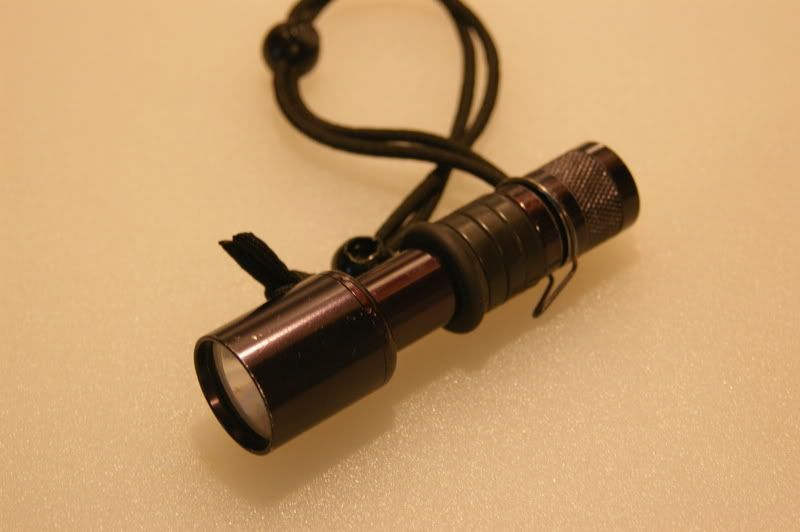 The Rogers technique is similar to how you see doctors use hypodermic needles. The big ring allows the user to set the light between the index and middle fingers of the weak hand. Instead of putting his thumb on the pressure button, the user instead rests the rear of the light against the meat of his palm. This allows the user to turn on the light simply by applying backwards pressure against the large ring, which presses the rear of the light into the base of the thumb, activating the light. This hold allows the user to still get at least three of his weak-hand fingers around the grip of the weapon. 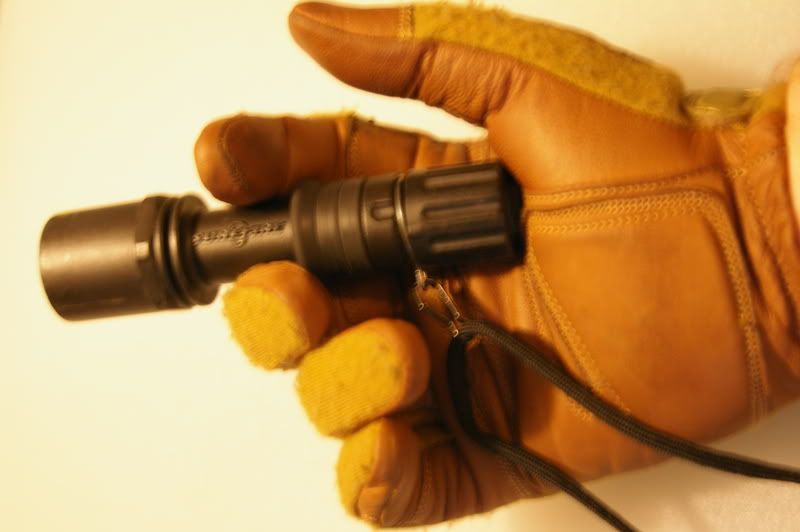 As most of us know, shooting with both hands is easier to do under stress than shooting with one hand, and the Rogers technique allows for an almost completely two handed hold on the weapon which aids accuracy and proper indexing of the light significantly, in my experience. To this day I have not found a handheld light technique that works better in conjunction with a handgun than the Rogers technique. (Also called the "hypodermic needle" technique or in some colorful cases the "cock-ring technique") As a result, the configuration found on the 6Z has remained my favorite configuration for a tactical light. I bought and carried two of them because the incandescent elements, while very powerful and bright, had a bad habit of blowing out on me at the worst time. I was not alone in this experience which is why you hear people often tell you that with flashlights two are one, one is none. A few years ago Surefire released a polymer bodied update of the 6Z called the Z2 combat light. 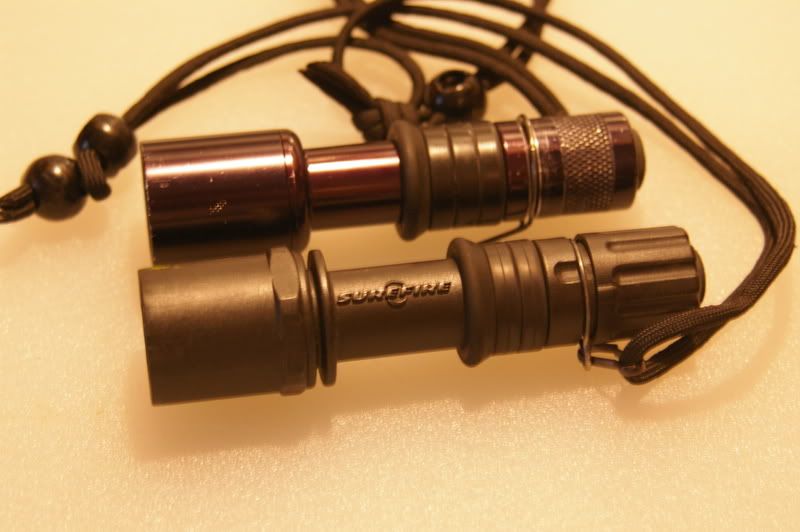 . This is essentially just a 6Z in polymer with a couple of improvements like a roll resistant bezel. I bought one as soon as they came out and I've been using it as my primary carry light ever since. I heartily recommend these two lights to the defense minded individual. Now does that mean that all other lights are unsuitable for the task? No, it simply means that after much trial and error those are the lights I have found to be best suited for using in conjunction with a handgun, which is the primary defensive weapon for practically every legally armed individual in this country, LE or ordinary joe. There are other lights that will work with the Rogers technique like Surefire's G2 or the old 6P, but I find them more difficult to use with the technique than the dedicated "combat" lights. Surefire has, however, recently released a line of rings for the G2 and 6P style lights that will let you configure them to look very similar to the setup seen on the "combat" lights. I haven't had the chance to thoroughly evaluate them, but from a glance they look like they may be just the ticket for someone who wants a more positive use of the Rogers technique. All that being said, the Surefire lights mentioned are not the ONLY options on the market worth considering. If someone wants a simple recommendation for a light with a minimum of fuss and bother, I'd say the mentioned lights are your best bet. If, however, you are willing to do some research and want just a general list of features to look for, here you go: 1. A general purpose handheld tactical light should put out between 60 and 80 lumens -- This is another point of controversy in the world of flashlight geeks. A lot of people are, to borrow Ken Hackathorn's description, "absolutely queer" for how many lumens a particular light can generate. Contrary to what people think a light that can double as the bat signal or that puts out enough light to melt the face of a bad guy like that Nazi in Raiders of the Lost Ark is not necessarily a good thing. Remember the opening discussion about how the rods in our eyes can saturate and become useless for a short period of time? The more lumens your light puts out the higher the chances that once you use the light you will actually "flashbulb" yourself when using it. Most interior structures in the United States have walls painted with light colors. Light colors reflect more light than dark colors. Somebody who lights up a normal residential hallway with a 200 lumen face melter even for just a split second is going to experience what is known as the "flashbulb effect". The flashbulb effect happens when the rods in your eyes are hit with a flash of light sufficient to saturate them, but not long enough to allow the cones in your eyes to take over completely. This leaves you literally blind for a short period of time...completely unable to see a bloody thing. At the various low light training sessions I've attended there has always been somebody with a massive light that ends up blinding themselves the first time they use the thing in a shoot house. They were fine when on an open carbine range where none of the light was reflecting back into their face, but once they got inside an enclosed structure suddenly all that light started bouncing off the walls right into their eyes and it significantly diminished their ability to see shoot vs. no shoot targets and to navigate in the dark house. This invariably caused them to become dependent on having the face melter on throughout the shoothouse and unable to see or deal with anything that didn't fall within the circle of light generated by their hand-held. ...and that's not a good thing. Light is a target indicator. When a light goes off it draws the attention of everyone in the area, good or bad. As a result, you don't want to be searching through a structure with the light on all the time. You want to use the light as little as you can so as not to give people who want to kill you a fix on your position. This is why strobing or flashing is taught for searching and room clearing. You use quick bursts of light to figure out what's in front of you and you keep moving, meaning that if an unseen bad guy shoots at the light he will have to be doing it from memory and will be shooting at a location you no longer occupy. If anyone doubts the validity of the flashbulb effect, conduct a simple experiment. Find a friend who is a photography nerd and ask to borrow their big camera flash. Wait until it is completely dark in your house and give yourself at least 30 minutes in the dark for your eyes to adjust to their peak night vision efficiency. Then point the camera flash down the hallway and trigger it. See how long it takes you to recover the ability to see to a useful level. You will then understand why it is called the "flashbulb" effect. (Note: You can also set up a game camera in the bathroom and ask the missus to report back on what effect it had on her during the night, but be sure you have a comfortable couch first.) A 60-80 lumen light offers enough power to clearly identify what is going on within the hotspot of the light, but not so much light that you obliterate your night vision. Again, this is for a GENERAL PURPOSE TACTICAL LIGHT. There are occasions when the use of the face-melters is entirely appropriate (mostly in wide open outdoor scenarios) but the majority of people are going to find them to be a hindrance more than a help. 2. LED lamp elements are preferred -- LED's have proven to allow for longer battery life and can survive more abuse than incandescent lamp units. A more reliable light that uses fewer batteries is a no-brainer. 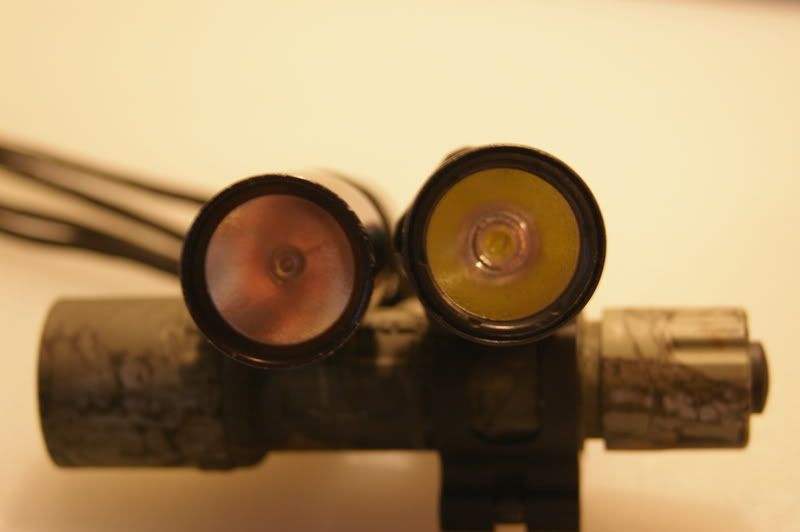 Here you can see the LED element on the right and the incandescent element on the left. 3. The activation switch should be pressure based -- ...meaning you have to apply deliberate pressure to keep the light on rather than a "click" style on/off switch reminiscent of the old Mag lites. The pressure based switches are a pain in the neck if you are using the light to fix a circuit breaker or a fan belt...but click style switches are even MORE annoying when you are trying to use the light in a tactically sound fashion or in conjunction with a handgun. Under stress they inevitably get switched on when they shouldn't or left on for far longer than is desirable, making the person holding the light a target. There are a number of switch styles on the market that do everything from just keeping the light on with a click to engaging a strobe function...but avoid anything that isn't pressure based. The simple lock-out tailcaps seen as standard equipment on the Surefires pictured here and that are the default on most Surefire lights are already very good for their intended purpose. --- More on the way. |
It is substantially true that virtue or morality is a necessary spring of popular government.
George Washington
http://www.friendsofangela.com/
George Washington
http://www.friendsofangela.com/
|
GEAR -- Weapon Lights For as long as there have been flashlights, there have been people wishing they could mount them to a weapon. If you've ever tried to use a hand held light in conjunction with a weapon it becomes instantly clear that doing so makes you feel like a monkey trying to hump a football. It's awkward, uncomfortable, and just plain sucks. Dedicated weapon lights were invented to help make the process of using a light and a weapon at the same time easier. Handguns -- Mounting a light to a handgun is no mean feat. Handguns don't typically have a lot of real-estate where someone can mount a dedicated weapon light. Still, the people at Surefire found a way and came up with some dedicated mounts for handguns that required only slight modification of the weapon and they became the standard for elite military units and tactical teams the world over....for a while, at least. Eventually somebody figured out that having the light stuck to the weapon in a semi-permanent fashion wasn't always ideal and that the large, heavy units then on the market were less than ideal, especially for guys wearing 40 + pounds of body armor and 20 or more pounds of weapons and other assorted equipment. I don't exactly recall what the first handgun on the market with an integrated accessory rail was. My gut says that the H&K Mk 23 was the first but I could be wrong about that. I think I can say without fear of contradiction that the first exposure most people had to accessory rails built into handguns was when they saw their first redesigned Glock frame which had a nice accessory rail built right into it. In an uncharacteristic bit of forward thinking Glock modified their frames so that easy on, easy off dedicated weapon lights like the Insight M3 could be mounted to their handguns. And there was much rejoicing.....for a while, anyways. Turns out that the M3 kind of sucked. The concept was great, but the light had a bad habit of dying on you at the worst moments, especially under recoil. Insight Technologies released some updates to the design to make them more durable, but they still weren’t ideal. Neither were the nitrolon weapon lights offered as a more reliable alternative to the M3 lights. It wasn’t until the introduction of useful LED technology that handgun lights really went prime-time. Today the two most popular options on the market are the Streamlight TLR-1 and the Surefire X series weapon lights….and both are very good units. Yes, Virginia, I said that the TLR-1 is a good weapon light worthy of consideration. Hopefully that will make the people who get the yuk-face anytime Surefire is mentioned be quiet for a few minutes. The TLR-1 is by all accounts a durable, reliable, eminently useful weapon light option….and coming in at around 100 bucks it is probably the best value in a weapon light currently on the market. The Surefire X-series weapon lights are my personal choice for a dedicated handgun mounted weapon light. I prefer the Surefire units because they are a bit more compact and have a mounting system that I like better than the TLR-1’s screw based system. They also have much better tape switches available than the TLR-1 does. With these weapon lights there are essentially two types of controls: 1. Tape switches: Pressure activated switches that are connected to the back of the light by a wire and that can generally be mounted on the grip of the weapon, allowing a squeeze to the grip of the weapon to activate the light. 2. Rocker switches: A switch mounted directly to the back of the light unit that is activated by moving the switch up or down by a either the trigger finger or a finger on the weak hand. The TLR-1, X series and the various M3 derivative lights all come with rocker switches as a standard option. For a number of people the standard rocker switch is just fine. Others, however, have trouble using them effectively. I have found that rocker switches on weapon lights just don’t work well for me. My fingers are considerably shorter than the length of my palm making it difficult for me to reach out in front of the trigger guard on many handguns to use the rocker switch on a weapon light. On a handgun like a Glock I don’t have much trouble with it, but on something like a Beretta 92 it’s incredibly difficult for me. As a result I prefer tape switches for my handgun mounted lights. 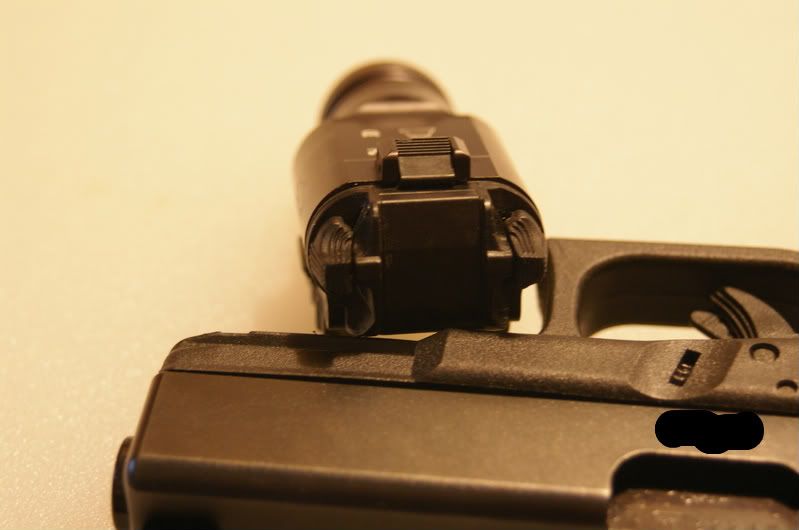 The "rocker" switch. 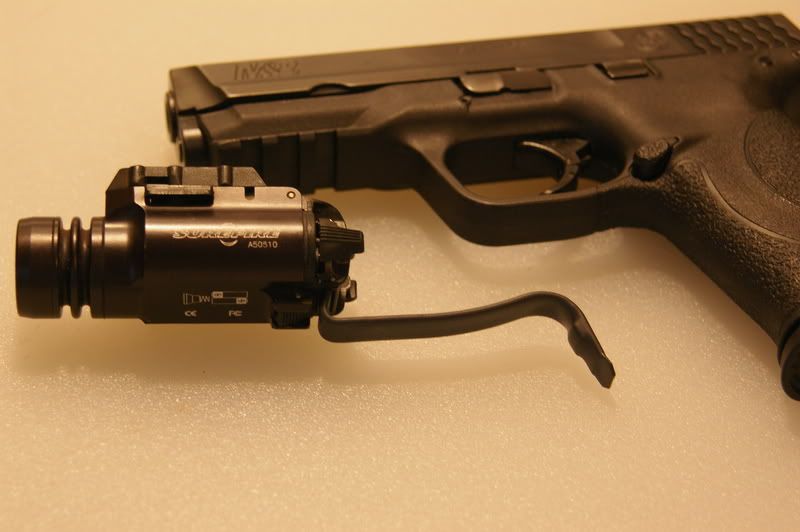 The "tape" switch. Like everything else in the “tactical” world, tape switches on handguns bring their own unique challenges and issues to the table. The biggest is accidental light discharges. As I stated earlier light is a target indicator. You want to use a minimum amount of light when you are searching a structure or doing something similar because you don’t want the bad guy to know where you are. Tape switches are easier to use on purpose than rocker switches, but the downside to them is that they are also easier to use by accident than rocker switches, which can lead to lighting yourself or your teammates (if you do the CQB thing for a living) by accident. The consequences of this can range from being a minor inconvenience to alerting the enemy to your presence and getting yourself and/or team members killed. The consequences for the average citizen or law enforcement officer are typically going to be on the very low end of that spectrum, thus I would say that the higher risk of light AD’s with tape switches is a good trade-off for those individuals (like myself) who find that rocker switches don’t work well for them. I stated earlier that I prefer the tape switches used by the Surefire X series lights and now I’ll tell you why. Many tape switches out there are held on to the grip of a handgun via an adhesive or Velcro that is held on to the grip and the tape switch with an adhesive. These do not tend to be good long term mounting solutions, and they don’t offer the freedom to take the light on and off of the weapon at will. The Surefire X series lights, however, have the “DEVGRU” switch which is molded around a stiff metal insert that is specifically designed for mounting on a particular type of weapon. This means you can take the X series light (an X200B in the pictures) on and off of the weapon at will without worry. You also don’t have to find ranger bands or similar tricks to hold the switch on the grip of the weapon for hard use. 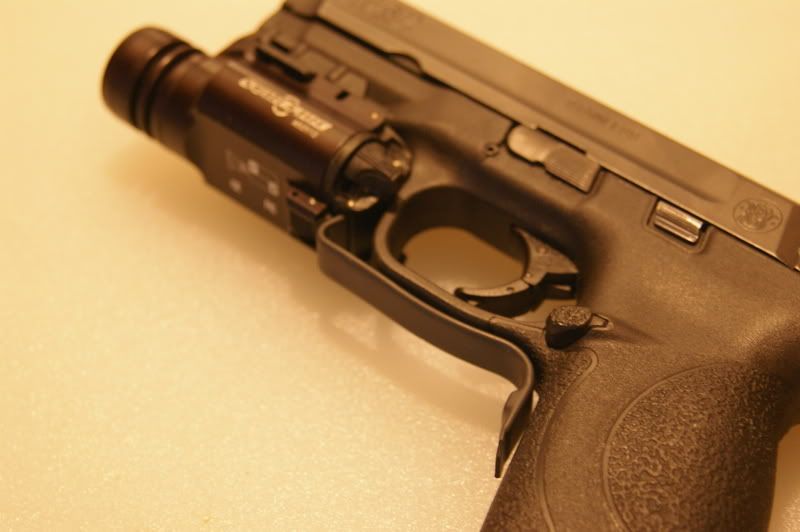 Now all of that is great for those who have a weapon with an integrated accessory rail, but what if your weapon doesn’t have one? Thankfully the various light companies have realized that there are lots of people out there who don’t have rails on their handguns and have figured out various aftermarket solutions for this problem. One such solution is the Surefire MR-11 mounting rail you see here: 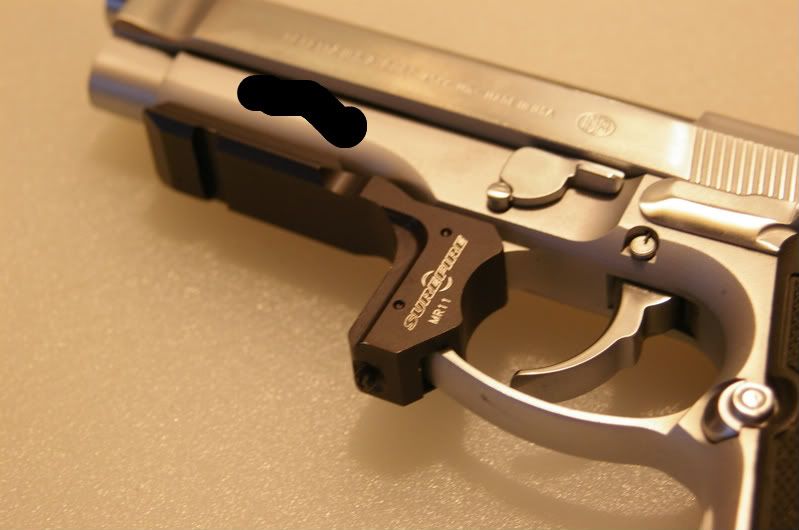 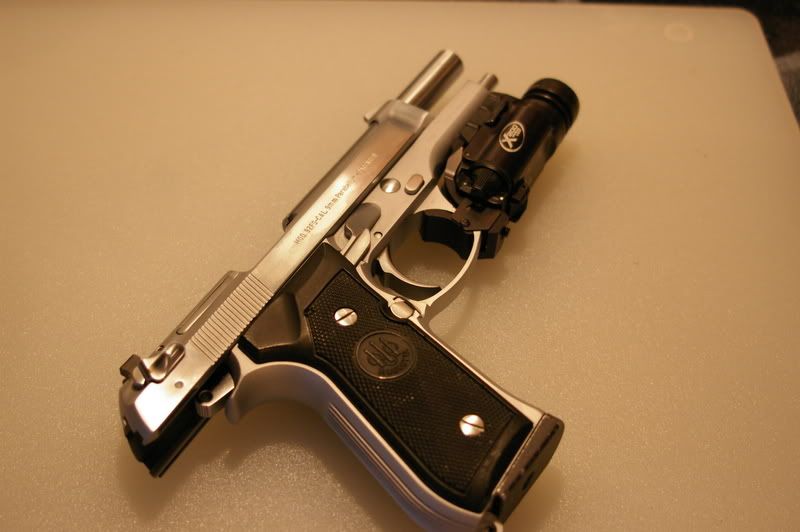 The MR-11 attaches to the front of the trigger guard on the Beretta 92 without damaging the finish, and allows you to mount a Surefire X series weapon light. Other manufacturers also offer similar adapters, but the Surefire add-on rails are the best I’ve seen from anyone. They are available for a number of service weapons like the Sig P226, the 1911, and the H&K USP. Okay….so you now have a weapon light and you’ve got it mounted to your weapon...but how do you carry the bloody thing? This too is an area where help from various manufacturers can be found. There are a number of holster makers out there who offer carry options for weapon mounted lights. Safariland offers versions of their excellent law-enforcement holsters (like the 6004) to accommodate handguns with weapon lights, and so do other makers like Com-Tac, Blade-Tech, etc. Unfortunately when it comes to concealed carry of a handgun with a weapon light your options are significantly narrowed. Most of the previously mentioned holsters are belt holsters that require some sort of covering garment. If you want to carry IWB it’s decidedly harder to find a holster to accommodate that. Thankfully Raven Concealment has come up with a great system that allows you to take one of their belt holsters and convert it into an IWB if you choose to do so. 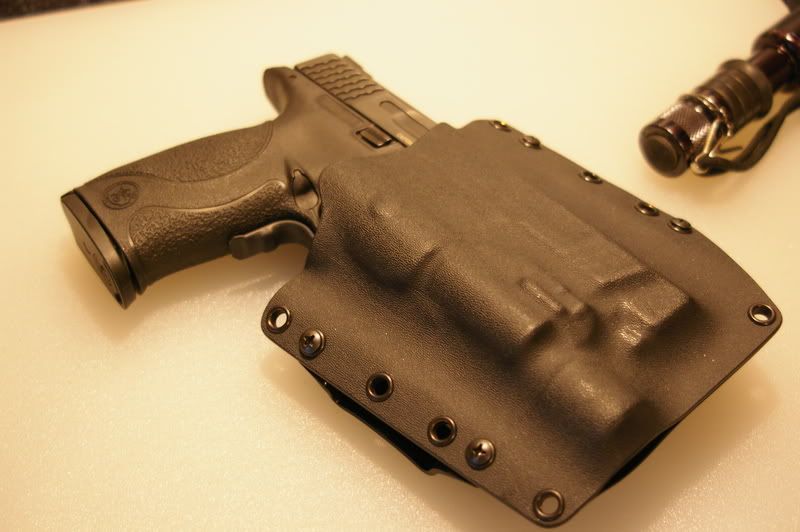  Their standard belt configuration is also the most concealable holster for a mounted handgun on a light that I’ve found. While a mounted light does add some bulk to the weapon, the Raven Concealment holsters handle it better than any other design I’ve tried. Lots of very experienced people are buying gear from Raven Concealment and consider them the best kydex maker around right now. I’m very pleased with the gear I have from Raven Concealment thusfar. ---- More to come |
It is substantially true that virtue or morality is a necessary spring of popular government.
George Washington
http://www.friendsofangela.com/
George Washington
http://www.friendsofangela.com/
|
Carbine – There are many more options out there for carbine lights than there are for handgun lights. While this means more choice, it can also mean more confusion about what you need. There are essentially two basic categories of carbine lights: Dedicated weapon lights, and mounts that let you use general purpose tactical lights. An example of a dedicated weapon light is the 9 volt Surefire you see in the picture. It attaches to the rifle via a dedicated throw lever mount (you can get one with a thumbscrew mount which is preferable because the ARMS throw lever mount pictured SUCKS) and it has a remote tape switch activation. It’s a very good light, durable, reliable, and more than bright enough for any general purpose carbine work. It is also heavy and expensive. I purchased the pictured light for over 300 bucks several years ago and other than the fact that the sucky mount falls off the weapon entirely on occasion, it’s been a good light. (if you want a good throw lever mount for this sort of light, buy a LaRue) 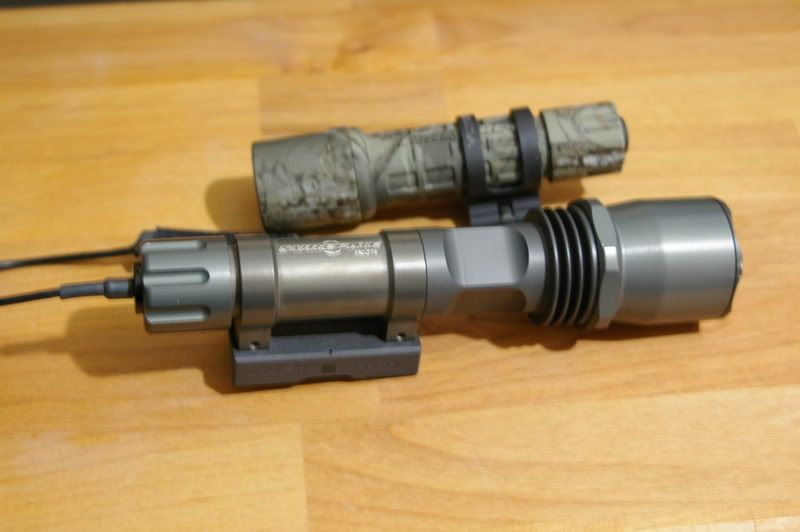 Recently, however, I saw that Larry Vickers was using a Surefire G2 mounted to his rifle with a VLTOR mount and I started thinking. The G2 setup described costs less than 100 bucks even if you replace the standard G2 element with an LED upgrade. It’s also a good bit lighter than the big Surefire, takes up less rail space, and doesn’t seem to have any real disadvantages in actual use. I decided to give it a whirl myself and since running it in dedicated low light training I’ve found it to be a wonderful option. It’s effective, reliable, and cheap. What more could you ask for? One note of caution: If you want to use an incandescent G2 in this sort of setup in a weapon bigger than 5.56, you should invest in a shock isolated bezel to keep from constantly blowing out lamp elements. The first pic is of Mr. Vickers' light setup: EDIT -- The photo of Mr. Vickers' rifle is apparently fone.... 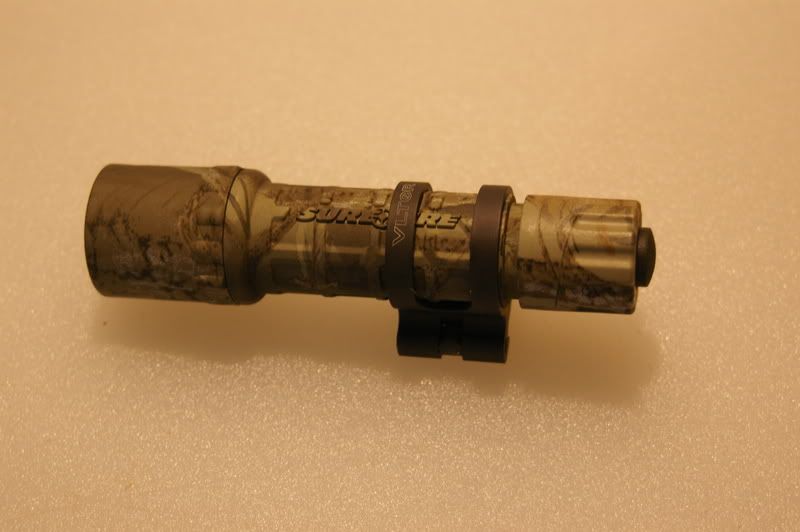 Are there other options? Sure. The Surefire X300 is also very much at home on the rail of a carbine. Pentagon makes some nice carbine lights that seem to perform well. Because there are so many options you shouldn’t have any issue finding something that will fit your budget and your needs. My only caution would be to remember that our earlier discussion about the lumens you want on a tactical light also applies here. You don’t want to have a face melter on your carbine any more than you want one on your handgun or in a handheld light. Anything from 60 to 100 lumens is preferred for a carbine light that will be doing work indoors and outdoors. If you won’t have to go into enclosed structures and you have lots of money then you can buy one of the super-high lumen Surefire anti-aircraft lights if you want. --- More to come |
It is substantially true that virtue or morality is a necessary spring of popular government.
George Washington
http://www.friendsofangela.com/
George Washington
http://www.friendsofangela.com/


|
GEAR – Handgun Sights At a bare minimum you NEED a tritium dot in your front sight. Yes, I know that Bill Hickock didn’t have a glow-in-the-dark front sight on his Colt Navy revolvers, but again he didn’t have the option in his day. Ever since the handgun was invented people have been trying various methods to make the front sight easier to see, especially in low light. In the old days guys used to paint their front sight a loud color to help it stand out. Somewhere along the line somebody thought of putting a small gold insert in the front sight and buffing it to a high shine so that it would be more visible in low light. These days there are a number of good low light sighting options available on the market. That wasn’t always the case. Back in the days when the S&W revolver was king, there was no such thing as sights that glowed in the dark. That concept was invented by a police officer back in the 70’s who noticed the luminescent qualities of some radio-active isotopes and thought that they would be extremely useful for handgun sights. He then made a side business installing sights equipped with promethium vials in them on to firearms. Eventually this idea occurred to others and in 1981 the Trijicon Company finally got around all the bureaucratic hurdles necessary to sell tritium equipped products to the public. Tritium has a longer life than promethium and this made for a longer service life. Today practically every maker out there offers a weapon with tritium sights (Trijicon makes the tritium elements for every sight on the market regardless of the brand name of the sight) pre-installed from the factory. While this is a good thing, unfortunately the dominant sight configuration is to have three “dots”, each with a tritium vial in it that is the same size, color, and brightness. This, as it turns out, isn’t an ideal setup. When you look through the sights of a handgun, the rear sight appears to be bigger than the front sight of the handgun. This is because it is closer to your face. In low light with tritium sights that are all the same color and brightness when side by side, the rear sights are actually going to appear to be bigger and BRIGHTER than the front sight, making it harder to find and focus on the front sight under stress. Thankfully there are sight makers who have realized this and who offer sights in various color combinations to try and help a shooter to distinguish between the front and rear sights under stress. While this is progress, it still isn’t ideal. Even with orange or yellow rear sight “dots” you can still end up losing the smaller, dimmer front sight. As a result I’ve pretty much transitioned all my carry guns to a plain black rear sight and a tritium front like the plain black Warren Tactical rear sight you see here on my M&P. With this arrangement I have found that even when shooting in almost no light I can make A zone hits without problem using just my glowing front sight out to 25 yards. A plain black rear sight is useable and more accurate than a traditional three dot setup under stress, but still isn’t ideal. Some folks have examined the problem and have come up with a great solution: Make the rear sight “dots” smaller and dimmer. Scott Warren is one of those folks and he created a rear sight with a smaller subdued dot and a front sight with a green dot of standard size and brightness, and the result is the best night sight setup I’ve tried. You can see the rear sight on my Glock 19 here. The rear dot doesn’t distract from the brighter front dot but it does allow you to figure out where your front sight is in relation to the rear sight…and at least in my experience the vertical dot-on-dot arrangement seems to align very naturally for me. Currently this setup is only available for Glocks, but as soon as he makes it available for the M&P family of weapons I am going to change out my plain black rear sights.  Plain black Warren rear 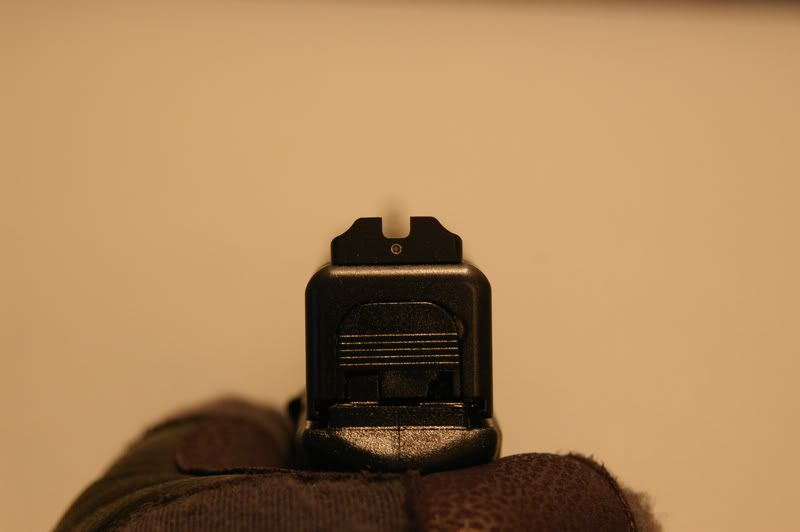 Warren rear with smaller, subdued tritium element. The following pictures attempt to illustrate some of the differences in sighting setups. They are fuzzy because the camera wasn’t at all happy with the level of light being used, and the fact that I was trying to snap the picture with one hand while holding the weapon with the other didn’t help any either. Still, while they aren’t 100% true to life, they do help illustrate the point. First up, plain black sights as found on a S&W K frame. 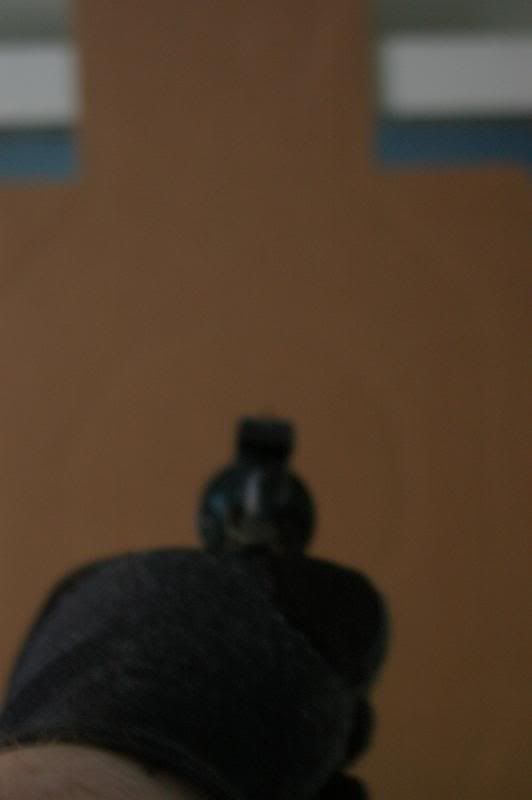 Next, the plain black rear with a tritium front.  Next, the Warren tritium rear with tritium front. 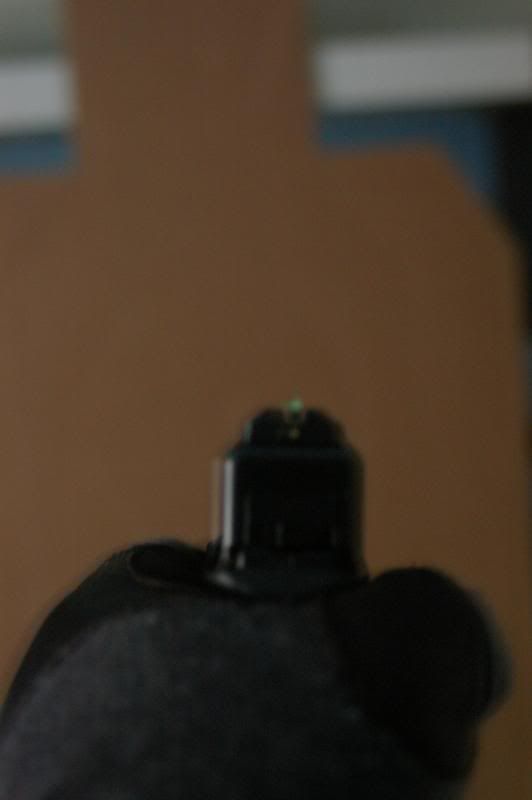 I know what you're thinking...where are the 3 dot sight pictures? Well I couldn't get the camera to take a useful picture of the 3 dot setup.  |
It is substantially true that virtue or morality is a necessary spring of popular government.
George Washington
http://www.friendsofangela.com/
George Washington
http://www.friendsofangela.com/
|
Lasers – The best available option for low light shooting with handguns these days is the laser. While lasers aren’t as durable or reliable as iron sights with tritium vials in them, they are MUCH easier to use in low light than even iron sights that glow. Our natural instinct when we perceive a threat is to focus intensely on the threat itself…and yet to be accurate with a handgun you have to focus on some sort of sighting reference (like the sights) rather than the threat. The laser, on the other hand, allows someone to see a valid aiming index that is literally ON the target, working more in line with how we operate under stress. The laser is to the handgun what the red dot is to the carbine, a simpler aiming index that allows for more accurately placed fire under stress and especially in low light. I know that some people have regarded lasers on handguns as unnecessary “gadgets” and something that shouldn’t be used for any serious purpose. One of the guys who used to hold that opinion is Ken Hackathorn, and after getting his hands on them and really running them hard he’s come to the point where he’s one of the loudest proponents of the laser’s utility on handguns. Lasers are really something that you can’t fully appreciate until you’ve given them a shot. Explanations invariably fail to communicate the true benefit they offer. The best example is the little S&W J frame. 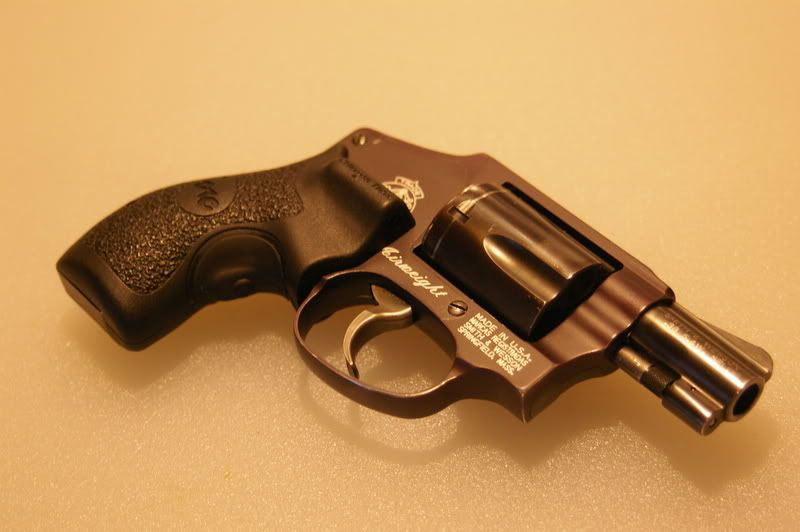 The J frame is probably the single most difficult handgun to master. It’s got a heavy trigger, a short sight radius and stock sights that are almost impossible to see even in bright daylight. With a laser attached, however, it suddenly becomes easier to get a good sighting index. Ask anyone who has used the CT grips on a revolver for serious evaluation and they’ll tell you that they have used them to make shots they never could have made without the laser. My own personal testimony is that I and several other shooters were able to use a S&W J frame at about 20 yards in almost pitch blackness to make solid center of the A Zone hits on a target with the laser activated. Everyone who tried it was sold on the utility of the CT lasers. As an example, this is what it’s like to try and aim the J frame in dimming light: 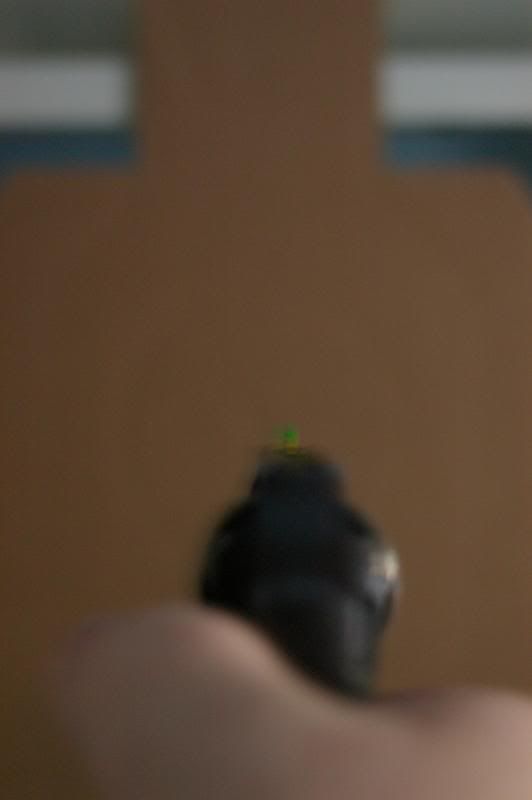 This is what it looks like when you use the laser: 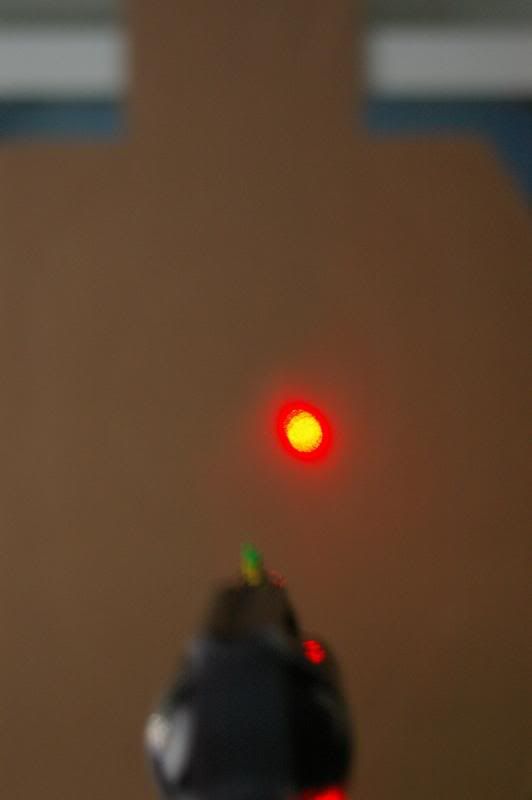 Which one looks easier to you? It takes some dedicated training and practice to learn to use the laser properly, but it’s worth it. They are also tremendous training tools. The laser offers you instant feedback on your trigger control. If you see the laser making a checkmark or a U while you shoot, you are snatching the trigger. It’s much more difficult to get that kind of feedback from iron sights. |
It is substantially true that virtue or morality is a necessary spring of popular government.
George Washington
http://www.friendsofangela.com/
George Washington
http://www.friendsofangela.com/
|
GEAR – Carbine Sights The best option for low light use for most people is (surprise surprise) an Aimpoint red dot. They work great in conjunction with a white light and they’ll work if you mount some sort of NV behind them. They have a long battery life, they are durable, reliable…pretty much everything you could hope to want in an optic. A decidedly inferior option to the red dot are the various tritium equipped iron sights available at least for the AR-15. These are better than straight iron sights, but once you’ve used a good red dot there really is no comparison. GEAR – Carbine Lasers. There are a number of laser systems out there for the carbine. Generally they aren’t necessary for most folks who have a red dot optic on their rifle. There are a couple of exceptions worth noting, however…. 1. Night Vision – if you are using a night vision device that is mounted on a helmet (generally the preferred method for using them) then you aren’t going to be able to look through your red dot optic to aim. This is why IR laser systems exist, to allow for an accurate aiming reference without having to have a cheek weld on the weapon. 2. Gas mask/hazmat/chem-bio suits – The masks in these suits generally prevent a decent cheek weld, meaning you probably won’t be able to use the optic/sights on your carbine. A laser system like the DBAL would be an asset here. 3. Sight-to-barrel relationship – If you have a weapon intended mainly for close quarters that has a big difference in sight to barrel relationship it may be to your advantage to mount a laser to help deal with close quarters work. An example is a Colt 9mm SMG. I was using one in a shoothouse recently that had an Aimpoint mounted to the top of the carry handle. As good as the Colt is and as good as the Aimpoint is, the combination wasn’t so hot. The Aimpoint mounted on top of the carry handle left a great deal to be desired. It made for a really nasty sight offset that complicated close range work. In that situation a Crimson Trace unit or a DBAL would have helped to deal with the sight offset issue and would have made A zone hits and headshots much easier at the close ranges found inside the shoothouse. If you aren’t in those categories you probably don’t need the laser on your weapon. Generally the sorts of guys who are in those situations are paid to carry machineguns by some sort of government entity. Edit -- GEAR -- Ammunition Something VERY few people ever stop to consider is how their carry ammo performs in low light. Most people have never shot their carry ammo at night and have no idea what sort of issues it can cause for them. I talked earlier about the "flashbulb" effect that too bright of a light can cause and why that happens. The same concern exists with the muzzle flash from various ammunition. Believe it or not muzzle flash can end up flashbulbing you and in some extreme cases everyone else within a 10 yard radius, rendering you temporarily blind. For a long time US military ammo had a flash retardant in the powder mix, but recently that practice was discontinued in the name of cutting expense. Muzzle flash falls into four basic categories: 1. Red -- this is the most desirable type of muzzle flash because the rods in our eyes don't respond to light in the red wavelengths...meaning that a red muzzle flash won't damage your night vision at all. 2. Orange -- This is not as good as red because it can actually effect your night vision somewhat, but it's still quite manageable most of the time. 3. Yellow -- This is where you start to get into flashbulb territory. Yellow muzzle flash is bright and typically interferes significantly with your night vision. Most of the FMJ practice ammo on the market that I've tried has a yellow muzzle flash. A number of duty/defensive ammo choices also have a yellow muzzle flash. 4. White -- This is the worst. A white muzzle flash gives you the full flashbulb effect and temporarily blinds you. It takes at least half a second if not longer for you to recover any useful vision. When you are in a dynamic situation it's really bad to have yourself blinded for a second or more. It can also make it almost impossible to pick up your tritium sights for several seconds after you are flashbulbed. While muzzle flash is not the most important factor in selecting ammunition for your carry/duty weapons, it is nevertheless an aspect of ammunition performance that needs to be weighed in as part of the decision. For handguns the Winchester "Ranger" line of ammunition includes a flash retardant that gives it a very mild red muzzle flash from most weapons. Speer's Gold Dot ammo tends to give a reddish-orange muzzle flash that isn't bad at all from most full sized guns. It's a bit more objectionable from compact guns. If I remember correctly Federal's HST is a bit worse than Gold Dot. The absolute worst muzzle flash that I've seen from ANY ammo, carbine or pistol is Remington's 230 grain .45 ACP Golden Saber JHP load. That produces a HIDEOUS white muzzle flash that flashbulbs EVERYONE within a 15 yard radius. It's insane...and it just happens to be the FBI choice for their 1911s. This demonstrates that even a large, well funded organization can completely miss the ball on the requirements of night fighting. Just because agency X uses load Y that doesn't make it ideally suited for your needs or for all situations. In fact, it might be a pretty stupid choice for your needs. Now for handguns there aren't many things you can do to tone down muzzle flash beyond using a full sized handgun and selecting ammo that doesn't have too much muzzle flash. Generally ammo selection is going to be the most powerful control you have over muzzle flash in your handgun. Carbines are a much different animal. There are a number of muzzle devices out there that are aimed at dealing with muzzle flash. The standard A2 birdcage hider works pretty well. The Vortex also seems to work pretty well. Things like the Noveske Krink style break are horrible from a muzzle flash point of view. They serve a purpose on short barreled weapons, but they aren't meant as an efficient means of hiding muzzle flash. Well, that’s a VERY basic run-down of gear choices and issues. I know that it’s hard to view anything that looks that long as “basic”, but it is. The next segment will deal with the most important aspect of preparing for the realities of low light fighting….TRAINING. Gear is no substitute for training, but a realistic look at the necessary gear is necessary before we talk about preparing to use it. |
It is substantially true that virtue or morality is a necessary spring of popular government.
George Washington
http://www.friendsofangela.com/
George Washington
http://www.friendsofangela.com/
| Excellent post, only got to skim it so far. Can't wait to read it in depth... |
China will go to war to get their men pie. Whether its with us, Europe, or Russia, there are 75,000,000 men in China with no possible chance to get pie... Ever. 75,000,000 angry armed virgins... They are like a Super ARFCOM - bluewaterheaven




Ya, it's a bit long but if you want to cover the bases on something like this you've got to go through all that.
|
It is substantially true that virtue or morality is a necessary spring of popular government.
George Washington
http://www.friendsofangela.com/
George Washington
http://www.friendsofangela.com/

Hey, it's the first wall of text I've actually read in awhile. Good writeup. 
|


| Excellent write up. With the OP's permission, can we get this tacked somewhere? |
I really could use a thread to masturbate to.- Playmore Minds 12-04-2007
Originally Posted By ColonelHurtz:
Palestinian kids... they blow up so fast.
Proud Member Ranstad's Militia, The Fantastic Bastards.
Originally Posted By ColonelHurtz:
Palestinian kids... they blow up so fast.
Proud Member Ranstad's Militia, The Fantastic Bastards.

Well I'm reluctant to tack my own thread but if another mod wants to do it, so be it. |
It is substantially true that virtue or morality is a necessary spring of popular government.
George Washington
http://www.friendsofangela.com/
George Washington
http://www.friendsofangela.com/
Depends on which one you are looking at. Bushmaster markets one that is made by Yankee Hill (I believe) which I used for years on a carbine that didn't have a rail system.  If you lock-tite the screws on that item it works very well. It's a bit heavy but very well made. With the right light mount it will work well. Personally I think the next hot thing is going to be a mount that allows you to mount something like an X300 over the top of the barrel. That seems to be the best place to mount a weapon light as it doesn't get in the way of anything else there. |
It is substantially true that virtue or morality is a necessary spring of popular government.
George Washington
http://www.friendsofangela.com/
George Washington
http://www.friendsofangela.com/
|
John, Great write up. I look forward to the training aspect. One of things I have found is regardless of what you have, it's only effective as the training time you put in to master equipment and build your skills. Training is the key to any firearm system. |
American by chance, Southern by the grace of God.
I'd like to make that happen, but it's kind of hard to do with only two hands. This picture isn't the greatest, but it does show a bit more: 
|
It is substantially true that virtue or morality is a necessary spring of popular government.
George Washington
http://www.friendsofangela.com/
George Washington
http://www.friendsofangela.com/
I'm going to try to get more into the various techniques when I do the training aspect. (hopefully tomorrow) My personal favorite position is the Rogers technique...but the thing about flashlight techniques is that one technique does not fit all situations. You need a minumum of two techniques and preferably a familiarity with all the various techniques out there even if you don't use them all the time. My main problem with the FBI technique is that it is REALLY easy to end up back lighting yourself with it if you aren't careful, and I've seen cops do it a number of times. The idea is to get the light up and away from the body because incoming rounds will be heading for the light...but generally if someone is shooting at the light they are going to be putting rounds in the general direction of the light. The FBI technique is my least favorite technique because in my opinion it is harder to index the light and the sights in the same spot with that technique than it is with any other. |
It is substantially true that virtue or morality is a necessary spring of popular government.
George Washington
http://www.friendsofangela.com/
George Washington
http://www.friendsofangela.com/
Amen. The gear writeup is longer than the training writeup will be, but it is decidedly less important than the training writeup. Gear is the easy part. Learning to use it to the level where you can use it effectively under stress is the hard part and there's no shortcut. |
It is substantially true that virtue or morality is a necessary spring of popular government.
George Washington
http://www.friendsofangela.com/
George Washington
http://www.friendsofangela.com/




Another reason I'm a fan of pressure switches. If you have to tuck the light to reload you don't have to worry about whether or not you remembered to turn it off as bullets are flying. |
It is substantially true that virtue or morality is a necessary spring of popular government.
George Washington
http://www.friendsofangela.com/
George Washington
http://www.friendsofangela.com/
I like using the FBI method for shooting from behind cover. Posts, short walls, etc. IMO, it's more of a search method than actually a firing method. |
American by chance, Southern by the grace of God.

That's pretty much my take on it. Your post also points out why I stated earlier that no one technique gets it done all the time. There are just too many variables in life so you'll need multiple techniques. Personally my favorite is the Rogers technique, but I also use the Harries technique quite a bit, especially for left-handed corners. The neck index technique also has it's place, as does the FBI technique. |
It is substantially true that virtue or morality is a necessary spring of popular government.
George Washington
http://www.friendsofangela.com/
George Washington
http://www.friendsofangela.com/

The aimpoint has its limitations. If I put the brightness low enough to use in the dark, then my light washes out the dot. If I leave it bright enough to see with the light on, I can't see the target through the glare of the dot in the dark. Is there a better solution? |
"The utmost excellence at which humanity can arrive, is a constant and determinate pursuit of virtue..."



I don't have that problem. I use my Aimpoint on the brightest setting in the peak daylight hours but for night use I knock it back a few notches and I'm good. If you can't see your dot on a reasonable night setting with your light on, I'd say that you might have a light that is entirely too bright. 60-100 lumens is the range you want to be in, with about 80 lumens being just right. What Aimpoint are you using? What light setup? That might help us figure out what is eating your lunch. |
It is substantially true that virtue or morality is a necessary spring of popular government.
George Washington
http://www.friendsofangela.com/
George Washington
http://www.friendsofangela.com/
The Warren sights are incredible. They are the fastest sight setup I've ever found and they are more accurate than anything else I've tried. It allows enough daylight around the front sight so that you can actually see what's going on in daylight. At night it doesn't get in the way of the front sight. |
It is substantially true that virtue or morality is a necessary spring of popular government.
George Washington
http://www.friendsofangela.com/
George Washington
http://www.friendsofangela.com/

