


Posted: 4/21/2008 4:13:45 PM EDT
|
I watched a video of the P51 Mustang in action and it stated it had 1650 horsepower engine. I do not know anything about flying so I am thinking that all that horsepower must mean that there is a lot of torque. How does torque affect the the pilot? Does it make the aircraft physically harder to fly than a craft with lesser horsepower and torque? |
 i think its a rolls royce or merlin supercharged v12 with like 1000+ci.
|
I have no idea. But someday I will have enough money to fly in one. At our CAlifornia Waterfowl WoodDuck dinner every year, Dan Vance donates a ride in his Mustang, named Speedball Alice, for the auction. It typically goes for about $1000 for a half hour ride. The best part is he flies into your local airport to pick you up. Here is some info about Speedball Alice. Speedball Alice |
|
A P51 is one of the few single engine airplanes i know that have a VMC speed. Basically it means that under a certain airspeed the torque of the engine can over power the flight surfaces control authority. It what it does to you is if full throttle is used on takeoff at a low enough airspeed the airplane will roll over and no amount of aileron or rudder will do a damn thing until you bring the throttle back. Killed quite a few folks I understand. That video of the corsairs at Oshkosh running into each other on landing a year ago shows it, the guy in the back ( that flipped over ) firewalled the throttle to go around and didn't have enough air flowing over the control surfaces to counter the torque, put him down for another one that forgot about that particular trait of high HP single engine aircraft. |
|
The amount of torque must be compensated with a large enough tail and rudder surface. Torque effects are mostly encountered on large power changes like takeoffs, level accelerations etc. Many aircraft suffered from torque issues that overpowered the rudder...for example the GeeBee just didn't have enough tail. Other compounding issues were the size of the propeller combined with the amount of torque. |


at most 2. those engines are MASSIVE. 4 would make the tractor way too long.. even tho itd help keep it stable during a run. |
I saw it in person, and they were Mustangs, not corsairs... 
|
|
ok the engine specs are: # Type: 12-cylinder supercharged liquid-cooled 60° "Vee" piston aircraft engine # Bore: 5.4 in (137.2 mm) # Stroke: 6 in (152.4 mm) # Displacement: 1,648.96 in³ (27.04 L) # Length: 69 in (175.3 cm) # Width: 29.8in (75.7 cm) # Height: 41.2 in (104.6 cm) # Dry weight: 1,375 lb - 1,640lb dry # Valvetrain: Overhead camshaft-actuated, two intake and two exhaust valves per cylinder, sodium-cooled exhaust valve stems # Supercharger: Single stage single speed. # Fuel system: Twin-choke updraft carburettor with automatic mixture control # Fuel type: 87 later 100 Octane Aviation fuel # Oil system: Dry sump with one pressure pump and two scavenge pumps. # Cooling system: 100% ethylene glycol, pressurized. 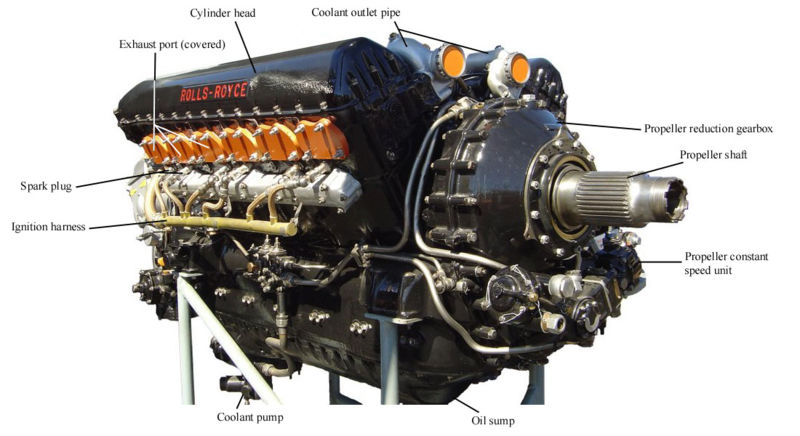  |
Is this the crash you saw? www.youtube.com/watch?v=deVgrh8LESo |
That's the one, yep p-51s not Corsairs, my bad. |
