


Posted: 7/20/2017 2:41:35 PM EDT
| LGS has a 4 inch model 19-3 in what appears to be good shape for $499. I don't really know how to value these smith revolvers. Is that a decent price? Also, what are the things to check on these older revolvers? |

|
As long as it locks up tight and the finish is good, run do not walk, back to the shop. BUT be sure and check the lock up. A lot of 19/66 got shot loose. They were designed for a modest amount of magnum shooting.
Way back when, police departments practiced or qualified with 38 Special, but carried 357 Magnum. They discovered in officer involved shootings their people weren't used to magnum loads. Once they started qualifying with magnum ammo the K frames didn't hold up. Which lead to the L frame. |

|
Quoted:
As long as it locks up tight and the finish is good, run do not walk, back to the shop. BUT be sure and check the lock up. A lot of 19/66 got shot loose. They were designed for a modest amount of magnum shooting. Way back when, police departments practiced or qualified with 38 Special, but carried 357 Magnum. They discovered in officer involved shootings their people weren't used to magnum loads. Once they started qualifying with magnum ammo the K frames didn't hold up. Which lead to the L frame. |
|
Quoted:
It is used, I guess the -3 means 3rd gen |
|
Quoted:
Tight lockup meaning when closed the cylinder has no play? |

|
The 19 is a classic
110-125gr magnums were really hard on them. Avoid shooting them, watch for cracked forcing cone 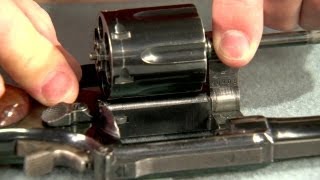 Inspecting Smith and Wesson Revolvers | Smith & Wesson Revolver Project |
|
Quoted:
Some play on a Smith is normal. Old Colts lock up tight but Smiths are different. There are two things to consider. The rotational play of the cylinder and the forward and back play, called end shake. The former is pretty normal the latter not so much. How much is too much can be subjective and requires a bit of experience to decipher. |
| Thanks! I will check this out after work |

| Frame cutting underside of the top strap by the throat. Also, thumb hammer back until locks in single action. Push forward on hammer, it should not release. Inspect turn line on cylinder, faint to very pronounced. Google Smith Wesson K frame inspection for all things to look for. $499 for good condition in LGS is not bad price. Pinned and recessed Smiths climb in value everyday. They don't make them that way anymore. |
|
check the cylinder lock up (UNLOAD FIRST, OBVIOUSLY) by slowly pulling the trigger and determine if the bolt correctly locks into the cylinder recess prior to the hammer falling. Check all six cylinders.
Check for end shake. That is how much the cylinder moves forward and aft while it is locked into the frame of the gun. End shake is easily corrected with shims, but it is indicative of use wear. Check the frame for flame cutting. This is on the top strap of the frame just above the entrance to the barrels breech. The depth of the flame cutting indicates how much the revolver has been fired. Check the muzzle for nicks or dings that would affect accuracy. Check the firing pin for nicks, chips, and alignment. Check the sides of the hammer for scratches caused by uneven rubbing on the frame. Does the hammer align correctly or does it align on one side more than the other. None of these items by themselves should preclude you from buying the revolver. Taken together, they can tell you whether the revolver is just old, or old, and abused. I actually like older revolvers as their use smoothes them out considerably. If a 357 mag is fired with only 38 spell loads, it can have many thousands of rounds through it, and be in marvelous shape. If a revolver has been fed a steady diet of really hot 357 loads, it can be nearly worn out much faster...hence the check for flame cutting. David North was giving good advice while I was typing away..Nicely done, David. |
|
Quoted:
check the cylinder lock up (UNLOAD FIRST, OBVIOUSLY) by slowly pulling the trigger and determine if the bolt correctly locks into the cylinder recess prior to the hammer falling. Check all six cylinders. Check for end shake. That is how much the cylinder moves forward and aft while it is locked into the frame of the gun. End shake is easily corrected with shims, but it is indicative of use wear. Check the frame for flame cutting. This is on the top strap of the frame just above the entrance to the barrels breech. The depth of the flame cutting indicates how much the revolver has been fired. Check the muzzle for nicks or dings that would affect accuracy. Check the firing pin for nicks, chips, and alignment. Check the sides of the hammer for scratches caused by uneven rubbing on the frame. Does the hammer align correctly or does it align on one side more than the other. None of these items by themselves should preclude you from buying the revolver. Taken together, they can tell you whether the revolver is just old, or old, and abused. I actually like older revolvers as their use smoothes them out considerably. If a 357 mag is fired with only 38 spell loads, it can have many thousands of rounds through it, and be in marvelous shape. If a revolver has been fed a steady diet of really hot 357 loads, it can be nearly worn out much faster...hence the check for flame cutting. David North was giving good advice while I was typing away..Nicely done, David. |
|
Quoted:
All revolver will have end shake, in fact if it has NO end shake, that's a bad thing, same if it's too much. |


|
Quoted:
cracked forcing cone.... http://thefirearmsforum.s3.amazonaws.com/2011/05/124582_9eda9c18643bf405dee1ef2dfc621a22.jpg My old 19-4 http://i.imgur.com/bncawbH.jpg http://i.imgur.com/cflkV2u.jpg |