


[ARCHIVED THREAD] - Things that go boom UPDATE on pg. 2: Now with more pics and videos (Page 1 of 3)
Posted: 5/27/2016 3:01:43 AM EDT
|
The Hussite Wars (a.k.a., The Bohemian Wars, 1419-1434), saw extensive use of handgonnes. They had been in use for some time by then, but that was when they had become a more prominent weapon and saw much more extensive use on the battlefield.
The Hussite Wars featured the use of the wagenburg (loosely translated as wagon fort or wagon fortress), a train of heavily-built wagons with firing ports, chained together. Handgonners would fire from inside through the ports or over the top. 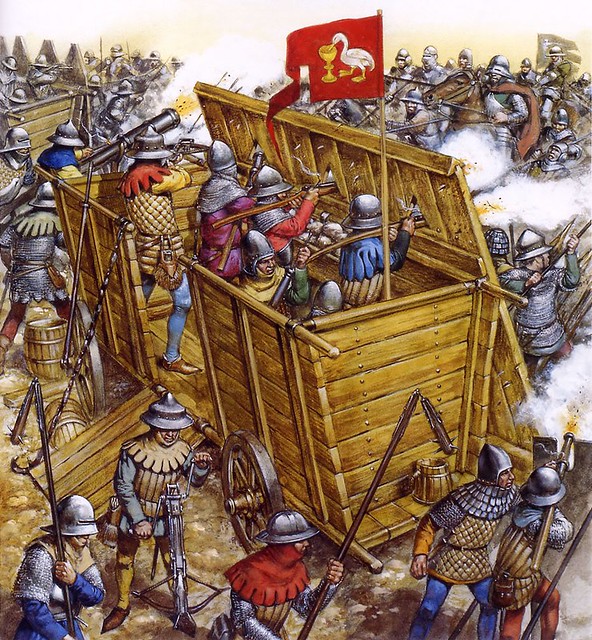
An example of a modern reproduction of one: 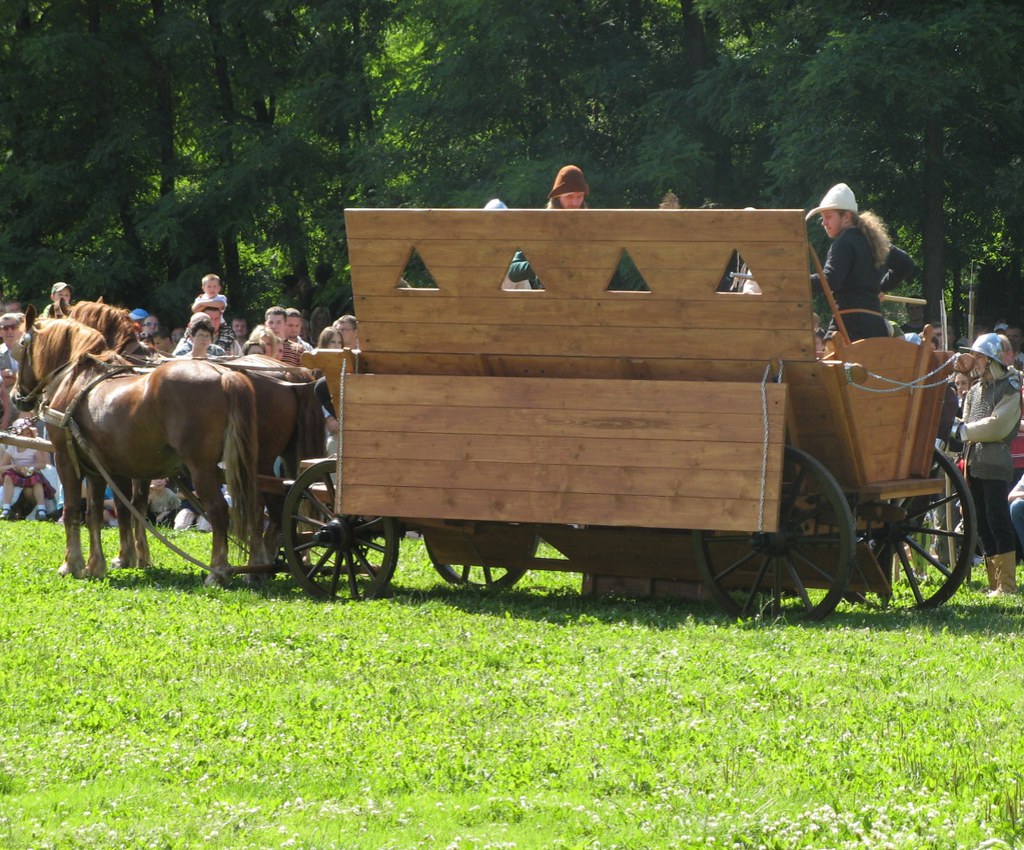
Another one: 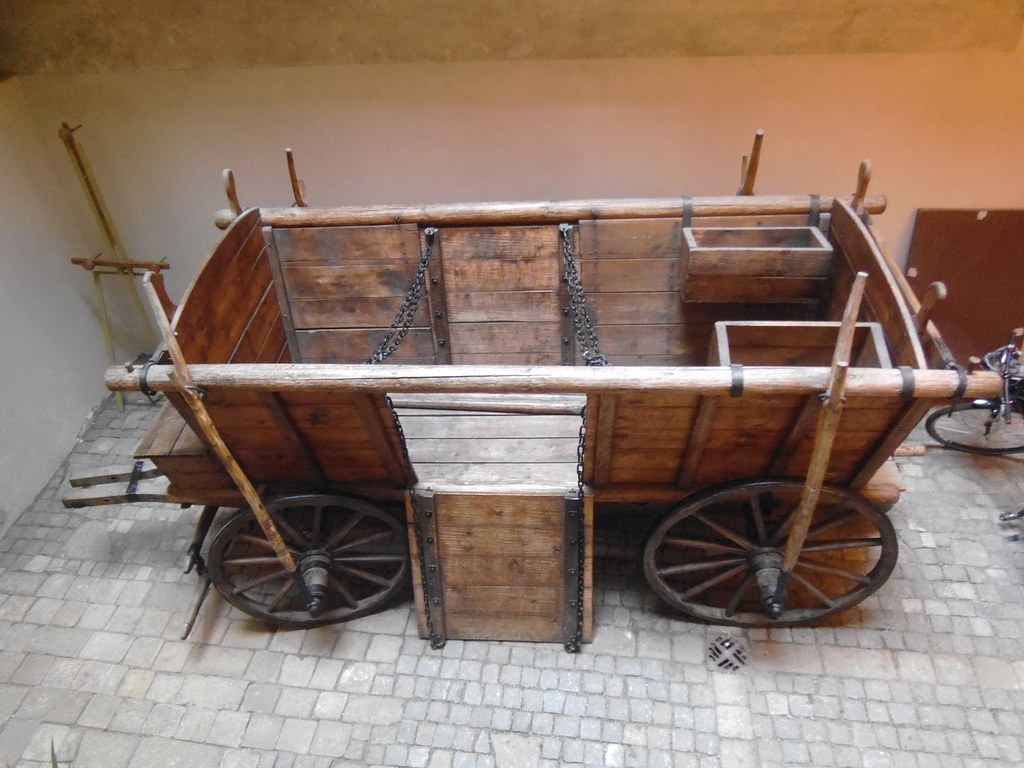
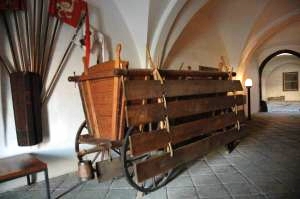
Chained together, they served as a mobile fortress. 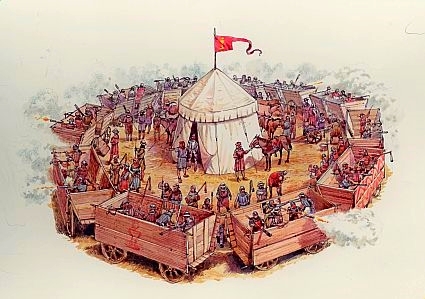
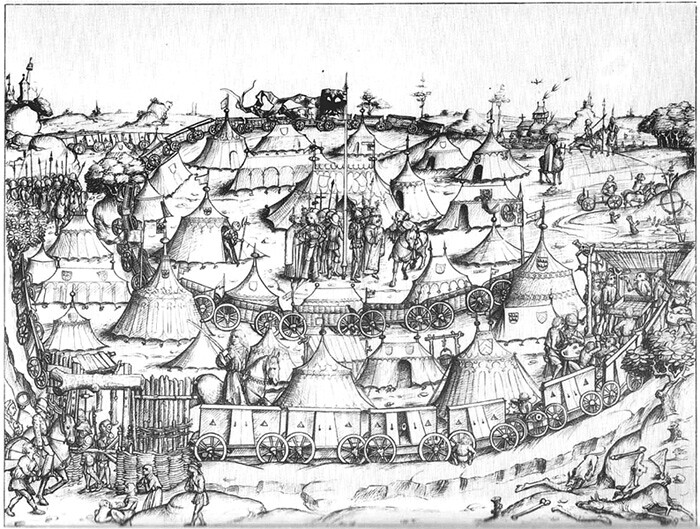
They had drop-down plates under the bottom to prevent enemy soldiers from crawling under the wagons to get inside. Depending on the terrain Hussites prepared the carts to the battle forming them in square or circle. The carts were joined by means of the chain (wheel to wheel). Therefore the carts were located aslant (their corners attached to each other) in order to allow, if necessary, to harness the horses quickly. . In front of this wall of carts a ditch was dug by camp followers. The crew of each cart consists of 18-21 soldiers: 4-8 crossbowmen, 2 handgunners, 6-8 soldiers equipped with polearms and flails (flail was Hussite "national weapon"), 2 shield carries and 2 drivers. The wagons also had a little pocket of rocks in case the soldiers ran out of ammunition.
There were two different handguns used by the Hussites. One was called the "trestle gun" (nicknamed the hook gun) and it was used as field artillery on the wagons. The trestle gun was so heavy that it required a hook to the wagon, hence its nickname. The other gun was called the pistala (from the Czech word for flute, because of its shape, possibly became the word "pistol" in English). http://allempires.com/article/index.php?q=hussite_wars 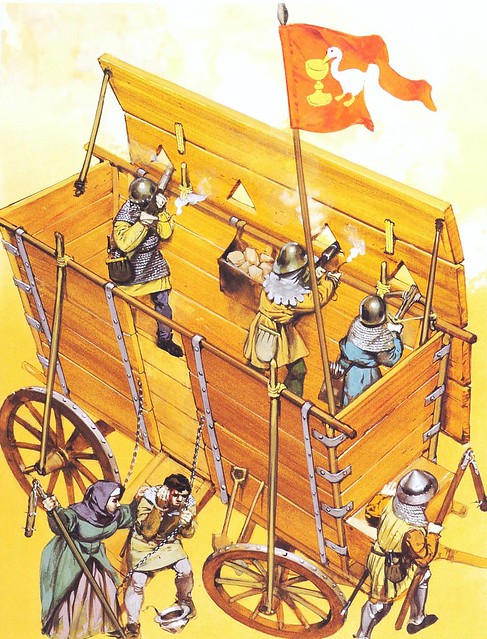
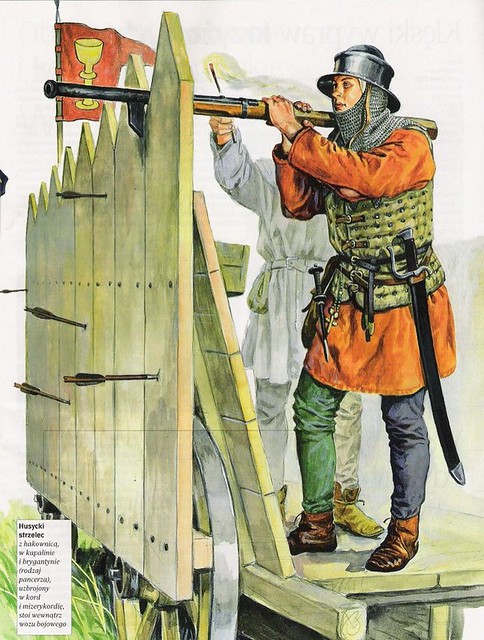
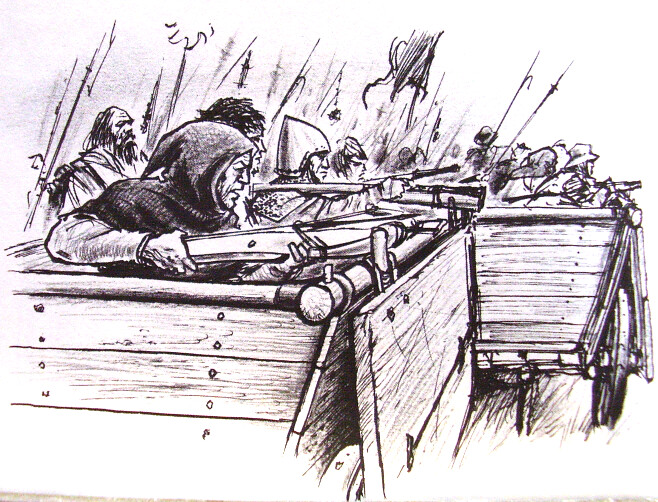
Artillery was fired through the gaps between the wagons (or they had guys there armed with pikes and halberds to stop anyone who tried to get through the gaps). 
A music video I thought was kinda cool. The scenes are from a movie made in Europe (in the 1960s I think) about the Hussite wars. It's not available on video in the U.S. 
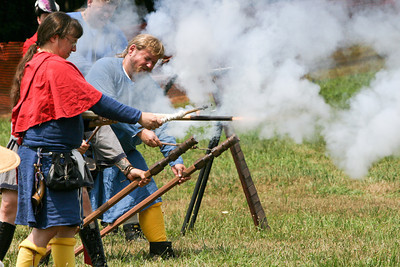
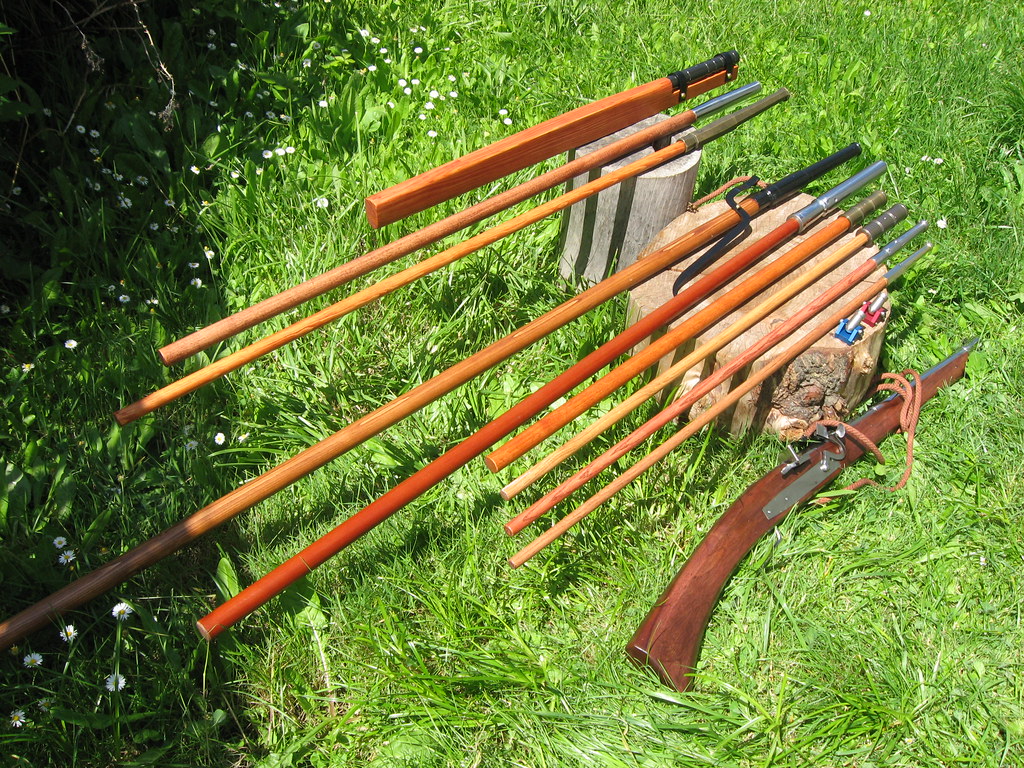
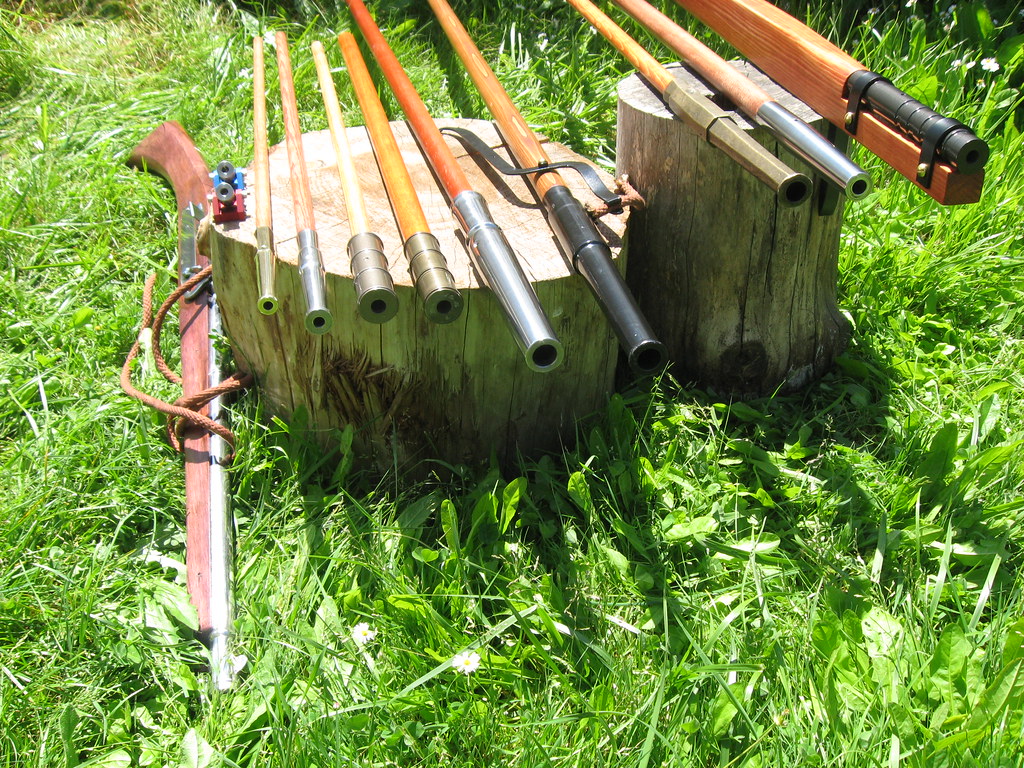
I decided to make a few video clips of myself shooting some handgonnes, including some pieces I haven't shot in a long time. I also got a bunch of pictures so you can see some detail. The videos are all live fire; powder and ball, no blank loads. In some of the clips I used a piece of burning slowmatch for ignition, in others I used a piece of fuse (not historically correct, but convenient). Handgonners often fired their pieces individually, but sometimes a second man provided the ignition, allowing the shooter to hold the gonne more securely or aim it better. Since I was doing this by myself, using a fuse allowed me to do that. I also demonstrate how these first firearms were commonly held when shooting them: under the arm, at the hip, and over the shoulder for better aim. 
But first a little spelling and pronunciation. Why 'handgonne', and how do you pronounce it? The simple answer is it's pronounced the same as 'handgun.' 'Guns' at first referred to cannons, then also to the handheld guns (or handguns) that were developed for the individual soldier to use. The spelling is just a product of it's time. Words back then were often spelled differently than they are today. And there was no standardized spelling back in the day. The same word was spelled differently depending on who was writing it. The word 'gun' was spelled gonne, gone, gunne, gunn, and probably several other variations. They all meant the same thing: a gun. Sometimes people today will see the funny spelling and think they need to give it a fancy pronunciation. But if you can say 'handgun', that's all you need to say. The reason we use the old spelling today is simply as a way to differentiate this type of handgonne... 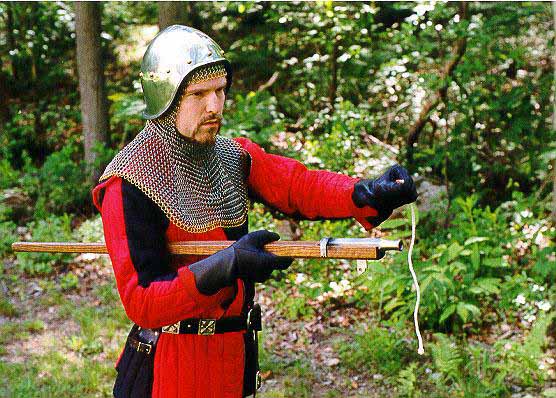
from this type of handgun. 
The earliest European handgonnes were generally of two types. You had the type that was basically a tube on a stick (the stick was called the tiller): 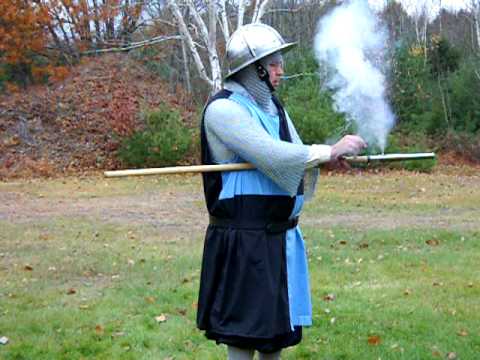

(This one had some firepower) 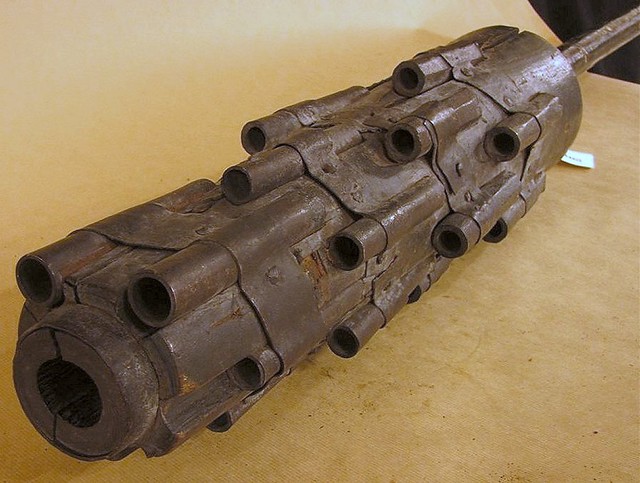
The other type had the barrel strapped to a larger, heftier tiller: 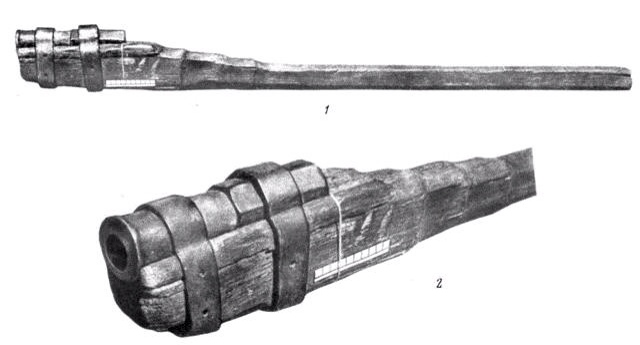
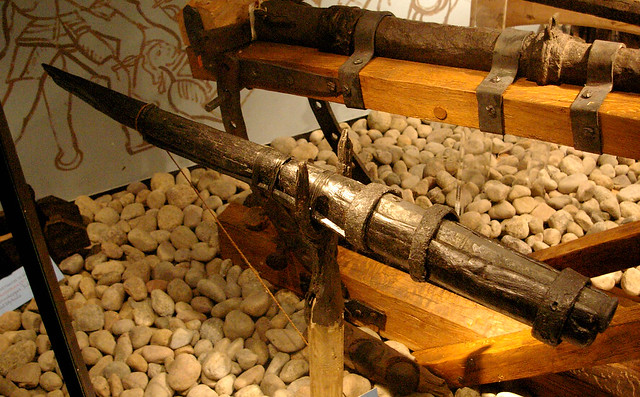
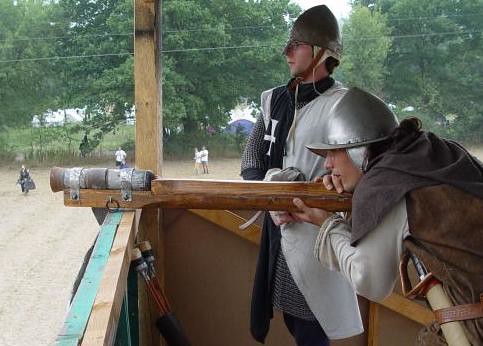

There was also the hackbut (from the earlier 'hackenbüsche', or hook gun). Both types of handgonnes were made this way. It had a hook on the bottom. When shooting over a barrier such as a shield or wall, the gonne was hooked over the top to kill the recoil. If the action got too close to continue reloading and shooting, you had a spiked war club. 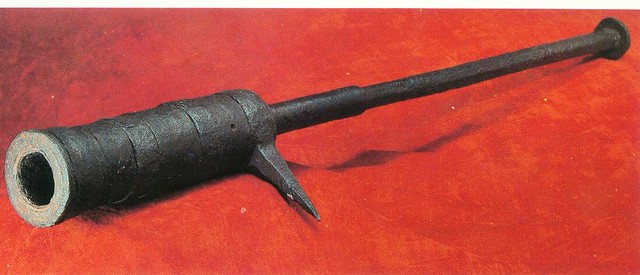

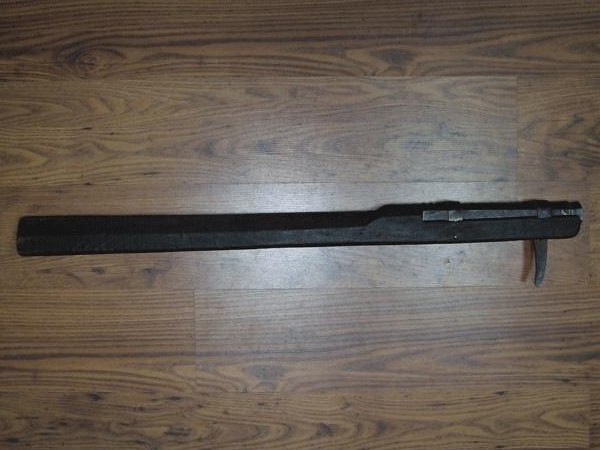
So let's get on with some shooting. The first one we have here is a very compact .50 caliber handgonne. Pretty short barrel, but it's a cool little shooter. I made a birch tiller for it. 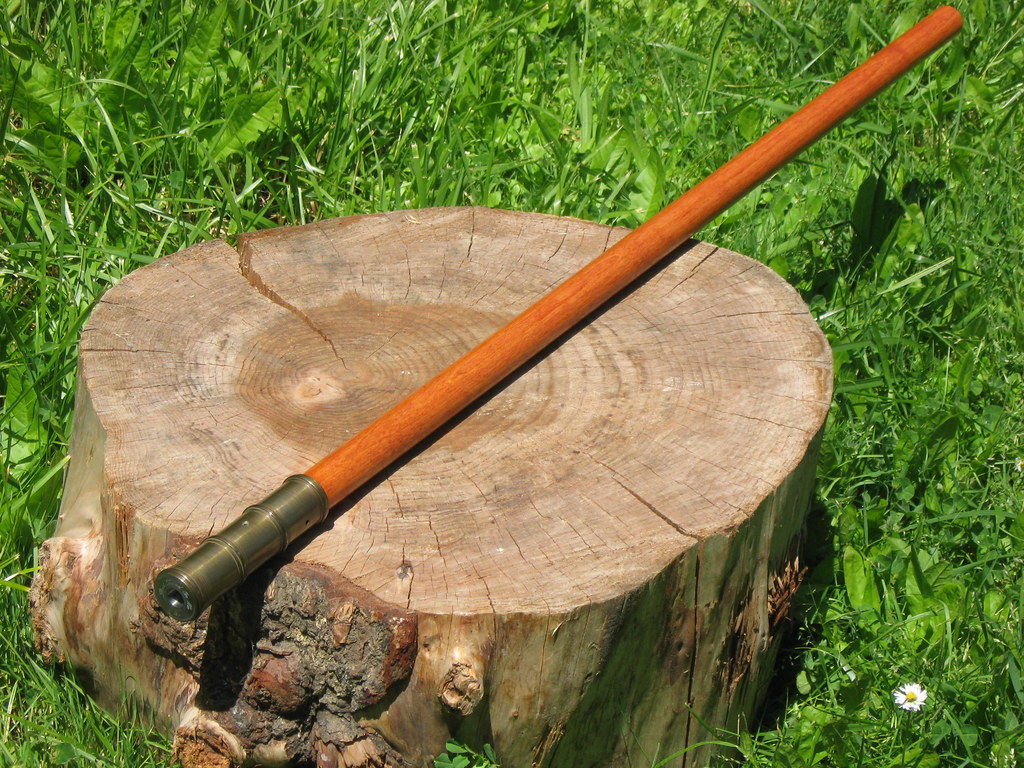
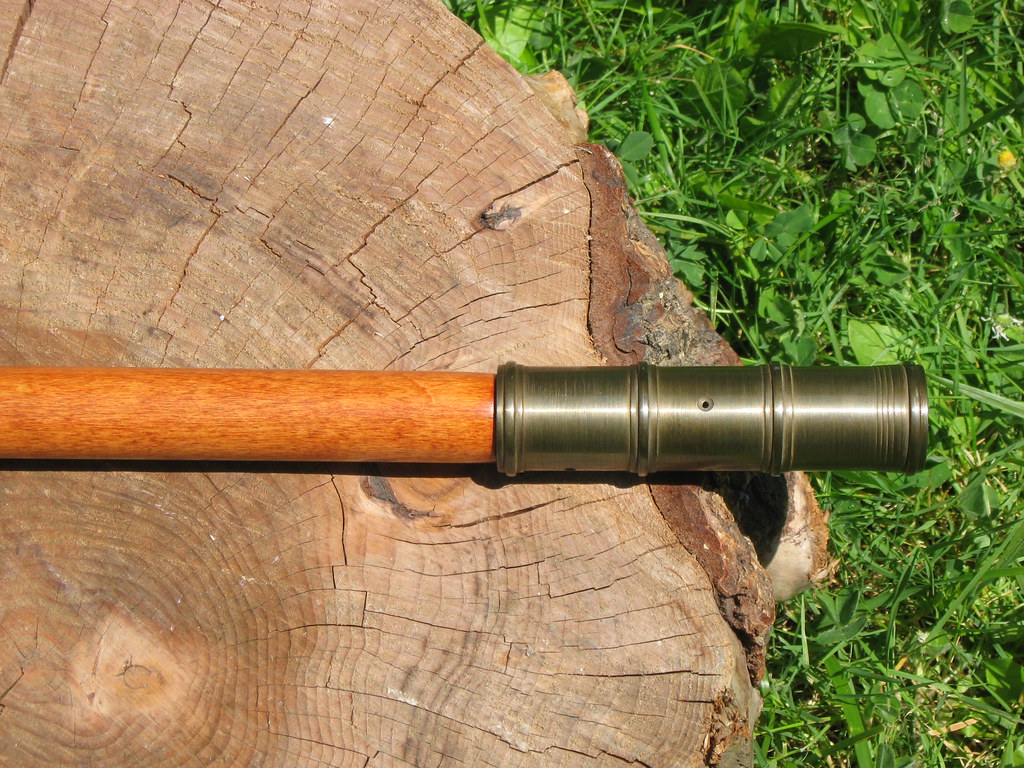
I call it the Gadsden Gonne. 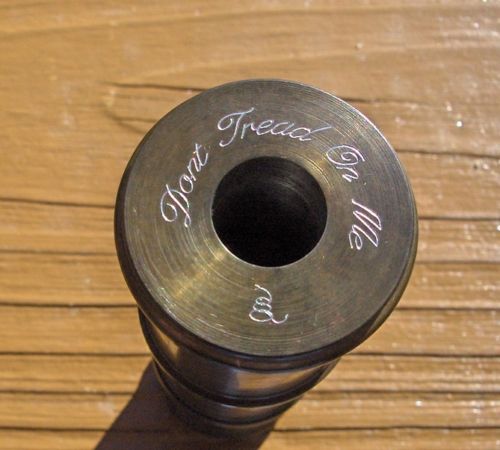
And here it is sending a ball downrange.
This one is the same as the Gadsden Gonne but without the engraving on the muzzle, and I painted it and gave it a more slender oak tiller. 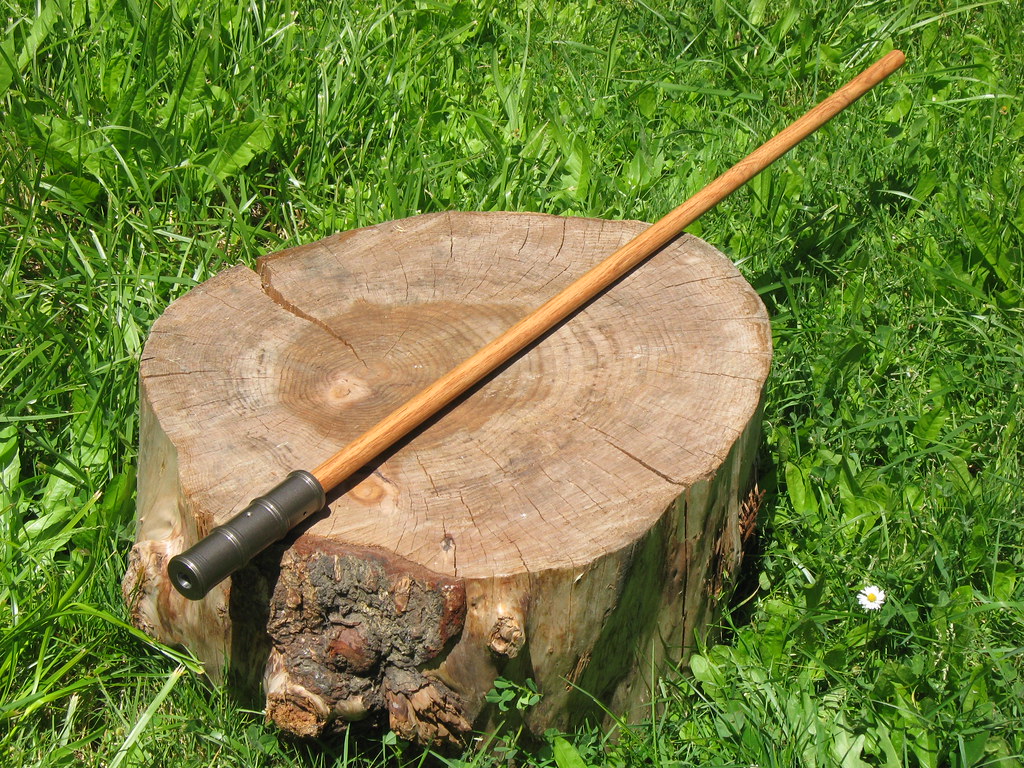
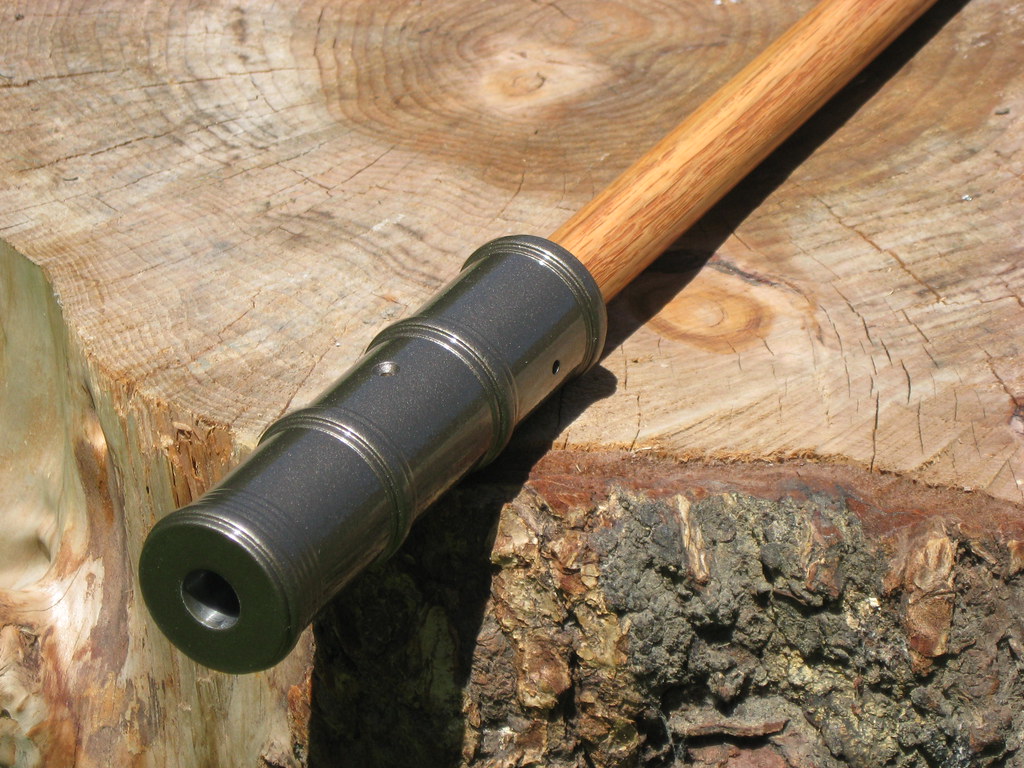
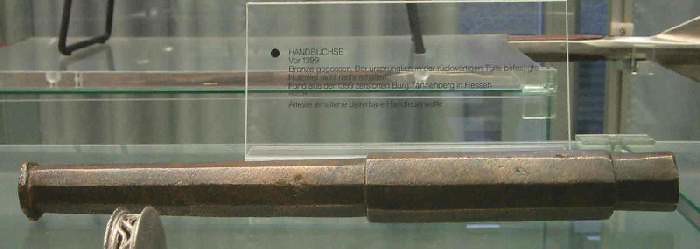
Next we have a very famous piece, the Tannenberg gonne. The Tannenberg gonne is a handgonne barrel currently sitting in a museum in Germany. It was found in the ruins of Tannenberg Castle during an archeological expedition in 1849. The castle was destroyed in 1399. We know the gonne was made sometime in the 1300s, but no one knows exactly when. It was cast in bronze and has a powder chamber behind the bore. It's also a little bit beat up at both ends. Here it is as it sits in the museum: 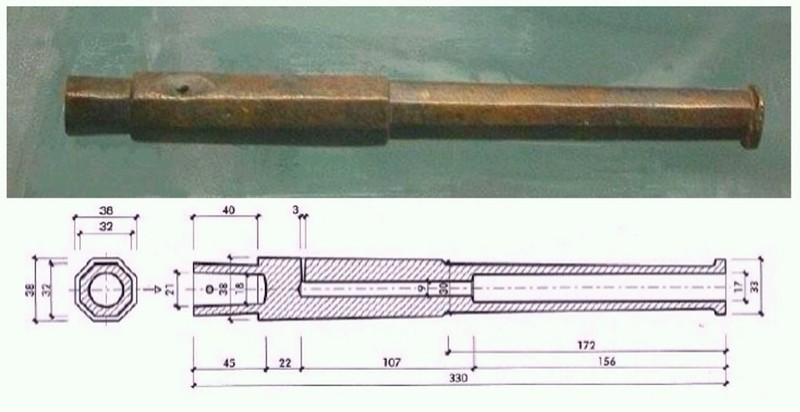
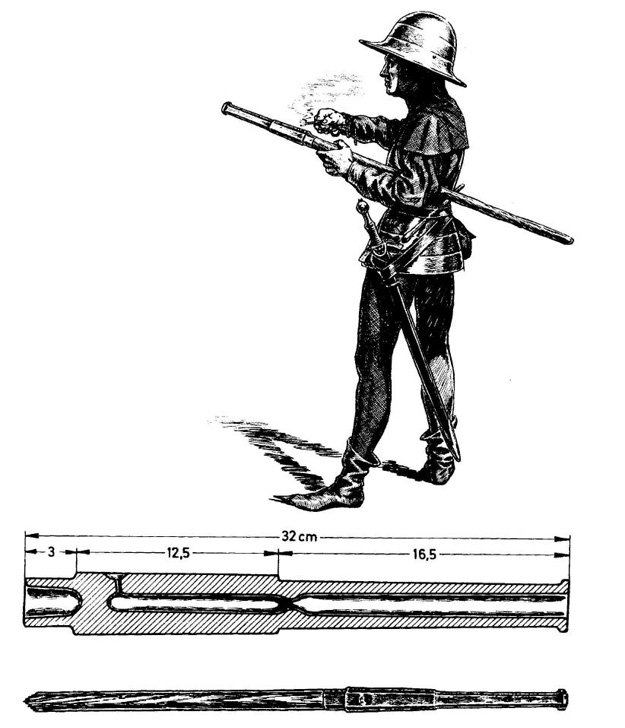
Mine is a functional exact replica of the Tannenberg gonne. I've seen some Tannenberg replicas made by individuals and they're very nice, but they're very modern. They took the measurements of the original and made a new one from steel. The lines are perfectly straight, smooth sides, perfectly machined socket and muzzle ends. Much nicer than the original ever was. Mine isn't like that; it's an exact copy. It was cast in bronze like the original. It has all the same unevenness and imperfections along the sides, the banged up muzzle and out-of-shape socket opening, it even has the exact same powder chamber design inside. It was sold by the American Historical Foundation, those guys who make the commemorative guns. 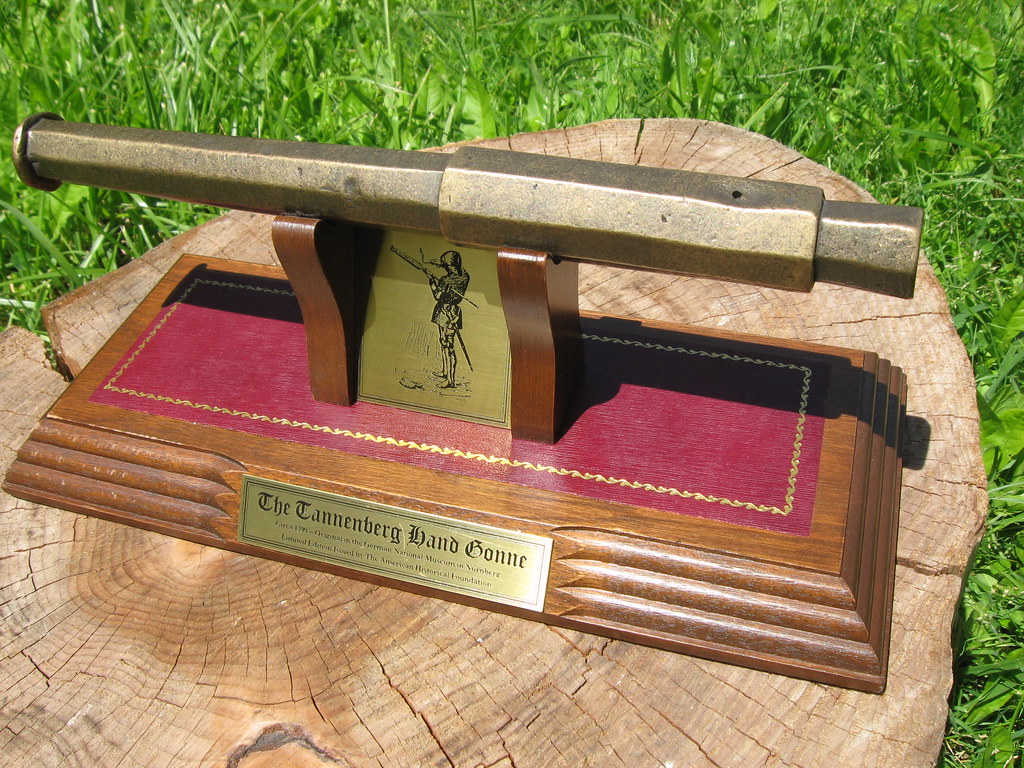
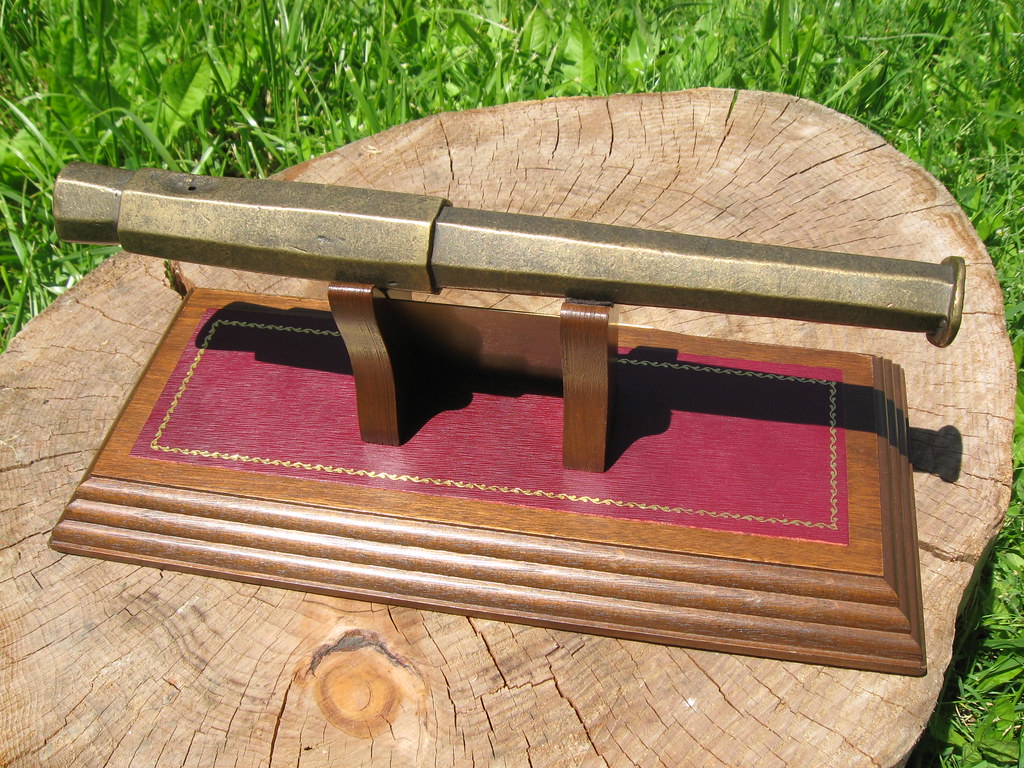
The socket, like the original, is bent out of shape a bit. 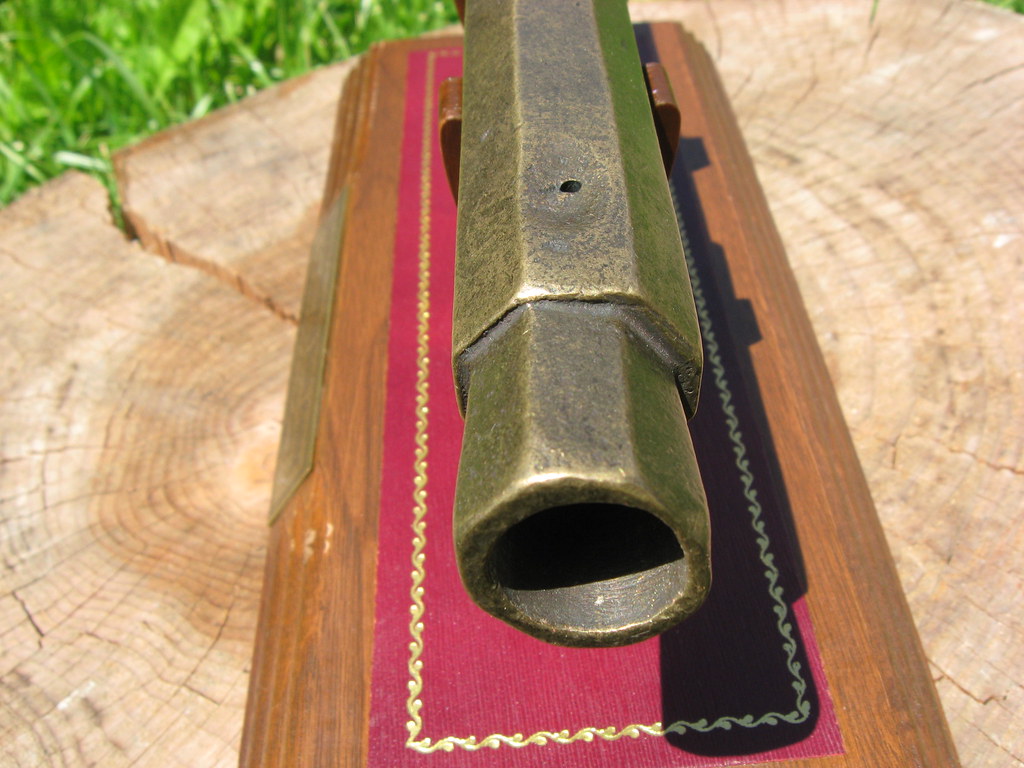
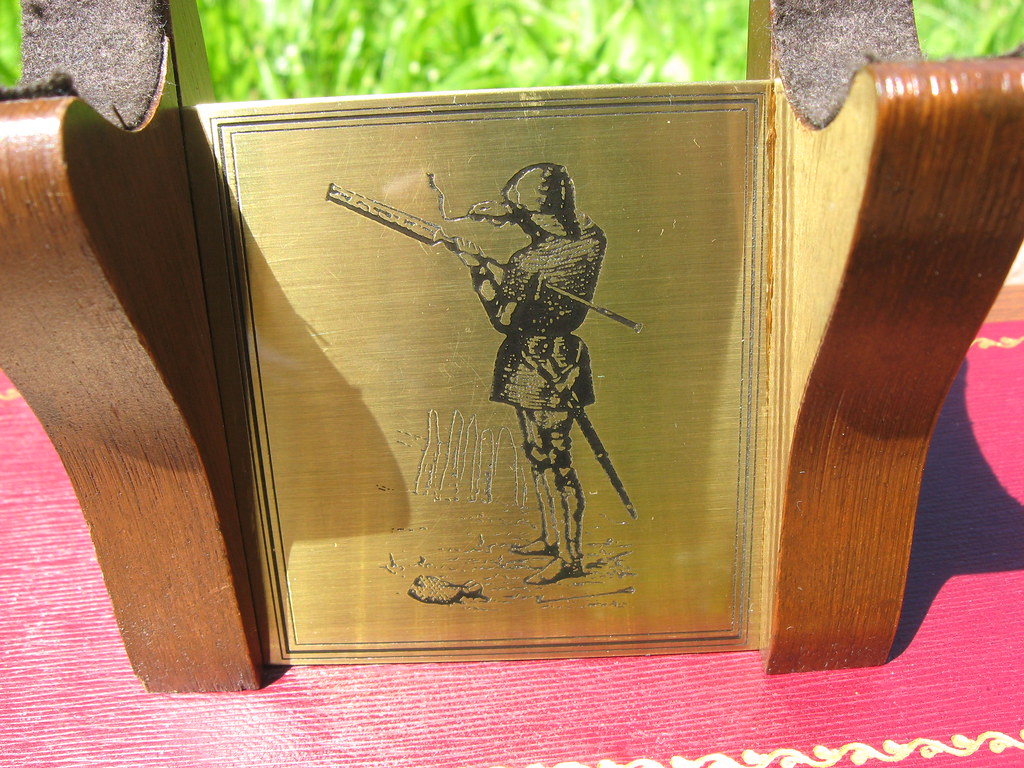
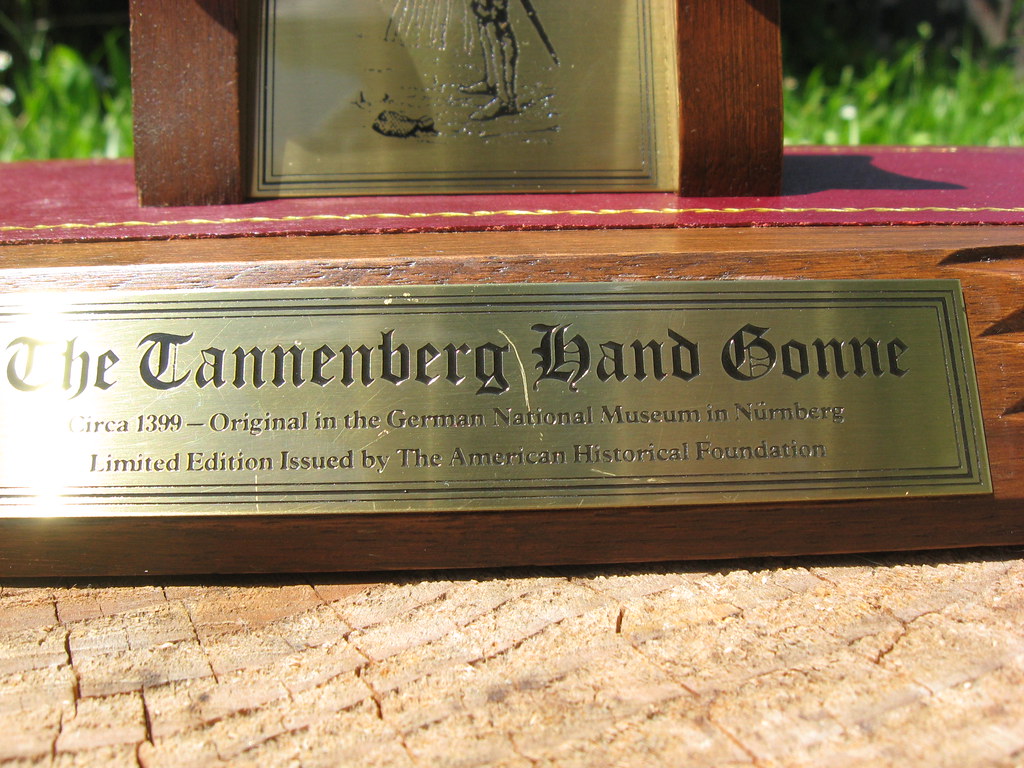
It was difficult to carve the peg on the end of the tiller to fit the socket because of it's funky shape. I was able to make it work, but due to the socket's being a bit warped, I wasn't able to get the barrel and the tiller lined up perfectly straight. But it's close enough, and it holds securely enough to work. I made the tiller from pine. 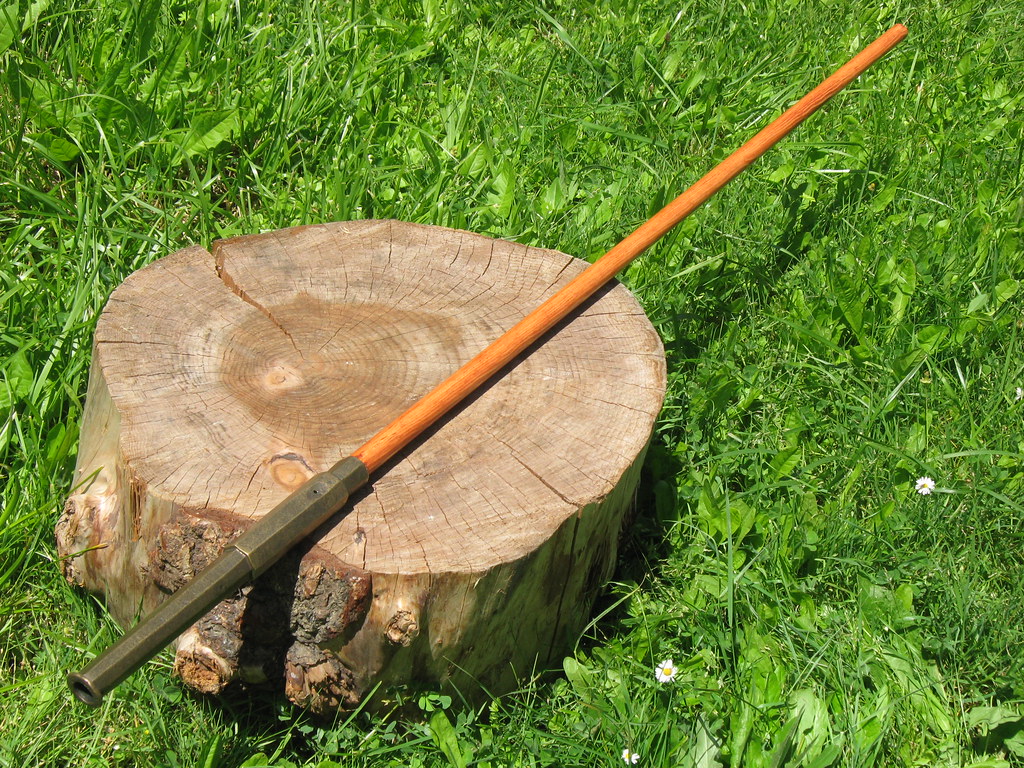
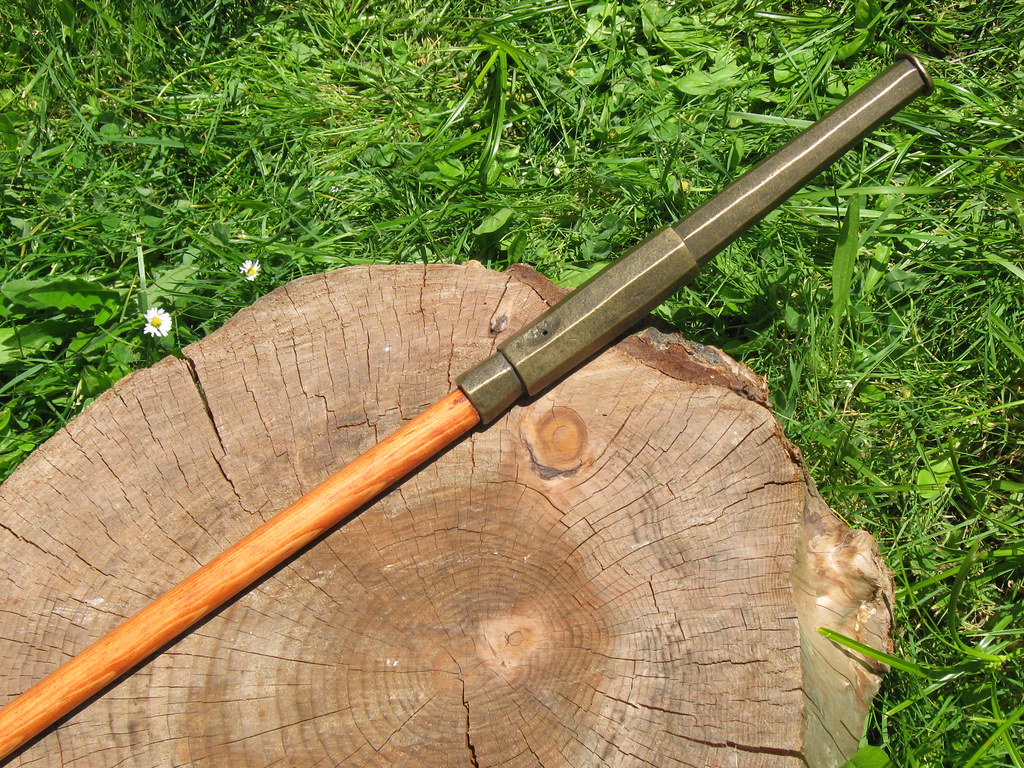
Here's where it gets interesting. The barrel was manufactured in Germany. There are some stamps on one of the lower flats. 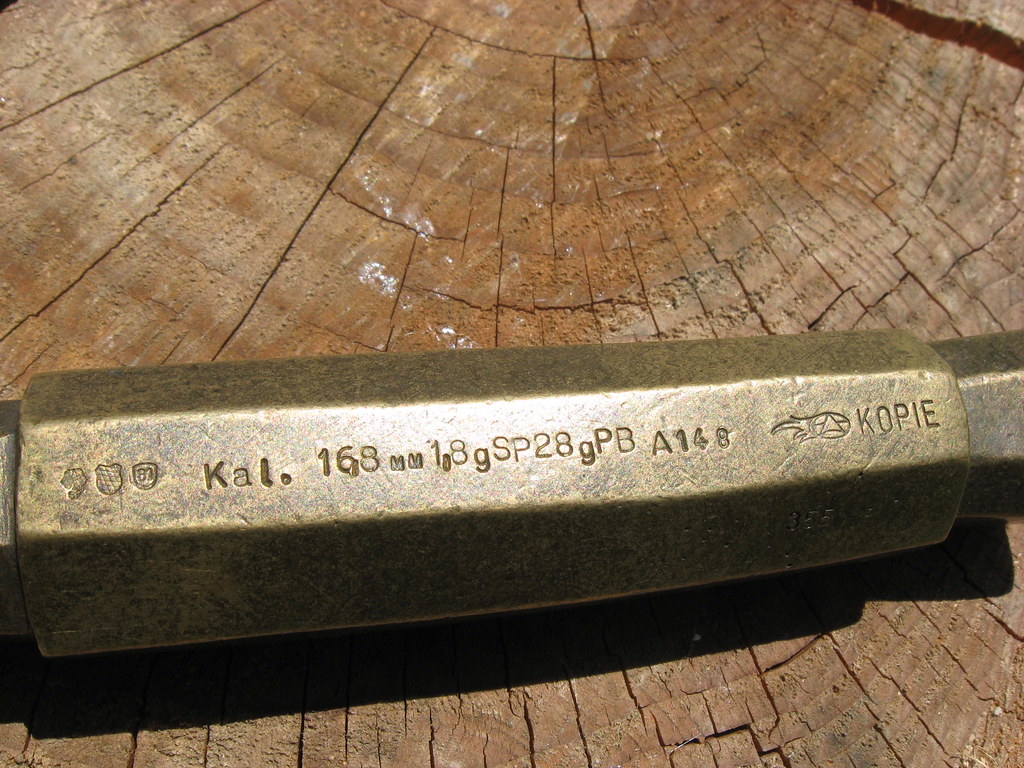
It shows what I think are proof marks, a manufacturer's mark, and the word 'copy' in German. The "kaliber" is stamped 16.8mm, which = .66 caliber, although it showed closer to .68 when I measured it. And there are a series of letters and numbers. With the help of google translate and doing some measurement conversions, I believe these give a recommended maximum load of 1.8 grams or 28 grains of blackpowder. A little experimenting with my powder measure shows the chamber holds 80 grains of powder when it's full. So how do we account for the discrepancy between the load stamped on it and how much powder the chamber holds? We have to look at the technology of the time. When this gonne was made (sometime in the 1300s), crumbled and corned powder hadn't been invented yet. They were still using a fine grained mixture called meal or serpentine powder, which burned with more of a sizzle than a boom. They had to use a bunch of it to get decent power out of their guns, more than we would need to use today with our modern blackpowder. A long slender chamber allowed them to use a good amount of their weaker (relatively speaking) powder while producing enough pressure to give that ball some oomph. I wouldn't doubt if the manufacturer erring on the side of safety was a factor as well. So the manufacturer of this replica recommends 28 grains of powder. I don't shoot this gonne frequently, and I don't feel like testing it to see how much the cast bronze barrel can take, so I go light on the load. I use just 25 grains to play it safe. That's not much for a ball that size, but with modern blackpowder it's enough to work. I filled the remaining space in the chamber with oatmeal (maple and brown sugar flavor; gimme a break, it was all I had in the cupboard) so there wouldn't be a big gap between the powder and the ball. It worked just fine. So the Tannenberg gonne comes back to life after more than six centuries, while delivering a breakfast of hot oatmeal to it's enemies. 
Next is a hackbut handgonne (also called an arquebus at this point). I've spent the last few weeks building this one and I just finished it a few days ago. I made the hook from a railroad spike. Overall length is 36". I made the tiller from cedar. It's kind of hard to tell in the pictures but the middle part of the tiller is more rectangular while the bottom of the tail end is rounded and tapers up a bit towards the end, to make a more comfortable grip. The top part at the front tapers down to a rounded end to match the barrel contour. This isn't meant to be a copy of any particular historical piece, it's just my own creation. 
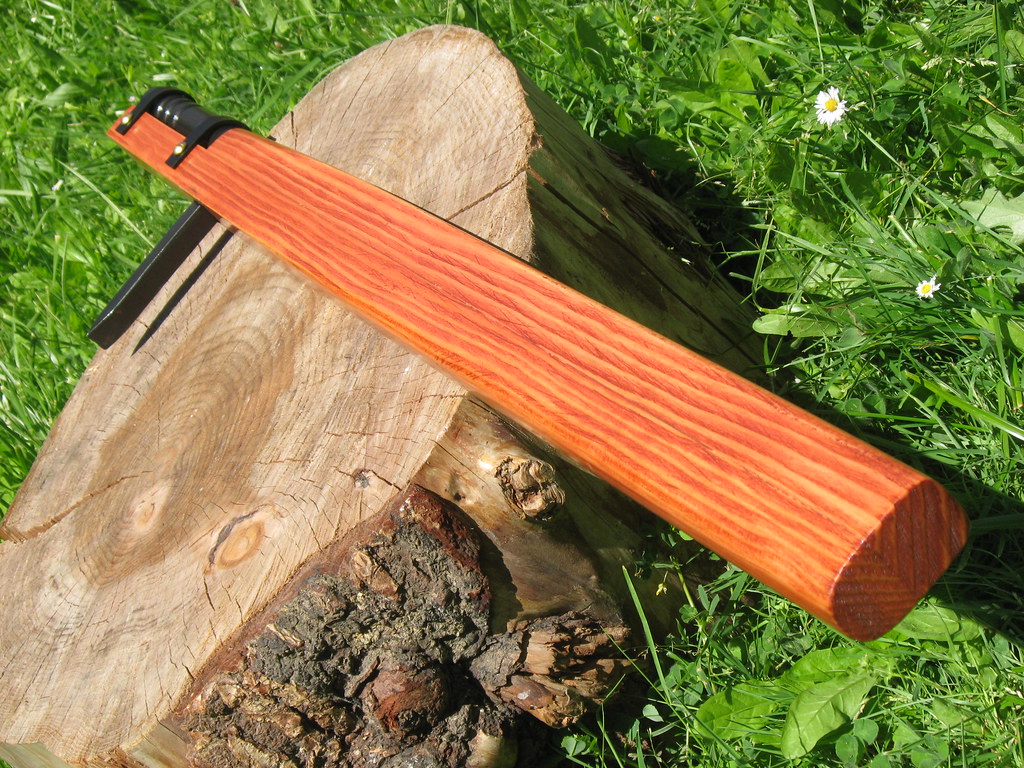
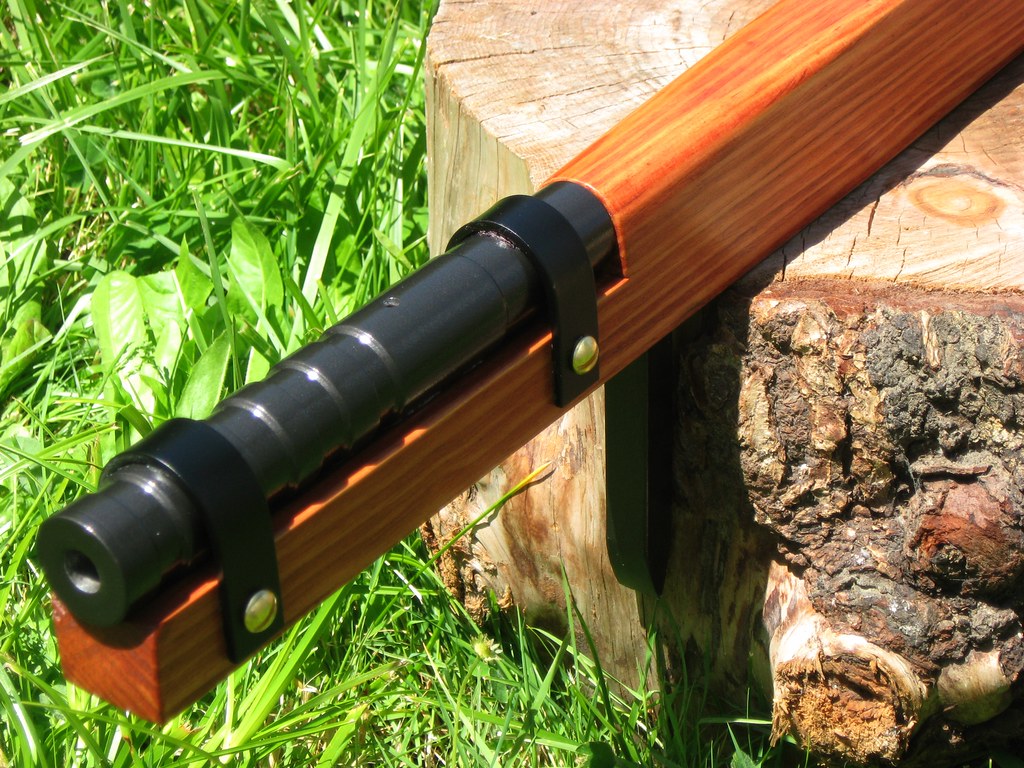
A couple of shots of yours truly holding it so you can get an idea of the size of it. 

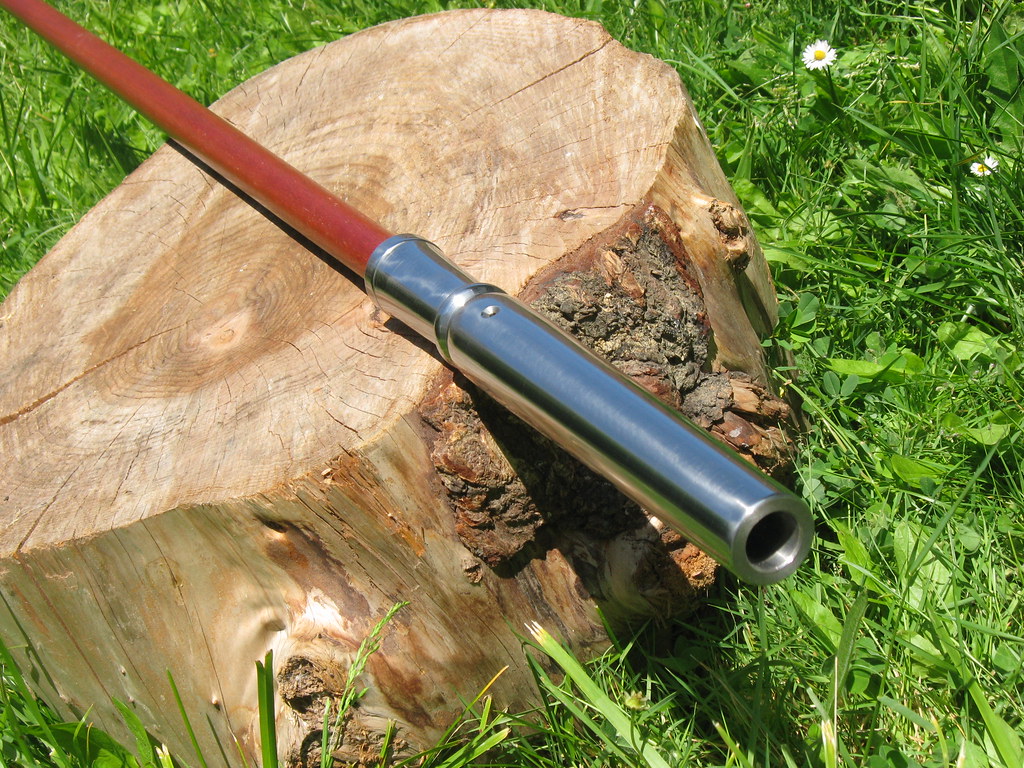
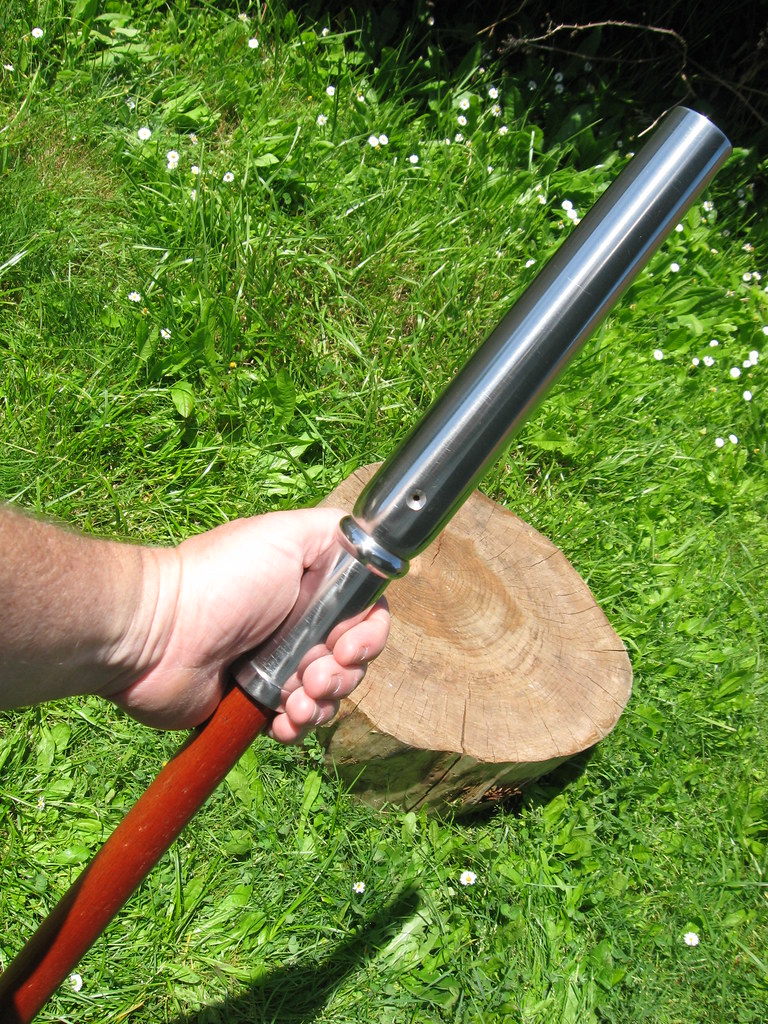
Now we move up to the big leagues. This one is a .75 handgonne. The tiller is ash, which was originally a staff that I bought in a martial arts store in China Town in Seattle. It was for my kids who were training in Tang Soo Do at the time, but it was too heavy for them, so I put it to good use as a boom stick. But I'll probably replace it; a large heavy barrel like this one needs a larger tiller. 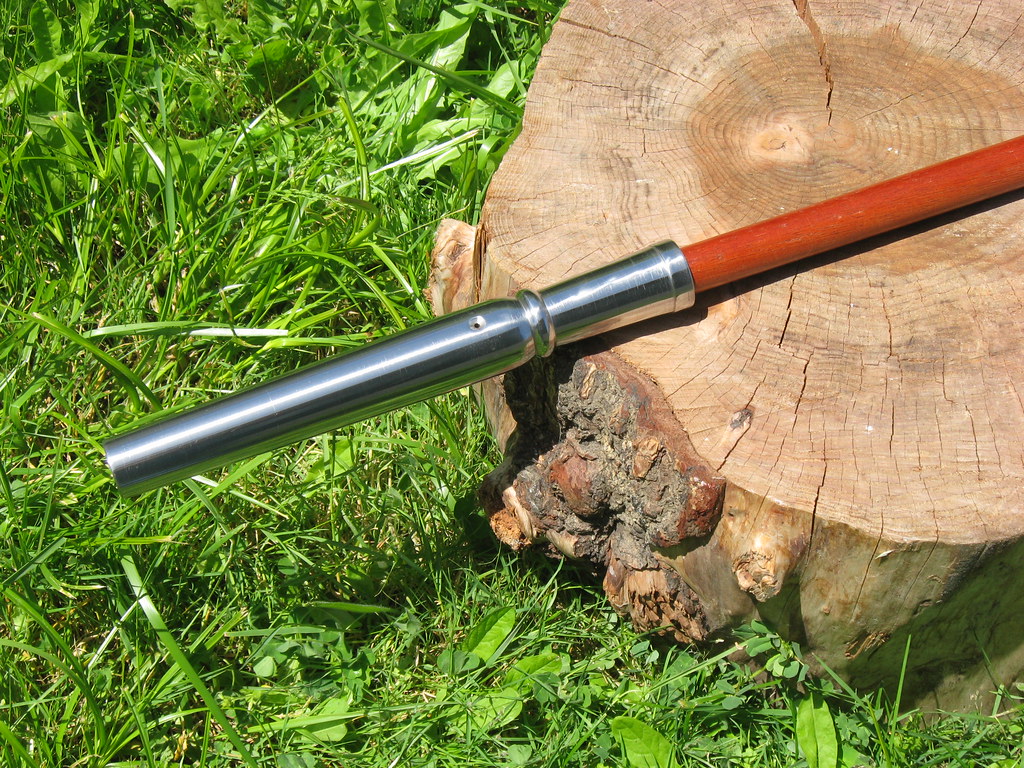

Now for something a little different. This illustration had a lot to do with it: 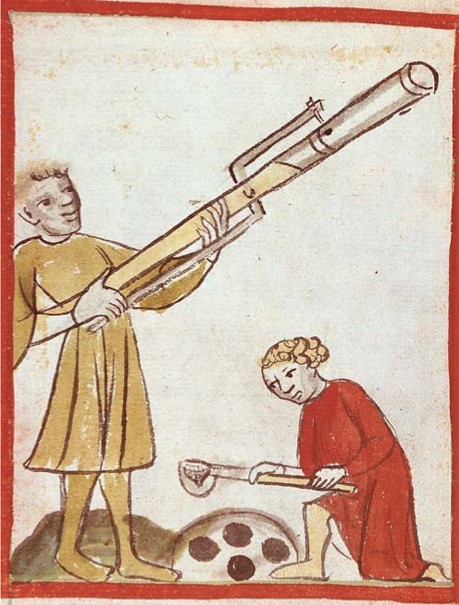
That picture is from a manuscript dated 1411. It's the earliest known illustration of any type of handheld firearm that uses a trigger mechanism. It's a very simple affair, just a long S-shaped (or serpentine) lever that pivots in the middle (either attached to the side of the tiller or running through a slot in the center of it; it was done both ways). One end has a piece of burning slowmatch clamped in it. Lift up on the bottom end of the lever to lower the match to the touch hole and boom. Very primitive, but it was the first trigger. Prior to that, ignition was provided by a separate means (applying a match or some other separate heat source by hand). This is my (loosely based) version of that serpentine matchlock gonne (although technically not a 'lock' as most people use the word today). It's .75 caliber; overall length is 74" (4" taller than I am). The tiller is hemlock. 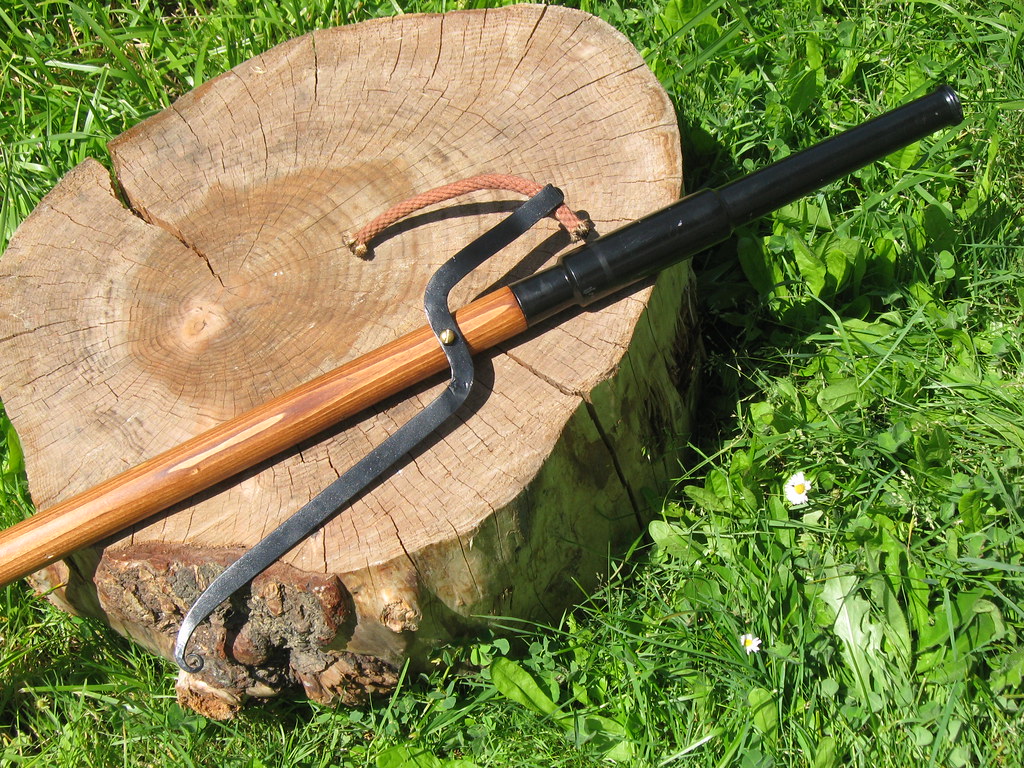

This gonne has already seen action in the hands of my two boys who proved to be very capable handgonners. They would have done well in the 15th century. 

Last is the arquebus. Sometime in the early 1400s, corned powder came along. It was more powerful and gave the handgonne a real boost. That's when barrels started getting longer as they realized it meant the ball hit harder and penetrated better. The tiller was also morphing into the shape we know today as the rifle stock. The early ones had no type of trigger at all, just the barrel and tiller, as seen here: 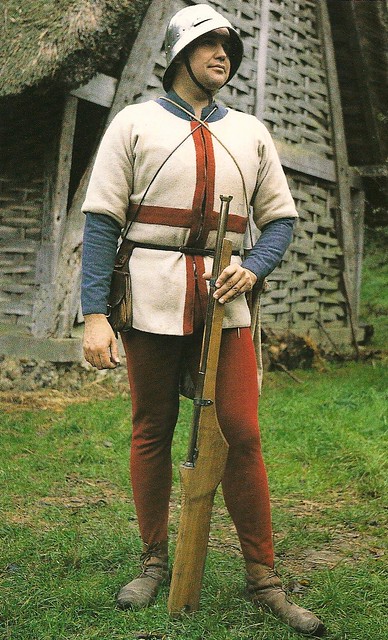
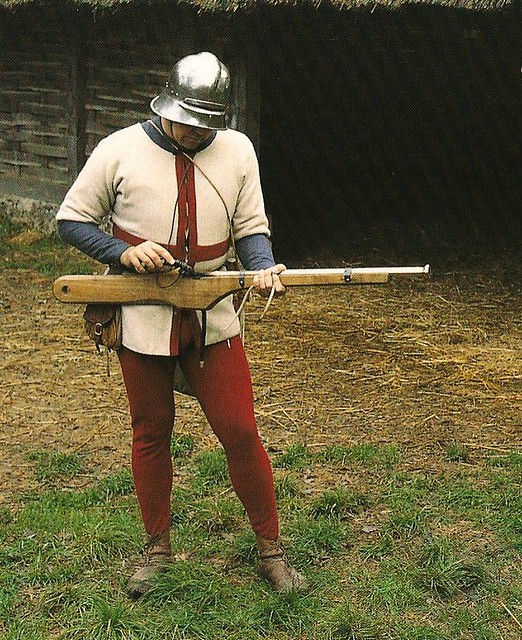
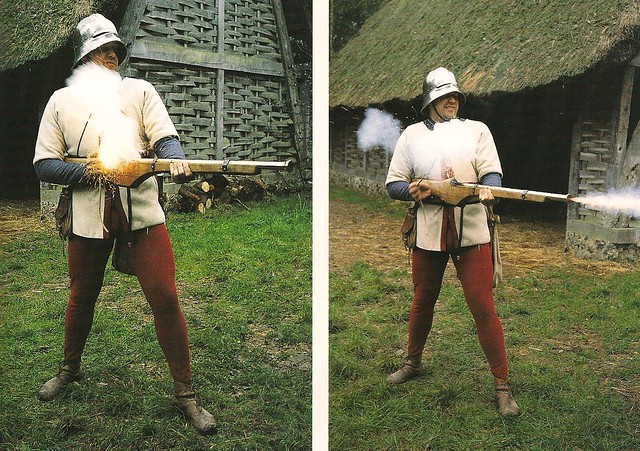
Others had a simple trigger lever as shown by the weapons used by these two arquebusiers: 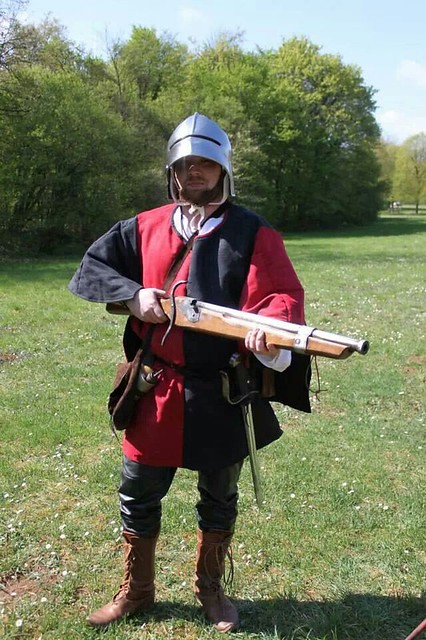

The simple ones with no trigger lever continued to be used for a time along with the ones that did have one. But eventually the simple serpentine lever had been replaced by a lock that connected the trigger and the dog (what the hammer was often called at the time) with a lever (called the sear) attached to the inside of a lock plate. This is the matchlock most people know of today. This whole transition period is when gonnes really started to look like what we know today as a gun. The arquebus was used extensively in war until it was later replaced by the larger and longer matchlock musket. A famous incident was the battle of Cerignola in 1503. The French and Spanish were duking it out. The Spanish used the layout of the terrain to their advantage and set up a good defensive position. The French cavalry attacked and found themselves slaughtered by the Spanish arquebusiers. Gunpowder in war was nothing new by then, but this was the first time the outcome of a major battle was decided by the use of handheld firearms. 
This is my .58 matchlock arquebus. 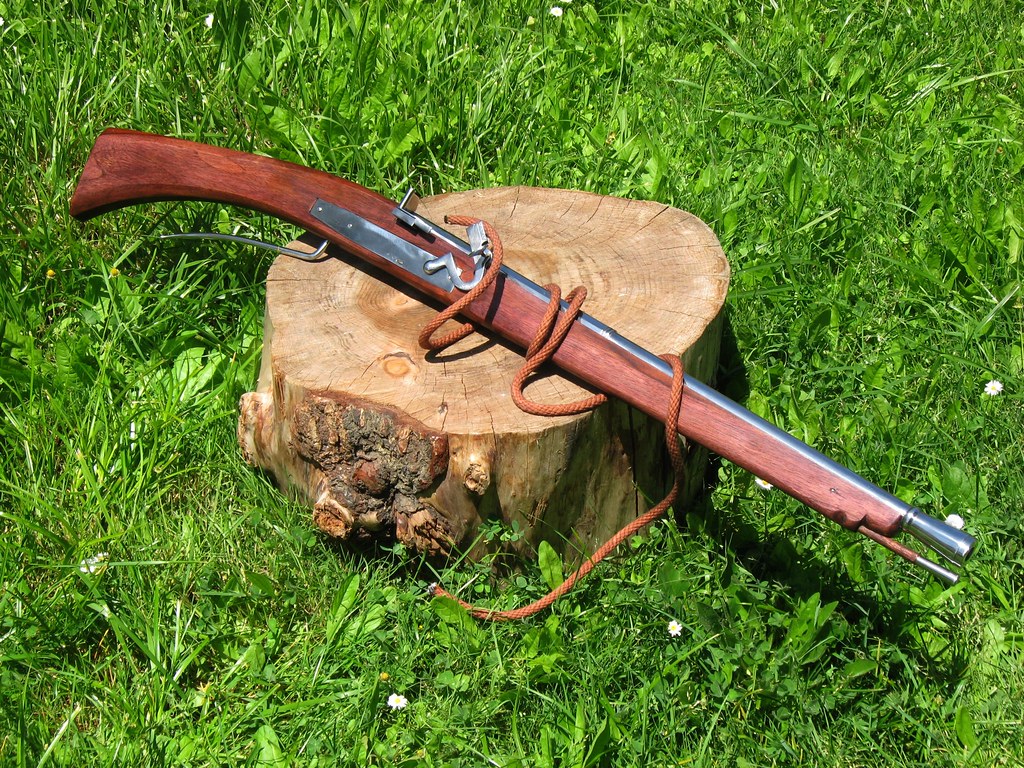
And this is the music it makes when it sings. 
So the handgonne has an important place in the history of guns. It led to the arquebus, the caliver, the musket, and other variations followed like the pistol, shotgun, rifle, etc. Every type of handheld firearm that we have today is descended from the handgonne. It was the original individual firearm that started it all. No gun collection is complete without one. 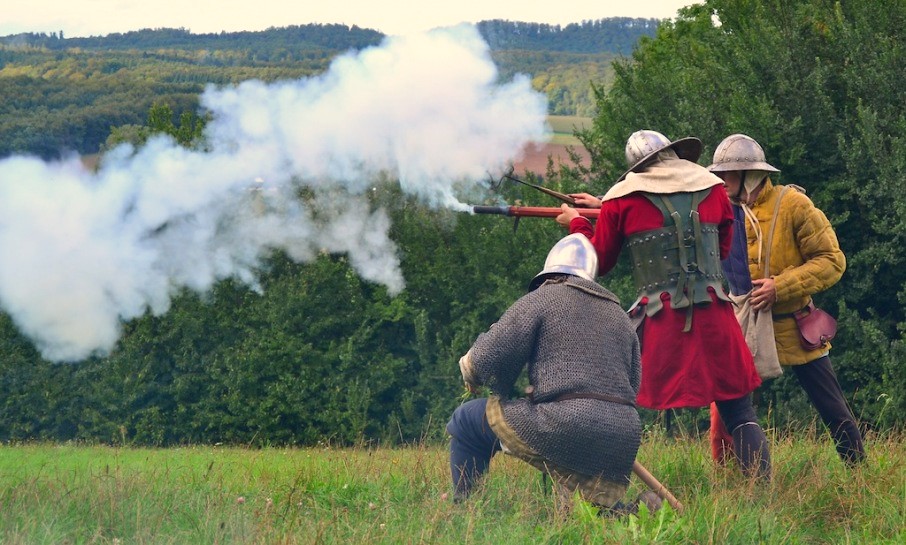
|
|
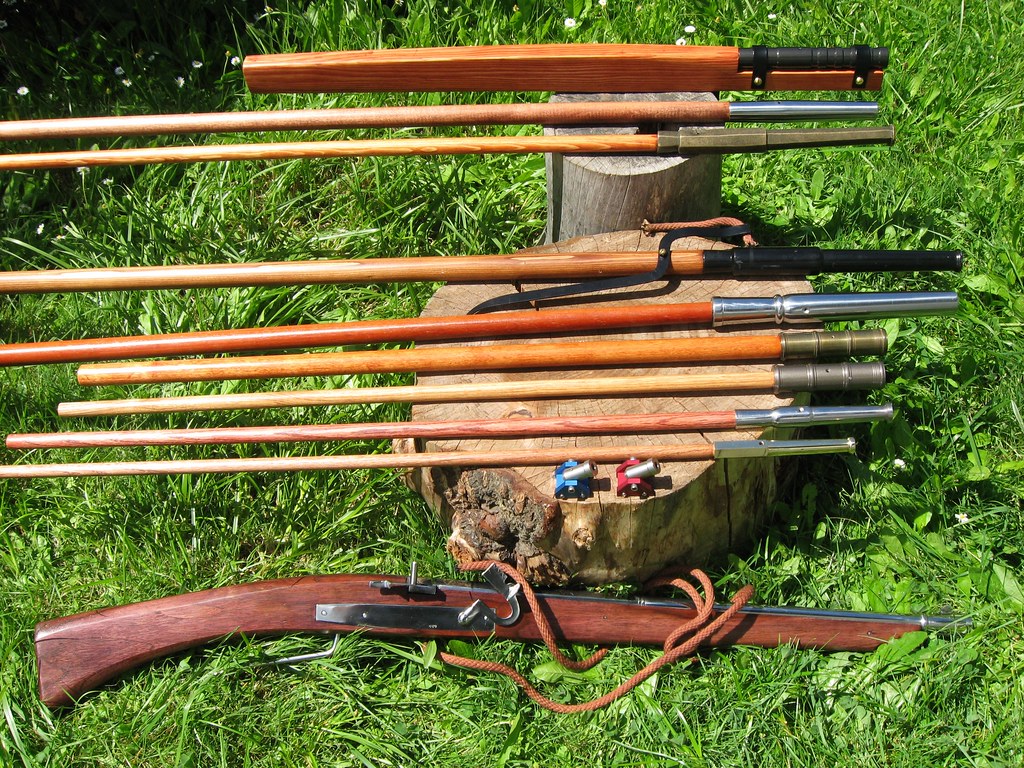
My full size .50 gonne, and it's little sister in .25.
A patched #4 buckshot pellet fits the bore nicely. It can also fire airsoft BBs. 

Seriously thinking of opening the .50 straight bore out to .58 bore w/ .50 powder chamber. The .25 actually has a .188 hemispherical powder chamber.
|
|
Quoted:
Tactical Handgonne? I feel a challenge . . . Quoted:
Quoted:
How well do they suppress and can I get one with picatinny rails? Tactical Handgonne? I feel a challenge . . . Dude, yes. Thread the muzzle for a flash hider, mount a few picatinny rails, a single point sling, and a laser sight. A pistol grip on the tiller would work well, too. Maybe mount some of those 45 degree back up sights along the barrel. 
|


|
Quoted:
Something different, Thundermug! 1" bore, 7" deep. Big throaty roar with one ounce (438 gr) of 1F . . . http://www.fototime.com/C3783059CE8B691/large.jpg That's a signal cannon right? |


|
Quoted:
That's a signal cannon right? Quoted:
Quoted:
Something different, Thundermug! 1" bore, 7" deep. Big throaty roar with one ounce (438 gr) of 1F . . . http://www.fototime.com/C3783059CE8B691/large.jpg That's a signal cannon right? Yes. Signalling device. Unless of couse you plan on shooting 1/4 pound lead balls straight up into the air and ducking for cover . . .
|

|
Quoted:
These are called handgonne because a lot of blokes ended up with a hand gone. True story. Quoted:
These are called handgonne because a lot of blokes ended up with a hand gone. True story. lulz Quoted:
Best post I've read in a long time, even if it was educational. Thanks for your time and effort. lol Sorry. Next time I'll try to dumb it down so you lose a few I.Q. points while you read it. 
|
|
Quoted:
lulz lol Sorry. Next time I'll try to dumb it down so you lose a few I.Q. points while you read it.
Quoted:
Quoted:
These are called handgonne because a lot of blokes ended up with a hand gone. True story. lulz Quoted:
Best post I've read in a long time, even if it was educational. Thanks for your time and effort. lol Sorry. Next time I'll try to dumb it down so you lose a few I.Q. points while you read it.
Don't worry, we have the tail end of a Presidential election cycle to do that for you! |