


[ARCHIVED THREAD] - Gas Planets (Page 1 of 3)
Posted: 3/5/2016 1:02:52 PM EDT
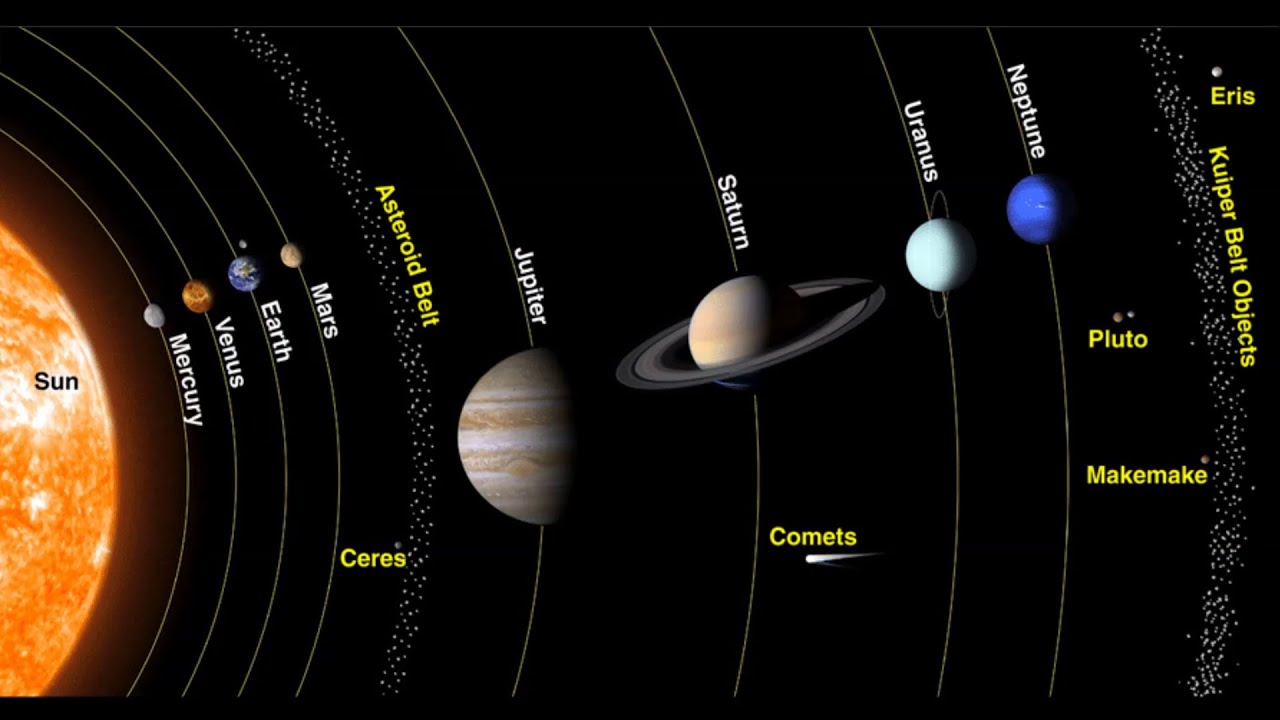
It just occurred to me that their existence is odd. I've always though of space a rather void. Yet their is enough gaseous material out there to form a planet, LARGE planets. Fine, I was wrong. But I would have thought with the vast and randomness of the gas molecules in the void of space, the gas planets would have been a little more similar in their composition. Maybe the suns energy burns off or helps convert gasses to other forms at different distances.

|
|
It wasn't a void so much when the solar system formed.
Our system was likely birthed in a gas dense nebula. Where a massive object started accreting gas and became the sun. Jupiter formed in the accretion whirlpool and attained an orbit around the new sun. Jupiter's composition is 90% hydrogen / 10% helium and the sun is 91% hydrogen / 9% helium so we can assume they both formed from the same cloud. Not sure about the others. They could have been captured from a passing system or formed later on in the solar system's evolution. |
|
They are the same as a star, just not massive enough to conduct fusion in the core or produce energy that way.
God created them in order to protect Earth, without the gas giants clearing the solar system of debris and shepherding the "asteroid belt" earth would be inhabitable. |

|
Funny how small we are in the grand scheme of things. |
|
Quoted:
It wasn't a void so much when the solar system formed. Our system was likely birthed in a gas dense nebula. Where a massive object started accreting gas and became the sun. Jupiter formed in the accretion whirlpool and attained an orbit around the new sun. Jupiter's composition is 90% hydrogen / 10% helium and the sun is 91% hydrogen / 9% helium so we can assume they both formed from the same cloud. Not sure about the others. They could have been captured from a passing system or formed later on in the solar system's evolution. Looked at compositions before posting, but did not compare them to the sun. Interesting. |
|
That looks cold. |
|
Quoted:
Funny how small we are in the grand scheme of things. Quoted:
Funny how small we are in the grand scheme of things. Completely insignificant. We could all vanish tomorrow and the universe would not care, or even know. Which is why everyone with all their micro aggressed bullshit are retarded. |
|
Quoted:
They are the same as a star, just not massive enough to conduct fusion in the core or produce energy that way. God created them in order to protect Earth, without the gas giants clearing the solar system of debris and shepherding the "asteroid belt" earth would be inhabitable. ??????????? |
|
Quoted:
Funny how small we are in the grand scheme of things. Quoted:
Funny how small we are in the grand scheme of things. Like beyond microscopic. |
|
Quoted:
??????????? Quoted:
Quoted:
They are the same as a star, just not massive enough to conduct fusion in the core or produce energy that way. God created them in order to protect Earth, without the gas giants clearing the solar system of debris and shepherding the "asteroid belt" earth would be inhabitable. ??????????? Slept through junior high science class? |
|
Quoted:
They are the same as a star, just not massive enough to conduct fusion in the core or produce energy that way. God created them in order to protect Earth, without the gas giants clearing the solar system of debris and shepherding the "asteroid belt" earth would be inhabitable. You are awesome!!! You go from zero to derp in 2.5 posts. |
|
Quoted:
You are awesome!!! You go from zero to derp in 2.5 posts. Quoted:
Quoted:
They are the same as a star, just not massive enough to conduct fusion in the core or produce energy that way. God created them in order to protect Earth, without the gas giants clearing the solar system of debris and shepherding the "asteroid belt" earth would be inhabitable. You are awesome!!! You go from zero to derp in 2.5 posts. the gas planets are composed of hydrogen with metallic hydrogen in the middle. Add more mass of hydrogen to Jupiter and get enough for fusion, and you'd have a double star system. It's also common knowledge that the mass of Jupiter protects the earth from debris and keeps the asteroid belt corralled. This is basic stuff you could learn in junior high science class. 
|
|
Quoted:
the gas planets are composed of hydrogen with metallic hydrogen in the middle. Add more mass of hydrogen to Jupiter and get enough for fusion, and you'd have a double star system. It's also common knowledge that the mass of Jupiter protects the earth from debris and keeps the asteroid belt corralled. This is basic stuff you could learn in junior high science class.
Quoted:
Quoted:
Quoted:
They are the same as a star, just not massive enough to conduct fusion in the core or produce energy that way. God created them in order to protect Earth, without the gas giants clearing the solar system of debris and shepherding the "asteroid belt" earth would be inhabitable. You are awesome!!! You go from zero to derp in 2.5 posts. the gas planets are composed of hydrogen with metallic hydrogen in the middle. Add more mass of hydrogen to Jupiter and get enough for fusion, and you'd have a double star system. It's also common knowledge that the mass of Jupiter protects the earth from debris and keeps the asteroid belt corralled. This is basic stuff you could learn in junior high science class.
I don't question the protection they provide. But if God created the gas giants to protect us, then why create the theat in the first place. |
|
Interestingly, Neptune is pretty anomalous. Puzzled astronomers for a long time how it could be the size it is but have such a long, slow orbit. The going theory now is that it formed closer in, then a close encounter slung it further out on the disc, where it also messed with a lot of Kuiper Belt objects, causing the late heavy bombardment. |
|
Quoted:
I don't question the protection they provide. But if God created the gas giants to protect us, then why create the theat in the first place. Quoted:
Quoted:
Quoted:
Quoted:
They are the same as a star, just not massive enough to conduct fusion in the core or produce energy that way. God created them in order to protect Earth, without the gas giants clearing the solar system of debris and shepherding the "asteroid belt" earth would be inhabitable. You are awesome!!! You go from zero to derp in 2.5 posts. the gas planets are composed of hydrogen with metallic hydrogen in the middle. Add more mass of hydrogen to Jupiter and get enough for fusion, and you'd have a double star system. It's also common knowledge that the mass of Jupiter protects the earth from debris and keeps the asteroid belt corralled. This is basic stuff you could learn in junior high science class.
I don't question the protection they provide. But if God created the gas giants to protect us, then why create the theat in the first place. "Why did they put suspension on cars when they could have just made the roads perfectly flat?" |
|
Quoted:
"Why did they put suspension on cars when they could have just made the roads perfectly flat?" Quoted:
Quoted:
Quoted:
Quoted:
Quoted:
They are the same as a star, just not massive enough to conduct fusion in the core or produce energy that way. God created them in order to protect Earth, without the gas giants clearing the solar system of debris and shepherding the "asteroid belt" earth would be inhabitable. You are awesome!!! You go from zero to derp in 2.5 posts. the gas planets are composed of hydrogen with metallic hydrogen in the middle. Add more mass of hydrogen to Jupiter and get enough for fusion, and you'd have a double star system. It's also common knowledge that the mass of Jupiter protects the earth from debris and keeps the asteroid belt corralled. This is basic stuff you could learn in junior high science class.
I don't question the protection they provide. But if God created the gas giants to protect us, then why create the theat in the first place. "Why did they put suspension on cars when they could have just made the roads perfectly flat?" 
|
|
Quoted:
"Why did they put suspension on cars when they could have just made the roads perfectly flat?" Quoted:
Quoted:
Quoted:
Quoted:
Quoted:
They are the same as a star, just not massive enough to conduct fusion in the core or produce energy that way. God created them in order to protect Earth, without the gas giants clearing the solar system of debris and shepherding the "asteroid belt" earth would be inhabitable. You are awesome!!! You go from zero to derp in 2.5 posts. the gas planets are composed of hydrogen with metallic hydrogen in the middle. Add more mass of hydrogen to Jupiter and get enough for fusion, and you'd have a double star system. It's also common knowledge that the mass of Jupiter protects the earth from debris and keeps the asteroid belt corralled. This is basic stuff you could learn in junior high science class.
I don't question the protection they provide. But if God created the gas giants to protect us, then why create the theat in the first place. "Why did they put suspension on cars when they could have just made the roads perfectly flat?" He is referring to God and the creation of the universe, not man and his adaptation to the natural environment. |
|
Quoted: Quoted: Quoted: Quoted: Quoted: It's also common knowledge that the mass of Jupiter protects the earth from debris and keeps the asteroid belt corralled. This is basic stuff you could learn in junior high science class. I don't question the protection they provide. But if God created the gas giants to protect us, then why create the theat in the first place. "Why did they put suspension on cars when they could have just made the roads perfectly flat?" |
|
Quoted:
I've always though of space a rather void. I'm going to take you off on a tangent. If we use our intuition, we would believe space is a void, however we now know that even completely empty space is not just nothing it is a something. It is a thing. It is something with definite characteristics. We don't exactly know what it is, but it is something. It is something that can be bent, twisted, contracted and expanded with extremely accurate and predictable results. The Earth as it moves through space, not only warps the space around it by that movement, the Earth's rotation twists the space as well. It is like sitting a basketball on a trampoline and the ball being so sticky and the trampoline pliable enough that if you twisted the basketball, the trampoline around the ball twists with the basketball. Of course this happens in a 3 dimensional world instead of a 2 like a trampoline. Really interesting stuff. 
|
|
The local area around the solar system, and the solar system itself, are only as empty as they are BECAUSE the solar system, and likely a few other systems, formed from the enormous cloud of dust and gas that inhabited this region before it collapsed under the shared gravity. |
| Something I read about, that I thought was neat, is that its fairly common for gas giants to form closer to the sun. Astronomers have found a solar system with a gas giant that's really close to the sun, like Mercury close, or closer, and the bastards on fire because of its proximity to its sun. So that Solar system basically has a giant fire planet rotating around. Thats pretty cool. |
|
Quoted: Well, ain't this bizarro-world ... mdk is making sound scientific points and gets pounced upon in the Primate House. Crazy world.  |
|
Quoted:
That the mass of the gas planets, and Jupiter in particular, somewhat shield Earth is a sound scientific point. Saying that Jupiter was placed there by God specifically to act as a shield for the Earth is not. Quoted:
Quoted:
Well, ain't this bizarro-world ... mdk is making sound scientific points and gets pounced upon in the Primate House. Crazy world. But roads. |
|
Quoted: Something I read about, that I thought was neat, is that its fairly common for gas giants to form closer to the sun. Astronomers have found a solar system with a gas giant that's really close to the sun, like Mercury close, or closer, and the bastards on fire because of its proximity to its sun. So that Solar system basically has a giant fire planet rotating around. Thats pretty cool. It's also worth noting that the most commonly used methods for finding exoplanets are inherently biased toward finding very large planets, quite close to their stars. |
|
Quoted:
Well, ain't this bizarro-world ... mdk is making sound scientific points and gets pounced upon in the Primate House. Crazy world. Lol I was reading and saw it was mdk and had to scratch my head because he actually made sense except for the whole God protecting us bit. With out Jupiter we would be in a very different circumstance. |
|
Quoted: "Why did they put suspension on cars when they could have just made the roads perfectly flat?" Quoted: Quoted: Quoted: Quoted: Quoted: They are the same as a star, just not massive enough to conduct fusion in the core or produce energy that way. God created them in order to protect Earth, without the gas giants clearing the solar system of debris and shepherding the "asteroid belt" earth would be inhabitable. You are awesome!!! You go from zero to derp in 2.5 posts. the gas planets are composed of hydrogen with metallic hydrogen in the middle. Add more mass of hydrogen to Jupiter and get enough for fusion, and you'd have a double star system. It's also common knowledge that the mass of Jupiter protects the earth from debris and keeps the asteroid belt corralled. This is basic stuff you could learn in junior high science class. I don't question the protection they provide. But if God created the gas giants to protect us, then why create the theat in the first place. "Why did they put suspension on cars when they could have just made the roads perfectly flat?" Because man, who builds cars and roads, isn't claimed to be infallible and omnipotent. |
|
Quoted:
"Hot Jupiters" have been found, but the best theories going are that they formed farther out and an encounter similar to what happened to Neptune caused them to migrate inward later in their "lives". It's also worth noting that the most commonly used methods for finding exoplanets are inherently biased toward finding very large planets, quite close to their stars. Quoted:
Quoted:
Something I read about, that I thought was neat, is that its fairly common for gas giants to form closer to the sun. Astronomers have found a solar system with a gas giant that's really close to the sun, like Mercury close, or closer, and the bastards on fire because of its proximity to its sun. So that Solar system basically has a giant fire planet rotating around. Thats pretty cool. It's also worth noting that the most commonly used methods for finding exoplanets are inherently biased toward finding very large planets, quite close to their stars. As I recall, which could be wrong since it was a while back, they found enough gas giants closer in to their sun that they were thinking that they were incorrect in their theories about how solar systems formed, or at least there were different models they hadn't accounted for or thought of. That it seemed that gas giants being closer to the sun was pretty commonplace. |
|
Quoted: What blows my mind, is how tiny a planck measure is and how ginormous the Graham's number is. I can't reconcile these two. Where am I in between them. Quoted: Quoted: If that blows your mind you should see how big stars can get. What blows my mind, is how tiny a planck measure is and how ginormous the Graham's number is. I can't reconcile these two. Where am I in between them. http://htwins.net/scale2/ |
|
Jupiter may protect us now, but it acted as a Planned Parenthood for whatever the mangled fetus of the asteroid belt would have been...
Which doesn't make since if it was placed there by god to protect us... unless maybe the planet the asteroid belt would have made was the devil! :o Posted Via AR15.Com Mobile |
|
Quoted:
That the mass of the gas planets, and Jupiter in particular, somewhat shield Earth is a sound scientific point. Saying that Jupiter was placed there by God specifically to act as a shield for the Earth is not. Quoted:
Quoted:
Well, ain't this bizarro-world ... mdk is making sound scientific points and gets pounced upon in the Primate House. Crazy world. I never thought about a biblical reason for planets, but this is a good point that I wondered why it didn't come up earlier. There is a 360 deg sphere around our world, how does one dot in the sky, circling the same path in around the sun, protect us. Does it move to intercept incommings? Is earth here to protect Venus? Venus to protect Mercury? |
|
Quoted:
As I recall, which could be wrong since it was a while back, they found enough gas giants closer in to their sun that they were thinking that they were incorrect in their theories about how solar systems formed, or at least there were different models they hadn't accounted for or thought of. That it seemed that gas giants being closer to the sun was pretty commonplace. Quoted:
Quoted:
Quoted:
Something I read about, that I thought was neat, is that its fairly common for gas giants to form closer to the sun. Astronomers have found a solar system with a gas giant that's really close to the sun, like Mercury close, or closer, and the bastards on fire because of its proximity to its sun. So that Solar system basically has a giant fire planet rotating around. Thats pretty cool. It's also worth noting that the most commonly used methods for finding exoplanets are inherently biased toward finding very large planets, quite close to their stars. As I recall, which could be wrong since it was a while back, they found enough gas giants closer in to their sun that they were thinking that they were incorrect in their theories about how solar systems formed, or at least there were different models they hadn't accounted for or thought of. That it seemed that gas giants being closer to the sun was pretty commonplace. We think Jupiter made a "grand tack", where it started accreting from the outside of its orbit rather than the inside, which widened its orbit. Probably due to a nudge from Saturn but it can be modeled just from the dynamics of gases moving around Jupiter's accretion disk. There was a really cool animation of it somewhere I'll try to find it. It's probable that most large gas giants don't do that. What we've really discovered is solar system formation is really chaotic and the results vary widely, although there are quite a few systems that look to be quite similar to ours. There was some selection bias because giants near the star are easier to see. |
|
Quoted:
Quoted:
Quoted:
If that blows your mind you should see how big stars can get. What blows my mind, is how tiny a planck measure is and how ginormous the Graham's number is. I can't reconcile these two. Where am I in between them. http://htwins.net/scale2/ My device does not support flash but if that is the one that lets you zoom in and out on scale, Very Cool. |
|
Quoted: As I recall, which could be wrong since it was a while back, they found enough gas giants closer in to their sun that they were thinking that they were incorrect in their theories about how solar systems formed, or at least there were different models they hadn't accounted for or thought of. That it seemed that gas giants being closer to the sun was pretty commonplace. Quoted: Quoted: Quoted: Something I read about, that I thought was neat, is that its fairly common for gas giants to form closer to the sun. Astronomers have found a solar system with a gas giant that's really close to the sun, like Mercury close, or closer, and the bastards on fire because of its proximity to its sun. So that Solar system basically has a giant fire planet rotating around. Thats pretty cool. It's also worth noting that the most commonly used methods for finding exoplanets are inherently biased toward finding very large planets, quite close to their stars. As I recall, which could be wrong since it was a while back, they found enough gas giants closer in to their sun that they were thinking that they were incorrect in their theories about how solar systems formed, or at least there were different models they hadn't accounted for or thought of. That it seemed that gas giants being closer to the sun was pretty commonplace. |
|
During the initial formation of the solar system, a nebula (cloud of gas and smoke-sized dust particles) began collapsing under the mutual gravity of its own particles.
At some point, as it shrunk, it started spinning as whatever tiny angular momentum it started with was concentrated (like an ice skater spinning faster when she pulls in her arms). This caused it to flatten into a disk spiraling around the protostar. The larger bits of dust had enough gravity to collect other bits of dust. As they collected, more and more material fell onto them, until we had several to several dozen planet-sized chunks orbiting the protostar. At this point, they were all basically the same composition - just a sample of the original gas and dust. The dust melted together under the heat of compression (remember, it started as a gas, and when that gas compressed onto the planet's surface, it heated up) and collision (each dust particle fell onto the planet's surface and impacted with some significant speed). So each planet had a rocky core made up of melted space dust, surrounded by a huge pile of hydrogen and helium. However, once the protostar got hot enough and dense enough to start a fusion reaction in the center, everything changed. The remaining gas and dust got blown out of the inner orbit by the star's solar wind and radiation pressure. Basically, a gas molecule has a tiny amount of gravity, so it doesn't take a whole lot for it to get pushed away from the sun instead of falling into it. In addition to this, as the inner planets warmed up, their hydrogen atmospheres boiled off and went back into space. The more distant, colder planets collected this hydrogen by their gravity as they continued to sweep up the gas leftovers that were still orbiting the sun. As this is happening, the gas is chemically changed by the solar radiation. The line that separates the "hydrogen boiled off" planets from the "collected the hydrogen planets" is called "the frost line," where objects are distant enough to cool off through thermal radiation faster than they're warmed by solar radiation, and achieve a temperature where the hydrogen won't boil off. This line* is located somewhere between Mars and Jupiter. So, now we've got a lot of planetesimals orbiting around the sun, but they haven't completely consolidated yet or stabilized their orbits. Think "giant asteroids" more than "planets." These collide to form planets, and each collision re-melts the objects. One of these later collisions spun up the Earth enough to fling off a chunk of mantle material to form the moon and give us a lot of extra spin. Side note: this extra spin is the only reason we have water today. Venus is very similar to Earth, but spins much slower. So slowly that the day lasts long enough for the sun to boil off all the oceans they had to start with, and then boil those gases right off the planet and into space. But, remember those planets that collected all that extra hydrogen? Because they collected all that extra mass, they're extra heavy now. Especially now that they've consolidated into just a handful of planets. In fact, they're so huge - especially Jupiter, which got first dibs on all the gas that blew off the inner planets - that their gravitational influence prevents the nearest rocky planet from consolidating into a planet at all. Instead, the bits of that planet crashed into each other, grinding it into smaller pieces, and those bits went flying into the inner solar system, pelting the surface of those planets with asteroids and covering them with craters. Thus, the asteroid belt. Now, we have a bunch of rocky planets with no atmosphere, and a bunch of gas giants with slightly different compositions. At this point, I should mention what happened to the gas and such that blew past the gas giants without getting collected. It got cold. Really cold. Solidified around any specks of dust it could find, and created comets. Tons of comets. These comets are in huge, unstable orbits, and continually pelted the inner planets, giving them water and hydrogen for their atmospheres. Mercury was too hot and small, lost all of it pretty quickly. Venus rotated too slowly, everything boiled off the day side and was blown off, leaving only the densest of gases on the surface, such as CO2. Earth and Mars had plenty of water, and enough air pressure to keep it liquid. However, Mars was too small to keep a molten core for very long. Earth is larger, and didn't cool off faster than the radioactive decay in the core could warm it back up. When Mars's interior froze, the cycle of molten iron and nickel that created its magnetic field... stopped. Without the magnetic field protecting the atmosphere, solar wind blasted Mars's atmosphere into space, one molecule at a time. As the air pressure dropped, the oceans boiled away, leaving the dry planet we know today. So, that's it. The history of the solar system in a nutshell. Couple of interesting points here. Because this was all determined by physics, we can bet that most solar systems with a medium-sized star like ours will have a pretty similar system of planets - a few rocky planets, an asteroid belt, and a few gas giants. Which matches very closely what we actually see. We can see this process in various stages of completion in nebulas all around us. It's like walking through a car factory and seeing each step, to figure out how your car works. *Not technically true, but if you know enough to know that, then this explanation wasn't meant for you. |
|
Quoted:
What blows my mind, is how tiny a planck measure is and how ginormous the Graham's number is. I can't reconcile these two. Where am I in between them. Quoted:
Quoted:
If that blows your mind you should see how big stars can get. What blows my mind, is how tiny a planck measure is and how ginormous the Graham's number is. I can't reconcile these two. Where am I in between them. You are important enough that the same One who it took 6 days to create all that, dedicated 33 years of his only Son living as a man, the death on the cross, 3 days in the grave, and the resurrection in order to give you a chance. We really aren't that small in the scheme of things. Gas giants and stars are big but they are finite; they have an end. Our souls are Eternal. |

|
Quoted:
You are important enough that the same One who it took 6 days to create all that, dedicated 33 years of his only Son living as a man, the death on the cross, 3 days in the grave, and the resurrection in order to give you a chance. We really aren't that small in the scheme of things. Gas giants and stars are big but they are finite; they have an end. Our souls are Eternal. Quoted:
Quoted:
Quoted:
If that blows your mind you should see how big stars can get. What blows my mind, is how tiny a planck measure is and how ginormous the Graham's number is. I can't reconcile these two. Where am I in between them. You are important enough that the same One who it took 6 days to create all that, dedicated 33 years of his only Son living as a man, the death on the cross, 3 days in the grave, and the resurrection in order to give you a chance. We really aren't that small in the scheme of things. Gas giants and stars are big but they are finite; they have an end. Our souls are Eternal. I believe in God whole heartily, but can someone please post a gif of the world is no older than 6000 years old chick. She was jerking it, boobs (that God gave her) jiggling, and a cute little attitude that says "take me" (in the butt). ndk89, your heart is in the right place and I'd be happy to call you a friend, you just can't dictate how others should live. Be happy in your own world. Back on track, a friend once let me look through good NV, I though it was clouds, turns out the Milky Way is awesome on a camping night. So many things out there. |

|
that is amazing dude thanks for sharing. I saw some great night time shows in Colorado but Alaska had it beat hands down. |