


[ARCHIVED THREAD] - A Bitcoin FAQ/tutorial (Page 1 of 3)
Posted: 11/19/2013 6:34:33 AM EDT
|
Hello and welcome. I will make an attempt to explain the basics of bitcoin so that people can have a better grasp of what is going on and why it's so popular. I'm writing this post because I find bitcoin fascinating. This is a work in progress. These are some basic tidbits I've gathered from my reading over the past few months. I am by no means an expert, therefore I do not warrant or claim any of this information to be accurate. If you want to learn more, visit bitcoin.org. What is a bitcoin? In basic terms, a Bitcoin (BTC) is internet currency. You buy them with USD, Euros, Chinese Yuan, or other currency, and you can send them to people as payment for goods and services like any other currency. Bitcoin is unique from other currencies for a few reasons, mostly related to how it is created and how it is transferred, which I will cover below. Who created it? There is a lot of controversy here. Supposedly a Japanese "person” by the name of "Satoshi Nakamoto” wrote a white paper in 2009 talking about a new idea he had for an internet currency. This person wrote and published the paper first. After the paper was published, he disappeared and no one has heard from him since. Some people think Satoshi is a pseudonym for a group of programmers at MIT or in Russia, China, or Japan. The truth is, no one really knows the identity of the person or group of individuals who first published the white paper. Why do people want to use it? There are a large number of reasons. Generally, people want to use it because it transfers within 20 seconds and with a confirmation within about 30 minutes on average. It is not controlled by any central governing authority. There is no single corporation, bank, institution, government, or group that controls or issues Bitcoin. Furthermore, there are millions of people in the world who want to use bitcoin to avoid stifling government regulations. For example, the Chinese government has very stringent requirements on what they can do with the Yuan and where it can be sent. The Chinese people greatly want to use bitcoin to skirt government regulations, so they can purchase goods and services from outside the country as well as store their wealth out of easy reach from the Chinese government itself. This is just one example. Also read up on people in Cyprus using bitcoin during their financial meltdown. Read up on the Thai government's outright ban. ETA: It is important to note here that bitcoin transactions are irreversible. Once you hit send and they hit the network to process, then that is it. They are gone. Some people believe the reason "Satoshi" coded it that way was to give further trustworthiness to the currency. No one would trust it so much if there was a way to reverse the transaction. This also might lend some support for its value, which brings us to our next question. What is the intrinsic value of bitcoin? Well, if by intrinsic value you mean an inherent value because they are useful other than as a medium of exchange, then... none whatsoever. They were created to give people the ability to send currency to one another across the world in a matter of seconds with the transactions being confirmed within 10-20 minutes. The main draw to bitcoin is its usefulness as a medium of exchange, especially across borders and between financial institutions with very little to zero transaction fee. You can send $10,000,000 via bitcoin to Tokyo within 20 seconds and have it cleared within 20 minutes with zero cost to you. That is where the value is with bitcoin. It seems to be the closest thing we have seen to a world currency that is completely digital. However, this doesn't mean there isn't other value to bitcoin, and this is solely my opinion. Are there regulations against it? Currently, in the US, there are no statutes prohibiting or banning the use of or possession of Bitcoin. A month or two ago, the Thai government officially banned it after basically making a statement that they didn't understand it and therefore it's "bad.” There are also no official laws regulating bitcoin companies and exchanges YET, but they are working on it now. However, that being said, FINRA has made a statement within the past few months that it considers bitcoin businesses and exchanges to fall under the definition of "money transmitters” and "money processors.” Therefore, according to FINRA, all bitcoin businesses and exchanges will be required to follow the regulations of similar businesses like Western Mutual, MoneyGram, et al. It should be noted that compliance with these laws is very expensive and will most certainly be a huge setback for new bitcoin start-ups and exchanges. The businesses that are able to meet the requirements sooner will have a competitive advantage until other start-ups can find the funding to comply. How do I buy it? Bitcoin is traded in many different ways. You can buy it face-to-face by meeting up with someone at Starbucks; look at localbitcoins.com for more info. However, you can also buy it online at an "exchange” which works in a similar fashion to a currency or stock exchange. There are a handful currently trading in USD as well as other major currencies. See MtGox.com, BTC-E.com, Bitstamp.com, and CampBX for more info. Do I have to give my private information to these exchanges? Since FINRA has classified bitcoin processors and exchanges as "money transmitters” and "money processors,” in order to comply with US anti-money laundering laws, you must provide official ID (passport, drivers license, etc), proof of identity, and a proper US bank account to withdraw funds. You can scan and upload these required documents to their respective websites. Who determines the price of bitcoin? The price changes with supply and demand like any other freely-floating currency (as opposed to a pegged currency). The price will represent the current fair market value at any single point in time for that particular market. If you want to buy it at an online exchange, you will pay the going market rate. If you want to buy them face-to-face, then the price will be whatever a willing seller will accept for their bitcoins and whatever you are willing to pay. How is bitcoin sent from one person to another? To answer this, you must understand the bitcoin network and how it functions. It is "decentralized” and works very similarly to bittorrent and other encrypted peer-to-peer networks. In order to send bitcoins to someone, you traditionally would download the bitcoin software from http://bitcoin.org/ and install it. Once you install the software, you will then be connected to the network and thereby have the abiilty to send bitcoins to every other bitcoin user in the world. They would arrive within about 20 seconds or so. This implies you have bitcoins to send and brings us to a discussion of a bitcoin wallet. What is a bitcoin wallet? A bitcoin wallet is simply a group of bitcoin "addresses” where you can deposit coins. Think of it like a wallet in your pocket. It probably has a number of credit card slots hold cards. Imagine being able to have unlimited numbers of credit card slots in your wallet at which to store cards. Similarly, the bitcoin wallet stores addresses, and each address can hold practically unlimited amounts of coins. Are bitcoin wallets "secure”? Well, that depends on what you mean by "secure.” They are secure in the fact that they are stored on your computer and have 256 bit encryption. You protect your wallet with a private "key.” If you lose the private key, then you lose your coins. It's that simple. If a hacker gains access to your private key, either by a key-logger, malware, a virus, or by accessing your computer when you aren't around, then you can lose all of your coins. This means the security of your private key and your computer is paramount. What about online wallets? There are a number of businesses which have sprung up within the last year or so that offer online wallet services. These are very popular because people are afraid of keeping their coins on their own computer. The most popular service in the US is probably Coinbase.com. Is an online wallet secure? That depends on how they have their database setup, their network, and their encryption. You have to trust that they won't allow hackers to gain access to your wallet that is held in their database. Look at Coinbase.com for more information. Can you transfer bitcoins through an online wallet service without messing with the bitcoin-qt software client? Yes. Look at Coinbase.com or similar services. Is there a bitcoin service to allow small businesses to accept it at a point of sale terminal? Yes. Look at Bitpay.com and Bitinstant.com Can I look at the current market prices on the bitcoin exchanges? Yes. Look at bitcoincharts.com/markets, bitcointicker.co, and bitcoinity.org/markets How are bitcoins "created”? Okay. We have reached the meat and potatoes everyone wants to know. This is a very simple explanation, but I have to give you some background to preface the discussion. One of the main issues with bitcoin that people care about is how it prevents fraud. There are all kinds of buzzwords and jargon thrown around which are quite nebulous to the uninformed, e.g., "block-chain,” and "mining.” The original concept proposed in the white paper by Mr. "Satoshi” calls for a feature of the bitcoin network that checks each transaction for accuracy at the time it is sent. This relates to how they are created, as the two concepts are intertwined. In order to make the network decentralized but still maintain accuracy and credibility, the software code requires every computer on the network to hold a ledger of all bitcoin transactions that have ever been sent. Yes, you read that right. Every single computer on the network has the entire history of transactions ever completed going back to the very first bitcoin, which is called the "genesis.” It's essentially a public ledger. The reasons for having a public ledger on each user's computer are many and almost outside the scope of this FAQ. The simple answer is decentralization, to give credibility to the network, to make it easy for suspecting parties to trust and have faith in the network, and to make it hard for bitcoin to be stopped by disapproving bureaucrats. It was designed to rise or fail based on worldwide acceptance and faith in the code. Please read more below at the question, "Can the government shutdown the network?". Each bitcoin created has a unique code or identifier (ID). Therefore, when you send that coin to someone else, the network tracks that identifier. This is how the network knows what coins are in what addresses. It is VERY important to understand that ALL computers hold this record of transactions, which is called the "block chain,” and this information is not encrypted. It is available for anyone and everyone to view. Another buzzword for this is the "ledger,” but block chain has a better ring to it. So, when someone sends bitcoins, the network takes the unique bitcoin ID and uses other information, such as where it's coming from, where it's going, the time it's sent, et al., and crunches all of it through a cryptographical algorithm to come up with a unique "hash” for that transaction. The network uses these "hashes” to track transactions and prove that you in fact do have the bitcoin you claim to have. In order to make things flow in an orderly fashion, the network wants to string transactions together so they are easy to follow... this makes it easy for the network to "confirm” transactions, which is how it prevents fraud. The hash functions serve basically to be a fingerprint of each transaction that is easily verifiable to prevent people from double-spending coins and other monkey business. How does the network use hash functions? Again, remember they are the "output” of details of each transaction computed through a cryptographical algorithm. The way this works is, the network strings together these hash functions into an overlapping chain. Think of links in a towing chain or a necklace, with each link being a hash function, and all the hash functions are linked together. The network is programmed to link transactions together into a "block” before signing off on it as being accurate. In other words, the network has to confirm all the details of each transaction to make sure no one is trying to double spend coins or other monkey business. This is how the network prevents fraud. It must first confirm that all coins are legitimate and the person trying to spend them is the legitimate owner. Once the network links the transactions together, it then takes that block and links it to the previous block. This is how the block chain is created... with strings of overlapping hash functions. The network is programmed to automatically change the number of transactions that are included in each block so that each block takes about 10 minutes to complete and link to the previous block. The network decides this based on the computing power of the miners at that particular time and the volume of transactions. This is not suppose to be a dissertation, so if I have made an egregious error, let me know and I'll try to correct it. Can you give a BASIC example of how a transaction works with the block-chain? So, for example, say I send 1 btc to Joe Sixpack. The network will take my bitcoin address, which is public knowledge along with Joe's address, the unique bitcoin ID for this particular coin, the time, and some other stuff. It will then run all of that info through a cryptographical algorithm to come up with a unique hash. However, that hash must be able to link to other hashes in the block, so it's a specially-created hash. Then, it takes the other transactions and computes those hashes, which are then linked together into a block. Finally the network takes that block of linked hashes, once ALL the transactions are verified, and links it to the prior block. This creates a chain of blocks, each composed of various numbers of transactions. Then, the following group of transactions are compiled into a block of hashes and added to the previous block and so on. This is where the term block chain originated. It's also where the term mining came from, which is the work and time required for your computer to crunch the algorithm to link hashes together. What's so important about overlapping hash functions? The overlapping of cryptographical hashes (i.e., bitcoin mining) takes a prodigious amount of computing power, depending on how the network strings the hashes together. The amount of computing power CAN be relatively small, or it can be so big that it takes thousands of PCs working together in a group (a pool). In fact, the software code was designed to automatically scale the difficulty of creating these hashes, so the more computers there are crunching hashes, the harder it gets, and the fewer number of computers there are crunching hashes, the easier it gets. Basically, it gets harder to mine with more computers doing it and vice versa. Does your computer start crunching these hashes (mining) when you load the bitcoin software to join the network? NO. You have to download different "bitcoin mining” software to start crunching hashes. Why is the network software coded to automatically adjust the difficulty of linking these hash functions? This concept is directly linked to how bitcoins are created. I wanted to explain the basics of how transactions work before moving to this topic. Okay, I think I understand how bitcoin transactions work and how they are linked together, but you haven't explained how new bitcoins are created!! We've had the meat, now for the potatoes. In order to answer this, we must first understand WHY bitcoin was created. Basically, in so many words, it's a huge, digital economic experiment. No one in our modern era has done something like this before that is so decentralized. One of the main reasons for bitcoin is to create a digital and unique currency (not "money”) which is separated from a government or a managing, central authority – a currency that is not subject to a central bank printing tons of it on a whim thereby causing rampant inflation. In fact, much to the average person's surprise, bitcoin was designed to be a deflating currency. It is designed to gain value the more people who use it and are willing to accept it. With more people adopting it, the theory is it will create more demand, thereby raising its price. The reason it's suppose to deflate, is the supply or output of new bitcoins is finite and fixed. The software is coded to only allow 21,000,000 coins to exist. The network will only spit out 21M bitcoins, and when the last one is created, then that is it. The way it works is, every 4 years the network reduces the number of bitcoins it spits out by half, so the number in circulation grows on an exponential curve at a decreasing rate. It started in 2009, so in 2013 the number of bitcoins created dropped in half. In 2017 the same thing will happen, and so on. There are a number of reasons for this. One is to gradually introduce coins into the market to control inflation and not dump all the coins at once. Another reason is to prevent massive deflation by consistently introducing coins over a long period of time. Another is to allow over half of the coins to be put into circulation within the first 4-5 years. As of now there are just over 12,000,000 coins in existence. There are many other benefits to bitcoin. The transactions are sent within 20 seconds or so, but it takes the network 10 minutes on average to verify and clear 1 block. Therefore, it will take 10-20 minutes until your transaction is officially "verified” by the network, i.e., hashed into a block. So how are they created or "mined”!? This part is particularly genius. As mentioned previously, it takes a ton of computing power to link the hashes together into a chain. So, in order to entice people to give up their computing resources to create these hash functions (which at the same time verifies or "clears” transactions as valid), the network will spit out coins to the first PC or group of PCs that successfully computes the hash of a block that links to the prior block. That's it. For the first 4 years, the network would award 50btc to the PC or group of PCs that compute the hashes for a block. Remember, it takes about 10 minutes for the network to create a block, so effectively the award was 50 bitcoins per ten minutes, but in order to claim the prize, your PC had to compute the hashes for the entire block of transactions. And you were competing against every other computer who wants to compute blocks, so naturally the computers with tons of "crunching” power were awarded the lion's share of the coins. As said previously, that was until this year, 2013, when the output dropped in half. Presently, only 25 bitcoins are created and thus awarded to the first computer or group to compute the hashes for a block of transactions. In 2017, that number will drop in half once again to 12.5 bitcoins, and so on. That is how bitcoins are created. They are awarded to people who give up their computing power and electricity to "verify” or "proof” transactions by crunching the numbers to chain together the hash functions into blocks and then, in turn, chain the blocks together. That essentially is "bitcoin mining.” The system is designed to verify each transaction that gets processed, to make sure coins aren't being spent twice. Since the "miners" are needed to validate transactions, what will happen when all the bitcoins have been mined (released to circulation)? You can read on bitcoin.org where the managers of the software have stated they will require a small transaction fee to pay the miners for their computing power. What happens when bitcoins are lost, deleted, captured by gov. officials, or otherwise removed from circulation? They are presumably gone forever. This would obviously reduce the total available bitcoins to less than 21M, but it should increase the market price, assuming no change in demand, which changes constantly. What is a "mining pool”? This is simply a group of people who link their computers together with a bitcoin mining program over the internet. They lump their computing power into a pool in order to process transactions more easily and hopefully create a block so they can get 25btc. There are a number of them if you want to try it out. Why do people invest thousands of dollars to buy ASIC devices? The bitcoin network uses specific algorithms to create hashes. These algorithms are distinct from other crypto-currencies like litecoin. Special processors were designed to crunch the algorithms and chain the hashes efficiently. These started to really become popular within the last year or so. Look up Butterfly Labs for more info. Does Litecoin (LTC) work the same way as bitcoin? Yes and no. It obviously was created based on the bitcoin code. The designers of litecoin did not like the fact that bitcoin uses certain hash algorithms which enable companies to specially design or create the ASIC mining processors. The litecoin creators wanted to make a crypto-currency that any Joe Sixpack could mine on his own with a few graphics cards, so they designed their hash algorithms to be very compatible with GPU processors instead ASIC miners. This means there is far less demand for ASIC-style miners for litecoin. It also hasn't quite taken off as much as bitcoin so far, since it was created a year or two later. Litecoin is still somewhat new to the game, and people got heavy into building mining rigs with 100 GPUs to mine ltc. Certain AMD cards tend to work much more efficiently than GeForce cards. You can find a treasure trove of info on litecoin if you want to learn more. Wait! If people are buying special mining devices, wouldn't that increase the speed at which blocks are made and therefore cause coins to be awarded faster to the miners? No, because as said previously, the network responds to more PCs mining by increasing the difficulty of linking hashes together and thus creating a block. The bitcoin software is programmed to do this automatically. In fact, it's programmed to change the difficulty so that at any given time, a new block is created every 10 minutes. Thus, during the first 4 years of bitcoin, a new block was created by the miners every 10 minutes, awarding 50 btc. That's 300 btc per hour, 7200 per day, 2.628M per year. The network would switch to only creating 25btc per block after the first 4 years passed with 10.512M bitcoins in circulation. It's easy to see that the harder it becomes to mine with more people doing it around the world, and with only half the amount of coins being awarded, the difficulty of mining coins yourself increases exponentially. So, basically.. it pays BIG to get in early! Can the government shutdown the network? Well, the answer is controversial. Lots of people think it's very hard to do because the bitcoin network doesn't have a central server or database. The network itself is composed of thousands or millions of people and businesses with the bitcoin software (bitcoin-qt among others) loaded on their computer. This software connects them to the network. That's it. That's the network. It works similarly to peer-to-peer networks like bittorrent. The data in the network is encrypted, which makes it difficult for ISPs to throttle or restrict the packets. ETA: MANY people have posited that it would be somewhat impossible to shutdown bitcoin forever. The reason why they feel that way is.. there is no central server anywhere in the world. The only way users are able to send coins back and forth to each other is if there are "miners" present to confirm the transactions. One of the brilliant parts of bitcoin is the way it automatically handles difficulty. If an entire government country were somehow able to shutdown a hundred-thousand computers, the chances are very slim that the entire network would be stopped, because there are other countries which are friendly to bitcoin. As long as there is a miner, there will be a block chain and likewise there will be a network. The entire thing lives inside of the internet... inside of each user's computer all over the world. It would be next to impossible to shutdown the entire internet to stop bitcoin. Can you use a VPN or Proxy with the bitcoin network? YES. If you are in a country with a government hostile to bitcoin, it is possible to connect to a VPN or proxy located in a bitcoin-friendly country to send and receive your coins. Since some private proxies encrypt the data between the proxy and the user, it can be more difficult for the ISP or government to see what you are sending and receiving. Also, lots of private VPNs accept bitcoin as payment. Are bitcoins a good investment? Since bitcoin is suppose to be used as a currency, asking this question is kind of like asking if euros, pounds, or dollars are a good investment. Have people made millions already by investing in bitcoin? Yes, but they got into it very early. Now that over half of the coins have been created; that 25 coins are created with each block instead of 50; and that so many people are trying to mine, it has become MUCH more difficult to mine them yourself. If they take off and half the world starts using them, then maybe the value will grow or maybe a new currency will take prominence and the value will plummet. No one knows for sure. That's the risk you take by holding btc. There is always a possibility of government intervention as well. They are quite risky by their nature. Do other people have access to the bitcoin software, and therefore can they create their own currency based on the bitcoin code? Yes. This is the beautiful part of bitcoin. It's not perfect by any stretch, but Mr. Satoshi made the bitcoin code OPEN SOURCE. He/she/they gave it to the entire world to use however they desire. Anyone and everyone has access to the bitcoin source code. This is how there are so many other competing currencies as you can see on some exchanges like btc-e.com. Since the bitcoin code is open source, doesn't that make it easier for competing currencies to be created, possibly threatening bitcoin? Yes. Satoshi knew that if he made the bitcoin code proprietary, it would become centralized and untrusted by users around the world. Part of what is so great about bitcoin is the knowledge that anyone in the world can download the source code and read it. This means thousands of coders and programmers can keep a watch on the code to make sure it is legit. This same ideology is what drives software like Truecrypt and KeePass. Why did the bitcoin creator choose to only issue 21,000,000 coins? The short answer is it's a mystery. Once again, remember that nothing like this has ever been accepted by so many people before on such a large scale. Some people speculate that Satoshi didn't think it would blow up to be this big. If you only have a few thousand people on the network, then 21M coins would be a lot. Maybe he thought someone would take the source and create something even better that would gain world-wide acceptance. Why did he choose to have the blocks created every 10 minutes instead of a longer or shorter period of time? See answer above. Why did he choose to drop the mining payout in half every four years instead of every two years or eight years, etc? See answer above. Also, it's worth mentioning again that he probably wanted to have over 50% of the coins to be issued within the first 4-5 years and also to help stabilize the price if it really took off. If only 21 million bitcoins will ever be created and they are all priced very high, how can anyone afford to transact smaller amounts in USD or other currencies? The simple answer is: bitcoin is fractional. It can be divided into 1/100,000,000 of 1 btc. This small unit has been named by the community as a "Satoshi." Therefore, if the price of bitcoin gets crazy.. say $10,000 each, then instead of sending 1btc or 0.05btc, you would instead be sending 0.0005 btc or something similar. This is not set in stone based on the bitcoin.org website. Why are the Chinese so interested in bitcoin? The Chinese government greatly restricts their currency. There are a lot of controls on what they can do with the Yuan, as in ordering goods from out of the country and so forth. Within the past 3 or 4 weeks, the equivalent to the Chinese version of Ebay and Google began accepting bitcoin as payment. So, this has naturally caused a large increase in demand. What are some bitcoin websites where I can learn more? Charting and graphs: fiatleak.com/ bitcoincharts.com/markets/ bitcoinity.org/markets bitcointicker.co/ Bitcoin wallets: Bitcoin.org Bitcoinarmory.com Coinbase.com Bitcoin payment processors: Bitpay.com Bitinstant.com Bitcoin exchanges in USD: MtGox.com btc-e.com bitstamp.com campbx.com bitfinex.com Network mining difficulty For those of you who are curious about the network difficulty and how hard it is to currently mine bitcoin, here is a chart from bitcoin.sipa.be. You will have to do some further reading on the difficulty of mining and the network hashing rates. I must confess did not get into mining soon enough before it was far out of reach, and thus I don't know as much. This graph tells us that within the past 3.5 months, the mining difficulty has gone from roughtly 300 Terahashes per second to over 5000 Thash/sec! Wow. That should give you some idea as to how many eyes are turning on this thing and how many people want to get a piece of that mining pie. 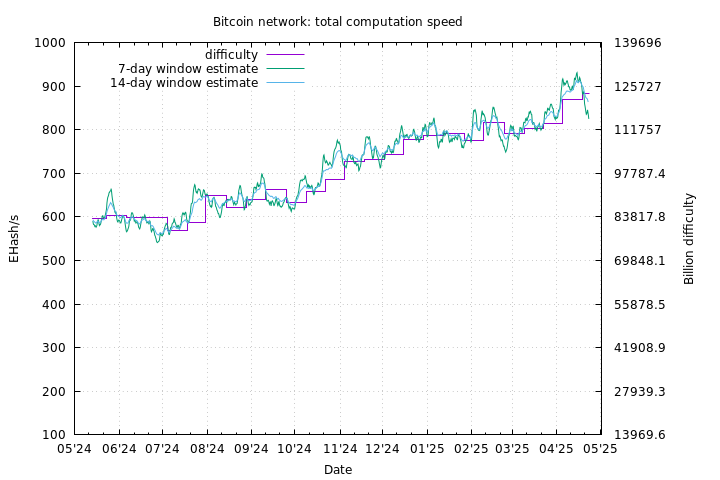 |


|
What are your thoughts on cloud-based mining like https://cloudhashing.com/
|
|
I feel like I really missed an opportunity. I saw them come on the market and thought it was cool, but didn't buy any cause it was difficult to convert cash to btc. Oh well, I'll try to get on board with litecoins. P.S. anyone want to sell BTC or LTC for paypal PM me |
|
Quoted: Do all the wallets take a day and 16gb of data to sync up? It depends on if you use online wallets or offline wallets. If you use the regular client from bitcoin.org, then it will take a long time to initially sync. There was some info about them possibly being able to change that later with further revisions of the software. I guess no one really knows what's in store in that regard. If you use an online wallet like Coinbase, then you don't have to worry about syncing the block chain, but you sacrifice some security by having to trust them instead of storing them on your computer. |
|
Quoted:
I feel like I really missed an opportunity. I saw them come on the market and thought it was cool, but didn't buy any cause it was difficult to convert cash to btc. Oh well, I'll try to get on board with litecoins. P.S. anyone want to sell BTC or LTC for paypal PM me The opportunity still exists - the market is soft right now because the bull run collapsed. As of right now, Bitcoin is selling for $600.00 on the dot on Bitstamp. Meanwhile, it's selling at 5635 CNY on BTC-China. 5635 CNY = $924.84. There's a >30% disparity between markets right now. I believe this is due to the Chinese using Bitcoin as a means of avoiding capital controls and moving money out of China. Buy BTC on BTC-China for ~$900 from a Yuan-denominated Chinese account, sell them on Bitstamp for ~$600 and deposit the proceeds into a USD- or Euro-denominated account in the West. |
|
Quoted:

Was wondering if it's too late to get into the mining. Seems like it might. I have spare computers laying around, but that may be hard to compete with people selling USB 330 MHz ASICs for $30. Quoted:
Quoted:
Do all the wallets take a day and 16gb of data to sync up?
Was wondering if it's too late to get into the mining. Seems like it might. I have spare computers laying around, but that may be hard to compete with people selling USB 330 MHz ASICs for $30. Spare computers are junk w/r/t mining. I suggest donating them to a charity like Computers4Kids, then using the money saved from the tax writeoff to buy BTC directly. |
|
Well, I was too late to the game to get into mining, so I haven't really looked into the cloud stuff. I like to watch the speculation and follow the market. |
|
Thank you for the write up. This is fascinating, especially after having just read The Great Deformation by David A Stockman.
This is truly getting the gov't out of currency. Now if they'll just stay out. But like any free market, what keeps more bitcoin networks from hitting the market and competing with the current bitcoin network/market? |
|
Quoted:
Thank you for the write up. This is fascinating, especially after having just read The Great Deformation by David A Stockman. This is truly getting the gov't out of currency. Now if they'll just stay out. But like any free market, what keeps more bitcoin networks from hitting the market and competing with the current bitcoin network/market? Nothing, that has already started. |
|
Quoted:
Was wondering if it's too late to get into the mining. Seems like it might. I have spare computers laying around, but that may be hard to compete with people selling USB 330 MHz ASICs for $30. Quoted:
Quoted:
Do all the wallets take a day and 16gb of data to sync up?
Was wondering if it's too late to get into the mining. Seems like it might. I have spare computers laying around, but that may be hard to compete with people selling USB 330 MHz ASICs for $30. Probably for BTC and even LTC, though there are other currencies with lower difficulties. I would take any money you would spend on mining rigs and buy coins at this point. I want to buy LTC's but it is such a pain. I wish one could buy LTC's directly through Coinbase. |
|
Quoted:
Nothing, that has already started. Quoted:
Quoted:
Thank you for the write up. This is fascinating, especially after having just read The Great Deformation by David A Stockman. This is truly getting the gov't out of currency. Now if they'll just stay out. But like any free market, what keeps more bitcoin networks from hitting the market and competing with the current bitcoin network/market? Nothing, that has already started. I think it would be a good thing. I see a future where American Express and Visa have their own cryptocurrencies. Some of those might even be backed with physical assets. It would be extremely interesting if someone like AmEx were to launch a cryptocurrency - say AmEx Gold - with 1 troy ounce of gold promised upon demand for each coin in circulation. So long as you trusted them to actually fork over the gold, the "problem" of inherent worth would be gone. |
|
Quoted:
Probably for BTC and even LTC, though they're are other currencies with lower difficulties. I would take any money you would spend on mining rigs and buy coins at this point. I want to buy LTC's but it is such a pain. I wish one could buy LTC's directly through Coinbase. Quoted:
Quoted:
Quoted:
Do all the wallets take a day and 16gb of data to sync up?
Was wondering if it's too late to get into the mining. Seems like it might. I have spare computers laying around, but that may be hard to compete with people selling USB 330 MHz ASICs for $30. Probably for BTC and even LTC, though they're are other currencies with lower difficulties. I would take any money you would spend on mining rigs and buy coins at this point. I want to buy LTC's but it is such a pain. I wish one could buy LTC's directly through Coinbase. USD -> Bitcoin (Coinbase) Bitcoin -> Litecoin (BTC-e) Not hard at all. Do you want to buy some? I'll sell you 40 LTC for 0.6 BTC (price pending change immediately prior to transaction, of course) My PGP pubkey is as follows, I'll be happy to sign a contract beforehand: -----BEGIN PGP PUBLIC KEY BLOCK----- Version: GnuPG/MacGPG2 v2.0.20 (Darwin) Comment: GPGTools - http://gpgtools.org mQENBFFaG38BCACr9jFjjhnZ6jnqa7h0sfrm6EGdi9RGamD/XDT5hnS1hkm5LsZE wgjWRaYR25PomsMyuW8yrYZnuFHRZOmV6lQTpgeumkxSRAMMWOweo1IY26739hYD aGLEqOGT4muz9A1rDlhHp+Pkc2WfDVBDf0tK9rxYR1Ri+hXq2G1OL0axJ8TlFLTP qgIuRugzbFhfxYQNaMFkr4DPvOKYIxM9SuPe6IIUyGOSFnA1P41cM2FN7D83g4Xc KdPAKKaRt3KsDSfWZYlR/1lMhOQ2P7HNmwfTQIqWS6+rb4W/EwVgQ3hZpYWUVxR/ /s91DGfJbiITuGtNjUCHdIA5iL4BocuTG4LLABEBAAG0K0dhZHNkZW4gR3JhcGhp Y3MgPHNob3BAZ2Fkc2RlbmdyYXBoaWNzLmNvbT6JAT0EEwEKACcFAlFaG38CGy8F CQeGH4AFCwkIBwMFFQoJCAsFFgIDAQACHgECF4AACgkQrgcqNNOFrWUvnQf9Edxu jmQBcBEuc3bxGGXBBMu9ArZWPy6Mk7bEyZREKJm/rbSS9UrFH1SoakKLhkMnCVFn voVh3A7fGuRWqKCmM1QbLMUhqPmybu0+VoUKeh+jw4oboJOsIMwAwNvItOtr75h9 SrTkuIIVg4Kd+Gusc3a3kLZA1jtKMR1QPV5dM/dRWi165zvdDwZ1HD/d5sf0UcIE 8nzQWSGhe25erG0ozMFBcQDZiIqmMr5AkzCuK7UuGH4pHj2mKEZp0O9gnKeEw+hj nAGfBpvEY4juvuIVTfF+UEOepMKZTU8Ut1aIxAMyHPPQUKC2d9pHRCuyRU0Prurg X93Z5cStifkrC6xPY7kBDQRRWht/AQgA621ap2l0DHkEOCOe2QQHx9HuYCVscjVC uGYZI5dLpMEMyefASooJPjhXdR1Qn//GbB/o/fdZhL0Ke2wrQkgQFHCa0Q2t8ZRk VtyrS2Kg6pq/ZDqOJsR5ROK2879Howlj/aVE6J6A+FeYGCiPZ8ezCH/tnYT4ncPU 6W3sr59z7+Mf67DPo8Mb9dYMukaN1OrPz+FmW9Y+N2ZMB2dh7NewNzW12/NxtD3M O2xuHUqgzylnlB80l04ZTeDS7GXHCwlYFl7hDggs8Vo2W+o/ataqhqKFuftsYr5b NBeepSnAD1r0XOFUtiuSyAL9GNjlYqOeGztjIYOOQzBPBI1xfhkQGwARAQABiQJE BBgBCgAPBQJRWht/AhsuBQkHhh+AASkJEK4HKjTTha1lwF0gBBkBCgAGBQJRWht/ AAoJEPiWASGJibJk+TMH/jBw1UJfPHZwLNuu6bh6DWsK19jW86dSLOb6JD0aBifL W9R66bBOFDyWUOz1hhovlZr2U4N8rwuMX9p6Ygs8Pb56IKk8BIVfWtw4epy2Ffbi L0wt7cZsBYQeEGKtWVVYGo/lO/cQVy8veBAq+O6I7X1o8QNVX0L8ienJdVU9vXCc oMeDWD2WS/7S1O0S5wFXkxTQJVfT3TWWJjmtP9HUnmwm8dP6ZsKUeoR7jFlI0kCS n+JlgW3P4JI17h/gM5WAJVSCGrX6Gb7VXGBHN5fGJwzkQRGEQSrtWZKJPMd+uP8x 4/d9rAbq+habRJtJylJUF0km1RdLeK7OAIkdUZmJECHKqgf/Tv4NunmB+z3IPu4s ehBnMImv7IXc0c3hK5e2+PU5zCHr0va+2UGLxKou9cak6iSBfvD+r2yVasFTo+Rw 72EEITyEy3/MuruF43NTNwzPMMP+MWgs4aMq7TTHEFwj1C/g3kkF93T/bXQ/yNOA bBfRM85YjKaP3koejhEyshxXpTf5AaRT7MSkwoLn8rLmK+9kT3QQkgyeR6u5ebyM 4G3EzPsBCowRchOsQaHwZCmZSFG1IryKq53IwABlv2FrwcCXJeQ6bs0SfUq8abUI TsaYlG+IehyJmjomoWQkDF1guOGnNjh836xRXgLOnedn5s3EUuyndWYD4NqpGwtM Q5YqLA== =B0rF -----END PGP PUBLIC KEY BLOCK----- Anyone know how to do a spoiler tag? I forget :( |
|
Quoted:
Anyone on BTC-e? What's the best way to transfer USD? I'm finding most places aren't accepting US customers. Normally, Coinbase. They're out of coins to sell though, so Localbitcoins.com is your best best. Not that the person you deal with need not be "local". Lots of people there account cash deposits to their bank account anywhere in the country. Be sure to verify their feedback, and use Localbitcoin's escrow service. |

|
Help me out here. It sounds possible to be mining bitcoins and every time you get close to making a block, some other guy beats you to that block. Then you never get any BCs for your trouble. Ever.
Is that possible or does the process of mining somehow guarantee some kind of success? |
|
Quoted:
Help me out here. It sounds possible to be mining bitcoins and every time you get close to making a block, some other guy beats you to that block. Then you never get any BCs for your trouble. Ever. Is that possible or does the process of mining somehow guarantee some kind of success? Correct. The first pool to "make" the blockchain wins. The larger the pool, the more hashes can be guessed per second. Of course, the larger the pool the smaller your piece of it in the event your pool is first. *My understanding. I could be off. |
|
Thx for the write up. Governments around the world are gonna crash this party so damn hard the internet will shut down for 87 seconds.
Kudos to the risk takers that made a killing in the early days, epic suck to be the guy holding BTC when the .gov comes calling for their cut. |
|
Quoted:
Spare computers are junk w/r/t mining. I suggest donating them to a charity like Computers4Kids, then using the money saved from the tax writeoff to buy BTC directly. Quoted:
Quoted:
Quoted:
Do all the wallets take a day and 16gb of data to sync up?
Was wondering if it's too late to get into the mining. Seems like it might. I have spare computers laying around, but that may be hard to compete with people selling USB 330 MHz ASICs for $30. Spare computers are junk w/r/t mining. I suggest donating them to a charity like Computers4Kids, then using the money saved from the tax writeoff to buy BTC directly. Let me rephrase: Spare computing power. I have a few quad-core 3 GHz machines, and a number of dual core 2.667-3 GHz machines. Spare, in that most of the time I don't need the computing power they offer. So using them to mine will only burn a few extra watts of power. |

|
Quoted:
Well, I was too late to the game to get into mining, so I haven't really looked into the cloud stuff. I like to watch the speculation and follow the market. Quoted:
Well, I was too late to the game to get into mining, so I haven't really looked into the cloud stuff. I like to watch the speculation and follow the market. I'd be willing to bet that it's more profitable to rent the computing power than to buy it. |
|
Quoted:
Let me rephrase: Spare computing power. I have a few quad-core 3 GHz machines, and a number of dual core 2.667-3 GHz machines. Spare, in that most of the time I don't need the computing power they offer. So using them to mine will only burn a few extra watts of power. Quoted:
Quoted:
Quoted:
Quoted:
Do all the wallets take a day and 16gb of data to sync up?
Was wondering if it's too late to get into the mining. Seems like it might. I have spare computers laying around, but that may be hard to compete with people selling USB 330 MHz ASICs for $30. Spare computers are junk w/r/t mining. I suggest donating them to a charity like Computers4Kids, then using the money saved from the tax writeoff to buy BTC directly. Let me rephrase: Spare computing power. I have a few quad-core 3 GHz machines, and a number of dual core 2.667-3 GHz machines. Spare, in that most of the time I don't need the computing power they offer. So using them to mine will only burn a few extra watts of power. nope CPU mining is way too slow and a waste of power. You need ASIC to be competitive at the least. |
|
Quoted:
does anyone mine with a macbook pro? If so could you send me an email on how to? Sure - don't :) I have a late 2012 MBP with an i7. I made about 0.005 LTC per day when I was mining with it. It's orders of magnitude more difficult now, and more orders of magnitude more difficult with Bitcoin. |
|
Quoted:
If I could buy BTC or LTC with using Paypal and didn't have to link by bank account, I would be all over it. I just worry about linking to one of these sites. Bitcoin is irreversible. PayPal isn't. If I sold you $10k in Bitcoins for PayPal, and you reversed the transaction... you'd have $10k in Bitcoins, your $10k from PayPal, and I'd have to track your ass down. |
|
Quoted:
Bitcoin is irreversible. PayPal isn't. If I sold you $10k in Bitcoins for PayPal, and you reversed the transaction... you'd have $10k in Bitcoins, your $10k from PayPal, and I'd have to track your ass down. Quoted:
Quoted:
If I could buy BTC or LTC with using Paypal and didn't have to link by bank account, I would be all over it. I just worry about linking to one of these sites. Bitcoin is irreversible. PayPal isn't. If I sold you $10k in Bitcoins for PayPal, and you reversed the transaction... you'd have $10k in Bitcoins, your $10k from PayPal, and I'd have to track your ass down. Wait Simon is selling BTC for PP! IM in coming! Do you take WoW gold as well? I got plenty! 
|
|
Quoted:
Sure - don't :) I have a late 2012 MBP with an i7. I made about 0.005 LTC per day when I was mining with it. It's orders of magnitude more difficult now, and more orders of magnitude more difficult with Bitcoin. Quoted:
Quoted:
does anyone mine with a macbook pro? If so could you send me an email on how to? Sure - don't :) I have a late 2012 MBP with an i7. I made about 0.005 LTC per day when I was mining with it. It's orders of magnitude more difficult now, and more orders of magnitude more difficult with Bitcoin. so what's your btc/ltc stash looking like now if you've been in the game for 3 years? Just curious, no biggie if that's tmi 
|
|
Quoted:
Bitcoin is irreversible. PayPal isn't. If I sold you $10k in Bitcoins for PayPal, and you reversed the transaction... you'd have $10k in Bitcoins, your $10k from PayPal, and I'd have to track your ass down. Quoted:
Quoted:
If I could buy BTC or LTC with using Paypal and didn't have to link by bank account, I would be all over it. I just worry about linking to one of these sites. Bitcoin is irreversible. PayPal isn't. If I sold you $10k in Bitcoins for PayPal, and you reversed the transaction... you'd have $10k in Bitcoins, your $10k from PayPal, and I'd have to track your ass down. True. Seriously considering using my old bank account that is still open to play around in this space. |
|
a FYI on armory..
https://bitcointalk.org/index.php?topic=339403.0 |
|
ok all the new people. Please look into securing your coin. Either by offline wallets, heavy encryption, paper wallets or BIP0038. Id hate for you to get hacked or a virus or a harddrve crash and loose all your coin.
I have one of these on order and will do a full review for you guys if your interested.. |
|
Quoted:
so what's your btc/ltc stash looking like now if you've been in the game for 3 years? Just curious, no biggie if that's tmi Quoted:
Quoted:
Quoted:
does anyone mine with a macbook pro? If so could you send me an email on how to? Sure - don't :) I have a late 2012 MBP with an i7. I made about 0.005 LTC per day when I was mining with it. It's orders of magnitude more difficult now, and more orders of magnitude more difficult with Bitcoin. so what's your btc/ltc stash looking like now if you've been in the game for 3 years? Just curious, no biggie if that's tmi A year ago, I would have answered. Today... I'll decline to. I will say that I have nowhere near enough to retire on at today's rates. I will continue to buy, at any price, until Bitcoin becomes a globally currency or dies. I see it as a high risk investment. |
|
Quoted: ok all the new people. Please look into securing your coin. Either by offline wallets, heavy encryption, paper wallets or BIP0038. Id hate for you to get hacked or a virus or a harddrve crash and loose all your coin. I have one of these on order and will do a full review for you guys if your interested.. How would you buy in person if you had a wallet on a PC at home?
|
|
Quoted:
So you'd recommend against something like coinbase for an online wallet? How would you buy in person if you had a wallet on a PC at home? Quoted:
Quoted:
ok all the new people. Please look into securing your coin. Either by offline wallets, heavy encryption, paper wallets or BIP0038. Id hate for you to get hacked or a virus or a harddrve crash and loose all your coin. I have one of these on order and will do a full review for you guys if your interested.. How would you buy in person if you had a wallet on a PC at home? keep a few coin in a portable wallet and bank the rest in a offline one.. you don't keep all your money in your wallet at home do ya? No you have some walking around $$ and the rest in the bank. same thing.. the fob thingy i linked works with online wallets and devices. |
|
Quoted:
keep a few coin in a portable wallet and bank the rest in a offline one.. you don't keep all your money in your wallet at home do ya? No you have some walking around $$ and the rest in the bank. same thing.. the fob thingy i linked works with online wallets and devices. Quoted:
Quoted:
Quoted:
ok all the new people. Please look into securing your coin. Either by offline wallets, heavy encryption, paper wallets or BIP0038. Id hate for you to get hacked or a virus or a harddrve crash and loose all your coin. I have one of these on order and will do a full review for you guys if your interested.. How would you buy in person if you had a wallet on a PC at home? keep a few coin in a portable wallet and bank the rest in a offline one.. you don't keep all your money in your wallet at home do ya? No you have some walking around $$ and the rest in the bank. same thing.. the fob thingy i linked works with online wallets and devices. I concur. The majority of my savings are kept in offline wallets. I keep a relatively small amount in Coinbase for day-to-day stuff. I will say that I currently have just over 1.6 BTC in Coinbase, and I'm starting to get slightly uncomfortable with it there. I've got plans for it though, or I'd move most of it offline. I like to keep less than $200 USD in "hot" wallets, hosted or not. |
|
OP great write up, so If I get one of these ASIC things for mining every ten minutes it will give me 25 BTC? Or the chance to make 25 BTC? Unless another better ASIC device takes the algorithm? Like ebay sniping at the last second? My computer does all the work for 9 min. and 59 seconds then gives the 25 coins to someone else?
Also is litecoin related to BTC or no. ? Thanks. |