


Posted: 9/11/2013 8:26:11 PM EDT
|
I have been reading and studying about nuclear attacks lately and found some interesting information.
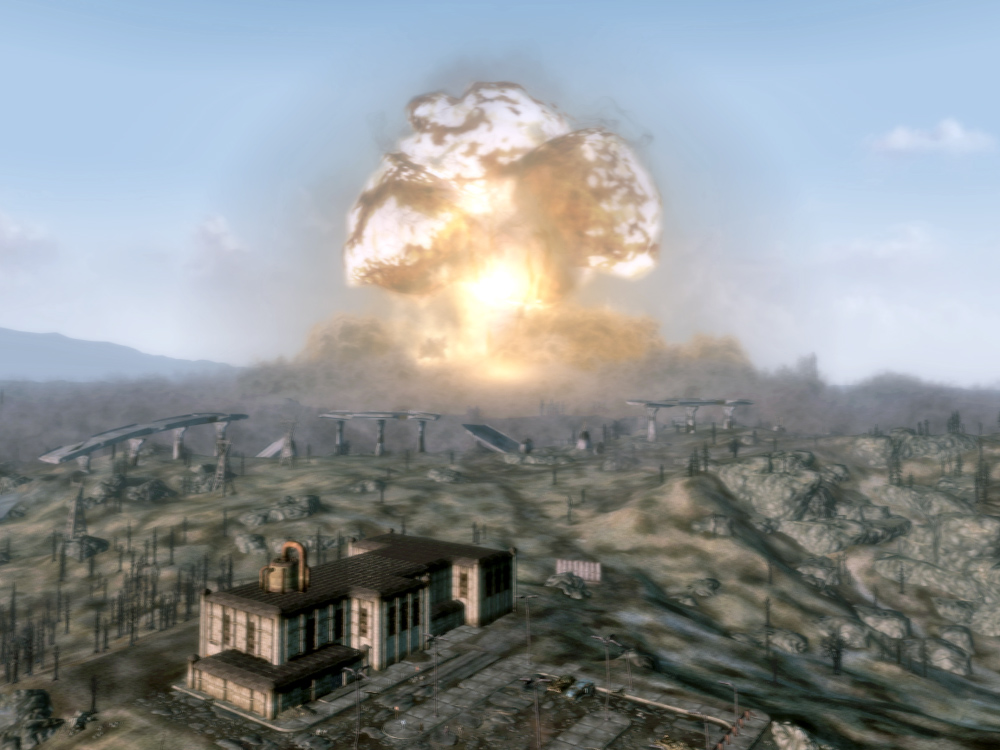
First a small scale most likely nuclear attack a study was conducted on four cities. link A few nuclear detonations this would occur a weak link are the hospitals. They are concentrated in the area most likely to be destroyed. Another weak link is the inability of the nation’s hospital system to treat the burn victims a 550-kiloton detonation would create. A 550-kiloton detonation in Atlanta, the least densely populated of the four cities studied, would result in nearly 300,000 serious burn victims. “The hospital system has about 1,500 burn beds in the whole country, and of these maybe 80 or 90 percent are full at any given time,” Bell said. “There’s no way of treating the burn victims from a nuclear attack with the existing medical system.” The large scale nuclear attack the majority of people would die due to the cold and starvation not because of the nuclear attack. link •Hundreds of large cities in the U.S., Europe and Russia are engulfed in massive firestorms which burn urban areas of tens or hundreds of thousands of square miles/kilometers. •150 million tons of smoke from nuclear fires rises above cloud level, into the stratosphere, where it quickly spreads around the world and forms a dense stratospheric cloud layer. The smoke will remain there for many years to block and absorb sunlight. •The smoke blocks up to 70% of the sunlight from reaching the Earth's surface in the Northern Hemisphere, and up to 35% of the sunlight is also blocked in the Southern Hemisphere. •In the absence of warming sunlight, surface temperatures on Earth become as cold or colder than they were 18,000 years ago at the height of the last Ice Age •There would be rapid cooling of more than 20°C over large areas of North America and of more than 30°C over much of Eurasia, including all agricultural regions •150 million tons of smoke in the stratosphere would cause minimum daily temperatures in the largest agricultural regions of the Northern Hemisphere to drop below freezing for 1 to 3 years. Nightly killing frosts would occur and prevent food from being grown. •Average global precipitation would be reduced by 45% due to the prolonged cold. •Growing seasons would be virtually eliminated for many years. •Massive destruction of the protective ozone layer would also occur, allowing intense levels of dangerous UV light to penetrate the atmosphere and reach the surface of the Earth. •Massive amounts of radioactive fallout would be generated and spread both locally and globally. The targeting of nuclear reactors would significantly increase fallout of long-lived isotopes. •Gigantic ground-hugging clouds of toxic smoke would be released from the fires; enormous quantities of industrial chemicals would also enter the environment. •It would be impossible for many living things to survive the extreme rapidity and degree of changes in temperature and precipitation, combined with drastic increases in UV light, massive radioactive fallout, and massive releases of toxins and industrial chemicals. •Already stressed land and marine ecosystems would collapse. •Unable to grow food, most humans would starve to death. •A mass extinction event would occur, similar to what happened 65 million years ago, when the dinosaurs were wiped out following a large asteroid impact with Earth (70% of species became extinct, including all animals greater than 25 kilograms in weight). •Even humans living in shelters equipped with many years worth of food, water, energy, and medical supplies would probably not survive in the hostile post-war environment. |
|
This book is dated but excellent. http://www.amazon.com/Life-After-Doomsday-Bruce-Clayton/dp/0873641752 ETA: Radiochemistry.org has some cool info http://www.radiochemistry.org/history/nuke_tests/ |
|
Want a realistic scenario?......the kind people who plan to respond use?.........try this:
www.rand.org/pubs/technical_reports/2006/RAND_TR391.pdf? |
|
Quoted:
Lets see your test data? Quoted:
Lets see your test data? This was a huge thing back in the 1980s -- the whole TTAPS study pushed by Carl Sagan. "The Strategic Nuclear Balance" by Pry, specifically Volume II talked about the problems with TTAPS: Page 202
Subsequent analyses of TTAPS have not supported its findings. Russell Seitz, of Harvard University's Center for International Affairs (and formerly with the geophysics division of C. S. Draper Laboratory), has traced the history of nuclear winter research and found that the trend has been, as climatological models have improved, to predict less severe nuclear winter effects and finally to discredit the phenomenon (see Figure 7.1). Seitz describes some of the erroneous assumptions in TTAPS that were corrected by later studies: Because so much depended on them, the assumptions embodied in the TTAPS software merit a closer look. Instead of a planet with continents and oceans, the TTAPS model postulated a featureless bone-dry billiard ball. Instead of nights and days, it postulated twenty-four hour sunlight at one-third strength. Instead of realistic smoke emissions, it simply dumped a ten-mile thick soot cloud into the atmosphere instantly. The model dealt with such complications as east, west, winds, sunrise, sunset, and patchy clouds in a stunningly elegant manner—they were ignored. When later computer models incorporated these real-world elements, the flat black sky of TTAPS fell apart into a pale broken shadow that traveled less far and dissipated more quickly. One factor alone— the moderating effect of the oceans—turned out to be the source of a 200 percent error.61 Citing a 1986 study by the National Center for Atmospheric Research (NCAR), Seitz writes that "after five generations of ever more sophisticated models, nuclear winter had succumbed to scientific progress ... at worst, 'The Day After' might witness July temperatures upward of +50° F [degrees] in mid-America. The depths of nuclear winter, in other words, could no longer be distinguished from the coolest days of summer."62 Starley Thompson and Stephen Schneider, the authors of the NCAR study on nuclear winter, wrote the epitaph for this latest apocalyptic theory in the summer 1986 issue of Foreign Affairs: "On scientific grounds the global apocalyptic conclusions of the initial nuclear winter hypothesis can now be relegated to a vanishingly low level of probability."63 
The above image was found on Page 170 of Volume II with the following label: The figure shows how successive studies of nuclear winter have sharply revised downward its estimated severity, as expressed in the number of "heating degree days" that would result. "Heating degree days" are computed by multiplying how far temperatures drop below 65° F by how many days the lower temperatures last. For example, two days having temperatures of 60 degrees would account for 10 "degree days." As Seitz puts it: "The contrast between the original 22,000-degree-day catastrophe-equivalent to a year and a half of Alaskan winter-and the final few-degree-day cool spell is clearly apparent." The figure also shows that, despite the discrediting of nuclear winter by the scientific community, the popular press incorrectly kept revising upward the mortality estimates associated with nuclear winter. The best evidence suggests that nuclear winter would not occur and that no one would die from brief episodes of cool weather that might attend a counter-force nuclear winter. Figure 7.1. The decline and fall of "nuclear winter." Source: Russell Seitz, "In From the Cold: Nuclear Winter Melts Down," The National Interest (Fall 1986), p. 8. ----------- Basically, the image tells it all: The NAS/NCAR studies done in 1984/85 by people who knew what they were doing estimated the heating degree days resulting from a nuclear winter as being from 1800 to 4000. That put it roughly between winter in Tampa Florida and Washington DC. Things would be a bit colder than usual (DC would be twice as cold), but it wouldn't be the apocalyptic TEOTWAKI scenario that Sagan pushed from 1983-84. |


|
Quoted:
The large scale nuclear attack the majority of people would die due to the cold and starvation not because of the nuclear attack. link nucleardarkness.org 
"Nuclear Darkness, Global Climate Change and Nuclear Famine" No mention of reanimation of the recently deceased? |
|
Quoted:
This book is dated but excellent. http://www.amazon.com/Life-After-Doomsday-Bruce-Clayton/dp/0873641752 Quoted:
This book is dated but excellent. http://www.amazon.com/Life-After-Doomsday-Bruce-Clayton/dp/0873641752 Yep - Clayton was one of the early debunkers of the "Nuclear War Is Unsurvivable" myth. For most Americans, survival of the first few weeks after a nuclear attack is not only possible, it is almost unavoidable. With careful preparation, any family or small group of people can ensure its survival under such conditions, and also through the long period of recovery to follow. |
|
The 300,000 burn victim numbers they quote will most likely die within a few days, negating the need to treat them or house them for long. The likelihood of a lethal radiation dose is pretty high considering they were either close or exposed enough to receive those burns. And make no mistake, those victims would want to die quickly. Burn victims are already dead. The traumatic injuries would be the most concerning. |
|
Quoted:
The 300,000 burn victim numbers they quote will most likely die within a few days, negating the need to treat them or house them for long. The likelihood of a lethal radiation dose is pretty high considering they were either close or exposed enough to receive those burns. And make no mistake, those victims would want to die quickly. Burn victims are already dead. The traumatic injuries would be the most concerning. Beat me to it... If you're close enough for serious burns, odds are high you got a lethal dose of radiation. |
|
Quoted:
The 300,000 burn victim numbers they quote will most likely die within a few days, negating the need to treat them or house them for long. The likelihood of a lethal radiation dose is pretty high considering they were either close or exposed enough to receive those burns. And make no mistake, those victims would want to die quickly. Burn victims are already dead. The traumatic injuries would be the most concerning. Under 0bamacare, euthanasia would become SOP for treating those with severe burns. |
|
Potassium iodide. Any ground strike in the US, you'd want that.
It fills the thyroid with iodine so you don't intake isotopes instead, which would immediately go to the thyroid and probably give you cancer. Can be given to people and animals for protection in the months following a nuclear accident or attack. It's one of the few cheap, simple measures you can take that WORKS if you're not at ground zero, but downwind. 
|
|
Quoted:
I have been reading and studying about nuclear attacks lately and found some interesting information. First a small scale most likely nuclear attack a study was conducted on four cities. link A few nuclear detonations this would occur a weak link are the hospitals. They are concentrated in the area most likely to be destroyed. Another weak link is the inability of the nation’s hospital system to treat the burn victims a 550-kiloton detonation would create. A 550-kiloton detonation in Atlanta, the least densely populated of the four cities studied, would result in nearly 300,000 serious burn victims. “The hospital system has about 1,500 burn beds in the whole country, and of these maybe 80 or 90 percent are full at any given time,” Bell said. “There’s no way of treating the burn victims from a nuclear attack with the existing medical system.” The large scale nuclear attack the majority of people would die due to the cold and starvation not because of the nuclear attack. link •Hundreds of large cities in the U.S., Europe and Russia are engulfed in massive firestorms which burn urban areas of tens or hundreds of thousands of square miles/kilometers. •150 million tons of smoke from nuclear fires rises above cloud level, into the stratosphere, where it quickly spreads around the world and forms a dense stratospheric cloud layer. The smoke will remain there for many years to block and absorb sunlight. •The smoke blocks up to 70% of the sunlight from reaching the Earth's surface in the Northern Hemisphere, and up to 35% of the sunlight is also blocked in the Southern Hemisphere. •In the absence of warming sunlight, surface temperatures on Earth become as cold or colder than they were 18,000 years ago at the height of the last Ice Age •There would be rapid cooling of more than 20°C over large areas of North America and of more than 30°C over much of Eurasia, including all agricultural regions •150 million tons of smoke in the stratosphere would cause minimum daily temperatures in the largest agricultural regions of the Northern Hemisphere to drop below freezing for 1 to 3 years. Nightly killing frosts would occur and prevent food from being grown. •Average global precipitation would be reduced by 45% due to the prolonged cold. •Growing seasons would be virtually eliminated for many years. •Massive destruction of the protective ozone layer would also occur, allowing intense levels of dangerous UV light to penetrate the atmosphere and reach the surface of the Earth. •Massive amounts of radioactive fallout would be generated and spread both locally and globally. The targeting of nuclear reactors would significantly increase fallout of long-lived isotopes. •Gigantic ground-hugging clouds of toxic smoke would be released from the fires; enormous quantities of industrial chemicals would also enter the environment. •It would be impossible for many living things to survive the extreme rapidity and degree of changes in temperature and precipitation, combined with drastic increases in UV light, massive radioactive fallout, and massive releases of toxins and industrial chemicals. •Already stressed land and marine ecosystems would collapse. •Unable to grow food, most humans would starve to death. •A mass extinction event would occur, similar to what happened 65 million years ago, when the dinosaurs were wiped out following a large asteroid impact with Earth (70% of species became extinct, including all animals greater than 25 kilograms in weight). •Even humans living in shelters equipped with many years worth of food, water, energy, and medical supplies would probably not survive in the hostile post-war environment. WRONG the mount penatubo eruption Put more dust and ash into the atmosphere than all of the worlds nuclear weapons combined. Resulting in a half degree weather change for about a year. |

|
Quoted:
You guys are overlooking one really big factor.... . . . . . http://www.freewebs.com/roho911/Godzilla%201954%203.jpg Note to self, get pet lizard before nuclear strike. |