


[ARCHIVED THREAD] - USAF Airlift (Page 1 of 4)
Posted: 6/6/2013 11:28:55 PM EDT
|
Hi all.
I was wondering, when the US military, I guess the army mainly, needs to get lots of stuff, people and heavy cargo to a far away place how do they do it? I'm guessing the US Navy becomes helpful and has some ships designed for this task and I know the USAF has C-5's and C-17's. My question is mainly focused on airlift though, if the army is deploying to Afghanistan for example and they need to get tanks, Humvee s and people over there, do they load all their stuff onto trains and trucks to get it all to the nearest air force base and then put it all onto the C-5's and C-17's? Or are there centralized bases in the USA designated as loading off loading bases and the C-5'sd and C-17's from all over the country come from their individual bases to these centralized locations to meet the army or Marines for the on / off loads? I was thinking about this the other day and I know the USAF has about 200 C-17's and I don;t know how many C-5's and Hercs, but I was think of how the Army gets all their stuff to thew bases to get it onto the planes to fly out, the roads leading from Army bases to USAF bases would be clogged for miles with tanks and other military equipment almost all the time would they not? And because I love the C-17, I took these at the last air show I went to last year. 


The USAF jet done the display and the Australian jet was on static all day. |
| It depends on many factors. Obviously sealift is going to do the bulk of the moving. And there are strategically located storage points. So it really won't necessarily be too long by sea. As for airlift there are many factors that come to play. Smaller emergency forces can be airlifted by the Air Force, but civilian aircraft are also used. There is actually a program where the government will cover a portion of the purchase of various civilian air cargo and airliners for the use of them in an emergency. |
|
When I was with the Rapid Deployment Forces and the 18th Airborne Corps, We flew with our gear in C-130's, 141's and C-5's. Sometimes we'd get to an airbase and deploy with our helicopters (UH-60's) further on. We did this in Grenada as the airborne parachute assault and landing on the runway after it was secured. All divisions in that group were considered light infantry, including 1st and 2nd 75th Rangers (the 3rd wasn't active yet), and everything we had was air deployable. Same with the 82nd. Heavy divisions could deploy some assets via C-5, like the M1 tanks and APC's, but it was too heavy and limited for air transport. I've seen them deploy by rail if it was on the same continent. We shipped lots of stuff to Saudi by sea lift for Desert Storm. I was only assigned to the 1/75th and 101st during my 4 years in the 80's. We went everywhere by air, although we trained to do beach assaults with landing craft, I hated it. |
|
Some locations have the capabilities to garrison troops and equipment, and to load them up and move them around at the same place. A good example would be Joint Base Lewis-McChord in WA.
Other locations they would have to drive or ship the equipment and troops to an appropriate airfield. Ever notice that pretty much every military base s located next to an interstate? There is a reason for this. The ability to fly equipment and troops is very inefficient and there are major limits on the capacity that can be moved. Most situations that don't require boots on the ground RFN will use rail and ships to get the equipment to it's destination. The troops will travel commercial until they are in country. |
|
Heavy equipment mostly go's by rail to ships.
Most large Army bases (Ft Bragg and Ft Campbell come to mind) have large rail yards in them, everything is loaded up on trains and shipped to the coast. The DOD keeps a huge amount of vehicles and heavy equipment pre-positioned on RORO ships that can be activated if needed. Most of the troops fly on Air Reserve aircraft and flown into the AOR on civilian planes. The USAF heavy lift aircraft are typically reserved for combat drops, air land insertions and special airlift. The AF has a lot of planes but, instead of shipping the huge amount of shit using planes, airlift is used to resupply the force instead. |
|
Depends on the severity of the need and time available. During Gulf War 1, the initial supply of M-1s came in by C-5 while the bulk were onboard sealift (takes a couple weeks to get there by boat). Even today, items that absolutely have to be there now will come in by air, while the 'we need this stuff when you can get it here' items come by boat. TRANSCOM has the responsibility for determining how to move everything... Cargo, pax, tanks -just about everything that can't get there by itself.
Sometimes it's not readily apparent and almost counterintuitive. M-1s can be airlifted (barely) along with helicopters and most stuff. CV - 22's can fly themselves, but are often sent by boat to save wear on the aircraft. On the other hand, Mark V boats are sent by air. 'One size fits all' doesn't apply! |
|
Stand aside noobs. 2T2 checking in. The vast majoity of heavy vehicles go by boat via the Navy, and then are put on big ass trucks and run through Pakistan. From there, some vehicles come to us at the major hubs for air movement, others just keep on trucking. That's really dependant on whatthe unit needs. If they need to get some MRAPs or hummers somewhere quick, they'll "buy" a 17 or a 130 for all their shit.
As for stateside, there are basees that have Aerial Ports. Travis AFB, Dover AFB, and Charleston AFB are called super ports, because of the large volume of cargo and passengers we push through them. Those bases have the C5s, C17s, 747s, and the occasional IL-76 or AN-124 will come in. We also use KC-10s to push cargo. Pax movement is done several different ways. If it's an entire unit moving they'll have a dedicated aircraft just for them, and a lot of the time its a civilian aircraft thats chartered out for military use. Like a unit out of Ft Benning can rent an aircraft to fly them all the way to Manas AB, and then from there, they'll jump on a C17 pax mover and fly into a major base in the desert. For small groups, it's really up to the unit on how they move. They can go mil-air the entire way (being grey tail aircraft), or they can take a commercial flight up to a certain point, and then they will get on a AMC (air mobility command) chartered flight to where ever they need to go. This is a really, really basic description of it. 2T2_Crash could probably explain it better than me, not to mention there are numerous loadmasters (2T2 wannabes) and boom operators (loadmaster wannabes) floating around the site that could explain it a bit better. |
|
Okay cool, so as I understand it,there is a lot of flexibility built into how it is done.
For example, if SHTF somewhere, the C-17's, C-5's and C-130's will move some men and a small amount of APC's, maybe a few tanks and Humvees and some choppers over to set up or take over a base, such as Bagram or what ever the main base in AFG is. This happens while a much larger force of men and equipment are being sea lifted to the location and the aircraft, as well as getting the initial group of people and equipment into the zone will constantly bring in supplies and re-enforcements until the larger forces arrive. Once that happens, the big birds continue their heavy lift of re-enforcements and supplies as required throughout the campaign. Makes sense I guess. |
| Isn't a bunch of our equipment already afloat in various parts of the world as part of the Military Sealift Command's Prepositioning Program? |
|
Quoted:
Stand aside noobs. 2T2 checking in. The vast majoity of heavy vehicles go by boat via the Navy, and then are put on big ass trucks and run through Pakistan. From there, some vehicles come to us at the major hubs for air movement, others just keep on trucking. That's really dependant on whatthe unit needs. If they need to get some MRAPs or hummers somewhere quick, they'll "buy" a 17 or a 130 for all their shit. As for stateside, there are basees that have Aerial Ports. Travis AFB, Dover AFB, and Charleston AFB are called super ports, because of the large volume of cargo and passengers we push through them. Those bases have the C5s, C17s, 747s, and the occasional IL-76 or AN-124 will come in. We also use KC-10s to push cargo. Pax movement is done several different ways. If it's an entire unit moving they'll have a dedicated aircraft just for them, and a lot of the time its a civilian aircraft thats chartered out for military use. Like a unit out of Ft Benning can rent an aircraft to fly them all the way to Manas AB, and then from there, they'll jump on a C17 pax mover and fly into a major base in the desert. For small groups, it's really up to the unit on how they move. They can go mil-air the entire way (being grey tail aircraft), or they can take a commercial flight up to a certain point, and then they will get on a AMC (air mobility command) chartered flight to where ever they need to go. This is a really, really basic description of it. 2T2_Crash could probably explain it better than me, not to mention there are numerous loadmasters (2T2 wannabes) and boom operators (loadmaster wannabes) floating around the site that could explain it a bit better. LOL, 2t2 and a 12'ver to boot... 
|
|
Quoted:
Quoted:
Stand aside noobs. 2T2 checking in. The vast majoity of heavy vehicles go by boat via the Navy, and then are put on big ass trucks and run through Pakistan. From there, some vehicles come to us at the major hubs for air movement, others just keep on trucking. That's really dependant on whatthe unit needs. If they need to get some MRAPs or hummers somewhere quick, they'll "buy" a 17 or a 130 for all their shit. As for stateside, there are basees that have Aerial Ports. Travis AFB, Dover AFB, and Charleston AFB are called super ports, because of the large volume of cargo and passengers we push through them. Those bases have the C5s, C17s, 747s, and the occasional IL-76 or AN-124 will come in. We also use KC-10s to push cargo. Pax movement is done several different ways. If it's an entire unit moving they'll have a dedicated aircraft just for them, and a lot of the time its a civilian aircraft thats chartered out for military use. Like a unit out of Ft Benning can rent an aircraft to fly them all the way to Manas AB, and then from there, they'll jump on a C17 pax mover and fly into a major base in the desert. For small groups, it's really up to the unit on how they move. They can go mil-air the entire way (being grey tail aircraft), or they can take a commercial flight up to a certain point, and then they will get on a AMC (air mobility command) chartered flight to where ever they need to go. This is a really, really basic description of it. 2T2_Crash could probably explain it better than me, not to mention there are numerous loadmasters (2T2 wannabes) and boom operators (loadmaster wannabes) floating around the site that could explain it a bit better. LOL, 2t2 and a 12'ver to boot... what's so funny hoss? he nailed it pretty damn well in. Loadmaster = all glory and minimal work boomer = no brains but a tablet that will say a piece needs 4x the tiedown really required. the USAF can move massive amounts of cargo when required but the preferred method for moving lots of heavy machinery is sealift. ETA: during Operation Tomodachi we moved a Japanese Ground Self Defense Force motor-t company using C17s. Over 100 vehicles that had NEVER been flown on airlift had to be moved. We used USAF and RAAF C17s and IIRC it took around 12 trips. There is a science behind airlift that includes ground capability to prep and load cargo, aircrew availability to fly the jets, trained loadmasters that double-check everything and keep a close watch on the cargo in air to ensure the plane lands vs lawn-darting... Tankers to extend the flight time (and global reach) of the aircraft, Skilled Boom operators who can ensure an in-air refueling plus ground crew at the receiving end to download the cargo. as mush shit as we 2T2's give loadmasters and boom operators we all know each others' job is just as important. |
|
During the first Gulf War, my oldest brother(civilian) was leading a crane crew hired by Boot & Coots, Red Adair and the oilwell firefighting guys.
They needed that stuff in Kuwait ASAP. AF regs required the diesel fuel be pumped out of the bulldozers/trucks, etc., so he invited me down to pick up a few drums of free diesel. The equipment was then lifted onto special pallets which were then rolled into C5s. I pulled up at the gate to Ellington AFB in a faded, rusty yellow 77 F100 with Farm Truck plates, and said to the guy at the gate that I was with XYZ Crane and Rigging, and got waved through and pointed in the right direction. No ID, no sign in, no vehicle search. Pulled up to within a hundred feet of the open nose of a C5 where the fuel drums were stacked. My brother loaded up a couple drums of diesel. Got a tour of the aircraft. I don't think it would happen that way today. |
|
Back in '99, as part of TF Hawk/JTF Shining Hope (Tirana, Albania), we (TALCE) flew over to Germany on a C-5, trans-loaded our equipment over to two C-17s then headed to Albania. Once we got unloaded, we started receiving Aircraft a short after we landed and had COMMs up with HQ AMC and Ramstein. As the aircraft were coming in we went about setting up our comm shelter while talking to the planes over a PSC-5 hooked up in a Humvee. We worked C-17s and C-130s for about 30 days 24/7. Usually two in the air, two on the ground at all times. Was a neat experience to see an empty airfield turn into a sprawling base over a short period of time. Muddy as hell, rained a bunch, and smelled like sheep shit.
Abrams, Bradleys, MLRS, HEMTTs, all came via C-17s. IIRC, the arty was sling loaded by the helos when they came over from Italy. Now that was a cluster fuck right off the bat. Had Chinooks, Apaches, Black Hawks trying to land wherever there was an open spot on the ramp...seemed like the Army forgot to establish comms with them on arrival. Lots of confusion and broken shit...my InMarsat and small SATCOM antennas got blown off the top of the shelter when a Chinook decided to set down about 60 feet away. |
| Our Helos were flown to Port and loaded on a ship. Going to Iraq, we got the helos and containers off the ship in Kuwait and flew in to country. The containers were driven by locals.. To AFG. The ships were downloaded at a different port and loaded on C-5 ( I think, whatever the biggest one is) and downloaded at a either Bagram or KAF with containers. Helo's fly from there. Not sure how containers get out to the smaller bases in AFG. |
|
Quoted:
During the first Gulf War, my oldest brother(civilian) was leading a crane crew hired by Boot & Coots, Red Adair and the oilwell firefighting guys. They needed that stuff in Kuwait ASAP. AF regs required the diesel fuel be pumped out of the bulldozers/trucks, etc., so he invited me down to pick up a few drums of free diesel. The equipment was then lifted onto special pallets which were then rolled into C5s. Dont know how it was then but now days it's minimal fuel unless going Chapter 3 (war time gotta go now) then it can go up to 1/2-3/4 depending on airframe. Getting free gas is awesome... I got a free fuel up before 
I pulled up at the gate to Ellington AFB in a faded, rusty yellow 77 F100 with Farm Truck plates, and said to the guy at the gate that I was with XYZ Crane and Rigging, and got waved through and pointed in the right direction. No ID, no sign in, no vehicle search. Pulled up to within a hundred feet of the open nose of a C5 where the fuel drums were stacked. My brother loaded up a couple drums of diesel. Got a tour of the aircraft. I don't think it would happen that way today. fuuuuuuuuuck no! |
|
I can't weigh in on airlift even though I've been a happy customer of theirs for years both as pax and coordinating with those guys. Aerial Port guys are rock stars in my mind. Some of the best people in the AF. I almost joined the Aerial Port Squadron at my Guard base but they were BRAC'ed.
As other posters have said, theres no way in hell people can roll up on an Air Force base anymore and get in even without some very basic pre-coordination. I deal with plenty of angry people like truck drivers, construction crews, family members etc, who get mad at us for holding them up while try to figure out why they need to come in and then get even more pissed why they're getting searched and why they're being run on our background check systems. People seem to have forgotten we are at war, 9/11 happened and there are tons of crazy people who try to get on base. Bases used to be pretty loose security wise and people are still used to that. I love dealing with Granny and her yelling at me when she wants to go visit her nephew who ends up being the base commander. I used to think all old women were sweet and nice, but thats only when you don't hold them up and send them to the search lane.
Strategic and tactical airlift is one of these reasons we are able to let our guys go out and kill fuckers in their sleep on Christmas. God bless our Aerial Porters and lift pilots. |

|
Quoted:
It depends on many factors. Obviously sealift is going to do the bulk of the moving. And there are strategically located storage points. So it really won't necessarily be too long by sea. As for airlift there are many factors that come to play. Smaller emergency forces can be airlifted by the Air Force, but civilian aircraft are also used. There is actually a program where the government will cover a portion of the purchase of various civilian air cargo and airliners for the use of them in an emergency. You may be thinking of the Civilian Reserve Air Fleet, or CRAF. You can Google it to find out the details, but IIRC, it came about in the late '70s or early '80s (I remember SecDef Weinberger speaking of it early in the Reagan administration), and essentially gave incentives to airline companies to slightly modify aircraft for use as cargo carriers by DoD during a national emergency such as an invasion of W Germany by the USSR / WP. There were, I think, three levels of CRAF. The first time it was used that I know of was Operation Desert Shield. That program went from 0 to Mach 1 in a matter of days. It's my understanding that for weeks, there was one airplane of US origin landing on Saudi soil every minute, 24/7, bringing people and supplies to US Forces that were flowing in-theater. In fact, my neighbor growing up was an AA DC10 pilot, and told me the president can order the airline companies to subordinate their aircraft to DoD in the event of a national emergency. I suppose CRAF was a logical attempt to make the process more organized and orderly. MPF squadrons at sea can provide the equipment needed by a Marine ground combat element (or GCE) with enough supplies to fight a war for thirty days. In theory, this will allow enough time for heavy armor, arty, trucks, ammo, etc. for the US Army to arrive by sea lift. The Marines arrive by plane, to marry up with equipment that arrived by purpose-built MPF ships. Transit time for sea lift is generally about two weeks from a U.S. port to the ME, so the MPF squadrons fill the gap. I don't know what it is for ships leaving Europe for the same region. During Op Desert Shield, 600 M1A1 Abrams MBTs-two 1990-era U.S. Army heavy armored divisions-were shipped from storage sites in Germany (meant to fight the Big War should the USSR had ever crossed the Fulda Gap), again by sea lift. In fact, Op Desert Storm was the result of decades of planning to fight the Rooskies in both Europe and South West Asia. During the Yom Kippur War in 1973, US aid in the form of tanks and munitions arrived by both air and sea, from what I've read. Airlift of armor can be done, but it's not desirable. A platoon of Marine M1A1 MBTs was recently flown into Afghanistan for use in RC-South, but was just a platoon, not a full battalion, which consists of 58 tanks plus (I believe) 4 M88A1 Hercs, fuelers, etc. Just like sea lift is preferred over airlift, transport by train is more desirable than transport on flatbed trailer pulled by a diesel truck on the interstate. |
|
Quoted:
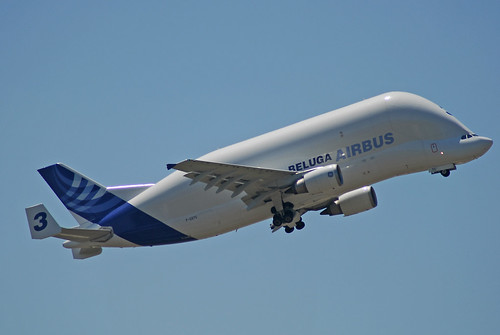
Depending on who we're battling at the time, don't we also contract for the use of this beast: http://farm1.static.flickr.com/164/366096615_d1ecac6419.jpg THAT is a really ODD looking airplane. |
|
Quoted:
Thanks all for the awesome replies, especially xviperx420 
NP. If you have any other questions, just shoot me a PM. Edit: If you want to read about AF heritage in general, read this: AF Heritage Someone mentioned CRAF above. From our CDCs: The CRAF program is one where selected aircraft from US airlines agree to support the DOD's airlift requirements when organic aircraft cannot support them all. The CRAF is designed to augment DOD's airlift capability in time of war or during a President-declared emergency. CRAF is made up of three segments: international, national, and aeromedical.
The international segment consists of long-range and short-range sections. The long-range aircraft must be capable of over-water flights and provides the largest capability with passenger and cargo aircraft. The short-range section supports near-offshore operations with both passenger and cargo aircraft. The national segment, consisting of domestic and Alaskan sections, proviodes passenger and cargo aircraft using regional air carriers with at least 75 seats and a cargo-carrying capability of at least 32,000 lbs. The aeromedical segment is used to evacuate critical casualties from an operational area. This segment is also used to move medical supplies and crew to the theater, which allows organic and other aircraft to maximize cargo airlift. ...Many commercial aircraft exist, but these are the most common: B-747, DC-8, AN-124, DC-10, MD-11 and B-707... "Organic aircraft" refers to aircraft like the C5 and C17. |
|
Quoted:
Quoted:
Stand aside noobs. 2T2 checking in. The vast majoity of heavy vehicles go by boat via the Navy, and then are put on big ass trucks and run through Pakistan. From there, some vehicles come to us at the major hubs for air movement, others just keep on trucking. That's really dependant on whatthe unit needs. If they need to get some MRAPs or hummers somewhere quick, they'll "buy" a 17 or a 130 for all their shit. As for stateside, there are basees that have Aerial Ports. Travis AFB, Dover AFB, and Charleston AFB are called super ports, because of the large volume of cargo and passengers we push through them. Those bases have the C5s, C17s, 747s, and the occasional IL-76 or AN-124 will come in. We also use KC-10s to push cargo. Pax movement is done several different ways. If it's an entire unit moving they'll have a dedicated aircraft just for them, and a lot of the time its a civilian aircraft thats chartered out for military use. Like a unit out of Ft Benning can rent an aircraft to fly them all the way to Manas AB, and then from there, they'll jump on a C17 pax mover and fly into a major base in the desert. For small groups, it's really up to the unit on how they move. They can go mil-air the entire way (being grey tail aircraft), or they can take a commercial flight up to a certain point, and then they will get on a AMC (air mobility command) chartered flight to where ever they need to go. This is a really, really basic description of it. 2T2_Crash could probably explain it better than me, not to mention there are numerous loadmasters (2T2 wannabes) and boom operators (loadmaster wannabes) floating around the site that could explain it a bit better. LOL, 2t2 and a 12'ver to boot... It's all fun and games until I frustrate your household goods for 6 months for improper shipping documents. |
|
Quoted:
Quoted:
Quoted:
Stand aside noobs. 2T2 checking in. The vast majoity of heavy vehicles go by boat via the Navy, and then are put on big ass trucks and run through Pakistan. From there, some vehicles come to us at the major hubs for air movement, others just keep on trucking. That's really dependant on whatthe unit needs. If they need to get some MRAPs or hummers somewhere quick, they'll "buy" a 17 or a 130 for all their shit. As for stateside, there are basees that have Aerial Ports. Travis AFB, Dover AFB, and Charleston AFB are called super ports, because of the large volume of cargo and passengers we push through them. Those bases have the C5s, C17s, 747s, and the occasional IL-76 or AN-124 will come in. We also use KC-10s to push cargo. Pax movement is done several different ways. If it's an entire unit moving they'll have a dedicated aircraft just for them, and a lot of the time its a civilian aircraft thats chartered out for military use. Like a unit out of Ft Benning can rent an aircraft to fly them all the way to Manas AB, and then from there, they'll jump on a C17 pax mover and fly into a major base in the desert. For small groups, it's really up to the unit on how they move. They can go mil-air the entire way (being grey tail aircraft), or they can take a commercial flight up to a certain point, and then they will get on a AMC (air mobility command) chartered flight to where ever they need to go. This is a really, really basic description of it. 2T2_Crash could probably explain it better than me, not to mention there are numerous loadmasters (2T2 wannabes) and boom operators (loadmaster wannabes) floating around the site that could explain it a bit better. LOL, 2t2 and a 12'ver to boot... It's all fun and games until I frustrate your household goods for 6 months for improper shipping documents. what's so funny hoss? he nailed it pretty damn well in. Loadmaster = all glory and minimal work boomer = no brains but a tablet that will say a piece needs 4x the tiedown really required. the USAF can move massive amounts of cargo when required but the preferred method for moving lots of heavy machinery is sealift. ETA: during Operation Tomodachi we moved a Japanese Ground Self Defense Force motor-t company using C17s. Over 100 vehicles that had NEVER been flown on airlift had to be moved. We used USAF and RAAF C17s and IIRC it took around 12 trips. There is a science behind airlift that includes ground capability to prep and load cargo, aircrew availability to fly the jets, trained loadmasters that double-check everything and keep a close watch on the cargo in air to ensure the plane lands vs lawn-darting... Tankers to extend the flight time (and global reach) of the aircraft, Skilled Boom operators who can ensure an in-air refueling plus ground crew at the receiving end to download the cargo. as mush shit as we 2T2's give loadmasters and boom operators we all know each others' job is just as important. If I knew it was this easy to get under two 2T2s skin's I would have started long ago. Sorry, 2A373 and 1A171 here... |
|
Quoted:
Quoted:
Depending on who we're battling at the time, don't we also contract for the use of this beast: http://farm1.static.flickr.com/164/366096615_d1ecac6419.jpg THAT is a really ODD looking airplane. Just like the Boeing 747 Dreamlifter, which has a similar look and mission. The Beluga hauls fuselage sections of the A-380 to the final assembly plant and the Dreamlifter hauls 787 Dreamliner fuselage sections to its final assembly plant. I don't think either could be used to haul military cargo, because they are too specialized for hauling fuselage sections. I doubt the floor is strengthened enough to haul heavy military gear, only lightweight aircraft sections. The only thing I might think they would be chartered to haul would be to haul satellites or other light aerospace loads. But the Air Force has specially modified C-5s for those loads. |
|
Quoted: Stand aside noobs. 2T2 checking in. The vast majoity of heavy vehicles go by boat via the Navy, and then are put on big ass trucks and run through Pakistan. From there, some vehicles come to us at the major hubs for air movement, others just keep on trucking. That's really dependant on whatthe unit needs. If they need to get some MRAPs or hummers somewhere quick, they'll "buy" a 17 or a 130 for all their shit. As for stateside, there are basees that have Aerial Ports. Travis AFB, Dover AFB, and Charleston AFB are called super ports, because of the large volume of cargo and passengers we push through them. Those bases have the C5s, C17s, 747s, and the occasional IL-76 or AN-124 will come in. We also use KC-10s to push cargo. Pax movement is done several different ways. If it's an entire unit moving they'll have a dedicated aircraft just for them, and a lot of the time its a civilian aircraft thats chartered out for military use. Like a unit out of Ft Benning can rent an aircraft to fly them all the way to Manas AB, and then from there, they'll jump on a C17 pax mover and fly into a major base in the desert. For small groups, it's really up to the unit on how they move. They can go mil-air the entire way (being grey tail aircraft), or they can take a commercial flight up to a certain point, and then they will get on a AMC (air mobility command) chartered flight to where ever they need to go. This is a really, really basic description of it. 2T2_Crash could probably explain it better than me, not to mention there are numerous loadmasters (2T2 wannabes) and boom operators (loadmaster wannabes) floating around the site that could explain it a bit better. The Navy? That's funny. Try Merchant Marine. I was at Viet Nam & Desert Shield/Storm. Also worked my share of ammo ships. |
|
Quoted:
Quoted:
Stand aside noobs. 2T2 checking in. The vast majoity of heavy vehicles go by boat via the Navy, and then are put on big ass trucks and run through Pakistan. From there, some vehicles come to us at the major hubs for air movement, others just keep on trucking. That's really dependant on whatthe unit needs. If they need to get some MRAPs or hummers somewhere quick, they'll "buy" a 17 or a 130 for all their shit. As for stateside, there are basees that have Aerial Ports. Travis AFB, Dover AFB, and Charleston AFB are called super ports, because of the large volume of cargo and passengers we push through them. Those bases have the C5s, C17s, 747s, and the occasional IL-76 or AN-124 will come in. We also use KC-10s to push cargo. Pax movement is done several different ways. If it's an entire unit moving they'll have a dedicated aircraft just for them, and a lot of the time its a civilian aircraft thats chartered out for military use. Like a unit out of Ft Benning can rent an aircraft to fly them all the way to Manas AB, and then from there, they'll jump on a C17 pax mover and fly into a major base in the desert. For small groups, it's really up to the unit on how they move. They can go mil-air the entire way (being grey tail aircraft), or they can take a commercial flight up to a certain point, and then they will get on a AMC (air mobility command) chartered flight to where ever they need to go. This is a really, really basic description of it. 2T2_Crash could probably explain it better than me, not to mention there are numerous loadmasters (2T2 wannabes) and boom operators (loadmaster wannabes) floating around the site that could explain it a bit better. The Navy? That's funny. Try Merchant Marine. I was at Viet Nam & Desert Shield/Storm. Also worked my share of ammo ships. The merchant marines fall under the Military Sealift Command and the Navy during times of war. During peacetime they are their own thing, but are regulated by the Coast Guard. If you were in Nam and GW1 as a MM, you worked for the Navy. Edit: it's much like the CRAF. Once they're activated, they work for the AF. |
|
Quoted: Quoted: Quoted: Stand aside noobs. 2T2 checking in. The vast majoity of heavy vehicles go by boat via the Navy, and then are put on big ass trucks and run through Pakistan. From there, some vehicles come to us at the major hubs for air movement, others just keep on trucking. That's really dependant on whatthe unit needs. If they need to get some MRAPs or hummers somewhere quick, they'll "buy" a 17 or a 130 for all their shit. As for stateside, there are basees that have Aerial Ports. Travis AFB, Dover AFB, and Charleston AFB are called super ports, because of the large volume of cargo and passengers we push through them. Those bases have the C5s, C17s, 747s, and the occasional IL-76 or AN-124 will come in. We also use KC-10s to push cargo. Pax movement is done several different ways. If it's an entire unit moving they'll have a dedicated aircraft just for them, and a lot of the time its a civilian aircraft thats chartered out for military use. Like a unit out of Ft Benning can rent an aircraft to fly them all the way to Manas AB, and then from there, they'll jump on a C17 pax mover and fly into a major base in the desert. For small groups, it's really up to the unit on how they move. They can go mil-air the entire way (being grey tail aircraft), or they can take a commercial flight up to a certain point, and then they will get on a AMC (air mobility command) chartered flight to where ever they need to go. This is a really, really basic description of it. 2T2_Crash could probably explain it better than me, not to mention there are numerous loadmasters (2T2 wannabes) and boom operators (loadmaster wannabes) floating around the site that could explain it a bit better. The Navy? That's funny. Try Merchant Marine. I was at Viet Nam & Desert Shield/Storm. Also worked my share of ammo ships. The merchant marines fall under the Military Sealift Command and the Navy during times of war. During peacetime they are their own thing, but are regulated by the Coast Guard. If you were in Nam and GW1 as a MM, you worked for the Navy. Edit: it's much like the CRAF. Once they're activated, they work for the AF. Wrong on Desert Shield/Storm - American President Lines, I was on a container ship making it's regular run to Fujira, UAE. We were carrying huge loads for the war effort + commercial cargo during that time. Here is the way it works for commercial merchant seamen - We hire out to the company. If the ship is under charter to MSC then that is fine. But you still are working for the company. My experience during DS was a little different because the Persian Gulf was the ship's regular run anyway. So no, I was not "working for the Navy", I was on a ship that had a large percentage of military cargo. And proud to help our folks in uniform. I've also worked commercial ships that carry large amounts of Army cargo + commercial between Hawaii & the West Coast. Doesn't mean I "work for the Navy". |
|
Quoted:
Quoted:
Quoted:
Quoted:
Stand aside noobs. 2T2 checking in. The vast majoity of heavy vehicles go by boat via the Navy, and then are put on big ass trucks and run through Pakistan. From there, some vehicles come to us at the major hubs for air movement, others just keep on trucking. That's really dependant on whatthe unit needs. If they need to get some MRAPs or hummers somewhere quick, they'll "buy" a 17 or a 130 for all their shit. As for stateside, there are basees that have Aerial Ports. Travis AFB, Dover AFB, and Charleston AFB are called super ports, because of the large volume of cargo and passengers we push through them. Those bases have the C5s, C17s, 747s, and the occasional IL-76 or AN-124 will come in. We also use KC-10s to push cargo. Pax movement is done several different ways. If it's an entire unit moving they'll have a dedicated aircraft just for them, and a lot of the time its a civilian aircraft thats chartered out for military use. Like a unit out of Ft Benning can rent an aircraft to fly them all the way to Manas AB, and then from there, they'll jump on a C17 pax mover and fly into a major base in the desert. For small groups, it's really up to the unit on how they move. They can go mil-air the entire way (being grey tail aircraft), or they can take a commercial flight up to a certain point, and then they will get on a AMC (air mobility command) chartered flight to where ever they need to go. This is a really, really basic description of it. 2T2_Crash could probably explain it better than me, not to mention there are numerous loadmasters (2T2 wannabes) and boom operators (loadmaster wannabes) floating around the site that could explain it a bit better. The Navy? That's funny. Try Merchant Marine. I was at Viet Nam & Desert Shield/Storm. Also worked my share of ammo ships. The merchant marines fall under the Military Sealift Command and the Navy during times of war. During peacetime they are their own thing, but are regulated by the Coast Guard. If you were in Nam and GW1 as a MM, you worked for the Navy. Edit: it's much like the CRAF. Once they're activated, they work for the AF. Wrong on Desert Shield/Storm - American President Lines, I was on a container ship making it's regular run to Fujira, UAE. We were carrying huge loads for the war effort + commercial cargo during that time. Here is the way it works for commercial merchant seamen - We hire out to the company. If the ship is under charter to MSC then that is fine. But you still are working for the company. My experience during DS was a little different because the Persian Gulf was the ship's regular run anyway. So no, I was not "working for the Navy", I was on a ship that had a large percentage of military cargo. And proud to help our folks in uniform. I've also worked commercial ships that carry large amounts of Army cargo + commercial between Hawaii & the West Coast. Doesn't mean I "work for the Navy". My father worked for APL during WWII as a basic seaman (I think that's what his paperwork stated). He still has the leather "wallet" he carried his paperwork in. |
|
Quoted:
If I knew it was this easy to get under two 2T2s skin's I would have started long ago. Sorry, 2A373 and 1A171 here... we end up on a hair trigger with the responses thanks to years of dealing with loadmasters. at least you're not a damn nonner trying to make fun. 
|
|
Quoted:
Quoted:
If I knew it was this easy to get under two 2T2s skin's I would have started long ago. Sorry, 2A373 and 1A171 here... we end up on a hair trigger with the responses thanks to years of dealing with loadmasters. at least you're not a damn nonner trying to make fun.  Hey asshole..... Hey asshole.....
|
|
Quoted:
Quoted:
Quoted:
If I knew it was this easy to get under two 2T2s skin's I would have started long ago. Sorry, 2A373 and 1A171 here... we end up on a hair trigger with the responses thanks to years of dealing with loadmasters. at least you're not a damn nonner trying to make fun. Hey asshole.....K-9 cops are one of the few acceptions to the "Fuck nonners" rule. 
|
|
Quoted:
Quoted:
Quoted:
Quoted:
If I knew it was this easy to get under two 2T2s skin's I would have started long ago. Sorry, 2A373 and 1A171 here... we end up on a hair trigger with the responses thanks to years of dealing with loadmasters. at least you're not a damn nonner trying to make fun. Hey asshole.....K-9 cops are one of the few acceptions to the "Fuck nonners" rule.

|
|
Quoted:
what's so funny hoss? he nailed it pretty damn well in. Loadmaster = all glory and minimal work Meh. Navy and USMC Loadmasters do EVERYFUCKING thing. Load planning, weight and balance, Form-F, certification of HAZMAT for transportation, loading the aircraft, driving the forklift, driving the K-Loader, helping to fuel the aircraft, working on the aircraft, sometimes we even get to drive the bus. 
|
|
Quoted:
Isn't a bunch of our equipment already afloat in various parts of the world as part of the Military Sealift Command's Prepositioning Program? This is important, and usually where most of the early heavy stuff there comes from. Unless it's really, really important, the heavy stuff doesn't move by air. |
|
Quoted: Depending on who we're battling at the time, don't we also contract for the use of this beast: http://farm1.static.flickr.com/164/366096615_d1ecac6419.jpg We don't usually have a great need for fuselage sections or rocket stages in the wars we've been fighting lately. |
|
Quoted:
Quoted:
what's so funny hoss? he nailed it pretty damn well in. Loadmaster = all glory and minimal work Meh. Navy and USMC Loadmasters do EVERYFUCKING thing. Load planning, weight and balance, Form-F, certification of HAZMAT for transportation, loading the aircraft, driving the forklift, driving the K-Loader, helping to fuel the aircraft, working on the aircraft, sometimes we even get to drive the bus.
and you guys dont feel the need to change every fucking load we bring you... Navy and USMC Hercs are the easiest to load "cool... put it on the plane, dont break nothing" |
|
Quoted:
Quoted:
Quoted:
what's so funny hoss? he nailed it pretty damn well in. Loadmaster = all glory and minimal work Meh. Navy and USMC Loadmasters do EVERYFUCKING thing. Load planning, weight and balance, Form-F, certification of HAZMAT for transportation, loading the aircraft, driving the forklift, driving the K-Loader, helping to fuel the aircraft, working on the aircraft, sometimes we even get to drive the bus.
and you guys dont feel the need to change every fucking load we bring you... Navy and USMC Hercs are the easiest to load "cool... put it on the plane, dont break nothing" well, that's because their first priority is accomplishing the mission. and their accountable to the same chain of command as the people whose shit they are loading. being an asshole in the navy and USMC has consequences. |
|
Quoted:
Quoted:
Quoted:
Quoted:
what's so funny hoss? he nailed it pretty damn well in. Loadmaster = all glory and minimal work Meh. Navy and USMC Loadmasters do EVERYFUCKING thing. Load planning, weight and balance, Form-F, certification of HAZMAT for transportation, loading the aircraft, driving the forklift, driving the K-Loader, helping to fuel the aircraft, working on the aircraft, sometimes we even get to drive the bus.
and you guys dont feel the need to change every fucking load we bring you... Navy and USMC Hercs are the easiest to load "cool... put it on the plane, dont break nothing" well, that's because their first priority is accomplishing the mission. and their accountable to the same chain of command as the people whose shit they are loading. being an asshole in the navy and USMC has consequences. not everyone in the USAF is a lazy asshole that just makes excuses to not do their jobs... not everyone in the USN, USMC or USA are dedicated to the mission. |
|
Quoted:
Quoted:
It depends on many factors. Obviously sealift is going to do the bulk of the moving. And there are strategically located storage points. So it really won't necessarily be too long by sea. As for airlift there are many factors that come to play. Smaller emergency forces can be airlifted by the Air Force, but civilian aircraft are also used. There is actually a program where the government will cover a portion of the purchase of various civilian air cargo and airliners for the use of them in an emergency. You may be thinking of the Civilian Reserve Air Fleet, or CRAF. You can Google it to find out the details, but IIRC, it came about in the late '70s or early '80s (I remember SecDef Weinberger speaking of it early in the Reagan administration), and essentially gave incentives to airline companies to slightly modify aircraft for use as cargo carriers by DoD during a national emergency such as an invasion of W Germany by the USSR / WP. There were, I think, three levels of CRAF. The first time it was used that I know of was Operation Desert Shield. That program went from 0 to Mach 1 in a matter of days. It's my understanding that for weeks, there was one airplane of US origin landing on Saudi soil every minute, 24/7, bringing people and supplies to US Forces that were flowing in-theater. In fact, my neighbor growing up was an AA DC10 pilot, and told me the president can order the airline companies to subordinate their aircraft to DoD in the event of a national emergency. I suppose CRAF was a logical attempt to make the process more organized and orderly. Yep, that's it. I was jut trying to describe things in basic terms and stay away from alphabet soup. Although you obviously know more about it than I do. I'm actually more familiar with it from a civil perspective. I did misremember the mechanism for the incentive though. Participating airlines are guaranteed peacetime airlift business at specific amounts. |
|
Quoted:
Quoted:
Depending on who we're battling at the time, don't we also contract for the use of this beast: http://farm1.static.flickr.com/164/366096615_d1ecac6419.jpg THAT is a really ODD looking airplane. And a very specific purpose. I'm not aware of a time when we would have had much use for it. Aircraft like that usually carry light but bulky loads such as other aircraft parts or in NASA's case, rockets. Maybe it could be used for helos. |
|
Quoted: Quoted: Quoted: Depending on who we're battling at the time, don't we also contract for the use of this beast: http://farm1.static.flickr.com/164/366096615_d1ecac6419.jpg THAT is a really ODD looking airplane. And a very specific purpose. I'm not aware of a time when we would have had much use for it. Aircraft like that usually carry light but bulky loads such as other aircraft parts or in NASA's case, rockets. Maybe it could be used for helos. We used them for ICBM transport at times in the 50's and 60"s. Wright-Patt has one on display at the museum. The USAF had a few at the time. |
|
They put lots of stuff on ships from what I see...
I worked on the docks and we had lots of fun driving armor from the rail spur on to the RoRo ships. If they use shipping compiles then union guys had to do the loading / unloading.. Yes it's a stupid rule, I had fun!! Got to drive hundreds of Bradley's, M-88? Recovery vehicles and M1 tanks on and off the ships. Not too many tanks, on.y got in 4 of those bit hundreds of Bradley's in sand box 1, much bigger mix in 2 .. We also unloaded lots and lots of beat up old tanks, Bradley's and hammers from Korea... The guys would sit next to us and tell us what to do and make sure we didn't fuck up.. Almost always the barrels were removed from everything but we had a few good ones for pics.. Always bought the troops a big BBQ lunch the last day of the move... Cool guys |