


Posted: 11/17/2012 8:50:03 AM EDT
|
What prevents companies infected by Union workers on strike....from simply FIRING all the strikers, and replacing them all with non-union labor?
If Hostess was facing bankrupcy over labor costs... why didn't they simply fire *EVERYONE* who was on strike... and rehire non-union labor employees? I presume laws prevent them from doing it, otherwise they would have... but I want to be familiarized with the laws so I know what burdens they face. |
| I think the NLRB ("O") would be all over Hostess's shit if they did that. They would probably suffer an even worse economical demise if they did that. Perhaps if the co. had deeper pockets and could afford a long legal labor battle which would lead to low productivity for awhile they may do it. I am by no means a labor expert, so i am also jumping in for some potential knowledge! |
|
Quoted:
I believe once unions get a foothold in a company then the only way to get rid of them is for the employees to do it. This is why many business's will keep a close eye and fire union plants for "other" reasons. Lets say I have a business that is Union run, can't I just fire everyone who is on strike and hire non-union labor? How does that work in "right to work" vs. "non-right to work" states? |
|
Depends on the contract...in most cases, their right to strike is clearly delineated in their collective bargaining agreement. In some cases there is NO right to strike...in those situations, if they walk off the job, you may be able to fire them immediately. Generally speaking, there is no way to easily oust a union once they form without a lot of litigation costs. It comes down to economics, and if the return on the investment to get rid of them offers no short term gain, it's not worth doing. There is also nothing to stop the replacements from organizing again.
The laws need to change....yet in this political environment, if anything, they will only grow to more strongly favor the labor, not the management. 
|
|
There are Federal Labor Laws that cover the existence of unions, as well as State-Level protections.
So yeah, Unions are - in general - just another layer of red tape preventing the free market from working efficiently. In the end, Union Management and lawyers are the only real winners. http://www.dol.gov/opa/aboutdol/lawsprog.htm#.UKfQ0IfoTzo http://en.wikipedia.org/wiki/National_Labor_Relations_Act |
|
Quoted:
Quoted:
I believe once unions get a foothold in a company then the only way to get rid of them is for the employees to do it. This is why many business's will keep a close eye and fire union plants for "other" reasons. Lets say I have a business that is Union run, can't I just fire everyone who is on strike and hire non-union labor? How does that work in "right to work" vs. "non-right to work" states? Sure....then you would be sued....and you would lose. Then, those people you fired would all get their jobs back, and most likely be awarded back pay. Its truly sickening that an owner has little control of their business once the union sets in. In the end, the best defense is making sure that when the very first contract (CBA) is executed, you have a better legal team than the union does. Limit their rights from the outset, and build in opportunities to prove negligence....also limit the opportunity to make curement. |
| Depends on the state. In most right to work states they could do just that. In some others there are laws preventing them from it. The problem they may run into is not having anyone to train the new employees without the old ones. I know when the Union went on strike at the Olin ammunition plant in Alton, IL, Olin hired temporary workers to replace those on strike and payed them the same wages the Union folks would have made. When the contract was negotiated Olin fired all the temp people and brought their Union help back in. It was a pretty shitty way to treat the nonunion guys, but they did tell them all that going in. If you cross a picket line many unions will never allow you to join, so the guys that went to work for Olin durring the strike got screwed from both sides. |
|
Quoted:
Quoted:
Quoted:
I believe once unions get a foothold in a company then the only way to get rid of them is for the employees to do it. This is why many business's will keep a close eye and fire union plants for "other" reasons. Lets say I have a business that is Union run, can't I just fire everyone who is on strike and hire non-union labor? How does that work in "right to work" vs. "non-right to work" states? Sure....then you would be sued....and you would lose. Then, those people you fired would all get their jobs back, and most likely be awarded back pay. Its truly sickening that an owner has little control of their business once the union sets in. In the end, the best defense is making sure that when the very first contract (CBA) is executed, you have a better legal team than the union does. Limit their rights from the outset, and build in opportunities to prove negligence....also limit the opportunity to make curement. You can also agree to honor the contract and refuse to sign it. That's what my employer does. They can still do stuff nonunion if they want to then too. They are actually about to start a project and do the whole thing nonunion to see if they can do it cheaper. They wont save money though because they will contract out the whole nonunion project and we normally use in house union labor for about 25% of the project. Common sense tells you the contractor is going to make a profit that will equal or be greater than any savings on wages especially when you throw in the million change orders they add to every job. This is in the south where Union construction wages aren't vastly higher than nonunion. Benefits generally being the big difference in cost. I don't know why they will not allow some of us in house guys to go nonunion and try to do it with nonunion in house labor. But they will not even consider that. It makes no sense considering our entire maintenance staff is nonunion and they are about twice as bid as the construction side. I guess the want to continue to use the construction side as temp help, even though most have been with them years. Company policy makes it much easier to get rid of us than the nonunion guys, believe it or not. |

|
Quoted: You close the company, sell off all assets to your junior partner and then reopen under another name with nonunion employs. I worked for a company that was under a union contract. The company sold and the new owners shut the plant down for 24 hours, NO ONE was allowed in the building. After the 24 hours we reported back and reapplied for our old jobs. The new owners hired everyone back with their old seniority and benefits. The 24 shutdown however, broke the union contract. We were on 90 day probation, then on the 91st day the union stewards came around trying to get people to sign up for the union. They need X % to get the union back in. I and several others told them to fuck off, and the vote was damn close. The union won by just 1 vote.
|
|
From this page: "In the U.S., as established in the National Labor Relations Act there is a legally protected right for private sector employees to strike [...] and they cannot be fired." So the short answer is that labor unions exist because they are backed by government force. |
|
Quoted:
From this page: "In the U.S., as established in the National Labor Relations Act there is a legally protected right for private sector employees to strike [...] and they cannot be fired." So the short answer is that labor unions exist because they are backed by government force. How does that relate to right to work states? |


The reason I want to know more about them, is so I know how to better counter other people's arguments who are for the unions. I frankly didn't really know you couldn't fire Union workers. 
|
|
Quoted: Quoted: From this page: "In the U.S., as established in the National Labor Relations Act there is a legally protected right for private sector employees to strike [...] and they cannot be fired." So the short answer is that labor unions exist because they are backed by government force. How does that relate to right to work states? As far as I know, being in a right to work state has no bearing on whether a union gets federal protection. If I'm wrong I'm sure I'll be corrected in short order.  |
|
Quoted:
Quoted:
I believe once unions get a foothold in a company then the only way to get rid of them is for the employees to do it. This is why many business's will keep a close eye and fire union plants for "other" reasons. Lets say I have a business that is Union run, can't I just fire everyone who is on strike and hire non-union labor? How does that work in "right to work" vs. "non-right to work" states? Happened here with auto repair and body shops. Every place that has strikers hired new people and moved on. If the strikers wanted a job they had to cross or starve. Busted the union. |
| What about lockouts due to lack of a new contract? A local union plant is in that boat right now(sugar plant). Union's contract expired and union employees are locked out until a new contract is signed. This has been ongoing for over a year. With no current contract can they just tell the union members to consider the lockout permanent and they've been replaced? What it amounts to is the sugar plant has stated the maximum terms they will offer, which is less than the minimum terms the union will accept. Of course, all these union employees have been out of a job for over a year and have staffed the protest camper at the driveway of the plant for all this time. Where do they draw the line and say enough is enough? |
|
Basics of it;
1. There are two types of states. "Right to work" states....Look them up. and "Closed shop" states. 2. In "Closed Shop" states, if there is a union present, you have NO choice other than to become a union member. None. Zero. Don't like it. Don't work here. |
|
Right-to-work states don't ban unions, they just don't require it. In "right-to-work" states, there is no requirement to join a union. Employment is "at-will" so you can be fired or quit for pretty much any reason without any union contract to fall back on.
Often, the employers will say something to the effect of "we're not a union company" when a new employee joins, and if rabble-rousers start trying to form a union, the employer will shitcan the troublemakers before they have a chance to unionize. If a union does manage to form and the employer recognizes them, then they can strike and negotiate labor contracts and all that stuff (including receiving certain federal protections). Also, here is a map of "right-to-work" states in turquoise, obviously there is a strong correlation to political red states: 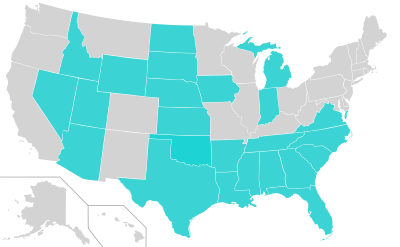
|
Seems like alot of folks here are anti Union to me. Stil good folks just need to brush up on labor history to get a better picture of the country work force. As history shows back to the John L Lewis days and united mine workers were getting killed and hurt then when they would get hurt they would be out of a job even the towns were company owned. The work force cam together to protect saftey and jobs. Today most of the blue collor jobs pay better and have safer work places because of the early days, union or non union. As you can tell I am Union and proud of it over 35 years now. IBEW. Our union trains the workforce so when a company hires them to do the work they dont pay to train employes and they know it will be done as safe as possible and will get quality work. The saftey and training skills are top in the country. Non union company and jobs benefit today from the saftey programs set forth by our union fore fathers long ago. Unions are not for every one or every company, but are a big part of saftey and benefits protection that alot of jobs have today, union and non union. my openion everyone has there own. 
|
|
Quoted:
Seems like alot of folks here are anti Union to me. Stil good folks just need to brush up on labor history to get a better picture of the country work force. As history shows back to the John L Lewis days and united mine workers were getting killed and hurt then when they would get hurt they would be out of a job even the towns were company owned. The work force cam together to protect saftey and jobs. Today most of the blue collor jobs pay better and have safer work places because of the early days, union or non union. As you can tell I am Union and proud of it over 35 years now. IBEW. Our union trains the workforce so when a company hires them to do the work they dont pay to train employes and they know it will be done as safe as possible and will get quality work. The saftey and training skills are top in the country. Non union company and jobs benefit today from the saftey programs set forth by our union fore fathers long ago. Unions are not for every one or every company, but are a big part of saftey and benefits protection that alot of jobs have today, union and non union. my openion everyone has there own. Yes, unions CAN have a good side. IMO the negatives outweigh that-like the union a couple years ago that protested a Boy Scout's Eagle project that involved cleaning a park. Hos volunteer work took jobs away from union workers. Another negative is harrassment to nonmembers in right to work states-this can range from absolutely refusing to have anything to do with someone who isn't a member("you didn't join my club so I won't talk to you") to outright threats. When my wife got her teaching job, she was told by teacher's union members that "if she values her job she will join the union". Granted, I've never been a union member, but after my only experiences with unions being negative I won't be a member either. Yes, unions have done some good things in terms of workplace safety. However, we now have laws that replace much of that usefulness. |
|
Quoted: Right-to-work states don't ban unions, they just don't require it. In "right-to-work" states, there is no requirement to join a union. Employment is "at-will" so you can be fired or quit for pretty much any reason without any union contract to fall back on. Often, the employers will say something to the effect of "we're not a union company" when a new employee joins, and if rabble-rousers start trying to form a union, the employer will shitcan the troublemakers before they have a chance to unionize. If a union does manage to form and the employer recognizes them, then they can strike and negotiate labor contracts and all that stuff (including receiving certain federal protections). Also, here is a map of "right-to-work" states in turquoise, obviously there is a strong correlation to political red states: http://upload.wikimedia.org/wikipedia/commons/thumb/2/2a/Right_to_work.svg/400px-Right_to_work.svg.png pretty much this. The reason most companies can't just fire them is because they were stupid enough to sign a legal contract saying as much. If I owned a company and was well off I would shut the doors before I let a union tell me what I was going to do with my business and I would make it clear. You unionize I will shut this bitch down permanently. |
|
Unions can't do shit to keep a company from just firing striking workers. They're a vendor witholding product in order to negotiate a better price, and there is no reason a company can't find other vendors to buy from.
Now enter the government, and let's say the union has done a little back alley deal with the members voting for some asshat in exchange for him getting a law passed that unions are somehow more equal than other vendors, so once they get their hooks into a company, they can leech off it till it dies like Hostess or GM. Now the company has the threat of armed men with badges offering them a deal they literally can't refuse. That's what we have now. It sucks ass. Unions serve a purpose, but the government shouldn't be involved in price and quantity negotiations for any production input, be it labor, fuel, real estate, widgets, or anything else. |
|
Screw those union a'holes. I ran a 1,000 ton Cinci' press for years for Cat'. Every 3 months we had these "All Employee" meetings at the division I worked at and the (Union) turds would always bitch about "Getting fucked in the ass with no Vaseline and no reach-around" (We all worked for the attachments division and were making 2 1/2 times the going rate in our area BTW). My brother's and I always asked them...."Why in the HOLY fuck would you continue to come back every day if you felt that these people were...essentially..."raping" you?...Is there something about this that you like?...You'd get away with that shit ONCE with me and I'd be down-the-road looking for greener pastures". One day, we went to the "All Employee" meeting and they told us that the plant was closing. It was hilarious (  ), my brother Dave was telling all the (Crying) workers that their day of emancipation was finally here and that...they could ), my brother Dave was telling all the (Crying) workers that their day of emancipation was finally here and that...they couldall start getting What was their "rightful due" from "ALL" the other employers in our area (There weren't any  ) just chomping-at-the-bit ) just chomping-at-the-bitto hire us. I really hated to lose that job (I loved working for Cat') but, that last day almost made it worth losing  |