


[ARCHIVED THREAD] - My Generator set up (Page 1 of 2)
Posted: 8/4/2012 12:26:50 PM EDT
|
I wired a seperate dual wireing circute for my gen set in my home. Installing 120 volt outlets behind the freezer, fridge, tv, and two in the pantry just in case i need to run some other stuff during an outage. It works great. Everything running the most power i have used is about 3000 watts of the 5500 constant running watts of the gen set (6875 surge). I used 10/4 romex from distrubition box to inlet plug and 10/4 heavy so from gen set to inlet box. Running seperate circute insures that NO power is sent down line and no need to shut off main line breaker in house. This was important to me because i work for a power company and i know the danger than can be. Yes i have to unplug each applance and light and tv from house receptical and plug it into the gen circute but that is no problem and it works great. I run 4 to 6 lights, Directv and 40 in LED tv, Refridgerator, Freezer, 2 fans in summer, gass logs for heat in winter which will keep whole home nice and warm no power used. Have plenty of power to spare.
Trying to put some pics of the set up here but cant find out how to do it. can anyone help me please. Someone here wanted to know what i did for emg power set up but dont remember who. thanks. |
| OK good point. the reason for running seperate circute completely seperate from normal power is this. i work for a power company and i HAVE seen those switches fail putting power back on the line and/or when power comes back on backfeeding power back to the generator causing all kinds of safty issues and damage. I know 99% of time they work find but for me having everything completly seperate is more inportant to me. Thanks for the input i thought about this for over a year before i went the way i did and put alot more work into it. |
|
Quoted:
Why not backfeed using a UL-listed interlock device? Good question! Trying to figure this out here. http://www.ar15.com/forums/t_1_5/1349005_Attn__Arfcom_electricians____Help_needed_with_generator.html |
|
Quoted:
OK good point. the reason for running seperate circute completely seperate from normal power is this. i work for a power company and i HAVE seen those switches fail putting power back on the line and/or when power comes back on backfeeding power back to the generator causing all kinds of safty issues and damage. I know 99% of time they work find but for me having everything completly seperate is more inportant to me. Thanks for the input i thought about this for over a year before i went the way i did and put alot more work into it. Are you telling me you've seen main breakers fail in such a way that when they are in the OFF position, they'll still let current flow? |
|
Quoted:
Yes i have seen two breakers that have failed. one was due to a lighting strike guess that can trash any circute but the other was checked by an eletrictian and it did fail. thats why I did it the way i did and it works but it is alittle more work. Interesting. I suppose what you did is the safest method since it's completely separate from utility service. |
|
Quoted: Quoted: How can a physical transfer lock out fail? UL tests for that. The argument I've seen (and in the thread linked above) is that the mains only opens the hots and not the neutrals. Neutrals are bonded to ground at service point entry. Per NEC, any generator connected as service must be bonded to this neutral point. Now if the neutral isn't grounded, then you could have backfeeding. This is why a transfer install by a licensed electrician will check for this fault. But if the ground is broken after the install... If you try to make something fool proof, they just come up with a better fool. A manual disconnect between meter and main panel will prevent such neutral backfeed if the ground is cut. Still, the system is dangerous. |

|
Quoted: It DOES have a seperate ground rod grounding the generator. I did check and had eletr. check it for proper grounding. yes i know i have to hook up the ground when setting it up to run more work As your system is powered by the generator, grounding is necessary. Separately derived is the wording in the NEC. Also, that grounding point is where neutrals are tied to ground. |
|
After the Derecho storm smacked the hell out of us, I decided I'd had enough and purchased a Champion generator from these guys: http://www.electricgeneratorsdirect.com/ The generator is rated at 7.5kw steady state and 9.250kw surge. It is a superbly well made unit and made right here in America. I own a 3600' sq. two story home with a 4-ton A/C. No sump pump, no well pump. All appliances are gas, including the water heater. The A/C draws about 5.5kw surge. Here is the genset:  After careful research of the tasks and risks involved, I decided to let an electrical contractor install the bypass system. Good plan since they had to drill a hole in my concrete foundation. Here is the 10-breaker panel:  It is a Reliance Q310C. It will handle up to 30A. It has ten breakers but we had to use 2 for the A/C system, leaving me with 8 for the rest of the house. Here is the Reliance PB30 outside jackbox to connect the genset to the house:  I also purchased a Reliance 20' cable. The generator comes with a very robust 1:4 cable but I haven't used it yet. We selected 8 circuits that we'd most likely need during an outage. We left the guest BRs off, my wife's art/craft studio off, and the basement off except for the 2nd frige. Everything else is connected up. After the installation was complete, we did an optest. We fired up the generator and switched over the entire house except for the A/C. All worked perfectly with almost no load on the generator. The wattmeters on the Q310C box barely moved. Now came the acid test...would the generator handle the A/C too? The electrician said no that I'd have to shut down the A/C to power up the other ckts...but my ancient electrical theory homework said it should take the load ok. I flipped the twin breaker on the the Q310C box, the generator loaded down a bit, the wattmeters sagged a bit and then the generator ran fine and the wattmeters quickly returned to about 1/3 of full scale...and the A/C was still working along with the rest of the house!  The electrician was a bit chagrined. I was super happy! Just to test it again...I shut off the A/C then turned it on again. After the five minute dead time to settle out, it came on again just as before with the same load indications. I admire those of y'all who have the skillset to do your own electrical work. I wasn't willing to risk it. I don't even know that the codes are now.  |
|
Quoted: Quoted: It DOES have a seperate ground rod grounding the generator. I did check and had eletr. check it for proper grounding. yes i know i have to hook up the ground when setting it up to run more work As your system is powered by the generator, grounding is necessary. Separately derived is the wording in the NEC. Also, that grounding point is where neutrals are tied to ground. Sir, my guys said I did not need another grounding bar sunk in the ground because my unit is grounded through the 4-prong plug from the genset to the PB30 plug then into the house ground. There is a heavy gauge copper multi-strand cable from the house service box to the ground bar buried in the ground. Am I about to kill someone or burn down my house?  |
|
Quoted: Quoted: Quoted: It DOES have a seperate ground rod grounding the generator. I did check and had eletr. check it for proper grounding. yes i know i have to hook up the ground when setting it up to run more work As your system is powered by the generator, grounding is necessary. Separately derived is the wording in the NEC. Also, that grounding point is where neutrals are tied to ground. Sir, my guys said I did not need another grounding bar sunk in the ground because my unit is grounded through the 4-prong plug from the genset to the PB30 plug then into the house ground. There is a heavy gauge copper multi-strand cable from the house service box to the ground bar buried in the ground. Am I about to kill someone or burn down my house? Your setup is properly installed per the National Electric Code. Now, if you were to use the generator elsewhere, then you would need grounding. |
| I just wired up a 240v receptical on its own double pull 30 amp breaker. Then made a double male end cord to go from my generator to the receptical. I keep that breaker off always. If I lose power I shut off the main and everything else. Then I plug in the generator and fire it up. Turn on the 30amp breaker and any other breakers that I need. I also work for the power company and this is pretty much the same way the guys I work with do it too. |
|
Quoted: Keith_J - While you're in the thread, can you enlighten everyone in the thread as to floating neutral vs. bonded neutral? A floating neutral is an accident waiting to happen. Normal 120 volt appliances may continue to work as the neutral is shared with the other leg and you will get voltages higher than 120 in the lower draw appliance if there is a load on the other leg. Imagine a hair curler that now gets 200 volts where it was designed for 120 because someone turned on a toaster oven on the other leg. The heating element blows and may fault to the metal shell. If not grounded...bam. Curling irons are commonly used barefoot.  |
|
Quoted:
I just wired up a 240v receptical on its own double pull 30 amp breaker. Then made a double male end cord to go from my generator to the receptical. I keep that breaker off always. If I lose power I shut off the main and everything else. Then I plug in the generator and fire it up. Turn on the 30amp breaker and any other breakers that I need. I also work for the power company and this is pretty much the same way the guys I work with do it too. My set up is like this |
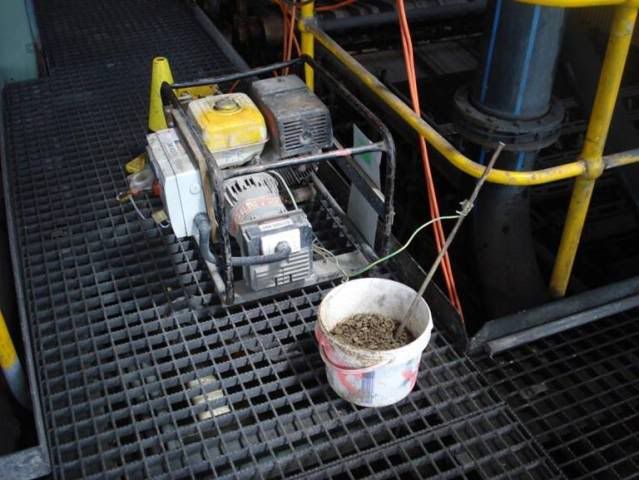
|
Quoted:
I wired a seperate dual wireing circute for my gen set in my home. Installing 120 volt outlets behind the freezer, fridge, tv, and two in the pantry just in case i need to run some other stuff during an outage. It works great. Everything running the most power i have used is about 3000 watts of the 5500 constant running watts of the gen set (6875 surge). I used 10/4 romex from distrubition box to inlet plug and 10/4 heavy so from gen set to inlet box. Running seperate circute insures that NO power is sent down line and no need to shut off main line breaker in house. This was important to me because i work for a power company and i know the danger than can be. Yes i have to unplug each applance and light and tv from house receptical and plug it into the gen circute but that is no problem and it works great. I run 4 to 6 lights, Directv and 40 in LED tv, Refridgerator, Freezer, 2 fans in summer, gass logs for heat in winter which will keep whole home nice and warm no power used. Have plenty of power to spare. Trying to put some pics of the set up here but cant find out how to do it. can anyone help me please. Someone here wanted to know what i did for emg power set up but dont remember who. thanks. Excellent. Complete isolation with man in the loop switching. May not be fancy but the reliability is A+. |
|
Quoted: if you use a portable generator with just extension cords to run say a freezer and lights and maybe a fan do you need a ground rod for grounding? 5 kW and under, using only NEMA type plugs, no. Any hard wired set and those above 5 kW must be grounded per NEC if used as a stand-alone system. But if the service is already grounded, the generator must be bonded to that ground. All homes (should) be grounded at their service entry point. |
|
Quoted: Just out of curiosity, wouldn't a manual transfer switch have been easier? A manual switch breaks the connection, physically, correct? Yeah, but IF you have a floating neutral and you run the generator, you could backfeed. But floating neutrals cause other issues. And yes, circuit breakers can fail. But if you have a 3PDT switch between your meter and transfer/main, this REMOTE issue can be circumvented. You have to be smarter than the wire. Not hard to do, the issue is training. |
|
Quoted:
After the Derecho storm smacked the hell out of us, I decided I'd had enough and purchased a Champion generator from these guys: http://www.electricgeneratorsdirect.com/ The generator is rated at 7.5kw steady state and 9.250kw surge. It is a superbly well made unit and made right here in America. I own a 3600' sq. two story home with a 4-ton A/C. No sump pump, no well pump. All appliances are gas, including the water heater. The A/C draws about 5.5kw surge. Here is the genset: http://img.photobucket.com/albums/v496/LWilde/41537.jpg After careful research of the tasks and risks involved, I decided to let an electrical contractor install the bypass system. Good plan since they had to drill a hole in my concrete foundation. Here is the 10-breaker panel: http://img.photobucket.com/albums/v496/LWilde/Q310C_500.jpg It is a Reliance Q310C. It will handle up to 30A. It has ten breakers but we had to use 2 for the A/C system, leaving me with 8 for the rest of the house. Here is the Reliance PB30 outside jackbox to connect the genset to the house: http://img.photobucket.com/albums/v496/LWilde/PB30_500.jpg I also purchased a Reliance 20' cable. The generator comes with a very robust 1:4 cable but I haven't used it yet. We selected 8 circuits that we'd most likely need during an outage. We left the guest BRs off, my wife's art/craft studio off, and the basement off except for the 2nd frige. Everything else is connected up. After the installation was complete, we did an optest. We fired up the generator and switched over the entire house except for the A/C. All worked perfectly with almost no load on the generator. The wattmeters on the Q310C box barely moved. Now came the acid test...would the generator handle the A/C too? The electrician said no that I'd have to shut down the A/C to power up the other ckts...but my ancient electrical theory homework said it should take the load ok. I flipped the twin breaker on the the Q310C box, the generator loaded down a bit, the wattmeters sagged a bit and then the generator ran fine and the wattmeters quickly returned to about 1/3 of full scale...and the A/C was still working along with the rest of the house!
The electrician was a bit chagrined. I was super happy! Just to test it again...I shut off the A/C then turned it on again. After the five minute dead time to settle out, it came on again just as before with the same load indications. I admire those of y'all who have the skillset to do your own electrical work. I wasn't willing to risk it. I don't even know that the codes are now.
Hmmmmm this makes me think about doing something comparable but with solar panels on wheels and deep cycle batteries. |
| Ok to understand the floating neautral.......... say you got a cabin in the midle of nowhere......not on grid and you powering it with a portable generator lights refridgerator fan ect .......... should you have the generator connected to a ground rod? what are some issues you talked about with floating neutrals? trying to learn some things here thanks |
|
Quoted: Ok to understand the floating neautral.......... say you got a cabin in the midle of nowhere......not on grid and you powering it with a portable generator lights refridgerator fan ect .......... should you have the generator connected to a ground rod? what are some issues you talked about with floating neutrals? trying to learn some things here thanks If the house is wired to code, it will have a ground. When you connect the generator, this ground will be used for the generator. Do not assume a 4 wire connection to the generator will ground it, some gensets may not be connected chassis to ground. It SHOULD be. Floating neutrals are best understood by circuit analysis. Forget AC for now, think of the split leg system as a positive leg, a negative leg and a neutral. From leg to leg, you have 240 volts. From either leg to neutral, you have 120 volts. The transformer has a ground. The neutral should also be grounded, if it loses ground, now any 120 volt appliance will see either greater than 120 volts (if the appliance has less draw than the other leg) or less than 120 volts (if the other leg has less draw than that appliance). Or, in other words, current through the neutral line is ZERO when both legs are balanced. This almost never happens, the neutral conductor is almost always carrying current, just most of the time it is less than either leg. The neutral carries no current for 240 volt loads, all current is in the legs. |
|
Quoted: Yea. If I ever use it away from the house, I'll be sure to drive a stake into the ground and hook up the genset to the ground cable. Thanks.Quoted: Quoted: Quoted: It DOES have a seperate ground rod grounding the generator. I did check and had eletr. check it for proper grounding. yes i know i have to hook up the ground when setting it up to run more work As your system is powered by the generator, grounding is necessary. Separately derived is the wording in the NEC. Also, that grounding point is where neutrals are tied to ground. Sir, my guys said I did not need another grounding bar sunk in the ground because my unit is grounded through the 4-prong plug from the genset to the PB30 plug then into the house ground. There is a heavy gauge copper multi-strand cable from the house service box to the ground bar buried in the ground. Am I about to kill someone or burn down my house? Your setup is properly installed per the National Electric Code. Now, if you were to use the generator elsewhere, then you would need grounding. |
|
I have a back up generator here. I have a 6 circuit 2ND panel near the 200 amp service coming into the house. All I do is power up the generator outside, plug it into the house into a 240 plug outside near the hatchway, go to the power supply area of the basement and click the 6 circuits and 90% of the house is powered up.
The guy charged me 500 bucks to wire it up. OP, do it right. The house will be worth more when you sell it, and no one is going to die when working around electricity in, around your place or down the street. |
|
Quoted:
I just wired up a 240v receptical on its own double pull 30 amp breaker. Then made a double male end cord to go from my generator to the receptical. I keep that breaker off always. If I lose power I shut off the main and everything else. Then I plug in the generator and fire it up. Turn on the 30amp breaker and any other breakers that I need. I also work for the power company and this is pretty much the same way the guys I work with do it too. My wife's cousin works for Detroit Edison and this is how he is going to wire up mine. |
|
Quoted:
Quoted:
I just wired up a 240v receptical on its own double pull 30 amp breaker. Then made a double male end cord to go from my generator to the receptical. I keep that breaker off always. If I lose power I shut off the main and everything else. Then I plug in the generator and fire it up. Turn on the 30amp breaker and any other breakers that I need. I also work for the power company and this is pretty much the same way the guys I work with do it too. My wife's cousin works for Detroit Edison and this is how he is going to wire up mine. Double male cords are called "suicide cords" for a reason. Terrible idea as they leave little room for error. Inlet boxes are cheap. Also, backfeeding without an interlock does not meet code. Interlocks devices are cheap too. |
|
Quoted: Only thing I would suggest is put your electronics on a UPS Even if a small APC 500 THis will help clean up the power feeding the device and will also save you in a brown out condition. Not really. The waveform of a generator is mechanically generated by the speed of the engine. Sure, you can have slight power factor related voltage shifts but still less than 3% total harmonic distortion unless you really inductively load the generator. Voltage regulation is also pretty damn good, there is more error induced by wiring voltage drop than what the generator gives. Now, a UPS? That is nothing more than an inverter, unless you go VERY EXPENSIVE, it will be a modified sine wave unit. Which is far worse than 59 to 61 Hz from a mechanically governed generator. Besides, computers run on DIRECT CURRENT, the power supply is a switched mode power supply and most newer ones are power factor corrected. |
|
Quoted:
Quoted:
Quoted:
I just wired up a 240v receptical on its own double pull 30 amp breaker. Then made a double male end cord to go from my generator to the receptical. I keep that breaker off always. If I lose power I shut off the main and everything else. Then I plug in the generator and fire it up. Turn on the 30amp breaker and any other breakers that I need. I also work for the power company and this is pretty much the same way the guys I work with do it too. My wife's cousin works for Detroit Edison and this is how he is going to wire up mine. Double male cords are called "suicide cords" for a reason. Terrible idea as they leave little room for error. Inlet boxes are cheap. Also, backfeeding without an interlock does not meet code. Interlocks devices are cheap too. I work on voltages ranging from 120vac-345kv. I'm pretty sure I know how to use my cord. I wouldn't recommend it for someone who doesn't know what they're doing but it is pretty simple. When power is out for days or weeks I could give two sh!ts about code. When I am doing storm restoration and I run across someone with a setup like mine it doesn't bother me at all. We fuzz the lines and treat everything as hot unless we have a visual open anyway. |
|
Quoted:
OK good point. the reason for running seperate circute completely seperate from normal power is this. i work for a power company and i HAVE seen those switches fail putting power back on the line and/or when power comes back on backfeeding power back to the generator causing all kinds of safty issues and damage. I know 99% of time they work find but for me having everything completly seperate is more inportant to me. Thanks for the input i thought about this for over a year before i went the way i did and put alot more work into it. I bought a 12kw generator so I can run my heat pump. I had an electrician install a double throw switch and a dedicated 50 amp input plug to the switch block. Throw the switch disconnect from utility, plug in and start generator and throw switch to generator input. I run everything but the water heater and emergency heat strips in the heating system. |
|
Quoted:
Quoted:
Quoted:
Quoted:
I just wired up a 240v receptical on its own double pull 30 amp breaker. Then made a double male end cord to go from my generator to the receptical. I keep that breaker off always. If I lose power I shut off the main and everything else. Then I plug in the generator and fire it up. Turn on the 30amp breaker and any other breakers that I need. I also work for the power company and this is pretty much the same way the guys I work with do it too. My wife's cousin works for Detroit Edison and this is how he is going to wire up mine. Double male cords are called "suicide cords" for a reason. Terrible idea as they leave little room for error. Inlet boxes are cheap. Also, backfeeding without an interlock does not meet code. Interlocks devices are cheap too. I work on voltages ranging from 120vac-345kv. I'm pretty sure I know how to use my cord. I wouldn't recommend it for someone who doesn't know what they're doing but it is pretty simple. When power is out for days or weeks I could give two sh!ts about code. When I am doing storm restoration and I run across someone with a setup like mine it doesn't bother me at all. We fuzz the lines and treat everything as hot unless we have a visual open anyway. It's just a heads up for the readers at home. 
My circumstances are such that I may not be the one hooking things up - a family member might. No point for me to endanger loved ones with needlessly dangerous items. |
|
Quoted:
Quoted:
Quoted:
Quoted:
Quoted:
I just wired up a 240v receptical on its own double pull 30 amp breaker. Then made a double male end cord to go from my generator to the receptical. I keep that breaker off always. If I lose power I shut off the main and everything else. Then I plug in the generator and fire it up. Turn on the 30amp breaker and any other breakers that I need. I also work for the power company and this is pretty much the same way the guys I work with do it too. My wife's cousin works for Detroit Edison and this is how he is going to wire up mine. Double male cords are called "suicide cords" for a reason. Terrible idea as they leave little room for error. Inlet boxes are cheap. Also, backfeeding without an interlock does not meet code. Interlocks devices are cheap too. I work on voltages ranging from 120vac-345kv. I'm pretty sure I know how to use my cord. I wouldn't recommend it for someone who doesn't know what they're doing but it is pretty simple. When power is out for days or weeks I could give two sh!ts about code. When I am doing storm restoration and I run across someone with a setup like mine it doesn't bother me at all. We fuzz the lines and treat everything as hot unless we have a visual open anyway. It's just a heads up for the readers at home.
My circumstances are such that I may not be the one hooking things up - a family member might. No point for me to endanger loved ones with needlessly dangerous items. The more I think about it you are right. I am going to make a checklist of things that must be done to backfeed my panel. Everybody makes mistakes and all it takes is skipping one step and things could be bad. This might not be the safest setup but if done properly I see no issues. I would not recommend this to someone who doesn't understand exactly what they are doing. |