


Posted: 1/24/2017 7:29:54 PM EDT
|
So far I have only two autos, a Seiko 5 SNZG09K1 and a Seiko diver SKX173.
The 5 lost several minutes a day until I played amateur watchmaker, pulled the back, and fiddled with the adjustment. I've now got it down to about 20 seconds a day. 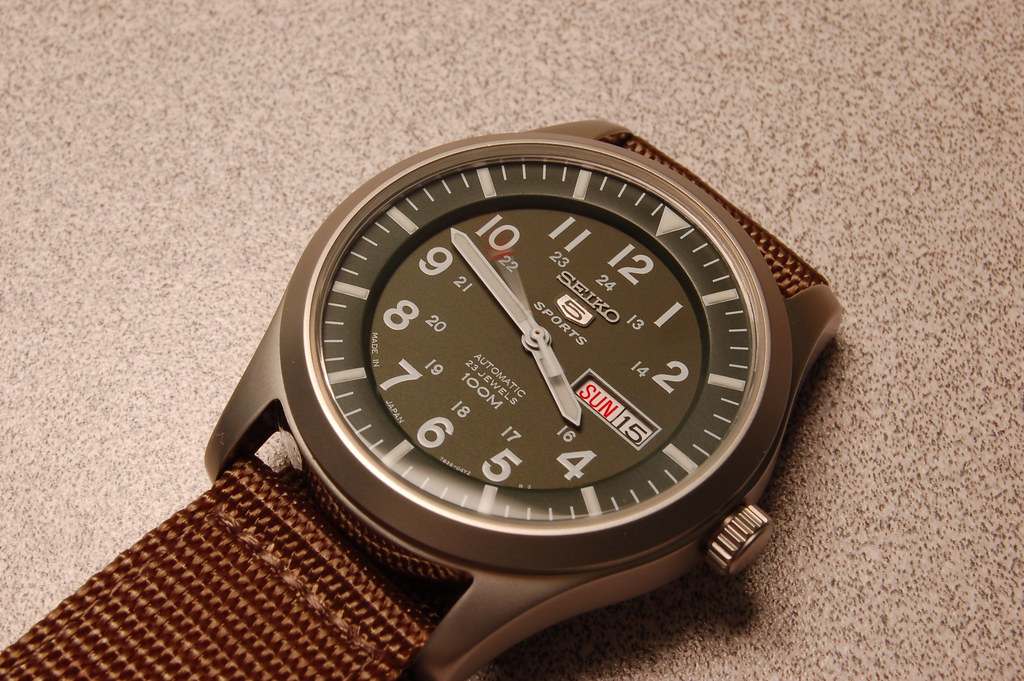 DSC_2143-Seiko5-SNZG09K1 by FredMan, on Flickr DSC_2143-Seiko5-SNZG09K1 by FredMan, on Flickr
The diver, on the other hand, in the 2 weeks I've been wearing it, has gained a total of 3 seconds. I find this simply amazing. 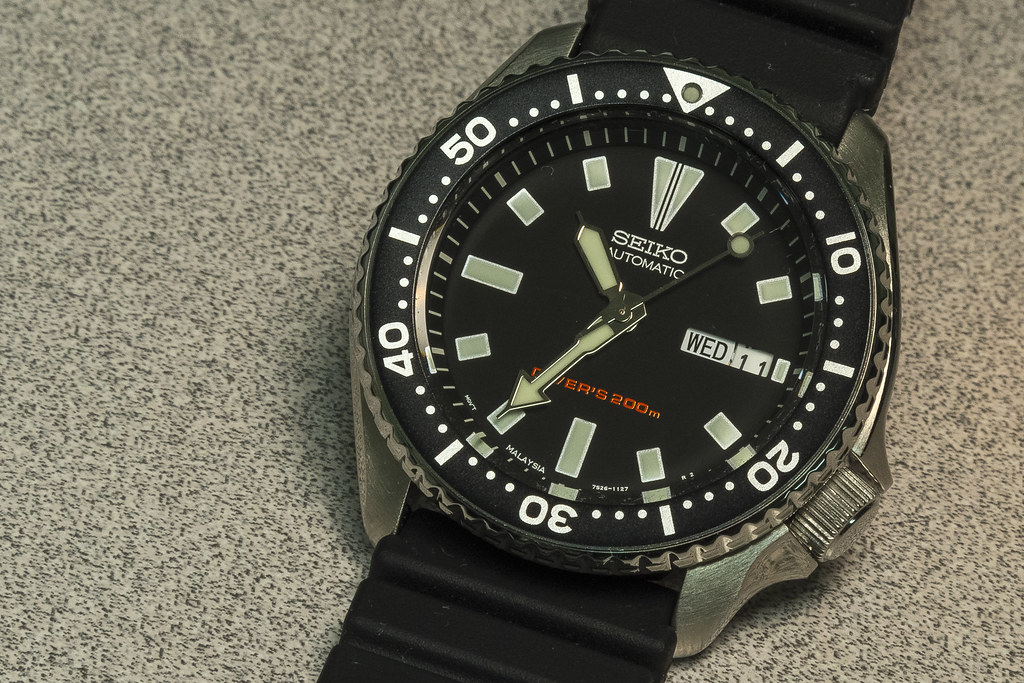 SKX173 by FredMan, on Flickr SKX173 by FredMan, on Flickr
I've been comparing times against a weather-clock combo I have that automatically checks against the atomic clocks every night. When I'm wearing these watches I'm wearing them 14-15 hours a day. What kind of accuracy are you getting? What tips/tricks do you have/use to get the most accuracy out of your autos? |

|
My Omega Seamaster caliber 1120 (ETA 2892.2) is COSC certified.
That said it's had one service (previous owner) and has been consistent -2 / -1.5 a day. I set it Monday morning to the Naval observatory and it's -5 to the naval clock as of right now. It was a bit slower (-4) but after wearing it daily since the 9th (when I got it) it's tightened up. I rest it face up at night as that's the only time I don't wear it. If I needed precision time for something I'd wear my gshock |
|
Quoted:
Sorry I call BS on +3 seconds in two weeks. That would depend on a lot of factors. Some watches might gain 10 seconds in 12 hours on the wrist, then lose 10 seconds over 12 hours laying face up on the nightstand. I've seen several watches that had pretty big gain/loss in certain short term situations but it averaged out to some pretty impressive numbers over weeks or months. |
|
Quoted:
That would depend on a lot of factors. Some watches might gain 10 seconds in 12 hours on the wrist, then lose 10 seconds over 12 hours laying face up on the nightstand. I've seen several watches that had pretty big gain/loss in certain short term situations but it averaged out to some pretty impressive numbers over weeks or months. Possible I suppose, but I'm still doubtful |
|
My Seamaster Co-Ax gains a couple minutes every month or so. I really haven't tried to exactly measure it. When I notice its fast a couple minutes I change it back. (Seems like its every couple months anyways.) Now I'll have to pay attention!
I wear it 24/7. Edit: it appears to be fast approx 6 seconds since I posted a little under 26 hours ago. |

|
Quoted:
Sorry I call BS on +3 seconds in two weeks. You can call it BS all you want, but here's my readings: Watch recv'd 1/10/17 First timecheck, 1/15/17 Watch- 11:08:45 Clock - 11:08:28 17 sec fast, FIRST READING. All readings are taken in the evening (so 06 hrs is really 18 hrs) 1/16/17 W-10:42:30 C-10:42:12 18 sec fast, +1 sec variance from 1st reading 1/20/17 W-10:31:30 C-10:31:13 17 sec fast, 0 sec variance from first reading, +1 sec variance from previous reading 1/24/17 W-06:17:45 C-06:17:30 15 sec fast, -2 sec variance from first reading, -2 sec variance from previous reading 1/27/17 W-10:10:00 C-10:09:49 11 sec fast, -6 sec variance from first reading, -4 sec variance from previous reading So, after 16 days, the watch has lost 6 seconds compared to the first reading on day 4. On average it's losing 0.375 seconds per day (and I understand that it might be gaining/losing throughout the day, but at the times I'm taking readings this is what I've got). That's pretty damn accurate in my book. |