


Posted: 4/7/2017 11:11:11 AM EDT
|
Just picked up a Savage 11VT in .308 with 24" barrel.
Looking for a scope with a 30mm tube for target shooting and deer hunting. Rings (steel GG&G #1020's) and base (Nightforce 20 moa Steel) already purchased. Shooting out to maybe 400 yards at the most. Looking for input as far as a fixed power or variable power with FFP. No real budget, but I'd like to keep it at under $400. SWFA SS series in: 10x or 12x for the fixed power. Nikon, Primary Arms, and Falcon Optics for variable power. |
|
None of the < $400 variable magnification optics come close to the quality or ruggedness of the SWFA SS. There might be an exception on sale/clearance/used etc. somewhere.
IMAO the SWFA reticle is fine for holdover, you just have to learn how to use one of the many available ballistics resources to find where on the mil reticle your hold is for a given range. This is knowledge and skill worth acquiring. re: suitability of fixed power for hunting. What kind of deer hunting? If it's from a blind shooting 50 - 100 yds I think target acquisition even with a 12x is manageable. If you're out tracking mule deer in West Texas expecting to do a snap shot, maybe not so much. The 6x SWFA SS is a compromise option. I've seen many shooters hit steel at a local 500yd range with those all day long. Depends on priorities. How often are you going to try shooting something smaller than a watermelon at 400yds? |
|
Back in the day, 4x was considered optimum of you were hunting east of the Mississippi, and 6x was considered optimum if you were hunting west of the Mississippi.
Speaking from a western SD born and raised perspective, 400-500 yard kills on antelope were readily achievable with a decent 6x scope. If you wanted to shoot varmints or shoot at 500-800 yards, I'd recommend the 10x, rather than the 6x, but it's important to note that the field of view of the SWFA 10x scope is half that of the 6x scope. |
|
Mostly stands or a seated ground location for hunting deer along tree lines around open fields.
The target shooting is more for practice and fun. BDC or non-BDC, fixed or variable power, christ this annoying as hell. I may just end flipping a quarter to decide if I go fixed or variable and do the same for the other decision regarding the scope specifics after that 
|
|
Quoted:
...BDC or non-BDC, fixed or variable power, christ this annoying as hell. I may just end flipping a quarter to decide if I go fixed or variable and do the same for the other decision regarding the scope specifics after that 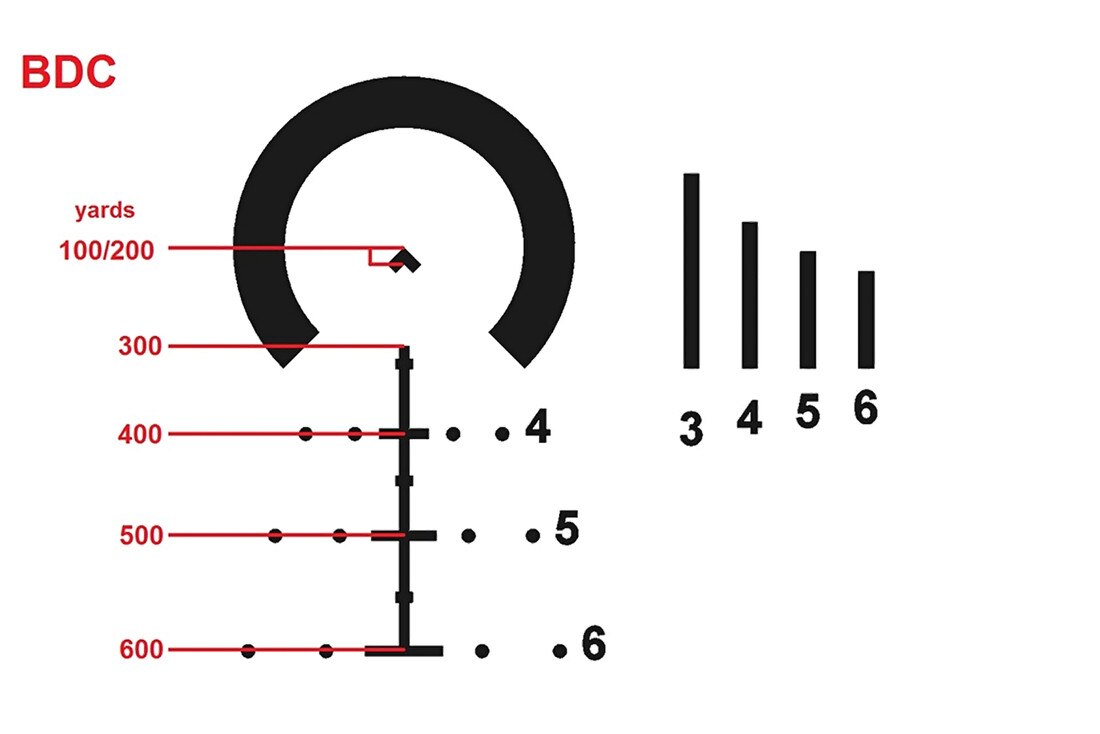
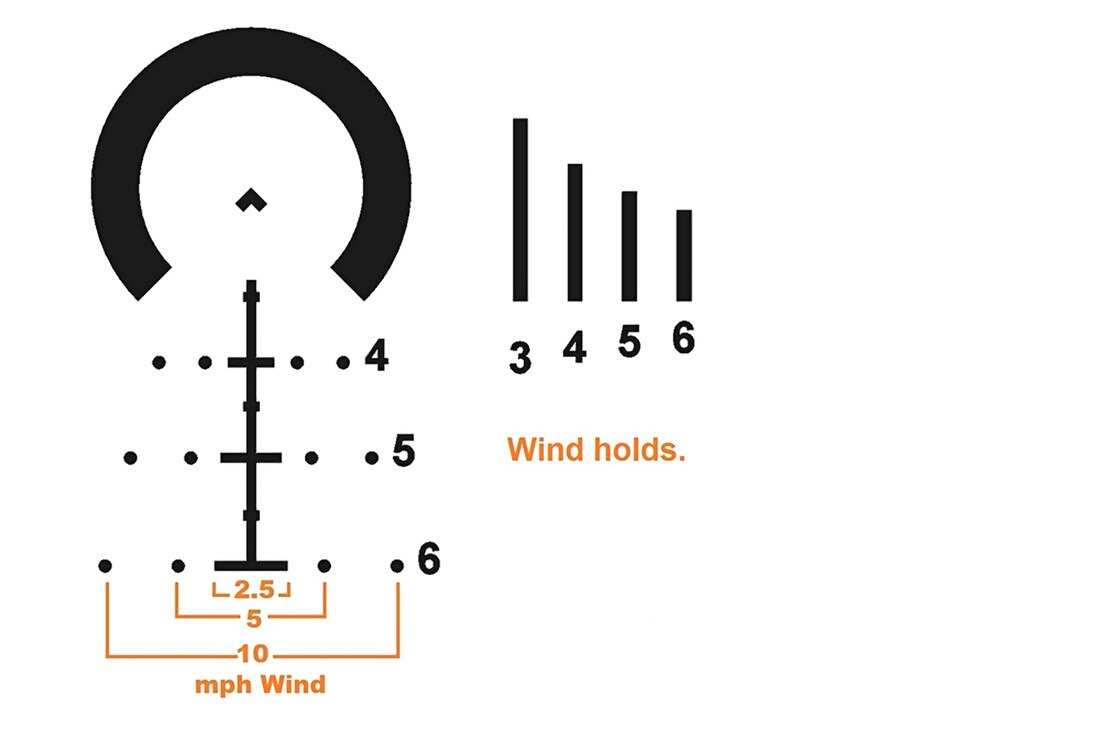
|
|
Quoted:
Mostly stands or a seated ground location for hunting deer along tree lines around open fields. The target shooting is more for practice and fun. BDC or non-BDC, fixed or variable power, christ this annoying as hell. I may just end flipping a quarter to decide if I go fixed or variable and do the same for the other decision regarding the scope specifics after that 1. Zero at your preferred distance - 100 yards or meters is pretty common, but it's not a requirement, then put the elevation and windage needed for a particular shot on your Mil or MOA finger adjustable turrets. 2. Establish a basic zero at some intermediate distance and then use the hash marks on a Mil or MOA reticle to adjust for longer or shorter shots. For example, if you're using a Federal 165 gr Sierra Game King in your .308 at 2700 fps, and zero at 250 yards, the bullet will be within 3 3/4" of the line of sight out to about 285 yards. You'd then hold 2 MOA high at 300, 3 MOA high at 350 yards, 5 MOA high at 400 yards, 7 MOA high at 450 and 9 MOA high at 500. 2, 3, 5, 7 and 9 MOA is easy to remember. 3. Use a BDC reticle. The BDC requires you to zero at a specific distance. The reticle is also designed for/limited to a specific load or class of cartridges, and unless you take care to ballistically match the load to the reticle, it's not as precise as either of the other methods. Number 1 is precise, but requires you to either generate the required ballistic data or memorize the come ups at various ranges, and it's a bit slower if you are engaging targets at different distances. Number 2 is very flexible but again requires you to either generate the required ballistic data or memorize the correction needed at various ranges. It can however can be done very quickly, if you memorized the corrections. Number 3 is not always that precise, you're limited by the maximum range allowed by the reticle, and the magnification has to be factored in of you're using a second focal plane scope. But short of screwing up the magnification on an SFP scope, or using a cartridge that is not all that consistent with the reticle, it's fast and pretty idiot proof. A scope with adjustable turrets can be used for either option 1 or 2, and a scope with a BDC reticle AND adjustable turrets can be used for option 1 or 3. With a Mil, MOA or BDC reticle you still have the option of correcting for a missed first shot, by making the correction using the reticle - but it's easier and more precise with the Mil or MOA reticles. ---- Honestly, given 400 yard ranges and your style of hunting - stands or still hunting over open field, where observation is a key element, just get a 10x fixed power scope with a Mil or MOA reticle and matching Mil or MOA turrets. If you think in yards and inches, get the MOA reticle. If you think in meters and centimeters, get the Mil-dot reticle. In other words, do you consider a white tail deer to be 15" deep in the chest, or 38 cm deep in the chest? If you said 15", get an MOA reticle - it'll make life simpler and you'll shoot better. You can then use the reticle itself for ranging and inside 600 yards or so, it will be plenty accurate enough for your purposes. You can also then either use the Mil or MOA hash marks to hold off the target for windage and elevation, or put the dope on the scope and shoot with the cross hairs on the target. |
|
I didn't address it in my initial response as it is independent of the reticle, and I focused on how the reticles themselves are used, but there is also a 4th option, not always a good one, but an option.
4. A BDC turret. In this case the elevation turret itself is marked for the specific ranges, based on the trajectory of a specific load (more precise) or class of cartridges (less precise). The principle advantage is being able to quickly adjust the elevation to a specific range, while at the same time retaining the ability to use a standard reticle more suitable for range estimation than some BDC reticles. The primary disadvantage is some loss of precision, while the other disadvantages vary based on how the BDC turret is designed. If it's just a regular click adjustable 1/4 MOA or .1 Mil turret, the maximum range is limited to one rotation of the turret (good for hunting purposes but not adequate for long range shooting). Alternatively, the current can be marked for multiple turns, but that results in a much less clear multiple rotation marking scheme. Another approach is to engineer the turret for much more aggressive elevation adjustment so that you get enough adjustment in one turn to allow for shooting out to 1000 yards. The downside with this approach is that since each click increases the range by 100 yards or 100 meters, you lose some of the ability for precise adjustment for atmospherics and/or deviation from the marked range increments. One way to address this deficiency is to not use clicks at all on the turret, but rather allow smooth movement between the marked range increments. This lets you eye ball calibrate for ranges in between the 100 yard/meter increments, but it doesn't allow for repeatable corrections, which makes it more of a short range, non precision option. Colt used that approach on their old 3x20 scopes for the M16. The USMC took a different approach on it's 10x sniper scope (the Unertl MST-100 and the later US Optics version with an improved coil spring erector). It used a single turn turret that covered ranges from 100 to 1000 yards matched to the M118LR round (using the 175 gr Sierra Match King). However it also incorporated a separate vernier elevation adjustment located on the turret below the primary range adjustment that allowed for 3 MOA of fine adjustment up or down from the selected range setting. This allowed the shooter to accommodate non standard atmospherics as well as ranges in between the marked range settings. It was a great scope for tactical shooting purposes, but the downside was that it had a mil-dot reticle for ranging purposes, along with a BDC turret in yards, a vernier elevation adjustment in MOA and a 1/2 MOA windage turret marked in 1 MOA increments. It was consequently a bit of a mix of imperial and metric units and it would have been an easier to use system with an MOA reticle. In any event they now sell for pretty insane money in the $2.5K to $3K range for one of the small number that US Optics sold on the civilian market while a USMC marked version will sell for around $6K in hammered crap condition and around $10K in excellent condition. There are some low to mid price range scopes that use a BDC turret. For example Nikon uses a BDC turret as an option on the M-223 and M-308 scopes with the Nikoplex reticle, along with M-223 and M-308 models that use an MOA elevation turret and a BDC reticle. They are however a mixed bag with a host of potential issues along with the normal BDC potential non precision issues. - The optics are not stellar by any means, and you can get better glass in their price range. - The Nikoplex reticle has extremely limited ranging capabilities, but the MOA windage and elevation adjustments are accurate and repeatable enough for ranges out to 600 yards or so. - In the 3-12 SF model the internal adjustment is limited to 60 MOA and in the 4-16 model it's a very inadequate 40 MOA. - The BDC reticle models have basically no reticle ranging capability, and all the potential issues of the specific load not matching the BDC reticle. With the exception of the USMC's very successful 10x Unertl - which was designed for a specific round and used a vernier elevation adjustment to add back in the precision capability, I just don't regard BDC turreted scopes as precision rifle scopes due to the host of compromises and lost capabilities. I might make an exception for a model that offered a Mil or MOA reticle along with a truly ballistically matched BDC turret (in corresponding metric or imperial units) with intermediate clicks to allow for some fine tuning in elevation. However, as noted above that involves compromises in either multiple rotations of the turret, or limited maximum range. |
