



Born with a low tolerance for bullshit
Joined:
Feb 2007
Posts:
45687
EE: 0% (0)
 KY, USA
|
Originally Posted By Merlin: Ok so we've spent a lot of time talking about FEL's and FEL load capability; but what we haven't talked about is the part that is just as, if not more important at the other end of the tractor: The rear tires. Specifically, filling the rear tires with ballast for extra stability, lower center of gravity and most important of all: keeping the rear tires planted with a heavy FEL load. A big tractor with a ginormous FEL load capability can't pick up doodly-squat if a tractor rear tire rises off the ground with the smallest load. Remember, once a rear tractor tire starts to rise off the ground, the tractor is in immediate danger of rolling over. Tractor Rolling Over = Bad News. So what do people use to fill their rear tires with? Basically: straight water, water with salt (calcium chloride), windshield washer fluid, antifreeze (2 kinds), beet juice, methanol and then the last is to foam the tires. So which do you choose? Let's start by eliminating the ones that are toxic or dangerous: ethylene glycol antifreeze and methanol; the former is a poison, the latter flammable and a poison). Then let's eliminate the one that is corrosive: water with salt (calcium chloride). If you live north of the AL/TN border, you can eliminate straight water. That leaves polypropylene glycol (RV antifreeze), windshield washer fluid, beet juice and foaming the tires. You can mix RV antifreeze and WWF with water if you don't need Siberian-level temp protection (i.e. 0 degrees and below). For example, for my tire ballast needs, I usually mix 4-5 gallons of RV antifreeze with ~ 40 gallons of straight water; it works well enough here in SC TN. The best time to buy RV antifreeze is early spring when Walmart et al put it on sale to get rid of it for the summer (RV antifreeze is used to freeze-proof water potable lines in RVs during the winter). IMO the best tire ballast is Beet Juice aka Rimguard. Advantages include: heavier than water (~11 lbs/gallon vs. 8.2 lbs/gallon for water), doesn't freeze to at least -40 degrees or lower and it's non-toxic and non-corrosive. The downsides: Cost and the fact that it's not DIY-able, you have to go to a Rimguard dealer. The other negative is that it's not available every where (TN and south); worse you have to call and/or write Rimguard to find one; they are not listed. The last time I called, the closest dealer to me was 140 miles north in KY. The last option is foaming the tires. Advantages include: very heavy, tires are now run-flat (important in heavy briar country), can't freeze, once it's done it's done. Disadvantages are: Expensive, can't be done every where and not DIY-able. The other big disadvantage is with no air = very rough ride; there's nothing to absorb shocks and bumps. Last question: How do I fill my rear tires? Stay tuned! Thanks for looking! Where exactly is the Kentucky fill station for Rimguard? Just wondering. I'm in the Bowling Green area. Great post, btw. 
|
Nobody ever wakes me at 2 in the morning telling me that my grass is out on the highway.~~Radiopat
Wine is sunlight held together by water~~Galileo Galilei
Well-behaved women rarely make history~~Marilyn Monroe
Wine is sunlight held together by water~~Galileo Galilei
Well-behaved women rarely make history~~Marilyn Monroe

|
Originally Posted By Merlin: Ok so we've spent a lot of time talking about FEL's and FEL load capability; but what we haven't talked about is the part that is just as, if not more important at the other end of the tractor: The rear tires. Specifically, filling the rear tires with ballast for extra stability, lower center of gravity and most important of all: keeping the rear tires planted with a heavy FEL load. A big tractor with a ginormous FEL load capability can't pick up doodly-squat if a tractor rear tire rises off the ground with the smallest load. Remember, once a rear tractor tire starts to rise off the ground, the tractor is in immediate danger of rolling over. Tractor Rolling Over = Bad News. So what do people use to fill their rear tires with? Basically: straight water, water with salt (calcium chloride), windshield washer fluid, antifreeze (2 kinds), beet juice, methanol and then the last is to foam the tires. So which do you choose? Let's start by eliminating the ones that are toxic or dangerous: ethylene glycol antifreeze and methanol; the former is a poison, the latter flammable and a poison). Then let's eliminate the one that is corrosive: water with salt (calcium chloride). If you live north of the AL/TN border, you can eliminate straight water. That leaves polypropylene glycol (RV antifreeze), windshield washer fluid, beet juice and foaming the tires. You can mix RV antifreeze and WWF with water if you don't need Siberian-level temp protection (i.e. 0 degrees and below). For example, for my tire ballast needs, I usually mix 4-5 gallons of RV antifreeze with ~ 40 gallons of straight water; it works well enough here in SC TN. The best time to buy RV antifreeze is early spring when Walmart et al put it on sale to get rid of it for the summer (RV antifreeze is used to freeze-proof water potable lines in RVs during the winter). IMO the best tire ballast is Beet Juice aka Rimguard. Advantages include: heavier than water (~11 lbs/gallon vs. 8.2 lbs/gallon for water), doesn't freeze to at least -40 degrees or lower and it's non-toxic and non-corrosive. The downsides: Cost and the fact that it's not DIY-able, you have to go to a Rimguard dealer. The other negative is that it's not available every where (TN and south); worse you have to call and/or write Rimguard to find one; they are not listed. The last time I called, the closest dealer to me was 140 miles north in KY. The last option is foaming the tires. Advantages include: very heavy, tires are now run-flat (important in heavy briar country), can't freeze, once it's done it's done. Disadvantages are: Expensive, can't be done every where and not DIY-able. The other big disadvantage is with no air = very rough ride; there's nothing to absorb shocks and bumps. Last question: How do I fill my rear tires? Stay tuned! Thanks for looking! Filled mine on a L 3240 Kubota, owners manual gives the volume of liquid. Used R/V antifreeze and tire fill valve bought @ TSC. That model is a little underpowered so I could tell the difference when backing up steep hills. |
|
Originally Posted By Kitties-with-Sigs: Where exactly is the Kentucky fill station for Rimguard? Just wondering. I'm in the Bowling Green area. Great post, btw. Originally Posted By Kitties-with-Sigs: Originally Posted By Merlin: Ok so we've spent a lot of time talking about FEL's and FEL load capability; but what we haven't talked about is the part that is just as, if not more important at the other end of the tractor: The rear tires. Specifically, filling the rear tires with ballast for extra stability, lower center of gravity and most important of all: keeping the rear tires planted with a heavy FEL load. A big tractor with a ginormous FEL load capability can't pick up doodly-squat if a tractor rear tire rises off the ground with the smallest load. Remember, once a rear tractor tire starts to rise off the ground, the tractor is in immediate danger of rolling over. Tractor Rolling Over = Bad News. So what do people use to fill their rear tires with? Basically: straight water, water with salt (calcium chloride), windshield washer fluid, antifreeze (2 kinds), beet juice, methanol and then the last is to foam the tires. So which do you choose? Let's start by eliminating the ones that are toxic or dangerous: ethylene glycol antifreeze and methanol; the former is a poison, the latter flammable and a poison). Then let's eliminate the one that is corrosive: water with salt (calcium chloride). If you live north of the AL/TN border, you can eliminate straight water. That leaves polypropylene glycol (RV antifreeze), windshield washer fluid, beet juice and foaming the tires. You can mix RV antifreeze and WWF with water if you don't need Siberian-level temp protection (i.e. 0 degrees and below). For example, for my tire ballast needs, I usually mix 4-5 gallons of RV antifreeze with ~ 40 gallons of straight water; it works well enough here in SC TN. The best time to buy RV antifreeze is early spring when Walmart et al put it on sale to get rid of it for the summer (RV antifreeze is used to freeze-proof water potable lines in RVs during the winter). IMO the best tire ballast is Beet Juice aka Rimguard. Advantages include: heavier than water (~11 lbs/gallon vs. 8.2 lbs/gallon for water), doesn't freeze to at least -40 degrees or lower and it's non-toxic and non-corrosive. The downsides: Cost and the fact that it's not DIY-able, you have to go to a Rimguard dealer. The other negative is that it's not available every where (TN and south); worse you have to call and/or write Rimguard to find one; they are not listed. The last time I called, the closest dealer to me was 140 miles north in KY. The last option is foaming the tires. Advantages include: very heavy, tires are now run-flat (important in heavy briar country), can't freeze, once it's done it's done. Disadvantages are: Expensive, can't be done every where and not DIY-able. The other big disadvantage is with no air = very rough ride; there's nothing to absorb shocks and bumps. Last question: How do I fill my rear tires? Stay tuned! Thanks for looking! Where exactly is the Kentucky fill station for Rimguard? Just wondering. I'm in the Bowling Green area. Great post, btw. But call or e-mail them; like I said, this was +5 years ago. |
FreeKyle!
https://www.ar15.com/forums/General/The-offical-Kyle-Rittenhouse-thread-fund-raiser-link-in-OP-/5-2362752/
https://www.ar15.com/forums/General/The-offical-Kyle-Rittenhouse-thread-fund-raiser-link-in-OP-/5-2362752/
|
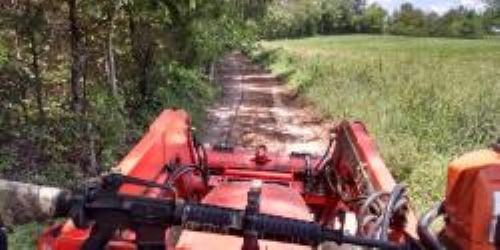
Originally Posted By Morlawn66: Filled mine on a L 3240 Kubota, owners manual gives the volume of liquid. Used R/V antifreeze and tire fill valve bought @ TSC. That model is a little underpowered so I could tell the difference when backing up steep hills. Originally Posted By Morlawn66: Originally Posted By Merlin: Ok so we've spent a lot of time talking about FEL's and FEL load capability; but what we haven't talked about is the part that is just as, if not more important at the other end of the tractor: The rear tires. Specifically, filling the rear tires with ballast for extra stability, lower center of gravity and most important of all: keeping the rear tires planted with a heavy FEL load. A big tractor with a ginormous FEL load capability can't pick up doodly-squat if a tractor rear tire rises off the ground with the smallest load. Remember, once a rear tractor tire starts to rise off the ground, the tractor is in immediate danger of rolling over. Tractor Rolling Over = Bad News. So what do people use to fill their rear tires with? Basically: straight water, water with salt (calcium chloride), windshield washer fluid, antifreeze (2 kinds), beet juice, methanol and then the last is to foam the tires. So which do you choose? Let's start by eliminating the ones that are toxic or dangerous: ethylene glycol antifreeze and methanol; the former is a poison, the latter flammable and a poison). Then let's eliminate the one that is corrosive: water with salt (calcium chloride). If you live north of the AL/TN border, you can eliminate straight water. That leaves polypropylene glycol (RV antifreeze), windshield washer fluid, beet juice and foaming the tires. You can mix RV antifreeze and WWF with water if you don't need Siberian-level temp protection (i.e. 0 degrees and below). For example, for my tire ballast needs, I usually mix 4-5 gallons of RV antifreeze with ~ 40 gallons of straight water; it works well enough here in SC TN. The best time to buy RV antifreeze is early spring when Walmart et al put it on sale to get rid of it for the summer (RV antifreeze is used to freeze-proof water potable lines in RVs during the winter). IMO the best tire ballast is Beet Juice aka Rimguard. Advantages include: heavier than water (~11 lbs/gallon vs. 8.2 lbs/gallon for water), doesn't freeze to at least -40 degrees or lower and it's non-toxic and non-corrosive. The downsides: Cost and the fact that it's not DIY-able, you have to go to a Rimguard dealer. The other negative is that it's not available every where (TN and south); worse you have to call and/or write Rimguard to find one; they are not listed. The last time I called, the closest dealer to me was 140 miles north in KY. The last option is foaming the tires. Advantages include: very heavy, tires are now run-flat (important in heavy briar country), can't freeze, once it's done it's done. Disadvantages are: Expensive, can't be done every where and not DIY-able. The other big disadvantage is with no air = very rough ride; there's nothing to absorb shocks and bumps. Last question: How do I fill my rear tires? Stay tuned! Thanks for looking! Filled mine on a L 3240 Kubota, owners manual gives the volume of liquid. Used R/V antifreeze and tire fill valve bought @ TSC. That model is a little underpowered so I could tell the difference when backing up steep hills. I got my tire fill quantities from the Rimguard .pdf on this page: https://www.rimguardsolutions.com/beet-juice-is-better/tire-fill-chart/ My owner's manual shows all the different tire sizes for my tractor but just says fill to a maximum of 75%; no fill quantities given. Here's a great example of why you want lots of heavy weight on the back of your tractor if you are picking up heavy FEL loads:   In addition to the weight of the tractor and rear tires, we have the following added ballast weights: - 2 x 55 gals x 8.2 lbs/gallon = 902 lbs of tire ballast - 675 lb box blade - 410 lb concrete, lead and steel weight block - 110 lb Ratchet Rake - 6' of #145 rail (2 x 145 lbs) = 290 lbs - 2 x 250 LB concrete, lead and steel wheel weights = 500 lbs Total rear ballast weight: 2,887 lbs of rear weight to counteract what was on the FEL. 1,402 lbs of that weight was on the wheels themselves; 1,485 lbs was behind the tires. Think about that for a moment: The standard weight for a GST L4330 is around 3500 lbs. I increased the weight of the tractor by over 80% - and the rear tires were still skittering along the gravel driveway; especially as I came down my driveway back ear where the stump is in the first pic. With an FEL and a heavy load, you almost can't have too much weight on the back of the tractor. |
FreeKyle!
https://www.ar15.com/forums/General/The-offical-Kyle-Rittenhouse-thread-fund-raiser-link-in-OP-/5-2362752/
https://www.ar15.com/forums/General/The-offical-Kyle-Rittenhouse-thread-fund-raiser-link-in-OP-/5-2362752/