


Posted: 10/27/2012 2:35:49 PM EDT
|
I'm going to move turkeys down a notch. I think our next species will be rabbits.
When I was a kid, I would help my Dad butcher. The job I had then was holding the rabbit by the hind legs while my Dad skinned & gutted. I'll build some sort of jig to take the place of a young teenager. Anyone have pictures of their setup? |
|
I've posted my setups here a few times, as have others.
Keep losing my connection due to Sandy, but will try to find older posts. We have been fooling with rabbits for a long time, in the hundreds at times, but have cut way back as of late. I am a HUGE proponent of raising rabbits:quiet,prolific, relatively odorless, tasty, and come in convenient serving sizes.  A GREAT way to get your feet wet! A GREAT way to get your feet wet!
|
|
Quoted:
I'm looking hard at Craiglist for cheap pens, but no luck. Check local and county run animal shelters. People always drop off rabbitswith cages etc Some are junk, aome are NIIICCCEEEE! Have gotten quite a few for free, or a small donation. Now, they just call when they want to get rid of them.
Few years back, had some folks who raised them commercially get out of it. I gave $10 per 6 cage unit, feeders and water bottles included. Heck they were even throwing in some rabbits! We set up a LOT of 4Hers out of that deal! |
|
I got some cages today. 6 Havahart wire (single) cages, at least 2 have legs (I planned to hang them anyway),probably 4 good trays for underneath, 9 water bottles, 5 feeders, a nest box, and some other things for $100. Not a crazy good deal, but a lot cheaper than new.
|
|
Quoted:
I live in the middle of town Snow and I've only ever had possums. I've shot three of those bastards in the last year. Read a story years ago where Opossum was a big rural protein source during the depression. So attracting them may not be a bad thing. Frankly just the thought of skinning one out makes me a bit queasy…but then again I haven’t been hungry for quite some time. My older sister had rabbits all though our childhood. We never ate them but pretty easy up-keep and good source of quality fertilizer. |
|
Quoted:
Quoted:
I live in the middle of town Snow and I've only ever had possums. I've shot three of those bastards in the last year. Read a story years ago where Opossum was a big rural protein source during the depression. So attracting them may not be a bad thing. Frankly just the thought of skinning one out makes me a bit queasy…but then again I haven’t been hungry for quite some time. My older sister had rabbits all though our childhood. We never ate them but pretty easy up-keep and good source of quality fertilizer. The problem is that in order to have the rabbits during rough times, you have to have the rabbits during good times. I don't think I'd mind possums, at least until I open up the underside of my house. Rats would be a real problem though. Mice are already driving me crazy. |
Just to spur on this conversation:
|
|
Quoted:
Just to spur on this conversation:
Definitely no expert, but here's what I'm going to do. Californians or New Zealands My pens are 24x24 - not sure how much food. I'll buy in 50lb bags and fill the little hog type rabbit feeders. That's what we did when I was a kid. I plan on starting with 2 does and an unrelated buck. That should be plenty for us. |
|
I'm absolutely not an expert, but I am a research addict. I will tackle my questions one at a time.
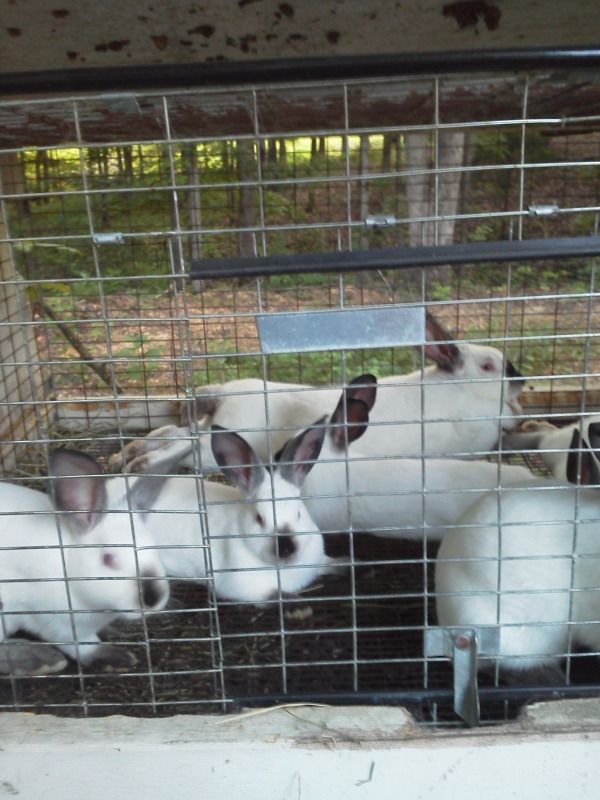
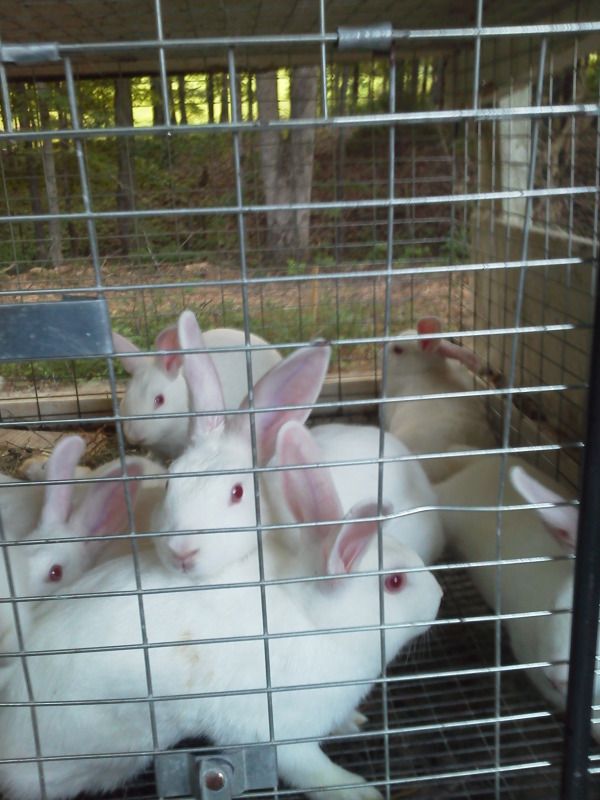
Californian and New Zealand White rabbits are, by far, the most popular breed for a meat operation. Both are also shown, but beware that show rabbits don't necessarily have all the traits, such as high milk production, frequent breedings, and large litter size needed for a successful meat operation. RRR has also used American Chinchilla, New Zealand Red, Silver Fox, Champagne D'Argents, Blanc d'Hotot, and Satin rabbits for variety. Using crossbreds is generally not recommended for commercial operations, but can be perfectly acceptable for a backyard hobby if the breeder desires to experiment. Only breeds such as those listed should be crossed. Crossing Flemish Giant with the listed breeds is also acceptable. Generally RRR uses a purebred CA or NZW buck to either a purebred or crossbred doe.
Beware of rabbit breeders who want to sell Flemish Giants or other large breeds (with the possible exception of the French Lop) for use in a backyard meat operation. While Flemish Giants were used to produce some of the present day medium sized breeds like the New Zealand White, they should not be used by the casual breeder for meat. These breeds do produce larger fryers faster, but their meat-to-bone ratio is not as favorable since the large breeds have bigger bones. Sometimes a Flemish Giant cross (Californian or New Zealand White) can be used successfully as a sire. Another possible sire is a B-10 meat rabbit (Giant Chinchilla/New Zealand White cross). A third crossbred-type rabbit, the Altex is excellent for commercial purposes with a NZW doe. However, since it is not recommended to save offspring for breeding, it might not be the best choice for a small family herd. The source of this information is A Primer on Backyard Meat Rabbit Raising Practices. Many other answers can also be found there. |
|
All 3 came home in the same cage. As soon as we put the buck in, he mounted one of the does. They rode in the cage for about an hour, in the darkness of my pickup bed with the lid closed. I wonder what I might have in 29-31 days.
From this site: http://www.rabbitchow.com/HEALTHIERRABBITS/default.aspx Rabbits are induced ovulators; breed each doe twice at one hour to four hour intervals for a larger litter size. When breeding rabbits, if the doe does not accept the buck, consider this a red flag that the doe is in poor condition or health. Does that are “force bred” will become pregnant less then fifty percent of the time, while “accepted breeds” will conceive close to one hundred percent of the time. |
|
Quoted:
This is a great thread. Is anyone doing anything interesting with the furs? Usually we kill them before they are decent, fur-wise. Still very "blue", ie, hide so thin you'll see the hair roots from the inside. Most furbearers are blue if taken too early in the fall, it's dependent on photoperiod to a large degree, but in the case of these rabbits, just too young. I have killed some of our old breeding stocking and tanned a few, both home tanned and sent out, but not done much with them. Maybe a loincloth???? 
|
|
Quoted:
All 3 came home in the same cage. As soon as we put the buck in, he mounted one of the does. They rode in the cage for about an hour, in the darkness of my pickup bed with the lid closed. I wonder what I might have in 29-31 days. From this site: http://www.rabbitchow.com/HEALTHIERRABBITS/default.aspx Rabbits are induced ovulators; breed each doe twice at one hour to four hour intervals for a larger litter size. When breeding rabbits, if the doe does not accept the buck, consider this a red flag that the doe is in poor condition or health. Does that are “force bred” will become pregnant less then fifty percent of the time, while “accepted breeds” will conceive close to one hundred percent of the time. Take does to the buck. Take a lot of what you read with a grain of salt. We've had a few does that would NEVER stand to be bred:We prop up their butts, and let the buck do his thing, and have had very good sucess with this. Some bucks are ALWAYS ready to go, and some are reluctant: they get culled, unless they throw REALLY good offspring.. And there IS a slight difference in the appearance of a a doe's naughty bits when she is REALLY ready. We do breed am and then midday and sometimes even the next day, just to be sure. We also do a bunch of does at the same time: that way if some have huge litters, can spread the excess around to does with small litters. |
|
Quoted:
Just to spur on this conversation:
My area of expertise, LOL. Most people now use Californian or New Zealand whites due to processors wanting a white furred rabbit. These two breeds are more commercialized to be efficient. I keen American Blues a heritage breed developed in California in the early 1900's. A 24x24 inch cage would suffice for bucks or does without a litter, I also have 36x24 cages that I built for does with litters. Food is relatively cheap but you would optimally want to keep the protein ratio at 16%. I am having a hard time finding it around where I live so I use Tractor Supply's store brand at 15%, didn't really affect my growout rate of mt last 2 litters. I have heard 1 buck (male) for up to 9 does (female). I have 5 does and 1 buck but am keeping a buck out of my next litter, always good to have a spare buck in case your buck decides to up and die. Inbreeding isn't much of an issue with rabbits honestly alot of breeders will breed animals from the same litter, I just bred a buck and doe from the same litter without a hitch. The main thing to keep in mind with rabbits is to breed the best and eat the rest. If your looking for replacements from your litters keep the best and eat the rest of them. Litters usually reach optimal butcher weight between 8-12 weeks or 5 pounds, the skins aren't usually as good but I am trying my hand at tanning these last litters. |