


Posted: 8/31/2010 4:52:02 PM EDT
|
I picked up a couple cast iron skillets at a yard sale the other day for $15. Seemed a little high for the shape they were in but I love cooking with my cast iron skillet at home so I decided to buy them.
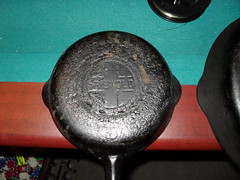
The big one I scrubbed until my arm was sore. The small skillet is crusted over pretty bad, and I don't have the strength to scrub another. Does anyone have any ideas on the best way to clean this? I have read you can use lye, but I couldn’t find any at the hardware store, I guess it's hard to find now because it's used in meth labs. I also heard oven cleaner works but I'm not sure if it would help this crusted up mess. I would appreciate any suggestions. Before cleaning 
After cleaning 
|
|
SparticleBrane did an excellent post on cast iron rehab:
http://www.ar15.com/archive/topic.html?b=10&f=19&t=631895 Unfortunately it slipped off to the archive and I think you need to be a team member to see all of the replies in an archive post. 
|
|
My mom used to build a fire outdoos and stick the pan in the coals and let the coals burn the stuff off of it.
She's done a bunch of pans that way––after I got married she collected cast iron from yard sales and flea markets for me...she'd clean them up and season them well and bring them to me when she'd visit. I've never SEEN her do this, but apparantly it works. I'm still using that cast iron. I'm sorry I can't point you to a source for how to do it exactly. Foxfire might tell. If you don't have a good answer by first of October I'll dig through my Foxfire collection and see. I can't do it now because I'm too behind on work and blowing off my responsibilities on Arfcom.  
Anyway her method makes me wonder if a self-cleaning oven might remove some of it...I dunno. Maybe not hot enough. |
|
Excellent, Griswald cast iron, pretty good stuff, if not the best.
For really bad grungy cast iron, I use the electrolysis method: - A 6 amp manual battery charger, smaller will work, just take longer - Arm and Hammer laundry detergent (not baking soda) - plastic bucket - sacrificial piece of steel (NOT stainless steel!); rebar works good and is cheap I forget the amount of detergent for the amount of water, but it's not real critical. Attach the charger "black on black" i.e. the negative terminal to the cast iron, the positive to the sacrificial piece of steel. Rotate the pan to ensure complete coverage electrolysis works via "line of sight". A day or two later, the pan should be completely clear of crap and down to bare metal. Here's a good link discussing electrolysis: removing rust Good luck. Merlin |
|
If you have a self-cleaning electric oven put the pot in the next time you run the cycle - it will turn all the baked on crud into ash (just like the stuff in the oven). From there I just re-season. I have not tried it with heavy rust but it removes light rust in fact the pot will have a light rust color until you wash and start re-seasoning. |
This reminds me –– I've had a 9" Lodge skillet outside in a 5-gallon bucket of water + lye for probably ~3-4 months now. I wonder if there's anything left! 
My wife is out of town this weekend so perhaps this will be a good chance to clean that up, re-season it, and finish seasoning a few other skillets. Some of mine from the original batch didn't quite take correctly, especially on the handles. Not sure why... Feral, what are the chances of pulling a thread out of archive? I'm a bit embarrassed I let it go into the archives. 
|
|
Quoted:
My mom used to build a fire outdoos and stick the pan in the coals and let the coals burn the stuff off of it. She's done a bunch of pans that way... I've never SEEN her do this, but apparantly it works. I'm still using that cast iron. ... Anyway her method makes me wonder if a self-cleaning oven might remove some of it...I dunno. Maybe not hot enough. Quoted:
If you have a self-cleaning electric oven put the pot in the next time you run the cycle - it will turn all the baked on crud into ash (just like the stuff in the oven). From there I just re-season. I have not tried it with heavy rust but it removes light rust in fact the pot will have a light rust color until you wash and start re-seasoning. I've used both methods with good results. Growing up, we heated our house with the fireplace (cooked in it occasionally, too), and I recall my mother showing me how to burn off a cast iron pan in the fireplace, then re-season it. My wife & I have also used the self-cleaning oven method too. Both work, pretty much about the same...though I find the fire method more pleasing; guess it's 'cause I get to have a fire! David |
|
http://www.griswoldandwagner.com/cgi-bin/store/agora.cgi?product=skillets you can make damn good money looking at these prices Quoted: Griswald is some good stuff. You can always sell it on evilbay turn a nice profit and buy other prep stuff. |
|
I use the power tool method.
A 4" angle ginder with wire brush, makes short work of Rust and crud. It may sound harsh, but it does not need harsh chemicals. I dnag near have just about all sizes of cast iron cookware I have ever seen. I only keep the old good stuff afer cleaning. If I was going to eat from a pan I would never use chemicals. Oh and I also have seasoned 50 gal. pots that were rescued from flower beds. |
|
Quoted:
I use the power tool method. A 4" angle ginder with wire brush, makes short work of Rust and crud. It may sound harsh, but it does not need harsh chemicals. I dnag near have just about all sizes of cast iron cookware I have ever seen. I only keep the old good stuff afer cleaning. If I was going to eat from a pan I would never use chemicals. Oh and I also have seasoned 50 gal. pots that were rescued from flower beds. I would love to see some pics! I don't own any cast iron cookware yet but it is something I have started looking for and at at flea markets, yard sales, etc. Just getting into the game late and there are not a lot of these that show up like I remember them years ago. I would love to see what a 50-gal pot looks like (witches kettle type thing?)! Is it like this? 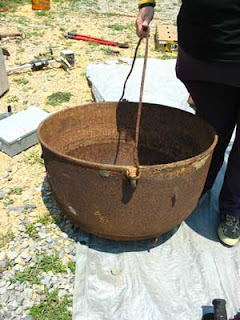
Or, here is another: 
Those are some serious kettles. I assume these would be for making apple butter or stuff like that? |
|
Quoted:
Quoted:
I use the power tool method. A 4" angle ginder with wire brush, makes short work of Rust and crud. It may sound harsh, but it does not need harsh chemicals. I dnag near have just about all sizes of cast iron cookware I have ever seen. I only keep the old good stuff afer cleaning. If I was going to eat from a pan I would never use chemicals. Oh and I also have seasoned 50 gal. pots that were rescued from flower beds. I would love to see some pics! I don't own any cast iron cookware yet but it is something I have started looking for and at at flea markets, yard sales, etc. Just getting into the game late and there are not a lot of these that show up like I remember them years ago. I would love to see what a 50-gal pot looks like (witches kettle type thing?)! Is it like this? http://2.bp.blogspot.com/_zMRlZAIV2HQ/RpLqiFq1X4I/AAAAAAAAAvo/v2g_1GlcOSE/s320/IMG_8561.jpg –– Or, here is another: http://i1.sell.com/17/89/1141214/53/75/3506070-l.jpg Those are some serious kettles. I assume these would be for making apple butter or stuff like that? My grandparents used them for washing clothes, prepping meat for canning (all on outdoor fires usually)––anything for which you needed a large amount of hot water. (Scalding hogs, for instance). My grandmother always used an old lard can to cook her beets for canning, but you could do it with one of these too. I want a couple of them for outdoor use, but the ones in our family had all cracked or been broken by the time I got to them. Intact ones at antiques stores....well....they think a LOT of those. I don't have the setup to hang it over a fire, either. Would love to have one of those.
kitties |


|
Quoted:
Quoted:
I recommend you find your way to camp-cook.com There is a gentleman that has a recipe involving vinegar that everyone swears by. Sorry I don't have time at the moment to dig it up, i'll look later and see if I can find it. Did you find it? Sure did. I am using this method as we speak. LINK I'm glad I went to this site because I could have ruined my pans by using the self clean oven cycle or camp fire. I guess older pans were constructed with thinner cast iron than todays pieces, and they can warp or crack in the oven or fire when heated to high temps. Self clean and camp fire are OK with modern pieces but not with the antiques. When my project is complete I will post some after pictures. Thanks for all the help. |
|
Quoted:
I have only used the self cleaning oven method on antiques - cast iron my wife inherited from relatives in MT or from my parents in NY. We do not own any "new" stuff. From what I've read, chances are I would be ok using the self clean oven but in some cases, certain ovens can reach extreme temps and cool quick, and it's the quick cooling that causes the warp or crack. Since I'm not sure what my oven will do I'm going play it safe and just do the oven cleaner method. I'm about 2 coats in and it's looking pretty good. |
|
OK. I gotta show you my cast iron.
Here's my witch's kettle. When we were little, our family would have "Chickin' Pluckin' Parties." After my Granddad chopped off the chicken heads, my Nanny would have a pot like this boiling on a fire and throw the chickens in. Then we kids had to pluck all the feathers off. This isn't Nan's. Her's rusted out. I bought this at a yard sale. I have only used it as a planter. I don't have a covered place to store it out of the rain. That's a railroad tie beside it. I guess it's about 15-18 gallons. I need to be nicer to it. 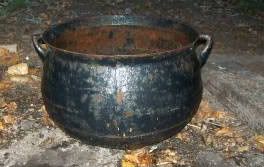
Here's some cast iron I've collected from yard sales for barter when the SHTF. I store them under a bed. They need to be cleaned and seasoned. 
Here are my everyday skillets. They are all old Griswold or Wagner. 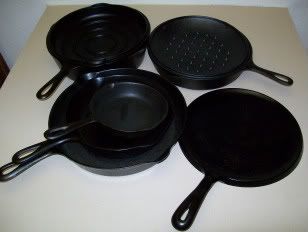
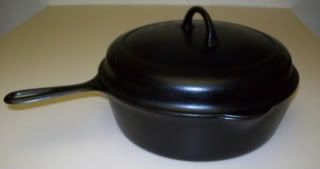
Our favortie griddle. Not a day goes by that we don't use this. 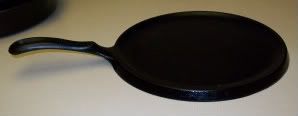
|
