


Posted: 2/22/2015 12:14:42 AM EDT
|
In my recent purchase of custom maps from Topozone I recieved a one year free membership to the Trimble "My Topo Maps" service.
With this I can utilize this app on my iPad and see Topo maps with my choice of overlays. The best part is I can save maps go my device and print them. So, when I get up tomorrow I will provide some screenshots of this as well as the maps. As to the maps, I will zoom in a little more next time but they work well and I was able to clearly follow the path from near my house, down the levy system, to the Brazos River. The layer control adjusts the overlay view. It's a handy tool. 


|
|
Quoted:
Topo maps are great but you also need to learn to use a compass and how to plot your course on that map if you don't know how already. If you can identify terrain features you are a leg up on most people. That is exactly what I want to work on with the forum. I am fortune that I have a good understanding of map reading and navigation. I get to apply this in the field not only for fun but for work too. I'd like to provide info for others that don't have this ability to knowledge yet. |
|
Quoted:
That is exactly what I want to work on with the forum. I am fortune that I have a good understanding of map reading and navigation. I get to apply this in the field not only for fun but for work too. I'd like to provide info for others that don't have this ability to knowledge yet. Quoted:
Quoted:
Topo maps are great but you also need to learn to use a compass and how to plot your course on that map if you don't know how already. If you can identify terrain features you are a leg up on most people. That is exactly what I want to work on with the forum. I am fortune that I have a good understanding of map reading and navigation. I get to apply this in the field not only for fun but for work too. I'd like to provide info for others that don't have this ability to knowledge yet. I will be following this post. I never did learn proper map reading/navigation skills but it's something I really want to do. So if you decide to keep this going you'll have at least one person interested. |
|
I bought a copy of the Boy Scout "Orienteering" merit badge book. Nicely dumbs down the skills and technical jargon for a beginner.
Orienteering |
|
Quoted:
I bought a copy of the Boy Scout "Orienteering" merit badge book. Nicely dumbs down the skills and technical jargon for a beginner. Orienteering Great idea! Might be a good idea to buy an older one for my SO, she likes to read tech things sometimes, a little at a time. I think I'll just leave it where she can find it without pushing it on her and see what happens. She was asking questions about reading a compass a couple weeks ago so this is timely. |
|
Tomorrow I bill break out the compass and we will start with "orienting" your map.
It will have to wait till I get home from work though. I will upload the pics as soon as I get everything staged. We will also get some pics of common figures contained in the "key" for identification. |
|
How To Use a Compass with a USGS Topographic Map
Note that the date on my map was Feb of 2015. You want to keep maps updated as the difference between true and magnetic shifts over time. You will see some references near the compass such as MGRS and UTM, I will provide more info on how those relate to the maps later. For now a simple way to orient your map: Method #1 These directions assume your orienting arrow lines up with the North indicator on your compass dial, meaning the compass has NOT been adjusted for declination. A) Obtain the local magnetic declination for the area represented on your map. At the bottom of every USGS map is a diagram that displays the difference & direction between true north (represented as a star), grid north (abbreviated as "GN"), and magnetic north (abbreviated as "MN"). Magnetic declination is the number of degrees and direction between true north and magnetic north. Because declination varies over time, it is advisable to get a reasonably current figure. If your USGS map is more than 15 years old (the declination date appears in the diagram), here’s an easy-to-use website that gives you only the information you need for your specific area: Magnetic Declination Calculator If magnetic north is east of true north, the local declination is positive. If magnetic north is west of true north, the local declination is negative. B) Draw a line on the map that connects your starting point with the destination (your "map bearing"). Extend the line all the way through the map border (the "neat line"). C) Distance yourself from any nearby metal such as keys, belt buckle, desk, car, fence, etc. Place the compass on the map so the needle’s pivot point is directly over the intersection of your map bearing and neat line. D) Rotate the dial until compass ring north agrees with map north. Read your map bearing from the compass dial. Make sure the bearing agrees with your direction of travel – for example, if you intend to travel due east, the bearing is 90 degrees, not 270 degrees. E) Do this step mentally – don’t turn the compass dial: If the local declination is positive, then subtract the declination amount from the bearing you just derived. If the local declination is negative, then add the declination amount to the bearing you just derived. F) Turn the compass dial until the figure you calculated in step E lines up with the index line. G) Lift the compass off the map, and with the direction of travel arrow pointing directly away from you, rotate your body and the compass all in one motion until the red magnetic needle overlays the orienting arrow. H) Sight a landmark along this bearing, and proceed to it. Repeat this step until you reach your destination. From USGS 

|
|
Your declination info was updated in 2015 but the map intself hasn't been updated since 1983 (which is normal, most paper maps are old)
Dirt roads, streams, vegetation can and do move/reroute/disappear & the older the map the more leeway you need to give certain features on the map. |
|
Quoted:
Your declination info was updated in 2015 but the map intself hasn't been updated since 1983 (which is normal, most paper maps are old) Dirt roads, streams, vegetation can and do move/reroute/disappear & the older the map the more leeway you need to give certain features on the map. 1983? I think you are confused with North American Datum of 1983 (NAD83) Vs. the date of 1999 for the center map (5) Sugar Land. Not the same thing. From: NOAA What are NAD 27 and NAD 83? The North American Datum of 1927 (NAD 27) is "The horizontal control datum for the United States that (was) defined by (a) location and azimuth on the Clarke spheroid of 1866, with origin at (the survey station) Meades Ranch." ... The geoidal height at Meades Ranch (was) assumed to be zero. "Geodetic positions on the North American Datum of 1927 were derived from the (coordinates of and an azimuth at Meades Ranch) through a readjustment of the triangulation of the entire network in which Laplace azimuths were introduced, and the Bowie method was used." (Geodetic Glossary, pp. 57) The North American Datum of 1983 (NAD 83) is the horizontal control datum for the United States, Canada, Mexico, and Central America, based on a geocentric origin and the Geodetic Reference System 1980. This datum, NAD 83, is the current geodetic reference system. NAD 83 is based on the adjustment of 250,000 points, including 600 satellite Doppler stations, which constrain the system to a geocentric origin. (Geodetic Glossary, pp 57) Why did NGS change from NAD 27 to NAD 83? NAD 83 was computed by the geodetic agencies of Canada (Federal and Provincial) and the National Geodetic Survey for several reasons. The horizontal control networks had expanded piecemeal since 1933 to cover much more of the countries and it was very difficult to add new surveys to the network without altering large areas of the previous network. Field observations had added thousands of accurate Electronic Distance Measuring Instrument (EDMI) base lines, hundreds of additional points with astronomic coordinates and azimuths, and hundreds of Doppler satellite determined positions. It was also recognized that the Clarke Ellipsoid of 1866 no longer served the needs of a modern geodetic network. For an in-depth explanation see NOAA Professional Paper NOS 2 "The North American Datum of 1983", Charles R. Schwarz, Editor, National Geodetic Survey, Rockville, MD 20852, December 1989. How do the horizontal datums differ? Which should I use? The NAD 27 was based on the Clarke Ellipsoid of 1866 and the NAD 83 is based on the Geodetic Reference System of 1980. The NAD 27 was computed with a single survey point, MEADES RANCH in Kansas, as the datum point, while the NAD 83 was computed as a geocentric reference system with no datum point. NAD 83 has been officially adopted as the legal horizontal datum for the United States by the Federal government, and has been recognized as such in legislation in 48 of the 50 states. The computation of the NAD 83 removed significant local distortions from the network which had accumulated over the years, using the original observations, and made the NAD 83 much more compatible with modern survey techniques. Tomorrow we can discuss what the difference is to WGS 84 ( corrected, thank you.) |
|
Can I interject something here....
I have done a fair amount of travel using a topo map and compass. Both on hiking trails and full on cross country thru mountainous terrain. Real world -> you use the map only, aligning it with landmarks as you go. Where a compass comes in handy is in a situation where you can not see landmarks or you are trying find your semi-exact location by triangulation because your are a little bewildered. IMO, a very crucial piece of equipment in mountainous terrain is an altimeter. Mine weights approx. 1.5 once and is good to 3ft / 1 m. You periodically adjust for changes in barometric pressure by setting it at a known altitude of a lake or pass. I have Topos from the 1950s I still carry. In my AO the declination has changed only approx. 3° since then to today. A pretty trivial amount in the real world of getting from point A to point B. ETA - Map and Compass is the only way to go. I have a GPS and only used a couple of times. Hated it for back country travel. It is a back up only kind of device for when you don't have a map. IMO, a GPS belongs in your car where it works the best... |
|
Quoted:
1983? I think you are confused with North American Datum of 1983 (NAD83) Vs. the date of 1999 for the center map (5) Sugar Land. Not the same thing. From: NOAA What are NAD 27 and NAD 83? The North American Datum of 1927 (NAD 27) is "The horizontal control datum for the United States that (was) defined by (a) location and azimuth on the Clarke spheroid of 1866, with origin at (the survey station) Meades Ranch." ... The geoidal height at Meades Ranch (was) assumed to be zero. "Geodetic positions on the North American Datum of 1927 were derived from the (coordinates of and an azimuth at Meades Ranch) through a readjustment of the triangulation of the entire network in which Laplace azimuths were introduced, and the Bowie method was used." (Geodetic Glossary, pp. 57) The North American Datum of 1983 (NAD 83) is the horizontal control datum for the United States, Canada, Mexico, and Central America, based on a geocentric origin and the Geodetic Reference System 1980. This datum, NAD 83, is the current geodetic reference system. NAD 83 is based on the adjustment of 250,000 points, including 600 satellite Doppler stations, which constrain the system to a geocentric origin. (Geodetic Glossary, pp 57) Why did NGS change from NAD 27 to NAD 83? NAD 83 was computed by the geodetic agencies of Canada (Federal and Provincial) and the National Geodetic Survey for several reasons. The horizontal control networks had expanded piecemeal since 1933 to cover much more of the countries and it was very difficult to add new surveys to the network without altering large areas of the previous network. Field observations had added thousands of accurate Electronic Distance Measuring Instrument (EDMI) base lines, hundreds of additional points with astronomic coordinates and azimuths, and hundreds of Doppler satellite determined positions. It was also recognized that the Clarke Ellipsoid of 1866 no longer served the needs of a modern geodetic network. For an in-depth explanation see NOAA Professional Paper NOS 2 "The North American Datum of 1983", Charles R. Schwarz, Editor, National Geodetic Survey, Rockville, MD 20852, December 1989. How do the horizontal datums differ? Which should I use? The NAD 27 was based on the Clarke Ellipsoid of 1866 and the NAD 83 is based on the Geodetic Reference System of 1980. The NAD 27 was computed with a single survey point, MEADES RANCH in Kansas, as the datum point, while the NAD 83 was computed as a geocentric reference system with no datum point. NAD 83 has been officially adopted as the legal horizontal datum for the United States by the Federal government, and has been recognized as such in legislation in 48 of the 50 states. The computation of the NAD 83 removed significant local distortions from the network which had accumulated over the years, using the original observations, and made the NAD 83 much more compatible with modern survey techniques. Tomorrow we can discuss what the difference is to UTM 84.I think you mean WGS 84 Quoted:
Quoted:
Your declination info was updated in 2015 but the map intself hasn't been updated since 1983 (which is normal, most paper maps are old) Dirt roads, streams, vegetation can and do move/reroute/disappear & the older the map the more leeway you need to give certain features on the map. 1983? I think you are confused with North American Datum of 1983 (NAD83) Vs. the date of 1999 for the center map (5) Sugar Land. Not the same thing. From: NOAA What are NAD 27 and NAD 83? The North American Datum of 1927 (NAD 27) is "The horizontal control datum for the United States that (was) defined by (a) location and azimuth on the Clarke spheroid of 1866, with origin at (the survey station) Meades Ranch." ... The geoidal height at Meades Ranch (was) assumed to be zero. "Geodetic positions on the North American Datum of 1927 were derived from the (coordinates of and an azimuth at Meades Ranch) through a readjustment of the triangulation of the entire network in which Laplace azimuths were introduced, and the Bowie method was used." (Geodetic Glossary, pp. 57) The North American Datum of 1983 (NAD 83) is the horizontal control datum for the United States, Canada, Mexico, and Central America, based on a geocentric origin and the Geodetic Reference System 1980. This datum, NAD 83, is the current geodetic reference system. NAD 83 is based on the adjustment of 250,000 points, including 600 satellite Doppler stations, which constrain the system to a geocentric origin. (Geodetic Glossary, pp 57) Why did NGS change from NAD 27 to NAD 83? NAD 83 was computed by the geodetic agencies of Canada (Federal and Provincial) and the National Geodetic Survey for several reasons. The horizontal control networks had expanded piecemeal since 1933 to cover much more of the countries and it was very difficult to add new surveys to the network without altering large areas of the previous network. Field observations had added thousands of accurate Electronic Distance Measuring Instrument (EDMI) base lines, hundreds of additional points with astronomic coordinates and azimuths, and hundreds of Doppler satellite determined positions. It was also recognized that the Clarke Ellipsoid of 1866 no longer served the needs of a modern geodetic network. For an in-depth explanation see NOAA Professional Paper NOS 2 "The North American Datum of 1983", Charles R. Schwarz, Editor, National Geodetic Survey, Rockville, MD 20852, December 1989. How do the horizontal datums differ? Which should I use? The NAD 27 was based on the Clarke Ellipsoid of 1866 and the NAD 83 is based on the Geodetic Reference System of 1980. The NAD 27 was computed with a single survey point, MEADES RANCH in Kansas, as the datum point, while the NAD 83 was computed as a geocentric reference system with no datum point. NAD 83 has been officially adopted as the legal horizontal datum for the United States by the Federal government, and has been recognized as such in legislation in 48 of the 50 states. The computation of the NAD 83 removed significant local distortions from the network which had accumulated over the years, using the original observations, and made the NAD 83 much more compatible with modern survey techniques. Tomorrow we can discuss what the difference is to UTM 84.I think you mean WGS 84 The the declination is a very local thing. To the poster that thinks ;that the declination doesn't matter to much I think that it sure does.1 degree in 1/4mile is 23 feet. Multiply that by how far you are going and add in the terrain will put you a long way off. |
|
Quoted:
1983? I think you are confused with North American Datum of 1983 (NAD83) Vs. the date of 1999 for the center map (5) Sugar Land. Not the same thing. You're correct. My apologies, my eyes and the phone screen resolution aren't what they were. When I later viewed and zoomed the pics on my laptop I could see things better. Last time I used a MGRS map they didnt date the quadrants as your map does (that I remember..I need to drag out some of my old maps and check) Spent many weeks and countless KM on Camp Mackall landnav course back in early 90s. Sadly my eyes aint holding up it seems. Lesson Learned. Please continue. edit: old school map 

|

|
Quoted:
The the declination is a very local thing. To the poster that thinks ;that the declination doesn't matter to much I think that it sure does.1 degree in 1/4mile is 23 feet. Multiply that by how far you are going and add in the terrain will put you a long way off. 24' is 4 body lengths.... Where are you going to need that kind of accuracy? I didn't read every word of this thread but I assumed the OP wants to learn teach people to navigate with map and compass for the purpose of getting from point A to point B. I haven't been to any place I can remember where the terrain would allow you to walk that straight of a line. If I'm trying to get to one of the mountain on the horizon, I need to follow the terrain (and your nose) to get there. I'm not going to plot an exact course every 50' 3° difference in declination doesn't matter here. IE: the mountains didn't move enough to notice since 1958... 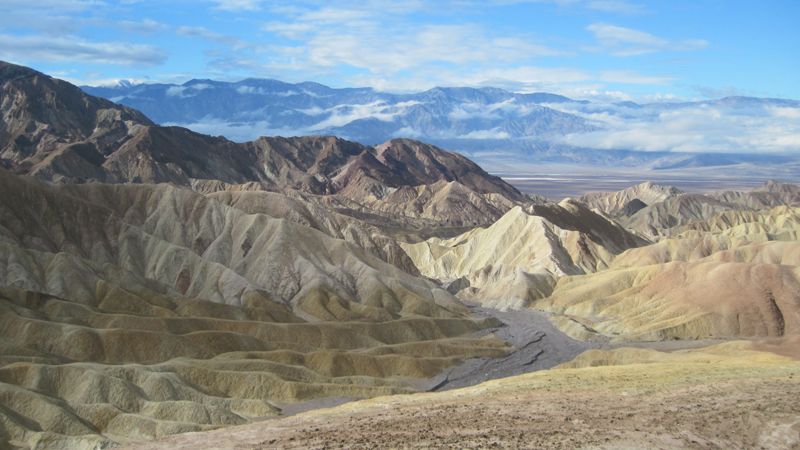
|
|
Quoted:
Guess everyone here knows all there is to know. Lots of luck. Easy Clem..... No one here even remotely said they Knew ALL there is to Know... Providing the basics of map and compass are VERY important -> so thank you for the effort. I thought it was very good until you started pissing around talking about the difference in Datums. You are going to lose the very people you are trying teach something to. IMO - The first thing to do is get someone to push back the computer chair and go into the field. Knowing the basic direction, observing the terrain and comparing it to the map is step one. I still call BS on the difference in the declination drift over 40 yrs being important in the real world of back-country navigation. Or was something other than BCN not the point of this thread? If you are concerned about the drift, you can use the map and compass to find the difference in the field using observations. Please note I edited my post above to say teach instead of learn -> my bad.... |
|
Please rescind your delete request, Op...this thread is something I find educational / informative. I may not post in it, since I am a 'newb" and have little to contribute yet, but I am following it, and learning.
Why take away from the knowledge that other people contributed in your thread? |
|
Quoted:
Please rescind your delete request, Op...this thread is something I find educational / informative. I may not post in it, since I am a 'newb" and have little to contribute yet, but I am following it, and learning. Why take away from the knowledge that other people contributed in your thread? +1 I have not played with toppo maps since my freshman year of high school. Was enjoying the info. |