


Posted: 7/7/2012 7:50:59 PM EDT
|
About a year ago I put in a small solar system more as a way to learn about solar than anything, but tonight we got to use it. We lost power at 9:10 PM and within five minutes we were cut over to the battery backup system for the fridge, freezer, satellite, TV, and a few lights. I was watching the inverter draw and battery voltage. After 90 minutes the voltage actually went up from 12.6 to 12.7. Then the power came back on.
All in all I'm happy that everything worked as designed. I had played with it as I was installing, but never had a real situation before. Yes, I have a generator that I could have hooked in, but I wanted to see how the battery system would work. It's nice to have a backup to the backup. |
|
Here's your solar porn!
As I said, it's a SMALL system intended to be an inexpensive (relatively) learning experience. I started with the 45 watt solar kit like: http://www.harborfreight.com/45-watt-solar-panel-kit-68751.html and installed them on the south side of the garage, just sitting on some concrete blocks. 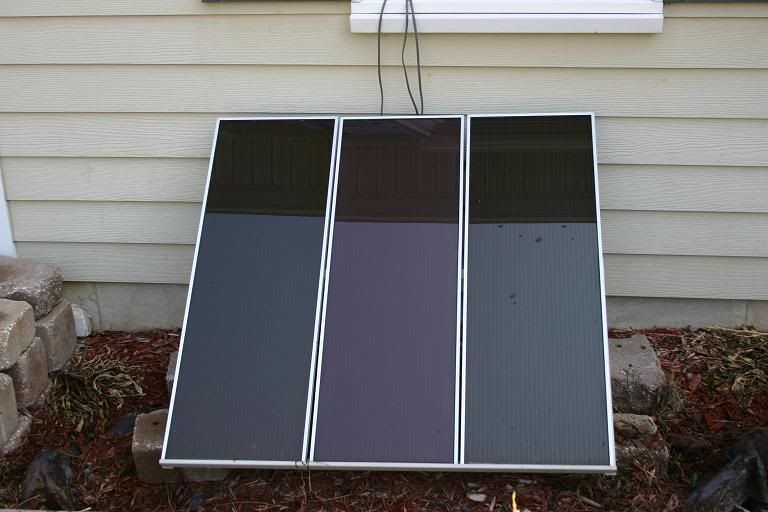
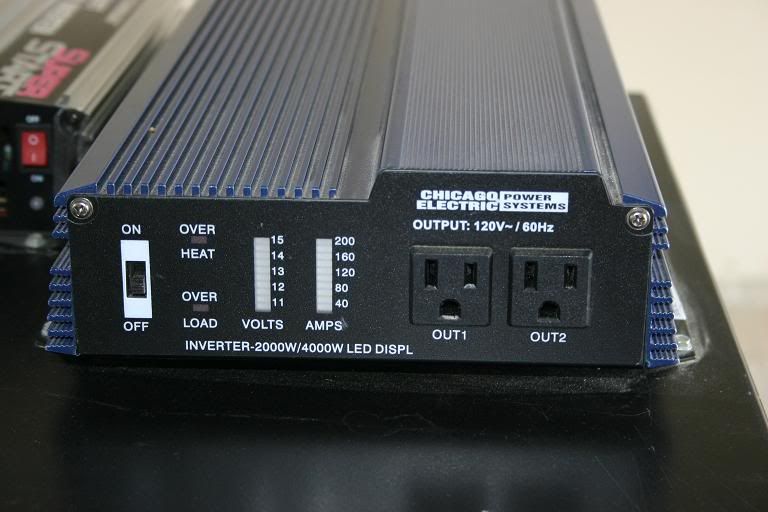
I added two inverters –– one 850 watt and one 2,000 watt. http://www.harborfreight.com/2000-watt-continuous-4000-watt-peak-power-inverter-95596.html 
I'm using two 70 amp-hour deep-cycle batteries connected in parallel. They are sitting on a foam pad to insulate them from the steel cbinet. I know that these are not the optimal batteries for a solar system, but they were on sale and work just fine. 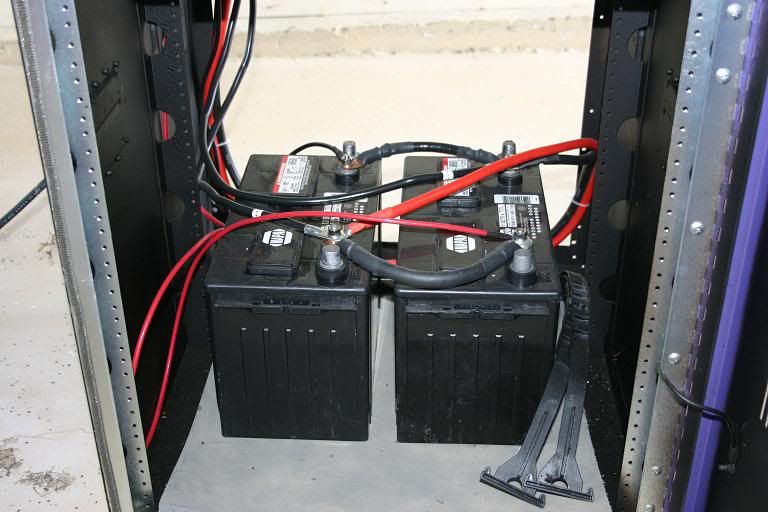
I mounted the whole mess in an old equipment rack I had. The cord at the bottom is actually a quick disconnect to the solar pannels; not an extension cord. 
The final product looks like this: 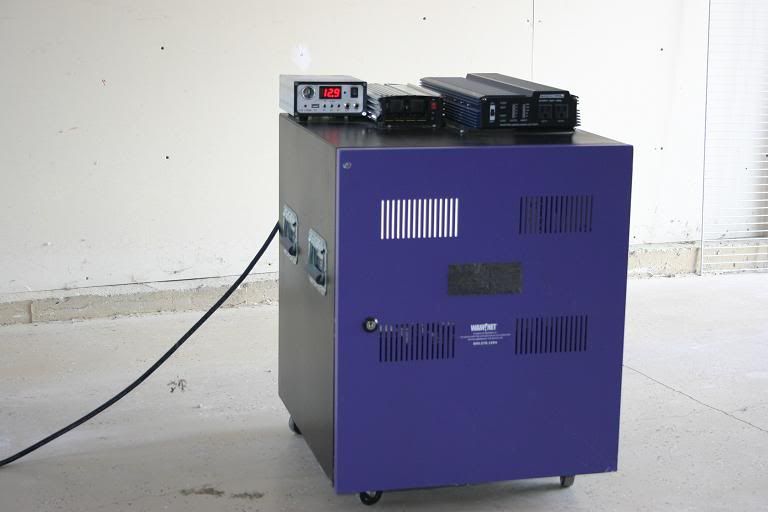
To figure out what load different appliances would put on the system I picked up a meter at harbor freight and checked the fridge, tv, lights, etc. That gave me a good idea of what I could run at the same time and which inverter I could use. 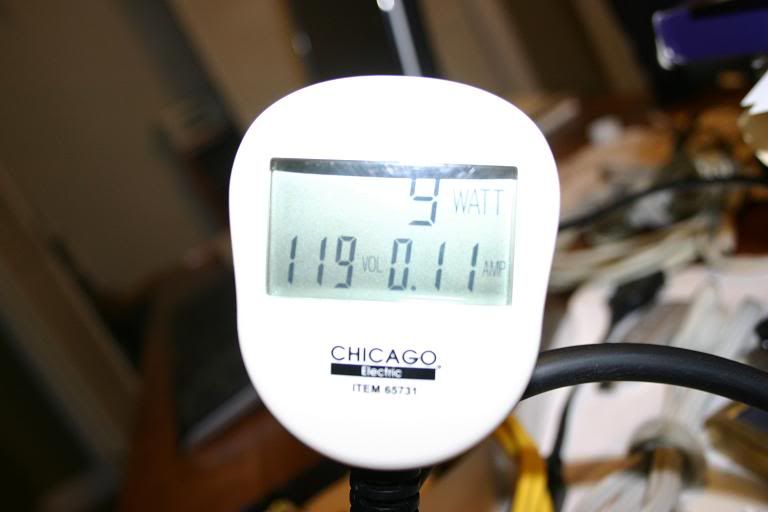
I really want to change out the pannels and charge controller to something that will give me 400 watts or more. With only 45 watts going into the system, it's not going to keep up with a long-term outage. No, this won't run the A/C, water heater, well pump, or other high-draw items, but id did make the night more pleasant and kept the beer cold. As for the cost? I'm in this about $700.00 including wires, cabinet, connectors . . . everything. |
|
backwoods solar has 95w panels for $225, just $35 more than the 45w harbor freight panels.
OP, thanks for the info. I've been thinking of a small system like yours, just to get the experience and have some power before needing to hook up the genny. ETA: Doh, I missed that the HF panels come w/ regulator, batt clamps, etc. |
|
Nice little setup, but your panels will not recharge your batteries in a timely manner.
It will work for a nice little standby battery backup, but you'll need AC to top off the batteries. With 45 watts, at optimal location/angle, you will get perhaps 4 amps (max) of charging current for a few minutes per day. |
|
Quoted:
Nice little setup, but your panels will not recharge your batteries in a timely manner. It will work for a nice little standby battery backup, but you'll need AC to top off the batteries. With 45 watts, at optimal location/angle, you will get perhaps 4 amps (max) of charging current for a few minutes per day. Oh, I know, but in my case they did nothing but charge for several months then got used for 90 minutes. The next upgrade would be new panels and a MPPT charge controller. Then replace the batteries. Then replace the inverters. Then . . . We looked seriously at a grid-tie system, but could not justify the expense even with tax credits. I also considered an off-grid system, but the expense of lots of panels, good batteries, controllers, and inverters just didn't make sense. For me, having a small system sitting in the garage that doesn't require running a big ass generator for a few lights and miscellaneous stuff is just fine for now. We also looked VERY seriously at the Enphase micro inverters. Very interesting concept to put an inverter on each panel and deliver 110/220 rather than DC. |
|
I've been thinking of a battery backup system, using a home made DC Generator (couple car alternators mounted on old lawn mower) to charge the batteries. I would use this in place of running a generator all the time. Need to run one fridge, small chest freezer, and small window A/C unit (if its hot out), and a 1/2 hp 120VAC well pump.
Your success has inspired me. For those of you that have done it: Is it actually worth it (or cheaper with fuel savings) to run batt backup VS a generator. I would be looking at about a 3500 watt generator if I went that way. Other than clean power, what are the advantages? I can run my laptop off my truck cig lighter (or my boat trolling battery), so clean power doesn't really matter to me. Also, I live in the country, so running silent means nothing special. |
|
Quoted:
Quoted:
Nice little setup, but your panels will not recharge your batteries in a timely manner. It will work for a nice little standby battery backup, but you'll need AC to top off the batteries. With 45 watts, at optimal location/angle, you will get perhaps 4 amps (max) of charging current for a few minutes per day. Oh, I know, but in my case they did nothing but charge for several months then got used for 90 minutes. The next upgrade would be new panels and a MPPT charge controller. Then replace the batteries. Then replace the inverters. Then . . . We looked seriously at a grid-tie system, but could not justify the expense even with tax credits. I also considered an off-grid system, but the expense of lots of panels, good batteries, controllers, and inverters just didn't make sense. For me, having a small system sitting in the garage that doesn't require running a big ass generator for a few lights and miscellaneous stuff is just fine for now. We also looked VERY seriously at the Enphase micro inverters. Very interesting concept to put an inverter on each panel and deliver 110/220 rather than DC. You might look at a hybrid - I have an outback based one, so I sell energy when I'm not using it for backup. The new xantrex 600V and midnight solar MPPT controllers have changed the game and reduced wiring costs a lot. The one drawback with the enphase is that they are grid tie only, and won't sync without a very tight frequency/voltage on the AC line. I have heard some success syncing them in a microgrid with a hybrid xantrex setup, such that when the AC loads are satisified, and batteries charged, the xantrex will slightly adjust it's frequency to knock the enphase units offline. My understanding is you have to get an alternate firmware load or some such magic. |
|
2 question:
1. why two inverters? A small one for small loads, and big one for big loads? So you're not taking the overhead from the big one when running small loads? 2. Can you just plug your battery bank into a genny on cloudy days, or when you need a quick charge? I'm assuming you can... |
|
Quoted:
2 question: 1. why two inverters? A small one for small loads, and big one for big loads? So you're not taking the overhead from the big one when running small loads? 2. Can you just plug your battery bank into a genny on cloudy days, or when you need a quick charge? I'm assuming you can... 1. Already had the 800 watt but it wouldn't run the fridge and anything else, so the breaker would trip if there were lights on and the fridge kicked on. I do split the loads putting lighting on the small inverter and heavier loads on the 2,000 watt one. We changed over most of the lights in the house to CFLs so we can run a bunch for a shorter time or a few for a long time with 800 watts. 2. Absolutely, yes. What you use to charge the batteries can be solar, hydro, wind, etc. |
|
Quoted:
Quoted:
Quoted:
Nice little setup, but your panels will not recharge your batteries in a timely manner. It will work for a nice little standby battery backup, but you'll need AC to top off the batteries. With 45 watts, at optimal location/angle, you will get perhaps 4 amps (max) of charging current for a few minutes per day. Oh, I know, but in my case they did nothing but charge for several months then got used for 90 minutes. The next upgrade would be new panels and a MPPT charge controller. Then replace the batteries. Then replace the inverters. Then . . . We looked seriously at a grid-tie system, but could not justify the expense even with tax credits. I also considered an off-grid system, but the expense of lots of panels, good batteries, controllers, and inverters just didn't make sense. For me, having a small system sitting in the garage that doesn't require running a big ass generator for a few lights and miscellaneous stuff is just fine for now. We also looked VERY seriously at the Enphase micro inverters. Very interesting concept to put an inverter on each panel and deliver 110/220 rather than DC. You might look at a hybrid - I have an outback based one, so I sell energy when I'm not using it for backup. The new xantrex 600V and midnight solar MPPT controllers have changed the game and reduced wiring costs a lot. The one drawback with the enphase is that they are grid tie only, and won't sync without a very tight frequency/voltage on the AC line. I have heard some success syncing them in a microgrid with a hybrid xantrex setup, such that when the AC loads are satisified, and batteries charged, the xantrex will slightly adjust it's frequency to knock the enphase units offline. My understanding is you have to get an alternate firmware load or some such magic. I've looked at Outback, Midnite, Xantrex, Morningstar, Blue Sky and many others and the Midnite Clasic 150 Lite would be my choice. Agreed on the Enphase. We looked at doing a grid tie system using them but decided against it mainly because it provided NO backup (off grid) capability without A LOT of bastardization. |
|
I like your cart!
I used my "play" inverter the other night for the first time in a while. The winds blew and the power went out for four hours. I do have a generator but I thought it wouldn't be out that long so used the inverter for the TV, fan, and cable modem. My system is based on a xantrex 2.0. I need to hardwire it in a few outlets so the frequent momentary power outages during bad weather doesn't knock us offline. |
|
Quoted:
Quoted:
Quoted:
Nice little setup, but your panels will not recharge your batteries in a timely manner. It will work for a nice little standby battery backup, but you'll need AC to top off the batteries. With 45 watts, at optimal location/angle, you will get perhaps 4 amps (max) of charging current for a few minutes per day. Oh, I know, but in my case they did nothing but charge for several months then got used for 90 minutes. The next upgrade would be new panels and a MPPT charge controller. Then replace the batteries. Then replace the inverters. Then . . . We looked seriously at a grid-tie system, but could not justify the expense even with tax credits. I also considered an off-grid system, but the expense of lots of panels, good batteries, controllers, and inverters just didn't make sense. For me, having a small system sitting in the garage that doesn't require running a big ass generator for a few lights and miscellaneous stuff is just fine for now. We also looked VERY seriously at the Enphase micro inverters. Very interesting concept to put an inverter on each panel and deliver 110/220 rather than DC. You might look at a hybrid - I have an outback based one, so I sell energy when I'm not using it for backup. The new xantrex 600V and midnight solar MPPT controllers have changed the game and reduced wiring costs a lot. The one drawback with the enphase is that they are grid tie only, and won't sync without a very tight frequency/voltage on the AC line. I have heard some success syncing them in a microgrid with a hybrid xantrex setup, such that when the AC loads are satisified, and batteries charged, the xantrex will slightly adjust it's frequency to knock the enphase units offline. My understanding is you have to get an alternate firmware load or some such magic. They are actually making pretty good strides in tying enphase systems into a battery backup system. http://www.wholesalesolar.com/grid-tie-to-off-grid.html Heres a link to a discussion about the above setup. Enphase Discussion |