


Posted: 10/13/2008 3:07:29 PM EDT
|
In building a house with passive solar in mind where does one get started with research? Specifically how does the house get located on the land? N S E W? What building materials should be used? What is good heating system? IS the region of the country important? I have done some research and googling has not be very fruitful....Is eco building a new concept and is a passive solar design a new concept as well? |
Your google-foo is weak.  I gathered much of my education from the university of Phoenix. I don't know if their solar education site is still up but it was a good one. South is your friend. Solar cells like passive solar water heaters are more efficient when facing south. Solar cells are light enough to be rotated with the sun and there are trackers which can improve performance. Unfortunately Pennsylvania is one of the worst US states for solar power. You might think about wind or mini-(water)mill created power. 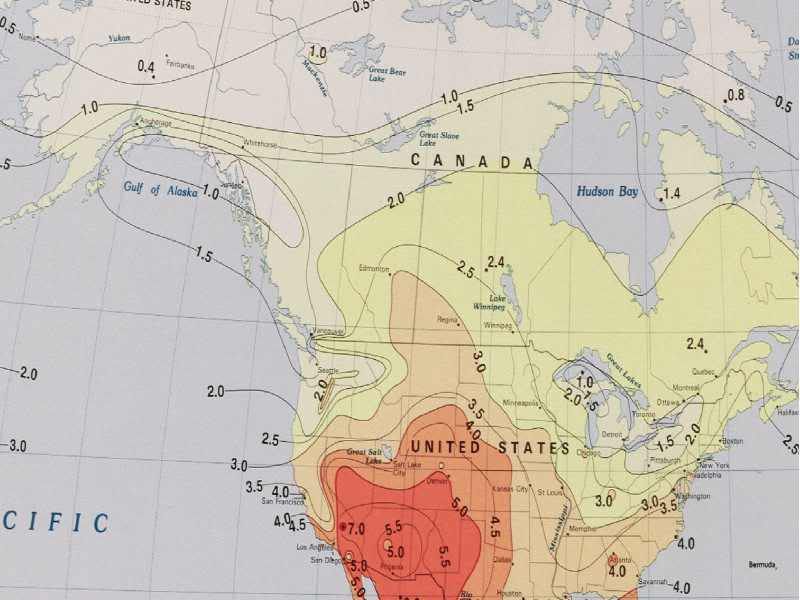
|
|
All the cliff dwelling indians knew that they stayed warm on the south side and froze to death on the north side of the cliffs. To properly orient your home you need to: 1. pick a sunny day 2. check with the local weather station and find out EXACTLY when sunrise and sunset are for your EXACT location. You then find the exact midpoint between sunrise and sunset. It will be close to 12 but probably not exactly 12. This time is your solar noon. 3. Drive a stake into the ground in a cleared area in the center of your building envelope 4. When your solar noon hits drive another stake into the ground at the top of the shadow cast by the 1st stake. Tie a string between these 2 stakes. You now have your N-S axis for your home. You want your longest wall running 90 degrees from your string. Build your home out of concrete blocks filled with grout. The reason you do this is for lots of thermal mass. You need lots of thermal mass to keep your home from overheating on sunny days. Insulate the EXTERIOR then cover it with whatever you want (brick, clapboard, stucco) Make sure most of your windows are on the south side. Use good solar glass on the south and triple pane on the north and east. NO windows on the west. Use big overhangs (3') to shade your giant windows in the summer or you'll cook. Put your garage on the NW side to block both cold winter wind and hot afternoon sun. Any heating/cooling system is OK. Nat gas is cheapest. |

actually not really. the most you can situate the long axis of your house to point south the better off you will be for solar gain. but you also have to have a reasonable (not to much) amount of glazing for your region, and proper overhangs, etc etc. web pages to read, not guaranteeing they are good: http://www.passivesolarenergy.info/ http://www.grinningplanet.com/environmental-books/solar-energy-books.htm http://www.self.org/books.asp http://www.norcalsolar.org/index.php?option=com_content&task=view&id=36&Itemid=30 the best one in my experience: http://www.realgoodssolar.com/ |
What do you mean longest wall running 90 degree to the string? |
|
The string will be perfectly oriented N-S if you follow the instructions. Ideally, your home will be long and skinny. If the dimensions are 30x90 then obviously the 90' wall is longest. You want it oriented as close to E-W as possible which will be at a 90 degree angle from the string you tied between your 2 stakes. |
|
if i'm following him correctly he's telling you to run the longest wall perpendicular to your north south axis. in this case the string. in your passive solar house, you will have large over hangs to shield the house from the high summer sun. the low winter sun will strike the house. iirc, you want a lot of windows on the south side to allow the sun in to heat the house during the winter. you will use a lot of cement, brick, adobe, tile, etc. to capture what he is available from the sun during the day. then at night the heat will radiate back out. conversely, during the summer, these materials will be slow to absorb heat from the air. simply google "passive solar" and you'll be reading for months if not years. google is your friend. |
|
Old construction can't be moved but everyone needs to pay attention to which direction their new construction is facing. I'm no tree hugger (except when those big butts are headed to the sawmill or better the veneer mill ) but passive solar makes sense! It's cheap and easy if you start out facing south!No lie, my 4000 sq ft house built in 1981 has 5 sliding glass doors and 2 bay windows all facing south. My highest gas bill was $185 while my neighbor's was over $500 for the same month! |
|
What we did- not exactly scientific but it works.
Faced the house due South. Put the most windows on that side of the house. The overhang we should have made larger but we didn't. When we add on we will do that with the addition. We did concrete block and poured it solid with grout mix and rebar. Insulated on the inside of the wall AND on the outside with 2" foam board. Aquacreted over the foam board. Put less windows on the north side of the house and placed the house so we have acres of evergreens on the north side of the house (windbreak). Planted several deciduous trees on the south side of the house to shade the windows in the summer. Most of these died however. The idea is that the leaves are off in the fall/winter time when you want the heat in the house and are on during the summer when you don't want the heat in the house. We have no installed carpet in the house- it's all good wood flooring and tile. It can be cleaned with a broom instead of a vacuum if power is an issue. It also makes it a lot easier to clean. The slab with the tile soaks up a lot of heat also. This time of year, with full sun during the day we can open the curtains on the south side of the house and the house warms up VERY quick in the morning. The house rarely gets to below 60 degrees later in the night. Course we have a wood stove also. This year we added a "sun tunnel" to bring some light into an area that didn't have a lot of natural sunlight. These things are nice and if you have a chance to do them, go for it. Installation was easy and it is BRIGHT, even producing a lot of light on a full moon night! Do NOT put solar panels on your roof, BTDT, had to re-roof! Lowdown3 |