


Posted: 8/21/2025 7:37:36 AM EDT
|
Is Jesus Jewish? Of course He is. "Most Christians today don’t realize that the early church was entirely Jewish — Torah-observant believers worshiping in the Temple and celebrating the biblical feasts. But over the next few centuries, Christianity underwent a dramatic transformation into a predominantly Gentile religion stripped of its Jewish heritage. In this video, we trace the historical and theological journey from the first-century Jerusalem church to the Council of Nicaea and beyond. Learn how political upheaval, cultural tensions, and theological shifts led to this Great Separation — and why it matters today."  The Shocking history of the early Church! Watched early this morning and thought was an interesting commentary. So do we love the Jewish people? "...For the Son of Man is Lord of the Sabbath.” ~ Yeshua For the 'Church', what matters today? |
| How is it shocking? If you've read Acts and the Epistles it's evident that the early church was predominantly Jewish. Paul went to the Gentiles to spread the Word. There was the conflict of the "circumcised " with the "uncircumcised " as gentiles were brought into the chirch. |
|
Quoted: Shocking to protestants, absolutely, I was one. The early Church matches the Catholic Church, because it is one in the same. (Yes I am referencing the whole Catholic Church; East, West, etc. The Apostolic churches.) Then why did the Catholic church do away with the Feasts that our Father in Heaven gave us for edification, that all teach us about the Messiah, and replace them with man made feasts? Reminds me of this man made feast: So all the people tore off the gold rings which were in their ears and brought them to Aaron. Then he took the gold from their hands, and fashioned it with an engraving tool and made it into a cast metal calf; and they said, “This is your god, Israel, who brought you up from the land of Egypt.” Now when Aaron saw this, he built an altar in front of it; and Aaron made a proclamation and said, “Tomorrow shall be a feast to the Lord.” |
|
Quoted: Then why did the Catholic church do away with the Feasts that our Father in Heaven gave us for edification, that all teach us about the Messiah, and replace them with man made feasts? Reminds me of this man made feast: So all the people tore off the gold rings which were in their ears and brought them to Aaron. Then he took the gold from their hands, and fashioned it with an engraving tool and made it into a cast metal calf; and they said, “This is your god, Israel, who brought you up from the land of Egypt.” Now when Aaron saw this, he built an altar in front of it; and Aaron made a proclamation and said, “Tomorrow shall be a feast to the Lord.” "Then why did the Catholic church do away with the Feasts that our Father in Heaven gave us for edification." You mean the one offered every day in the Mass, the source and summit of the Church God gave us? As to the rest, I'm not following what you are getting at. |
|
Quoted: Shocking to protestants, absolutely, I was one. The early Church matches the Catholic Church, because it is one in the same. (Yes I am referencing the whole Catholic Church; East, West, etc. The Apostolic churches.) Heh. Tell me you didn’t watch the video without telling me you didn’t watch the video. Because your conclusion & the videos conclusion does not match at all. |
|
Quoted: Heh. Tell me you didn’t watch the video without telling me you didn’t watch the video. Because your conclusion & the videos conclusion does not match at all. Quoted: Quoted: Shocking to protestants, absolutely, I was one. The early Church matches the Catholic Church, because it is one in the same. (Yes I am referencing the whole Catholic Church; East, West, etc. The Apostolic churches.) Heh. Tell me you didn’t watch the video without telling me you didn’t watch the video. Because your conclusion & the videos conclusion does not match at all. I watched the video, it's a fictional reading of history. And not even a good one at that, it's just typical lazy nonsense based on opinion and feelings from someone in a manmade religion. It is cartoonishly bad history. |
|
Quoted: I watched the video, it's a fictional reading of history. And not even a good one at that, it's just typical lazy nonsense based on opinion and feelings from someone in a manmade religion. It is cartoonishly bad history. Quoted: Quoted: Quoted: Shocking to protestants, absolutely, I was one. The early Church matches the Catholic Church, because it is one in the same. (Yes I am referencing the whole Catholic Church; East, West, etc. The Apostolic churches.) Heh. Tell me you didn’t watch the video without telling me you didn’t watch the video. Because your conclusion & the videos conclusion does not match at all. I watched the video, it's a fictional reading of history. And not even a good one at that, it's just typical lazy nonsense based on opinion and feelings from someone in a manmade religion. It is cartoonishly bad history. Yeah, it’s not great. |
|
Quoted: Yeah, it’s not great. Quoted: Quoted: Quoted: Quoted: Shocking to protestants, absolutely, I was one. The early Church matches the Catholic Church, because it is one in the same. (Yes I am referencing the whole Catholic Church; East, West, etc. The Apostolic churches.) Heh. Tell me you didn’t watch the video without telling me you didn’t watch the video. Because your conclusion & the videos conclusion does not match at all. I watched the video, it's a fictional reading of history. And not even a good one at that, it's just typical lazy nonsense based on opinion and feelings from someone in a manmade religion. It is cartoonishly bad history. Yeah, it’s not great. My post earlier is in response to what he is trying to get at, he is claiming the Catholic Church is a fraud and tries to use one of the earliest bishops to somehow prove that... Ignatius was the third bishop of Antioch, a disciple of John, and ordained by Peter himself. He's even considered to be the child Jesus holds in Mark. |
|
Honestly wild video, it doesn't only misreads Scripture but it also misquotes the Church Fathers and skips out on two centuries of Christianity. One, James was not the leader of the Jerusalem Council. Yes he was a very important figure but it was Peter who made the doctrinal statement. James made a pastoral statement, but not doctrinal. Two, the earliest Christians would have read Scripture in the temples and that's not abnormal. St Justin Martyr (150AD) talks about some of this. They would first read Scripture then gather at someone's home and break bread (Eucharist). To anyone who's been to a Catholic Church or is Catholic we would easily make the connection here... Liturgy of the Word Liturgy of the Eucharist There's some clear errors in the video, so it definitely misses the mark. |
|
So, OP, history is a fun subject but it often gets co-opted by rhetoricians. Don’t get your history from influencers, nuns, or preachers, get your history from historians. Here’s a good primer: https://www.amazon.com/dp/0140231994?tag=arfcom00-20  |
|
When will you believe or accept that the 'Church' is every born again [born from above] believer in Yeshua? Philippians 3:2-3 Look out for the dogs [the Judaizers, the legalists], look out for the troublemakers, look out for the false circumcision [those who claim circumcision is necessary for salvation]; for we [who are born-again have been reborn from above—spiritually transformed, renewed, set apart for His purpose and] are the true circumcision, who worship in the Spirit of God and glory and take pride and exult in Christ Jesus and place no confidence [in what we have or who we are] in the flesh— The term "tabernacle" (Hebrew: mishkan, Greek: skene) signifies God’s dwelling or presence. Exodus 25:8 And have them make me a sanctuary, so that I may dwell among them. Leviticus 26:11-12 I will place my dwelling in your midst, and I shall not abhor you. [12] And I will walk among you, and will be your God, and you shall be my people. Ezekiel 37:27 My dwelling place shall be with them; and I will be their God, and they shall be my people. II Corinthians 6:16 And what agreement has the temple of God with idols? For you are the temple of the living God. As God has said: “I will dwell in them And walk among them. I will be their God, And they shall be My people.” John 1:14 "And the Word became flesh and dwelt among us, and we have seen his glory, glory as of the only Son from the Father, full of grace and truth." Some context: The Greek word for "dwelt" here is eskenosen, meaning "tabernacled." This verse describes Jesus, the Word become flesh, dwelling among humanity, fulfilling the Old Testament concept of God’s presence in the Tabernacle. Revelation 21:3 And I heard a loud voice from heaven saying, “Behold, the tabernacle of God is with men, and He will dwell with them, and they shall be His people. God Himself will be with them and be their God. John 3:7 Do not be astonished that I said to you, ‘You must be born from above.’ ~ Jesus There is only one Church. |
|
Quoted: So, OP, history is a fun subject but it often gets co-opted by rhetoricians. Don’t get your history from influencers, nuns, or preachers, get your history from historians. Here’s a good primer: https://www.amazon.com/dp/0140231994?tag=arfcom00-20 https://m.media-amazon.com/images/I/71BhcE52n-L._UF1000,1000_QL80_.jpg I posted early to hear thoughts from the forum. We have a diversity of backgrounds and I learn things when I listen to others still to this day. Thanks for the book reference JAD. |
|
Quoted: When will you believe or accept that the 'Church' is every born again [born from above] believer in Yeshua? There is only one Church. It is a complex topic, spiritually there are those who are baptized in the proper form. Visibly, there is a Church, and to reject that Church is to reject God. This Church is in the New Testament onward, structured by Christ and subsequently His Apostles. So technically you can be a baptized son of God, but in schism from His Church. What we see in Protestantism is rejection of God's authority given to His Church, which is ultimately a rejection of God's authority. The ideology of liberalism, the rejection of a higher authority. Everyone is a pope unto himself, and an endless founding of manmade churches. And now we're at a point where protestants are trying to reinvent the wheel, all fighting with each other on how to do it and what's necessary; while at the same time rejecting the wheel that is in plain sight. Or in the case of the OPs video, to just completely make up history. Here we are today, dealing with the fallout of the revolt; wokeness, liberalism, atheism, rampant degeneracy, libertarianism, total unchecked license to do whatever one wants, the worship of Lady Libertas the demon. And many young protestants are seeking something more, something deeper, something profound, searching for God's Church that their spiritual ancestors rejected to fulfill their own desires and vices without judgement. To go back to the early Church, is to see that protestantism is only relatable to the heretics, is unrecognizable to the first Christians as Christianity, and will always fail. |
|
Quoted: It is a complex topic, spiritually there are those who are baptized in the proper form. Visibly, there is a Church, and to reject that Church is to reject God. This Church is in the New Testament onward, structured by Christ and subsequently His Apostles. So technically you can be a baptized son of God, but in schism from His Church. What we see in Protestantism is rejection of God's authority given to His Church, which is ultimately a rejection of God's authority. The ideology of liberalism, the rejection of a higher authority. Everyone is a pope unto himself, and an endless founding of manmade churches. And now we're at a point where protestants are trying to reinvent the wheel, all fighting with each other on how to do it and what's necessary; while at the same time rejecting the wheel that is in plain sight. Or in the case of the OPs video, to just completely make up history. Here we are today, dealing with the fallout of the revolt; wokeness, liberalism, atheism, rampant degeneracy, libertarianism, total unchecked license to do whatever one wants, the worship of Lady Libertas the demon. And many young protestants are seeking something more, something deeper, something profound, searching for God's Church that their spiritual ancestors rejected to fulfill their own desires and vices without judgement. To go back to the early Church, is to see that protestantism is only relatable to the heretics, is unrecognizable to the first Christians as Christianity, and will always fail. |
|
Quoted: It is a complex topic, spiritually there are those who are baptized in the proper form. Visibly, there is a Church, and to reject that Church is to reject God. This Church is in the New Testament onward, structured by Christ and subsequently His Apostles. So technically you can be a baptized son of God, but in schism from His Church. What we see in Protestantism is rejection of God's authority given to His Church, which is ultimately a rejection of God's authority. The ideology of liberalism, the rejection of a higher authority. Everyone is a pope unto himself, and an endless founding of manmade churches. And now we're at a point where protestants are trying to reinvent the wheel, all fighting with each other on how to do it and what's necessary; while at the same time rejecting the wheel that is in plain sight. Or in the case of the OPs video, to just completely make up history. Here we are today, dealing with the fallout of the revolt; wokeness, liberalism, atheism, rampant degeneracy, libertarianism, total unchecked license to do whatever one wants, the worship of Lady Libertas the demon. And many young protestants are seeking something more, something deeper, something profound, searching for God's Church that their spiritual ancestors rejected to fulfill their own desires and vices without judgement. To go back to the early Church, is to see that protestantism is only relatable to the heretics, is unrecognizable to the first Christians as Christianity, and will always fail. Quoted: Quoted: When will you believe or accept that the 'Church' is every born again [born from above] believer in Yeshua? There is only one Church. It is a complex topic, spiritually there are those who are baptized in the proper form. Visibly, there is a Church, and to reject that Church is to reject God. This Church is in the New Testament onward, structured by Christ and subsequently His Apostles. So technically you can be a baptized son of God, but in schism from His Church. What we see in Protestantism is rejection of God's authority given to His Church, which is ultimately a rejection of God's authority. The ideology of liberalism, the rejection of a higher authority. Everyone is a pope unto himself, and an endless founding of manmade churches. And now we're at a point where protestants are trying to reinvent the wheel, all fighting with each other on how to do it and what's necessary; while at the same time rejecting the wheel that is in plain sight. Or in the case of the OPs video, to just completely make up history. Here we are today, dealing with the fallout of the revolt; wokeness, liberalism, atheism, rampant degeneracy, libertarianism, total unchecked license to do whatever one wants, the worship of Lady Libertas the demon. And many young protestants are seeking something more, something deeper, something profound, searching for God's Church that their spiritual ancestors rejected to fulfill their own desires and vices without judgement. To go back to the early Church, is to see that protestantism is only relatable to the heretics, is unrecognizable to the first Christians as Christianity, and will always fail. The funny thing is that you can see the flaws in the video, but not your own thinking. This is why you study history under historians. |
|
Quoted: It is a complex topic, spiritually there are those who are baptized in the proper form. Visibly, there is a Church, and to reject that Church is to reject God. This Church is in the New Testament onward, structured by Christ and subsequently His Apostles. So technically you can be a baptized son of God, but in schism from His Church. I don't think that the subject of the one Church is overly complex. 'There is no schism in the body of Christ.' Who are God's children? John 1:11-12 He came to that which was His own [that which belonged to Him—His world, His creation, His possession], and those who were His own [people—the Jewish nation] did not receive and welcome Him. But to as many as did receive and welcome Him, He gave the right [the authority, the privilege] to become children of God, that is, to those who believe in (adhere to, trust in, and rely on) His name— [Is. 56:5] If you are seeking a proper baptism, why not ask Jesus to baptize you? He is the baptizer of the Holy Spirit and fire. The question is, are you born from above? I don't believe that God really cares that much if you identify as a religious Jew, Gentile, Catholic or even Protestant. - Do you personally identify with the Lord Jesus Christ's death burial and resurrection? The new covenant is in His blood. Jesus is the Son of God. Don't you love the Father's children? 1 John 5:1 Everyone who believes [with a deep, abiding trust in the fact] that Jesus is the Christ (the Messiah, the Anointed) is born of God [that is, reborn from above—spiritually transformed, renewed, and set apart for His purpose], and everyone who loves the Father also loves the child born of Him. Hebrews 3:1 "Therefore, holy brothers and sisters, who share in the heavenly calling, [thoughtfully and attentively] consider the Apostle and High Priest whom we confessed [as ours when we accepted Him as Savior], namely, Jesus; ..." 1 Timothy 2:5 For there is [only] one God, and [only] one Mediator between God and mankind, the Man Christ Jesus,..." I called on the name of Jesus, and He saved me. John 1:12 But to all who received him, who believed in his name, he gave power to become children of God, Anyhow, I'm no theologian but I know who Love is. |
|
Quoted: Mass is in Aramaic? Quoted: Quoted: Until Mass starts. Mass was in Greek & Hebrew. It is Tradtion, the 3 languages Sanctified in Blood of the Cross. The note placed on the Cross proclaiming Christ as King of the Jews. It was written in Latin, Greek, Hebrew. Most spoke Greek in Common as it was the trade language. The Mass, is the Worship of God. He has shown how it expects Worship starting with Abraham, throught the Exodus, the Temple rites, and finally the Last Supper. Singing and Praising is Good. Praying is Good. But it is not Worship. |
|
Quoted: So, OP, history is a fun subject but it often gets co-opted by rhetoricians. Don’t get your history from influencers, nuns, or preachers, get your history from historians. Here’s a good primer: https://www.amazon.com/dp/0140231994?tag=arfcom00-20 https://m.media-amazon.com/images/I/71BhcE52n-L._UF1000,1000_QL80_.jpg Henry Chadwick's Early Church History is indeed a good primer. It was one of about three books I used for my first church history class in college (St Vladimir's Seminary-Iona College). I still have it. |
|
Quoted: Henry Chadwick's Early Church History is indeed a good primer. It was one of about three books I used for my first church history class in college (St Vladimir's Seminary-Iona College). I still have it. Quoted: Quoted: So, OP, history is a fun subject but it often gets co-opted by rhetoricians. Don’t get your history from influencers, nuns, or preachers, get your history from historians. Here’s a good primer: https://www.amazon.com/dp/0140231994?tag=arfcom00-20 https://m.media-amazon.com/images/I/71BhcE52n-L._UF1000,1000_QL80_.jpg Henry Chadwick's Early Church History is indeed a good primer. It was one of about three books I used for my first church history class in college (St Vladimir's Seminary-Iona College). I still have it. The other two wouldn’t happen to be Gonzalez’ set, would it? |
|
Quoted: Christians from the first hundred or so years would find modern Catholicism unrecognizable as well. Quoted: Quoted: It is a complex topic, spiritually there are those who are baptized in the proper form. Visibly, there is a Church, and to reject that Church is to reject God. This Church is in the New Testament onward, structured by Christ and subsequently His Apostles. So technically you can be a baptized son of God, but in schism from His Church. What we see in Protestantism is rejection of God's authority given to His Church, which is ultimately a rejection of God's authority. The ideology of liberalism, the rejection of a higher authority. Everyone is a pope unto himself, and an endless founding of manmade churches. And now we're at a point where protestants are trying to reinvent the wheel, all fighting with each other on how to do it and what's necessary; while at the same time rejecting the wheel that is in plain sight. Or in the case of the OPs video, to just completely make up history. Here we are today, dealing with the fallout of the revolt; wokeness, liberalism, atheism, rampant degeneracy, libertarianism, total unchecked license to do whatever one wants, the worship of Lady Libertas the demon. And many young protestants are seeking something more, something deeper, something profound, searching for God's Church that their spiritual ancestors rejected to fulfill their own desires and vices without judgement. To go back to the early Church, is to see that protestantism is only relatable to the heretics, is unrecognizable to the first Christians as Christianity, and will always fail. In what way? Do you know anything about the Mass now and the Mass then? |
|
Quoted: The funny thing is that you can see the flaws in the video, but not your own thinking. This is why you study history under historians. Great argument. I have studied, there is no argument for protestantism that isn't based in fiction or fantasy. There really is no argument at all, it began 1500 years after the fact. To be true, you have to concede the Church fell into error instantly, that the Church founded by God failed immediately. Then God let his people drift away from Him for 1400 years... And that once restored, the Church founded by Luther/Calvin/Henry (oh wait), was superior to God's. You also have to give up the Bible, how could such a fraudulent Church have gotten that correct. Or were they somehow infallible in getting the Bible right, but completely wrong on everything else? |
|
We are so confident in our assertions of being right, but have we really discerned the Body of Christ ...or even the household of God? The people of God may not be who you think they are. Ephesians 4:13-16 "... until all of us come to the unity of the faith and of the knowledge of the Son of God, to maturity, to the measure of the full stature of Christ. We must no longer be children, tossed to and fro and blown about by every wind of doctrine, by people's trickery, by their craftiness in deceitful scheming. But speaking the truth in love, we must grow up in every way into him who is the head, into Christ, from whom the whole body, joined and knit together by every ligament with which it is equipped, as each part is working properly, promotes the body's growth in building itself up in love." As it is written: "There is no one who is righteous, not even one; ..." |
|
Quoted: Great argument. I have studied, there is no argument for protestantism that isn't based in fiction or fantasy. There really is no argument at all, it began 1500 years after the fact. To be true, you have to concede the Church fell into error instantly, that the Church founded by God failed immediately. Then God let his people drift away from Him for 1400 years... And that once restored, the Church founded by Luther/Calvin/Henry (oh wait), was superior to God's. You also have to give up the Bible, how could such a fraudulent Church have gotten that correct. Or were they somehow infallible in getting the Bible right, but completely wrong on everything else? Quoted: Quoted: The funny thing is that you can see the flaws in the video, but not your own thinking. This is why you study history under historians. Great argument. I have studied, there is no argument for protestantism that isn't based in fiction or fantasy. There really is no argument at all, it began 1500 years after the fact. To be true, you have to concede the Church fell into error instantly, that the Church founded by God failed immediately. Then God let his people drift away from Him for 1400 years... And that once restored, the Church founded by Luther/Calvin/Henry (oh wait), was superior to God's. You also have to give up the Bible, how could such a fraudulent Church have gotten that correct. Or were they somehow infallible in getting the Bible right, but completely wrong on everything else? lol. This post is a great example of what I’m talking about. Once again, you sound like the dude in the video with a very curated, rhetorically driven, one dimensional understanding of the past. Frankly, trying to discuss history with you is pointless because your presuppositions are hilariously skewed and your methodology is non existent. Here’s a great book that will help you start to develop an understanding of how to approach history with some degree of integrity: https://www.amazon.com/dp/1581349238?tag=arfcom00-20 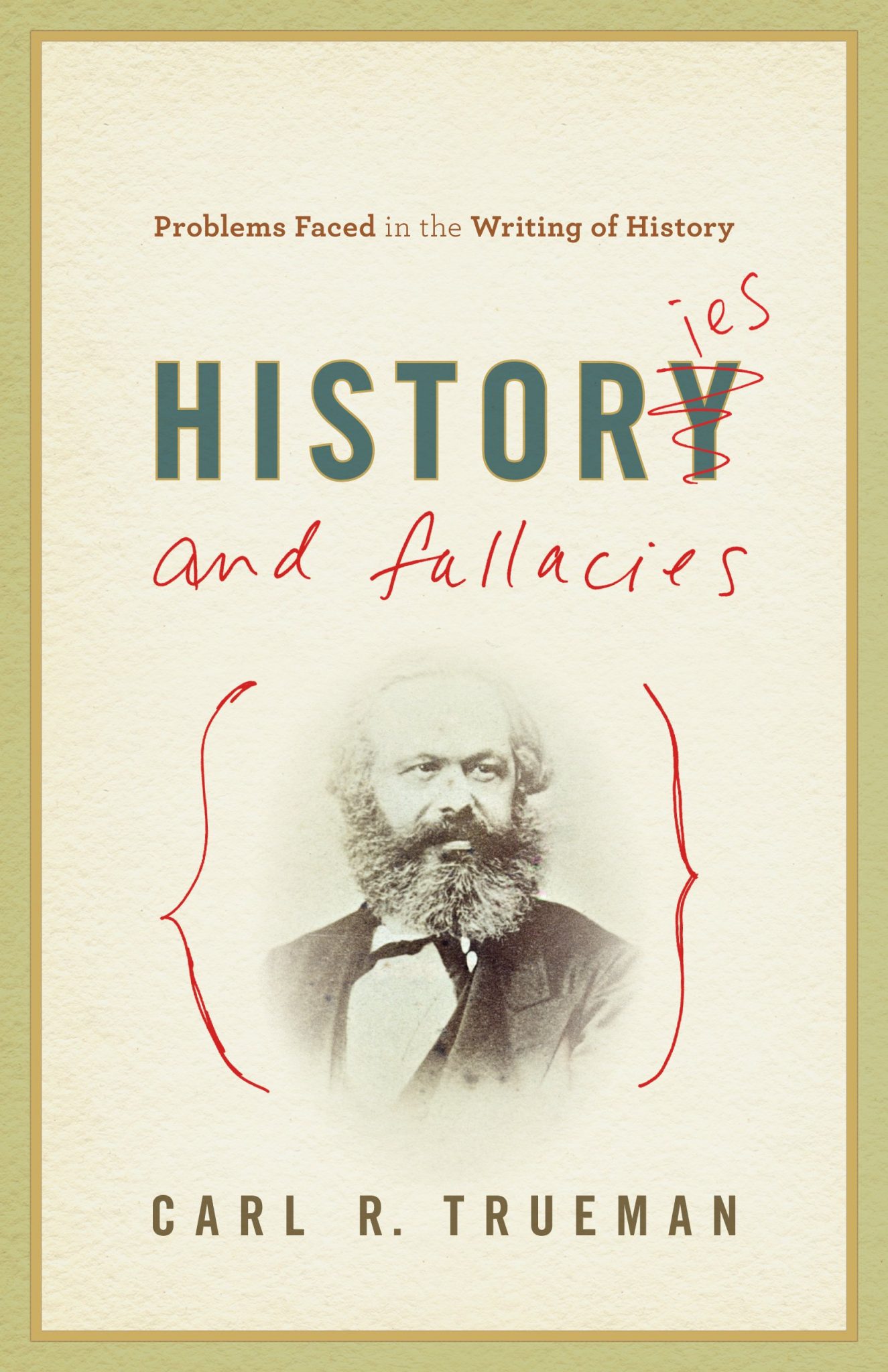
|
|
Quoted: lol. This post is a great example of what I’m talking about. Once again, you sound like the dude in the video with a very curated, rhetorically driven, one dimensional understanding of the past. Frankly, trying to discuss history with you is pointless because your presuppositions are hilariously skewed and your methodology is non existent. Here’s a great book that will help you start to develop an understanding of how to approach history with some degree of integrity: https://www.amazon.com/dp/1581349238?tag=arfcom00-20 https://media.thegospelcoalition.org/wp-content/uploads/2011/06/20195020/carl-trueman-histories-fallacies1.jpg Quoted: Quoted: Quoted: The funny thing is that you can see the flaws in the video, but not your own thinking. This is why you study history under historians. Great argument. I have studied, there is no argument for protestantism that isn't based in fiction or fantasy. There really is no argument at all, it began 1500 years after the fact. To be true, you have to concede the Church fell into error instantly, that the Church founded by God failed immediately. Then God let his people drift away from Him for 1400 years... And that once restored, the Church founded by Luther/Calvin/Henry (oh wait), was superior to God's. You also have to give up the Bible, how could such a fraudulent Church have gotten that correct. Or were they somehow infallible in getting the Bible right, but completely wrong on everything else? lol. This post is a great example of what I’m talking about. Once again, you sound like the dude in the video with a very curated, rhetorically driven, one dimensional understanding of the past. Frankly, trying to discuss history with you is pointless because your presuppositions are hilariously skewed and your methodology is non existent. Here’s a great book that will help you start to develop an understanding of how to approach history with some degree of integrity: https://www.amazon.com/dp/1581349238?tag=arfcom00-20 https://media.thegospelcoalition.org/wp-content/uploads/2011/06/20195020/carl-trueman-histories-fallacies1.jpg What are you even arguing? You haven't actually stated anything. Make a case on something regarding the early Church, anything you want. How about Baptism? The Eucharist? Church governance? The Mass? Pick one. Tell me historically where the Catholic (or Orthodox) are wrong. |
|
Quoted: What are you even arguing? You haven't actually stated anything. Make a case on something regarding the early Church, anything you want. How about Baptism? The Eucharist? Church governance? The Mass? Pick one. Tell me historically where the Catholic (or Orthodox) are wrong. The foundation of the church is the Cross of Christ, not a sinfull man. Peter, himself said that Jesus is the "Rock/Cornerstone" Acts 4:8-11 8 Then Peter, filled with the Holy Ghost, said unto them, Ye rulers of the people, and elders of Israel, 9 If we this day be examined of the good deed done to the impotent man, by what means he is made whole; 10 Be it known unto you all, and to all the people of Israel, that by the name of Jesus Christ of Nazareth, whom ye crucified, whom God raised from the dead, even by him doth this man stand here before you whole. 11 This is the stone which was set at nought of you builders, which is become the head of the corner. 12 Neither is there salvation in any other: for there is none other name under heaven given among men, whereby we must be saved. Also 1Peter: 2:6-8 6 Wherefore also it is contained in the scripture, Behold, I lay in Sion a chief corner stone, elect, precious: and he that believeth on him shall not be confounded. 7 Unto you therefore which believe he is precious: but unto them which be disobedient, the stone which the builders disallowed, the same is made the head of the corner, 8 And a stone of stumbling, and a rock of offence, even to them which stumble at the word, being disobedient: whereunto also they were appointed. The Church was started on the day of Pentecost when God sent down the Holy Spirit and Baptised the beleivers in the Holy Spirit. With the evidence of speaking in Tongues. Peter was a Born Again, Tongue talking street preacher who preached the Blood of Jesus Christ for Salvation. Not having another sinner pour water on your head when you had no understanding of sin. 1 Peter: 18-19 18 Forasmuch as ye know that ye were not redeemed with corruptible things, as silver and gold, from your vain conversation received by tradition from your fathers; 19 But with the precious blood of Christ, as of a lamb without blemish and without spot Shocking! |
|
Quoted: lol. This post is a great example of what I’m talking about. Once again, you sound like the dude in the video with a very curated, rhetorically driven, one dimensional understanding of the past. Frankly, trying to discuss history with you is pointless because your presuppositions are hilariously skewed and your methodology is non existent. Here’s a great book that will help you start to develop an understanding of how to approach history with some degree of integrity: https://www.amazon.com/dp/1581349238?tag=arfcom00-20 https://media.thegospelcoalition.org/wp-content/uploads/2011/06/20195020/carl-trueman-histories-fallacies1.jpg I'm just going through this thread adding new books to my wishlist. |
|
Quoted: What are you even arguing? You haven't actually stated anything. Make a case on something regarding the early Church, anything you want. How about Baptism? The Eucharist? Church governance? The Mass? Pick one. Tell me historically where the Catholic (or Orthodox) are wrong. Quoted: Quoted: Quoted: Quoted: The funny thing is that you can see the flaws in the video, but not your own thinking. This is why you study history under historians. Great argument. I have studied, there is no argument for protestantism that isn't based in fiction or fantasy. There really is no argument at all, it began 1500 years after the fact. To be true, you have to concede the Church fell into error instantly, that the Church founded by God failed immediately. Then God let his people drift away from Him for 1400 years... And that once restored, the Church founded by Luther/Calvin/Henry (oh wait), was superior to God's. You also have to give up the Bible, how could such a fraudulent Church have gotten that correct. Or were they somehow infallible in getting the Bible right, but completely wrong on everything else? lol. This post is a great example of what I’m talking about. Once again, you sound like the dude in the video with a very curated, rhetorically driven, one dimensional understanding of the past. Frankly, trying to discuss history with you is pointless because your presuppositions are hilariously skewed and your methodology is non existent. Here’s a great book that will help you start to develop an understanding of how to approach history with some degree of integrity: https://www.amazon.com/dp/1581349238?tag=arfcom00-20 https://media.thegospelcoalition.org/wp-content/uploads/2011/06/20195020/carl-trueman-histories-fallacies1.jpg What are you even arguing? You haven't actually stated anything. Make a case on something regarding the early Church, anything you want. How about Baptism? The Eucharist? Church governance? The Mass? Pick one. Tell me historically where the Catholic (or Orthodox) are wrong. This thread is about the development of the early church. The history presented in the OPs video was pretty shallow, as you pointed out. Unfortunately, your rebuttal was equally shallow. I pointed that out & have been suggesting resources so you can do better. Seems like a pretty straightforward conversation to me. Despite what demagogues may teach, the early church was pretty diverse, in some ways perhaps just as diverse as the Christian landscape today. Here’s some resources that will help you: Dunns Unity and Diversity in the New Testament Freeman A New History of Early Christianity This is a three part book. The first kinda sucks, the third is OK. But the second section is the money section. Ehrmans The Triumph of Christianity & Lost Christianities Now, let me say before you go reading these books it would be a good idea to read and understand the book on historical fallacies first. I don’t endorse every idea or conclusion in those books, but they talk about realities that anyone interested in the early church need to wrestle with. And as to your suggested sidebars, no, I think we should finish the conversation we’re in instead of jumping into one of your hobby horse topics with the cut and paste talking points. Though your desire to change the subject does lend credence to my earlier comment about your skewed presuppositions and your nonexistent methodology. |
|
Quoted: I'm just going through this thread adding new books to my wishlist. Quoted: Quoted: lol. This post is a great example of what I’m talking about. Once again, you sound like the dude in the video with a very curated, rhetorically driven, one dimensional understanding of the past. Frankly, trying to discuss history with you is pointless because your presuppositions are hilariously skewed and your methodology is non existent. Here’s a great book that will help you start to develop an understanding of how to approach history with some degree of integrity: https://www.amazon.com/dp/1581349238?tag=arfcom00-20 https://media.thegospelcoalition.org/wp-content/uploads/2011/06/20195020/carl-trueman-histories-fallacies1.jpg I'm just going through this thread adding new books to my wishlist. Ha! Every time a birthday/christmas/anniversary/ whatever rolls around the wife peeks into my amazon wishlist and reminds me that the making of many books has no end. Maybe someday I’ll figure that out. 
|
|
Quoted: So, OP, history is a fun subject but it often gets co-opted by rhetoricians. Don’t get your history from influencers, nuns, or preachers, get your history from historians. Here’s a good primer: https://www.amazon.com/dp/0140231994?tag=arfcom00-20 https://m.media-amazon.com/images/I/71BhcE52n-L._UF1000,1000_QL80_.jpg I forgot I had this on my Kindle. Thanks for the reminder! |
|
Quoted: I forgot I had this on my Kindle. Thanks for the reminder! Quoted: Quoted: So, OP, history is a fun subject but it often gets co-opted by rhetoricians. Don’t get your history from influencers, nuns, or preachers, get your history from historians. Here’s a good primer: https://www.amazon.com/dp/0140231994?tag=arfcom00-20 https://m.media-amazon.com/images/I/71BhcE52n-L._UF1000,1000_QL80_.jpg I forgot I had this on my Kindle. Thanks for the reminder! Any time! 
|
|
Read Polycarp's Epistle to the Phillipians: The Epistle Of Polycarp To The Philippians Then Eusibus Ecclesiastical History https://archive.org/details/eusebiusecclesia0000euse_v9k8 . The early church was the Catholic Church. |
|
Quoted: The other two wouldn’t happen to be Gonzalez’ set, would it? Quoted: Quoted: Quoted: So, OP, history is a fun subject but it often gets co-opted by rhetoricians. Don’t get your history from influencers, nuns, or preachers, get your history from historians. Here’s a good primer: https://www.amazon.com/dp/0140231994?tag=arfcom00-20 https://m.media-amazon.com/images/I/71BhcE52n-L._UF1000,1000_QL80_.jpg Henry Chadwick's Early Church History is indeed a good primer. It was one of about three books I used for my first church history class in college (St Vladimir's Seminary-Iona College). I still have it. The other two wouldn’t happen to be Gonzalez’ set, would it? No, the others were 1) William HC Frend's The Early Church, From the Beginnings to 461 and 2) Dimitri Obolensky's The Byzantine Commonwealth Eastern Europe 500 - 1453. Both available at Amazon. There were auxiliary texts as well. Our professor, (the Rev.) John Erickson, had degrees from Harvard (BA) and Yale (MPhil). An Orthodox convert, we were blessed to have him at St Vladimir's. |
|
Quoted: Miss you, Fred. No homo.  Quoted: Quoted: Henry Chadwick's Early Church History is indeed a good primer. It was one of about three books I used for my first church history class in college (St Vladimir's Seminary-Iona College). I still have it. Miss you, Fred. No homo. Lol, miss you, too. |
|
Quoted: When will you believe or accept that the 'Church' is every born again [born from above] believer in Yeshua? Philippians 3:2-3 Look out for the dogs [the Judaizers, the legalists], look out for the troublemakers, look out for the false circumcision [those who claim circumcision is necessary for salvation]; for we [who are born-again have been reborn from above—spiritually transformed, renewed, set apart for His purpose and] are the true circumcision, who worship in the Spirit of God and glory and take pride and exult in Christ Jesus and place no confidence [in what we have or who we are] in the flesh— The term "tabernacle" (Hebrew: mishkan, Greek: skene) signifies God’s dwelling or presence. Exodus 25:8 And have them make me a sanctuary, so that I may dwell among them. Leviticus 26:11-12 I will place my dwelling in your midst, and I shall not abhor you. [12] And I will walk among you, and will be your God, and you shall be my people. Ezekiel 37:27 My dwelling place shall be with them; and I will be their God, and they shall be my people. II Corinthians 6:16 And what agreement has the temple of God with idols? For you are the temple of the living God. As God has said: “I will dwell in them And walk among them. I will be their God, And they shall be My people.” John 1:14 "And the Word became flesh and dwelt among us, and we have seen his glory, glory as of the only Son from the Father, full of grace and truth." Some context: The Greek word for "dwelt" here is eskenosen, meaning "tabernacled." This verse describes Jesus, the Word become flesh, dwelling among humanity, fulfilling the Old Testament concept of God’s presence in the Tabernacle. Revelation 21:3 And I heard a loud voice from heaven saying, “Behold, the tabernacle of God is with men, and He will dwell with them, and they shall be His people. God Himself will be with them and be their God. John 3:7 Do not be astonished that I said to you, ‘You must be born from above.’ ~ Jesus There is only one Church. What is JESUS saying here in Matthew 11:25, Luke 10:21? JESUS also rebuked religion fervently. For clarity, I needed to add that I replied in agreement of what is written in the quote. |
|
Quoted: This thread is about the development of the early church. The history presented in the OPs video was pretty shallow, as you pointed out. Unfortunately, your rebuttal was equally shallow. I pointed that out & have been suggesting resources so you can do better. Seems like a pretty straightforward conversation to me. Despite what demagogues may teach, the early church was pretty diverse, in some ways perhaps just as diverse as the Christian landscape today. Here’s some resources that will help you: Dunns Unity and Diversity in the New Testament Freeman A New History of Early Christianity This is a three part book. The first kinda sucks, the third is OK. But the second section is the money section. Ehrmans The Triumph of Christianity & Lost Christianities Now, let me say before you go reading these books it would be a good idea to read and understand the book on historical fallacies first. I don’t endorse every idea or conclusion in those books, but they talk about realities that anyone interested in the early church need to wrestle with. And as to your suggested sidebars, no, I think we should finish the conversation we’re in instead of jumping into one of your hobby horse topics with the cut and paste talking points. Though your desire to change the subject does lend credence to my earlier comment about your skewed presuppositions and your nonexistent methodology. Quoted: Quoted: Quoted: Quoted: Quoted: The funny thing is that you can see the flaws in the video, but not your own thinking. This is why you study history under historians. Great argument. I have studied, there is no argument for protestantism that isn't based in fiction or fantasy. There really is no argument at all, it began 1500 years after the fact. To be true, you have to concede the Church fell into error instantly, that the Church founded by God failed immediately. Then God let his people drift away from Him for 1400 years... And that once restored, the Church founded by Luther/Calvin/Henry (oh wait), was superior to God's. You also have to give up the Bible, how could such a fraudulent Church have gotten that correct. Or were they somehow infallible in getting the Bible right, but completely wrong on everything else? lol. This post is a great example of what I’m talking about. Once again, you sound like the dude in the video with a very curated, rhetorically driven, one dimensional understanding of the past. Frankly, trying to discuss history with you is pointless because your presuppositions are hilariously skewed and your methodology is non existent. Here’s a great book that will help you start to develop an understanding of how to approach history with some degree of integrity: https://www.amazon.com/dp/1581349238?tag=arfcom00-20 https://media.thegospelcoalition.org/wp-content/uploads/2011/06/20195020/carl-trueman-histories-fallacies1.jpg What are you even arguing? You haven't actually stated anything. Make a case on something regarding the early Church, anything you want. How about Baptism? The Eucharist? Church governance? The Mass? Pick one. Tell me historically where the Catholic (or Orthodox) are wrong. This thread is about the development of the early church. The history presented in the OPs video was pretty shallow, as you pointed out. Unfortunately, your rebuttal was equally shallow. I pointed that out & have been suggesting resources so you can do better. Seems like a pretty straightforward conversation to me. Despite what demagogues may teach, the early church was pretty diverse, in some ways perhaps just as diverse as the Christian landscape today. Here’s some resources that will help you: Dunns Unity and Diversity in the New Testament Freeman A New History of Early Christianity This is a three part book. The first kinda sucks, the third is OK. But the second section is the money section. Ehrmans The Triumph of Christianity & Lost Christianities Now, let me say before you go reading these books it would be a good idea to read and understand the book on historical fallacies first. I don’t endorse every idea or conclusion in those books, but they talk about realities that anyone interested in the early church need to wrestle with. And as to your suggested sidebars, no, I think we should finish the conversation we’re in instead of jumping into one of your hobby horse topics with the cut and paste talking points. Though your desire to change the subject does lend credence to my earlier comment about your skewed presuppositions and your nonexistent methodology. I’m not suggesting sidebars to change the subject, I’m trying to figure out and narrow down where you are and go from there. The only deviations in the early Church that didn’t resemble Catholicism or Orthodoxy today are the heresies that came and went and were admonished by the early Christians. This was also why I mentioned the sidebars; if you didn’t believe in the true presence of the Eucharist, not a Christian. Didn’t believe in regenerative Baptism, not a Christian. Didn’t have a succession of bishops from the Apostles, not a church. Didn’t submit to your bishop, not a Christian. Didn’t believe in the divinity of Christ, not a Christian. Etc. Diverse yes, but of the same faith, a universal faith. Read these, especially Irenaeus, Ignatius, and Eusebius. https://www.newadvent.org/fathers/ Read what the early churches and bishops were writing, they wrote a lot. Ehrman rings a bell, I think I’ve read some of his. But I will read it. |
|
I would also suggest reading the Didache. It was written in Greek by a first century Christian. Actually talks about practices. It mentions the long time Orthodox practice of fasting on Wednesdays and Fridays (which we still do). Can't recommend a certain translation. Maybe someone else can. https://en.wikipedia.org/wiki/Didache |
|
Quoted: No, the others were 1) William HC Frend's The Early Church, From the Beginnings to 461 and 2) Dimitri Obolensky's The Byzantine Commonwealth Eastern Europe 500 - 1453. Both available at Amazon. There were auxiliary texts as well. Our professor, (the Rev.) John Erickson, had degrees from Harvard (BA) and Yale (MPhil). An Orthodox convert, we were blessed to have him at St Vladimir's. Quoted: Quoted: Quoted: Quoted: So, OP, history is a fun subject but it often gets co-opted by rhetoricians. Don’t get your history from influencers, nuns, or preachers, get your history from historians. Here’s a good primer: https://www.amazon.com/dp/0140231994?tag=arfcom00-20 https://m.media-amazon.com/images/I/71BhcE52n-L._UF1000,1000_QL80_.jpg Henry Chadwick's Early Church History is indeed a good primer. It was one of about three books I used for my first church history class in college (St Vladimir's Seminary-Iona College). I still have it. The other two wouldn’t happen to be Gonzalez’ set, would it? No, the others were 1) William HC Frend's The Early Church, From the Beginnings to 461 and 2) Dimitri Obolensky's The Byzantine Commonwealth Eastern Europe 500 - 1453. Both available at Amazon. There were auxiliary texts as well. Our professor, (the Rev.) John Erickson, had degrees from Harvard (BA) and Yale (MPhil). An Orthodox convert, we were blessed to have him at St Vladimir's. Ah. Right on. Frend is a good one too, though I’m unfamiliar with Obolensky. |
|
Quoted: I’m not suggesting sidebars to change the subject, I’m trying to figure out and narrow down where you are and go from there. The only deviations in the early Church that didn’t resemble Catholicism or Orthodoxy today are the heresies that came and went and were admonished by the early Christians. This was also why I mentioned the sidebars; if you didn’t believe in the true presence of the Eucharist, not a Christian. Didn’t believe in regenerative Baptism, not a Christian. Didn’t have a succession of bishops from the Apostles, not a church. Didn’t submit to your bishop, not a Christian. Didn’t believe in the divinity of Christ, not a Christian. Etc. Diverse yes, but of the same faith, a universal faith. Read these, especially Irenaeus, Ignatius, and Eusebius. https://www.newadvent.org/fathers/ Read what the early churches and bishops were writing, they wrote a lot. Ehrman rings a bell, I think I’ve read some of his. But I will read it. Quoted: Quoted: Quoted: Quoted: Quoted: Quoted: The funny thing is that you can see the flaws in the video, but not your own thinking. This is why you study history under historians. Great argument. I have studied, there is no argument for protestantism that isn't based in fiction or fantasy. There really is no argument at all, it began 1500 years after the fact. To be true, you have to concede the Church fell into error instantly, that the Church founded by God failed immediately. Then God let his people drift away from Him for 1400 years... And that once restored, the Church founded by Luther/Calvin/Henry (oh wait), was superior to God's. You also have to give up the Bible, how could such a fraudulent Church have gotten that correct. Or were they somehow infallible in getting the Bible right, but completely wrong on everything else? lol. This post is a great example of what I’m talking about. Once again, you sound like the dude in the video with a very curated, rhetorically driven, one dimensional understanding of the past. Frankly, trying to discuss history with you is pointless because your presuppositions are hilariously skewed and your methodology is non existent. Here’s a great book that will help you start to develop an understanding of how to approach history with some degree of integrity: https://www.amazon.com/dp/1581349238?tag=arfcom00-20 https://media.thegospelcoalition.org/wp-content/uploads/2011/06/20195020/carl-trueman-histories-fallacies1.jpg What are you even arguing? You haven't actually stated anything. Make a case on something regarding the early Church, anything you want. How about Baptism? The Eucharist? Church governance? The Mass? Pick one. Tell me historically where the Catholic (or Orthodox) are wrong. This thread is about the development of the early church. The history presented in the OPs video was pretty shallow, as you pointed out. Unfortunately, your rebuttal was equally shallow. I pointed that out & have been suggesting resources so you can do better. Seems like a pretty straightforward conversation to me. Despite what demagogues may teach, the early church was pretty diverse, in some ways perhaps just as diverse as the Christian landscape today. Here’s some resources that will help you: Dunns Unity and Diversity in the New Testament Freeman A New History of Early Christianity This is a three part book. The first kinda sucks, the third is OK. But the second section is the money section. Ehrmans The Triumph of Christianity & Lost Christianities Now, let me say before you go reading these books it would be a good idea to read and understand the book on historical fallacies first. I don’t endorse every idea or conclusion in those books, but they talk about realities that anyone interested in the early church need to wrestle with. And as to your suggested sidebars, no, I think we should finish the conversation we’re in instead of jumping into one of your hobby horse topics with the cut and paste talking points. Though your desire to change the subject does lend credence to my earlier comment about your skewed presuppositions and your nonexistent methodology. I’m not suggesting sidebars to change the subject, I’m trying to figure out and narrow down where you are and go from there. The only deviations in the early Church that didn’t resemble Catholicism or Orthodoxy today are the heresies that came and went and were admonished by the early Christians. This was also why I mentioned the sidebars; if you didn’t believe in the true presence of the Eucharist, not a Christian. Didn’t believe in regenerative Baptism, not a Christian. Didn’t have a succession of bishops from the Apostles, not a church. Didn’t submit to your bishop, not a Christian. Didn’t believe in the divinity of Christ, not a Christian. Etc. Diverse yes, but of the same faith, a universal faith. Read these, especially Irenaeus, Ignatius, and Eusebius. https://www.newadvent.org/fathers/ Read what the early churches and bishops were writing, they wrote a lot. Ehrman rings a bell, I think I’ve read some of his. But I will read it. You see, this post is a great example of what I’ve been talking about. In this post, we’ve got textbook examples of historical anachronisms and generality fallacies. Just like the guy in the OP, which is why I keep saying your posts are just as bad as his. You keep saying you disagree with me, but your actions keep affirming my posts. |
|
Quoted: I would also suggest reading the Didache. It was written in Greek by a first century Christian. Actually talks about practices. It mentions the long time Orthodox practice of fasting on Wednesdays and Fridays (which we still do). Can't recommend a certain translation. Maybe someone else can. https://en.wikipedia.org/wiki/Didache If you’re just looking for the text, a google search will bring it up. One of the better critical commentaries is the translation of Niederwimmer's commentary in the hermenea series. https://www.amazon.com/dp/0800660277?tag=arfcom00-20 |
|
Quoted: I would also suggest reading the Didache. It was written in Greek by a first century Christian. Actually talks about practices. It mentions the long time Orthodox practice of fasting on Wednesdays and Fridays (which we still do). Can't recommend a certain translation. Maybe someone else can. https://en.wikipedia.org/wiki/Didache Yes, The Didache is an excellent resource for studying church history. It was an auxiliary text for 2-3 such classes I had in seminary. I can't recall the translation that was in the St Vladimir's bookstore, 1975-1983. Another great resource is the Apostolic Tradition by Hippolytus (d.235). I wrote a paper on it for an MDiv church history class (most of which I've forgotten by now) and it features an overview of early Christian liturgical practice. |
|
Quoted: You see, this post is a great example of what I’ve been talking about. In this post, we’ve got textbook examples of historical anachronisms and generality fallacies. Just like the guy in the OP, which is why I keep saying your posts are just as bad as his. You keep saying you disagree with me, but your actions keep affirming my posts. Quoted: Quoted: Quoted: Quoted: Quoted: Quoted: Quoted: The funny thing is that you can see the flaws in the video, but not your own thinking. This is why you study history under historians. Great argument. I have studied, there is no argument for protestantism that isn't based in fiction or fantasy. There really is no argument at all, it began 1500 years after the fact. To be true, you have to concede the Church fell into error instantly, that the Church founded by God failed immediately. Then God let his people drift away from Him for 1400 years... And that once restored, the Church founded by Luther/Calvin/Henry (oh wait), was superior to God's. You also have to give up the Bible, how could such a fraudulent Church have gotten that correct. Or were they somehow infallible in getting the Bible right, but completely wrong on everything else? lol. This post is a great example of what I’m talking about. Once again, you sound like the dude in the video with a very curated, rhetorically driven, one dimensional understanding of the past. Frankly, trying to discuss history with you is pointless because your presuppositions are hilariously skewed and your methodology is non existent. Here’s a great book that will help you start to develop an understanding of how to approach history with some degree of integrity: https://www.amazon.com/dp/1581349238?tag=arfcom00-20 https://media.thegospelcoalition.org/wp-content/uploads/2011/06/20195020/carl-trueman-histories-fallacies1.jpg What are you even arguing? You haven't actually stated anything. Make a case on something regarding the early Church, anything you want. How about Baptism? The Eucharist? Church governance? The Mass? Pick one. Tell me historically where the Catholic (or Orthodox) are wrong. This thread is about the development of the early church. The history presented in the OPs video was pretty shallow, as you pointed out. Unfortunately, your rebuttal was equally shallow. I pointed that out & have been suggesting resources so you can do better. Seems like a pretty straightforward conversation to me. Despite what demagogues may teach, the early church was pretty diverse, in some ways perhaps just as diverse as the Christian landscape today. Here’s some resources that will help you: Dunns Unity and Diversity in the New Testament Freeman A New History of Early Christianity This is a three part book. The first kinda sucks, the third is OK. But the second section is the money section. Ehrmans The Triumph of Christianity & Lost Christianities Now, let me say before you go reading these books it would be a good idea to read and understand the book on historical fallacies first. I don’t endorse every idea or conclusion in those books, but they talk about realities that anyone interested in the early church need to wrestle with. And as to your suggested sidebars, no, I think we should finish the conversation we’re in instead of jumping into one of your hobby horse topics with the cut and paste talking points. Though your desire to change the subject does lend credence to my earlier comment about your skewed presuppositions and your nonexistent methodology. I’m not suggesting sidebars to change the subject, I’m trying to figure out and narrow down where you are and go from there. The only deviations in the early Church that didn’t resemble Catholicism or Orthodoxy today are the heresies that came and went and were admonished by the early Christians. This was also why I mentioned the sidebars; if you didn’t believe in the true presence of the Eucharist, not a Christian. Didn’t believe in regenerative Baptism, not a Christian. Didn’t have a succession of bishops from the Apostles, not a church. Didn’t submit to your bishop, not a Christian. Didn’t believe in the divinity of Christ, not a Christian. Etc. Diverse yes, but of the same faith, a universal faith. Read these, especially Irenaeus, Ignatius, and Eusebius. https://www.newadvent.org/fathers/ Read what the early churches and bishops were writing, they wrote a lot. Ehrman rings a bell, I think I’ve read some of his. But I will read it. You see, this post is a great example of what I’ve been talking about. In this post, we’ve got textbook examples of historical anachronisms and generality fallacies. Just like the guy in the OP, which is why I keep saying your posts are just as bad as his. You keep saying you disagree with me, but your actions keep affirming my posts. Never mind. If you want to discuss something, say something. |
|
Found the book I had the included the Didache. It's called The Apostolic Fathers. https://www.amazon.com/dp/1945757094?tag=arfcom00-20 |
|
Quoted: I would also suggest reading the Didache. It was written in Greek by a first century Christian. Actually talks about practices. It mentions the long time Orthodox practice of fasting on Wednesdays and Fridays (which we still do). Can't recommend a certain translation. Maybe someone else can. https://en.wikipedia.org/wiki/Didache Edit, to me this adds credibility. It changed my mind on issues like the definition of baptism. |
|
Quoted: Ah. Right on. Frend is a good one too, though I’m unfamiliar with Obolensky. Quoted: Quoted: Quoted: Quoted: Quoted: So, OP, history is a fun subject but it often gets co-opted by rhetoricians. Don’t get your history from influencers, nuns, or preachers, get your history from historians. Here’s a good primer: https://www.amazon.com/dp/0140231994?tag=arfcom00-20 https://m.media-amazon.com/images/I/71BhcE52n-L._UF1000,1000_QL80_.jpg Henry Chadwick's Early Church History is indeed a good primer. It was one of about three books I used for my first church history class in college (St Vladimir's Seminary-Iona College). I still have it. The other two wouldn’t happen to be Gonzalez’ set, would it? No, the others were 1) William HC Frend's The Early Church, From the Beginnings to 461 and 2) Dimitri Obolensky's The Byzantine Commonwealth Eastern Europe 500 - 1453. Both available at Amazon. There were auxiliary texts as well. Our professor, (the Rev.) John Erickson, had degrees from Harvard (BA) and Yale (MPhil). An Orthodox convert, we were blessed to have him at St Vladimir's. Ah. Right on. Frend is a good one too, though I’m unfamiliar with Obolensky. And yet one more from my undergraduate church history course(s), Cyril Richardson's Early Christian Fathers. It's excellent and a great introduction to patristics. First published in 1953, I see it is still available at Amazon. https://www.amazon.com/Early-Christian-Fathers-Library-Classics/dp/0684829517 |