


[ARCHIVED THREAD] - Relativity. (Page 1 of 2)
Posted: 10/4/2009 12:05:51 PM EDT
|
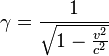
A question came up in the Stargate Universe thread, about the relationship between time, and the speed of light. Einstein proved that the closer you get to the Speed Of Light, the slower time moves for you relative to the rest of the Universe, I.E., if you travel just under the speed of light for 1 year, Century's may have passed in the rest of the Universe. (Think Planet Of The Apes.), but what happens if you somehow go PAST the Speed Of Light?
Yes I know that it has also been effectively proven impossible to break the Speed Of Light as you would end up with infinite mass, and would have to transform into energy if you did somehow do it, but just for the sake of argument, say that you have somehow found a way, or that the theory were flawed. So your aboard the U.S.S. Tachyon, and you have just passed the speed of light, so what is time doing from your perspective? |
|
Impossible to go past the speed of light from what I have read. Your mass approaches infinity as you approach the speed of light. ETA: This brings up a good question. If I get very close to the speed of light and my mass is approaching infinity, would the entire universe be drawn towards me and create the mother of all black holes?
|
|
Quoted:
Impossible to go past the speed of light from what I have read. Your mass approaches infinity as you approach the speed of light. ETA: This brings up a good question. If I get very close to the speed of light and my mass is approaching infinity, would the entire universe be drawn towards me and create the mother of all black holes? Correct, but assume you somehow found a way. |
|
Quoted:
Quoted:
Impossible to go past the speed of light from what I have read. Your mass approaches infinity as you approach the speed of light. Correct. It would take Infinite energy to accelerate a massive body to the speed of light. This; mass is the resistance to acceleration, at the speed of light when the mass of an object, even a subatomic particle, becomes infinite, there is not enough energy in the entire universe to accelerate it further to superluminal speeds. |
|
Quoted:
Quoted:
Impossible to go past the speed of light from what I have read. Your mass approaches infinity as you approach the speed of light. ETA: This brings up a good question. If I get very close to the speed of light and my mass is approaching infinity, would the entire universe be drawn towards me and create the mother of all black holes? Correct, but assume you somehow found a way. That's sort of like saying "sure, you can't divide by zero, but lets just pretend you can, and have a poll about what the answer would be." By the way, the correct answer on your poll is "moving into the future," since that is what all observers are doing all the time anyway. 
|
|
Several experiments have shown that some things *do* can travel faster than the speed of light.
The problem with moving matter at the speed of light is: at the speed of light, it becomes energy. . .and now do you turn energy back into matter. Either way, from *your* perspective, time is still going just like it always has. |
|
Quoted:
As much as I admire Einstein, I've always had an issue with the speed of light being absolute. In the science (art?) of modern quantum physics, there are many subatomic particles that exhibit the theory of traveling faster than light. What's up with that? The problem is nobody has figured out the math to support a better idea. |
|
Quoted:
Quoted:
Quoted:
Impossible to go past the speed of light from what I have read. Your mass approaches infinity as you approach the speed of light. ETA: This brings up a good question. If I get very close to the speed of light and my mass is approaching infinity, would the entire universe be drawn towards me and create the mother of all black holes? Correct, but assume you somehow found a way. That's sort of like saying "sure, you can't divide by zero, but lets just pretend you can, and have a poll about what the answer would be." By the way, the correct answer on your poll is "moving into the future," since that is what all observers are doing all the time anyway. Good answer |


|
Quoted:
So, yeah, if that's the case, then the ship traveling at FTL hasn't really been out there all that long. Makes sense. It's all relative; much, much, less time has passed on the ship relative to the amount of time that has passed at the point from which it originated. The passage of a year's time on the ship could easily correspond to the passage of millenia at its point of origin, which leads to another plot hole in the new Stargate Universe series. Although according to the script, the ship was launched hundreds of thousands of years ago from it's point of origin; it should be almost brand spanking new since little time has elapsed on board. |
|
Quoted:
Quoted:
Quoted:
Impossible to go past the speed of light from what I have read. Your mass approaches infinity as you approach the speed of light. ETA: This brings up a good question. If I get very close to the speed of light and my mass is approaching infinity, would the entire universe be drawn towards me and create the mother of all black holes? Correct, but assume you somehow found a way. That's sort of like saying "sure, you can't divide by zero, but lets just pretend you can, and have a poll about what the answer would be." By the way, the correct answer on your poll is "moving into the future," since that is what all observers are doing all the time anyway. Yes I know it's impossible, but this thread is to answer a question that came up about a SCIENCE FICTION show, so just pretend that you have found a way, or that the theory were wrong, whatever, this is supposed to be fun akin to the airplane on a treadmill, it'll never happen, but just pretend it did. So your aboard the U.S.S. Tachyon, and you have just gone past the speed of light, so now what is time doing? |
|
Quoted: Quoted: Quoted: Quoted: Impossible to go past the speed of light from what I have read. Your mass approaches infinity as you approach the speed of light. ETA: This brings up a good question. If I get very close to the speed of light and my mass is approaching infinity, would the entire universe be drawn towards me and create the mother of all black holes? Correct, but assume you somehow found a way. That's sort of like saying "sure, you can't divide by zero, but lets just pretend you can, and have a poll about what the answer would be." By the way, the correct answer on your poll is "moving into the future," since that is what all observers are doing all the time anyway. Yes I know it's impossible, but this thread is to answer a question that came up about a SCIENCE FICTION show, so just pretend that you have found a way, or that the theory were wrong, whatever, this is supposed to be fun akin to the airplane on a treadmill, it'll never happen, but just pretend it did. So your aboard the U.S.S. Tachyon, and you have just gone past the speed of light, so now what is time doing? In a lot of shows (star trek for example) they're cheating and not actually going faster than the speed of light in their reference frame. http://en.wikipedia.org/wiki/Alcubierre_drive |
|
Quoted:
Quoted:
Quoted:
Quoted:
Impossible to go past the speed of light from what I have read. Your mass approaches infinity as you approach the speed of light. ETA: This brings up a good question. If I get very close to the speed of light and my mass is approaching infinity, would the entire universe be drawn towards me and create the mother of all black holes? Correct, but assume you somehow found a way. That's sort of like saying "sure, you can't divide by zero, but lets just pretend you can, and have a poll about what the answer would be." By the way, the correct answer on your poll is "moving into the future," since that is what all observers are doing all the time anyway. Yes I know it's impossible, but this thread is to answer a question that came up about a SCIENCE FICTION show, so just pretend that you have found a way, or that the theory were wrong, whatever, this is supposed to be fun akin to the airplane on a treadmill, it'll never happen, but just pretend it did. So your aboard the U.S.S. Tachyon, and you have just gone past the speed of light, so now what is time doing? It's turtles all the way down. |
|
Quoted:
Quoted:
Quoted:
Impossible to go past the speed of light from what I have read. Your mass approaches infinity as you approach the speed of light. ETA: This brings up a good question. If I get very close to the speed of light and my mass is approaching infinity, would the entire universe be drawn towards me and create the mother of all black holes? Correct, but assume you somehow found a way. That's sort of like saying "sure, you can't divide by zero, but lets just pretend you can, and have a poll about what the answer would be." By the way, the correct answer on your poll is "moving into the future," since that is what all observers are doing all the time anyway. I'm not so sure that's correct; since not all observers move into the future depending on their relative positions. Here's an example: An individual is falling into a black hole and is being observed by an individual beyond the event horizon. The observer watches as the "faller" accelerates rapidly and disappears into the singularity. Now from the "fallers" point of view: He falls towards the singularity at an ever decreasing rate of speed until he stops falling since the singularities gravity well time stops completely so he never falls in because he is frozen in space-time and ceases to move into the future. So from the remote viewers relative position; he is seen to fall in whereas from his own position of observation; he never does. There are two realities; he falls in and he doesn't. And both observations are correct. I'm going with from his perspective "time is frozen". |
|
Quoted:
Quoted:
Quoted:
Quoted:
Impossible to go past the speed of light from what I have read. Your mass approaches infinity as you approach the speed of light. ETA: This brings up a good question. If I get very close to the speed of light and my mass is approaching infinity, would the entire universe be drawn towards me and create the mother of all black holes? Correct, but assume you somehow found a way. That's sort of like saying "sure, you can't divide by zero, but lets just pretend you can, and have a poll about what the answer would be." By the way, the correct answer on your poll is "moving into the future," since that is what all observers are doing all the time anyway. I'm not so sure that's correct; since not all observers move into the future depending on their relative positions. Here's an example: An individual is falling into a black hole and is being observed by an individual beyond the event horizon. The observer watches as the "faller" accelerates rapidly and disappears into the singularity. Now from the "fallers" point of view: He falls towards the singularity at an ever decreasing rate of speed until he stops falling since the singularities gravity well time stops completely so he never falls in because he is frozen in space-time and ceases to move into the future. So from the remote viewers relative position; he is seen to fall in whereas from his own position of observation; he never does. There are two realities; he falls in and he doesn't. And both observations are correct. I'm going with "time is frozen". Damn I love this place. |


|
Quoted:
if you could travel at speed of light, would your head lamps work 
Quantum mechanics; which I studied more than 45 years ago in college so I'm rusty as all hell and have forgotten all the time dilation formulas, has a dilation formula for the addition of velocities as well. For example; you are on the flatbed of a railway car moving at a speed of 10 MPH (pretend you are in a vacuum to remove air resistance from the situation) and you throw a stone at a speed of 20 MPH directly in the direction that you are traveling. The thrown stone is moving through space at a forward velocity of 30 MPH right? Wrong; according to the dilation formula for additive velocities; the stone is actually moving at a slightly lower velocity than 30 MPH although the effect is almost undetectable. At relativistic velocities the dilation effect for additive velocities becomes huge; so huge in fact that if you shine a spotlight from that same flatbed that's moving at 10 MPH; the dilation of additive velocities is infinite so that the light from your spotlight isn't moving at the speed of light plus 10 MPH; it's still only moving at the speed of light. BTW; relative space, according the observer's position is also dilated as velocity increases, although in our environment the effect is almost undetectable. As you approach a significant fraction of the speed of light; the effect becomes extreme. For example let's say you were on a very long, thin, needle shaped, spaceship traveling at a significant fraction of the speed of light. From your position on the ship; everything would appear as normal; but for a remote observer at your point of origin; your ship would take on the shape of a blunt cone. The closer to the speed of light you traveled; the blunter the cone shape of your ship would appear to the remote observer, but of course from your observation point everything would appear normal; nothing would have changed. |
|
IIRC Einstein said it was impossible to travel faster than the speed of light. However he added that if could be possible to get from point A to point B faster than light.
You just would not be able to propel yourself faster than the speed of light but you can take a shortcut (wormhole) and get to you destination faster than light particles that originated from your starting point. |
|
Quoted: IIRC Einstein said it was impossible to travel faster than the speed of light. However he added that if could be possible to get from point A to point B faster than light. You just would not be able to propel yourself faster than the speed of light but you can take a shortcut (wormhole) and get to you destination faster than light particles that originated from your starting point. Pretty much. Absolute barriers are absolute. |
|
Quoted:
IIRC Einstein said it was impossible to travel faster than the speed of light. However he added that if could be possible to get from point A to point B faster than light. You just would not be able to propel yourself faster than the speed of light but you can take a shortcut (wormhole) and get to you destination faster than light particles that originated from your starting point. And there is the coupled particle effect as well. |
|
I think you've got the two reference frames backwards. At any rate, time never "stops" in either reference frame.
Quoted:
Quoted:
Quoted:
Quoted:
Impossible to go past the speed of light from what I have read. Your mass approaches infinity as you approach the speed of light. ETA: This brings up a good question. If I get very close to the speed of light and my mass is approaching infinity, would the entire universe be drawn towards me and create the mother of all black holes? Correct, but assume you somehow found a way. That's sort of like saying "sure, you can't divide by zero, but lets just pretend you can, and have a poll about what the answer would be." By the way, the correct answer on your poll is "moving into the future," since that is what all observers are doing all the time anyway. I'm not so sure that's correct; since not all observers move into the future depending on their relative positions. Here's an example: An individual is falling into a black hole and is being observed by an individual beyond the event horizon. The observer watches as the "faller" accelerates rapidly and disappears into the singularity. The observer NEVER sees the faller fall into the singularity. The observer sees the image of the falling person slow down and redshift into nothingness at the event horizon. The photons leaving the faller's body as he crosses the event horizon take an infinite amount of time to overcome the gravity well, and so never get to the observer. This is because the light from the faller cannot escape the gravity well once the faller is beyond the event horizon; this is the definition of the event horizon. It is not possible to see the singularity, or anything falling into it. Now from the "fallers" point of view: He falls towards the singularity at an ever decreasing rate of speed until he stops falling since the singularities gravity well time stops completely so he never falls in because he is frozen in space-time and ceases to move into the future. So from the remote viewers relative position; he is seen to fall in whereas from his own position of observation; he never does. While the time the faller perceives is slowed relative to the time the outside observer perceives, time doesn't stop for the faller. This is true of any accelerated reference frame. There are two realities; he falls in and he doesn't. And both observations are correct. I'm going with from his perspective "time is frozen". |
|
Quoted:
As much as I admire Einstein, I've always had an issue with the speed of light being absolute. In the science (art?) of modern quantum physics, there are many subatomic particles that exhibit the theory of traveling faster than light. What's up with that? No. Quantum dynamics does not allow for FTL movement of particles either. In quantum physics, particles may appear to move faster than light to an observer, but they really already existed there. Quantum physics delocalizes particles, but they still behave in relativistic manner when observed. |
|
Anything moving FTL must have either real rest mass and negative or imaginary energy OR, negative or imaginary rest mass and real energy.
In 1917 Toleman showed that anything moving at c squared or above would have negative time ordering for a STL observer. The speed above which time reversal occurs drops toward c as the observers’ speed increases toward c. Time reversal can only occur between a FTL reference frame and a STL reference frame. To answer your question, to go past the speed of light, you have to convert to Tachyons with real energy (a matter for engineering students), and then you will be moving FTL toward your destination, and loosing energy, accelerating. Time will be passing at approximately the same rate it does now, but as you accelerate, it will slow. As you approach c squared, the universe will appear to slow down to a stop, and then time will appear to reverse for the rest of the universe. From a science fiction POV: We are ready to launch the first FTL starship to (of course) Alpha Centauri. The trip will take 5 minutes. As launch time approaches T-5, long range scanners pick up a ship at Alpha Centauri; no…2 ships! And one is heading at c squared plus speed straight for Earth! We hurry to launch our ship to intercept the unidentified aliens. Our ship approaches the other at “ridiculous” speed! And the ships collide! Er…disappear! Meanwhile, the communications guy has been trying to get our attention, our ship made it to Alpha Centauri after the “other” ship disappeared, and has been their for a while, like… before they launched. |
|
Quoted:
I think you've got the two reference frames backwards. At any rate, time never "stops" in either reference frame. Quoted:
Quoted:
Quoted:
Quoted:
Impossible to go past the speed of light from what I have read. Your mass approaches infinity as you approach the speed of light. ETA: This brings up a good question. If I get very close to the speed of light and my mass is approaching infinity, would the entire universe be drawn towards me and create the mother of all black holes? Correct, but assume you somehow found a way. That's sort of like saying "sure, you can't divide by zero, but lets just pretend you can, and have a poll about what the answer would be." By the way, the correct answer on your poll is "moving into the future," since that is what all observers are doing all the time anyway. I'm not so sure that's correct; since not all observers move into the future depending on their relative positions. Here's an example: An individual is falling into a black hole and is being observed by an individual beyond the event horizon. The observer watches as the "faller" accelerates rapidly and disappears into the singularity. The observer NEVER sees the faller fall into the singularity. The observer sees the image of the falling person slow down and redshift into nothingness at the event horizon. The photons leaving the faller's body as he crosses the event horizon take an infinite amount of time to overcome the gravity well, and so never get to the observer. This is because the light from the faller cannot escape the gravity well once the faller is beyond the event horizon; this is the definition of the event horizon. It is not possible to see the singularity, or anything falling into it. True; I was simplifying, once the faller passes through the event horizon he disappears since nothing can escape the gravity well since at that threshold the surrounding space is so distorted that it is completely curved and there is no way out. Now from the "fallers" point of view: He falls towards the singularity at an ever decreasing rate of speed until he stops falling since the singularities gravity well time stops completely so he never falls in because he is frozen in space-time and ceases to move into the future. So from the remote viewers relative position; he is seen to fall in whereas from his own position of observation; he never does. While the time the faller perceives is slowed relative to the time the outside observer perceives, time doesn't stop for the faller. This is true of any accelerated reference frame. I' don't believe that this is true for accelerated reference frames that enter singularities which is why they are called singularities; the laws of physics break down and space-time, if in fact it exists at all, can no longer be described. There are two realities; he falls in and he doesn't. And both observations are correct. I'm going with from his perspective "time is frozen". I oversimplified since the "faller" would be torn apart by gravitational forces long before the theoretical time dilation effect could be observed. But time stops dead at the singularity. Take it easy on me son; I haven't studied this shit in over 45 years. 
|
|
NEWS FLASH
They already made light go faster than normal light speed. How? They put two plates side by side separated by less distance than a normal photon's typical wave pattern. The photon ricocheted off the plates thereby traveling less distance than it normally would. VOILA! FTL Photons! 
|
|
Quoted:
Anything moving FTL must have either real rest mass and negative or imaginary energy OR, negative or imaginary rest mass and real energy. In 1917 Toleman showed that anything moving at c squared or above would have negative time ordering for a STL observer. The speed above which time reversal occurs drops toward c as the observers’ speed increases toward c. Time reversal can only occur between a FTL reference frame and a STL reference frame. To answer your question, to go past the speed of light, you have to convert to Tachyons with real energy (a matter for engineering students), and then you will be moving FTL toward your destination, and loosing energy, accelerating. Time will be passing at approximately the same rate it does now, but as you accelerate, it will slow. As you approach c squared, the universe will appear to slow down to a stop, and then time will appear to reverse for the rest of the universe. From a science fiction POV: We are ready to launch the first FTL starship to (of course) Alpha Centauri. The trip will take 5 minutes. As launch time approaches T-5, long range scanners pick up a ship at Alpha Centauri; no…2 ships! And one is heading at c squared plus speed straight for Earth! We hurry to launch our ship to intercept the unidentified aliens. Our ship approaches the other at “ridiculous” speed! And the ships collide! Er…disappear! Meanwhile, the communications guy has been trying to get our attention, our ship made it to Alpha Centauri after the “other” ship disappeared, and has been their for a while, like… before they launched. And causality would go right out the window which is theoretically impossible, but makes for great sci-fi like in the Terminator series of movies where the grandfather paradox is exploited as the major plot device. WIKI: In modern physics, the notion of causality had to be clarified. The insights of the theory of special relativity confirmed the assumption of causality, but they made the meaning of the word "simultaneous" observer-dependent[6]. Consequently, the relativistic principle of causality says that the cause must precede its effect according to all inertial observers. This is equivalent to the statement that the cause and its effect are separated by a timelike interval, and the effect belongs to the future of its cause. Special relativity has shown that it is not only impossible to influence the past, it is also impossible to influence distant objects with signals that travel faster than the speed of light. In the theory of general relativity, the concept of causality is generalized in the most straightforward way: the effect must belong to the future light cone of its cause, even if the spacetime is curved. New subtleties must be taken into account when we investigate causality in quantum mechanics and relativistic quantum field theory in particular. In quantum field theory, causality is closely related to the principle of locality. A careful analysis of the phenomena is needed, and the exact outcome depends on the interpretation of quantum mechanics chosen: this is especially the case of the experiments involving quantum entanglement that require Bell's Theorem for their implications to be fully understood. Despite these subtleties, causality remains an important and valid concept in physical theories. For example, the notion that events can be ordered into causes and effects is necessary to prevent causality paradoxes such as the grandfather paradox, which asks what happens if a time-traveler kills his own grandfather before he ever meets the time-traveler's grandmother. See also Chronology protection conjecture. |
|
Quoted:
NEWS FLASH They already made light go faster than normal light speed. How? They put two plates side by side separated by less distance than a normal photon's typical wave pattern. The photon ricocheted off the plates thereby traveling less distance than it normally would. VOILA! FTL Photons! Hell; if you want, you can easily drive your car faster than the speed of light. http://www.news.harvard.edu/gazette/1999/02.18/light.html HARVARD GAZETTE ARCHIVES Physicists Slow Speed of Light By William J. Cromie Gazette Staff Lene Hau has shed new light on a new form of matter. Photo by MaryAnn Nilsson. Light, which normally travels the 240,000 miles from the Moon to Earth in less than two seconds, has been slowed to the speed of a minivan in rush-hour traffic –– 38 miles an hour. An entirely new state of matter, first observed four years ago, has made this possible. When atoms become packed super-closely together at super-low temperatures and super-high vacuum, they lose their identity as individual particles and act like a single super- atom with characteristics similar to a laser. Such an exotic medium can be engineered to slow a light beam 20 million-fold from 186,282 miles a second to a pokey 38 miles an hour. "In this odd state of matter, light takes on a more human dimension; you can almost touch it," says Lene Hau, a Harvard University physicist. Hau led a team of scientists who did this experiment at the Rowland Institute for Science, a private, nonprofit research facility in Cambridge, Mass., endowed by Edwin Land, the inventor of instant photography. In the future, slowing light could have a number of practical consequences, including the potential to send data, sound, and pictures in less space and with less power. Also, the results obtained by Hau's experiment might be used to create new types of laser projection systems and night vision cameras with power requirements a million times less than what is presently possible. But that's not why Hau, a research scientist at both Harvard and the Rowland Institute, originally set out to do the experiments. "We did them because we are curious about this new state of matter," she says. "We wanted to understand it, to discover all the things that can be done with it." It took Hau and three colleagues several years to make a container of the new matter. Then followed a series of 27-hour-long trial runs to get all the parts and parameters working together. "So many things have to go right," Hau comments. "But the results finally exceeded our expectations. It's fascinating to see a beam of light almost come to a standstill." Members of Hau's team included Harvard graduate students Zachary Dutton and Cyrus Behroozi. Steve Harris from Stanford University served as a long-distance collaborator. Making a Super-atomic Cloud The idea of this new kind of matter was first proposed in 1924 by Albert Einstein and Satyendra Nath Bose, an Indian physicist. According to their theory, atoms crowded close enough in ultra-low temperatures would lock together to form what Hau calls "a single glob of solid matter which can produce waves that behave like radio waves." This so-called Bose-Einstein condensate was not actually made until 1995, because the right technological pot to cook it up in did not exist. Vacuums hundreds of trillions of times lower than the pressure of air at Earth's surface, and temperatures almost a billion times colder that that in interstellar space, are needed to produce the condensate. Temperatures must be lowered to within a few billionths of a degree of absolute zero (minus 459.7 degrees F), where atoms have the least possible energy and all but cease to move around. Hau and her group started with a beam of sodium atoms injected into a vacuum chamber and moving at speeds of more than a thousand miles an hour. These hot atoms have an orange glow, like sodium highway and street lights. Laser beams moving at the normal speed of light collide with the atoms. As the atoms absorb particles of light (photons), they slow down. The laser light also orders their random movement so they move in only one direction. When the atoms are slowed to a modest 100 miles an hour or so, the experimenters load the atoms into what they call "optical molasses," a web of more laser beams. Each time an atom collides with a photon it is knocked back in the direction from which it came, further slowing it down, or cooling it. The atoms are now densely packed in a cigar-shaped clump kept floating free of the walls of their container by powerful magnetic fields. "It's nifty to look into the chamber and see the clump of cold atoms floating there," Hau remarks. In the final stage, known as "evaporative cooling," atoms still too hot or energetic are kicked out of the magnetic field. The stage is now set for slowing light. One laser is shot across the width of the cloud of condensate. This controls the speed of a second pulsed laser beam shot along the length of the cloud. The first laser sets up a "quantum interference" such that the moving light beams of the second laser interfere with each other. When everything is set up just right, the light can be slowed by a factor of 20 million. The process is described in detail in the Feb. 18 issue of the scientific journal Nature. (Warning: Don't try this at home.) Relativity and the Internet Slowing light this way doesn't violate any principle of physics. Einstein's theory of relativity places an upper, but not lower, limit on the speed of light. According to relativity theory, an astronaut traveling at close to the speed of light will not get old as fast as those she leaves behind on Earth. But driving at 38 miles an hour, as everyone knows, will not affect anyone's rate of aging. "However, slowing light can certainly help our understanding of the bizarre state of matter of a Bose-Einstein condensate," Hau points out. And a system that changes light speed by a factor of 20 million might be used to improve communication. It can be used to greatly reduce noise, which allows all types of information to be transmitted more efficiently. Also, optical switches controlled by low intensity light could cut power requirements a million-fold compared to switches now operating everything from telephone equipment to supercomputers. But what about the cost and exotic equipment needed for such improvements? "Technologies that push past old limits are always expensive and impractical to begin with; then they become cheaper and more manageable," Hau says matter-of-factly. She sees the possibility that slow light will lead to "significant advances in communications ten years from now, if we get to work on it right away." What will she do next? Hau sweeps her hand over a roomful of equipment and explains how things are already being set up to slow light speed even more, to one centimeter (less than a half-inch) a second. That's a leisurely 120 feet an hour. |
|
A little musing about relativity.
By definition photons move at light speed, the photons that traveled from across the visible universe and are just now arriving at earth are how old? From our viewpoint they are many billions of years old, from the photons viewpoint no time has passed in their journey across the universe. From their reference frame they have not aged at all since their creation billions of years ago. The photons leaving the tungsten filament from my lamp as I type were created just now but from their reference frame they are of the same age as the photons that just arrived from across the universe. The apparent fact that two photons, one billions of years old and one just created, from our reference frame, are actually of identical age is difficult to comprehend. What is stranger is when I turn on the bedroom light tomorrow morning all of those photons will be of the same age as today's and yesterdays! |
|
Quoted:
Quoted:
NEWS FLASH They already made light go faster than normal light speed. How? They put two plates side by side separated by less distance than a normal photon's typical wave pattern. The photon ricocheted off the plates thereby traveling less distance than it normally would. VOILA! FTL Photons! Hell; if you want, you can easily drive your car faster than the speed of light. http://www.news.harvard.edu/gazette/1999/02.18/light.html HARVARD GAZETTE ARCHIVES Physicists Slow Speed of Light By William J. Cromie Gazette Staff Lene Hau has shed new light on a new form of matter. Photo by MaryAnn Nilsson. Light, which normally travels the 240,000 miles from the Moon to Earth in less than two seconds, has been slowed to the speed of a minivan in rush-hour traffic –– 38 miles an hour. ( SNIP) The thing I love about both of these experiments is that the so called time dilation effect of the Relativity theory is disproved. Relativity is just like Newton's laws of motion, useful for some things, but ultimately incorrect for explaining the Universe. |
|
Quoted: The thing I love about both of these experiments is that the so called time dilation effect of the Relativity theory is disproved. Relativity is just like Newton's laws of motion, useful for some things, but ultimately incorrect for explaining the Universe.  The Global Positioning System can be considered a continuously operating experiment in both special and general relativity. The in-orbit clocks are corrected for both special and general relativistic time dilation effects as described above, so that (as observed from the Earth's surface) they run at the same rate as clocks on the surface of the Earth. In addition, but not directly time dilation related, general relativistic correction terms are built into the model of motion that the satellites broadcast to receivers — uncorrected, these effects would result in an approximately 7-metre (23 ft) oscillation in the pseudo-ranges measured by a receiver over a cycle of 12 hours. |
|
And causality would go right out the window which is theoretically impossible, but makes for great sci-fi like in the Terminator series of movies where the grandfather paradox is exploited as the major plot device.
I think Feinberg dealt with the casualty issue in 1967. Whatever the SF possibilities of time travel paradoxes maybe, particle negative time ordering does not seem to be an issue. Consider that NTO simply reverses the apparent direction of motion of extremely high velocity particles with low material interaction probabilities. I don't believe time travel is possible. But lately, I wonder if Lost didn't get it right, though. |
|
Quoted:
Quoted:
Quoted:
NEWS FLASH They already made light go faster than normal light speed. How? They put two plates side by side separated by less distance than a normal photon's typical wave pattern. The photon ricocheted off the plates thereby traveling less distance than it normally would. VOILA! FTL Photons! Hell; if you want, you can easily drive your car faster than the speed of light. http://www.news.harvard.edu/gazette/1999/02.18/light.html HARVARD GAZETTE ARCHIVES Physicists Slow Speed of Light By William J. Cromie Gazette Staff Lene Hau has shed new light on a new form of matter. Photo by MaryAnn Nilsson. Light, which normally travels the 240,000 miles from the Moon to Earth in less than two seconds, has been slowed to the speed of a minivan in rush-hour traffic –– 38 miles an hour. ( SNIP) The thing I love about both of these experiments is that the so called time dilation effect of the Relativity theory is disproved. Relativity is just like Newton's laws of motion, useful for some things, but ultimately incorrect for explaining the Universe. The speed limit for light is for light in a vacuum. In matter, the net speed of light is slower. In a bose-einstein condensate, it apparently is really, really damned slow. Relativity is still alive and kicking. |

|
Quoted:
Quoted:
Quoted:
NEWS FLASH They already made light go faster than normal light speed. How? They put two plates side by side separated by less distance than a normal photon's typical wave pattern. The photon ricocheted off the plates thereby traveling less distance than it normally would. VOILA! FTL Photons! Hell; if you want, you can easily drive your car faster than the speed of light. http://www.news.harvard.edu/gazette/1999/02.18/light.html HARVARD GAZETTE ARCHIVES Physicists Slow Speed of Light By William J. Cromie Gazette Staff Lene Hau has shed new light on a new form of matter. Photo by MaryAnn Nilsson. Light, which normally travels the 240,000 miles from the Moon to Earth in less than two seconds, has been slowed to the speed of a minivan in rush-hour traffic –– 38 miles an hour. ( SNIP) The thing I love about both of these experiments is that the so called time dilation effect of the Relativity theory is disproved. Relativity is just like Newton's laws of motion, useful for some things, but ultimately incorrect for explaining the Universe. Nope; as KS_Physicist already pointed out; relativity is still alive and kicking as the article pointed out: "Slowing light this way doesn't violate any principle of physics. Einstein's theory of relativity places an upper, but not lower, limit on the speed of light. According to relativity theory, an astronaut traveling at close to the speed of light will not get old as fast as those she leaves behind on Earth. But driving at 38 miles an hour, as everyone knows, will not affect anyone's rate of aging." |
|
Quoted:
Relativity is still alive and kicking. Really? Then please explain to the class why the Earth accelerates toward a point 20 arc-seconds in front of the visible Sun, that is, towards the true, instantaneous direction of the Sun? Its light comes to us from one direction, its “pull” from a slightly different direction. Doesn't this imply that there are different propagation speeds for light and gravity? With gravity being the much ( if not infinitely ) faster than light? The Theory of Relativity is based on the idea that nothing travels faster than light. The Sun and the Earth disprove this while we chat. Relativity now enjoys the same dogmatic hold over scientists that Newton's Laws held for so long for exactly the same reason, we have nothing to replace it with. |
|
Quoted: Quoted: Really?Relativity is still alive and kicking. Then please explain to the class why the Earth accelerates toward a point 20 arc-seconds in front of the visible Sun, that is, towards the true, instantaneous direction of the Sun? Its light comes to us from one direction, its “pull” from a slightly different direction. Doesn't this imply that there are different propagation speeds for light and gravity? With gravity being the much ( if not infinitely ) faster than light? The Theory of Relativity is based on the idea that nothing travels faster than light. The Sun and the Earth disprove this while we chat. Relativity now enjoys the same dogmatic hold over scientists that Newton's Laws held for so long for exactly the same reason, we have nothing to replace it with. Gravity doesn't "propagate" like light because it isn't a partial of a wave. It is simply a distortion of the space that objects exist in.  |
|
Quoted:
Quoted:
Quoted:
Really?
Relativity is still alive and kicking. Then please explain to the class why the Earth accelerates toward a point 20 arc-seconds in front of the visible Sun, that is, towards the true, instantaneous direction of the Sun? Its light comes to us from one direction, its “pull” from a slightly different direction. Doesn't this imply that there are different propagation speeds for light and gravity? With gravity being the much ( if not infinitely ) faster than light? The Theory of Relativity is based on the idea that nothing travels faster than light. The Sun and the Earth disprove this while we chat. Relativity now enjoys the same dogmatic hold over scientists that Newton's Laws held for so long for exactly the same reason, we have nothing to replace it with. Gravity doesn't "propagate" like light because it isn't a partial of a wave. It is simply a distortion of the space that objects exist in. http://thetechies.files.wordpress.com/2009/01/gravitational-lens-01.jpg And exactly what is distorting FTL?
ETA: as in: what's space? |
|
Quoted:
Quoted:
Relativity is still alive and kicking. Really? Then please explain to the class why the Earth accelerates toward a point 20 arc-seconds in front of the visible Sun, that is, towards the true, instantaneous direction of the Sun? Its light comes to us from one direction, its “pull” from a slightly different direction. Doesn't this imply that there are different propagation speeds for light and gravity? With gravity being the much ( if not infinitely ) faster than light? The Theory of Relativity is based on the idea that nothing travels faster than light. The Sun and the Earth disprove this while we chat. Relativity now enjoys the same dogmatic hold over scientists that Newton's Laws held for so long for exactly the same reason, we have nothing to replace it with. Right. Gravitons are real energy Tachyons. They move in a negative time direction, so they transfer momentium to normal particles in the direction they appear to be traveling in. And, of course, NTO particles slow time. |
|
Quoted:
Quoted:
Quoted:
Really?
Relativity is still alive and kicking. Then please explain to the class why the Earth accelerates toward a point 20 arc-seconds in front of the visible Sun, that is, towards the true, instantaneous direction of the Sun? Its light comes to us from one direction, its “pull” from a slightly different direction. Doesn't this imply that there are different propagation speeds for light and gravity? With gravity being the much ( if not infinitely ) faster than light? The Theory of Relativity is based on the idea that nothing travels faster than light. The Sun and the Earth disprove this while we chat. Relativity now enjoys the same dogmatic hold over scientists that Newton's Laws held for so long for exactly the same reason, we have nothing to replace it with. Gravity doesn't "propagate" like light because it isn't a partial of a wave. It is simply a distortion of the space that objects exist in. http://thetechies.files.wordpress.com/2009/01/gravitational-lens-01.jpg Please note that it distorts space-time as if it were a repulsive force, when to ordinary matter, it is an attractive force. Please note that Time Reversal cannot occur between 2 FTL reference frames. That indicates that space-time is FTL; a Tachyon matrix with real rest mass. Gravitons being Tachyons with real energy. |
|
Quoted:
Quoted:
Quoted:
Quoted:
Really?
Relativity is still alive and kicking. Then please explain to the class why the Earth accelerates toward a point 20 arc-seconds in front of the visible Sun, that is, towards the true, instantaneous direction of the Sun? Its light comes to us from one direction, its “pull” from a slightly different direction. Doesn't this imply that there are different propagation speeds for light and gravity? With gravity being the much ( if not infinitely ) faster than light? The Theory of Relativity is based on the idea that nothing travels faster than light. The Sun and the Earth disprove this while we chat. Relativity now enjoys the same dogmatic hold over scientists that Newton's Laws held for so long for exactly the same reason, we have nothing to replace it with. Gravity doesn't "propagate" like light because it isn't a partial of a wave. It is simply a distortion of the space that objects exist in. http://thetechies.files.wordpress.com/2009/01/gravitational-lens-01.jpg And exactly what is distorting FTL?
ETA: as in: what's space? Mass is the property distorts spacetime. Light (photons) travel through spacetime - their path is therefore distorted. This is predicted by relatively and is confirmed by the deflection of light from other stars passing around the sun on the way to Earth. For your original query: Since when is gravity composed of particles with nonzero rest mass? Even if you support the graviton theory, gravitons have zero rest mass. No particle with nonzero mass at rest can meet or exceed the local speed of light. For your new editorial query: Trying to further describe spacetime beyond it being a dimensional continuum is not really possible (nor would it be comprehendable for the most part). |