


Israel attack (and subsequent wars) *News Only* thread (Page 96 of 125)
|
Washington Post: How Israeli covert activities in Syria seek to thwart its new government Covert Israeli supplies were part of a long-running effort to prop up the Druze — a religious minority that has traditionally played a role in the politics of several Middle Eastern countries, current and former Israeli officials said. And that effort continues until today, a Washington Post investigation has found. The flow of weapons peaked in April, after Syrian Druze fighters clashed with Islamist gunmen aligned with Sharaa. And it ebbed in August after Israel pivoted to negotiating with Sharaa and doubts emerged among Israeli officials about the reliability of the Syrian Druze separatists and the feasibility of their aims. But Israel continues to carry out airdrops of nonlethal military equipment such as body armor and medical supplies to Syrian Druze fighters, effectively undermining Sharaa’s ability to centralize power. Full article in spoiler Click To View Spoiler
Saudi outlet Al Arabiya reports that officials in Lebanon suspect Israel abducted a senior military figure believed to hold information on Ron Arad, the Israeli airman missing since 1986. The report adds that the individual is a relative of Hezbollah Chief of Staff Fuad Shukr, who was killed by Israel in 2024, underscoring the enduring sensitivity of the Arad case and the continued shadow war between Israel and Hezbollah.
|
Robert A. Heinlein, Friday
Dramatic report on the Saudi "Al-Arabiya" network: Lebanese security forces suspect that Mossad captured a former senior military officer named Ahmad Shukr in the Al-Bekaa area. According to the source, Lebanon believes the operation is related to the disappearance of the MIA IDF navigator Ron Arad. (Photo below)
Update:
WATCH: The Iranian rial continues to plummet consistently. Inflation is rampant; it has almost no value against the dollar, and there are especially sharp drops during times of crisis and war. To buy a simple Samsung phone, you need a pile of bills, which means has almost no value. The ongoing decline is one of the clear signs of increasing pressure in Tehran and fear of imminent conflicts.
|
Robert A. Heinlein, Friday
7:54 AM Eastern
Hamas Criticizes Trump Plan’s Gaza Stabilization Force. Senior Hamas official Basem Naim commented on the second phase of the Trump plan: No clear progress has been made on establishing an international stabilization force in Gaza. The force’s mandate, roles, and operational details remain unclear in the agreement documents. Its responsibilities should be strictly limited to separating forces, monitoring the ceasefire, and preventing escalation. The force must not operate inside Gaza or interfere in Palestinian internal affairs.
|
Robert A. Heinlein, Friday
3:55 PM Eastern
Russia has entered U.S.-supported talks to broker a security arrangement between Israel and Syria, seeking troop deployments near the Israeli border. Israel favors Moscow’s presence over Turkey’s expanding influence, and Washington accepts Russia’s key role given its control on the ground, officials say. - Kan News.
Jordan conducted airstrikes in southern Syria targeting drug and weapons smuggling networks. According to news the strikes hit suspected Captagon production sites in Suwayda and Daraa that were controlled by Druze. in recent years Jordan conducted many airstrikes in Syria to combat drug smuggling.
Israeli Prime Minister Benjamin Netanyahu announced plans to invest $110 billion over 10 years to build an independent arms industry. “I approved a total of 350 billion shekels over the coming decade to build an independent arms industry for the State of Israel,” he said. “We want to reduce our dependence on any party, even on friends. The finest minds in our defense industries are hard at work developing weapons systems that will guarantee Israel’s advantage on the battlefield of the future.”
Israeli Deputy Minister Almog Cohen reveals on the Knesset floor that already on the evening of 10/7, the Shin Bet, with the help of an informant in the Hamas terrorist organization code name 'Green Sardine,' knew about a gathering of Nukhba terrorists in mosques around 03:30 AM - information that, if it had reached the right places, could have prevented the death of many Israelis.
NYT: Full article from X post. Ousted and in Exile, Generals Secretly Plot Insurgency in Syria They were among Bashar al-Assad’s top spymasters and generals, men who spent over a decade brutally suppressing a popular revolt in Syria. Now, a year after fleeing as the Assad regime collapsed, they are plotting to undermine the fledgling government that ousted them, and perhaps take back a piece of the country. It is unclear if these former regime officials pose a serious threat to the new Syrian authorities, and they often are at odds with each other. But in interviews with participants and communications among them reviewed by The New York Times, there is little doubt they are determined to reassert influence in Syria, which remains on edge after 13 years of civil war. Some of these former regime leaders are attempting to build an armed insurgency from exile. One has supported a group behind a million-dollar lobbying campaign in Washington. Several hope to carve off Syria’s coast, home to the minority Alawite sect to which Mr. al-Assad and many of his top military and intelligence officials belong. “We won’t begin until we are fully armed,” a former top commander of Syria’s once-feared Fourth Division, Ghiath Dalla, 54, told a subordinate in an April phone call from Lebanon that was intercepted without his knowledge. The exchange was among dozens of transcribed phone conversations, text messages and group chats shared with The Times by a group of Syrian activists who say they hacked the phones of top Assad commanders before the regime’s collapse and have been monitoring them ever since. The Times reviewed the material and cross-checked details with Syrian officials who are tracking the former regime figures, as well as with people in contact or working with those who were hacked. The activists shared only a sample of their material and spoke on condition of anonymity because they wanted to preserve their ability to continue the surveillance. Two main figures involved in these efforts are Suhail Hassan, Mr. al-Assad’s former special forces commander, and Kamal Hassan, the dictator’s onetime military spy chief. Both men face international sanctions on accusations of war crimes. Text exchanges and interviews with participants reveal they distributed funds, recruited fighters and, in the case of Suhail Hassan’s network, procured weapons. The two generals went into exile in Moscow with Mr. al-Assad in December 2024, yet both appear to be able to travel despite the international sanctions. Suhail Hassan has met with collaborators in Lebanon, Iraq and even Syria over the past year, according to text exchanges discussing his location. There were also messages referring to Kamal Hassan visiting Lebanon. An aide, a recruit and an acquaintance also told The Times they had met the former general there. Like others interviewed about the former generals’ ambitions, they spoke on condition of anonymity to describe plans meant to remain secret. Suhail Hassan could not be reached by The Times. Responding to questions via text message, Kamal Hassan denied he was involved in fomenting an armed insurgency. Syrian officials monitoring the would-be insurgents played down the threat of any insurgency in Syria. The officials insisted on anonymity because they were not authorized to talk to reporters. The country remains deeply divided after a civil war that left more than 600,000 dead. Parts of it remain only loosely under the new government’s control. And many people are wary of the extremist roots of Syria’s new leader, Ahmed al-Sharaa, who once allied with Al Qaeda before leading the rebel offensive that overthrew Mr. al-Assad. Two former Assad officials cooperating with the former generals told The Times they were well positioned to recruit from an Alawite community that is not only frightened, but also full of former soldiers. Still, it is unclear how many would answer the call. Many Alawites remain deeply resentful of the regime after years of deadly civil war. ‘Holy Warrior’ The earliest intercepted communications reviewed by The Times date to April 2025, when the activists who hacked the phones said they noticed a surge in activity by some targets. A month earlier, more than 1,600 people, mostly Alawites, had been killed in a burst of sectarian violence by thousands of armed men who rushed to Syria’s Mediterranean coast after former security forces in the Assad regime launched a coordinated attack on the new government’s troops, killing 16. The massacre offered a rallying cry for former Assad officials seeking to recruit Alawite fighters. Competing plans to do so were initially reported by Erem News, an Abu Dhabi-based outlet, and Reuters. Among those most active was Suhail Hassan, the former special forces commander, whose admirers called him “the Tiger” for his perceived ferocity in battle. He was known among the Syrian opposition for scorched-earth tactics and stands accused of ordering airstrikes on civilians. Long a favorite of the Russians, Mr. Hassan was one of the first officials Moscow sought to evacuate as the regime crumbled, four former officers said. But he apparently had little interest in sitting idle in Russia. From April into the summer, the communications reviewed by The Times between Mr. Hassan and others show him plotting a comeback. Among them were handwritten charts sent from his phone in April describing the number of fighters and weaponry in different villages along Syria’s coast. Mr. Hassan sent the charts to a person he addressed as the “commander in chief of our military and armed forces,” and said he had “verified” the identities of more than 168,000 fighters: 20,000 with access to machine guns, 331 with antiaircraft guns, 150 with anti-tank grenades and 35 snipers still in possession of their weapons. He ended each message with the same sign-off: “Your servant, with the rank of holy warrior.” Mr. Hassan never named his commander in the messages reviewed by The Times. But three people involved in the plans said he works with Rami Makhlouf, a Syrian tycoon and estranged cousin of Mr. al-Assad who also escaped Syria to Moscow. They said Mr. Makhlouf has funded Mr. Hassan’s efforts and also sent large sums to impoverished Alawite families on the Syrian coast. Mr. Makhlouf portrays himself as a messianic figure ready to lead Syria’s Alawites, and according to the people close to him, believes he can predict events by using a mystical text in his possession. His family declined a request to arrange an interview with him. By spring, the intercepted communications show Mr. Hassan had recruited Ghiath Dalla, the Fourth Division general. In one text exchange, Mr. Dalla told Mr. Hassan he had distributed $300,000 in monthly payments to potential fighters and commanders, at a rate of $200 and $1,000 per month. He also sought approval to buy satellite communication equipment for about $136,600. In the messages, Mr. Dalla indicated that he was living just over the Syrian border in a house in Lebanon and that he and his family lacked electricity and painted walls. In some conversations, he described a meeting with Iraqi militia leaders aligned with Iran in which they discussed options for smuggling weapons to insurgents without attracting Israeli strikes or being caught by the Syrian authorities. He also recounts meeting potential financiers. Other communications showed Mr. Dalla aborting assassination plots and plans to acquire or distribute drones and anti-tank missiles, including some he said were hidden in Syria. In April, the two generals brought another former general into the network, Muhammad al-Hasouri, 60, a top air force commander accused of personally carrying out a chemical weapons attack on the northern town of Khan Sheikhoun in 2017. Mr. Hassan wrote that Iranian officials had moved Mr. al-Hasouri and 20 fellow regime pilots into a hotel in Lebanon. Mr. Hassan said they had expressed a desire to stay and join his insurgency if he covered their room and board. One former regime official who said he was in touch with Mr. al-Hasouri said in October that the account was accurate, but said a month later the plans had fallen apart. He added that the wider network Mr. Dalla and Mr. Hassan tried to form had begun to fray. An Inroad to Washington Kamal Hassan, the former chief of military intelligence, is also described by collaborators in the intercepted communications as providing payments to supporters and potential recruits. Mr. Hassan is under U.S. sanctions for overseeing two notorious military intelligence branches, where photographs of victims leaked in 2014 showed systematic torture and execution. Asked about those accusations, Mr. Hassan said, “I consider these political and mere allegations, as they remain unaccompanied by documentation.” He also said the claims he had financed would-be insurgents had “many inaccuracies and questionable facts.” Two people working with Mr. Hassan said he was more focused on forging an influence network than on an insurgency. For example, they said, Mr. Hassan is a driving force behind the Beirut-based Foundation for the Development of Western Syria. The foundation presents itself as a group that works on behalf of Syrian minorities and provides housing for Alawites who fled to Lebanon. But the people working with Mr. Hassan say he uses it to lobby Washington to establish “international protection” for Syria’s Alawite region. Multiple online videos featuring Syrian refugees in Lebanon thank Mr. Hassan for his financial support, as does a post on the foundation’s Facebook page. “All campaign costs,” it says, referring to a prominent initiative for housing Alawite refugees, “were fully covered by the Syrian citizen Major General Kamal Hassan.” According to U.S. disclosure filings in August, the foundation retained the American lobbying firm Tiger Hill Partners and Joseph E. Schmitz, a former Trump adviser and executive at Blackwater Worldwide, the private military contractor, on a $1 million contract to represent it. Mr. Hassan at first referred an interview request to Mr. Schmitz, describing him as his lawyer. But later, Mr. Hassan denied any ties to the foundation or “any Syrian organization,” adding, “but in principle, I support and encourage any step that serves development and peace in Syria.” Mr. Schmitz declined to comment on behalf of Mr. Hassan but said on behalf of the foundation that they were working to ensure the protection and representation of minority groups in Syria. On social media, the foundation has touted meetings with the offices of six American lawmakers, including Representative Brian Mast, the Republican chairman of the House Foreign Affairs Committee, and Senator Jeanne Shaheen, a Democratic member of the Senate Foreign Relations Committee. Aides to Ms. Shaheen, Mr. Mast and other lawmakers confirmed the meetings with Tiger Hill lobbyists and said they had been routine and only with staff. Several diplomats in Syria said they were more disturbed by lobbying efforts in Washington than the insurgency plots. Such campaigns, they said, could gradually lay the groundwork for calls for a semiautonomous region in Syria. “Today, this case would never fly,” said Bassam Barabandi, a former Syrian diplomat who fled the regime and has lobbied on behalf of its victims since 2012. “But maybe two or three years from now, if the current government hasn’t provided stability, U.S. leaders may look for others to work with.” Neil Collier, Danny Makki and Devon Lum contributed reporting. Muhsen AlMustafa contributed research. Aaron Byrd contributed graphics production. Christiaan Triebert is a Times reporter working on the Visual Investigations team, a group that combines traditional reporting with digital sleuthing and analysis of visual evidence to verify and source facts from around the world. Haley Willis is a Times reporter with the Visual Investigations team, covering conflict, corruption and human rights.
Why should Israel maintain its presence at the peak of Mount Hermon? For years, Hezbollah exploited the harsh and unforgiving terrain of Mount Hermon for cross-border smuggling of weapons, narcotics, people, and other illicit cargo between Lebanon and Syria—and in the opposite direction as well. Following the collapse of the Assad regime in December 2024, IDF forces took control of the Hermon peak, creating a new reality in a historically problematic area. This move is justified, vital, and essential to Israel’s security. In a single step, the IDF expanded its strategic depth, thwarting current and future threats and attacks against Israeli territory. Israel’s presence in this area significantly hampers Hezbollah’s operational recovery and rebuilding efforts, particularly toward southern Syria, affects other fronts as well, and helps address the uncertainty and instability prevailing in Syria. In any agreement, Israel must preserve its presence in this area. Watch… 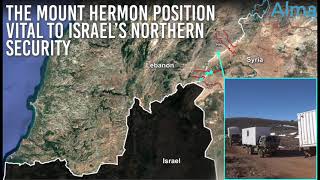 The Mount Hermon Position Vital to Israel's Northern Security |
Robert A. Heinlein, Friday
|
WSJ: Six Months After War, Israel Warns It Could Strike Iran Again Summary Israeli officials are considering military action against Iran’s efforts to rebuild its ballistic-missile arsenal, six months after a 12-day war. Prime Minister Benjamin Netanyahu stated Israel is monitoring rearmament by Hamas, Hezbollah, and Iran, and will act if necessary. Analysts suggest an Israeli strike on Iran’s missile program would be a significant shift, as Israel hasn’t previously gone to war over conventional buildup. Six months after launching a 12-day war with Iran over its nuclear program, Israeli officials are raising the prospect of another clash over Tehran’s efforts to rebuild its arsenal of ballistic missiles. Israeli Prime Minister Benjamin Netanyahu, speaking Wednesday at a graduation ceremony for Israeli air force pilots, said Israel was watching Hamas, Hezbollah and Iran as they rearm and would act if necessary. The country’s defense minister and the head of its air force, speaking at the same event, said Israel would move to prevent new threats. “We are not looking for confrontations, but our eyes are open to any possible danger,” Netanyahu said. The comments come as Netanyahu prepares to travel to the U.S. for a year-end meeting with President Trump. Israel’s assessment of Iran’s progress on ballistic missiles and the prospect of further military action will be on the agenda when the two leaders meet, an Israeli official said. It is unclear how the Trump administration would receive the prospect of new strikes on Iran as it leans on Israel to solidify the U.S.-brokered peace deal for Gaza and resolve tensions with the new government in Syria. Trump has repeatedly said U.S. bombing raids on key Iranian facilities this summer wiped out Iran’s nuclear program and opened the door to regional peace. U.S. officials have quietly expressed frustration with Israel’s readiness to turn to force. Trump has warned Iran against rebuilding its nuclear facilities, but not specifically about ballistic missiles. “As President Trump has said, if Iran pursued a nuclear weapon, that site would be attacked and would be wiped out before they even got close,” White House spokeswoman Anna Kelly said when asked whether the administration would support an Israeli attack over the missile program. Any Israeli strike would need at least a tacit signoff from Washington because Israel would need American help to defend it from the missiles Iran would likely launch in response. Attacking Iran over its ballistic missiles would mark a significant tightening of Israel’s red lines toward the country. When Israel launched its surprise attack in June, its main target was Iran’s nuclear program, which it considers an existential threat. Israel did set the destruction of Tehran’s conventional long-range weapons as a goal of the 12-day war, and afterward warned Iran that any attempt to rebuild either its nuclear or missile program would invite an attack. Drawing the line at missiles makes another war significantly more likely in the coming year, said Danny Citrinowicz, a former head of the Iran branch for Israeli military intelligence and now a senior Iran researcher at Israel’s Institute for National Security Studies. “Israel never went to war over a conventional buildup. It would be a first,” Citrinowicz said. “We are forcing ourselves to preserve a red line that will force us to attack again.” This shift, Citrinowicz said, is part of Israel’s new national security doctrine following Hamas’s surprise Oct. 7, 2023, attacks, under which Israel won’t hesitate to act on possible threats. Gulf Arab states are also concerned about Iran’s missile program. But Iran, which lacks an effective air force, sees missiles as a cornerstone of its defense—especially with its nuclear program and regional allies Hezbollah and Hamas badly battered by two years of fighting with Israel. Analysts say Iran is moving to restore its missile manufacturing capability while proceeding much more cautiously with its key nuclear sites. Iran has a deep hole to climb out of after multiple rounds of Israeli strikes that took out missiles, launch platforms and machines needed to produce solid fuel. Earlier in December, a U.S. special operations team boarded a ship in the Indian Ocean and seized military-related goods headed to Iran from China. Separately, the U.S. Treasury Department hit 32 individuals and entities across Europe, the Middle East and Asia for supporting Iran ballistic missile and drone production. Satellite images taken by Planet Labs show Iran is rebuilding the missile production sites targeted by Israel in previous strikes, said Sam Lair, a research associate at the James Martin Center for Nonproliferation Studies, who studied the imagery. Should Iran get its production facilities running at full capacity, it could produce hundreds of missiles a month, Lair said. The flurry of activity at these sites indicates Iran is likely already producing new missiles, but he said there wasn’t enough evidence to conclude that definitively. “The Iranians appear to have reconstituted some capability to produce missiles, but are not where they were previously,” Lair said. “They are devoting resources to rebuilding those facilities, and they could get there again.” Israeli and American media have been full of warnings from analysts, think tanks and politicians in Israel and the U.S. about Iranian efforts to rearm. “The central thing from six months ago is not only that we acted to significantly degrade those programs, but we broke the barrier to attack Iran,” Eli Cohen, Israel’s energy minister and a member of Netanyahu’s Likud party, said this week on Army Radio. “The message to Iran is clear: If you try to rebuild the nuclear program or rearm with ballistic missiles, the state of Israel will attack.” On Sunday, Sen. Lindsey Graham (R., S.C.) met Netanyahu in Jerusalem before giving interviews in Israel advocating an attack on Iran if necessary to stop its missile program. “We cannot allow Iran to get back into the ballistic missile production business,” Graham said in an interview with I-24 News. “The next attack, if there is a next attack, will be focused on their ballistic missile capability.” Iran launched heavy missile barrages against Israel last year, part of a tit-for-tat escalation that involved the first-ever direct strikes between the two longtime foes. The attacks overwhelmed Israeli defenses in some areas, while Iranian missile volleys during the war this summer grew increasingly successful and left dozens dead. But the attacks did little strategic damage. Israel is concerned Iran could eventually produce thousands of missiles in the coming years, enough to overwhelm any defense. Netanyahu this week signaled concerns Iran could try to strike Israel first. Analysts said it is unlikely Iran would attack Israel first given the regime is still weakened from the last war and is buckling under multiple crises at home, including a major water shortage and a currency in free fall. Tehran is also wary of provoking the U.S. Iran is giving priority to rebuilding its missile capability to raise the cost to Israel of any future attacks, said Ali Vaez, Iran project director at the conflict-resolution organization International Crisis Group. “The odds of a pre-emptive Iranian strike are near zero,” Vaez said. “The Iranians have realized that though their airspace is vulnerable, so is Israel’s.” Security analysts said Israel’s thinking around a strike is influenced by what it sees as a short window of opportunity while Iran’s capacity to launch missiles is still degraded, its air defenses are weak and the regime is dealing with a number of challenges. “We don’t want to wait for them to get stronger to attack us,” said Amir Avivi, a former senior defense official close to the current government. “We have to deal with this now and hit them while they are weak and the air corridor is open.” Write to Dov Lieber at [email protected] WSJ: Israelis Divided Over How to Investigate Failures Leading to Oct. 7 Summary Israel’s opposition is demanding an independent state commission to investigate failures leading to the Oct. 7, 2023, Hamas-led attack. Prime Minister Benjamin Netanyahu proposes overseeing a committee that would determine the investigation's mandate. Polls consistently show a large majority of Israelis support an independent state commission. For more than two years, Israelis were bitterly divided over the war in Gaza. With the backing of a mass protest movement, political parties opposing Israeli Prime Minister Benjamin Netanyahu demanded his government end the war and strike a deal to return the hostages taken on Oct. 7, 2023. With a cease-fire in place and nearly all the hostages returned, the opposition is now shifting its focus to demanding an independent state commission to investigate who in the Netanyahu government, and the security establishment, were responsible for the massive failures that allowed Hamas to undertake the worst assault on the Jewish state in its history. In the months after Oct. 7, Netanyahu rejected calls to launch an independent investigation, which historically has been overseen by the Supreme Court, saying it wasn’t right to do so during a war. Now, with the fighting over, and as he has faced pressure from the Supreme Court, he’s shifted his stance. Netanyahu is agreeing to an investigation, but one that would be appointed by lawmakers, not the court, arguing that it would better represent all Israelis. He and his allies repeatedly express distrust of the courts. The prime minister himself would oversee a committee that would determine the investigation’s mandate. Lawmakers in his coalition have argued the mandate’s scope should include not only the Hamas-led attack two years ago, but also how the 1993 Oslo Accords and the protest movement against Netanyahu’s proposed judicial overhaul contributed to the Oct. 7 massacre. On Wednesday, the Israeli Parliament, or Knesset, narrowly passed the first of three votes required to establish Netanyahu’s proposed commission. Families who had loved ones killed or kidnapped on Oct. 7 shouted their opposition from the Knesset galleries as the bill passed. Members of the opposition tore up paper copies of the bill on the Knesset floor. The issue is emerging as a central plank in the political opposition’s campaign against Netanyahu as the country heads into an election year. Israel must hold national elections by the end of October. Israel’s opposition is made up of both right-wing and left-wing parties, so focusing on what his critics claim is Netanyahu’s attempt to evade responsibility for Oct. 7 could be a unifying campaign message. Critics say Netanyahu is trying to skirt responsibility by appointing a political commission whose mandate he can determine. “That does unite the opposition,” said Yaakov Katz, a senior fellow at the Jerusalem-based Jewish People Policy Institute. Those hoping to challenge Netanyahu in the coming elections have seized on the issue. “The moment our government is established, we will establish an impartial state commission of inquiry to investigate the failure of October 7,” said former Israeli Prime Minister Naftali Bennett, who plans to run against Netanyahu in next year’s vote, in a post on X earlier this month. The date of the Oct. 7 attack is written on a soot-covered wall. The date of the Hamas-led attack is written on a soot-covered wall in Be’eri, southern Israel. Amir Levy/Getty Images Polls consistently show that a large majority of Israelis want to see an independent state commission. A poll released earlier this month by Channel 13, an Israeli news outlet, showed that 59% of Israelis support establishing a state commission of inquiry. Israel has launched 20 independent commissions of inquiry. They include investigations into the failings around the Yom Kippur war in 1973, when Egypt and Syria launched a surprise attack, and the 1982 Sabra and Shatila massacre, in which Israel was determined to have indirect responsibility for allowing Christian militia forces to kill Palestinians, during the First Lebanon War. Such commissions are led by a sitting judge, composed of leading experts, and are independent from the government. They have quasi-judicial powers, such as power of subpoena, and the ability to force witnesses to testify. By contrast, Netanyahu’s committee would comprise members appointed by the Israeli Parliament and would have a supervision mechanism of families who lost loved ones on or after Oct. 7, some associated with the opposition and others with the coalition. Netanyahu argues that such a committee would enjoy broader support from the public. “An unprecedented event like the 7th of October, requires a special committee, a national broad committee that is accepted by most of the people,” Netanyahu said in a statement this week. “I promise you all the subjects will be investigated—political, security, intelligence, legal. Everything.” If parliament approves it, the government’s proposed commission is likely to face legal challenges, including possible petitions against it to the Supreme Court. In November, the court issued a conditional order instructing the government to explain why it is not establishing a commission of inquiry as required by law to investigate the events of Oct. 7. The mass-protest movement that pushed for an end to the war in Gaza brought hundreds of thousands of Israelis to the streets weekly for nearly two years largely by focusing on calls to bring the hostages home. With the cease-fire in place, some protest groups are trying to shift the focus toward the commission to bring people back to the streets. They have so far seen limited success. Families of those killed or kidnapped are leading the protests to demand an independent investigation. “We need answers to how did all of this happen and how do we prevent such a disaster from ever happening again,” said Jon Polin, whose son, Israeli-American Hersh Goldberg-Polin, was taken at a music festival and survived 328 days before his captors killed him as Israeli troops closed in. “I don’t want any other parents to have to bury their children because we didn’t learn lessons.” Write to Anat Peled at [email protected] A couple of drone strikes ahead of next week's deadline
IRAN SOUGHT NUCLEAR WEAPONS AS EARLY AS 2001, PUTIN TOLD BUSH 🔴 Putin reportedly told former U.S. President George Bush in 2001 that Iran wanted a nuclear weapon, but that Russia would not help Tehran acquire sensitive nuclear or missile technology, according to a declassified memo of their meeting. Putin acknowledged Iranian specialists were seeking such expertise, yet he said he had ordered officials not to share it, while Bush stressed that Iranian access to advanced weapons systems would pose a security threat to both the U.S. and Russia, IranIntl reports.
|
Robert A. Heinlein, Friday
4:44 PM Eastern
IDF Spokesperson: Attack helicopter intercepts two drones attempting to enter Israeli territory from the western border. Earlier, IDF surveillance and the Air Control Center identified two drones crossing from the west in an attempted incursion into Israel. Following the detection, an Air Force attack helicopter, in coordination with Division 80, intercepted both drones.
|
Robert A. Heinlein, Friday
|
Robert A. Heinlein, Friday
|
Robert A. Heinlein, Friday
|
Robert A. Heinlein, Friday
Satellite imagery shows advanced construction activity of a military nature that has accelerated in recent months at Berbera Airfield in Somaliland. According to the images, 12 underground hangars are being built at the airfield, intended for fighter jets and drones which is noteworthy because Somaliland does not currently operate any fighter aircraft or large drones.
HAMAS ELECTIONS? Reports across the Arab world that Hamas intends to hold elections for the head of it's Political Bureau in the coming weeks. There are two main candidates: Khalil al-Hayya, who is the head of the terrorist group's Political Bureau in Gaza (despite living in Qatar), and Khaled Mashal, the former head of the Political Bureau. Sources indicated that al-Hayya is expected to win, given the broad support for him beyond the Gaza Strip.
Left out of the article is the idea Israel will base its defense postures on enemy capabilities and not intentions. This change, explained multiple times since 10/23, is big. The new approach rests on a simple premise: Israel must be able to absorb shock, slow the enemy immediately, and regain control quickly, without waiting for perfect information or centralized orders. Full article More than any single tactical failure, the October 7 invasion exposed a structural weakness in Israel’s security concept: The assumption that warning would arrive in time. Israel’s emerging defense doctrine, now taking shape across the IDF, is designed to ensure that even if intelligence fails, a surprise invasion cannot succeed. The new approach rests on a simple premise: Israel must be able to absorb shock, slow the enemy immediately, and regain control quickly, without waiting for perfect information or centralized orders. 3 layers of defense At the core of the doctrine is a three-layer defensive system along Israel’s most sensitive borders: Gaza, Lebanon, and Syria. The first layer consists of demilitarized or heavily restricted zones on the enemy side of the border. The second places IDF forces forward, including inside enemy territory where necessary, to disrupt preparations and deny freedom of movement. The third layer is a denser line of military outposts and forces directly along the frontier. This posture is resource-intensive: The IDF will require permanent deployment of large infantry and armored forces, supported by extensive sensor arrays, surveillance systems, and air defenses. The goal is not just deterrence, but physical obstruction: Limiting a hostile military buildup near the border, and slowing an attack long enough for overwhelming force to arrive. Air power on front line One of the most consequential shifts is the role of the Air Force. Rather than serving primarily as a strategic or supporting arm, air power is now being integrated directly into border defense. Under the new doctrine, the Air Force received authorization to act independently to defend Israel’s borders in real time. In practice, this means fighter jets can be launched immediately to counter a surprise assault, without waiting for orders from ground-division headquarters. This autonomy is a direct lesson from October 7, when delays proved catastrophic. The Air Force is also drawing up plans to disrupt invasions in their earliest stages: Fighter jets will bomb key roads and junctions inside Israel with heavy munitions, blocking enemy movement and buying critical time. These targets have already been mapped and pre-approved. Readiness levels reflect the new mindset. Aircraft availability for invasion scenarios has been increased by roughly 250%, Ynet reports. Jets on standby are now armed with 12-15 munitions and prepared to strike within minutes. The first operational priority is explicit: The protection of civilians. Know your enemy The IDF is also overhauling its intelligence culture. Any intel soldier, regardless of rank, can now send assessments or warnings directly to the head of military intelligence. Units dedicated to challenging prevailing assumptions, the so-called “concept breakers,” are being expanded. There is also a conscious move away from over-reliance on automated systems. While technology remains important, intel collection is being diversified with renewed investment in HUMINT, open-source research, and field-level observation. Cultural analysis is gaining weight, with deeper study of Arabic, Islam, and social dynamics supplementing purely technical pattern recognition. In addition, coordination between intel researchers and frontline surveillance units is being tightened to reduce gaps between analysis and reality. Overall, October 7 reshaped Israel’s threat perception and understanding of risk. Looking ahead, the IDF assumes that surprise attacks are possible, warning may be incomplete, and decision-makers may hesitate. The answer lies in improved intel analysis, layered defenses, and rapid reaction. Sooner or later, the IDF will be tested again.
Iranian President Masoud Pezeshkian stated in an interview published earlier today that Iran is in the midst of a “total war” against the United States, Israel and Europe, adding that any further acts of aggression against Iran would be met with a more decisive response from the Iranian Armed Forces. |
Robert A. Heinlein, Friday
IDF Military Intelligence, the Shin Bet, and the Headquarters for Economic Warfare against Terror gave information and evidence about Hamas infrastructures in Italy to the Italian law enforcement authorities. The investigation led to the arrest of 7 Hamas operatives in Italy, including the head of the local infrastructure, Muhammad Hanoun, a senior figure in Hamas leadership in Europe. During an operation by Italian law enforcement authorities, the organization's assets, funds, and property were seized.
Hezbollah Secretary General Naim Qassem, tonight: Israel has military superiority, but we have supremacy over our land and the right to resist. Where was the state when Officer Ahmad Al-Shakkar was kidnapped from the Zahle area? (The Lebanese officer who is claimed to have been kidnapped by Mossad about two weeks ago)
He added: We will not hand over our weapons, we will not retreat, and we will not surrender. We are ready to positively discuss a new national defense strategy (a euphemism for Hezbollah disarmament) only after Israel withdraws from Lebanon, the prisoners are released, and there are easing measures for Lebanon's reconstruction. |
Robert A. Heinlein, Friday
The Iranian rial tumbled to 1.43–1.45 million per USD, plunging 7% amid fresh U.S. sanctions, soaring inflation, and scarce foreign inflows. Footage from Tehran’s bazaars shows shopkeepers closing stores in protest, chanting “Don’t be afraid, we are all together” and “Shut it down.” There's a mounting economic frustration in Iran.
|
Robert A. Heinlein, Friday
Trump on Syria: “You know, your new president. I respect him. He's a very strong guy. And that's what you need in Syria. You can't put a choir boy. You can't put a, you know, somebody that's a perfect person. Everything's nice. No problems in life. You have the opposite there. He's a strong guy. We get along with him great. I can't ask for any more”
|
Robert A. Heinlein, Friday
Wiki article on the Basji, an organization that is part of the IRGC.
From today’s Newsletter: Why is Saudi Arabia striking UAE backed targets in Yemen? After more than a decade of fighting, Yemen’s war is increasingly defined by divisions inside the anti Houthi bloc rather than a single front against the rebels. The conflict began in 2014 when Iran aligned Houthis seized Sanaa and forced out the internationally recognized government. In 2015, Saudi Arabia launched a military campaign at the government’s request, assembling an Arab coalition that included the United Arab Emirates. Riyadh framed the intervention as a bid to restore state authority and block Iranian influence, while defending its territory from cross border missile and drone attacks. The war has since killed nearly 400,000 people through fighting, hunger, and disease, according to estimates, yet has remained largely out of global focus. Over time, coalition priorities diverged. Saudi Arabia concentrated on border security and containing Houthi firepower. The UAE built influence in southern Yemen, backing local forces including the Southern Transitional Council, which seeks independence and controls strategic ports such as Aden. Those tensions surfaced openly this week. On December 30, Saudi led coalition aircraft struck targets at the port of Mukalla in eastern Yemen. Saudi officials said the strikes hit unauthorized weapons shipments and rebel positions they described as destabilizing the region. Yemen’s Presidential Leadership Council responded by declaring a nationwide state of emergency, shutting all crossings for 72 hours, ordering UAE forces to leave within 24 hours, and suspending joint defense arrangements. It marked the most public rupture yet between Riyadh and Abu Dhabi since the war began. Mukalla is a strategic hub on the Arabian Sea and a gateway for trade and potential energy exports, making eastern Yemen a long contested zone between Saudi backed government forces and UAE aligned factions. Analysts warn the fallout could deepen fragmentation. While anti Houthi forces clash politically, the Houthis continue to hold the north and threaten Red Sea shipping. Any prolonged disruption risks worsening conditions for civilians, with more than 21000000 Yemenis reliant on aid. The United Nations has urged restraint, while the United States and other Western backers have remained publicly quiet. If the standoff hardens, Yemen may drift toward an informal split, with a Houthi controlled north, a UAE influenced south, and a weakened central authority in between. A war often described as stalled is showing fresh signs of movement.
|
Robert A. Heinlein, Friday
Iran scrambles to steady its sinking economy, replacing the Central Bank Chief as protests over skyrocketing prices roar across the country. Abdolnaser Hemmati, ousted years ago for mishandling the currency, is back at the helm amid public outrage over a rial in freefall and inflation topping 40%.
The Lebanese newspaper Al-Akhbar reports that Hamas is set to choose its next political bureau chief within days, weighing veteran Khaled Mashal against Khalil al-Hayya. Al-Hayya, former deputy to Gaza’s Hamas leader Yahya Sinwar, assumed leadership after Sinwar was eliminated. Mashal, a longtime figure in Hamas politics, previously led the political bureau before Ismail Haniyeh’s two terms, who was eliminated in Iran about 18 months ago.
Israel said it will suspend the operations of more than 2 dozen humanitarian groups in Gaza effective January 1, 2026, roughly 25 to 38 organizations, about 15% of active NGOs. Among those affected is Doctors Without Borders, which Israel accused of failing to comply with new registration and vetting rules requiring detailed disclosures on staff, funding, and activities. Israeli officials said the measures are designed to prevent aid networks from being exploited by Hamas or Palestinian Islamic Jihad.
|
Robert A. Heinlein, Friday
Somaliland
Iraqi militia sponsored by Iran
Syrian group supported by Israel
|
Robert A. Heinlein, Friday
|
Robert A. Heinlein, Friday
Hezbollah reportedly received “last chance” warnings from Egypt, Qatar, and Turkey, urging the group to hand over its arms to the Lebanese state and avoid a potential Israeli strike, sources told Saudi A-Sharq Al-Awsat. Lebanese officials said the messages came amid mounting regional and international pressure on Hezbollah to disarm, cautioning that maintaining weapons outside state control could deepen Lebanon’s political divide, isolate the country economically, and risk military confrontation.
Iran erupts again in Izeh. Protesters clash with security forces as anger over corruption, economic collapse, and decades of neglect boils over. Tear gas, arrests, and local internet blackouts mark the unrest. Izeh, long a hotspot for dissent among Arab and Bakhtiari communities, shows that frustration runs deeper than inflation, residents are fed up with being ignored while elites profit. The regime repeats its usual script: blame outsiders, crack down, cut internet access, and hope the outrage fades. But each cycle exposes the fragility of its grip.
|
Robert A. Heinlein, Friday
|
On the Brink of Economic Collapse, Can Protests in Iran Crack the Ayatollah Regime? - Middle East News Iran faces widespread protests, with demonstrators urged by lawmaker Ahmad Bakhshayesh Ardestani to focus on economic rather than political demands, reflecting Tehran's strategy to avoid escalation. The regime responds by engaging in dialogue and making swift administrative changes, like appointing Abdolnasser Hemmati as central bank governor, to placate economic discontent. ...factors including a severe drought that reduced grain yields by about 30 percent, shortages of electricity and natural gas and soaring prices for staples of basic goods. Hemmati...is perceived as a problematic figure by the conservatives. During his presidential election campaign, he didn't hesitate to attack the Revolutionary Guards...and even pledged to establish a commission of inquiry into the killing of protesters during the 2022. Hemmati is also a strong supporter of a nuclear agreement with the United States and has argued that Iran's difficulties stem from its self-imposed isolation from the world. "I hope the situation isn't the prelude to further chaos. If business people want things done properly, their slogans should remain in the economic sphere," Ahmad Bakhshayesh Ardestani, an Iranian lawmaker and member of the parliament's Iranian parliament's National Security and Foreign Policy Committee, said by way of summing up his views on the mass protests that erupted in Iran this week. His suggestion that demonstrators restrict their demands to the economic sphere hints at the regime's fear of the protest spilling into the political arena and from there into violent clashes with security forces, with unforeseeable consequences. Ardestani's remarks reflect Tehran's current approach of treating the protests as a reaction to the economic measures it has taken and plans to continue taking rather than as the beginning of civil disobedience aimed at overthrowing Iranian leadership. According to this interpretation, the regime has chosen a strategy of engaging the protest leaders in dialogue, listening to their arguments, avoiding confrontation and muscle-flexing as much as possible and taking quick steps that might at least assuage the "economic rage." "We have a duty to examine the slogans of the protest groups and to respect them. If economic expectations turn into political expectations, many problems will develop," Ardestani explained in an interview with the important Iranian economic website Iranian Labour News Agency, or ILNA. The "problems" he was alluding to were a return to the massive demonstrations of 2009, 2017, 2019 and 2022 and the street battles, arrests and killings that accompanied them. However, each of these major waves of protest had its own reasons, and the regime survived them all. Now too, treating the protest as a clear sign of the beginning of its downfall may prove hasty. While many hoped that last June's war with Israel would lead to the regime's downfall, in the end, Iranians actually rallied around the leadership and viewed the Israeli and American attacks as a war against them, no less than against the government. The regime praised the public for its demonstration of solidarity and again pledged to listen to their demands and implement economic and social reforms. These promises were not met, and factors including a severe drought that reduced grain yields by about 30 percent, shortages of electricity and natural gas and soaring prices for staples of basic goods deteriorated Iran's situation to an unprecedented low. On Wednesday – under the pretext of severe weather – schools, government institutions and state-owned companies were closed in an effort to reduce participation in the demonstrations. Developments in the coming days and especially the regime's response will determine the future of the protest, which has already spread to many regions of the country. Localized clashes, the use of tear gas, the beating of protesters and arrests on an unknown scale have been reported so far. More than 300 people were killed in the 2019 protests and nearly 500 people died in in 2022. In an attempt to quell the protests, President Masoud Pezeshkian's cabinet swiftly replaced on Wednesday the governor of the central bank, Mohammad Reza Farzin, who resigned on Monday, with Abdolnasser Hemmati, a talented economist. Farzin is considered responsible for the dramatic decline in the value of the rial. Hemmati ran for president in 2021 and lost to Ebrahim Raisi, who was killed in a helicopter crash. He went on to serve as the minister of economic and financial affairs in Pezeshkian's government until parliament dismissed him in March for alleged mismanagement and accusations that his policies hurt the strength of Iran's rial against hard currencies. Hemmati, however, is perceived as a problematic figure by the conservatives, especially the members of the Islamic Revolutionary Guard Corps, who control more than half of the Iranian economy. During his election campaign, he didn't hesitate to attack the Revolutionary Guards, promised to appoint five women to his cabinet if elected, and even pledged to establish a commission of inquiry into the killing of protesters during the 2022 demonstrations sparked by the murder of Mahsa Amini. Hemmati is also a strong supporter of a nuclear agreement with the United States and has argued that Iran's difficulties stem from its self-imposed isolation from the world, namely, from the West. The announcement of his appointment as governor this week was received positively by the public, leading to a rise in the rial and signaling to the regime that a handful of administrative moves might help ease the protests. However, Hemmati's appointment is no magic solution to Iran's deep crisis. The budget submitted by the government for parliamentary approval includes, among other things, a 20 percent salary increase for state employees and government companies; however, this rate falls short of compensating for inflation, which exceeds 45 percent. In an attempt to calm the protests, parliament members proposed on Wednesday increasing the salary raise to 30 percent and forming a list of basic goods whose prices would be low, fixed and strictly supervised by the government. At the same time, however, the budget calls for an increase of roughly 60 percent in state tax revenues, alongside cuts of about 35 percent in government spending. It's difficult to see how the government can meet its revenue targets when more than 30 percent of Iran's population lives below the poverty line, or how it plans to implement such deep spending cuts when the existing level of public services is already disgracefully low. Given this patchwork approach by parliament, it is doubtful whether Hemmati and Pezeshkian's government will succeed in implementing the necessary reforms. This is especially true given that, in the political struggle between the government and parliament, Pezeshkian is expected to face opposition from the Revolutionary Guards, who fear reforms that could undermine their sources of income. Even if, under the threat of protest, the government and Hemmati manage to approve the reforms, the main obstacle – the international and U.S. sanctions imposed on Iran – will have to be lifted to put the nation's economy on a recovery path. Lifting the sanctions, however, depends on a new nuclear agreement, for which there are currently no serious negotiations. Iranian Foreign Minister Abbas Araghchi revealed in an interview with the "Russia Today" website that for many months, he hasn't held talks with U.S. special envoy Steve Witkoff. The only "official" dialogue is the public one between U.S. President Donald Trump and Prime Minister Benjamin Netanyahu with Iran, and it is full of mutual threats and saturated with the fumes of war. The parties' declared positions remain the same. Iran has made clear that it's ready to resume negotiations at any moment, provided they are conducted based on "mutual respect." For Tehran, this means that the United States must recognize its right to enrich uranium on Iranian soil and set aside the issue of ballistic missiles, which Iran regards as a purely defensive deterrent. The United States is also extending its hand publicly for a possible diplomatic move, but on its own terms, which include a freeze on the nuclear program and a ban on uranium enrichment on Iranian soil. Recently, a new demand has been added to limit the ballistic missile program, an issue that wasn't at the center of previous negotiation rounds and wasn't included in the original nuclear deal. It is therefore difficult to see where a breakthrough might emerge that would allow negotiations between the two sides to resume. Amwaj Media, which specializes in Iranian and Iraqi affairs, reported this week that Netanyahu sent an indirect message through a "mutual friend," apparently Russian President Vladimir Putin, to the Secretary of Iran's Supreme National Security Council, Ali Larijani, clarifying that Israel doesn't intend to escalate the military campaign against Iran. No further confirmation was received about this exclusive report. Nevertheless, and despite the freeze in negotiations, efforts to renew the talks continue, and Saudi Arabia, Oman, Qatar and Turkey are busy proposing so-called acceptable terms that would allow the process to restart. In November, the Iranian president sent a letter to Mohammed bin Salman, requesting that he mediate between Tehran and Saudi Arabia. Turkish President Recep Tayyip Erdogan was also asked to raise the issue of negotiations during his meeting with Trump, as was Qatari leader Sheikh Tamim bin Hamad. All of them have warned Trump of the severe consequences the region could face if a new war were to break out between Israel and Iran, and appear to have offered their services as mediators and guarantors of the latter's conduct. Trump's public statements during his meeting this week with Netanyahu, however, were interpreted by Iran as approving a possible Israeli strike. Some Iranian commentators estimated that Israel might see the protests, which erupted precisely during the Trump-Netanyahu meeting, as an opportunity to attack and topple the regime. This interpretation is also used by the regime to accuse the protesters of "playing into the enemy's hands," arguing that, even if their economic grievances are justified, their rallies endanger state security. From there, it's a short path to escalation and the violent suppression of the protests. Iranians Have Had Enough At one point last week, a U.S. dollar traded for almost 1.5 million rials, having lost more than half its value in a year. As recently as 2021, a dollar cost around 250,000 rials and, only a decade ago, around 30,000. Iranians live in the fear of another round of military strikes by Israel or the United States. “You can’t plan even for two weeks in this country,” a young man who took part in the protests told me. “Without stability, there is no prospect for growth or welfare. We live day by day.” ...the regime needs to come to an agreement with the Trump administration that lifts the sanctions or at least keeps Iran safe from war. But Khamenei’s harsh ideological stance against Israel and the U.S. makes that hard to achieve. ...protesters in Tehran used a classic protest chant: “Neither Gaza, nor Lebanon, I give my life for Iran"...protesters believe that military adventurism has drained Iranian resources and helped put the country at odds with both the West and its Arab neighbors. In other words, Iranians link their economic malaise to their regime’s foreign policy. The demonstrations erupting across the Islamic Republic reflect deep economic and political discontent. A wave of protests started by shopkeepers swept through Tehran in December. Iranians have had such a terrible year—facing such a decline in living standards and such a sense of political impasse—that no one was terribly surprised when demonstrations filled the streets. I asked one Iranian student why she had taken part in the street protests. “Yeah, why should we protest?” she replied sarcastically. “After all, we have it so good!” The immediate spark for the protests was a sharp decline in the value of the Iranian currency. At one point last week, a U.S. dollar traded for almost 1.5 million rials, having lost more than half its value in a year. As recently as 2021, a dollar cost around 250,000 rials and, only a decade ago, around 30,000. This continuous decline has slashed savings, destroyed the Iranian middle class, and inflicted real suffering on the working classes. The protests began on Sunday with merchants who rely on importing electrical goods and find that very few can now afford them. But they’ve quickly mushroomed—as did previous rounds did in 2017, 2019, and 2022—spreading to cities in provinces such as Hamedan, Isfahan, and Lorestan, and drawing in students, pensioners, and members of Gen Z. Like previous waves of demonstrations, the protests have quickly acquired a political character. Protesters have chanted, “Death to the dictator,” targeting the octogenarian Supreme Leader Ayatollah Ali Khamenei, who has held the top post since 1989 with little accountability. As a statement read out by students at Tehran’s Beheshti University put it: “This criminal system has taken our future hostage for 47 years. It won’t be changed with reform or with false promises.” Iran’s President Masoud Pezeshkian, elected with promises of good governance last year, has overseen electricity and water cuts while failing to realize signature promises such as lifting restrictions of the internet. Wanting to show he is cut from a different cloth than his hard-line predecessor, Pezeshkian quickly promised to meet with representatives of protesters. His spokesperson affirmed “the constitutional right of peaceful protest” for Iranians. But Pezeshkian doesn’t control the security forces, so these pronouncements ring hollow. Dozens of protesters have already been arrested, including Sarira Karimi, head of a student union chapter at the University of Tehran. (Karimi was released on Wednesday.) In the small cities of Kuhdasht and Fasa, security forces shot at protesters. According to local officials, a member of the security forces was killed in Kuhdasht. Protesters also clashed with police in Hamedan and Najafabad. On Tuesday, Pezeshkian met with representatives of some guilds and merchant unions and promised to improve the economy. After almost 18 months in office, he finally dismissed Mohammadreza Farzin, the unpopular central-bank governor appointed by his hard-line predecessor. Farzin’s successor, Abdolnasser Hemmati, a pro-reform economist and Pezeshkian’s former finance minister, has promised economic stability. But Hemmati faces a tall order. He is likely to slash interest rates (the official rate currently stands at 40 percent) and to pursue banking and currency-exchange reform. But these are hardly panaceas for Iran’s deeply beleaguered economy, which suffers from international isolation, Western-imposed sanctions, and domestic mismanagement by a regime that has long failed to prioritize its people’s welfare. Iran’s current monthly minimum wage, of around 104 million rials, barely buys a gram of 18-karat gold (often used as a measure of real value). Nurses and teachers earn around 150 to 250 million rials a month while a semi-decent apartment in Tehran rents for around 200 million. Many professionals supplement their income by moonlighting as ride-share drivers or taking other odd jobs. Thousands have emigrated to seek a better life elsewhere. To make things worse, Iranians live in the fear of another round of military strikes by Israel or the United States. “You can’t plan even for two weeks in this country,” a young man who took part in the protests told me. “Without stability, there is no prospect for growth or welfare. We live day by day.” To change that, the regime would need to come to an agreement with the Trump administration that lifts the sanctions or at least keeps Iran safe from war. But Khamenei’s harsh ideological stance against Israel and the U.S. makes that hard to achieve. On Tuesday, protesters in Tehran used a classic protest chant: “Neither Gaza, nor Lebanon, I give my life for Iran.” The slogan, popular since 2009, reflects opposition to Iran’s backing for militias such as Hamas and Hezbollah. The protesters believe that military adventurism has drained Iranian resources and helped put the country at odds with both the West and its Arab neighbors. In other words, Iranians link their economic malaise to their regime’s foreign policy. Can the protesters prevail against the Islamic Republic? Every time Iranians come out to the streets, many around the world express this wish. Prominent American and Israeli politicians have already done so in the past few days. But rattled as the regime might be, it has seen mass protests off repeatedly in recent years. Opponents of the Islamic Republic remain hopelessly disorganized and disunited. Some protesters have chanted slogans in favor of Reza Pahlavi, Iran’s exiled crown prince. But Pahlavi remains a divisive figure among anti-regime Iranians. Many reject his claim to leadership. Pahlavi’s supporters and top advisers routinely criticize popular domestic dissidents including the Nobel Peace laureate Narges Mohammadi, actress Taraneh Alidoosti, and rapper Toumaj Salehi. Earlier this month, Mohammadi was physically attacked by pro-Pahlavi protesters in the northeastern city of Mashhad. Regardless of their politics, all opposition factions have failed to build powerful organizations or lasting networks that could direct the protests. Without such direction, the current protests are likely to lose momentum and fizzle out, just like previous rounds. Even if they were to last, it is far likelier that figures from inside the regime’s ranks would take the initiative and wrest power from Khamenei, than that the protesters would succeed in bringing about a change to the regime’s basic structures. “I am happy from the bottom of my heart to see others in the streets,” a young woman who took part in protests on Wednesday told me. “But I also know that we are economically fucked and things won’t get better anytime soon. We also have no easy way of winning against these bastards. It is hard to be hopeful.” Even as Iranians show incredible bravery by coming out against their thuggish regime, a winning strategy continues to be elusive. |
Robert A. Heinlein, Friday
Hamas's internal security mechanism reports that Hamas foiled an elimination attempt planned by Israel. According to the channel, the elimination was intended to be carried out using booby-trapped electric bicycles brought into the Gaza Strip by a Gaza trader—who ordered them from a company in Israel.
Yesterday was Israel's deadline for disarming Hezbollah. Now their sponsor, Iran, is occupied "killing alligators closer to the canoe" and will be of even less help than last year.
|
Robert A. Heinlein, Friday
There is anger at the regime, but also rage at the world in general--after a year of energy and water cuts, bombings, inflation, and a collapsing currency. Most are staying at home (as they did in 2022), but for an energized minority, the temptation for street fighting is becoming too great to resist. Education on the Iranian army (Artesh) as compared to the IRGC. SL=Supreme Leader
Ras Zimmit is the Iran expert at the INSS, an Israeli think tank very close to Israeli intelligence and the IDF.
Iran suffers from a "chronic disease" of poverty and neglect that leads to ongoing popular unrest • Immediate collapse requires conditions that have not yet matured, but in the long term - this is a real threat to the stability of the Islamic Republic • My commentary on @N12News .
My assessment is also based on the current wave of protests (similar to the major waves of late 2017, late 2018, May 2022, and 2022/23) on the three fundamental conditions required, in my view, to pose a significant threat to the very survival of the regime: A. Millions in the streets. At this stage, far from it. Probably thousands. B. A cross-sector coalition (workers in critical industries, women, youth, middle class, merchants, etc.), preferably organized (national-level leadership is not necessarily required at the protest stage). At this stage (quite similar to the late 2017 protests), the protest started with merchants, and has mainly spread to youth and students. This is still not enough. C. Rifts and signs of loss of control/internal struggles within the ruling elite, and especially in the security and suppression forces (if this happens, it is likely to occur only in very advanced stages). At this stage, there is no indication of this whatsoever. Cohesion is maintained, the leadership continues overall in a routine of normal activity, the demonstrations are suppressed mainly through the "usual" suppression mechanisms (by the Basij and SIG, without exceptional involvement of the Revolutionary Guards) and there is no evidence, for example, of elements in the security apparatus siding with the protesters. One caveat: Every protest wave is different from its predecessor, and this time (unlike in the past) it is occurring against a background of growing frustration due to the increasing domestic hardships. And therefore, the challenge to the regime intensifies from one wave to the next. And yet, this is still not enough. This is a concern as Khameini has moved quite a few younger, radical Islamists into the higher ranks of the IRGC as more pragmatic officers who grew up in the Iran-Iraq war move on.
Asked about Hezbollah helping Iran:
Not relevant in my eyes. They never needed or relied on assistance from Iraqi or Lebanese militias to suppress protests. If they reach a stage where there aren't enough Basijis or "regime-niks" willing to suppress, it's "game over for them" regardless of external support. |
Robert A. Heinlein, Friday
A brief situation report after five days of protests in Iran (as of now and may change significantly in the coming days): What do we have? 1) Demonstrations in several dozen locations across Iran, mainly at night. 2) The main protesters (within the limitations of what can be inferred from social networks): young people. The focus has shifted from merchants (mainly in the first two days) and university students (starting from the third day) to young people in the streets. 3) Scale of the demonstrations (again, within the obvious limitations): several dozen to hundreds at each location, totaling several thousand protesters (yesterday saw an increase in the number of protesters compared to previous days). 4) Use of violence: both by protesters and by the regime. Apparently about seven dead, several dozen injured, and several dozen arrested. What don't we have? 1) Quantitatively – no mass of protesters yet, even compared to previous waves of protests (2017, 2019, 2022). 2) Scope of fatalities – relatively low (same as above – even compared to previous waves). 3) Internet restrictions – they exist (reports of slowdowns, etc.), but there are no blanket blocks (in the 2019 fuel riots there was a total block for about a week, in 2022 there were more targeted but absolute blocks by areas and at certain hours). 4) Routine activity continues – yesterday a soccer game took place in Tehran with the participation of tens of thousands of spectators in the Premier League, ceremonies and events (for example, to mark the anniversary of the elimination of Qassem Soleimani). 5) Tehran – relatively quiet (since the events of the first two days in the bazaar). 6) No organized cross-sector coalition. 7) No use at all of the regime's suppression capabilities (according to the Iranian playbook – first use police, then move to special anti-riot forces and Basij, in severe cases – activate the Revolutionary Guards and special units) – currently mainly using the first and second circles (anti-riot forces and Basij in some cases). 7) No indications of erosion in the capabilities or determination of the enforcement and suppression forces.
Turkey is set to take in another group of released Palestinian terrorists, agreeing to admit 20 men in the coming weeks after talks with Hamas, according to Palestinian reports. The move would raise the number transferred to Turkey since last year to nearly 70, as Arab states largely refuse permanent resettlement and Ankara steps in amid widening regional reluctance.
Trump warns Iran: “If Iran shoots and violently kills peaceful protesters, which is their custom, the United States will come to their rescue. We are locked and loaded and ready to go.” 🔴 Iran hits back: Supreme National Security Council Secretary Ali Larijani responded sharply, warning that U.S. interference would bring “chaos across the entire region and destruction of American interests,” adding Trump “started the adventurism” and Americans should “look after their soldiers.” 🔴 IDF strikes Hezbollah: Israeli airstrikes hit multiple Hezbollah targets in southern Lebanon, including a Radwan Force training compound and weapons sites. First major action after Hezbollah disarmament deadline expired Dec 31. Beginning of something much larger for this month?
Censored materials cleared for release show a Hamas tunnel uncovered last week by Golani Brigade troops, roughly 800 meters from the border fence near Kissufim. The tunnel, with concrete walls and upright passageways, remains under inspection. Several infiltration routes and civilian homes lie within a few hundred meters on the Gaza side. Israeli Southern Command warns it may take months, if not longer, to fully map tunnels and shafts on the Israeli side of the “Yellow Line,” with operations set to continue into 2026.
Iranian cities protesting the Islamic regime, the numbers are still rising 1. Tehran, Tehran Province 2. Karaj, Alborz Province 3. Malard, Tehran Province 4. Isfahan, Isfahan Province 5. Najafabad, Isfahan Province 6. Fooladshahr, Isfahan Province 7. Shiraz, Fars Province 8. Mashhad, Razavi Khorasan Province 9. Kermanshah, Kermanshah Province 10. Yazd, Yazd Province 11. Hamedan, Hamedan Province 12. Asadabad, Hamedan Province 13. Qeshm, Hormozgan Province 14. Fasa, Fars Province 15. Kuhdasht, Lorestan Province 16. Zanjan, Zanjan Province 17. Kerman, Kerman Province 18. Babol, Mazandaran Province 19. Arak, Markazi Province 20. Khorramabad, Lorestan Province 21. Dorud, Lorestan Province 22. Baghmalek, Khuzestan Province 23. Lorestan, Lorestan Province 24. Fars, Fars Province 25. Khuzestan, Khuzestan Province 26. Markazi, Markazi Province 27. Marvdasht, Fars Province
Things I hear from my friends: - The internet continues to slow down. Not to the point of being unusable, but nonetheless, noticeably slower. - Most VPNs are running into issues (though I still see people posting things on IG). - In previous days a lot of people told me they saw a very visible presence of normal police (niroo entezami) in squares in their cities. But in the past 2 days they're seeing far more anti-riot police (who are more scary and have a reputation of being more violent). My own observation from social media (subject to the normal caveats of the medium): - The most intense and violent confrontations appear to be in cities with high Lor/Bakhtiari populations. - The general direction seems to be towards something most closely like Dey 96 (fitting that we're in Dey right now too). With the difference that Tehran isn't completely quiet, but it seems very university & bazaar centric. From what I can see, these do not have the violence or intensity of Aban 98. Yet at least, things can always change.
...a currency crisis emerges when a country runs down its international reserves and cannot afford its import bill. But the Central Bank of Iran has huge reserves, in excess of $120 billion. The problem is that the vast majority of those funds are not accessible because they are blocked in bank accounts around the world, even when those reserves are not in dollars. Global financial institutions are complying with U.S. secondary sanctions. Most economic issues in Iran are mainly caused by government mismanagement, and perhaps exacerbated by sanctions. But the recurring challenges with currency devaluation really are uniquely caused by U.S. sanctions and this is what makes the relationship between the currency crisis and the political crisis so challenging for Iran's authorities. Typically, a currency crisis emerges when a country runs down its international reserves and cannot afford its import bill. But the Central Bank of Iran has huge reserves, in excess of $120 billion. The problem is that the vast majority of those funds are not accessible because they are blocked in bank accounts around the world, even when those reserves are not in dollars. Global financial institutions are complying with U.S. secondary sanctions. The current IMF guess is that just 25% of those funds are readily available (this is probably an overestimation, both in terms of the monetary value and the ease of access). Last year, Iran's total imports amounted to around $72 billion. Imports have risen sharply in recent years, adding more pressure on the rial as the reserves remain frozen. But were Iran able to access its reserves under normal conditions, something that requires a détente with the U.S., the ratio of monthly reserves to imports would be nearly 20-to-1. By comparison, the average country has a monthly imports to reserve ratio of just 9. There are two implications here. First, it is no exaggeration to say that with specific regard to foreign exchange management, Iran is facing an imposed crisis. To be clear, the anger and demands of Iranian protestors go *way* beyond the narrow issue of the value of the Iranian currency, but a lot of political problems are downstream of the loss of purchasing power caused by currency devaluation and, in turn, inflation. This erodes not just household spending, but also the government's ability to maintain welfare spending and to invest in the future. Second, there really isn't much the central bank can do to address this ongoing crisis. They can keep trying to unify exchange rates, regulate the FX market, and improve currency allocations. But without access to reserves, the artificial pressure on the rial won't subside. The central bank is trying to run a huge, complex, and relatively globalized economy with the pennies it can find behind the couch cushions. This doesn't mean that Iran is a poor country, at least not in terms of the good and services being produced. The economy remains strikingly productive given the headwinds it has faced. But the financial account is a mess and this is where the balance of payments crisis really begins. |
Robert A. Heinlein, Friday
...But it's worth remembering that in 2009 there were millions in the streets and an opposition leader (Mir-Hossein Mousavi). Today there is no leader, there are at best thousands, and they're definitely not furious that their elections were stolen like in 2009, but simply angry (very) about their economic situation. Given the reasonable assumption that the unrest will intensify and the regime won't back down, then the government will have two options - to attack and risk unprecedented escalation (when it's unclear how effective a targeted strike will be) or do nothing and the message will be devastating both for the protesters today and for those thinking of coming out in the future. It's possible that morally Trump did the right thing, but it's not certain that practically it will serve the regime's opponents in Iran.
I think that the meaning of Trump's statement should be viewed in a broader context than the current internal situation in Iran. It's quite clear that the Revolutionary Guards will not refrain from firing at protesters if that's what is required, in their view, to protect the regime's stability. It's also quite clear that the "average Iranian citizen" will not rush out to the street and risk his life just because he is counting on Trump to carry out the threat to attack. So what? First, Trump's tweet adds another dimension to the array of considerations of the regime in Tehran, and that in itself makes decision-making there more complex. That's not necessarily a bad thing. Let them stew a bit in their own juice in the coming days and weeks. The sharp reactions of almost all the senior Iranian officials to the statement indicate that they are taking it seriously. Second, when such a statement is made just a few days after the Trump-Netanyahu meeting, it strengthens the assessment in Tehran that Israel and the US are coordinating with regard to a possible action against Iran. That's also not a bad thing (even if not necessarily true), especially in contexts that are not specifically related to the internal situation. In the bottom line, this is something that increases the uncertainty at the top in Tehran and somewhat narrows their room for maneuver. There is also a risk in this that it could pave the way for miscalculation, but it also illustrates to the Iranians that they have no good options and that it's wise to be cautious. Regime change will probably not come out of this, but perhaps it will illustrate to the regime, and mainly to the leader (since the president is in a somewhat different approach anyway) that it's preferable not to take unnecessary risks at the present time.
With the statements by Israeli officials and @realDonaldTrump , what has been going on behind the scenes is now clear. We distinguish between the stance of the protesting shopkeepers and the actions of disruptive actors, and Trump should know that U.S. interference in this internal matter would mean destabilizing the entire region and destroying America’s interests. The American people should know — Trump started this adventurism. They should be mindful of their soldiers’ safety.
Balochi separatists
|
Robert A. Heinlein, Friday
|
Washington Post: Iran protests, sparked by failing economy, turn deadly. Good summary of events as os 6:00 PM Eastern ISTANBUL — Iran’s nearly week-long protests, sparked by economic despair but quickly widening into demands for broad change, have turned deadly, with multiple human rights groups saying that several people had been killed by security forces. President Donald Trump issued a warning on social media Friday, writing that if Iran “violently kills peaceful protesters, which is their custom, the United States of America will come to their rescue. We are locked and loaded and ready to go.” The White House did not respond to a request for comment on what kind of aid Trump was referring to. Shortly after, Ali Larijani, secretary of Iran’s Supreme National Security Council, wrote on X that “Trump should know that American interference in this issue is equivalent to chaos in the entire region and will destroy America’s interests.” The Center for Human Rights in Iran had tallied seven killings by Friday, according to spokeswoman Bahar Ghandehari, while the Abdorrahman Boroumand Center for Human Rights in Iran said in an email Friday that it had documented the killings of eight people during the protests thus far. Arina Moradi, a spokeswoman for the Hengaw Organization for Human Rights, said that 11 people have been killed so far, including a 15-year-old. Those reported killed were all men, mostly in their 20s and 30s. The Human Rights Activists News Agency, which follows Iran closely, said Thursday that 119 Iranians had been arrested, seven killed and at least 33 injured. It said protests had occurred in at least 32 cities across Iran. Fars News, which is affiliated with Iran’s Islamic Revolutionary Guard Corps, reported that two people had been killed in the city of Lordegan during unrest there. The Tabnak news site, which is affiliated with a senior Iranian official, said three people had been killed in Azna, in western Lorestan province, during an attack on a police station. Rights groups reported the killing of a 37-year-old man, Dariush Ansari, in Fouladshahr, near the major city of Isfahan. Authorities appeared to dispute the circumstances of that death, with Mehr News, a semiofficial outlet, reporting that he had died of injuries sustained during a fight in front of his house, and that investigations into his “murder” had commenced. The deaths were mostly clustered in Lordegan in southwest Iran and two cities in Lorestan province. The Washington Post could not independently verify the circumstances of the killings. Iranian authorities have acknowledged one death, Amirhesam Khodayarifard, who they claim was a member of the Basij militia force deployed to suppress unrest. A judiciary official in Lorestan province, where Khodayarifard was killed, said the government would “identify the perpetrators of this incident and deal with them in accordance with the law.” In voice messages obtained by The Post, a person close to Khodayarifard’s family, with direct knowledge of the events, described immense pressure on the family to accept the government’s narrative that he was a member of the Basij militia. The person, whose messages were shared on the condition that they not be named, because of the attention the family has received from security forces, also provided details on a tense funeral held for Khodayarifard on Friday, during which authorities sought to depict him as one of their own. Khodayarifard was protesting Wednesday evening when he was shot in the back and neck, the person said. Authorities, including members of parliament and local religious leaders, then repeatedly pressured his father, Heshmat, to say his son was a member of the Basij and had died as a “martyr,” the term authorities use to refer to people killed in the course of defending the government or for causes it has approved. But Heshmat refused the requests, even after authorities first offered him money and then threatened to withhold Khodayarifard’s body, the person said. Heshmat, a farmer of modest means, told the officials that they could either give him the body for burial or they could keep it, but that he would not respond to the blackmail. Authorities then brought Khodayarifard’s body to the cemetery on Friday, but tried to cast the funeral as a state event. Officials attended despite the family’s wishes, enraging some in the crowd that had gathered. The crowd chanted protest slogans as they held Khodayarifard’s body aloft. Around 30 men wearing Basij and Revolutionary Guard uniforms approached the burial site. The crowd began throwing stones, the person said, an account corroborated by video from the funeral showing attendees hurling rocks and chasing out uniformed men. Later, the Tasnim news agency, which is affiliated with the Revolutionary Guard, said “rioters” had shouted obscenities and thrown stones during the funeral. It referred to Khodayarifard as a “martyr.” Iranian authorities’ response to the protests have so far run counter to the rhetoric of Iranian President Masoud Pezeshkian, who has said the protesters have legitimate demands and told reporters on Thursday that “if people are unhappy with us, we are the ones at fault.” The most recent protests started Sunday with shopkeepers in Iran whose businesses have been wrecked by the sharp depreciation of the Iranian rial in recent weeks. The demonstrations then spread throughout Tehran and to cities across the country, and drew in other elements of Iranian society, including university students. Some videos have shown security forces shooting toward demonstrators, and such actions fit a documented pattern from past rounds of protest in Iran, especially in recent years. At least 321 Iranians were killed by security forces during mass protests in November 2019, according to Amnesty International. A U.N. fact-finding mission found that authorities had carried out “unnecessary and disproportionate use of lethal force” in response to protests in 2022 that were sparked by the killing of a woman in police custody. It was unclear what Trump meant by his “locked and loaded” remarks when he pledged support for Iranian protesters Friday. Even with the U.S. military reorienting much of its combat power toward Venezuela in recent months, thousands of U.S. troops remain in the Middle East and land-based fighter jets are stationed in several countries. Pentagon spokesman Sean Parnell said the Defense Department “stands ready to execute” the president’s orders “at any time and in any place.” Another U.S. official with knowledge of operations in the region said there were no immediate changes to U.S. military posture in the Middle East following Trump’s remarks. The official spoke on the condition of anonymity because of the sensitivity of the issue. Past American presidents have sometimes been hesitant to wade into overseas protests, wary of committing U.S. involvement and unsure of how to navigate another country’s domestic politics. Foreign leaders’ pledging support for protests in Iran and other countries has “always been a balancing act,” said Carl Bildt, former prime minister of Sweden and co-chair of the European Council on Foreign Relations. “Can you ‘rescue’ protesters if things turn really violent? Obviously your possibility of rescuing individual protesters is bordering on nonexistent,” Bildt wrote in an email Friday. “The heavier you go into supporting the protests, the more you are responsible for what comes next. ” Dan Diamond and Dan Lamothe in Washington contributed to this report. Iran
The fact Hezbollah uses criminal activity in Latin America isn't new news, but the article claims 400 Hezbollah officers have gone to Venezuela recently in an attempt to raise money to replace funds that aren't coming from Iran.
If you have 90 minutes to kill  "Mullahs must get lost": Iran protests threaten to topple the theocracy | Eye for Iran | EP 84 Yemen
Only half of the Hamas terror tunnels on the Israeli-controlled side of the “Yellow Line” in Gaza have reportedly been destroyed by the IDF so far. According to a report in the Walla news site, citing estimates from the security establishment, Defense Minister Israel Katz has instructed the IDF to increase its operations to locate and destroy such tunnels. The site reports that IDF troops, including combat engineers, are working around the clock on such efforts, including deploying new methods of making the tunnels unusable. Under the peace plan put forward by US President Donald Trump, the International Stabilization Force is slated to begin deploying in Gaza this month, accompanied by a gradual withdrawal of Israeli troops from the area. Israeli forces currently hold about 53% of the Strip under their control. Link to PDF from Meir Amit Center: How Hamas perceived Israel’s rounds of deterrence, according to a document found in the Gaza Strip. Full paper also in spoiler below Click To View Spoiler |

Robert A. Heinlein, Friday
WARNING GRAPHIC: This came in from Parand - close to Khomeini International Airport. Khamenei’s thugs are shooting live bullets at people including women and children. “They shot 12-13 people” President Trump, you have now liberated Venezuela, but how many Iranians need to be murdered before you keep your promise to us?
|
Robert A. Heinlein, Friday
|
Robert A. Heinlein, Friday
The Iranian regime put up a statue showing a pre-Islamic Persian king who defeated the Romans, then took it down, now putting it back up again.
Public protest demonstrations in Iran Daily turnout observed from visual evidence 03 JAN: ≈2855 (tentative) • Medium-sized rural unrest at Malekshahi and Neyriz. • Overall, consistently scattered level of protest, rioting in urban centers. • Continued depressed turnout from university students— with notable exceptions for this date at Birjand and Shiraz Universities. • As in previous episodes of civil unrest, issue specific protesting appears to have ceased, with permit to assembly issuances suspended. • Police forces continue to exhibit reliability and motivation: apparent results of FARAJA BG Radan police welfare reforms and law enforcement upgrades since reassuming command in JAN2023
|
Robert A. Heinlein, Friday
|
Robert A. Heinlein, Friday
An intelligence report cited by The Times claims that Iran’s supreme leader Ayatollah Ali Khamenei has prepared a contingency plan to flee Tehran potentially to Moscow if nationwide unrest escalates and security forces begin to defect or disobey orders. The report says the plan involves a small inner circle, pre-positioned assets abroad, and draws on the precedent of Bashar al-Assad’s flight to Russia, reflecting concerns about Khamenei’s declining health, isolation during recent protests, and fears that loyalty within the security apparatus could fracture amid mounting economic hardship and public anger. Full article from the Times of London Khamenei, 86, plans to escape Tehran with a close circle of up to 20 aides and family, should he see that the army and security called on to quell the unrest are deserting, defecting or failing to follow orders. • Inside Iran protests that threaten regime: ‘This is the final battle’ Khamenei also “admires Putin, while the Iranian culture is more similar to the Russian culture”. The getaway plan is based on the escape of his ally, the fallen Syrian leader Bashar al-Assad who fled Damascus aboard a plane to Moscow to join his family before opposition forces stormed the capital in December 2024. Russian President Vladimir Putin and Syrian President Bashar al-Assad enter a hall during a meeting at the Kremlin. “They have plotted an exit route out of Tehran should they feel the need to escape,” which includes “gathering assets, properties abroad and cash to facilitate their safe passage”, the source said. Khamenei is known to hold a major network of assets, some under one of the most powerful organisations in Iran, Setad — part of a system of semi-state charitable foundations known for their financial obfuscation. Estimates put the total holdings at $95 billion, according to a Reuters investigation in 2013, including properties and companies, all held and controlled by Khamenei. Many of his closest aides, including the secretary of Iran’s supreme national security council, Ali Larijani — who warned President Trump to stay out of Tehran’s affairs — have family members already living abroad, including in the US, Canada and Dubai. Nationwide protests triggered by economic hardships have gripped cities across Iran, including in the holy city of Qom, over the last week. Protesters accuse anti-riot forces — made up of the Islamic Revolutionary Guard Corps (IRGC), the Basij militia, the police and the army — of using violent means including live fire, tear gas and water cannons to suppress the demonstrations. The forces are under the total command of Khameini, who is the supreme source of power in the Islamic republic, overruling the army, courts and media. He relies on the IRGC to enforce his bidding as a central source of power. The escape plan will be activated should Khamenei feel his security forces are not following orders. Desertion and defection are not easily undertaken, with Khamenei protecting loyalists, controlling key appointments and their safety, according to a psychological profile of the leader done by a western intelligence agency and seen by The Times. But the same assessment said Khamenei was “weaker, both mentally and physically” since last year’s 12-day war with Israel. He has barely been seen in public and, notably, has not been seen or heard from during the last several days of protests. For the duration of war, Khamenei holed up in a bunker, avoiding the fate of several other high-level IRGC officials and feeding his “obsession with survival”. The assessment calls him a “paranoid” leader, a trait that shaped his plan to leave Iran should his forces desert him. “On one hand, he is very ideologically motivated, but on the other he is pragmatic in what he sees: he sees tactical compromise for long-term greater cause. He is a long-term thinker,” the assessment read. Khamenei was born in Mashhad in 1939 to a family of religious clerics, from Azeri-Turkish origins. When he was young, he was interested in poetry, Persian and Western music, and literature, reading classics including by Tolstoy and Steinbeck. Under the rule of Iran’s last shah, Mohammad Reza Pahlavi, Khamenei joined the opposition. He was arrested several times and tortured by the Savak secret police, and in 1981 survived an assassination attempt that resulted in the loss of the use of one of his hands. Ali Khamenei in hospital after the assassination attempt in 1981 According to the assessment, the assassination attempt solidified a sense of “divine mission” to lead Iran in its mission to oppose Israel and the west, and preserve the regime above all else. After the revolution, he became deputy defence minister and member of council before becoming president. When the former supreme leader Ruhollah Khomeini died, Khamenei rose to power — despite not having the necessary chain of learned liturgical credentials to be leader. He sees himself as the leader of Shi’ite Muslims worldwide, justifying his investments in the so-called axis of resistance — Hezbollah in Lebanon, Hamas in Gaza, and Shi’ite movements and militias in Iraq, Syria and Yemen. The decapitation of those fronts in the war with Israel has led Iranians to question the investment in external forces instead of his own people, who have been left with record inflation and deteriorating living conditions. One chant heard on the streets of Iran sounded out: “No to Gaza, no to Lebanon, I’d give my life for Iran only.”
|
Robert A. Heinlein, Friday
IRAN: ‘MASSIVE’ STIMULUS PAYMENTS Economic relief in Iran is finally here! Iran’s government spokeswoman Fatma Mokhgarani is glad to announce that all Iranians will receive payments equal to 1 million tomans (approximately $7) per person per month for the next 4 months to ease economic pressure.
Statement from Mossad's official Persian account: “We are receiving reports and signs indicating that thousands of security forces and Basij members from the oppressive regime have become fed up and have decided to separate and leave their service. Those of you who have decided not to point your weapons at the people but to join the nation, history will remember you as the true soldiers of Iran and the protectors of the country and the Iranian people.”
Every protest wave in Iran is accompanied by the same report of an expected escape by Khamenei to Russia. By the way, this identical report was published on "Iran International" also during the war in June. It's worth noting that unlike the Shah's elite, which maintained close ties with the West and could find political and economic refuge outside Iran in 1979, the ruling elite of the Islamic Republic truly has no other way but to fight for power. And as for Khamenei himself: for heaven's sake, the guy is 87 years old. He hasn't left the country since he served as president in the 1980s, and even then, only rarely. The only place he's likely to go to in the coming years is to meet his Creator.
Once again — I am making no predictions — but so many of you need to be reminded that the Islamic Republic of Iran is not like the Hussein regime in Iraq, the Gaddafi regime, or the Assad regime in Syria. It is not based on hereditary succession, nor is it based on one man — or even several men. The Islamic Republic — which controls huge chunks of the Iranian economy — is a vast enterprise involving many people who have a vested interest in remaining in power. While the Supreme Leader enjoys absolute power, authority is exercised through an entrenched system that was deliberately designed after 1979 to survive leadership changes and internal crises. I keep seeing people saying “take the Ayatollah out” or suggesting doing to Ayatollah Khamenei what was done to Maduro. Khamenei is 86 years old — there are many, many, many men who are well protected and who hold enormous power standing behind him. This is a deeply institutionalized and resilient system of power. Again, I make no predictions, but many of your favorite commentators keep framing this as being about one man, and that is simply not true. There was a video a few days ago of men speaking Arabic in Iran. It was speculated they were Hezbollah/Iraqi militiamen in Iran to help with the current mess. Below is clarification--they seem to be tourists.
Based on the audio and visual cues, here is a breakdown of what is happening and what is being said: Context Language: The people are speaking Arabic, specifically the Iraqi dialect. Location: They are in Iran. The white car is a Saipa Pride (very common in Iran), and the license plate (with the Iran flag and Persian numbers like ۴۶) confirms the location. Situation: It appears to be a group of Iraqi tourists or pilgrims (likely in a city like Mashhad or Qom) arranging transportation. Translation The audio is a mix of distant shouting from the street and the person recording the video (who is much closer to the microphone). The Person Recording (Commentary): The clearest audio comes from the person holding the camera, who seems to be watching from a balcony and commenting on the scene below, possibly jokingly or sarcastically. 0:16: He asks, "Suwar? Hay laych suwar?" Translation: "Pictures? Why [are they taking] pictures?" or "Why are you filming?" 0:18: He says, "Hathola..." Translation: "These guys are..." (The sentence trails off). 0:22: He says, "Majid mat? Ha?" Translation: "Did Majid die? Huh?" Note: This sounds like dark humor or sarcasm. He might be joking about the chaos, or someone looking exhausted/fainted, or he is mishearing someone shouting about "Majid." The People on the Street: Their speech is muffled and overlapping, but standard travel phrases are audible: "Yalla": "Let's go / Hurry up." "Ta'al": "Come here." "Majid": A name being shouted multiple times (likely one of the men in the group). Summary: The cameraman is observing a chaotic scene of Iraqi travelers loading luggage into an Iranian taxi. He is confused or joking about why people are taking photos/filming the event and sarcastically asks if "Majid" (a name he likely heard them shouting) has died. |
Robert A. Heinlein, Friday
From 6:25 AM Eastern
A Western diplomat in Beirut told Nidaa Al-Watan that Israel is pressing forward on the next phase of its plan to neutralize Hezbollah’s arsenal north of the Litani River, without waiting for Lebanon’s government to convene tomorrow. The moves include a series of precise, high-intensity strikes on Hezbollah positions, depots, and weapons caches, signaling Israel’s willingness to assert its agenda through force.
|
Robert A. Heinlein, Friday
Iran’s Defense Council released a statement today. There is a striking passage that suggests #Iran is toying around with the idea of a preemptive strike. It reads: "The Islamic Republic of Iran does not limit itself to responding only after an action has occurred, and considers concrete indications of threat to be part of the security equation."
Link to Iranian protest map
Videos show thousands marching openly, with security forces largely standing aside. In one clip, officers even appear to wave at demonstrators. This contrasts sharply with events in previous days. On Saturday, protests in Malekshahi, another area of Ilam province, turned deadly after security forces intervened. Multiple people were killed or wounded when forces reportedly opened fire on demonstrators. The wounded were transferred to Imam Khomeini Hospital in Ilam, which then became a focal point of repression. Security forces reportedly surrounded the hospital, fired tear gas inside, and attempted to arrest injured protesters. @amnesty has condemned the hospital raid as a violation of international law, reporting that security forces stormed the hospital and detained wounded protesters while they were receiving treatment. The scale of the incident forced a response from the government. President Masoud Pezeshkian ordered an investigation, and Interior Minister Eskandar Momeni dispatched a delegation to Ilam to review the events. Notably, hardline security media are portraying the Abdanan rally as “authorized” because security forces did not intervene. That narrative may be cover for inability to contain it. In parallel, Pezeshkian seems intent on signaling peaceful de-escalation, even though lethal repression has already occurred and more severe force could still be deployed.
Axios: The United States proposed creating a joint U.S. Israeli Syrian fusion cell in Amman to manage security in southern Syria and host talks on demilitarization and an Israeli withdrawal. A U.S. official said both sides would freeze military activity at current positions while details are worked out in the fusion cell. Each side would send representatives to cover diplomatic, military, intelligence and commercial issues, with the U.S. acting as a 24 7 intermediary. |
Robert A. Heinlein, Friday
Iranian Army Chief General Hatami: Protests are a normal and natural matter in any country, but what is abnormal and unconventional is the rapid transformation of protests into riots in a very short time. This is uncharacteristic of the cultured Iranian nation and is undoubtedly planned by enemies.
According to information received by Iran International, Iranian-backed Iraqi militias began recruiting fighters four days ago to help the Islamic Republic’s forces suppress protests in Iran. So far, around 800 Iraqi Shiite militiamen have been deployed, almost all of them members of Kataib Hezbollah, Harakat al-Nujaba, Sayyid al-Shuhada and the Badr Organization. The information indicates that Iraqi government officials are aware of the mobilization of forces to assist Tehran. The transfer of these fighters is said to be taking place through the Shalamcheh, Chazabeh and Khosravi border crossings, under the cover of “pilgrimage trips to the holy shrine of Imam Reza in Mashhad.” In practice, the forces reportedly gather at a base linked to Khamenei base in Ahvaz before being dispatched to various regions to take part in the violent crackdown on demonstrations.
|
Robert A. Heinlein, Friday
A joint IDF and Israel Security Agency statement said Hamas gunfire targeted an area where Israeli troops were operating in the northern Gaza Strip, calling the incident a clear violation of the ceasefire agreement. In response, Israeli forces carried out a strike against a Hamas operative involved in directing attacks on IDF troops in the area, with further details to be released later.
Israel’s Defense Ministry said it has expanded construction of the Eastern Border Security Barrier, including the controlled destruction of about 500 old anti-tank mines laid in the area since the late 1960s. The mine clearance was carried out by the Israel National Mine Action Authority in support of ongoing barrier construction led by the Israel Ministry of Defense, in coordination with the IDF’s Central Command. The project, estimated to cost about $1.7 billion dollars (5.5 billion NIS), will establish a multi-layered security system along roughly 500 kilometers of Israel’s eastern border. The effort is a central part of a broader security strategy advanced by Defense Minister Israel Katz and IMOD Director General Amir Baram, and includes plans for a new IDF division responsible for securing the area.
It’s 10:30 p.m. in Tehran. Here are my 10 key observations from the 11th day of Iran’s protests + protest video compilation: 1️⃣ On the eleventh day, protests expanded compared to the previous day, with demonstrations increasingly taking place during daylight hours. Videos show greater organization and larger crowds. 2️⃣ Bazaar merchants went on strike in 28 cities across Iran. For the first time, Tabriz, Iran’s second-largest bazaar, joined the strikes. The trend suggests that bazaar strikes may expand further in the coming days. In addition, workers at the South Pars gas refinery—a vital source of regime revenue—walked off the job. It remains to be seen whether strikes will spread to Iran’s oil and gas sectors more broadly. 3️⃣ 35 deaths have been confirmed. After Lorestan with 7 killed, the highest tolls were recorded in Kermanshah (4), Ilam and Chaharmahal and Bakhtiari (3 each), Fars (2), and Isfahan and Qom (1 each). Analysts say video evidence suggests the real number of deaths is higher. 4️⃣ In a threatening video message [second video below], Ahmad-Reza Radan, the chief of police, alongside Judiciary Chief Gholam-Hossein Mohseni-Ejei, declared: “I promise that we will deal with the rioters to the very last one.” Both individuals are sanctioned by the United States. Israeli sources told me that on the final day of the war, Israeli jets were on their way to kill Ahmad-Reza Radan, but the war abruptly ended under U.S. pressure, and the jets were ordered to return. 5️⃣ Some videos show limited hesitation and passivity among regular police forces when confronting protesters. However, IRGC, intelligence, and Basij units continue the crackdown. Analysts say defections and passivity within repression forces could play a significant role in the expansion of protests. Some also note that threats by Trump and U.S. senators may not be insignificant. 6️⃣ Regime media reported the execution of an alleged Mossad spy in Iran. Dozens of people face execution on accusations of spying for Israel without due process. Analysts say the regime is using executions to instill fear, terror, and deterrence. 7️⃣ In an unprecedented move, Crown Prince Reza Pahlavi has called for nationwide protests on Thursday and Friday. His message on Instagram—the most widely used platform in Iran—has been viewed almost 70 million times on Instagram alone. Given Iran’s population of roughly 90 million, this is an extraordinary figure. [picture attached below] 8️⃣ While Iranian diaspora networks widely covered the protest call, the new head of VOA Persian was the only major outlet that refused to broadcast it. Many Iranians on social media have tagged Kari Lake, contacted members of Congress, and appealed to American influencers to use their influence to end the boycott of the Crown Prince on VOA. 9️⃣ State-controlled media, in what analysts describe as a familiar regime tactic, are accusing protesters of burning Quran shops, assaulting ordinary citizens, and vandalizing public property. 🔟 Reports have also emerged that the regime is seeking assistance from Iraqi militias to help suppress protests inside Iran. Iranians on social media are calling on the U.S. government to pressure Iraq to prevent such intervention. P.S. Nighttime protests are expected to continue for another two hours, and protests usually intensify after dark. More videos are expected to emerge over the next four hours as protesters return home.
|
Robert A. Heinlein, Friday
8 PM in Tehran is 11:30 AM Eastern
Iran’s Foreign Minister Abbas Araghchi landed in Beirut for talks with Lebanese leaders, saying upon arrival that Tehran is ready for all outcomes, stating: “We are fully prepared for any situation. We do not want war but we are ready for war, and we are also ready for negotiations based on mutual interests and respect. Whenever the Americans accept that negotiation is different from dictation, a meaningful negotiation can begin.”
Public protest demonstrations in Iran #️⃣ Daily turnout observed from visual evidence 07 JAN: ≈7893 ⬅️ (tentative) • Marked upward trend in daily turnout total— this day observed with 29 medium-sized protests (≥ 100 participants) • Significantly, security situation in Tehran appears largely intact, with most turnout involving merchants and currency collapse • A medium-sized daytime street resistance was attempted in Shiraz but quashed by AWCV. • Outlying population centers with lesser security forces appear susceptible to assembly aggregation, such as town squares • Bazaar related protests with some non-party aggregation affected twelve cities, eight of which medium-sized. • Ten universities saw student protesting, essentially equalling day's turnout total at onset • Two petro worker protests including a medium-sized with non-party aggregation at Kangan, ultimately put down by antiriot police • Police fatality in Iranshahr (rank: 1LT), result of shooting incident claimed by Baloch separatist group "Popular Front" SDF is a militia, mainly Kurdish, supported by the US
Washington Post: Despite Gaza ceasefire, war still deadly along Israel’s ‘Yellow Line’ For Palestinians living near Israel’s demarcation line in Gaza, the war never stopped. In the three months since a U.S.-backed ceasefire began, Israeli troops, tanks and drones have fired on residents almost daily in areas close to or abutting the line. The attacks have killed at least 250 people out of the more than 400 who have died since Oct. 10, according to the local health authority, which does not distinguish between civilians and combatants. Thousands more have been displaced, the United Nations and other humanitarian groups say. Israel says it is responding to attempts by Hamas operatives to cross the line, either to attack troops or to gather intelligence, in violation of the ceasefire agreement that required Israeli forces to partially withdraw. The boundary, known as the “Yellow Line,” splits Gaza roughly in half, with the Israeli military in the east, much of the south and part of the north, and the vast majority of Palestinians crammed into the west. The line, which is only partly marked by yellow-painted concrete blocks, was meant to be temporary, a first step toward Israel’s eventual withdrawal. But as the ceasefire took hold, Israeli forces worked quickly to reinforce their positions and establish new ones along the line, according to satellite imagery reviewed by Will Goodhind, an investigator and geospatial analyst for the open-access research project Contested Ground. Since then, Israeli leaders, including military chief of staff Eyal Zamir, have referred to the boundary as a “new border line.” And on several occasions, troops have pushed into areas west of the line, moving the yellow blocks overnight or without warning, residents and the U.N. said. In one instance last month, a community kitchen supported by the World Food Program along Gaza’s Salah al-Din road closed in the evening and by morning, it was suddenly on the Israeli side of the boundary, the U.N. agency said. The Israel Defense Forces has denied shifting the line. But as talks to advance the truce have stalled, Palestinians worry the stalemate will normalize a dangerous status quo — one that experts say would entrench Israel’s presence and de facto divide the territory, leaving the estimated 2.1 million people now in western Gaza perpetually isolated and displaced. “It hasn’t been calm since we returned here,” said 60-year-old Reda Elewa, a resident of the Shejaiya neighborhood in eastern Gaza City. “On the ground, it has never stopped — artillery, quadcopters, gunfire,” he said. Shortly after the ceasefire was announced, Elewa and his family returned to Shejaiya, where the plot of land their home once occupied is around 160 feet from the line. “They plan to move closer and push us out,” he said of Israel’s military activity. “There is no real ceasefire.” For Israel, maintaining the Yellow Line is key to pressuring Hamas, which led the attacks on Israeli communities on Oct. 7, 2023, that killed about 1,200 people and saw about 250 others taken to Gaza as hostages. Israel launched a punishing military campaign in response, killing more than 71,000 Palestinians, according to the Gaza Health Ministry. “Israel will never leave Gaza,” Defense Minister Israel Katz said last month at an event organized by the Makor Rishon news outlet. As part of the ceasefire deal, “there will be a significant security zone, even after we transition phases,” he said. But while the ceasefire plan envisions an “international security force” that would eventually deploy to Gaza and help oversee its demilitarization, the Trump administration has struggled to persuade nations to join. When asked last week whether Israeli forces would be withdrawing from Gaza, President Donald Trump, who had just met with Israeli Prime Minister Benjamin Netanyahu, said it was “a separate subject” from the disarmament of Hamas. “We’ll talk about that,” he said. In the meantime, Israeli forces have dug in further, clearing new ground, expanding compounds and building up high berms along the line. “In this case, the Yellow Line becomes a new de facto border,” said Ofer Guterman, a former senior analyst with Israel’s Military Intelligence Directorate and a researcher at the Institute for National Security Studies in Tel Aviv. “This arrangement works for both: Israel gets a security buffer protecting its communities, and Hamas keeps its weapons, controls the population, and rebuilds its civilian rule over most of Gaza’s residents.” But for the Palestinian civilians who have borne the brunt of the war, that type of understanding offers little comfort, both for their immediate circumstances and for the enclave’s future. Residents who lived in eastern Gaza either have lost or can no longer access their homes, businesses, land or other assets that are located in the Israeli-controlled zone, where troops are carrying out daily demolitions of residential and other buildings, according to the U.N. Israel says the demolitions are necessary to destroy Hamas’s military infrastructure. “Israel’s policy in Gaza is clear: The IDF operates to destroy the tunnels and eliminate Hamas terrorists without any restrictions within the ‘Yellow Area’ under our control,” Katz said. Israel’s portion of Gaza, which makes up more than half of the territory, has also swallowed up much of the enclave’s agricultural land, according to Gisha, an Israeli human rights group. The majority of the population, 1.6 million people, face acute food insecurity, according to the world’s leading authority on hunger. Meanwhile, in western Gaza, families are packed together amid the rubble, in tents or makeshift shelters, with little protection against the wind and rain. Israeli forces surround them on all sides, including the sea, and daily life near the Yellow Line — which cuts through the enclave’s most important urban centers — is unstable and violent. The attacks, residents say, can come at any time. For Eyad Amin, 45, that time came on Nov. 19, just one day after he moved his family from central Gaza back home to Shejaiya. When they arrived, he spotted a yellow block about 1,000 feet to the east. The next afternoon, Amin was at home when he heard a noise and looked out the window: A few yards away was an Israeli tank. He grabbed his three children and ran. When Amin returned the following day for some belongings, there was a new yellow block next to the house. “There was no prior warning, no alert,” he said. The IDF denied expanding the Yellow Line on Nov. 20. Shejaiya has been a flash point for violence along the Yellow Line, registering the highest number of Israeli attacks from Oct. 10 to Dec. 5, along with Bani Suheila, a town about a mile east of the southern city of Khan Younis, according to Armed Conflict Location & Event Data, a nonprofit organization that maps and analyzes data on political violence around the world. Other hot spots include the Tuffah neighborhood in eastern Gaza City, the Bureij refugee camp in central Gaza and Jabalya in the north, ACLED data shows. Among the dead so far: guests at a wedding in Tuffah, a Bedouin woman tending sheep near Israeli-controlled Rafah, a family traveling in a van in Gaza City’s Zeitoun neighborhood, and a teenager whose relatives say was shot and killed in Jabalya, then run over by an Israeli military vehicle. “It shouldn’t be called the Yellow Line — it’s the line of confrontation, the death line,” said Mohamed al-Bursh, 35, a resident of Jabalya whose destroyed home is a little less than 500 feet from the boundary. Bursh and his extended family returned to Jabalya for three days in October after the ceasefire went into effect. “Those three days were the worst of my life,” he said. “The Israeli army went wild. … Quadcopters fired on us and dropped grenades, and tanks shelled the area,” Bursh said, adding that now, “no one dares to go back … not even a cat or a dog would dare.” An Israeli security official, speaking on the condition of anonymity because they were not authorized to talk to the media, said that the IDF is “dealing with near-daily violations of the ceasefire agreement” but conceded that “the main point of friction” between troops and fighters is in Rafah in southern Gaza, where dozens of Hamas militants have been holed up in a tunnel complex behind Israeli lines. Three Israeli soldiers have been killed in Gaza since the ceasefire began, all of them in Rafah. At a cabinet meeting in October, the IDF’s deputy chief of staff, Tamir Yadai, said that troops were instructed to shoot at adult suspects approaching the Yellow Line but to detain rather than fire on children, according to Kan News, Israel’s public broadcaster. Anyone who approaches the line “should know that he may be hit,” added Katz, the defense minister. So when Tamer Abu Assi, 39, began sending his two young boys out to collect firewood near the ruins of their home in Bani Suheila, a little more than 100 yards from the line, he knew he was putting them at risk. But Abu Assi was injured and unable to walk, and as winter arrived the family, living in a withered tent, needed to stay warm. The boys — Jumaa, 10, and Fadi, 8 — “knew the limit marked by the Yellow Line and understood it was dangerous to cross,” he said. But as firewood became more scarce, each day they strayed farther from home. On Nov. 29, the IDF issued a statement saying it had “identified two suspects who crossed the yellow line, conducted suspicious activities on the ground, and approached IDF troops operating in the southern Gaza Strip, posing an immediate threat.” The Israeli air force “eliminated the suspects in order to remove the threat,” the statement said. The suspects were Abu Assi’s two boys. They were killed by an Israeli drone east of the Yellow Line, said Anas Abu Saada, 17, who had been with them collecting firewood nearby when he witnessed the attack. When asked about the identities of the victims, the IDF referred The Washington Post to its original statement. “They were just kids,” Abu Assi said. Karen DeYoung and Imogen Piper contributed to this report. |
Robert A. Heinlein, Friday
WATCH--Gaza’s October 7 millionaires: a horrendous and nasty class of aid and money thieves, many of whom are associated with Hamas and terror, has emerged in Gaza throughout the two years of war. These individuals, who before the war barely had a dollar in their pockets, are now playing with Euros and Dollars, just as children play with Monopoly money. They have set up massive networks that received donations primarily from Europe, as well as from Arab or Muslim countries, including Turkey, Asia, the Middle East, and North Africa, all with the promise that funds would be used to provide meals, shelter, or other aid to desperate civilians in the coastal enclave. Usually, they take some money, have a Gaza man, woman, or child pose with it, then take most of the money back, leaving just a tiny fraction and pocketing the rest. The guys will then go on social media to brag about how honest and pious they are and ask for more donations, all of course while paying Hamas significant sums to ensure that the terror group either provides protection or allows them to operate freely. This particular video is just one single example of one of these “October 7” millionaires who are literally showcasing millions of dollars on social media and saying how they are continuing to do good and ask for even more money, while the majority of the people of Gaza receive absolutely nothing from these funds. This is the tragedy of Gaza, before and after October 7; billions of dollars/euros have been raised to be sent to the Strip by Hamas and the international community, with little to nothing to show for it. Worse, the United States' negotiated ceasefire has allowed Hamas to replenish its coffers by hundreds of millions of dollars, providing the terror group and its infrastructure with cash to rebuild and re-entrench its control in preparation for the inevitable future round of war with Israel.
French reporter Emmanuel Razavi reports that #Iran regime officials have been seeking French visas for their family members, including Mohammad Bagher Ghalibaf's family and Hassan Rouhani's nephew. In previous protest cycles, I've seen similar reports which create the impression the regime is panicking. During the Mahsa Amini protests in 2022, there were reports regime officials were seeking British passports for their families. If this is true, the French government should deny the visas.
|
Robert A. Heinlein, Friday
11:30 AM is 8 PM in Tehran, the time mass protests were called by the Shah's son and others.
|
Robert A. Heinlein, Friday
The ongoing protests in Iran highlight the profound gap between the regime and a large segment of its people. This is the fourth major anti-regime protest wave that has erupted across Iran since 2017. Citizens have decried corruption, economic mismanagement, and the strict enforcement of behavioral standards, such as the hijab requirement for women, among many other issues over the years. The regime has demonstrated its unwillingness to fix the myriad problems motivating social unrest. The gap between the regime and its people is immense and not going away.
Despite the statements published today in Lebanon, the facts remain that extensive Hezbollah military infrastructure still exists south of the Litani River. The goal of disarming Hezbollah in southern Lebanon remains far from being achieved. This can be seen in the attached video. Israel acknowledges the decision of the Lebanese government to address the disarmament of Hezbollah and some of the efforts the Lebanese Armed Forces (LAF) have made in this context. Nevertheless, these efforts are limited. Hezbollah continues to rearm with the support of Iran, whose foreign minister is arriving today for a visit to Lebanon. Hezbollah is rearming faster than it is being disarmed. Furthermore, it is regrettable that there are instances of cooperation between elements within the LAF and Hezbollah. It should be emphasized that the IDF's strikes against Hezbollah do not delay the goal of disarming the organization - on the contrary, they advance it. Israel expects LAF efforts to disarm Hezbollah to continue south of the Litani and throughout all other parts of Lebanon, in full accordance with the ceasefire agreement. |
Robert A. Heinlein, Friday
#Breaking: it is estimated that nearly 1 million people are out in the streets of #Mashhad, the second-largest city of #Iran, tonight. The number of protesters is unprecedented, and the regime’s security forces have withdrawn from the city out of fear. They are nowhere to be seen, knowing these angry crowds will punish them. The Islamic regime is closer than ever to its fall. The engagement rate of Iranians in anti-regime protests has exceeded 4%, marking the beginning of the end for the regime, with defections from Iran’s regular armed forces now expected. #IranProtests
Channel 14 Israel: Amid Iran’s internet shutdown, Elon Musk has quietly enabled free Starlink access for protesters, according to people familiar with the matter. The move was implemented several days ago without a public announcement, with protest leaders informed privately. Israeli businessman Dubi Francis raised the issue with Musk’s team after an inquiry from Deputy Minister Almog Cohen. Musk committed to keeping the network open at no cost while protests continue and instructed Starlink executives to block regime interference.
|
Robert A. Heinlein, Friday
@BabakTaghvaee 1h #Breaking: Video recorded in the Sattar Khan neighborhood of #Tehran, capital city of #Iran, shows the aftermath of a successful attack by protesters on an Imam Ali battalion of the #Basij paramilitary forces of the #IRGC. Basij vehicles can be seen on fire, with their food supplies left scattered on the ground. #IranProtests
Watch this footage to understand why security forces of the #Iran Islamic regime abandoned the streets and retreated to their bases across many cities tonight, as protesters vastly outnumbered them. The video shows a captured Basij terrorist from an Imam Ali battalion after protesters overpowered, disarmed, and dispersed the unit. He can be seen injured following the confrontation.
Iranian Foreign Minister
Graphic post: Syrian Government Forces are dragging the bodies of dead Kurds through buildings. Desecration of corpses constitutes a war crime and a crime against humanity.
|
Robert A. Heinlein, Friday
NYT: Iran’s Supreme Leader Vows to ‘Not Back Down’ as Protests Swell When asked about the dozens reportedly killed in the protests so far, Mr. Trump said that some had died in crowd stampedes, adding “I’m not sure I can necessarily hold somebody responsible for that.” Iran’s supreme leader vowed on Friday that the government “will not back down” in the face of protests that have rocked the country in recent weeks, accusing demonstrators of being vandals who were trying to “please” President Trump. “There are people whose job is only about destruction,” Ayatollah Ali Khamenei said in a defiant, televised speech in Tehran, the capital. On Thursday, Iran was plunged into an internet blackout as demonstrations demanding the ouster of the government spread and grew in size. The protests, which began in late December, have turned deadly. On Thursday, Amnesty International, a rights group, said at least 28 protesters and bystanders, including children, had been killed between Dec. 31 and Jan. 3. Three other groups that document and track human rights — HRANA, based in Washington, Iran Human Rights based in Norway and the Hengaw Organization for Human Rights — put the toll at more than 40. Videos filmed on Thursday night and verified by The New York Times showed government buildings on fire across the country, including in Tehran. One of the videos showed fires in the streets of Kaj Square in the capital, with thousands of protesters flooding the area. Mr. Khamenei struck a more aggressive tone than Iran’s president, Masoud Pezeshkian, who this week called for tolerance and dialogue, saying “any violent and coercive behavior” should be avoided. “Last night in Tehran and in some other places, a group of vandals came and damaged buildings belonging to their own country just to please the president of the United States,” Mr. Khamenei said. Mr. Trump said last week that the United States would come to the aid of protesters in Iran if the government used lethal force against them. “He wants to side with the rioters and harmful individuals,” Mr. Khamenei said of Mr. Trump. “If he can, he should go and run his own country.” The initial demonstrations were led by merchants protesting the plummeting value of the Iranian rial, but they have since spread to cities across the country amid broader anger against Iran’s theocratic government. Mr. Khamenei, 86, has ruled over Iran for three decades as supreme leader. He sits above all other branches of government and has sweeping control of Iran’s theocratic system. A crowd of supporters chanted “Death to America” during his speech on Friday, in which he said Mr. Trump’s hands were “stained with the blood” of Iranians who were killed in a 12-day war with Israel last June. The war further weakened the country’s economy, which has been under sustained pressure for years, largely because of U.S. and European sanctions tied to Iran’s nuclear ambitions. “We will not tolerate serving foreign powers,” Mr. Khamenei said. “Whoever you may be, if you work for foreigners, the people and the Islamic system will reject you.” Mr. Khamenei urged young people to “preserve” their religion, their “political thought” and their “readiness,” adding that “a united nation will overcome any enemy.” Mr. Trump has recently touted his ability to use military might to strike, invade or coerce nations around the world — most recently by capturing the president of Venezuela. But in an interview on Thursday with Hugh Hewitt, a conservative American commentator, Mr. Trump was evasive when asked if he now intended to force regime change in Iran. “I don’t want to say it, but I will tell you they’re not doing well,” Mr. Trump said, referring to Iran’s government. He reiterated that “if they start killing people, which they tend to do during their riots,” the United States would “hit them very hard.” When asked about the dozens reportedly killed in the protests so far, Mr. Trump said that some had died in crowd stampedes, adding “I’m not sure I can necessarily hold somebody responsible for that.”
Article mentioned in X post in quotes below.
One of the core bargains the Islamic Republic offered in exchange authoritarian rule after the end of the Iran-Iraq War—that it could shield Iran from further conflict—has collapsed. Death to the dictator,” “This is the final battle,” and “Long live the king,” are the slogans Iranians have been shouting in the streets since December. They have returned to the streets in force, with the protests on January 8 involving enormous crowds around the country. While the latest wave of demonstrations began in the bazaars in response to the sharp devaluation of the national currency, these are not merely economic protests. Iranians are exhausted by a deepening impasse across political, social, environmental, and economic spheres, with crises compounding by the day. Under the status quo, the regime, the government, and society as a whole have proven incapable of resolving any of these challenges, leaving lives interrrupted and livelihoods diminished. The Islamic Republic’s veneer of invincibility was repeatedly shattered during 2025 and continues to break in 2026. For the first time since the end of the Iran–Iraq War in 1988, missiles struck Tehran and cities across Iran during the twelve-day war between Israel and Iran in June. Ever since, the U.S. president has repeatedly threatened action against the country. One of the core bargains the Islamic Republic offered in exchange authoritarian rule after the end of the Iran-Iraq War—that it could shield Iran from further conflict—has collapsed. Its strategies, investments, slogans, and its so-called Axis of Resistance have unraveled alongside its nuclear ambitions. From Syria to Lebanon, Palestine to Yemen, and as far as Venezuela, the regime’s purported allies are either dead, exiled, or imprisoned. The Islamic Republic has reached an impasse. It now waits only for the departure of one man: Ali Khamenei. In the early days of these protests, Donald Trump declared that the United States was “locked and loaded” and would come to the “rescue” of protesters should the regime violently suppress them. Trump’s intervention reflects the priority Iran has assumed in his foreign policy agenda and the opportunity he sees in making history as the president who could end Iran’s impasse after more than four decades. His messages followed a year of contradictory signaling: a preference for negotiations in the spring, calls for “unconditional surrender” during the June war, and renewed openness to talks in December. Strategic or not, these inconsistencies intensified pressure on the decision-making calculus of regime officials, further destabilizing an already brittle system. For Trump, the Iran file is unresolved. The fate of enriched uranium and the future of the nuclear program remain pressing concerns. The Iranian nuclear issue—one of the most consequential global challenges of the past two decades—still requires a comprehensive agreement, with or without the Islamic Republic. Trump appears unwilling to allow the issue to linger for much longer. Despite mounting losses, Khamenei has remained defiant, vowing never to negotiate with the United States. In doing so, he has chosen to sacrifice any last shreds of legitimacy. But Khamenei’s decision to hide in a bunker as Israeli missiles struck the country above him in June was more than symbolic. His political isolation—cornered by arch enemies in Washington and Tel Aviv—is equally consequential. What is unfolding is not merely the humiliation of a man who ruled through repression and archaic fantasies, but the embarrassment of a system that claimed to defend Iran’s independence and dignity while crushing the hopes, aspirations, and futures of its people. Those who justified decades of brutality in the name of sovereignty and deterrence now have nothing left to offer. The events of the past year have pierced the foundational myths of the Islamic Republic. Iran has reached a moment that generations imagined but never believed would arrive. For decades, Iranians were divided into competing camps—monarchists, reformists, abolitionists, loyalists—yet largely united by a shared sense of patriotic nationalism. Inside the country and across the diaspora, demands often contradicted one another. Some pushed for democracy from the early post-revolutionary years and more forcefully after the 2009 Green Movement. Some called for sanctions, others fought to lift them. Some opposed the 2015 nuclear agreement, others defended it. Some marched against war, others called for targeted strikes. Even the national flag—and the notion of rallying around it—became contested, with some rejecting the regime’s symbols and others embracing ancient ones. These divisions often drowned out a shared longing for a free Iran because regime collapse seemed impossible. That assumption no longer holds. Given the pace of developments inside Iran and globally, the country has entered the realm of the previously unimaginable. For the first time, Iranians at home and abroad are moving beyond articulating what they reject toward debating what must come next. A political transition is now inevitable, though its form remains uncertain. The central questions of the transitional period are unavoidable: who will lead it, how the military will be unified, when a referendum will take place, and who will contest elections. These are monumental challenges, inseparable from any credible path toward a free, secular, and independent Iran. Some view a renewed agreement between Trump and the regime as possible, however small the probability; such a deal would nonetheless trigger significant internal change. Another possibility is the regime’s survival beyond Khamenei and the elevation of figures such as Hassan Khomeini or Hassan Rouhani. Yet this outcome, too, would mark irreversible transformation. Incremental reform within a theological system fundamentally disconnected from society has reached its limits. A third—and more likely—scenario is a takeover by the Revolutionary Guards, a path that could lead to war with the United States and Israel, or result in a political bargain for their survival that would dramatically change Iran’s foreign policy and security doctrine. Over decades, segments of society repeatedly engaged the system—through elections, reformist platforms, and tactical participation—in the hope of averting hardline consolidation. Those efforts failed. The regime was never structurally accountable and grew more distant from ordinary Iranians’ aspirations. Supporting the protesters today therefore requires acknowledging their central demand: the end of the Islamic Republic and its theocratic rule. While Khamenei’s death appears a prerequisite for any scenario to advance, all actors are already positioning themselves for that moment, including the Revolutionary Guard. A fourth scenario has therefore gained momentum—one that moves beyond the regime altogether. Rather than emerging from negotiations, succession, or military takeover, this path centers on a transition initiated outside the Islamic Republic’s institutional framework. Since December, this possibility has shifted from abstraction to political reality. Leadership of the transition has become central, not as a matter of preference, but of necessity. Many capable figures remain unknown to the public, denied any platform to speak to their compatriots. Numerous political prisoners, exiled activists, and professionals have long prepared to serve their country. Among those widely recognized, Reza Pahlavi remains polarizing yet singular. For some, he represents an autocratic past; for many, he has come to symbolize a rupture with the present system. In an environment where institutional opposition is banned and leadership absent, legitimacy has shifted to the streets—and no alternative figure commands comparable recognition. State-controlled media failed to persuade post-revolutionary generations, while satellite networks and online platforms revived memories of pre-1979 Iran, reshaping public perception. Millions have consumed cable-quality programming highlighting the successes, progress, and modernity of the Pahlavi period on a daily basis for the past decade, if not longer. Opposition to Reza Pahlavi largely reflects resistance to the idea of monarchy itself rather than to him personally, though some cite contested actions, including his meeting with Benjamin Netanyahu. While a core group of his supporters seek coronation, Pahlavi has repeatedly rejected that role. He has stated that he seeks to lead a transitional process, not return as monarch, arguing that ceremonial kingship would silence him politically. What is instead proposed is a transitional period of twenty-four to thirty-six months, during which a decision council is established, a constitutional committee formed, political parties legalized, civil society revived, independent national media emerge, and urgent economic and environmental challenges addressed. Pahlavi remains the most widely recognized Iranian figure who has openly expressed interest in leading such a process. Other imprisoned figures, such as Nobel Peace Prize laureate Narges Mohammadi and former parliamentarian Mostafa Tajzadeh, also have significant support and will be active players in any political transition. Iran’s capacity for a smooth transition rests on institutional foundations, many of which predate the Islamic Republic. Core institutions remain largely apolitical and resilient, preventing the collapse of public services. Iran is not lacking in human capital. Millions of professionals inside the country can and will rebuild it. Iran is not Iraq, Libya, or Syria, but it faces comparable risks. Secessionist movements on its periphery—from Kurdish and Azeri groups to the Ahwazi movement and Jaish al-Adl—pose serious challenges. These threats are compounded by instability beyond Iran’s borders, including by the Taliban and the Islamic State, as well as the influence of major powers such as Russia, China, Israel, and the United States. The violation of Iran’s sovereignty by Israeli and U.S. strikes must not be obscured. Framing those attacks as targeting the regime and its officials was crucial in minimizing their impact on Iran as a state. Nonetheless, innocent lives were lost and civilian infrastructure was targeted. Any further escalation would endanger Iran’s territorial integrity and undermine the legitimacy of any future government. To avoid a historic betrayal of the Iranian people, Trump and Netanyahu now carry the burden of their own promises: that they seek to support and rescue the people of Iran, not to destroy the country but to see it flourish. U.S. efforts must therefore include protecting Iran’s sovereignty and territorial integrity during a fragile transition. Territory—the map of Iran—is sacred to Iranians. No Iranian, regardless of political orientation, would accept the loss of a single inch of land. A future government will be responsible for safeguarding sovereignty while reintegrating Iran into the international community with dignity. The Islamic Republic is over, at least as a political force. The greatest danger now is not collapse itself, but the failure to protect the transition from forces—internal and external—that would prefer chaos to a sovereign, democratic Iran
Opposition journalist Ilia Hashemi says Iranian forces killed more people during yesterday's protests than died in the 12-day war (~1060) "Based on conversations with eyewitnesses and a hospital surgeon in Tehran, I can confirm that the number of people killed last night in Tehran, Karaj, and Shahriar is significant. The surgeon said, “I was in the operating room all night,” and confirmed that “the number of protesters killed is higher than during the 12-day war.”"
Let’s make a couple of indisputable facts abundantly clear here, once and for all: 1) The mass demonstrations we witnessed last night throughout Iran were in response to a call by the Crown Prince of Iran, @PahlaviReza . 2) In their chants, the people were clearly demanding the return of Pahlavi. Any deviation from or misrepresentation of these facts is obfuscation of truth and betrayal of the Iranian people.
IDF: The IDF struck a weapons production site, weapons depots, and artillery launchers belonging to the Hezbollah terrorist organization in Lebanon. A short while ago, the IDF carried out strikes on Hezbollah terrorist infrastructure in several areas across Lebanon. As part of the strikes, the IDF targeted weapons depots and a weapons manufacturing site used to rehabilitate and strengthen the Hezbollah terrorist organization. In addition, launch sites and launchers, as well as other military structures used by Hezbollah to advance terror plans against IDF forces and the State of Israel, were attacked. The targets struck and Hezbollah’s reconstruction activity at these sites constitute a violation of the understandings between Israel and Lebanon and pose a threat to the State of Israel. The IDF will continue to act to remove any threat to the State of Israel.
|
Robert A. Heinlein, Friday
|
Reminder, Tehran is 8.5 hours ahead of US Eastern time. Posted in the last hour or so
|
Robert A. Heinlein, Friday
Amid mass protests in #Iran, @DailyMail is reporting exclusively tonight on secret documents from the Iranian regime's inner sanctum that we @UANI have obtained, which reveal the #IRGCterrorists suppression playbook, specifically its Sarallah Headquarters. UANI will be publishing the full report next week, which we hope will be of use to the Iranian freedom fighters on the ground and governments around the world. Stay tuned.
According to a senior Iranian source speaking to The Telegraph, Supreme Leader Khamenei has ordered the IRGC to stay at peak alert, surpassing June war readiness, putting his security in their hands as defections loom elsewhere. The official noted that the IRGC’s missile bunkers are fully mobilized, stating, “This time, it would be very different.”
Happening tonight in #Tehran, the capital city of #Iran, snipers linked to the #IRGC have been positioned on or near some government buildings tonight. This protester was shot by them. These snipers are most likely from Saberin Special Forces of the IRGC
|
Robert A. Heinlein, Friday
Jamming of Starlink terminals began many hours before the internet blackout in Iran, with 30% of uplink and downlink traffic being disrupted in the early hours, rising to 80% by 10 PM local time. This kind of interference has "never been seen...the technology involved was likely supplied to [Iran] by Russia or China" - IranWire
|
Robert A. Heinlein, Friday
In Response to the Failed Projectile Launched From the Gaza City Area: The IDF and ISA Struck Terror Targets in the Gaza Strip Yesterday (Thursday), in response to a failed projectile launched toward the State of Israel from the Gaza City, the IDF struck and eliminated terrorists from the Hamas terrorist organization and from additional terrorist organizations in the southern and northern Gaza Strip. As of now, it can be confirmed that the terrorists eliminated were: Kamal Abd al-Rahman Muhammad Awad, who served as head of the anti-tank missile array in the Hamas terrorist organization. Ahmad Thabet, who served as the head of a workshop within a Hamas department, and as a key source of knowledge in the field of weapons manufacturing and production that were used to be launched toward the State of Israel. In addition, the terrorist Ahmad Abd al-Fattah Saeed Maghdalawi was targeted, a Nukhba terrorist in the Nuseirat Battalion who infiltrated Israel and took part in the deadly October 7th massacre, including the attack on the Nova music festival. The results of the strike are under review. In an additional strike in the northern Gaza Strip, the IDF struck and eliminated four Hamas terrorists who operated from a command and control compound. The compound was used by the terrorists to store weapons and to advance terror attack plans against IDF troops and the State of Israel throughout the war. The terrorists operating from the site were planning to carry out an imminent terror attack against IDF forces operating in the northern Gaza Strip. Additionally, Hamas terror targets were struck, including eight launch tunnel shafts, two weapon production facilities, and three weapon storage facilities. The elimination of these terrorists constitute a significant degradation of Hamas' and additional terrorist organizations' operational capabilities and abilities to execute terror attacks against Israeli civilians and IDF troops. Iran
Iran's regular military issued a statement announcing it would not only "monitor the enemy" but also "protect national interests and public property". This could be a sign that a decision has been taken to deploy the Artesh to defend critical sites in Iran - though I do think it would be a big gamble if Tehran uses the army (rather than the Basij and IRGC) to crackdown on protests.
Melman is extremely close to Israeli intelligence
American intelligence is considering smuggling Starlink terminals into Iran if the regime continues to shut down and disconnect citizens from internet and phone networks, The terminals are linked to satellites. The aim is to sustain the ongoing protests. I assume such an operation would be coordinated with the Mossad, which possesses infrastructure and agents in Iran who have been effectively infiltrated into the country via smuggling routes, as demonstrated in the recent war. David Ignatius of the Washington Post reported that the Biden administration considered this option during the previous protests in '22-'23 but decided against it to avoid exposing smuggling routes and intelligence assets. An additional consideration weighed is the concern that external involvement could backfire and increase support for the regime."
On Saturday, January 20, internal sources report a strike by bus line drivers in #Tehran.
The United States is concerned by reports that the Islamic Republic regime is deploying Hezbollah terrorists and Iraqi militias to suppress peaceful protests. This regime has spent billions of dollars belonging to the Iranian people on terrorist proxy forces. Using those forces against its own citizens would constitute yet another profound betrayal of the Iranian people.
I watched the IRINN state run news channel's 8 am morning news. During the first 15 min (dedicated to main headlines) what stood out was that again and again they used the phrase "armed terrorists". This was a contrast to the previous term "rioters". They also showed drone footage of a group in Kermanshah with guns shooting at the police two times, clearly intending to visually show armed terrorists. And also emphasized multiple times they are supported by Israel and the United States. The choice of words projected a clear signal that they would crack down hard. You don't negotiate with terrorists.
|
Robert A. Heinlein, Friday
Reuters: Iran authorities signal intensified crackdown as unrest grows DUBAI, Jan 10 (Reuters) - Iran's authorities indicated on Saturday they could intensify their crackdown on the biggest anti-government demonstrations in years, with the Revolutionary Guards blaming unrest on terrorists and vowing to safeguard the governing system. A day after U.S. President Donald Trump issued a new warning that the United States could intervene, there were fresh reports of violence across the country, although an internet blackout made it difficult to assess the full extent of unrest. The exiled son of Iran's last shah, who has emerged as a prominent voice in the fragmented opposition, made his strongest call yet for the protests to broaden into a revolt to topple the clerical rulers. State media said a municipal building was set on fire in Karaj, west of Tehran, and blamed "rioters". State TV broadcast footage of funerals of members of the security forces it said were killed in protests in the cities of Shiraz, Qom and Hamedan. Footage posted on social media showed large crowds gathered in Tehran and fires lit in the street at night. In a video showing a nighttime protest in Tehran's Saadatabad district, a man is heard saying the crowd had taken over the area. "The crowd is coming. 'Death to the dictator', '.Death to Khamenei'," he said, referring to Supreme Leader Ayatollah Ali Khamenei. Reuters verified the locations of the videos. Protests have spread across Iran since December 28, beginning in response to soaring inflation, and quickly turning political with protesters demanding an end to clerical rule. Authorities accuse the U.S. and Israel of fomenting unrest. Iranian rights group HRANA says at least 50 protesters and 15 security personnel have been killed, and some 2,300 arrested. ARMY SAYS 'TERRORIST GROUPS' SEEK TO UNDERMINE SECURITY A witness in western Iran reached by phone said the Revolutionary Guards (IRGC) were deployed and opening fire in the area from which the witness was speaking, declining to be identified for safety. The semi-official Tasnim news agency reported the arrest of 100 "armed rioters" in the town of Baharestan near Tehran. In a statement broadcast by state TV, the IRGC - an elite force which has suppressed previous bouts of unrest - accused "terrorists" of targeting military and law enforcement bases over the past two nights. It said several citizens and security personnel had been killed and public and private property set on fire. Safeguarding the achievements of the Islamic revolution and maintaining security was a "red line", it added. The regular military also issued a statement saying it would "protect and safeguard national interests, the country’s strategic infrastructure, and public property". PAHLAVI SAYS GOAL IS TO PREPARE TO 'SEIZE CITY CENTRES' In a video posted on X, U.S.-based Reza Pahlavi, 65, whose father was toppled as Iran's shah in the 1979 revolution, said the Islamic Republic would be brought "to its knees". He called for people to seize the centres of their towns, and said he was preparing to return soon to Iran. "Our goal is no longer merely to come into the streets; the goal is to prepare to seize city centres and hold them," he said. Trump said on Thursday he was not inclined to meet Pahlavi, a sign that he was waiting to see how the crisis plays out before backing an opposition leader. Iran's rulers have weathered repeated bouts of unrest, including student protests in 1999, over a disputed election in 2009, against economic hardships in 2019, and in 2022 over the death in custody of a woman accused of violating dress codes. Trump, who joined Israel to strike Iran's nuclear sites last summer, warned Tehran last week the U.S. could come to the protesters' aid. On Friday, he said: "You better not start shooting because we'll start shooting too." "I just hope the protesters in Iran are going to be safe, because that's a very dangerous place right now," he added. He has repeatedly included Iran in lists of places where he could intervene next, after sending forces to seize the president of Venezuela a week ago. Some protesters on the streets have shouted slogans in support of Pahlavi, such as "Long live the shah", although most chants have called for an end to rule by the clerics or demanded action to fix the economy. DOCTOR SAYS PEOPLE BADLY BEATEN, KILLED A doctor in northwestern Iran said that since Friday large numbers of injured protesters had been brought to hospitals. Some were badly beaten, suffering head injuries and broken legs and arms, as well as deep cuts. At least 20 people in one hospital had been shot with live ammunition, five of whom later died. On Friday, Khamenei accused protesters of acting on behalf of Trump, saying rioters were attacking public properties and warning that Tehran would not tolerate people acting as "mercenaries for foreigners". The IRGC's public relations office said three members of the Basij security force were killed and five wounded during clashes with what it described as “armed rioters” in Gachsaran, in the southwest. Another security officer was stabbed to death in Hamedan, in western Iran. The son of a senior officer, the late Brigadier General Nourali Shoushtari, was killed in the Ahmadabad area of Mashhad, in the northeast. Two other security personnel were killed over the past two nights in Shushtar, in Khuzestan province. Authorities have described protests over the economy as legitimate while condemning what they call violent rioters over the past two weeks. Reporting by Dubai Newsroom. Video verification by Eleanor Whalley and Mahezabin Syed. Writing by Tom Perry Editing by Mark Potter and Peter Graff This would be 9:15 AM Eastern.
An update via starlink from Iranian opposition journalist Ilia Hashemi as the internet blackout continues: "Urgent - Around 17:45, Saturday, Jan 10. Tehran: Protests have begun in several districts of Tehran. The firing of tear gas has been reported in the Sa'adat Abad and Aryashahr neighborhoods of Tehran. Isfahan: The crowd size is increasing by the minute in the Chaharbagh Bala area. Shiraz: Several tear gas canisters were fired in the vicinity of the Maali Abad Bridge. Crowds have gathered at multiple points throughout the city. Qazvin (Zibashahr): Protests have started; reports of gunfire are being received. Rasht: Protests have begun in the Municipality (Shahrdari) area. Qom: Gatherings have formed in the Niroogah district."
|
Robert A. Heinlein, Friday
|
Robert A. Heinlein, Friday
Masses are now marching through Valiasr Street in Tehran. Preliminary reports indicate the Iranian Tax Administration building is on fire. Across multiple cities, disturbing updates are pouring in, wounded and killed numbers are rising fast. The regime is throwing everything it has at suppressing the uprising.
|
Robert A. Heinlein, Friday
An IRGC colonel accused of involvement in the killing of protesters in Malik Shahi was killed by protesters last week, according to local accounts. State media in Iran initially claimed he died in a gas leak, but reports now say protesters located his home and carried out the killing in retaliation. Fun fact: Larijani, who has threatened the US in the last week, has a daughter who is an oncologist here.
Iranian National Security Council Secretary Ali Larijani: A violent, organized group hijacked the situation, unrelated to legitimate economic protests. They exploited the unrest to commit brutal acts, killings, burnings, and beheadings, resembling ISIS tactics. Such atrocities have nothing to do with genuine protest.
|
Robert A. Heinlein, Friday
State‑run IRIB news agency says the head of the anti‑narcotics police in Mashhad, Brigadier General Javad Keshavarz, has been killed. The official statement claims he was killed in an attack by “armed terrorists,” a term Iranian leaders have recently used to describe protesters and those involved in clashes with security forces.
Update from Iran 🇮🇷 In city of Shahi, people took a bulldozer to the regime governor's office as well as a Qassem Soleimani statue. "Many of us have been killed, but our guys destroyed many cameras. Even an old woman with a walker was in the street (among the people). The only problem in Shahi is we don't have many escape routes. I just wanted to tell you that even in smaller places like Shahi people are in the streets."
Iran’s digital blackout has now deployed military jammers to shut down access to Starlink. “Despite reports that tens of thousands of Starlink units are operating inside Iran, the blackout has also reached satellite connections. It is reported that about 30% of Starlink’s uplink and downlink traffic was initially disrupted, quickly rising to more than 80%,” according to the Iranian opposition news website IranWire.
The desire to see the fascist Iranian regime fall has become a personal vendetta for most of the people of Gaza – not because they are steeped in geopolitics or deeply engaged in political analyses of regional political and security affairs, but because they feel, and accurately so, that their devastation, annihilation, destruction, and suffering were enabled, financed, supported, and instigated by the Islamic Republic and the Mullahs. Hamas, PIJ, and the entire terror industry and infrastructure that was propped up for decades under the banner of “resistance” would not be what they were on October 7 without tens of billions in direct involvement by the IRGC and countless other Iranian state apparatuses. Regardless of what kind of system and government ends up taking over in Tehran, should the regime fall or in the event of a transition following a forced or negotiated exit of the Mullahs, Gazans hope that the new system in Iran will no longer meddle in Palestinian affairs, whether in Gaza or the West Bank. This would remove a significant obstacle to non-violence and peace between Israelis and Palestinians, and indeed, the entire region. |
Robert A. Heinlein, Friday
Israel attack (and subsequent wars) *News Only* thread (Page 96 of 125)
Join the Community
Your next conversation starts here.
Create your free account to join discussions, share your experience, save topics, and connect with the AR15.COM community.
- Join discussions
- Follow topics and replies
- Connect with fellow enthusiasts
Already a member? Sign in
Stay informed by subscribing to our Newsletter