


Posted: 10/5/2011 10:37:23 AM EDT
|
This is in regard to my community (Plano, TX) but I suspect it's fairly widespread. When a 911 call goes out for something unrelated to fire (or rescue?), say a medical emergency, why is a firetruck dispatched also? Why not something like the guys in the old TV show "Emergency!"? |
|
Quoted:
This is in regard to my community (Plano, TX) but I suspect it's fairly widespread. When a 911 call goes out for something unrelated to fire (or rescue?), say a medical emergency, why is a firetruck dispatched also? Why not something like the guys in the old TV show "Emergency!"? Because in some areas fire is the primary ems provider until an ambulance can arrive on scene. |
|
The fire department may not be the same agency that works EMS.
In my county, we have a separate EMS agency that responds from 5 stations distributed around the county. We don't have the call volume to support more stations, but we have a lot of land area to cover. The fire districts are smaller than the EMS districts, so they can also get units on scene faster, although they may be less qualified, and unable to transport. Another advantage is that when all amublances are busy, you likely still have firefighters. For example, ambulances may be on the way to a hospital, but the fire units are available to take the call. A third reason is that some calls are so urgent, you don't care who gets there. If a guy is not breathing across the street from they fire station, you should probably send them, and the nearest ambulance. |
|
Quoted:
In my community there are always ambulances. Fire always goes along. (In the context previously explained) If I implied we don't send ambulances as well, i didn't mean to. We always send ambulances as well, but fire can almost always get there first. We have a very strict protocol that dictates what resources are sent for what types of emergencies in what areas. An ambulance may respond alone to a call, but if fire is dispatched to a medical emergency, EMS always is as well. For instance, a minor fall that occurred more than 6 hours ago, but is just now being reported will only get an ambulance if it's in a fire district that contains a first out EMS station with a unit currently there. In this case, an ambulance will surely arrive soon enough that a fire department arriving 30 seconds earlier would not have an effect on the outcome. On the other hand, for a call of difficulty breathing, fire and EMS will always be dispatched at the same time. In a case like this, 30 seconds could make a huge difference, and the additional man power will probably be welcomed. If your area sends EMS and Fire to each and every medicall call for service, they are probably doing so for that 1 in a million case where something bad may have happened if they didn't go. |
|
Quoted:
Our EMS is part of the FD. They use the engine guys as extra bodies and fire engines block traffic better than ambulances and patrol cars. This for us as well, although we're short staffed enough we don't always roll the BRT, our neighbors to the north and NW typically have the engine shadow the box, or act as 1st in while waiting for the rig from the other station. |
|
In Plano the FD also runs the EMS and all the personnel are crosstrained as EMTs and Paramedics. The fire engine/truck is sent along with the ambulance as extra manpower which is very helpful on critical calls like cardiac arrests. There are also fewer ambulances than fire apparatus so sometimes the truck/engine gets there first and initiates patient care. Some departments only send the engine/truck along on high priority calls, while others send it along on every call. I'm not sure what Plano does as far as response. I work at a neighboring dept. (not going to say which) and we send the engine/truck along regardless of the priority. Out in rural areas the FD often acts as first responders since one ambulance may cover several hundred square miles by itself. When I worked out in the county we covered a town that was sixteen miles away. We relied on the VFDs to let us know what we had and often they would call medivac for serious stuff before we even got there. Also very helpful with the 600 lb fatties! |
| Lincoln County Oregon is served by Pacific West Ambulance. We cover 25ish miles North to South, and 15-30 miles East to West (depending on where you are). There are 4 ambulances that cover that entire area. While we have mandated response times for the different areas, sometimes the closest ambulance is a ways away. Fire departments usually have EMT's that can respond. While they may not be the ones transporting you to the hospital, they do have the knowledge/training/equipment to deal with a lot of situations. Ambulances also cost a lot of money (staffing, equipping, licencing,...) so a lot of places would rather have a private company do the transporting and just respond in fire vehicles. |
|
Quoted:
Quoted:
This is in regard to my community (Plano, TX) but I suspect it's fairly widespread. When a 911 call goes out for something unrelated to fire (or rescue?), say a medical emergency, why is a firetruck dispatched also? Why not something like the guys in the old TV show "Emergency!"? Because in some areas fire is the primary ems provider until an ambulance can arrive on scene. thats how ours is. J- |
|
Let me just toss another thought in there.
When you have something where you want control of the scene, something like this 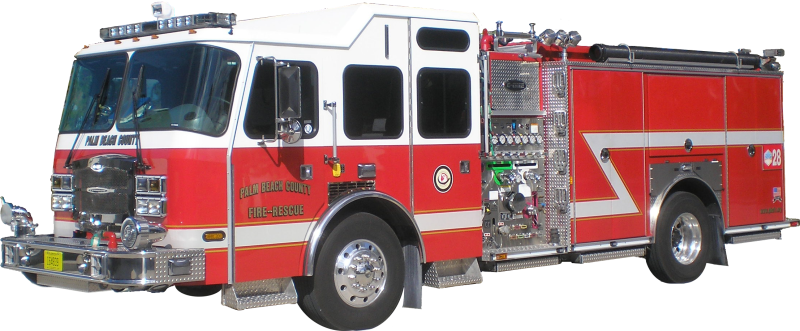
does a terrific job of making sure that the curious don't drive through it. Even if one says that's overkill, look at it this way. One is going to attract on lookers driving by in their cars and if they goof in their driving, at least one will be ready. Just a thought. ____________________________________________________________ ("...when it comes to lashes, I say the bigger the better.......,"––Drew Barrymore, (w,stte), Covergirl commercial, "Lashblast") |
|
Quoted:
In Plano the FD also runs the EMS and all the personnel are crosstrained as EMTs and Paramedics. The fire engine/truck is sent along with the ambulance as extra manpower which is very helpful on critical calls like cardiac arrests. There are also fewer ambulances than fire apparatus so sometimes the truck/engine gets there first and initiates patient care. Some departments only send the engine/truck along on high priority calls, while others send it along on every call. I'm not sure what Plano does as far as response. I work at a neighboring dept. (not going to say which) and we send the engine/truck along regardless of the priority. Out in rural areas the FD often acts as first responders since one ambulance may cover several hundred square miles by itself. When I worked out in the county we covered a town that was sixteen miles away. We relied on the VFDs to let us know what we had and often they would call medivac for serious stuff before we even got there. Also very helpful with the 600 lb fatties! To further expand on what zoot said, many FD's in the DFW Metroplex have at least one Paramedic on each engine/truck and Adavnced Life Support equipment so the engine/truck can begin working the patient. Also, if the patient is critical, one (maybe two) of the Paramedics [from the engine/truck ride in the ambulance to help work the patient. I've seen many times where the engine arrived 1st by a long time and saved the persons life. |
|
We usually beat the ambulance by 5-6 minutes during slow times, and 10+ minutes during busier times. 3 of our 5 apparatus are bls capable. Both our engines are rescue engines. Every rig has a small kit and an AED.
My rig: 
We run this as opposed to dedicated light rescue rigs for many reason (I personally think that light rescue rigs have no business in the way our system is set up here, and they're rare) If we get called to an MVA, E2 can provide safety lines for extrication, it's own extrication and carries med gear on it. At our station, we do have a medium/heavy rescue with our extrication gear because we have a lot more stuff on it. More cribbing, twice the tools, bigger pump, rams, struts, etc. It's pretty hard to put all that on an engine and carry enough tools, med gear, etc, when you also have a 1k gallon tank, 50 gallon foam tank, 1500 gpm pump, 6 man cab, etc. |
|
Quoted:
Quoted:
In Plano the FD also runs the EMS and all the personnel are crosstrained as EMTs and Paramedics. The fire engine/truck is sent along with the ambulance as extra manpower which is very helpful on critical calls like cardiac arrests. There are also fewer ambulances than fire apparatus so sometimes the truck/engine gets there first and initiates patient care. Some departments only send the engine/truck along on high priority calls, while others send it along on every call. I'm not sure what Plano does as far as response. I work at a neighboring dept. (not going to say which) and we send the engine/truck along regardless of the priority. Out in rural areas the FD often acts as first responders since one ambulance may cover several hundred square miles by itself. When I worked out in the county we covered a town that was sixteen miles away. We relied on the VFDs to let us know what we had and often they would call medivac for serious stuff before we even got there. Also very helpful with the 600 lb fatties! To further expand on what zoot said, many FD's in the DFW Metroplex have at least one Paramedic on each engine/truck and Adavnced Life Support equipment so the engine/truck can begin working the patient. Also, if the patient is critical, one (maybe two) of the Paramedics [from the engine/truck ride in the ambulance to help work the patient. I've seen many times where the engine arrived 1st by a long time and saved the persons life. This.... This is pretty much how we work as well! We have anywhere from one to two medics per ALS engine. All of our paid engines are ALS... the vollies are BLS... even 'tho we have a few vollies (who work for other agencies) that are trained medics . |
| I believe the 911 dispatcher makes the call on whether my FD gets sent on a call. We routinely hear amberlamps rolling in my district and no FF rigs assigned. We also hear 'No ambulance available" a lot,too. I'd say 50-50 on who gets there first, us or Rural Metro. We have portable defib,oxygen and oxygen accessories, big first aid bag, backboard. I think my dept may have flirted with getting our own ambulances, but I heard the start-up costs on those are way up there. Anybody got a $ ballpark? |
|
We have most everything our Rescues do, except transport capability, on our Engines and Ladders, most of which are staffed 24/7 by at least 1 Paramedic, and usually 2 or 3. We have 38 ALS Engines, 5 BLS Engines, 4 ALS Ladders and 25 ALS Rescues (transports). Short of it is...an Engine usually arrives before a Rescue, most of the time, starts ALS procedures (if needed), then transfers to the Rescue for further treatment and transport, (if warranted). |
|
Quoted: This is in regard to my community (Plano, TX) but I suspect it's fairly widespread. When a 911 call goes out for something unrelated to fire (or rescue?), say a medical emergency, why is a firetruck dispatched also? Why not something like the guys in the old TV show "Emergency!"? Several reasons. 1) If there is an accident on the highway the truck helps block traffic to protect the ambulance and the police. 2) If it's a possible heart attack or similar, someone on the truck will drive the ambulance so that both on the ambulance can be in the back working on the patient (i.e. CPR). 3) Sometimes the closest ambulance is on another call so they may send a truck with paramedics that is closer to work on the patient until an ambulance arrives from another station. Those are the ones that immediately come to mind. On the show "Emergency", they were basically paramedics on a rescue truck. They had no transport capabilities and had to wait for an ambulance. Kind of like #3 above. |
|
Quoted:
This is in regard to my community (Plano, TX) but I suspect it's fairly widespread. When a 911 call goes out for something unrelated to fire (or rescue?), say a medical emergency, why is a firetruck dispatched also? Why not something like the guys in the old TV show "Emergency!"? You realize Gage an DeSoto didn't transport anyone, right? They called for an ambulance to do transports, and often rolled with Engine 51 as well. |
|
Fire often rolls with because
Many FF's are EMT's. They help bring in equipment so the EMT/Paramedics can focus on patient care. They can help clear the scene of junk so the EMT/Paramedics have room to work. They can deal with family of friends, to calm them, and allow the EMT/Paramedics room to work. They can "manually" stabilize C-spine, limbs, fractures, etc until the EMT/Paramedics can splint/stbalize that injured area. Lifting assistance. |
|
Quoted: Quoted: This is in regard to my community (Plano, TX) but I suspect it's fairly widespread. When a 911 call goes out for something unrelated to fire (or rescue?), say a medical emergency, why is a firetruck dispatched also? Why not something like the guys in the old TV show "Emergency!"? You realize Gage an DeSoto didn't transport anyone, right? They called for an ambulance to do transports, and often rolled with Engine 51 as well. Haters gonna hate. |
|
I appreciate all the replies. My question was generated by my observation that I always see Plano FD & EMT responding together. *My* observation being usually in residential areas. Knowing that I have been personally responded to on 2 occasions to a residence, I thought it was overkill having FD there too. Although they taught me how well hydrogen peroxide gets blood out of the carpet.  Oh and did I mention how Fireman clown shoes stepped on my IV and pulled it out?  Seriously tho, just idle conversation and I appreciate what you guys do. Well except for the Emergency! haters. I loved that show. |


|
One department I worked for responded on all cardiac arrest calls. We had more fire stations than EMS, and generally had a faster response time.
The one I currently work at responds to cardiac arrest, and difficulty breathing. But is subject to change from time to time. Both fire and EMS respond out of the same stations at my current place of employment. And besides, an extra set of hands never hurt .
|
|
Here the local FD is always dispatched along with the private ambulance service. Fire usually beats them on scene as there is 7 fully staffed stations around town while the ambulance service only has 2 staffed units. The fire guys will start medical care and when the ambulance shows up they will either continue to assist with medical care or turn it over to the ambulance folks.
|
|
Generally speaking it's a combination of things:
- response time/distance: A vast majority of my county is served by VFDs doing first response at the EMT-B level with a smattering of -Ps. The transport ambulance is coming from a centralish location and can be up to 15-20 minutes from the scene, even running hot. So the Billy BlueLights run out and do their thing (and I say it with a smile, I am one). - severity (as determined by set criteria, either local protocols or NAEMD MPDS): dispatch asks the questions and determines the priority/code, and either sends extra hands or not. Things like breathing problems, serious bleeding, major trauma, possible cardiac issues, etc, get rescue (FD). Many of our local departments are getting away from responding to "alpha" calls - non-recent falls, backaches, general illness, etc. It's an easy way to cut the response numbers of the volunteers (and therefore keep them in the department without burning out) without significantly reducing service to the community. - FD budget justification: I know this isn't popular, but 70-80% of a fire department's calls are now medical, not fire/hazard related. If you want to have the big shiny trucks, you have to use them, not open the bay doors and sit on the front bumper drinking coffee. I (personally) think it's asinine to run a $600k engine on EMS calls that could be handled just as well by two -B's in a $50k Tahoe with a light bar and a few bags of gear. (I know this line of thinking isn't popular, but when we're cutting budgets and personnel, that's an easy way to cut some wear and tear without cutting staff.) |
|
Quoted: Generally speaking it's a combination of things: - response time/distance: A vast majority of my county is served by VFDs doing first response at the EMT-B level with a smattering of -Ps. The transport ambulance is coming from a centralish location and can be up to 15-20 minutes from the scene, even running hot. So the Billy BlueLights run out and do their thing (and I say it with a smile, I am one). - severity (as determined by set criteria, either local protocols or NAEMD MPDS): dispatch asks the questions and determines the priority/code, and either sends extra hands or not. Things like breathing problems, serious bleeding, major trauma, possible cardiac issues, etc, get rescue (FD). Many of our local departments are getting away from responding to "alpha" calls - non-recent falls, backaches, general illness, etc. It's an easy way to cut the response numbers of the volunteers (and therefore keep them in the department without burning out) without significantly reducing service to the community. - FD budget justification: I know this isn't popular, but 70-80% of a fire department's calls are now medical, not fire/hazard related. If you want to have the big shiny trucks, you have to use them, not open the bay doors and sit on the front bumper drinking coffee. I (personally) think it's asinine to run a $600k engine on EMS calls that could be handled just as well by two -B's in a $50k Tahoe with a light bar and a few bags of gear. (I know this line of thinking isn't popular, but when we're cutting budgets and personnel, that's an easy way to cut some wear and tear without cutting staff.) The highlighted part was what I was wondering about. And no, I'm not going to go raise a ruckus with City Hall, but I am a little tweaked that I had to pay for the EMS service* out of my pocket. *City owned service/equipment/employees. |