


Armory Sponsor
Posted: 4/9/2021 4:19:56 PM EDT
[Last Edit: Molon][Edited]
|
I’ve had numerous requests for this over the years, so here‘s an introduction to one of the techniques that I use for developing a hand-load for the AR-15. Reloading For The AR-15: Molon’s Accuracy Node Detection Technique 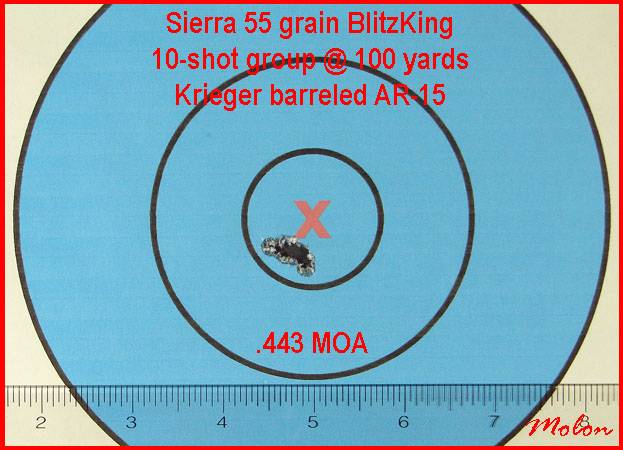 The Accuracy Node Detection Technique (ANDT) is simply a tool to aid hand-loaders in determining the specific powder-charge that is most likely to deliver the highest level of accuracy (technically precision) from their AR-15 with a particular powder and bullet. Those of you familiar with Creighton Audette’s Incremental Load Development Method (Ladder Test) or Dan Newberry’s Optimal Charge Weight method may recognize that the Accuracy Node Detection Technique is based on the same underlying principle as those methods, however, the ANDT is a more refined and statistically meaningful approach to finding an accuracy node. The ANDT uses larger effective sample sizes for greater confidence and utilizes the mean radius to determine the radial dispersion of composite shot-groups to obtain a more exact identification of the accuracy node of a given barrel/bullet/powder combination. For those of you not familiar with the mean radius, I’ll be explaining that shortly. The ANDT is not dependent upon “interpreting” the data like other methods; the data is what it is and the results speak for themselves. However, keep in mind that 60% of a load’s accuracy comes from the bullet. If you’re not using a quality bullet that your barrel “likes,” no amount of powder-charge testing is going to result in a load that produces sub-MOA 10-shot groups from you AR-15. A chronograph is not needed for the ANDT. If you’re only interested in long-range shooting, this is not the article you‘re looking for. I developed the ANDT for working-up short range (200 yards and in) match-grade hand-loads that consistently produce sub-MOA 10-shot groups from my match-grade AR-15s. As I mentioned above, the ANDT utilizes the mean radius to accurately and precisely determine the radial dispersion of the composite shot-groups that we will develop using the ANDT. The demonstration below shows how to manually calculate the mean radius, but modern ballistic programs make this task far easier. A PRIMER ON THE MEAN RADIUS The mean radius is a method of measurement of the radial dispersion of shot-groups that takes into account every shot in the group. It provides a more useful analysis of the consistency of ammunition and firearms than the commonly used method of extreme spread. Mean radius as defined in Hatcher's Notebook “is the average distance of all the shots from the center of the group. It is usually about one third the group diameter (extreme spread)” for 10-shot groups. The ratio is actually closer to 3.2 x the mean radius = the extreme spread for 10-shot groups, depending on the sample size and the morphology of the particular groups sampled. To obtain the mean radius of a shot-group, measure the heights of all shots above the lowest shot in the group. Average these measurements. The result is the height of the center of the group above the lowest shot. Then in the same way, get the horizontal distance of the center from the shot farthest to the left. These two measurements will locate the group center. Now measure the distance of each shot from this center. The average of these measures is the mean radius. Once you get the hang of measuring groups using the mean radius it becomes very simple to do. While being very simple to do, it is also very time consuming. Modern software programs such as RSI Shooting Lab and On Target make determining the mean radius a snap. The picture below is a screen capture from RSI Shooting Lab. The red cross is the center of the group (a little high and right of the aiming point). The long red line shows the two shots forming the extreme spread or group size. The yellow line from the red cross to one of the shots is a radius. Measure all the radii and take the average to obtain the mean radius. 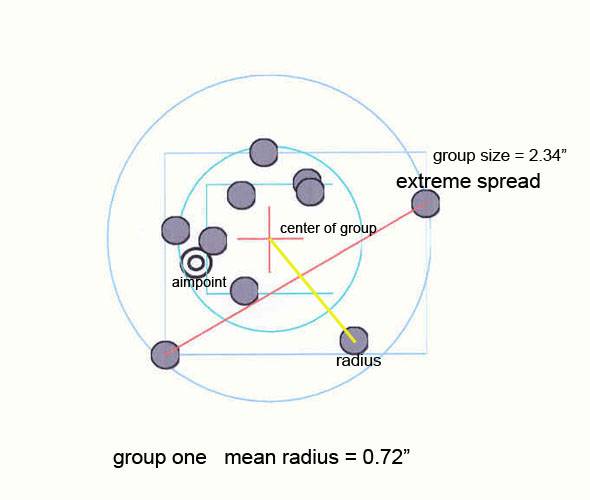 Mean Radius Demonstration Let’s say you fired a 5-shot group from 100 yards and the resulting target looks like this. (The X-ring measures 1.5” and the 10-ring measures 3.5”.) 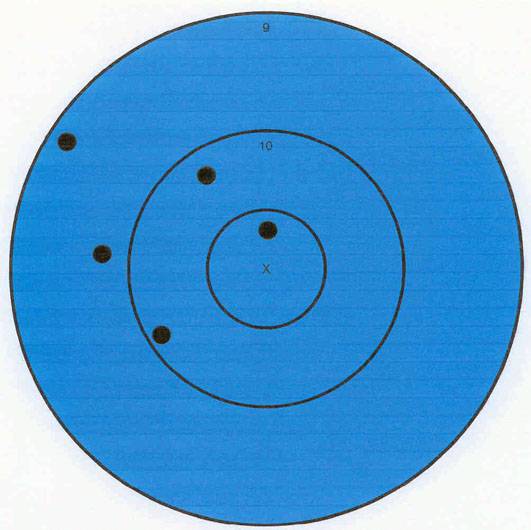 The extreme spread of the group measures 2.83”, but we want to find the mean radius (or average group radius.) In order to find the mean radius we must first find the center of the group. By “eye-balling” the target most people would see that the group is centered to the left of the “X-ring” and probably a little high, but we need to find the exact location of the center of the group. Locating the Center of the Group The first step in finding the center of the group is to find the lowest shot of the group and draw a horizontal line through the center of that shot. 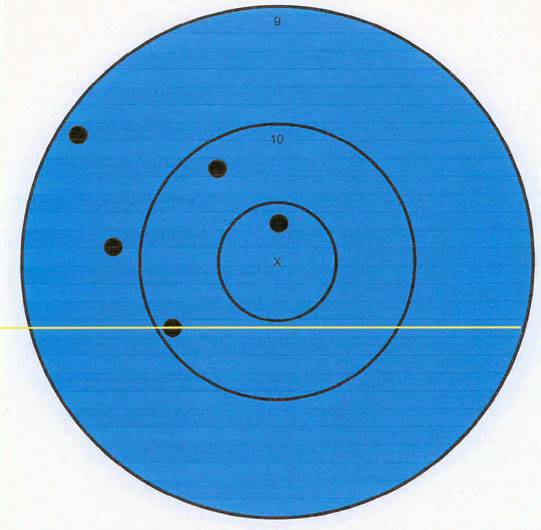 Next, find the left-most shot of the group and draw a vertical line through the center of that shot. 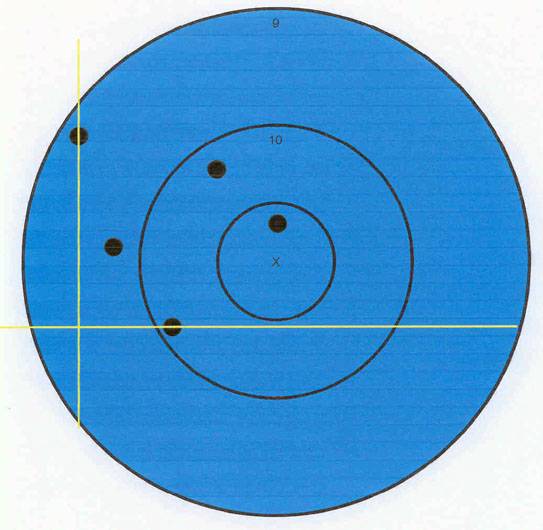 Now measure the distance from the horizontal line to the other four shots of the group that are above that line. Add those numbers together and divide by the total number of shots in the group (5). 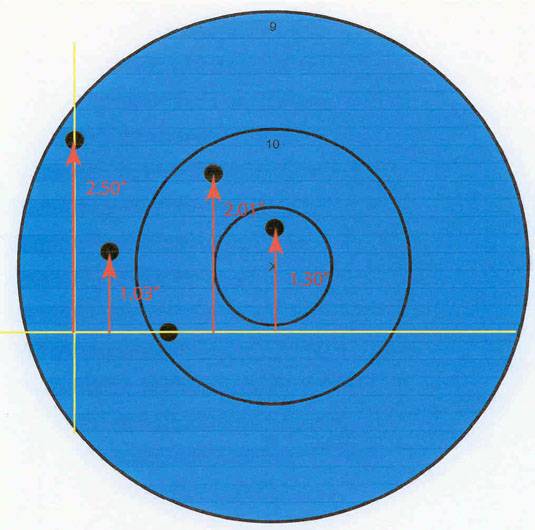 2.50” + 1.03” + 2.01” + 1.30” = 6.84” Divide by 5 to get 1.37”. This number is the elevation component of the center of the group. Next we need to find the windage component of the center of the group. From the vertical line, measure the distance to the other four shots of the group that are to the right of the line. Add those numbers together and again divide by the total number of shots in the group (5). 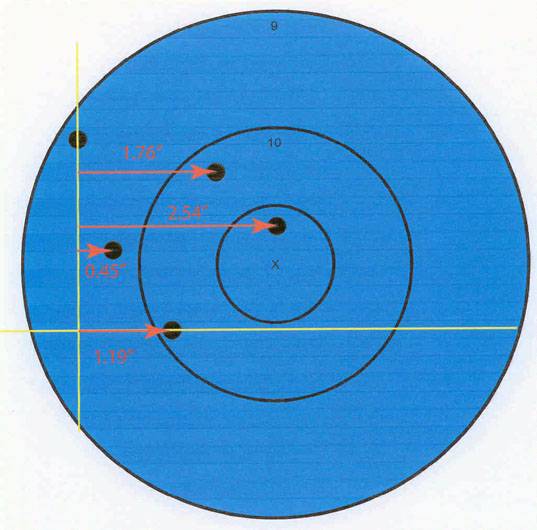 1.76” + 2.54” + 0.45” + 1.19” = 5.94” Divide by 5 to get 1.19” This is the windage component of the center of the group. Finding the windage and elevation components of the center of the group is the most difficult part of this process. Once that is done the rest of the process is a piece of cake. Using the windage and elevation components, locate the position on the target that is 1.37” (elevation component) above the horizontal line and 1.19” (windage component) to the right of the vertical line. This location is the center of the group! 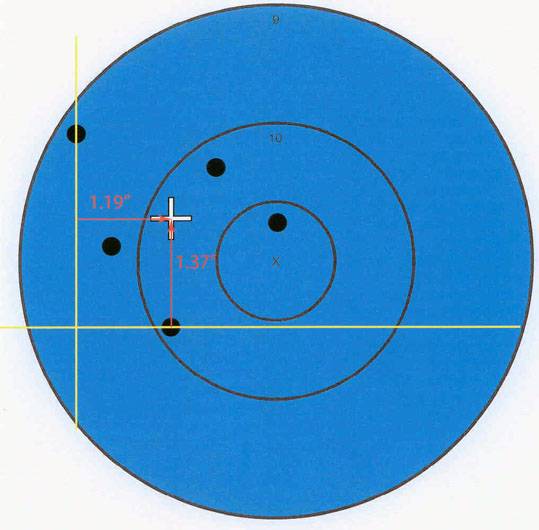 Determining the Mean Radius Now that we have located the position of the center of the group, the first step in determining the mean radius is to measure the distance from the center of the group to the center of one of the shots. This line is a single “radius”. 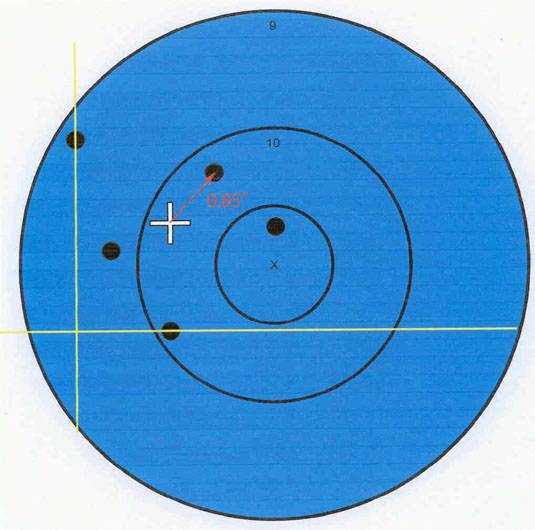 Now measure the distance from the center of the group to the center of each of the rest of the shots in the group. Add the measurements of all the radii together and then divide by the total number of shots in the group (5). 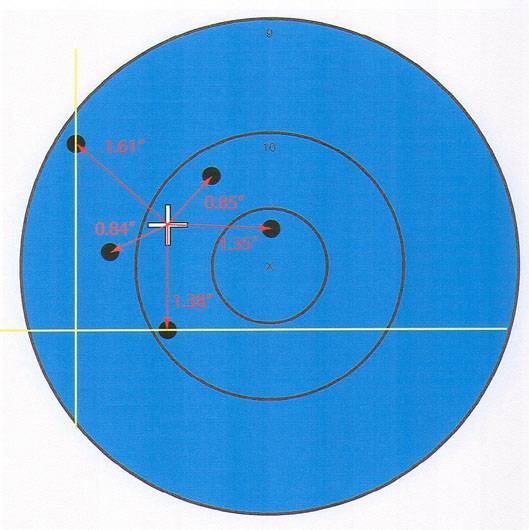 0.85” + 1.35” + 1.38” + 0.84” + 1.61” = 6.03” Divide by 5 to get 1.21”. This is the mean radius (or average group radius) of the group! Using the mean radius measurement to scribe a circle around the center of the group gives you a graphic representation of the mean radius. This shows the average accuracy of all the shots in the group. This demonstrates why the mean radius is much more useful than the extreme spread in evaluating the radial dispersion of our rifles and ammunition. 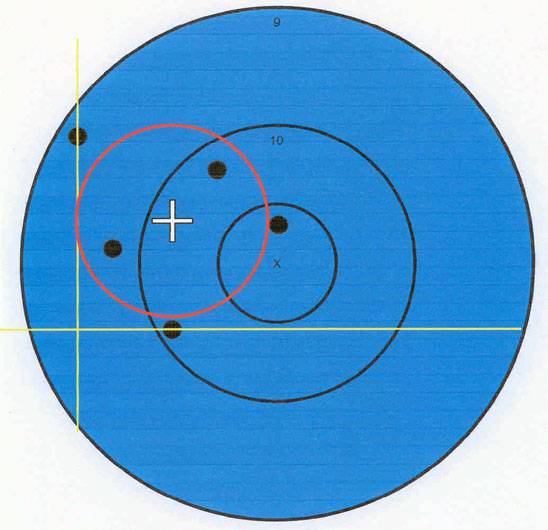 The table below will give you an idea of the relationship between the mean radius and extreme spread for 10-shot groups. 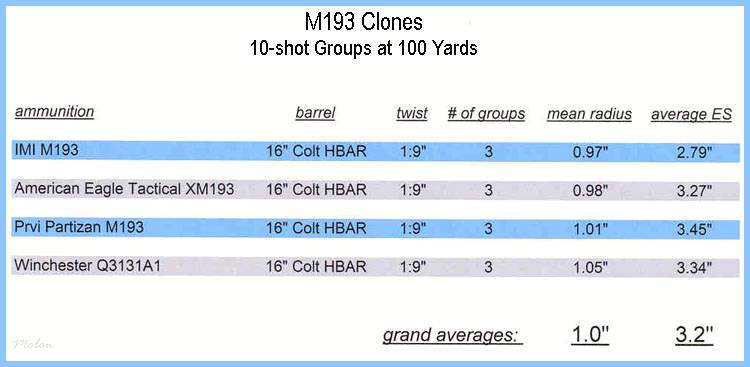 Here are some interesting quotes on the subject from old issues of American Rifleman. “Mean radius is the mean distance of bullet impacts from the center of the test group. It is used in government ammunition acceptance because it takes account of every shot and comes close to maximizing the test information. While there is no exact relationship between this measure and the simpler and more convenient group diameter, the 10-shot group diameter averages slightly over 3 times the mean radius.” "These examples illustrate the sensitiveness of the extreme spread to number of shots in the group. Indeed, as the table indicates, the measures made to only the outside shots of the group, e.g. the extreme spread, are very sensitive to number of shots, while the measures made to all the shots, e.g. the mean radius are far less so. It may be added that the latter measures are also less variable in their representation of the group; they are more efficient. This explains why the target testing of U.S. military rifle ammunition is by mean radius." Accuracy Node Detection Technique continued . . . Now that you understand the mean radius, we can delve into some particulars of the Accuracy Node Detection Technique. For the example that I’ll be presenting in this article, I was looking for an accuracy node for the Hornady 53 grain V-MAX (#22265) when charged with VihtaVuori N133 powder and fired from my 223 Remington 24” Krieger barreled AR-15. But first, a word from our sponsor: WARNING! Reloading is an inherently dangerous activity. The information provided here is for educational purposes only. It is not intended to be used for the actual loading of ammunition by the reader. No warranty, guarantee or assurance that these loads are safe is stated, suggested or implied nor should any be inferred. Usage of this information for the actual loading of ammunition may result in malfunctions, damage and destruction of property and grave injury or death to beings human in nature or otherwise. Don't even view this information in the presence of children or small animals. 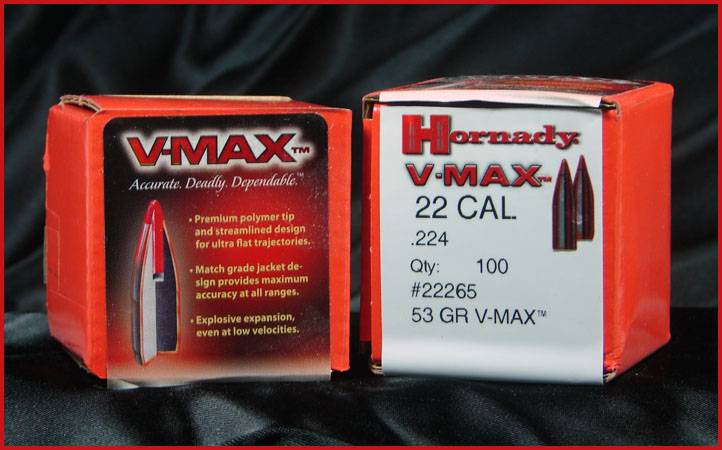 53 V-MAX on the left . . . 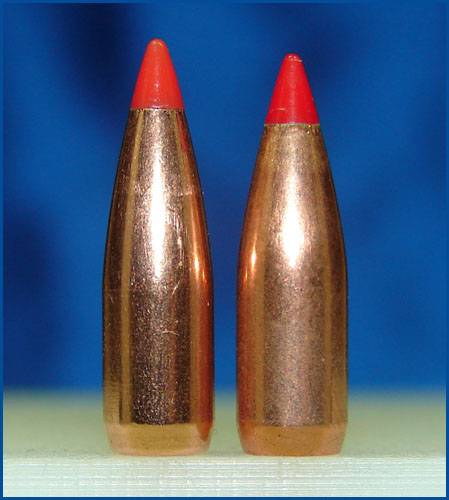 VihtaVuori N133 (the individual red squares in the grid below are 1/10 of an inch.) 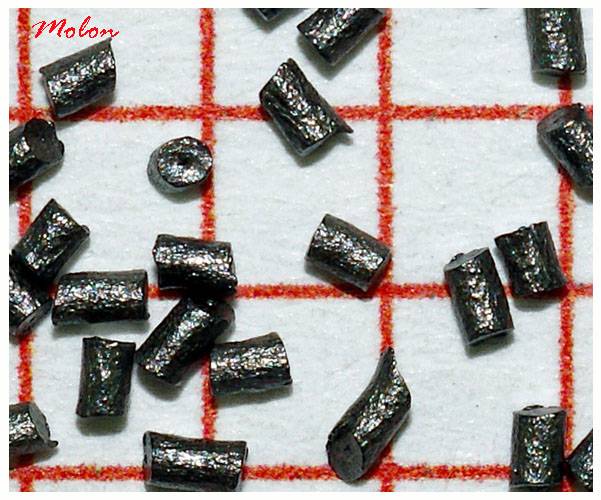 24” Krieger barrel . . . 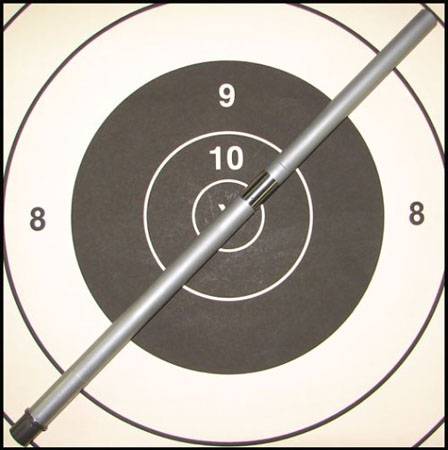 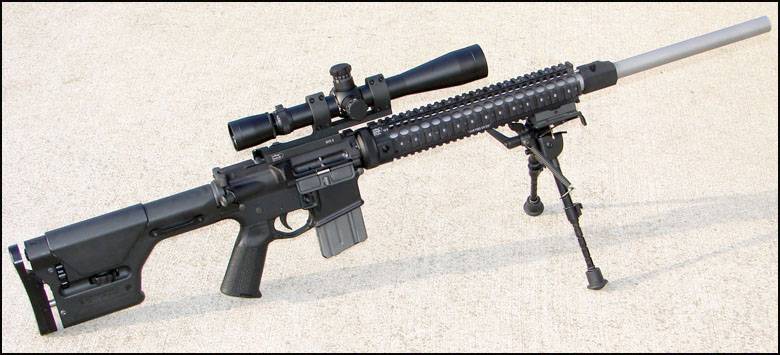 In my experience with hand-loading for precision AR-15s that are chambered for 223 Remington, I’ve found that an accuracy node can often be identified somewhere within a 1.5 grain spread of powder-charges; not always, but often. For this example of the ANDT, I used powder-charge weights ranging from 23.0 grains to 24.4 grains of VihtaVuori N133. The criteria that I used for this particular example of the ANDT was as follows: I wanted to find an accuracy node that was within the limits of the precision that the factory powder measure on my Dillon XL650 was capable of throwing. When using a short-cut extruded powder like VihtaVuori N133, the Dillon factory powder measure will throw the majority of the charges within plus or minus 0.1 grains of the nominal charge. However, a significant amount of the time, the Dillon factory powder measure will throw a charge that is plus or minus 0.2 grains of the nominal charge. Therefore, I needed an accuracy node that could maintain the desired level of precision on the target, throughout a plus or minus 0.2 grain powder-charge. Hence, I used an increment of 0.2 grains in the powder-charges used for this example of the ANDT. The following eight powder-charges were used: Powder-charge #1 - 23.0 grains Powder-charge #2 - 23.2 grains Powder-charge #3 - 23.4 grains Powder-charge #4 - 23.6 grains Powder-charge #5 - 23.8 grains Powder-charge #6 - 24.0 grains Powder-charge #7 - 24.2 grains Powder-charge #8 - 24.4 grains The powder-charges tested in this example of the ANDT were all dispensed (not thrown) to the tenth of a grain using a Pact Digital powder dispenser and scale and verified on a GemPro-250 scale. The hand-loads were otherwise loaded on the Dillon XL650. Five rounds of each of the eight powder-charges were loaded, for a total of 40 rounds. Next, some actual shooting.  All shooting for this example of the ANDT was conducted from my bench-rest set-up at a distance of 100 yards. The 24" Krieger barrel was free-floated. The free-float handguards of the rifle rested in a Sinclair Windage Benchrest, while the stock of the rifle rested in a Protektor bunny-ear rear bag. Sighting was accomplished via a Leupold VARI-X III set at 25X magnification and adjusted to be parallax-free at 100 yards. A mirage shade was attached to the top of the free-float hand-guard. Wind conditions on the shooting range were continuously monitored using a Wind Probe. The lower receiver housed a Geissele High-Speed National Match trigger. The set-up was very similar to that pictured below. 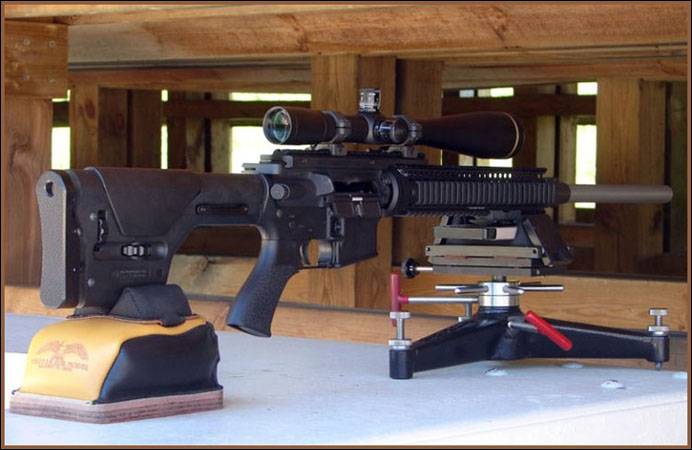 The Wind Probe 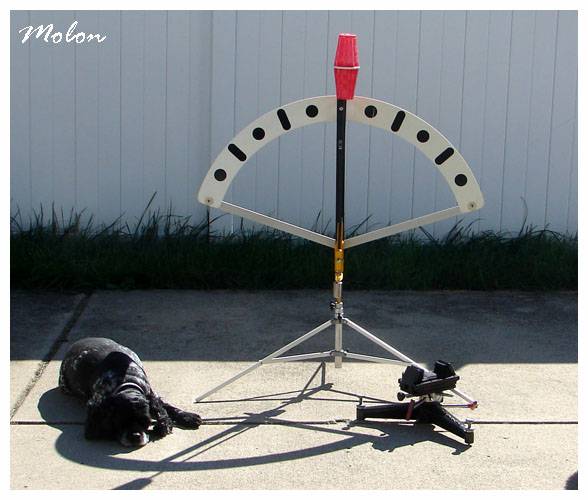 The shooting portion of the Accuracy Node Detection Technique should be conducted at a distance of 100 yards to help mitigate environmental variables. When conducting the shooting for the ANDT, you absolutely most monitor the wind conditions on the range and attempt to fire every shot under the same wind conditions. For those who think that the wind “doesn’t matter” at 100 yards, consider the following example. With the right ammunition, my precision AR-15s are capable of producing consistent sub-MOA 10-shot groups at 100 yards. Now, let’s say that you are a quarter of the way through the firing of 40 rounds for the ANDT. The wind has been calm up to this point. When you fire the next shot, you miss the fact that a 7 mph wind is now blowing from 3 o’clock. The wind dies down again and you continue shooting. Three quarters of the way through testing, you miss another 7 mph wind that has kicked up, only this time it’s coming from 9 o’clock. By not paying attention to the wind, your test results have now been increased by more than 1.5 MOA, simply due to wind deflection. So yes Virginia, the wind does indeed matter at the distance of 100 yards. 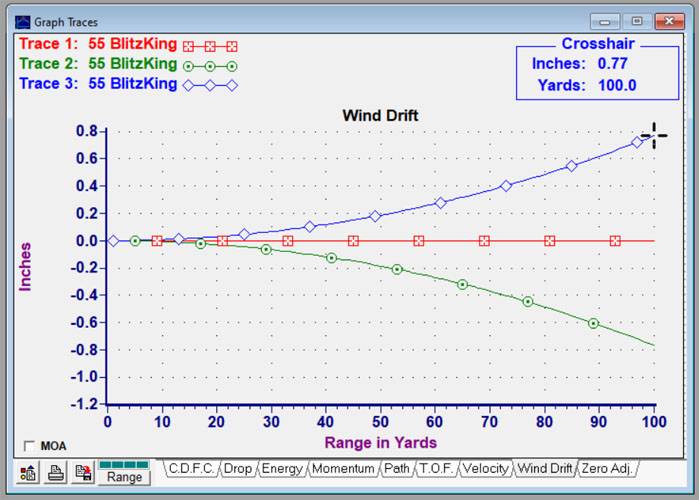 In order for the ANDT to produce valid data, you positively have to be able to properly execute the fundamentals of marksmanship 40 times (or more) in a row. When conducting the shooting portion of the ANDT, all rounds should be fired in a round-robin manner. This means that you fire one shot only at the first target using a round from the first powder-charge, then you fire one shot only at the second target using a round from the second powder-charge and so-on until you’ve fired one round at each of the eight targets. You repeat this process until all 40 rounds have been fired. Unless you had some collateral damage, you should now have eight targets all of which have five shots on them from each of the eight different powder-charges being tested. Now it’s time to head home and analyze the data. A sample target . . . 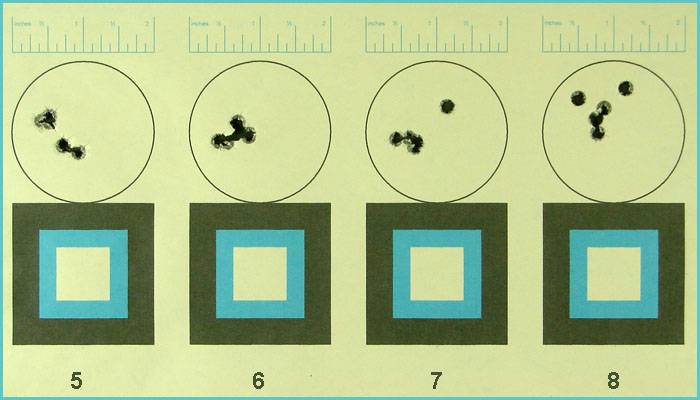 Here’s where things get interesting. We now have eight targets and each of those targets has a 5-shot group on them that was fired in a round-robin manner. Each 5-shot group was fired using rounds loaded with the same powder-charge. For the ANDT, we are not interested in the extreme spreads of those 5-shot groups. We’re not even interested in the mean radius of the individual 5-shot groups. What we are interested in, is the mean radius of the composite groups that we’re going to form from the eight individual targets. To form the composite groups, we first have to individually enter the eight, 5-shot targets into the computer program. In this case, I’ll be using RSI Shooting Lab. Once the individual targets are entered into the program, we can then use the program to over-lay targets to form composite groups. Do you remember earlier in this article that I stated what my criteria was for this example of the ANDT? I stated that “I needed an accuracy node that could maintain the desired level of precision on the target, throughout a plus or minus 0.2 grain powder-charge. Hence, I used an increment of 0.2 grains in the powder-charges used for this example of the ANDT.” Since each target contains a 5-shot group from the same powder-charge, and each incremental powder-charge was increased by 0.2 grains, we’re going to over-lay the targets in sequences of three, to form 15-shot composite groups, giving us more effective sample sizes, particularly when used in conjunction with the mean radius. That way our 15-shot composite groups will be made up of rounds fired from three different powder-charges; the nominal powder-charge (the one in the middle), a powder-charge that is 0.2 grains less than the nominal powder-charge and a powder-charge that is 0.2 grains more than the nominal powder-charge. For example, the first 15-shot composite group will be formed by over-laying target #1, target #2 and target #3. The second 15-shot composite group will be formed by over-laying target #2, target #3 and target #4. We’ll continue this sequence of over-laying the individual targets to form 15-shot composite groups until all eight of the individual targets have been used to form six, 15-shot composite groups. These six, 15-shot composite groups are what we have been working towards. The mean radii of these 15-shot composite groups are going to tell us where our accuracy node lies. 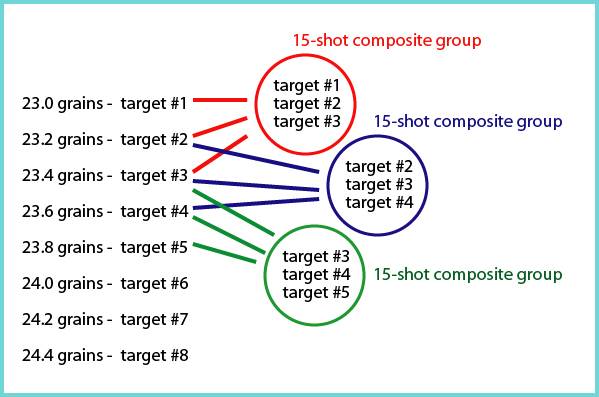 Here’s a visual demonstration of the process of over-laying the individual 5-shot targets, in sequences of three, to form the 15-shot composite groups. Here’s target #6 by itself. 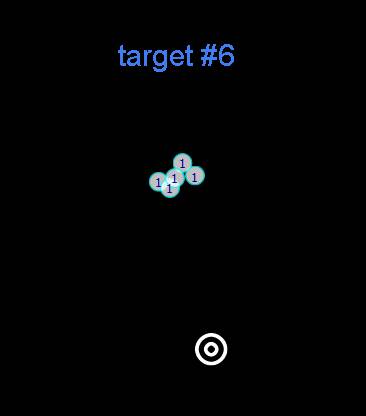 Here’s target #6 and target #7 over-layed on each other. 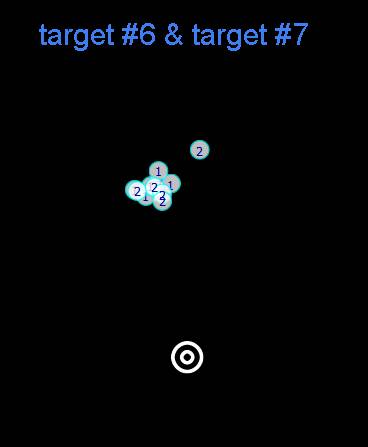 And targets #6, #7 and #8 over-layed on each other. 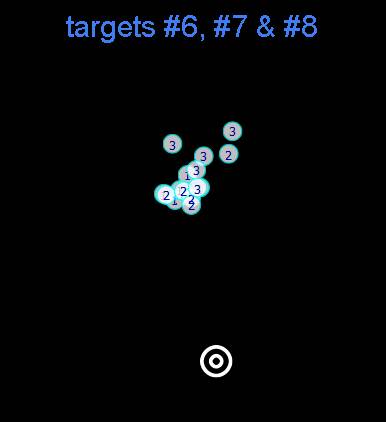 NOTE: It is extremely important when over-laying targets for the ANDT that the targets are over-layed on the centers of the targets, not on the centers of the groups. When over-laying targets using RSI Shooting Lab, the program gives you two options: “Aim Point” and “Center”. The “Aim Point” option is the correct option to over-lay the targets on the centers of the targets. The “Center” option will over-lay the targets on the centers of the groups. 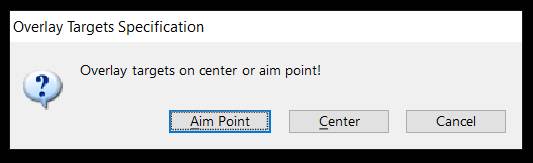 Before we get to the final results of this example of the ANDT, I’d like to use target #6 (that was shown above) to demonstrate the ineffectiveness of using the extreme spreads of individual 5-shot groups to locate an accuracy node. The 5-shot group on target #6 has an extreme spread of 0.42”. That’s a sub-½ MOA 5-shot group at 100 yards fired from a semi-automatic AR-15 (and remember too that these groups were fired round-robin). If I were using the extreme spreads of individual 5-shot groups to locate an accuracy node, I would think I had found it with target #6 . . . . but I would be mistaken, as we shall now see. Here are the mean radii of the six, 15-shot composite groups. The nominal powder-charge of the 15-shot composite group that has the smallest mean radius is the accuracy node for the 53 grain V-MAX load charged with VihtaVuori N133 and fired from my 223 Remington 24” Krieger barreled AR-15. 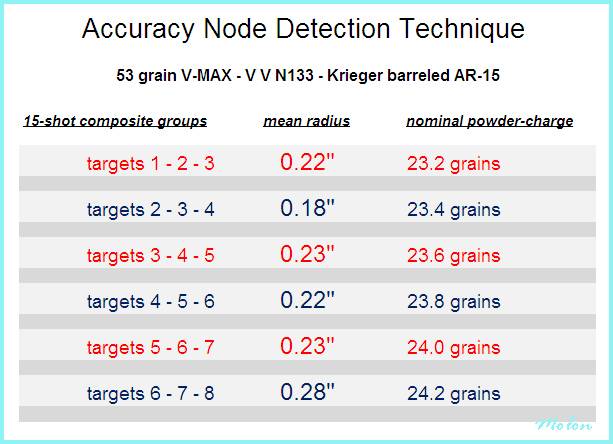 And there’s the accuracy node! Targets #2, #3 and #4 over-layed on each other form a 15-shot composite group that has a mean radius of 0.18” at 100 yards. 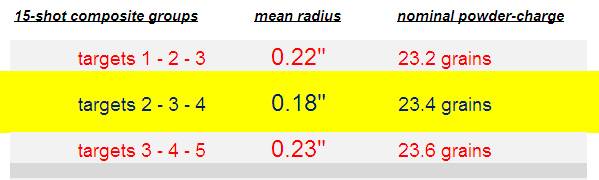 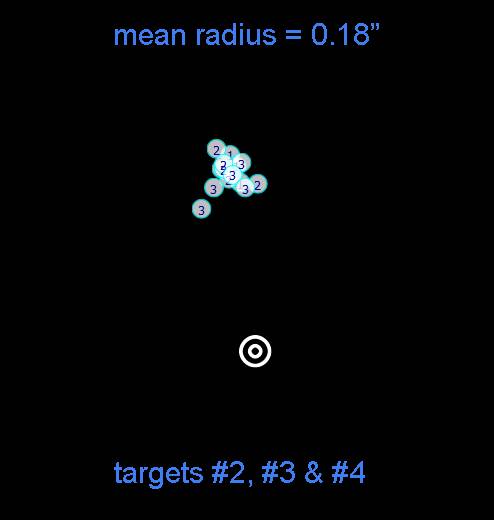 Now that we’ve identified the accuracy node at 23.4 grains of VihtaVuori N133, let’s take a look at what this load can do when fired from my Krieger barreled AR-15 at a distance of 100 yards. Hornady 53 Grain V-MAX 10-shot group: .533 MOA 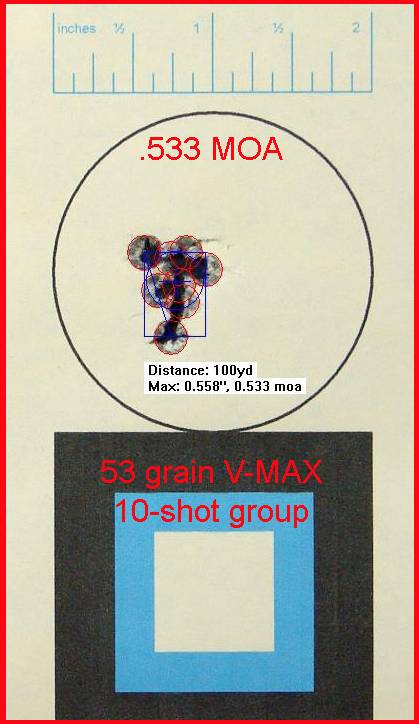 Here are some pics of groups from other hand-loads that I developed for my Krieger barreled AR-15s using the Accuracy Node Detection Technique. Sierra 55 Grain BlitzKing 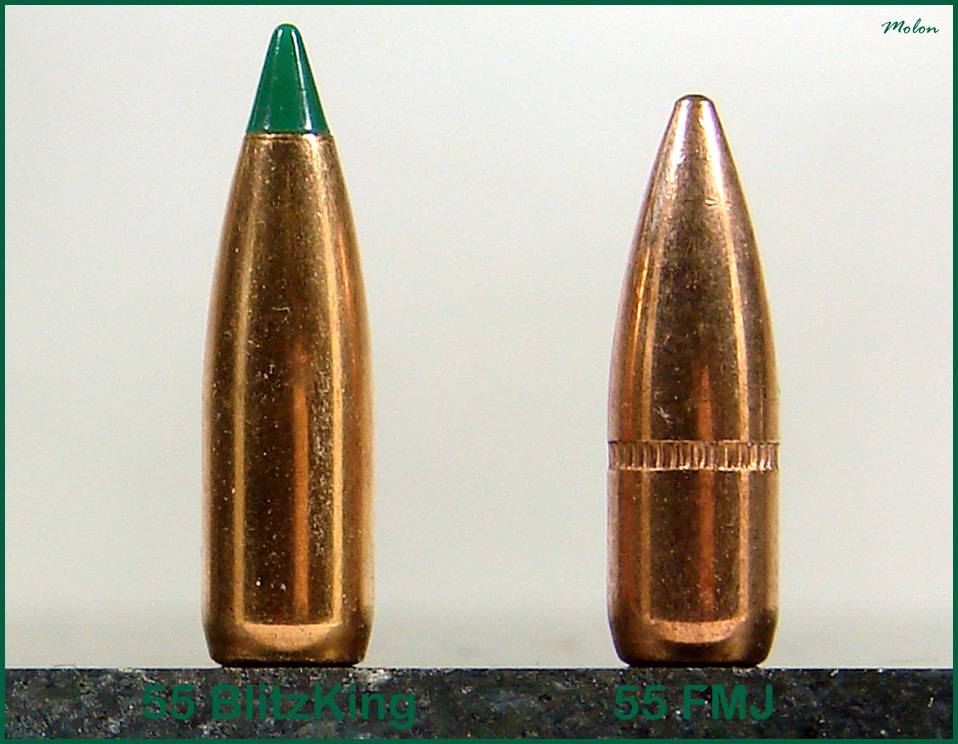 10-shot group: .439 MOA 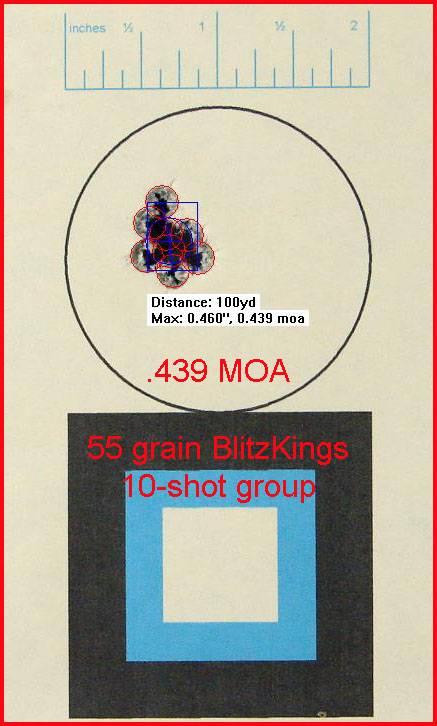 Berger 62 Grain HP 10-shot group: .483 MOA 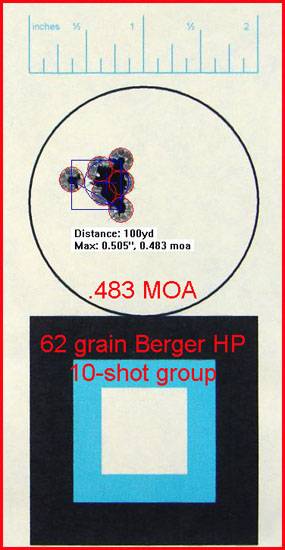  … |
All that is necessary for Trolls to flourish, is for good men to do nothing.
In God We Trust. Everyone else must post data.
In God We Trust. Everyone else must post data.




|
Very well thought out! I assume you'd adjust the "groupings" if say you felt your "throwing capabilities" was closer to .10 grains or the other way to say .3? But at some point they would blend too much together, for lack of better terms? I understand why but have you ever chronographed these loads? Thanks again! |


Global Warming Hoax Skeptic before it was cool
Joined:
Jun 2007
Posts:
60113
EE: 100% (1)
 WA, USA
|
Originally Posted By TGH456E: I assume you'd adjust the "groupings" if say you felt your "throwing capabilities" was closer to .10 grains or the other way to say .3? Naturally, any number of criteria can be developed for the size of the powder charge increments. It’s just a matter of how far down the rabbit hole you want to go. ... |
All that is necessary for Trolls to flourish, is for good men to do nothing.
In God We Trust. Everyone else must post data.
In God We Trust. Everyone else must post data.

|
thank you Professor Molon. this post is worth more than a year's worth of posts in GD. |
Don't be so open-minded that your brains fall out.
General education should not be mere job training, but training of the mind to reason. https://welltrainedmind.com/a/classical-education/
General education should not be mere job training, but training of the mind to reason. https://welltrainedmind.com/a/classical-education/

|
Originally Posted By ctres94: This really is incredible, thanks for the writeup. This concept of overlaying data from adjacent powder weights to get a bunch more statistically significant data out of a small amount of loads is really smart. Molon can, of course, explain this but if I understand it correctly, it isn't just getting higher numbers for data but also properly understanding the variance of powder throws. "....However, a significant amount of the time, the Dillon factory powder measure will throw a charge that is plus or minus 0.2 grains of the nominal charge. Therefore, I needed an accuracy node that could maintain the desired level of precision on the target, throughout a plus or minus 0.2 grain powder-charge. Hence, I used an increment of 0.2 grains in the powder-charges used for this example of the ANDT...... So if your realistic throw is +/- .2grains......... then you are looking at 23.0 to 23.4 as an extreme spread from your 23.2 as an example..... Thus you use 23.0, 23.2, 23.4 for your data. If say your realistic throw is +/- .1 grain..... then use say 23.1, 23.2, and 23.3.............. etc |

|
Wow, and to think I just laid my targets on the floor and said "Those three look kind of similar. I'll just go with the middle of them." I do like the 10 shot, round robin method. I've wondered about doing a "round robin", but as I'm usually working up a load, I'm watching for pressure signs as well. It seems like this would be the "next step" after you've verified your range does not give pressure spikes and also produces decent accuracy. Def. adding this to my subscribe list as I just got a bunch of 69g RMR bullets to try. |
When you buy from a small “mom and pop” business, you are helping a little girl get dance lessons, a little boy get his team jersey, a mom or dad put food on the table, a family pay a mortgage, or a student pay for college. -midcap
|
@Molon, regarding "round robin", do you load the rounds one at a time for each shot, or do you carefully load up a magazine with the rounds in the right shooting order? My thought is that I sometimes get a flyer when hand charging the first round in a mag as opposed to the self-loading when firing the rest of them. If I hand-charged or single loaded all of them, I'm skeptical of it directly correlating to semi-auto fire. Thanks for your good advice. I'll take it. |
Don't be so open-minded that your brains fall out.
General education should not be mere job training, but training of the mind to reason. https://welltrainedmind.com/a/classical-education/
General education should not be mere job training, but training of the mind to reason. https://welltrainedmind.com/a/classical-education/
|
Originally Posted By MRW: @Molon, regarding "round robin", do you load the rounds one at a time for each shot, or do you carefully load up a magazine with the rounds in the right shooting order? My thought is that I sometimes get a flyer when hand charging the first round in a mag as opposed to the self-loading when firing the rest of them. If I hand-charged or single loaded all of them, I'm skeptical of it directly correlating to semi-auto fire. Thanks for your good advice. I'll take it. 1. load a single round into the magazine 2. insert the magazine into the rifle with the bolt already locked back (pull down on the magazine to assure it's locked into the rifle) 3. don't use the charging handle to chamber the round 4. chamber the round by sharply pressing the bolt catch/release 5. fire the round semi-automatically; the bolt locks back 6. repeat steps 1 - 5 another 39 times ... |
All that is necessary for Trolls to flourish, is for good men to do nothing.
In God We Trust. Everyone else must post data.
In God We Trust. Everyone else must post data.



|
Electronic targets make this process very simple. Today I did a load workup, and shot a total of 30 rounds on a Shotmarker e-target. The target software will dump shot coordinates (and other data) into a .csv file, and you can easily open that up in Excel and run mean-radii calculations on individual groups and combined groups. Took all of about 10 minutes, start to finish, to run the numbers. |

|
Originally Posted By gasdoc09: Electronic targets make this process very simple. Today I did a load workup, and shot a total of 30 rounds on a Shotmarker e-target. The target software will dump shot coordinates (and other data) into a .csv file, and you can easily open that up in Excel and run mean-radii calculations on individual groups and combined groups. Took all of about 10 minutes, start to finish, to run the numbers. Indeed!  And to think that decades ago I did this stuff with a pencil and a ruler. And to think that decades ago I did this stuff with a pencil and a ruler.  .. |
All that is necessary for Trolls to flourish, is for good men to do nothing.
In God We Trust. Everyone else must post data.
In God We Trust. Everyone else must post data.
|
On Target TDS is another program that can be used for the ANDT. I used On Target TDS to over-lay targets #6, #7 and #8 as I did in the original post of this thread and the results were virtually identical to those obtained using RSI Shooting Lab. On Target TDS 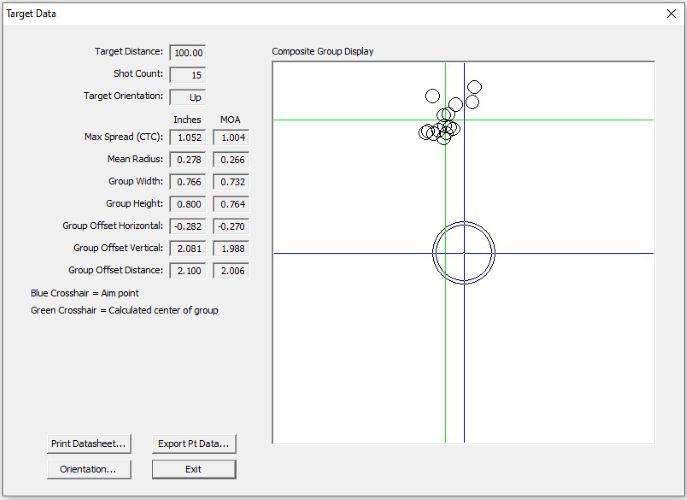 ... |
All that is necessary for Trolls to flourish, is for good men to do nothing.
In God We Trust. Everyone else must post data.
In God We Trust. Everyone else must post data.
Here’s another example of my Accuracy Node Detection Technique; this time using the software program, On Target TDS. The AR-15 barrel used in this example was a stainless-steel 20” Noveske HBAR with polygonal rifling, a 1:7’ twist and the Noveske Match Mod 0 chamber. According to the late John Noveske, the Match Mod 0 chamber “was developed to fire MK262 Mod 1 on AUTO in hot environments."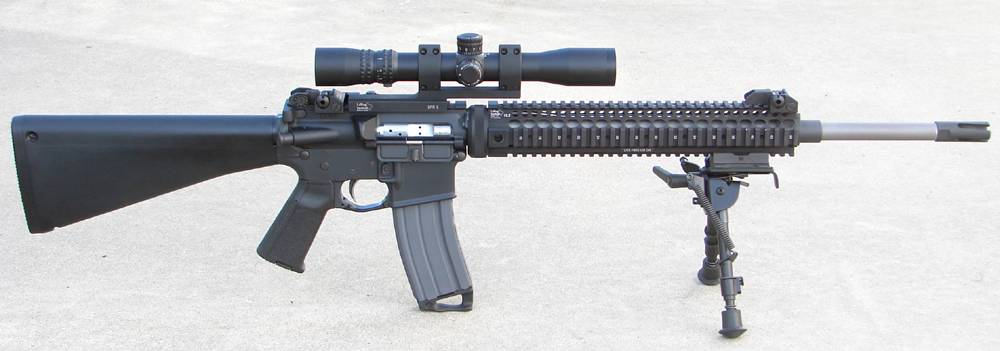 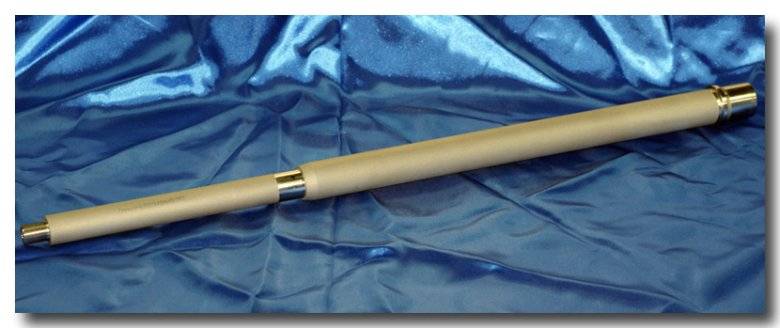 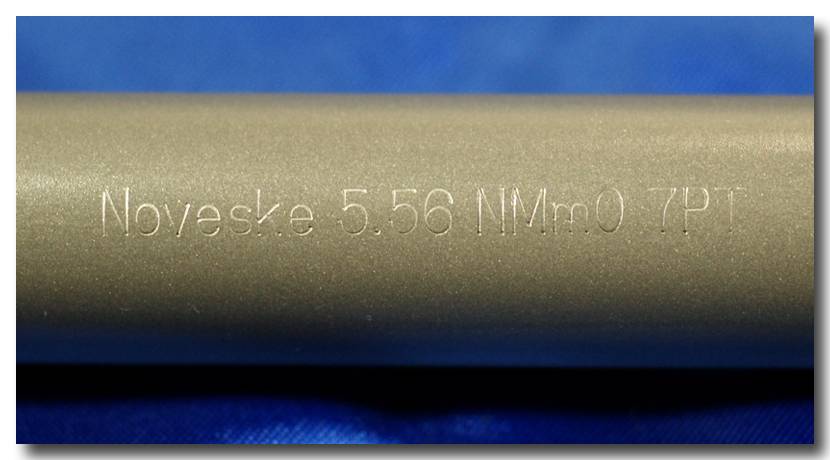 WARNING! Reloading is an inherently dangerous activity. The information provided here is for educational purposes only. It is not intended to be used for the actual loading of ammunition by the reader. No warranty, guarantee or assurance that these loads are safe is stated, suggested or implied nor should any be inferred. Usage of this information for the actual loading of ammunition may result in malfunctions, damage and destruction of property and grave injury or death to beings human in nature or otherwise. Don't even view this information in the presence of children or small animals. The projectile used for this example was the Sierra 55 grain BlitzKing and the powder used was VihtaVuori N133. The following eight powder charges were used: Target #1 - 24.0 grains Target #2 – 24.2 grains Target #3 – 24.4 grains Target #4 – 24.6 grains Target #5 – 24.8 grains Target #6 – 25.0 grains Target #7 – 25.2 grains Target #8 – 25.4 grains 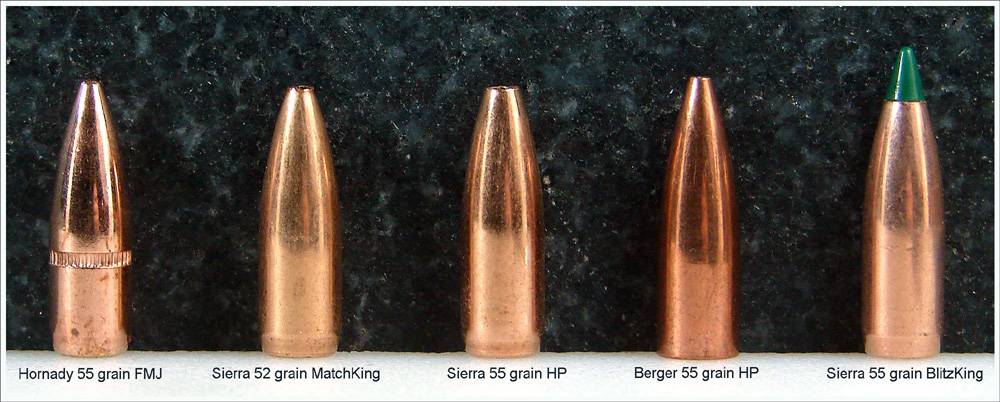 VihtaVuori N133 This test was conducted in the same manner as described in the original post of this thread. Eight 5-shot groups were fired in a round-robin manner to obtain six sets of three consecutive targets. These six sets of three consecutive targets were over-layed on each other using the On Target TDS software program to form six 15-shot composite groups and the mean radius was used to find the accuracy node. The results are shown in the graphics below. 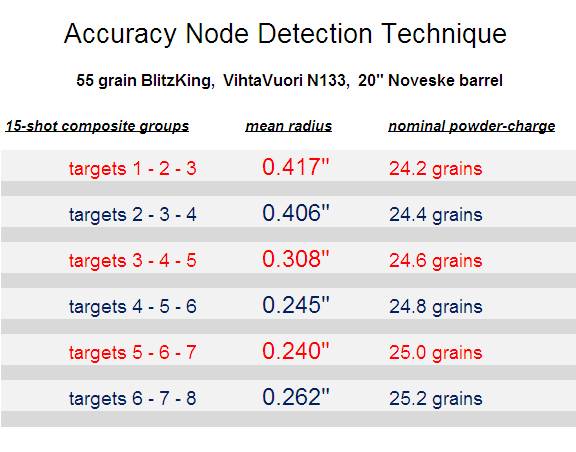 Groups #5, #6 and #7 over-layed . . . 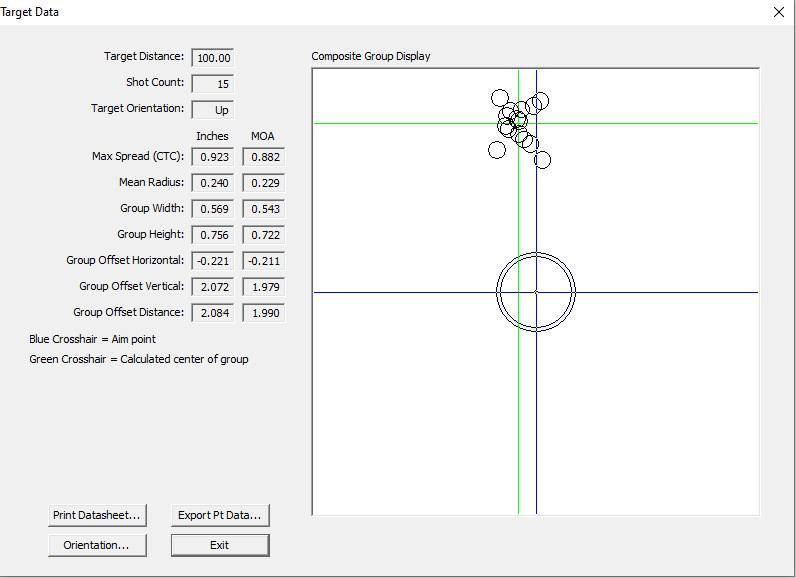 .... |
All that is necessary for Trolls to flourish, is for good men to do nothing.
In God We Trust. Everyone else must post data.
In God We Trust. Everyone else must post data.


|
Originally Posted By Molon: Indeed! https://www.ar15.com/media/mediaFiles/28568/tealc_new047-1905891.gif And to think that decades ago I did this stuff with a pencil and a ruler. .. I still do! I've been using 10-shot mean radius as my key metric since reading about it in an early Molon post years ago. I don't have the ambition to chase perfection but get joy out of 'good enough' which, for me, is 1.2" or better. Thank you Molon for contributing to the mean shooting IQ with each of your posts. |

Pitter Patter, let's get atter.
Joined:
Dec 2014
Posts:
41209
EE: 100% (31)
ND, USA
|
@Molon what's your take on barrel dampeners? particularly this explanation here:  The Rifle Precision Secret Nobody Is Telling You |
Don't be so open-minded that your brains fall out.
General education should not be mere job training, but training in how to be fully human.
https://www.memoriapress.com/articles/the-four-causes-of-classical-education/
General education should not be mere job training, but training in how to be fully human.
https://www.memoriapress.com/articles/the-four-causes-of-classical-education/
| Can you explain the utility of the round-robin approach, please? What effect on the data does that have, vs. just five shots of Load #1 at target #1? What does it help, or mitigate against? Never heard of doing it that way. |
"Three, two, one, keyturn."
"If there must be trouble let it be in my day, that my child may have peace." - Thomas Paine
I know the voices aren't real, but MAN do they have some good ideas!
"If there must be trouble let it be in my day, that my child may have peace." - Thomas Paine
I know the voices aren't real, but MAN do they have some good ideas!
|
Originally Posted By limaxray: Can you explain the utility of the round-robin approach, please? What effect on the data does that have, vs. just five shots of Load #1 at target #1? What does it help, or mitigate against? Never heard of doing it that way. Round robin is to remove a bias from shots grouped at a particular time. There could be a change in wind, lighting, shooter's concentration, barrel fouling or barrel heating. Any change in those conditions would be spread amongst all the targets. It provides a higher level of confidence that one or more targets were not shot with an advantage/disadvantage compared to the other targets. |
|
Originally Posted By Blowout: Round robin is to remove a bias from shots grouped at a particular time. There could be a change in wind, lighting, shooter's concentration, barrel fouling or barrel heating. Any change in those conditions would be spread amongst all the targets. It provides a higher level of confidence that one or more targets were not shot with an advantage/disadvantage compared to the other targets. Makes sense, thanks! |
"Three, two, one, keyturn."
"If there must be trouble let it be in my day, that my child may have peace." - Thomas Paine
I know the voices aren't real, but MAN do they have some good ideas!
"If there must be trouble let it be in my day, that my child may have peace." - Thomas Paine
I know the voices aren't real, but MAN do they have some good ideas!



|
Originally Posted By Molon: One of these on the way . . . https://www.ar15.com/media/mediaFiles/28568/harmonic_tuner-2061760.jpg ... The Harrells works great and is an affordable option. The tuners are really amazing with rimfire and trying to get the factory ammo to shoot through the same hole time and time again. |
|
Originally Posted By SuperJlarge: The Harrells works great and is an affordable option. The tuners are really amazing with rimfire and trying to get the factory ammo to shoot through the same hole time and time again. Have you tried one on an AR-15? .. |
All that is necessary for Trolls to flourish, is for good men to do nothing.
In God We Trust. Everyone else must post data.
In God We Trust. Everyone else must post data.

|
Originally Posted By Molon: Indeed! https://www.ar15.com/media/mediaFiles/28568/tealc_new047-1905891.gif And to think that decades ago I did this stuff with a pencil and a ruler. .. You forgot to mention your slide rule. 
|
"Of all the things I've lost, I miss my mind the most." A. Brilliant
|
Originally Posted By Molon: Have you tried one on an AR-15? .. Originally Posted By Molon: Originally Posted By SuperJlarge: The Harrells works great and is an affordable option. The tuners are really amazing with rimfire and trying to get the factory ammo to shoot through the same hole time and time again. Have you tried one on an AR-15? .. Unfortunately I have not but the same harmonic principles should apply. I’ve got an ATS tuner that I plan to test on my AR’s. It allows for the use of a brake or suppressor. The ATS that I’ve got on my 6creedmoor has been fantastic. |

|
Molon Curious to know if you ever chrono those nodes to see if there is any correlation between low SD's in velocity, and how it prints on paper? I sometimes see REALLY low SD's and ES's in velocity that don't print well on paper after all that work to find the SD node. |

|
Precision, SD, velocity. Good groups at shorter range can spread apart at longer range due to high SD. Bad groups with low SD shoot bad at all distances. Faster without sacrificing the others makes SD a lower coefficient and resists wind better. ARs are fairly standardized so there's a couple decades of tried and true loads that provide good precision and velocity. SD usually depends more on case prep and primer selection. Expect 15-25fps. Don't work too hard to get under that unless you're shooting Palma or F-TR. |
"Technique isn't something that can be taught. It's something you find on your own." - Bunta Fujiwara
|
Originally Posted By HighpowerRifleBrony: Precision, SD, velocity. Good groups at shorter range can spread apart at longer range due to high SD. Bad groups with low SD shoot bad at all distances. Faster without sacrificing the others makes SD a lower coefficient and resists wind better. ARs are fairly standardized so there's a couple decades of tried and true loads that provide good precision and velocity. SD usually depends more on case prep and primer selection. Expect 15-25fps. Don't work too hard to get under that unless you're shooting Palma or F-TR. Back in my service rifle days, the team would just give us ammo (usually 24.1 grains of R15 over a SMK 77) and you just shot it. I'm sure it was "good enough" for all occasions and outshot us most of the time. I've had more time reloading my own to tinker with this stuff and have seen some wildly inconsistent things shoot really well too. I'm wondering how much ANY of this matters in an AR platform beyond just getting it to print about an inch at 100 and going with it. |
|
Originally Posted By SuperJlarge: I’ve got an ATS tuner that I plan to test on my AR’s. It allows for the use of a brake or suppressor. Hmmm. |
All that is necessary for Trolls to flourish, is for good men to do nothing.
In God We Trust. Everyone else must post data.
In God We Trust. Everyone else must post data.
Armory Sponsor