


AR Sponsor


Posted: 9/8/2021 4:29:18 PM EDT
|
reposted with the broken picture links repaired The Effects of Phoria When Using the ACOG as an Occluded-Eye Gunsight  Phoria: the visual effect that occurs when one eye is blocked from seeing the same view of a target as the other eye; the blocked eye does not get the same sensory input as the other eye and can begin to wonder off, usually to one side or the other. In an attempt to make my Trijicon TA-11 ACOG more versatile at engaging close range targets, I installed a Progressive Machine and Tool flip-down front lens cover. With the lens cover in the up position (blocking the view through the scope) the ACOG can function as a non-magnified occluded-eye gunsight; functioning more like a non-magnified red-dot sight, than a magnified scope. However, when the ACOG is functioning as an occluded-eye gunsight, the view of the target for the eye looking into the scope is blocked and the effect of phoria comes into play. 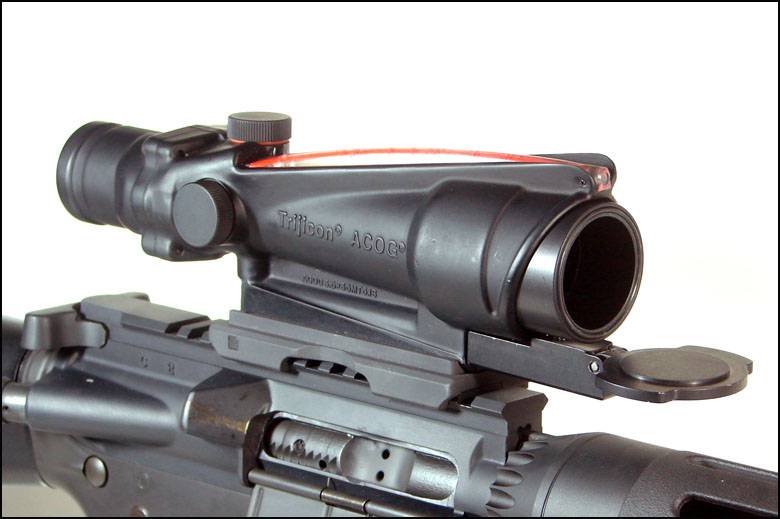 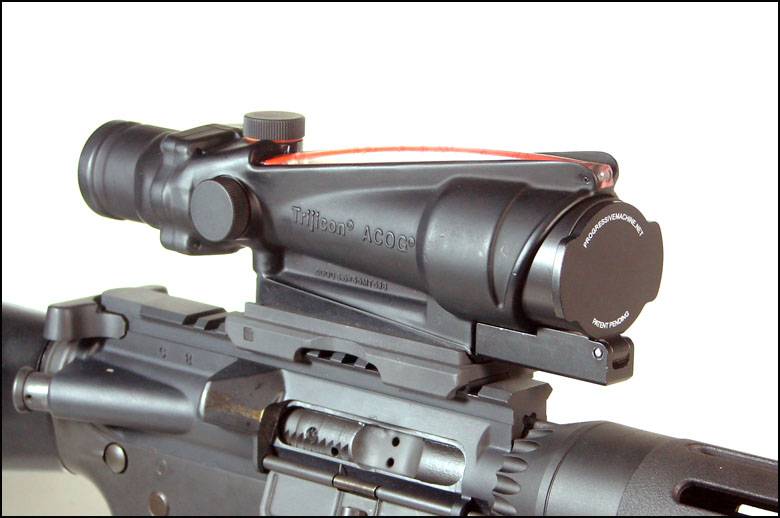 In order to determine just what the effects of phoria would be when using the ACOG TA-11 as an occluded-eye gunsight, I conducted a test comparing the precision and points of impact when shooting with the lens cover down (normal sighting) and the lens cover up (occluded-eye sighting.) Testing was conducted at a distance of 25 yards, the farthest distance that I would anticipate using the occluded eye-method of sighting. Shooting off of sand bags, I zeroed the TA-11 for point of aim equals point of impact at 25 yards using the normal sighting method. I then fired a 10-shot group with the normal sighting method that formed a tidy group with an extreme spread of 0.56”. 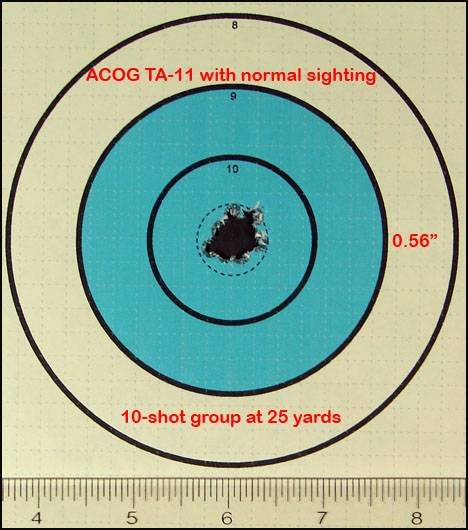 Next, I placed the lens cover in the up position, transforming the ACOG into an occluded-eye gunsight. The left eye views the target, while the right eye views the reticle in the scope. The right eye is blocked (occluded) from seeing the target due to the lens cover. The impact of the initial shots using this method had such a large horizontal deviation to the left that they were off the targets that I originally was using. I had to change to a 24” wide target and aim at the far right side of the target to capture the impact of the rounds. The aiming point for this portion of the test was the numeral “7” on the target. Using the occluded-eye method of sighting, I fired a 10-shot group. This group had an extreme spread of over 7” and the center of the group was 14” to the left of the aiming point! 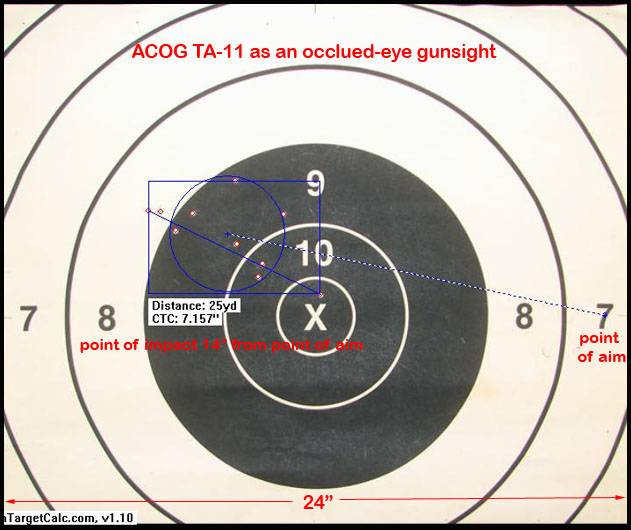 Notes on the Bindon Aiming Concept Many of the people that I’ve seen using the term “Bindon Aiming Concept” on the Internet, really don’t understand the meaning of the term. In point of fact, many people that claim that they are using the Bindon Aiming Concept with an ACOG scope are not actually using the Bindon Aiming Concept. They are using the ACOG scope as a dynamic occluded eye gun-sight. The “Bindon Aiming Concept” is a naturally occurring phenomenon of human binocular vision. It is not something that is built into a scope and therefore is not something that a scope does or doesn’t have. However, certain attributes of a scope (such as a large, colored, brightly lit centered reticle that stands out against the background) much more readily lend themselves to use of the Bindon Aiming Concept. Much of our "seeing" is done not with our eyes, but with our brain. When the brain (of most people) is presented with conflicting visual input from the left and right eyes, it selects the visual tract that provides the most clear/detailed image to “focus” on. Again, this is a naturally occurring phenomenon of human binocular vision. When using “both eyes open” sighting and the weapon/ACOG-sight is moving quickly, the image of the target and background presented to your dominant eye is blurred due to the magnification of the ACOG. At this point the brain selects the visual tract coming from your non-dominant eye to focus on because it is clear and sharp. The reticle itself is in focus at all times and the brain “includes” it along with the view coming from your non-dominant eye. When the weapon/sight stops moving, the magnified image presented to your dominant eye is no longer blurred and is now more detailed than the non-magnified image seen by your non-dominant eye. So, at this point, the brain selects the visual tract from your dominant eye to focus on. This is the final step of the Bindon Aiming Concept and it is this step that many shooters omit when they claim that they are using the Bindon Aiming Concept and the complete process does not occur instantaneously. As stated above, what these shooters are actually doing is using the ACOG as a dynamic occluded eye gunsight. As demonstrated in my first post in this thread, phoria enters the picture (no pun intended) when using the ACOG as an occluded eye gun-sight and this is why accuracy can be degraded.  ... |
|
Nice write up. I have the Trijicon Reflex wirh the NSN number and 4.3moa dot. Decades ago I did a similar experiment but at 100 yards. Shot a well aimed group group from the prone on bags that was with filter open and aiming with my sighting eye. Zero was set for that manner of shooting. I then closed down the parallax filter and shot another group using the OEG method. I did notice a shift in the group point of aim and basically atrributed it to something akin to parallax or braon merging the dot. Good enough for up cloose shooting as well as possible low light shooting. But it has it's issues. |
|
There is an additional factor into it regarding the mechanics of the optic. One prism sight may have a few inches of deflection, another model may have a foot. No one I’ve asked has any idea what causes the discrepancies, but it’s definitely the worst with ACOG’s. |
|
I decided to buy a Armson OEG on a whim one day for my retro xm177e2 build and when I got it I finally figured out I've been using the acog BAC wrong the either time. I was doing what you said where I would be looking through it and just shooting fast. I'm able to shoot the BAC much better now by concentrating with my left eye looking at the target and the reticle appears as an overlay much like how the OEG works. However, once I "think" about it, it disappears and I'm seeing the black ring/shadow with the reticle in there. The only problem is your left eye has to see the target. The BAC was designed for the close quarter battles but I think in those situations your sight might be obstructed from time to time especially around corners so it makes the BAC somewhat hard to practice effectively at least in all given situations but at least if you can't see the target with both eyes, you can still see it through the black shadow somewhat. I also suspect the BAC is nothing special to the acog. I experimented myself with a couple other illuminated optics and found they all can work in that capacity so long as it is illuminated. I would take duct tape and just tape and they all worked similarly but once you start thinking about it, all you see is a black with the illumination. You need to shoot quick. Like don't think just shoulder it and fire. I'm thinking doing it that way you'll get a much better grouping to the center. |
|
Bought an Armson OEG many years ago. Never could use the damn thing accuratly. It wasn't made for bench rest though, just quick both eyes open shots. And I still cant reliably use the "BAC" function of an acog. Makes my eyes all fucky For those who dont know what an Armson OEG is: 
|
|
The biggest issue with BAC is not phoria IMO, it is actually a form of parallax. Let me explain... It is the fact that tiny changes in your head rotation and tilt cause significant POI shifts. The amount of offset of your eyes (distance between) changes as you begin rotating your head left and right and express as left/right POI shifts. As head tilt changes (leaning to side) the groups move up and down. Or rather the head tilt shifts angle and rotation shifts distance of offset. The issue is one of true parallax between the eyes vs phoria. Parallax issues between the eyes are HUGE and independent of phoria using BAC. Phoria is only associated with precision when both head position and both eye positions are held perfectly still. The problem with BAC is the amount of offset changes with distance, but ALSO tiny changes in the way you mount the stock (EVEN WHEN YOUR DOMINANT EYE IS PERFECTLY CENTERED behind the scope) results in the nondominant eye being in a different position and you get large shot to shot POI shifts. To eliminate parallax with a traditional magnified optic you need only have the reticle and image at the same focal distance OR have the dominant eye perfectly centered behind the optic. With BAC you must have the same perfectly centered dominant eye, but ALSO have perfectly consistent non dominant eye position AND know your offsets for various ranges (3, 7, 10, 15, 25, and 50 yards) to be able to consistently hit a 2" target. It's damn near impossible under stress... good enough to 25 yards for body shots but not for fast head shots under stress and from akward positions. Even the best shooters change non dominant eye positions when mounting the rifle in awkward positions... it is simply not something anyone trains. I use BAC all the time with daylight bright reticle LPVO to get the target in my scope's FOV quickly at a distance... then make a small adjustment and take the shot with the dominant eye. I don't rely on it as a close range high speed aiming solution, because it is FAR worse than iron sights. |
|
Quoted: For those who dont know what an Armson OEG is: https://s.yimg.com/aah/yhst-89358177361248/armson-gen-ll-retro-m-16-carry-handle-mount-2.gif Reported to have been used in the Son Tay raid.  ... |
|
Quoted: Reported to have been used in the Son Tay raid. https://www.ar15.com/media/mediaFiles/28568/oeg_in_son_tay_raid_01_JPG-2094196.jpg ... I had never heard of this battle before. Sounds like the tool was effective. |
|
Quoted: Bought an Armson OEG many years ago. Never could use the damn thing accuratly. It wasn't made for bench rest though, just quick both eyes open shots. And I still cant reliably use the "BAC" function of an acog. Makes my eyes all fucky For those who dont know what an Armson OEG is: https://s.yimg.com/aah/yhst-89358177361248/armson-gen-ll-retro-m-16-carry-handle-mount-2.gif I had one of those. Its around here somewhere but its long dead. |
AR Sponsor