


AR Sponsor

Posted: 2/27/2016 8:10:42 PM EDT
|
I have been trying to work up a load with these bullets in my AR 15 for about a month without success . The specifics are as follows:
1) GS Custom Bullets 50 grain .224 HPBT HV bore rider 2) Lake City Brass 3) CCI 41 primers 4) powders tried RL 7 and VN 120. The last powder I tried was the VN 120 in the range of 22.5 grains to 23.5 grains! My Quick Load program shows all the loads as being high pressure with the last load, 23.5 gr as being extremely hot! The rifle will not extract the rounds! Every time I have to cycle the action by hand! My AR15 is effectively a single shot using this bullet. I will say that the GS bullet is the absolutely the most accurate bullet I have ever fired in my AR and this is the reason for all the effort! The brass shows no signs of pressure problems in the least! I believe that the bullet has such a small bearing surface that I am effectively firing a blank. Velocity using the 23.5 grains of VN 120 is in the 3350 FPS range. Any thoughts or suggestions would be appreciated. |
|
You need to look at both parts of the math.
The first is the actual working pressure of the round, and keeping Saami pressures in mind for 223, you don't want to crack through 55K psi ceiling. The second part is just how much pressure of the 55K working pressure is at the gas port when the bullet passes by it. Hence the heaver the bullet, the slower the powder is in burn rate, the farther is moves the pike dwell of the burn rate closer to the gas port to increase the gas system working pressure. Taking this burn rate chart for a 55gr bullet using 748, we can see what the gas system pressures will be for that round on the declining residual pressure at the gas port. 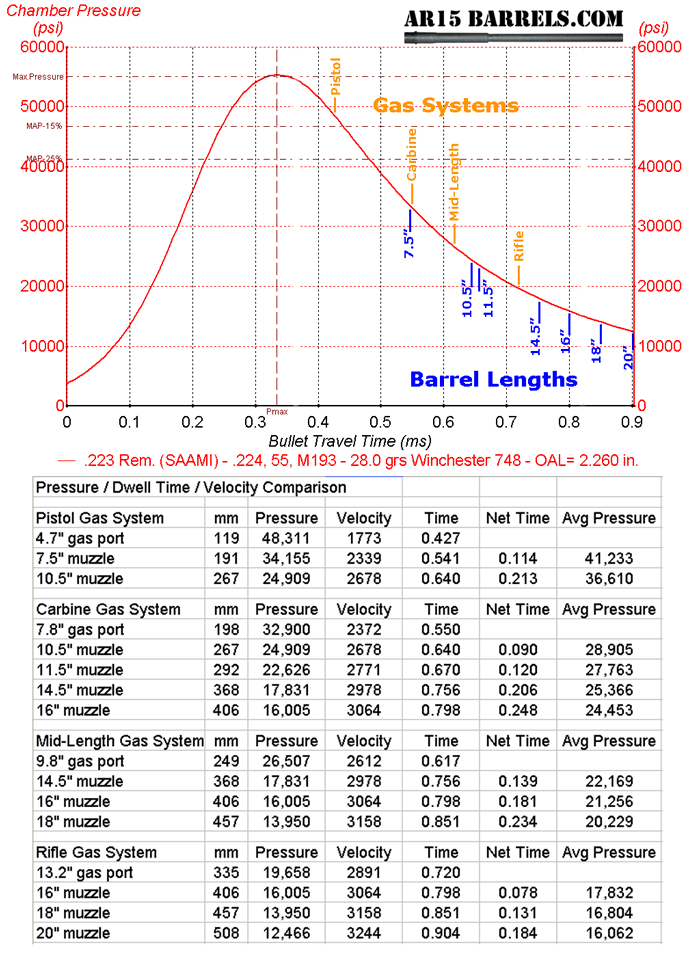
Now as you use a lighter bullet and faster burning powder for it, you end with the peak burn rate of the powder to the left, and this ends up with less residual gas pressure to the gas port instead. So the ar-15 barrel is gas ports for a 55gr bullet, with powders in the 2230 burn range, and when you are using both a lighter bullet, and faster burning powder, even through the working pressure of the round may still be 55K, it does not produce the same amount of gas system pressure to cycle the action instead. Powder burn rate chart, http://www.reloadersnest.com/burnrates.asp Now knowing this, and the working math of the system cycling correctly, its the mass weight of the buffer and B/C, and the recoil spring tension to hold the B/C forward, and then the needed gas force to unlock and force the B/C backwards, then we know that one of these needs to be corrected for the light bullet/faster burning powder load instead. If the rifle is never going to see a heaver round, then you can increase the gas port size to allow more pressure through it so it will cycle the lighter bullets/fast powder being used. The downfall, once a gas port has been increased, it not something that is an easy fix if the rifle is going to see standard load instead. Hence we have a problem with the bolt unlocking too late to cause the short stroking now with your loads, and when the bolt opens too fast instead if the gas port has been enlarge and standard ammo used, it also causes short stroking since the residual pressure in the bore is too high and pressure locks the spent case to the chamber walls for a clean release when the bolt tries to pull it out of the chamber isntead. The second way is to decrease the spring tension, but the problem here is although less spring tension may help the bolt to unlock easier/sooner to allow the rifle unlock in the correct timing, it also means less spring tension to strip a round out of the mag and lock the bolt up on the way forward instead. The final way is to just reduce the amount of buffer mass/weight instead. Here since the buffer can be changed in a snap, the best solution instead. Now one last thing, and that is to make sure that you don't have a leaking gas system before you do anything, so start off with some factory 55gr ammo to make sure that the rifle will cycle it correctly from the start. If it will cycle correctly with that ammo to weed the rifle itself out of the problem equation, then it's time to either try some slower burning powder to bump the residual pressure of the round upwards to see if that solves the problem, or as stated, go to a lighter buffer instead. If the rig will not cycle 55gr factory brass case ammo, then we have a problem with the rig itself, and that first need to be resolve instead. So to sum it up, the ideal B/C unlock timing is that that the residual pressure has dropped enough so the spent case can be extracted out of the chamber cleanly as the bolt unlocks, with enough force to cycle the B/C correctly as well. No enough gas to the gas system, and the rifle unlocks too late to cause short stroking. Bolt unlock too fast instead, and too much bore residual pressure pressure welding the spent case to the chamber ,and the rifle will short stroke since too much energy is lost by the bolt extractor trying to pull the spent case isntead. Note, here, if the rifle is over functioning/ the bolt unlocking too soon, then the spent case rims will be bent to hell from the extractor. And although I should have started with this (isntead of cycling around the block the long way around), all the above may be mute/not needed, if you just use a slower burning powder for the load instead. Looking at Hodgdon, see loads for slower burning powder all the way down to 4895, which with the slower burning powder to 55K working pressure, will produce enough gas port pressure to cycle the rifle correctly instead. http://www.hodgdonreloading.com |
AR Sponsor