


AR Sponsor

Posted: 8/27/2006 1:44:46 PM EDT
| Quick noob question. Is top velocity mostly already attained by 10.5 inches with a 9mm or is the bullet still significantly speeding up all the way to 16 inches? I know I've read that with some handgun ammo, the bullet is actually slowing down with longer barrels. Thanks for any information and sorry if this question has already been answered previously. |
The bullet doesn't slow down with longer barrels. If it did, there would be a suction sound as it left the muzzle, instead of a bang.  What happens is that the rate of acceleration tapers off. In other words, as the barrel gets longer, you get less of a velocity increase with each additional inch of barrel length. I haven't seen any velocity data for 9mm from a barrel around 10", but the data in my reloading book suggests that increasing a 9mm barrel from 4" to 18" only gives you an additional 200 to 300 fps. I'd be suprised if the velocity difference between a 10.5" and 16" 9mm was much more than 50 fps. Since a 16" carbine doesn't have a longer sight radius than a 10.5" pistol/SBR (unless the 16" is using a midlength handguard), I suspect the only real advantage of the 16" 9mm barrel is less legal hassles and expense in getting one. |
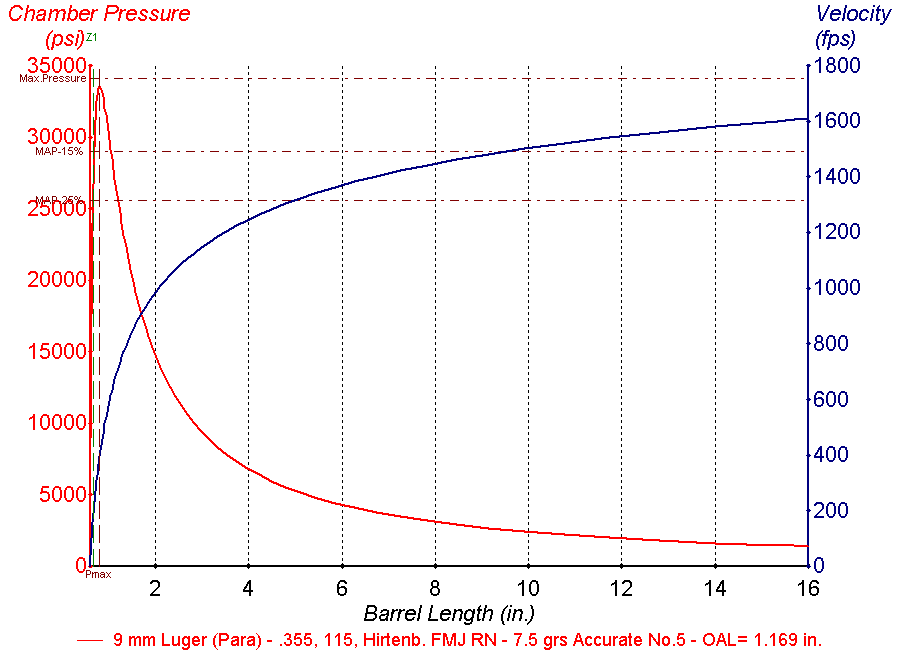

The bullet can slow down due to decreasing pressure as the area inside the barrel between the bolt and bullet expands, as shown in the above graph. You don't need negative pressure to slow a bullet down, just decreasing pressure and friction. At what length of barrel that would occur at, is something I've never seen calculated. |
| It depends on the load. I have chronographed the Samson 158 gr. subsonic as being about 20 fps SLOWER out of an SMG barrel than out of a 5" pistol barrel. Most normal loads will continue to add velocity as the barrel gets out to 16", but how much will depend on the actual loading of the cartridge. |
+1 on this. An extreme example would be a squib round that lodges partway down the barrel. |
|
The hard part to figure out is WHAT PRESSURE is required to overcome bore friction. The sticky part is that it takes less actual pressure after the bullet is in motion due to inertia. I also think that the friction decreases as the bullet travels further because of the bullet getting polished to bore size and maybe shedding a little bullet jacket. This level is probably something like 1000 PSI required to overcome dynamic bore friction. So, as long as the bore pressure is above this threshold, the bullet continues to accelerate. Once pressure gets below that threshold, then the bullet could begin to decelerate. I have a feeling that inertia would slow the beginning of deceleration though. This is very tricky stuff to calculate and Quickload does NOT seem to account for it. They account for bullet obturation pressures, but do not worry about running bore friction so much as most loads you could actually use will not allow for a situation where the bullet would slow down or stop in the bore. I have run simulations to 20 feet long on the barrel and they just show a VERY slow acceleration rate as the pressure drops lower and lower. Here is a 10ft 9mm plot: 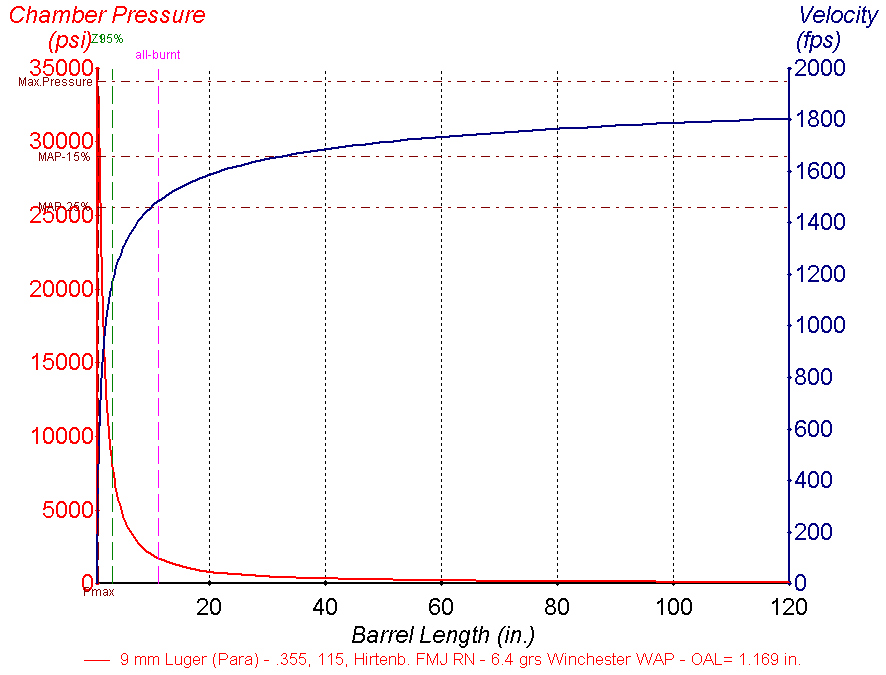
|
I don't know what pressure level that +p+ loads run to, but here is a pressure series based around 39,000 PSI showing the effect of powder charge changes in steps of 0.15gr. Note how fast the pressure and velocity change in such a small powder volume. This is exactly why reloading manuals warn you to follow the seating depth rules and not seat shorter than printed.
|
^^^^^^^^^^ Correct answer!^^^^^^^^^^ I did a load chrono from my 16" IMI 4 groove Uzi barrel and the 10.25" 6 groove barrel a few yr ago. The avg speed from both length barrel was 1331 for barrel "A", and 1338 for barrel "B".... do not recall which belong to which barrel, but the load I used was 8gr of Accurate #7, and a lead bullet made from wheel weight and RCBS 124gr RN mold, and had a gas check on the base -- refer to 9mm round in pic and bullet beside it : 
|
AR Sponsor