


Joined:
Jan 2026
Posts:
3
EE: 0% (0)
 USA
USA
Posted: 1/22/2026 12:15:02 AM EDT
|
I have been playing with solar for a bit, and wanted to share in a way that may make it more approachable. If you want to start, just do it. Start small. Here are a few choices that will teach you LOTS in a shortish time, from cheapest to most expensive. 1) A. Buy a cheap Lithium 12v 50 or 100ah battery, 2 100w panels, and a 75/15 Victron mppt converter. This will cost $275 plus wiring, maybe $300 total if you shop. An additional $50 will get you a shunt and display, highly reccomended. Use it for things. See how long it takes to charge the battery in the sun. See what 12v things you can run off it, and for how long. Fans, water pumps, lights, etc. Hook it to your camper or adventure vehicle and see what it can do and for how long. See how much you can do using only 12v appliances. B. Buy a pure sine inverter. Up to 600w or so. $1-200 depending on quality. Hook up 110 things. A tv, charge laptops, charge power tools, run fans, run tiny kitchen appliances. See how fast the inverter drains the battery with vampire load, and how much solar is now required to keep up. After this, you will be in a much more informed place to decide if you want to continue on that path, and also to have a good idea of what it requires as far as time/space/location/season. You may find out it is worthless to you , or that you wish to 4x your system. |
Joined:
Jan 2026
Posts:
4
EE: 0% (0)
USA
|
2) A. Buy a Jackery 1k or something. This is pretty useful in it's own right. Use it a lot. See how many times it charges your laptop/Ipad/phones, etc. See how long it runs your internet router. Will it keep your fridge going? Can you run a hot water kettle on it? How many times? B. Get 200w of solar for it. Either a foldup panel or regular panels. Hook them up and see how long it takes to charge it back up in various kinds of weather. What kind of terrain is necessary? How many hours did it take in summer? In winter? How much difference does it make when they are flat vs. 35*? This option gets you more in the beginning, I think it would be more difficult to learn with, because it would be tougher to change out individual components. It is much friendlier to a non-nerd, however, and easier to put in an impromptu adv vehicle. The easy button. Buy a tiny Jackery thing on Amazon or something. 300w or so, and with a solar panel. Give it to your kids. Tell them that is how they will be charging their phones and laptops for a while. That is how they will power a tv, whatever. After a week or two, they will be able to tell you what devices use the most power, when and where to set up the solar panels, etc. Also, they will be super comfortable with it and helpful if there is a power outage. |
Joined:
Jan 2026
Posts:
5
EE: 0% (0)
USA
|
*** End notes. It is tough to research solar, here is why. Different daylight provides different power. Diffused light may provide 1/8 or less of bright noon sun. The angle of the panels to the sun makes a large difference as well. Shadows cut a huge amount of power. So a 100w panel could produce 105w for someone 6hrs/day in Phoenix summer, or average 35w for 4hrs in Seattle fall. That's a 4x difference with the same panel. Lithium batteries charge more efficiently and are able to have more of their capacity used than other chemistries. So a 12v 100ah lead battery should only be used to provide 50ah, and requires something like 60ah of power to charge that much. So a 500ah lead or agm could perform like a 200 lithium if used conservatively. Solar is a rabbit hole. There is usually something that can be changed that will give you 2x power, at least in the beginning with small systems. Another battery, a few more panels, a different controller... However, doubling your power will often not change much. You will still run the same loads, just for longer. Or be able to deal with more cloudy days. But usually, when you want to level up your system for a larger load, you will need like 5-10x more power. Want to run AC, or a big fridge for more than one day, or be able to run your furnace? LOOOOTS more power/battery/inverter is necessary. Large inverter has large losses, needs large cables, lots of battery, and you probably want to run the furnace or AC for more than an hour, so add more batts, and more panels to charge them for the next night... |
|
That’s very well written. A lot of good information. First I bought a Bluetti EB3A and AC200MAX. I don’t like the EB3A much. It’s too small a battery capacity for an inverter. The AC200MAX is pretty good but pricey. My first build was a plastic ammo can with lifepo4 12v 12Ah. DC only. I find it very useful. Then a 12v 100Ah with 1200W inverter in a large milk crate. I think in the 12v 100Ah and smaller I prefer a store-bought unit based on weight and cost. We bought our daughters Anker Solix C1000 power stations. My biggest so far is a 48v 100Ah with an all-in-one inverter mounted on a hand truck. It’s very cost effective for the amount of power. I plan to do a 12v 280Ah with 2000W inverter on a hand truck next. Will Prowse’s YouTube videos and forum, diysolar.com have a lot of good information to get started. |
|
Originally Posted By Graybelline: 2) A. Buy a Jackery 1k or something. This is pretty useful in it's own right. Use it a lot. See how many times it charges your laptop/Ipad/phones, etc. See how long it runs your internet router. Will it keep your fridge going? Can you run a hot water kettle on it? How many times? B. Get 200w of solar for it. Either a foldup panel or regular panels. Hook them up and see how long it takes to charge it back up in various kinds of weather. What kind of terrain is necessary? How many hours did it take in summer? In winter? How much difference does it make when they are flat vs. 35*? This option gets you more in the beginning, I think it would be more difficult to learn with, because it would be tougher to change out individual components. It is much friendlier to a non-nerd, however, and easier to put in an impromptu adv vehicle. The easy button. Buy a tiny Jackery thing on Amazon or something. 300w or so, and with a solar panel. Give it to your kids. Tell them that is how they will be charging their phones and laptops for a while. That is how they will power a tv, whatever. After a week or two, they will be able to tell you what devices use the most power, when and where to set up the solar panels, etc. Also, they will be super comfortable with it and helpful if there is a power outage. I would buy a Kill-A-Watt meter before buying a solar generator. That way you can see what each appliance will use in power per day and can size the solar generator correctly. |

| Also... wire your panels in series up to the max voltage of your charge controller. We're running 4x 100w panels on our small camper, along with 2x 100ah lifepo4 batteries in parallel. As long as bill gates doesn't block the sun, we can run that camper forever, even in the fall, without the batteries dropping below 13v at night. |
Award: 24/365 Most likely to be an appendix.
"Dealing with Congress is like trying to have an adult conversation about the credit card with your alcoholic bi-polar Ukranian import wife."
"Dealing with Congress is like trying to have an adult conversation about the credit card with your alcoholic bi-polar Ukranian import wife."
Joined:
Jan 2026
Posts:
6
EE: 0% (0)
USA
|
Awesome, I was hoping for some personal experience. The Kill-a-watt is a good idea, but I would tend to use it down the road. Because it is disheartening to see how much power your fridge uses in a day when you are trying to power it with solar...  The series panels work, but they quickly max out the voltage on your controller. Everyone will learn for their situation, I have been using series-parallel to get more power out of a smaller, cheaper controller. Pros and cons for everything. It seems true that the commercial generators are a great form factor in the smaller sizes. Lots of people using them for a reason. |
|
Originally Posted By Graybelline: Awesome, I was hoping for some personal experience. The Kill-a-watt is a good idea, but I would tend to use it down the road. Because it is disheartening to see how much power your fridge uses in a day when you are trying to power it with solar... I would disagree. If you don't know how much power your appliances are using, then how can you size/build out a solar system to power them? |
|
Kill-a watt is a good tool for live measurements. But still its not an and all and your still going to have to use the 'ol gray matter. I'm testing a 2KWh Dabbsson  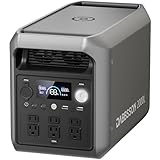
for a back up source when the power goes out, mainly for my furnace. I did a first run yesterday for the furnace only to see how much real world run time I could get on a furnace that has a running 500 watt load (700W in rush). With my thermostat cycling on and off as normal, at the 6 hour mark I had used less than 0.9Kw. So I'm happy. I had done some math and I should be able to get almost 4 hours of run time on its 2Kw storage and 2200w/3300w boost, but duty cycle still is the wild card. My goal is to be able to keep the heat on overnights and run the generator during the day if we go dark. With yesterdays test my confidence level is good to be able to get an 8 hour night out of it. I'm planning on doing more tests for run times and possibly adding a freezer to the mix just to see what I can get away with. Solar is a thought and probably is on the list next after I figure out which way to run. |
|
Originally Posted By Solothurn: That’s very well written. A lot of good information. First I bought a Bluetti EB3A and AC200MAX. I don’t like the EB3A much. It’s too small a battery capacity for an inverter. The AC200MAX is pretty good but pricey. My first build was a plastic ammo can with lifepo4 12v 12Ah. DC only. I find it very useful. Then a 12v 100Ah with 1200W inverter in a large milk crate. I think in the 12v 100Ah and smaller I prefer a store-bought unit based on weight and cost. We bought our daughters Anker Solix C1000 power stations. My biggest so far is a 48v 100Ah with an all-in-one inverter mounted on a hand truck. It’s very cost effective for the amount of power. I plan to do a 12v 280Ah with 2000W inverter on a hand truck next. Will Prowse’s YouTube videos and forum, diysolar.com have a lot of good information to get started. I wish I'd found this thread earlier. Will's videos and awesome forum made me dive in last year. I just posted one of his hand truck videos in the DIY forum. Will is great because he is not shill, financially tied to any manufacturer like most YT solar folks are. He will call a spade a spade. A little over a year after finding his videos and forum, I now have a permanent 6kw solar plant in my back yard. I washed a load of clothes with 2% of my battery storage. It was a fun test. To those reading this, be careful for two reasons. One, is you can screw up if you don't study the material. Second is, I'd you are safely successful, it is a highly addictive hobby. I just bought another six panels for Expansion Phase 3. Lol |
|
Originally Posted By DaGoose: I would buy a Kill-A-Watt meter before buying a solar generator. That way you can see what each appliance will use in power per day and can size the solar generator correctly. Amen. You start from the loads you intend to use and build up from tgat. That and a good meter that can do AC and DC volt and amperage. Klein sells an awesome little clamp on meter for $99 at Home Depot. |
|
Originally Posted By Graybelline: Awesome, I was hoping for some personal experience. The Kill-a-watt is a good idea, but I would tend to use it down the road. Because it is disheartening to see how much power your fridge uses in a day when you are trying to power it with solar... The series panels work, but they quickly max out the voltage on your controller. Everyone will learn for their situation, I have been using series-parallel to get more power out of a smaller, cheaper controller. Pros and cons for everything. It seems true that the commercial generators are a great form factor in the smaller sizes. Lots of people using them for a reason. I use two arrays. Six 405w in each series connected array. Each array feeds the MPPT charging circuits on a pair of EG4 3kw All in One inverter chargers. On a good day, those can fully charge my four 100ah LFP batteries. |
|
Originally Posted By DaGoose: I would disagree. If you don't know how much power your appliances are using, then how can you size/build out a solar system to power them? If you can read and have a decent grasp of middle school math, there are two great books I recommend. One is Will Prowse's "Mobile Solar" and Nick from the Clever Solar YT channel's book "Offgrid Solar Power Simplified". I personally prefer Nick's book, but both are outstanding and inexpensive on Amazon. If you can't learn the basics from those, then you are wise to leave it be. |
|
The only think I can add is either oversize your solar panels for the output you want, or be prepared to constantly be changing the angle on them to have a direct line to the sun. We have 800w or solar panels on our camper van, mounted flat on the roof. The best I've ever seen out of them on a bright and sunny day in the midwest is around 600watts. I'm guessing mostly because in my location, they needed to be angled more, not just flat. And if there is cloud cover (a lot in my area in the winter)...output drops to around 300 or lower. |

|
Thank you for the thread. I think mindset is part of the problem. I have no desire to start a new hobby. I would prefer off the shelf. Prices for these things are all over the board. It really isn't clear what you are getting if you are not already into the hobby. I understand the basics. The so called "generator" is really a lithium battery pack with a charge controller and inverter already built in. It can charge off AC 120V or trickle charge via solar panels. From there you get into the issues of power curve. Okay, it provides up to X watts and Y amp hours. Does the watt output remain constant or taper off over time? Is the published rating for AC or DC output? How much loss do you have with the inverter? Can you charge it with solar while using it? Okay, I understand the solar input may not keep up with the potential output. Is charging during use it still workable within the device's power curve? How to size panels to the generator? Sure a lot depends on amount of direct sunlight. There has to be some kind of guideline. I assume an 800 watt panel will charge faster than a 100 watt panel. Is it possible to go to big with a panel's output? Are different manufacturer's models cross compatible? Is their an industry standard? What do the "generators" weight? What are the overall footprints? For me those are big ones. It isn't portable if it takes two men to put in the truck. What I want is something with the functionality of a 2K full sinewave Honda compatible generator without the noise or fumes. It is very rare that I run a put-put gen hard enough to refuel in a single use. If I am ever powering something like a refrigerator or heater it is only until I can get less mobile or more powerful solutions online. If I could feasibly buy a solar generator substitute to a 2K put-put for less than a grand all in, I would do it right now. |
[NO TEXT]

|
Originally Posted By Ewald: Thank you for the thread. I think mindset is part of the problem. I have no desire to start a new hobby. I would prefer off the shelf. Prices for these things are all over the board. It really isn't clear what you are getting if you are not already into the hobby. I understand the basics. The so called "generator" is really a lithium battery pack with a charge controller and inverter already built in. It can charge off AC 120V or trickle charge via solar panels. From there you get into the issues of power curve. Okay, it provides up to X watts and Y amp hours. Does the watt output remain constant or taper off over time? Is the published rating for AC or DC output? How much loss do you have with the inverter? Can you charge it with solar while using it? Okay, I understand the solar input may not keep up with the potential output. Is charging during use it still workable within the device's power curve? How to size panels to the generator? Sure a lot depends on amount of direct sunlight. There has to be some kind of guideline. I assume an 800 watt panel will charge faster than a 100 watt panel. Is it possible to go to big with a panel's output? Are different manufacturer's models cross compatible? Is their an industry standard? What do the "generators" weight? What are the overall footprints? For me those are big ones. It isn't portable if it takes two men to put in the truck. What I want is something with the functionality of a 2K full sinewave Honda compatible generator without the noise or fumes. It is very rare that I run a put-put gen hard enough to refuel in a single use. If I am ever powering something like a refrigerator or heater it is only until I can get less mobile or more powerful solutions online. If I could feasibly buy a solar generator substitute to a 2K put-put for less than a grand all in, I would do it right now. Get at least an inverter that can handle 2000watts. This should be able to power most of your tools- refiges starlink. Ecoflow generator weighs about 50lbs with an addtional battery adding another 50lbs. They are convienent but expensive. They take about 1000watts of solar. Attached File Pictured is the ecoflow delta 2 and delta 2 max with an expansion battery. Its mobile for car/truck camping for sure. But they use alot of battery capacity by just being “on”. It will loose about 20-30% battery capacity overnight powering a small fan and a starlink. These are all in one systems that all you need is to add solar panels. They are limited in battery capacity as the expansion batteries are expensive. The small ecoflow is like 1024watts are so and the larger one is 2000w and expansion battery is another 2000w. Here is a small Eg4 3000 evh. Which is an inverter/charger/solar charge controller. It does not come with a battery but you can connect 48v batteries to it and expand it. Each server rack battery is about 5000watts. And that inverter uses less wattage to stay “on”. Attached File Its ok, but for me it never worked with the app and I could never monitor the status/remaining charge/ect. So next I build a large system for me. Based on 2 victron 48/10,000. Quattro inverters. That type of system is totally scalable. But you will need to buy each component- inverter/solar charge controller/shunt/bus bars/ fuses/batteries and cables. Attached File Like someone said- its a very addicting hobby but very useful. I can power up 2 cabins now. And totally off grid. It started with one little ecoflow delta. Yes. Probably over 40k in equipment- wire- tools.  But being able to go off grid is a good feeling. |
|
Originally Posted By Ewald: Thank you for the thread. I think mindset is part of the problem. I have no desire to start a new hobby. I would prefer off the shelf. Prices for these things are all over the board. It really isn't clear what you are getting if you are not already into the hobby. I understand the basics. The so called "generator" is really a lithium battery pack with a charge controller and inverter already built in. It can charge off AC 120V or trickle charge via solar panels. From there you get into the issues of power curve. Okay, it provides up to X watts and Y amp hours. Does the watt output remain constant or taper off over time? Is the published rating for AC or DC output? How much loss do you have with the inverter? Can you charge it with solar while using it? Okay, I understand the solar input may not keep up with the potential output. Is charging during use it still workable within the device's power curve? How to size panels to the generator? Sure a lot depends on amount of direct sunlight. There has to be some kind of guideline. I assume an 800 watt panel will charge faster than a 100 watt panel. Is it possible to go to big with a panel's output? Are different manufacturer's models cross compatible? Is their an industry standard? What do the "generators" weight? What are the overall footprints? For me those are big ones. It isn't portable if it takes two men to put in the truck. What I want is something with the functionality of a 2K full sinewave Honda compatible generator without the noise or fumes. It is very rare that I run a put-put gen hard enough to refuel in a single use. If I am ever powering something like a refrigerator or heater it is only until I can get less mobile or more powerful solutions online. If I could feasibly buy a solar generator substitute to a 2K put-put for less than a grand all in, I would do it right now. Yes. Most solar generators will run a load and charge at the same time. I would get a new ecoflow. https://us.ecoflow.com/products/delta-3-max-series-portable-power-station?view=d3mp&variant=54718699962441 It will provide enough power- portable and expandable battery capacity and has 1000 watts of solar. Just get the cheap 100w flexible panels and you will be good to go like 4-6 of them which are easier to carry that a full size panel if you want to be kinda portable. |

|
Originally Posted By Graybelline: Awesome, I was hoping for some personal experience. The Kill-a-watt is a good idea, but I would tend to use it down the road. Because it is disheartening to see how much power your fridge uses in a day when you are trying to power it with solar... The series panels work, but they quickly max out the voltage on your controller. Everyone will learn for their situation, I have been using series-parallel to get more power out of a smaller, cheaper controller. Pros and cons for everything. It seems true that the commercial generators are a great form factor in the smaller sizes. Lots of people using them for a reason. I’ve got some personal experience I have detailed since COVID. I had the components to do a small solar system at my cabin prior to that, but when I got laid off for an undetermined amount of time I slapped something together really quickly and it has met my needs 100% ever since. I am in the process of upgrading for retirement, but I have yet to run out of battery even staying there for a month in the winter in northern MI. I did not, however, use any sort of solar generator. They were expensive at the time and ultimately had smaller capacity than I would have needed-and getting things in a hurry was getting to be a problem as everything shut down. The other problem is that they were fairly limited in power output and not easily scalable at the time for an affordable amount. That has not changed. I was limited to what I could get and ended up with lead acid batteries, eight 6V 150AH golf cart batteries wired in a series/parallel arrangement for 12V 600AH. The panels I had at the time were Sharp 235W 24V panels-very high quality standard residential panels at the time. For charge controllers, I went with American made controllers-one for each panel, for redundancy. It seem costly and counter-intuitive to do a solar system like that, but it solves the redundancy problem (aside from lightning strikes), and I don’t have the entire array of panels take a shit when there is a shadow on one panel. It’s a tradeoff I was willing to make, most people will wire all of their panels into a single charge controller. That left the inverters. I found two Xantrex 1800w inverters that worked for one year in a construction trailer, and put one in the cabin…. The beauty of doing things the way I did and not going with a ‘solar generator’ is that if I suffer a failure of an inverter, I just go drive to Harbor freight and I am back in business while the damaged one goes for repair-assuming that the Chinese company that made it with only a warehouse on the west coast will be willing to repair it outside of a warranty replacement and assuming they are even still in business in 10 years… So, 4 panels, 4 charge controllers, 8 golf cart batteries, and an inverter…… It runs everything. And I mean everything, like we are down state at home on the grid. Granted, I am not running a 220V dryer or oven, but it does everything else: 160 foot deep well Microwave Apartment washing machine Log splitter Ice maker DC Fridge/Freezer Charging of power tools and cordless chainsaw Coffee water boiler All lighting and charging needs And I have never once run out of power.. In the winter we’ll be a little more careful and wait to do some things on a rare occasion, but the electric need goes down in the winter because you cook and boil water on a wood stove. Speaking of water, it will be the biggest consumer of power you have-getting it out of the ground, boiling it, freezing it, refrigerating it. I did add a second inverter once the well pump was a part of the deal-with a single inverter, we would trip occasionally when my wife would be cooking or whatever and the well pump would kick on while the inverter was already running the microwave. The log splitter prefers the Xantrex too, so I dedicated a $300 Harbor Freight PureSine to that. The biggest problem and cost for the setup was the batteries. At the time, and with the time I had to work with getting this system bubba’d up, I couldn’t use Lithium batteries for the simple fact that I couldn’t get them AND I couldn’t get a BMS to manage them. I was fortunate to get 4 batteries thru a friend who was a dealer when I got up to the cabin, and he was able to get another 4 in his last shipment for a month…. It was my only option, and they were expensive because I couldn’t bargain shop-batteries will always be the most expensive part of a solar setup. Lead acid are also a pain to keep topped up with water-the panels and charge controllers are constantly boiling the electrolyte off. I can honestly say that everything turned out just about perfect though in terms of the performance I got versus what I expected, and at the time I planned to scale it up-and then burned my house down with all of the rest of those Sharp panels and another of those $2000 Xantrex inverters I would have to replace at retail rather than the Craigslist price I got it at. Since then, the company that makes the charge controllers had come out with even better controllers that both Buck and Boost voltage (it’s a big deal, because you can charge when panel voltage is lower than battery voltage) that also communicate with a master head unit so all of your system now acts like a commercial system with a nice LCD graphic display that does everything but mix you a cocktail. I’m expanding from 4 panels to 20 in advance of retirement, and triple the battery capacity in Lithium prismatic cells with a balancer made by the same company that made my charge controllers. I pretty much have everything but the racking and am waiting for my septic system to go in before I install it. If doing a system like mine is of interest to you, it won’t be super cheap compared to a Chinese box full of batteries with a cheap inverter and charge controllers inside and a few low efficiency panels, but it will give you an amount of power that will actually be useful to you-If I can throw it together with a day in my garage and drive it three hours upstate in an emergency with limited access to components and have it give stellar service for 6 years, so can you. Buy your panels cheap on your local Craigslist-freight is a killer and there is always someone selling panels because they either tried to open a business or they bought used panels from solar farms like I did and are trying to recoup their money by selling a few extra because the shipping cost on a pallet of 4 panels is the same as for 30. Here is the company I like for charge controllers, BMS’s, and head units. Mount it on a plywood board like I did, wire it in a half hour, and you are in business: www.diysolarforu.com |
Never make another person a priority when they merely see you as an option...
"Some People Are Like Slinkies. They're Not Really Good For Anything, But They Bring a Smile To Your Face When Pushed Down The Stairs."
"Some People Are Like Slinkies. They're Not Really Good For Anything, But They Bring a Smile To Your Face When Pushed Down The Stairs."
|
Originally Posted By imq707s: The only think I can add is either oversize your solar panels for the output you want, or be prepared to constantly be changing the angle on them to have a direct line to the sun. We have 800w or solar panels on our camper van, mounted flat on the roof. The best I've ever seen out of them on a bright and sunny day in the midwest is around 600watts. I'm guessing mostly because in my location, they needed to be angled more, not just flat. And if there is cloud cover (a lot in my area in the winter)...output drops to around 300 or lower. ESPECIALLY if you are not using residential grade panels. I bought a bunch of 150w flexible panels this year for a powered recumbant trike I am building and am getting around 80w in mostly sunny/thin haze conditions at the perfect angle-and they fall off rapidly when moved away from the sun… one of my 270w panels belts out 250w on the same day, same time... you’ll want to get a panel analyzer as well, they run $50-70. |
Never make another person a priority when they merely see you as an option...
"Some People Are Like Slinkies. They're Not Really Good For Anything, But They Bring a Smile To Your Face When Pushed Down The Stairs."
"Some People Are Like Slinkies. They're Not Really Good For Anything, But They Bring a Smile To Your Face When Pushed Down The Stairs."
|
Originally Posted By Ewald: Thank you for the thread. I think mindset is part of the problem. I have no desire to start a new hobby. That’s cool, but it’s an expensive choice. You’ll pay more for less capability-and find out that a ‘solar generator’, unless it’s a BIG one will get you thru a day or two of a power outage, but not be capable of continuously meeting your needs. Ultimately it depends on what you are trying to accomplish-maybe that’s all you want…. But personal experience says that once you get a solar set up running and see what you can do with it, suddenly you want more of it. And it’s not really a hobby. Aside from putting water in batteries I wouldn’t have to if I had a choice when I got them, my system needs no maintenance. It just quietly powers my cabin and I show up and use it like an on grid house. I turn on the inverters when I get there and connect the DC fridge to the battery bus as a fire safety measure in case mice get in and chew wires, and then turn everything off when I leave…. That’s it. |
Never make another person a priority when they merely see you as an option...
"Some People Are Like Slinkies. They're Not Really Good For Anything, But They Bring a Smile To Your Face When Pushed Down The Stairs."
"Some People Are Like Slinkies. They're Not Really Good For Anything, But They Bring a Smile To Your Face When Pushed Down The Stairs."
|
Originally Posted By evilyoda: Oh- the solar panels can charge batteries MUCH faster than your 20amp 120 volt outlet. MUCH faster. Yeah, so much faster that the 2kw generator I took to the cabin has been used exactly once. It was a cloudy winter day and I was powering an automotive battery charger off of the generator to speed up my panels charging my battery bank….. relative to what the panels were doing it felt like pissing in the wind….. from a watts in standpoint that generator running the charger was electrically equivalent to only one panel that was already working. So I shut it off after an hour. Made no difference in the scheme of things. |
Never make another person a priority when they merely see you as an option...
"Some People Are Like Slinkies. They're Not Really Good For Anything, But They Bring a Smile To Your Face When Pushed Down The Stairs."
"Some People Are Like Slinkies. They're Not Really Good For Anything, But They Bring a Smile To Your Face When Pushed Down The Stairs."
Joined:
Jan 2026
Posts:
7
EE: 0% (0)
USA
|
I currently run a 400w system on a travel trailer, 4 100w panels. In summer, it could easily be 200w, but in winter the extra panels help. I have a small Victron charge controller 75/15 and 2 100ah Dumfume Lion batts. Around $650 in that system, including the wiring and the shunt. I have run a few different inverters, and haven't liked any of them, so currently not using one. The next one I try will be the Giandel 600 or 1200, depending on if I want to run a small window a/c with it or not. For anyone wondering, you will probably need 2.5x my little system or more to run any a/c all day on a multi-day basis. Or, you could run it for an hour or 3 on a weekend camp trip with just a few batts, if that is all you need. My TT has an electric conversion on the water heater that is 500w, 110v, so it was easy to power with solar and small inverter. Also it has a dorm fridge that is on.y 42w 110v. Using a small inverter (700-1k) powered them and everything else easily, and didn't drain the batts much. That didn't work for microwave, coffeepot, but I usually use the gas stove instead. Setting an RV or shed up with solar is relatively easy and a good learning experience. It's nice to learn learn with fewer and less expensive components. You can pick up used gear and swap it in, see if you like it. I bought a used Xantrex inverter, and while it worked, it was older and didn't do well with the upper charge voltage of the Li batts. Now that I have the pieces and knowledge, it would be easy to set up a small system on an SUV to run a 12v fridge for a tailgate party or road trip, or power a job trailer for tool charging. A lot of this can be done with a Jackery or similar, but it won't be as scalable or versatile, and I don't believe you will get the performance for dollar. However, the form factor on the Jackery is super handy, so for a minimal time investment, and being the most portable, it makes a lot of sense. |
Joined:
Jan 2026
Posts:
8
EE: 0% (0)
USA
|
====Mythbuster post==== At times, you will see or hear that solar does not need direct sunlight, just daylight. It is exciting to think that this is true, because it seems wrong, and life would be easier if it were the case. It's wrong... Solar will make power without direct sunlight, but only a small amount. 1/100-1/8 of possible system power. It's like someone saying they have ammo to bring, and they bring 6 rds of .22. Not technically incorrect, but functionally useless .  Most solar systems are designed to be recharged almost daily, so you need those panels contributing in a large way to refill. Direct sunlight is far more productive than diffused or low angle sunlight, on the order of 8-20x. Now that panels are cheaper, it helps, but be aware so that you can size or locate your system properly. |
|
Originally Posted By Graybelline: ====Mythbuster post==== At times, you will see or hear that solar does not need direct sunlight, just daylight. It is exciting to think that this is true, because it seems wrong, and life would be easier if it were the case. It's wrong... Solar will make power without direct sunlight, but only a small amount. 1/100-1/8 of possible system power. It's like someone saying they have ammo to bring, and they bring 6 rds of .22. Not technically incorrect, but functionally useless . Most solar systems are designed to be recharged almost daily, so you need those panels contributing in a large way to refill. Direct sunlight is far more productive than diffused or low angle sunlight, on the order of 8-20x. Now that panels are cheaper, it helps, but be aware so that you can size or locate your system properly. This is true, and on cloudy days you get about 1/8 of the power you do in full sun. The good news is that solar panels are damned cheap right now, so take what you think you need and at least double it. It’s Salad Days as far as the ability to make power cheap out of sunlight, it’s the rest of the system that’s expensive. |
Never make another person a priority when they merely see you as an option...
"Some People Are Like Slinkies. They're Not Really Good For Anything, But They Bring a Smile To Your Face When Pushed Down The Stairs."
"Some People Are Like Slinkies. They're Not Really Good For Anything, But They Bring a Smile To Your Face When Pushed Down The Stairs."