


Posted: 10/20/2024 6:36:18 PM EDT
|
My P320 in .357Sig is a 2015 model and went home for the voluntary recall in 2017. I've never had any problem with it whatsoever. After the numerous reports of guns going off in holsters I put mine in the safe, unloaded. The killer part is I have some really nice holsters for it and plenty of mags. Yeah yeah, the jury is still out on those, I get it. My belief is that almost all the stories of P320s going off in holsters are cover for a negligent discharge, but one or two might be real, and that's too many for me. The innards of these guns are not machined; the parts are all stamped so I imagine tolerance-stacking may be behind the problem (if there really is one). In other words, my P320 might never go off unintentionally, but the very next one that came off the assembly line might. The drop-discharge issue surfaced around 2017 and various people tested their guns themselves, and found there to be a real problem the Sig engineers were not aware of. That saved me the trouble of dropping my gun if nothing else. This time around nobody seems to be coming up with a fair test for the issue. I figure a paint shaker might be traumatic enough to coax a discharge out of the gun, if there was one in there. I primed a case, chambered it, and stuffed the pistol into an empty paint can lined with foam. The gun was not packed tight, but hand-shaking the can doesn't cause the gun to move much. Attached File Attached File Attached File So round one was the chambered primed case, no magazine, shaken for two minutes, the can rotated 180 degrees and shaken for another two minutes. After, I pried open the can and checked the case; no marks on the primer at all. Round two was the same empty primed case chambered but with a full magazine inserted. This time it was shaken for three minutes, the can rotated, and I left it shaking for six and a half minutes while I attended to another unrelated chore. After prying the can open and removing the magazine, the primer was again unmarked much less discharged. I then chambered the empty case and discharged the primer (it was louder than I thought it would be). So that was my test, as much as I could do before the rain started falling hard. I'm comfortable that the gun isn't going to "just go off" in my holster or out of it. So the P320 is back in the EDC lineup. |
|
Interesting test. I find it interesting that nobody has ever been able to replicate these guns firing themselves in a controlled environment. I've never seen anyone anywhere able to show exactly how these guns are able fire with no interaction at all. You'd think if it was a defect, it would be repeatable. Someone should be able to prove exactly how they fail (like they did with the drop test problem). |
|
I’ve played with 320s a lot, personally I think something gets inside the trigger guard and pulls the trigger. However, because the trigger guard is so thin, and the triggers have very little pretravel and are very light I think it’s too easy to have that happen. I do have a working theory, that I haven’t been able to prove, that maybe it’s possible due to the very long disconnect distance and stacking tolerance errors from the FCU/ grip module that maybe certain times the gun may be resting solely on the sear and then lose sear engagement due to the grip module/FCU moving in relation to the striker, and allowing the striker to fall. |
|
Quoted:I do have a working theory, that I haven’t been able to prove, that maybe it’s possible due to the very long disconnect distance and stacking tolerance errors from the FCU/ grip module that maybe certain times the gun may be resting solely on the sear and then lose sear engagement due to the grip module/FCU moving in relation to the striker, and allowing the striker to fall. Interesting theory, but if that was able to happen on a particular gun, it should be possible to reproduce it. |
|
A poor-man’s shaker table! In the engineering world there are test labs that basically do this across a frequency spectrum to see if they can break things like airplane parts. I appreciate your ingenuity and I think your pistol is definitely good to go lol. Only question I have: did you check for a dead trigger after shaking? That would imply the sear slipped and the drop safety caught the striker. |
|
Quoted: Interesting test. I find it interesting that nobody has ever been able to replicate these guns firing themselves in a controlled environment. I've never seen anyone anywhere able to show exactly how these guns are able fire with no interaction at all. You'd think if it was a defect, it would be repeatable. Someone should be able to prove exactly how they fail (like they did with the drop test problem).  Drop test a sig p320 yes it goes BANG!! 1st time on carpet! Plenty of those plus the hammer tap.tests. I assume you are referring to the post optional trigger upgrade test tough. Much like a Glock can do funny things if you get the right combo of parts that lack proper engagement but are individually in spec, I am confident that a few that should have been caught have slipped out the door based on some of the lawsuits that Sig settled. |
|
Quoted:  https://www.youtube.com/watch?v=hsljmVh-GFQ https://www.youtube.com/watch?v=hsljmVh-GFQPlenty of those plus the hammer tap.tests. I assume you are referring to the post optional trigger upgrade test tough. The OP is talking about a completely different issue where P320s/M17s/M18s are allegedly firing themselves inside a holster while someone was wearing it (It's never been reported to happen off-body). But yeah, people were demonstrating how the drop issue worked. It could be reproduced at will. Nobody has ever been able to readily reproduce the firing in the holster issue. Guns have been examined after the fact and nothing was ever found out of spec or damaged. Nobody has any solid evidence of how the problem occurs, just speculation and theory. My speculative theory is light trigger pull weight, short trigger travel and a foreign object in the holster or other holster problem. (out of the box, P320s have a much lighter and shorter trigger pull than a Glock) Imagine carrying a 1911 with the grip safety pinned and the thumb safety off (or on even. It's not unheard of for thumb safeties to get bumped off). A very careful individual could get away with it for a lifetime. The average person? Likely an AD will happen eventually. |
|
Quoted:Only question I have: did you check for a dead trigger after shaking? That would imply the sear slipped and the drop safety caught the striker. We have some serious vibe tables on base. I once asked the guy what would happen if they bolted a chair to it and sat someone on it - he said their insides would probably liquify. I checked it in a way. After shaking it the second time I dropped the magazine, pulled the trigger, and fired the primed case. I doubt there's any added value in shaking the gun inside any of my holsters, they're all P320 specific, but it's something to consider.. Not sure the gun with the holster would all fit inside the one-gallon can either. |
|
Ok if you do revision A of this test, please do the following: 1) Remove slide 2) Put slide back on, but when you do, don’t use the slide catch to hold the gun open. Just pull the slide back and hold it there while you rotate the takedown lever 3) Shake 4) Check for dead trigger Step 2 allows you to reassemble the gun with the takedown safety lever holding the sear lower that it should be, but still able to partially engage the striker. |
|
Quoted: Step 2 allows you to reassemble the gun with the takedown safety lever holding the sear lower that it should be, but still able to partially engage the striker. I think the problem with that is that, unless I’m mistaken, you can’t insert a magazine until you lift the slide catch lever up into the notch. That would preclude you from loading the pistol and (somehow) causing it to discharge. Or is there another way to bypass that step and load a magazine? |
|
Quoted: I think the problem with that is that, unless I’m mistaken, you can’t insert a magazine until you lift the slide catch lever up into the notch. That would preclude you from loading the pistol and (somehow) causing it to discharge. Or is there another way to bypass that step and load a magazine? Excellent question - I didn’t realize that mag insertion was blocked… now I’m gonna have to go look at mine again. Glad sig might be at least one step ahead of me. |
|
My P320 is usually in my car’s armrest. And I live in the Detroit area. OP didn’t need to do any shaking. With the roads here, my pistol has been through a lifetime’s worth. I’ve had no issues, because I don’t holster the pistol with foreign objects in the way. |

|
Quoted: The OP is talking about a completely different issue where P320s/M17s/M18s are allegedly firing themselves inside a holster while someone was wearing it (It's never been reported to happen off-body). That's not correct, several of the reported instances have been holstered pistols carried off body in bags. Off body carry in a bag carries even more of a risk of foreign objects getting into the holster. |
|
Quoted: I’ve played with 320s a lot, personally I think something gets inside the trigger guard and pulls the trigger. However, because the trigger guard is so thin, and the triggers have very little pretravel and are very light I think it’s too easy to have that happen. I do have a working theory, that I haven’t been able to prove, that maybe it’s possible due to the very long disconnect distance and stacking tolerance errors from the FCU/ grip module that maybe certain times the gun may be resting solely on the sear and then lose sear engagement due to the grip module/FCU moving in relation to the striker, and allowing the striker to fall. The p320 is essentially a 1911 in condition zero (with no grip safety). NO ONE in their right mind would carry a 1911 in C0 because of potential problems/accidents that could occur. But somehow the p320 is immune to those??! No way. For those well educated in handling handguns the p320 isnt an issue. For the mass soldier/police/civil servants who arent? The gun needs a few simple upgrades. Like you said, a thicker trigger guard, and a trigger dingus. The trigger is to light to not have those. |
|
Quoted: That's not correct, several of the reported instances have been holstered pistols carried off body in bags. Off body carry in a bag carries even more of a risk of foreign objects getting into the holster. I know of one incident where a foreign object inside of the female officer's purse came in contact with the trigger. It was not made clear as to whether she had it in a holster of some type or not. There was no malfunction with the firearm when examined. In most every incident, it was either attributed to human error or foreign objects causing the accidental discharges. |
|
Quoted: I use to think there was a tolerance stacking issue as well, however I now believe that Occam's razor prevails here: The p320 is essentially a 1911 in condition zero (with no grip safety). NO ONE in their right mind would carry a 1911 in C0 because of potential problems/accidents that could occur. But somehow the p320 is immune to those??! No way. For those well educated in handling handguns the p320 isnt an issue. For the mass soldier/police/civil servants who arent? The gun needs a few simple upgrades. Like you said, a thicker trigger guard, and a trigger dingus. The trigger is to light to not have those. It is and it isn't, especially if you are talking about a series 70 1911. P320s are available with a manual safety, and can even be converted to have one if it didn't come that way, so those variants can be carried in "Condition 1". To your point about the lack of a grip safety - that safety simply stops the trigger from being pulled back when the gun isn't being gripped. It's disengaged as soon as you grip the pistol to remove it from the holster and stays disengaged until you fully holster the pistol and release your grip. That said, it does stop the trigger from being inadvertently pulled rearward while the pistol is holstered in most scenarios, so that's clearly good, but it doesn't block the firing pin from moving forward. The series 70 has no internal safety to stop that from happening, which is why manufacturers often use lighter titanium firing pins in Series 70 1911s, so the gun is less likely to go off when dropped. But they do go off when dropped, as Ben Stoeger recently demonstrated with a Staccato (a Series 70 2011). A series 80 1911 has the addition of a firing pin safety, which blocks the firing pin from moving fully forward if the trigger is not pulled back. A P320 has the same feature - its striker safety. So while the P320 doesn't have a grip safety preventing the trigger from moving rearward. the gun shouldn't be able to fire in a holster if the trigger is not moved rearward. Jump to 19:50 for a demo:  P320 - SAFETY MECHANISMS That's the primary reason Sig changed the trigger to a lighter bow during the redesign - so it wouldn't have enough momentum to move rearward when the pistol impacts the ground after being dropped. So in that respect, a P320 seems safer than a Series 70 1911, or, for that matter, series 70 2011s now being carried by some LEOs. It's more like a Series 80 1911/2011 but without a grip safety, which, as you note, could be addressed with the addition of a trigger dingus. In fact, that would be superior to a grip safety since it would only be disengaged when you have your finger on the trigger, instead of disengaged by just gripping the gun. But the striker safety isn't the only internal safety in a P320, at least in those that were upgraded or produced after Sig's initial redesign. P320s now also have a second sear ledge, to catch the striker if it somehow slips off the primary sear ledge (11:20 in video above). Thus, it would take a chain of failures for the pistol to fire if the trigger wasn't pulled. The striker would have to slip off the first sear ledge, then somehow slip off the second (more aggressive) sear ledge and do so in the presence of a striker safety failure, perhaps due to a broken striker safety, broken/missing striker safety spring, or enough fouling on the FCU that prevents the striker safety from functioning. That's a heck of a lot of simultaneous failures. Occam's Razor would point to the trigger being pulled inadvertently instead. But no doubt, while a fully-cocked striker design may have allowed Sig to deliver a striker-fired pistol with a great trigger, it also set the stage for, if not failures, concerns about safety. Interestingly, there are a number of other popular pistols that have fully-cocked strikers (e.g., VP9), and we haven't seen many reports of similar failures with those pistols, but that may be just due to how many more P320s have been sold and are carried by LEOs. One last note for full disclosure - it does not take much trigger movement rearward to disengage the P320's striker safety. Sig mechanic has a pretty extensive video on the topic, but basically it's about ~0.1" for disengagement and another ~0.1" for the sear to release the striker. 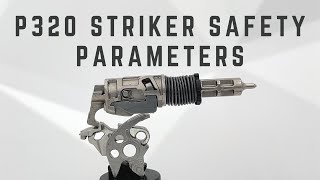 P320 - STRIKER SAFETY DISENGAGEMENT PARAMETERS TL;DR: If you have a P320, periodically disassemble so you can inspect the sear ledge for wear and remove the striker assembly to test the function of the striker safety. |
|
Quoted:I use to think there was a tolerance stacking issue as well, however I now believe that Occam's razor prevails here: The p320 is essentially a 1911 in condition zero (with no grip safety). NO ONE in their right mind would carry a 1911 in C0 because of potential problems/accidents that could occur. But somehow the p320 is immune to those??! No way. I've never seen anyone anywhere show exactly how one of these guns fired after the fact. If it was a tolerance issue it would be reproducible on that particular gun. Guns examined by armorers after the fact have all come back with a clean bill of health. I love my P320s, but the trigger is too light and short for carry IMO. I'd carry one of my 1911s before I'd choose these. They at least have a grip safety and a thumb safety. |
|
Quoted: It is and it isn't, especially if you are talking about a series 70 1911. P320s are available with a manual safety, and can even be converted to have one if it didn't come that way, so those variants can be carried in "Condition 1". To your point about the lack of a grip safety - that safety simply stops the trigger from being pulled back when the gun isn't being gripped. It's disengaged as soon as you grip the pistol to remove it from the holster and stays disengaged until you fully holster the pistol and release your grip. That said, it does stop the trigger from being inadvertently pulled rearward while the pistol is holstered in most scenarios, so that's clearly good, but it doesn't block the firing pin from moving forward. The series 70 has no internal safety to stop that from happening, which is why manufacturers often use lighter titanium firing pins in Series 70 1911s, so the gun is less likely to go off when dropped. But they do go off when dropped, as Ben Stoeger recently demonstrated with a Staccato (a Series 70 2011). Quoted: It is and it isn't, especially if you are talking about a series 70 1911. P320s are available with a manual safety, and can even be converted to have one if it didn't come that way, so those variants can be carried in "Condition 1". To your point about the lack of a grip safety - that safety simply stops the trigger from being pulled back when the gun isn't being gripped. It's disengaged as soon as you grip the pistol to remove it from the holster and stays disengaged until you fully holster the pistol and release your grip. That said, it does stop the trigger from being inadvertently pulled rearward while the pistol is holstered in most scenarios, so that's clearly good, but it doesn't block the firing pin from moving forward. The series 70 has no internal safety to stop that from happening, which is why manufacturers often use lighter titanium firing pins in Series 70 1911s, so the gun is less likely to go off when dropped. But they do go off when dropped, as Ben Stoeger recently demonstrated with a Staccato (a Series 70 2011). Quoted:A series 80 1911 has the addition of a firing pin safety, which blocks the firing pin from moving fully forward if the trigger is not pulled back. A P320 has the same feature - its striker safety. So while the P320 doesn't have a grip safety preventing the trigger from moving rearward. the gun shouldn't be able to fire in a holster if the trigger is not moved rearward. |
|
Quoted: I use to think there was a tolerance stacking issue as well, however I now believe that Occam's razor prevails here: The p320 is essentially a 1911 in condition zero (with no grip safety). NO ONE in their right mind would carry a 1911 in C0 because of potential problems/accidents that could occur. But somehow the p320 is immune to those??! No way. For those well educated in handling handguns the p320 isnt an issue. For the mass soldier/police/civil servants who arent? The gun needs a few simple upgrades. Like you said, a thicker trigger guard, and a trigger dingus. The trigger is to light to not have those. When I was scared to carry a C&L 1911 I carried it with a full mag, empty chamber. Trying to see if my every day life would make it go off. Nothing after a week. Then I did a week with my thumb safety clicked off on purpose. Still nothing. Then another week with my grip safety pinned and the thumb safety off. Again no problems. Now I have no issue carrying it cocked and locked. I think with the 320 having a narrow trigger guard and a lot of light bearing holsters being used (more space for a gap) PLUS this mostly happening to, let’s say “non gun enthusiasts” it’s more likely to happen. |
|
show up at a gun range with a series 80, 1911 carried cocked no-safety, and a rubber band around the grip safety. and handle it loaded like that, holster it like that, carry it like that all day. now have 1,000,000 people do that. 1,000,000 people who are all super careful and never would be a retard and AD, of course - of course. Then, gape in wonder at all the discharges. I give you - the Sig 320. As to OP specific test, just because your specific unit isn't failing under your test conditions, doesn't mean the guns aren't doing it. nor does it mean you've proven yours cannot. indeed, you may have worn the very parts in question now. every one of the Sig320 discharges (with enough of them by now being obvious discharges without blatant safety violations) has been difficult to replicate with the very gun that just did it. It's a cool test, but with this gun and these tests, a test that failed to cause a discharge, isn't really proof of much, I'm afraid. As to you feeling safe carrying it, that's cool. I will say, I'm not feeling so safe sitting in front of you in the bleachers with it angled into my back from your sitting position, while you are feeling safe carrying it - I'll say that. |
|
Quoted: But we aren't talking about guns getting dropped. We are talking about guns allegedly firing themselves while in a holster. The grip safety prevents the trigger from getting pulled by a foreign object since you have to squeeze the safety and the trigger at the same time. Though an idiot might push on the grip safety as they are holstering. Quoted: Quoted: It is and it isn't, especially if you are talking about a series 70 1911. P320s are available with a manual safety, and can even be converted to have one if it didn't come that way, so those variants can be carried in "Condition 1". To your point about the lack of a grip safety - that safety simply stops the trigger from being pulled back when the gun isn't being gripped. It's disengaged as soon as you grip the pistol to remove it from the holster and stays disengaged until you fully holster the pistol and release your grip. That said, it does stop the trigger from being inadvertently pulled rearward while the pistol is holstered in most scenarios, so that's clearly good, but it doesn't block the firing pin from moving forward. The series 70 has no internal safety to stop that from happening, which is why manufacturers often use lighter titanium firing pins in Series 70 1911s, so the gun is less likely to go off when dropped. But they do go off when dropped, as Ben Stoeger recently demonstrated with a Staccato (a Series 70 2011). Quoted:A series 80 1911 has the addition of a firing pin safety, which blocks the firing pin from moving fully forward if the trigger is not pulled back. A P320 has the same feature - its striker safety. So while the P320 doesn't have a grip safety preventing the trigger from moving rearward. the gun shouldn't be able to fire in a holster if the trigger is not moved rearward. I was addressing the comparison to a 1911 in condition zero, which I didn't think was fair given a series 70 doesn't have a firing pin safety the way a P320 has a striker safety. That's why I mentioned the drop issue. I'm not sure what your point is with the second part, but I understand what the grip safety does and tried to include that in the comparison. |
|
Quoted: I’ve played with 320s a lot, personally I think something gets inside the trigger guard and pulls the trigger. However, because the trigger guard is so thin, and the triggers have very little pretravel and are very light I think it’s too easy to have that happen. I do have a working theory, that I haven’t been able to prove, that maybe it’s possible due to the very long disconnect distance and stacking tolerance errors from the FCU/ grip module that maybe certain times the gun may be resting solely on the sear and then lose sear engagement due to the grip module/FCU moving in relation to the striker, and allowing the striker to fall. Ok, the striker falls. How does the striker block then fail as well? A dude that knows the mechanism in and out made videos, he had the FCU in a clear fixture, and the slide mounted on it with the rear slide cover off, so you could see the back of the striker, he could make the striker fall by pressing on the sear with a punch. Every time, the striker block caught it. I can believe that due to flexibility between the slide and FCU, and tolerance stacking, the striker could release without the trigger being pulled. But, the striker block also failing? |
|
Quoted: Ok, the striker falls. How does the striker block then fail as well? A dude that knows the mechanism in and out made videos, he had the FCU in a clear fixture, and the slide mounted on it with the rear slide cover off, so you could see the back of the striker, he could make the striker fall by pressing on the sear with a punch. Every time, the striker block caught it. I can believe that due to flexibility between the slide and FCU, and tolerance stacking, the striker could release without the trigger being pulled. But, the striker block also failing? Quoted: Quoted: I’ve played with 320s a lot, personally I think something gets inside the trigger guard and pulls the trigger. However, because the trigger guard is so thin, and the triggers have very little pretravel and are very light I think it’s too easy to have that happen. I do have a working theory, that I haven’t been able to prove, that maybe it’s possible due to the very long disconnect distance and stacking tolerance errors from the FCU/ grip module that maybe certain times the gun may be resting solely on the sear and then lose sear engagement due to the grip module/FCU moving in relation to the striker, and allowing the striker to fall. Ok, the striker falls. How does the striker block then fail as well? A dude that knows the mechanism in and out made videos, he had the FCU in a clear fixture, and the slide mounted on it with the rear slide cover off, so you could see the back of the striker, he could make the striker fall by pressing on the sear with a punch. Every time, the striker block caught it. I can believe that due to flexibility between the slide and FCU, and tolerance stacking, the striker could release without the trigger being pulled. But, the striker block also failing? Does it matter? Gun goes boom. Sig320's are statistically wildly more frequent of gun-goes-Boom, than all other models and brands combined. "But but but, it can't do that..." doesn't mean much, when you watch multiple video's of holstered 320's going off InRealLife - and have a large number of accounts from people experiencing it. |
Join the Community
Your next conversation starts here.
Create your free account to join discussions, share your experience, save topics, and connect with the AR15.COM community.
- Join discussions
- Follow topics and replies
- Connect with fellow enthusiasts
Already a member? Sign in
Stay informed by subscribing to our Newsletter