


Posted: 11/3/2024 7:17:11 PM EDT
|
Not to start a pissing contest but I'd like to hear some perspectives on this. My story is I come from a machine centrist background. I was in the Tool and Die making business. So using machines is second nature to me. If there is a machine to do the job you'd never do it by hand. I suspect the same is said for any production cabinet or woodworking business except for some very high end custom made price is no object shop. So I have been doing woodworking as a pastime for the last 2-3 years. I have been making mostly furniture type stuff. Picture of my last thing I made.  While I do OK I don't think of myself as anything but a novice. On my next project my wife wants me to use dovetails on the drawers. She prefers them. Myself, I think the way I make drawers is just as strong and better looking, much cleaner look. But its just not drawers. I want to make some smaller stuff, boxes, toolboxes other smaller stuff using dovetails on the corners.  My current drawer construction method. 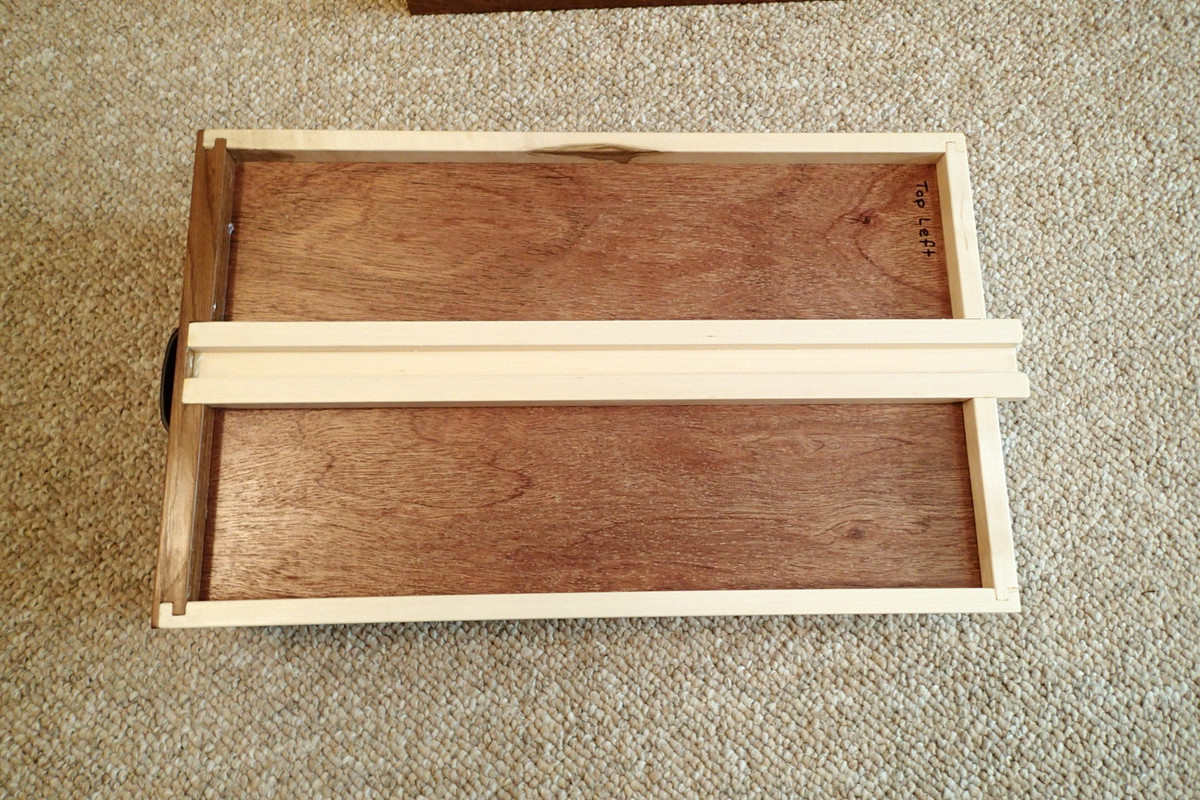 So I ask the following question, I don't have the skills at this point to do a hand cut dovetail. Not one I'd want to have in a finished project at least. I pretty much have the handtools necessary to do so. But I'm in my mid '60's and my eyesight is not going to get any better and its not as good as it used to be. I can buy a machine to do the work (shaper Origin?) for a couple of grand. I can afford to spend the money. So with limited skills would one in my position be best off skipping the time and effort to learn using handtools and just buy a machine to do the work for you? Or spend the time and get the skills? what does the hive think? |



|
If you were going to do a large quantity of the same dovetails on the same size stock, a dovetail jig would be a good way to go. I prefer the Keller jig, but the dovetail spacing is fixed. For your situation, where you want to work on bigger and smaller projects, hand cut is the way to go. A saw guide (I use a David Barron guide) is very nice, and there are several to choose from. As for investing the time to learn? It takes an afternoon. It isn't some ethereal skill that takes a lifetime to master. Make sure you mark the waste side and cut on that side of the line, then when you chisel out the waste watch a Paul Sellers video on how not to mash in the base. If you are interested in the utmost in precious dovetails, watch some Rob Cosman videos. Seriously, though, dovetails are easy.  3-Minute Dovetails |
Turns out, it was a different elephant.
|
Originally Posted By mrrick: "On my next project my wife wants me to use dovetails on the drawers. She prefers them" let her cut a few and see if she prefers them. funny thing, I told her the same thing, she replied, "how much do you prefer to have nice home cooked meals over TV diners?" |
|
Originally Posted By jhoyda1: I would try a dovetail router jig before I dropped a couple grand on a machine. Did I read that right? A couple grand? looked at lee valley tools, Jigs run from about $150-$1000. what machine that can cut dovetails runs less than a couple of grand? Grizzly dovetail machine here is a Grizzly dovetail machine, Grizzly, not a quality machine, kinda bottom of the barrel. $5000. A Shaper Origin, hand held CNC router is about $3000. |

|
So some thoughts... wood workers 200 years ago would have certainly used modern equipment if they had it available. Personally, I think modern woodworkers get the most benefit from a combination of techniques. Sometimes it's easier to grab a hand plane to true up that edge. Batching a bunch of lumber, yeah fire up the jointer. Using jigs and templates fall into the bridge, in my opinion. For a bunch of the stuff I make, a CNC would make life easier but firstly, I can't afford one right now and honestly, if I had the money, there's other tools I'd buy first. I cast no shade on the folks that use them but for me, as a hobby woodworker, it's a little too "production" for my tastes. |
|
If you're going to be making a lot of drawers, I'd invest in a jig. I'm a big fan of Leigh jigs as they simply work really well. I have their FMT Pro and their RTG400. The RTG is a dovetail jig you use with your router table. Works really well but is limited to evenly spaced dovetails. If you want the ability to space them however you want, consider their D4R Pro 24" model. Highland Hardware carries their complete line. Highland Hardware |
| Another vote for a router jig that can cut dovetails. You don't need a Shaper Origin. Once set up properly, you'll be knocking out dovetails all day long. I've been practicing hand cutting dovetails this year and I still don't have it down pat. I always wind up with some ugly gap. I'm mainly doing it to learn the fundamentals involved, and good sawing and chisel technique, but I have a long way to go. If I truly had a project that required a bunch of dovetails cut, I certainly would not do it by hand. |
|
Originally Posted By DirtyDirk: looked at lee valley tools, Jigs run from about $150-$1000. what machine that can cut dovetails runs less than a couple of grand? Grizzly dovetail machine here is a Grizzly dovetail machine, Grizzly, not a quality machine, kinda bottom of the barrel. $5000. A Shaper Origin, hand held CNC router is about $3000. The Leigh jigs are nice for adjustable spacing, but unless you're using them frequently, reading the instructions is like cramming for a test. The Keller jig is intuitive and you don't need to tape between the guide fingers to make sure you don't mess up. Charles Neil has some good videos. |
Turns out, it was a different elephant.
Joined:
Jul 2023
Posts:
548
EE: 0% (0)
 MS, USA
|
Originally Posted By Homesteader375: I've been cutting dovetails with my CNC router. I built it on a torsion box with a moxon vise built in so I can do vertical setups. The set up is a little tedious but it keeps my less than skilled hands from botching the job. You got any pictures? 
|
Joined:
Jul 2023
Posts:
549
EE: 0% (0)
MS, USA
|
Originally Posted By Skunkeye: You can get a Panto-Router for well under 2 grand and it is fairly versatile. The Leigh jigs are nice for adjustable spacing, but unless you're using them frequently, reading the instructions is like cramming for a test. The Keller jig is intuitive and you don't need to tape between the guide fingers to make sure you don't mess up. Charles Neil has some good videos. Its not just spacing (or dovetail depth or dovetail width and how they can easily be adjusted) but also angles.   That board on the front may not always intersect with the sides at a perfect 90deg angle and you got to figure for that...   |
Joined:
Jul 2023
Posts:
550
EE: 0% (0)
MS, USA
|
Originally Posted By Aaron56: That is fine work you did there in my opinion. The sort of workmanship that I would be proud to have in MY home. Thank You, that means alot coming from a guy like you that makes some really nice stuff. The Leigh DR4 pro only downside is the angles of the dovetails is set at 8 deg to match the fingers. You can adjust all the spacing, size and tweek the fit if required with it. I looked at some of the cheaper jigs and alot of the time your stuck with spacing which is a deal breaker for me. So I'm off to get a DR4 Pro. My lovely wife has some projects lined for me and I have lots wood that needs to be used so times a wasting. Didn't think of a jig when I started this thread, so thanks to all who tossed in your .02 here. As for the cost of things, well its all a priority isn't it. I don't spend money on stuff that I'd bet most do. Tools are one thing I don't mind spending money on, they usually hold some value even after being used. Just like Guns. |
|
Originally Posted By RinsableTick: If I truly had a project that required a bunch of dovetails cut, I certainly would not do it by hand. thats where I'm usually at. If I make a cabinet/dresser of some sort they usually have at least 3-4 drawers, the most I did was 9 so far. Thats alot of dovetails. If I get one that I'm not satisfied with  I notice some guys will dovetail just the front to sides but not the back of the drawers to the sides. To me that mix of methods on a single piece just offends my sensibilities for what little that really matters. But in the end I gotta be live with what I do. |
|
Originally Posted By Aaron56: You got any pictures? None of the work. I don't do much in the way of drawers and box type stuff. Here's the machine. I'm planning to rework the vice for another half inch or so of depth next time I replace my spoil board. Attached File Attached File |
Joined:
Jul 2023
Posts:
553
EE: 0% (0)
MS, USA
|
Originally Posted By Homesteader375: None of the work. I don't do much in the way of drawers and box type stuff. Here's the machine. I'm planning to rework the vice for another half inch or so of depth next time I replace my spoil board. https://www.ar15.com/media/mediaFiles/539786/20241106_172219_jpg-3371662.JPGhttps://www.ar15.com/media/mediaFiles/539786/20241106_172228_jpg-3371663.JPG Pretty sure that machine is going to serve you well AND be capable of doing a lot more than simple stuff like building boxes and drawers if you use it to it's full potential. |
Joined:
Jul 2023
Posts:
554
EE: 0% (0)
MS, USA
|
Originally Posted By DirtyDirk: The Leigh DR4 pro only downside is the angles of the dovetails is set at 8 deg to match the fingers. You can adjust all the spacing, size and tweek the fit if required with it. I looked at some of the cheaper jigs and alot of the time your stuck with spacing which is a deal breaker for me. So I'm off to get a DR4 Pro. My lovely wife has some projects lined for me and I have lots wood that needs to be used so times a wasting. All (some at least if I is being honest) of that (spacing stuff) can be tweaked using additional spacers between the fingers you have on your particular jigs. You can tweak other stuff depending on the bushings you are using. Even with the most basic of jigs - A bushing selection and the tiny bit of time it takes to make some spacers for whatever fingers you want to 'adjust' is not very hard to pull off. The more you play with and experiment with what you have already... The better off you will be in the future. |
|
Originally Posted By Aaron56: Pretty sure that machine is going to serve you well AND be capable of doing a lot more than simple stuff like building boxes and drawers if you use it to it's full potential. It's done some nice work. Currently dabbling in cribbage boards. These are some of the simpler ones. Still refining some aspects. Attached File This moulding was 160 years old and unobtainable. I don't own a shaper and the profile is so tall there are limited ways to make it come out consistently as I needed 32' to rebuild 2 columns and will probably need more in the future. I made it for a fraction of the cost of having knives ground and a custom run of trim produced. Attached File Attached File I |
Joined:
Jul 2023
Posts:
556
EE: 0% (0)
MS, USA
|
Originally Posted By DirtyDirk: thats where I'm usually at. If I make a cabinet/dresser of some sort they usually have at least 3-4 drawers, the most I did was 9 so far. Thats alot of dovetails. If I get one that I'm not satisfied with I notice some guys will dovetail just the front to sides but not the back of the drawers to the sides. To me that mix of methods on a single piece just offends my sensibilities for what little that really matters. But in the end I gotta be live with what I do. Originally Posted By DirtyDirk: thats where I'm usually at. If I make a cabinet/dresser of some sort they usually have at least 3-4 drawers, the most I did was 9 so far. Thats alot of dovetails. If I get one that I'm not satisfied with I notice some guys will dovetail just the front to sides but not the back of the drawers to the sides. To me that mix of methods on a single piece just offends my sensibilities for what little that really matters. But in the end I gotta be live with what I do. I just looked up that Jig you mentioned - The Leigh DR4 Pro so I could see it. That is pretty much similar to my bigger Porter Cable Omnijig but in the Leigh flavor. I would not start off with that one if I were in your shoes. Would suggest (if you just got to go with Leigh) one of their more simple versions with fixed finger templates to start off on until you get it all well understood and then move on to that DR4 Pro once you are more than comfortable with the fixed finger dovetail stuff. Will be a thousand times faster learning and perfecting your skills that way than starting off on the more complicated jig. Much less frustration. I started with the simple (and inexpensive) Porter Cable jig before upgrading and don't regret it for a second. Actually bought a second 4212 (the simple / inexpensive PC jig) AFTER having owned the Omni for a while just because they are so simple and easy to use that I wanted another around so I could set them up for different things.  All of this stuff I did with the simple PC 4212 jig and it was all brainless easy to manage -  While Porter Cable does not really spell out exactly how to do any of that sort of stuff in their 4212 manual - You sure as shit CAN do it if you understand how the things work. And the tool is relatively simple so things are not super hard to figure out... Have literally done thousands of boxes with those 4212 jigs over the years and will continue to be using them for years to come (even though I got the bigger and better Omnijig version as well).  90% of the time the more simple 4212 jigs are plenty good enough for what I want to do and they get it done FAST because they are so simple and easy to use. (setup times that are measured in very few minutes but will still produce consistent results for the entire job)  I will bet money that that Leigh DR4 Pro is the exactly like the PC Omni in the respect to that the 'kit' as you first buy it comes with the bare minimum and all of the 'extra' features that are 'possible' with it will cost you extra money to buy the 'optional' parts you will need. First thing I noticed when looking at the Leigh was how sparse they were on the fingers for their adjustable template. (as shown in the picture I saw of it here) https://www.woodcraft.com/products/leigh-d4r-pro-24-dovetail-jig?variant=43401204826250&gad_source=1&gclid=EAIaIQobChMIirbClIrOiQMVoaRaBR3KaQBPEAQYASABEgIDtvD_BwE&gclsrc=aw.ds Porter Cable did the same exact shit with the Omnijigs - Note how few fingers they come with from the factory on their 24" jig here -  (also note the super fast, easy and inexpensive 4212 in the background on that workbench) Just like the Leigh - That is skimping and bean counting in a bad way in my opinion. You barely get enough fingers to be able to actually USE half the template length and unless you space the shit out of them you can forget about using both sides at the same time (two corners at once IS always going to be faster if your machine can do it and these machines ARE inherently designed where you can set up the left and right sides on them independently so you can do left and right side joints working from the top (or bottom depending) of the joint in either case...) If you want to be able to actually USE that entire 24" you will need to buy more stuff. (which Porter Cable or Leigh will happily sell you. )All of these extra fingers cost me pretty good just to be able to have ENOUGH to be able to work both sides at the same time. (like one would normally do when doing dovetails with a fixed template and space to do so) You want a fixed finger template for that 24" machine? I would be willing to bet that Leigh offers that... https://www.woodcraft.com/products/leigh-model-f3-finger-joint-template-for-d-24-series-leigh-dovetail-jigs Have not dug deep into the Leigh stuff buy I would imagine they have dust / chip collection add-ons available as well. (stuff that both companies should just include from the get go in my opinion - buy once and cry once and get it over with instead of the constant need to buy the rest of what 'should' have been there on the front end)  When you step into that DR4 Pro or Omnijig world both companies leave a lot of stuff out in those basic packages that you will eventually 'need' to be able to get everything possible from the tool. Not to mention all of the different bushings and bits that are required to get to where you can do whatever you wish. Not cheap and bits don't last forever. You will want replacements to be readily available or on hand at any time. Not trying to turn you off on going down that Leigh dovetail road if that it where you want to be - Just trying to let you know that starting off on their smaller / more simple jigs will (just like with the PC stuff) more quickly acquaint you with the tools and how they are most easily used (making using their more adjustable stuff 1000 times easier to figure out and run with cause its all based on the same bits and numbers which are dependent on the particular brand) You mentioned angle stuff earlier - The Leigh DR4 pro only downside is the angles of the dovetails is set at 8 deg to match the fingers. PC is the same exact way. They want you to be stuck buying their stuff to work with their stuff. There will never come a day when I can call you up and borrow one of your Leigh bits to use for stuff on any of my PC jigs just like you would never be able to easily use any of my PC dovetail bits with your Leigh jigs. They both planned it that way for reasons...    |
Joined:
Jul 2023
Posts:
557
EE: 0% (0)
MS, USA
|
Originally Posted By Homesteader375: None of the work. I don't do much in the way of drawers and box type stuff. Here's the machine. I'm planning to rework the vice for another half inch or so of depth next time I replace my spoil board. https://www.ar15.com/media/mediaFiles/539786/20241106_172219_jpg-3371662.JPGhttps://www.ar15.com/media/mediaFiles/539786/20241106_172228_jpg-3371663.JPG Looking again at how you did that work surface - That is really, really nice. I can see from looking at the vise on the end how you could for sure set up a pair of boards (or a bunch of pairs at one time because it is HUGE  ) )The way you did the anchor points on the top surface is what really got my attention. THAT right there is perfection sir in my opinion. You gave yourself the ability to put a STRONG yet low profile anchor point pretty much anywhere you want on that top surface quickly and easily while at the same time keeping the top of the table flat and otherwise 'clean' to put whatever materials on. Hoping you don't have a link to where you sourced those threaded inserts you used cause if you do - My dumb ass is going to be buying a metric shit ton of them, a similar metric ton of the bolts that go with them, and spending as many hours as it takes to modify a few workbenches that I use the most... |
|
Originally Posted By Aaron56: Looking again at how you did that work surface - That is really, really nice. I can see from looking at the vise on the end how you could for sure set up a pair of boards (or a bunch of pairs at one time because it is HUGE )The way you did the anchor points on the top surface is what really got my attention. THAT right there is perfection sir in my opinion. You gave yourself the ability to put a STRONG yet low profile anchor point pretty much anywhere you want on that top surface quickly and easily while at the same time keeping the top of the table flat and otherwise 'clean' to put whatever materials on. Hoping you don't have a link to where you sourced those threaded inserts you used cause if you do - My dumb ass is going to be buying a metric shit ton of them, a similar metric ton of the bolts that go with them, and spending as many hours as it takes to modify a few workbenches that I use the most... Thanks! I use these: https://www.grainger.com/product/Hex-Drive-Threaded-Insert-807TX0 The depth is enough to get a good bite in the MDF but shallow enough that I can resurface down to abou 1/2" before I have to replace the spoil board. I usually use a piece of planed Baltic birch ply as a sacrificial surface under my work piece anyway as it works better for squaring up smaller work. The inserts take any 1/4-20 bolt so I've an assortment of different lengths and thumb wheels to tighten them down. Not as versatile as t track but, I feel like it's far more solid and I haven't found anything I couldn't secure yet. |
|
I have both machines & hand tools. What I always tell people I'm showing or teaching and I'll tell ARF too! Anything I can wreck with a hand tool I can wreck twice as fast with a machine or power tool! Get both for the win. Very acomplished work there OP. You seem very modest like my old man. ( he retired and took up making furniture also) I never had it in me to make furniture, it is level of skill and art I don't care to pursue or find out if I even have those skills. |
Joined:
Jul 2023
Posts:
562
EE: 0% (0)
MS, USA
|
Originally Posted By Homesteader375: Thanks! I use these: https://www.grainger.com/product/Hex-Drive-Threaded-Insert-807TX0 The depth is enough to get a good bite in the MDF but shallow enough that I can resurface down to about 1/2" before I have to replace the spoil board. I usually use a piece of planed Baltic birch ply as a sacrificial surface under my work piece anyway as it works better for squaring up smaller work. The inserts take any 1/4-20 bolt so I've an assortment of different lengths and thumb wheels to tighten them down. Not as versatile as t track but, I feel like it's far more solid and I haven't found anything I couldn't secure yet. I have one (a primary one that I use at the shop) workbench that has the aluminum track junk all over it. Some embedded in the top and spaced every foot or so and some much larger aluminum track around a few of the outside corners and a pile of the various length Kreg clamps that go with such... Like these - https://www.toolnut.com/kreg-kbc6-bench-clamp-6.html While the clamps are not horrible they are expensive as hell and if you even 'try' to use them to their full clamping ability that aluminum track IS going to bend and deform if it does not just rip right out of the table surface. :( A LOT of money wasted for only half ass good results while being limited to the lightest of loads.  If I had a nickle for every time I had to beat the aluminum track back down after clamping too hard and having it deform up above the table top surface I could buy several bags of good quality dog food and a few cases of good beer... There is a reason I only did that aluminum track crap to ONE workbench... Juice is NOT worth the squeeze in my opinion after using spending the money and actually using the junk for a good while. If I had a nickle for every time I had to beat the aluminum track back down after clamping too hard and having it deform up above the table top surface I could buy several bags of good quality dog food and a few cases of good beer... There is a reason I only did that aluminum track crap to ONE workbench... Juice is NOT worth the squeeze in my opinion after using spending the money and actually using the junk for a good while. Thanks to you 'educating' me and showing me a much better way - ALL of my aluminum track crap is getting ripped out and I am skinning the top on my primary workbench with a piece of fresh melamine and starting over doing it like you did... Aluminum track crap 'might' get relegated to a lesser used bench only because the clamps were too darn expensive to just throw away. For the sorts of projects I actually do the most on that primary bench of mine (or my second favorite bench here at home) that method that you use is going to serve me far, far better AND save me a metric ton of money and frustration in the long run. Already have a stack of melamine sheets and as soon as the stuff from Grainger arrives and I get it done I will do a thread with before and after pictures. Will most definitely remember to credit you for the idea and helping me improve on what I had... Will also be sure to show pictures of how easily that aluminum track will deform and give up when trying to use any real clamping force to secure things. Have a feeling that this is going to be one of the least expensive but best workbench upgrades I have done ever... I owe you one brother! |
|
Originally Posted By OTHP: I have both machines & hand tools. What I always tell people I'm showing or teaching and I'll tell ARF too! Anything I can wreck with a hand tool I can wreck twice as fast with a machine or power tool! Get both for the win. Very acomplished work there OP. You seem very modest like my old man. ( he retired and took up making furniture also) I never had it in me to make furniture, it is level of skill and art I don't care to pursue or find out if I even have those skills. Thanks. I don't know about the level of skill to do furniture. Seems to me a lot of the hand work takes alot skills, hand, eye coordination, along with really sharp tools. Like I said my day job was in the tool and die business. So I'm used to design and building of complex stuff with hundreds of moving pieces. So designing and building a pc of furniture isn't too tough, my Wife has a really good eye for proportions and eye appeal. I most likely work differently than most. I design my stuff in a CAD/CAM package first, dimension it out to 3 decimal places and make the individual pieces as close as I can then look at tweeking if needed. Its what I'm used to and tho its most likely not the best for working in wood it comes second nature to me so its what I do. I'm learning as I go, trying different methods and ways of doing stuff. Trying to find what works best with the equipment and skills I have. My biggest frustration is the lack of precision in woodworking. The raw material moves, the machines aren't precise, so its hard to do precise work as least as I'm used to. I mean in tool making +/-.005" is an acre of assholes for a tolerance, in woodworking your doing good keeping stuff in that range. One other thing is the use of the word "mill" in wood working is not at all what it means in metal working. To me when one says I'm going to mill this board down to size, I'm thinking, no, your sawing, planning and jointing a board to size. |
Joined:
Jul 2023
Posts:
565
EE: 0% (0)
MS, USA
|
Originally Posted By DirtyDirk: My biggest frustration is the lack of precision in woodworking. The raw material moves, the machines aren't precise, so its hard to do precise work as least as I'm used to. I mean in tool making +/-.005" is an acre of assholes for a tolerance, in woodworking your doing good keeping stuff in that range. That dovetail machine you are looking will absolutely do piles of precision parts all day long and consistently. (provided that the stock you are using is milled precisely as well of course) I will suggest though that you not wait days or weeks between your final sanding down to thickness and your dovetail machining because EXACTY like you said - The material can move. It can cup, it can twist, it can bow... The longer your pieces sit there milled to thickness but waiting to be routed and assembled - The greater the chances that stuff will not be exactly as perfect as it was right after it popped out of the sander. I have experienced it enough times (and learned the hard way) that I tend to aim for a block of time where I can finish my sanding and do my dovetail cutting in the same workday if at all possible. Depending on what type of dovetails you are doing you may want to assemble as soon as possible as well (thinking about through joints here). You are going to have a blast with that jig! |


|
Hand cutting dovetails is not THAT difficult and requires minimal tools. Practice is what is really required, and if you're retired and have the time to practice with a bunch of cheap pine and poplar, you can get the hang of it in an weekend. Certainly through dovetails. Now mitered, "secret mitered", and similar dovetails will require A LOT more practice and skill. Half blind are a little more work than through, but no where near as bad mitered and secret or concealed mitered. I have a Leigh D4R 24" I bought maybe 15 years ago. I've used it a handful of times, and setting it up IS tedious and finicky. You need to make sure your router's base is centered to the spindle, so you'll need a centering cone. Then you'll need to make sure your bushing is centered so you'll need a centering pin/cone for that. Then you need to read the instructions, twice, and run a few test pieces. The Leigh is the best jig out there, but the dovetails it cuts are still obviously machine made. Variable spacing is a huge benefit as is the wide width of the 24" model. Wood working is what you make of it. Some people like to shit on those who use machines and power tools. That's fine. I work a full time day job, have a toddler and an infant, have day to day things needing to be taken care of around the house, and a host of other things that keep me busy. I'd love to do a lot of hand tool wood working, but it isn't practical for me. A lot of "traditional" aspects of wood working, like mortice and tenon joints cam be largely substituted with a Festool Domino, so I bought one finally to be able to actually make things in a more reasonable time frame. Enjoy woodwork however is most enjoyable for you. If that means a bunch of machines, power tools, and jigs then so be it. Edited to add because I forgot: You're absolutely right about wood moving, of course, so always bear that in mind. Some people go insane trying to get a piece to within .001" when by the end of the day it's moved by five times that due to temperature and humidity swings. The precision in woodworking is there, but the tolerances don't need to be, and often in fact can't be, as tight as in metalworking. Strive for accuracy and precision, but don't go crazy chasing it with wood because it'll take all the fun out of it. |
Joined:
Jul 2023
Posts:
602
EE: 0% (0)
MS, USA
|
Originally Posted By A_G: Hand cutting dovetails is not THAT difficult and requires minimal tools. Practice is what is really required, and if you're retired and have the time to practice with a bunch of cheap pine and poplar, you can get the hang of it in an weekend. Certainly through dovetails. Now mitered, "secret mitered", and similar dovetails will require A LOT more practice and skill. Half blind are a little more work than through, but no where near as bad mitered and secret or concealed mitered. If it is so easy - please post some pictures of your work (with ANY of the different types of dovetails you were talking about). Some stuff you did by hand and 'in a weekend' and got it 'right' for more than a single joint... Forget the complicated joint pictures or pictures of more than a single joint done by hand of any kind - please share pictures of ANY stuff you did, by hand... That turned out tight enough where you did not require putty to fill the gaps and I will be 'educated'. Any more glue than this and stuff will not go together correctly for me...  |
|
Originally Posted By Aaron56: If it is so easy - please post some pictures of your work (with ANY of the different types of dovetails you were talking about). Some stuff you did by hand and 'in a weekend' and got it 'right' for more than a single joint... Forget the complicated joint pictures or pictures of more than a single joint done by hand of any kind - please share pictures of ANY stuff you did, by hand... That turned out tight enough where you did not require putty to fill the gaps and I will be 'educated'. Any more glue than this and stuff will not go together correctly for me... https://i.imgur.com/lS8yBrf.jpg Originally Posted By Aaron56: Originally Posted By A_G: Hand cutting dovetails is not THAT difficult and requires minimal tools. Practice is what is really required, and if you're retired and have the time to practice with a bunch of cheap pine and poplar, you can get the hang of it in an weekend. Certainly through dovetails. Now mitered, "secret mitered", and similar dovetails will require A LOT more practice and skill. Half blind are a little more work than through, but no where near as bad mitered and secret or concealed mitered. If it is so easy - please post some pictures of your work (with ANY of the different types of dovetails you were talking about). Some stuff you did by hand and 'in a weekend' and got it 'right' for more than a single joint... Forget the complicated joint pictures or pictures of more than a single joint done by hand of any kind - please share pictures of ANY stuff you did, by hand... That turned out tight enough where you did not require putty to fill the gaps and I will be 'educated'. Any more glue than this and stuff will not go together correctly for me... https://i.imgur.com/lS8yBrf.jpg  You have a habit of being a condescending self aggrandizing prick in every one of these wood working threads you post in. Yes, we get it, you do this shit professionally and you know it all. You post pictures of machine cut dovetails with a jig and spreading glue on them with a Q-tip because they fit so tight as if that's some kind of flex. Through dovetails aren't that fucking hard to cut by hand after some practice. No one was talking about a three way miter joint, which, even when done completely with machines IS still really hard to get right. Your attempt to flex with your machine cut dovetails? Yeah, ANYONE can do those. Next, please tell all of us who do this as a hobby in our garage that we're fools for using canister filters and cyclones on our dust collectors because we in fact need a dedicated room with six, six foot tall bags instead like a production shop. JFC even the leftist agitators in GD rarely post shit this fucking stupid. |
Joined:
Jul 2023
Posts:
614
EE: 0% (0)
MS, USA
|
Originally Posted By A_G: Through dovetails aren't that fucking hard to cut by hand after some practice. No one was talking about a three way miter joint, which, even when done completely with machines IS still really hard to get right. Your attempt to flex with your machine cut dovetails? Yeah, ANYONE can do those. If ANYONE could do them - You would have some pictures of your work to post up... If you had any experience at all you would have at least a few pictures of your work. But you don't... Please, Show us all just how 'easy' the stuff is... Guessing I personally know the owners (or employees) of 5 or 6 different cabinet / millwork shops in my local area (know to the point where I visit on occasion (with both of my girls ) ranging from small single or very few people shops to larger 20+ employee shops. I 'casually' know and have visited several others. Out of say a dozen different shops I know well locally to me - Only a single one has an actual owner capable of doing his own dovetail stuff and unless it is really, really high paying custom stuff where people have dreamed up or found pictures or really difficult stuff they want done dovetail wise - He farms that work out to a different company in a different state entirely. He has no employees that could do the stuff for him even though he has all of the tools on hand and he is not wasting his time to even try to train any to do so when he can just farm the stuff out to a different company (unless it was really, really intricate stuff he could actually charge whatever he wanted for and do it himself instead of just managing his normal business flow). They all pretty much farm out their dovetail needs for whatever cabinet project they are doing to one of two companies. (familiar with both - One does flawless work and is very expensive the other does slightly less quality work but is a lot less expensive) Unless the jobs are really custom designed stuff or unless they want their stuff right NOW... The jobs get farmed out to one of thse two companies. If the jobs are special - they call me and there is nothing they can possibly dream up that I can't do. If they are willing to pay what I ask (and it ain't cheap ) - I can make it happen a LOT faster for them.  Only once in the last 20 years I have visited another cabinet shop and actually seen them doing dovetail stuff 'in house'. (Not digging for your sake right now but I damn sure took pictures of what I saw and have them on a phone or hard drive somewhere...) Was visiting a friend that ran the paint dept of a particular shop and his helper was busy slapping putty into the loose as shit DT joints on some drawer boxes that someone there made for whatever project they had going through at the time. Guy that made those boxes was one of two guys that worked in their 'custom' dept and made a complete and utter mess out of every single joint he did on those boxes... On the way out I stopped by his work area and saw his PC jig still setup on his bench and told him that I saw his work in the paint room. Offered to help him set up machine for tighter joints that did not require putty (was trying to be nice and actually help the guy out) and he went nuts... Ape shit shit nuts...  Zero doubt in my mind that he would have assaulted me violently then and there if my pair of Dobergirls had not been right there with me at the time. He was 'that' pissed off that I 'tried' to help him... He packed his shit up and went home (unauthorized by his employer BTW) for the day in a huff. Shop owner called me later that day and asked me what happened. I explained how I offered help one of his guys in learning how to actually USE a tool that he owned and how he got butt hurt and stomped off. Shop owner saw my side of things, thanked me for trying to help his guy out and added 4 more days to his unscheduled 'time off'.  If you are going to talk shit about how 'ANYONE can do those' - Lets see some pictures of your work. Show us all just how 'easy' that shit is dude. |
Joined:
Jul 2023
Posts:
625
EE: 0% (0)
MS, USA
|
Originally Posted By A_G: Yeah, ANYONE can do those. Still waiting for your pictures showing me just how easy it is for ANYONE to do that stuff.  Step up and show us all how 'easy' it is for you do even the 'simple' stuff without needing a metric shit ton of filler to fix what you managed to actually get done once or twice.
|


|
Originally Posted By jhoyda1: I would try a dovetail router jig before I dropped a couple grand on a machine. Did I read that right? A couple grand? Yes, jig |
All your wheel weights are belong to me.
Patriot
Q-Tard
“We’re surrounded. That simplifies the problem.” - Chesty Puller, USMC
Patriot
Q-Tard
“We’re surrounded. That simplifies the problem.” - Chesty Puller, USMC
|
Originally Posted By Aaron56: I just looked up that Jig you mentioned - The Leigh DR4 Pro so I could see it. That is pretty much similar to my bigger Porter Cable Omnijig but in the Leigh flavor. I would not start off with that one if I were in your shoes. Would suggest (if you just got to go with Leigh) one of their more simple versions with fixed finger templates to start off on until you get it all well understood and then move on to that DR4 Pro once you are more than comfortable with the fixed finger dovetail stuff. Will be a thousand times faster learning and perfecting your skills that way than starting off on the more complicated jig. Much less frustration. I started with the simple (and inexpensive) Porter Cable jig before upgrading and don't regret it for a second. Actually bought a second 4212 (the simple / inexpensive PC jig) AFTER having owned the Omni for a while just because they are so simple and easy to use that I wanted another around so I could set them up for different things. https://i.imgur.com/9po5ELt.jpg All of this stuff I did with the simple PC 4212 jig and it was all brainless easy to manage - https://i.imgur.com/2IFbiPQ.jpg While Porter Cable does not really spell out exactly how to do any of that sort of stuff in their 4212 manual - You sure as shit CAN do it if you understand how the things work. And the tool is relatively simple so things are not super hard to figure out... Have literally done thousands of boxes with those 4212 jigs over the years and will continue to be using them for years to come (even though I got the bigger and better Omnijig version as well). https://i.imgur.com/L5ew79M.jpg 90% of the time the more simple 4212 jigs are plenty good enough for what I want to do and they get it done FAST because they are so simple and easy to use. (setup times that are measured in very few minutes but will still produce consistent results for the entire job) https://i.imgur.com/CYg5HJf.jpg I will bet money that that Leigh DR4 Pro is the exactly like the PC Omni in the respect to that the 'kit' as you first buy it comes with the bare minimum and all of the 'extra' features that are 'possible' with it will cost you extra money to buy the 'optional' parts you will need. First thing I noticed when looking at the Leigh was how sparse they were on the fingers for their adjustable template. (as shown in the picture I saw of it here) https://www.woodcraft.com/products/leigh-d4r-pro-24-dovetail-jig?variant=43401204826250&gad_source=1&gclid=EAIaIQobChMIirbClIrOiQMVoaRaBR3KaQBPEAQYASABEgIDtvD_BwE&gclsrc=aw.ds Porter Cable did the same exact shit with the Omnijigs - Note how few fingers they come with from the factory on their 24" jig here - https://i.imgur.com/8wLcl96.jpg (also note the super fast, easy and inexpensive 4212 in the background on that workbench) Just like the Leigh - That is skimping and bean counting in a bad way in my opinion. You barely get enough fingers to be able to actually USE half the template length and unless you space the shit out of them you can forget about using both sides at the same time (two corners at once IS always going to be faster if your machine can do it and these machines ARE inherently designed where you can set up the left and right sides on them independently so you can do left and right side joints working from the top (or bottom depending) of the joint in either case...) If you want to be able to actually USE that entire 24" you will need to buy more stuff. (which Porter Cable or Leigh will happily sell you. )All of these extra fingers cost me pretty good just to be able to have ENOUGH to be able to work both sides at the same time. (like one would normally do when doing dovetails with a fixed template and space to do so) https://i.imgur.com/W7Diaql.jpg You want a fixed finger template for that 24" machine? I would be willing to bet that Leigh offers that... https://www.woodcraft.com/products/leigh-model-f3-finger-joint-template-for-d-24-series-leigh-dovetail-jigs Have not dug deep into the Leigh stuff buy I would imagine they have dust / chip collection add-ons available as well. (stuff that both companies should just include from the get go in my opinion - buy once and cry once and get it over with instead of the constant need to buy the rest of what 'should' have been there on the front end) https://i.imgur.com/0Sm2fq7.jpg When you step into that DR4 Pro or Omnijig world both companies leave a lot of stuff out in those basic packages that you will eventually 'need' to be able to get everything possible from the tool. Not to mention all of the different bushings and bits that are required to get to where you can do whatever you wish. Not cheap and bits don't last forever. You will want replacements to be readily available or on hand at any time. Not trying to turn you off on going down that Leigh dovetail road if that it where you want to be - Just trying to let you know that starting off on their smaller / more simple jigs will (just like with the PC stuff) more quickly acquaint you with the tools and how they are most easily used (making using their more adjustable stuff 1000 times easier to figure out and run with cause its all based on the same bits and numbers which are dependent on the particular brand) You mentioned angle stuff earlier - PC is the same exact way. They want you to be stuck buying their stuff to work with their stuff. There will never come a day when I can call you up and borrow one of your Leigh bits to use for stuff on any of my PC jigs just like you would never be able to easily use any of my PC dovetail bits with your Leigh jigs. They both planned it that way for reasons... https://i.imgur.com/UyeDcYn.jpg https://i.imgur.com/9dMrtpt.jpg Your crew does not appear to help much
|
All your wheel weights are belong to me.
Patriot
Q-Tard
“We’re surrounded. That simplifies the problem.” - Chesty Puller, USMC
Patriot
Q-Tard
“We’re surrounded. That simplifies the problem.” - Chesty Puller, USMC
my first try with the Leigh jig,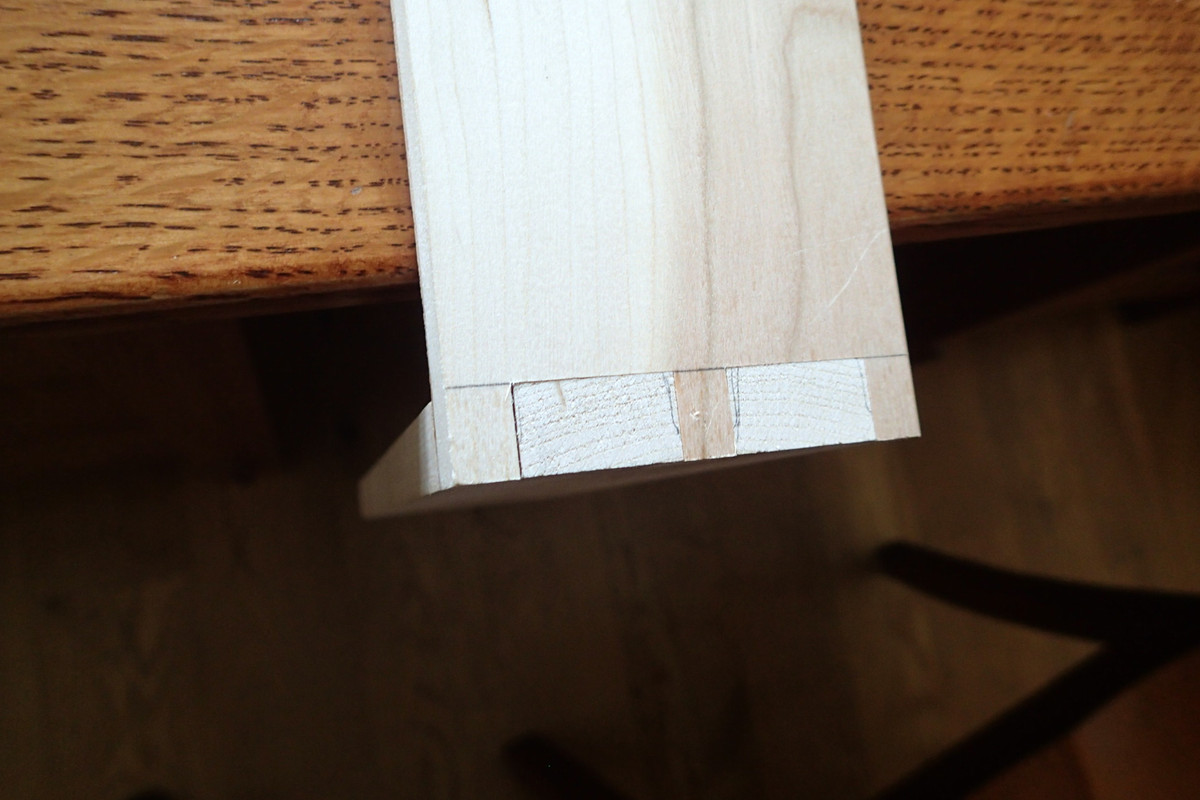 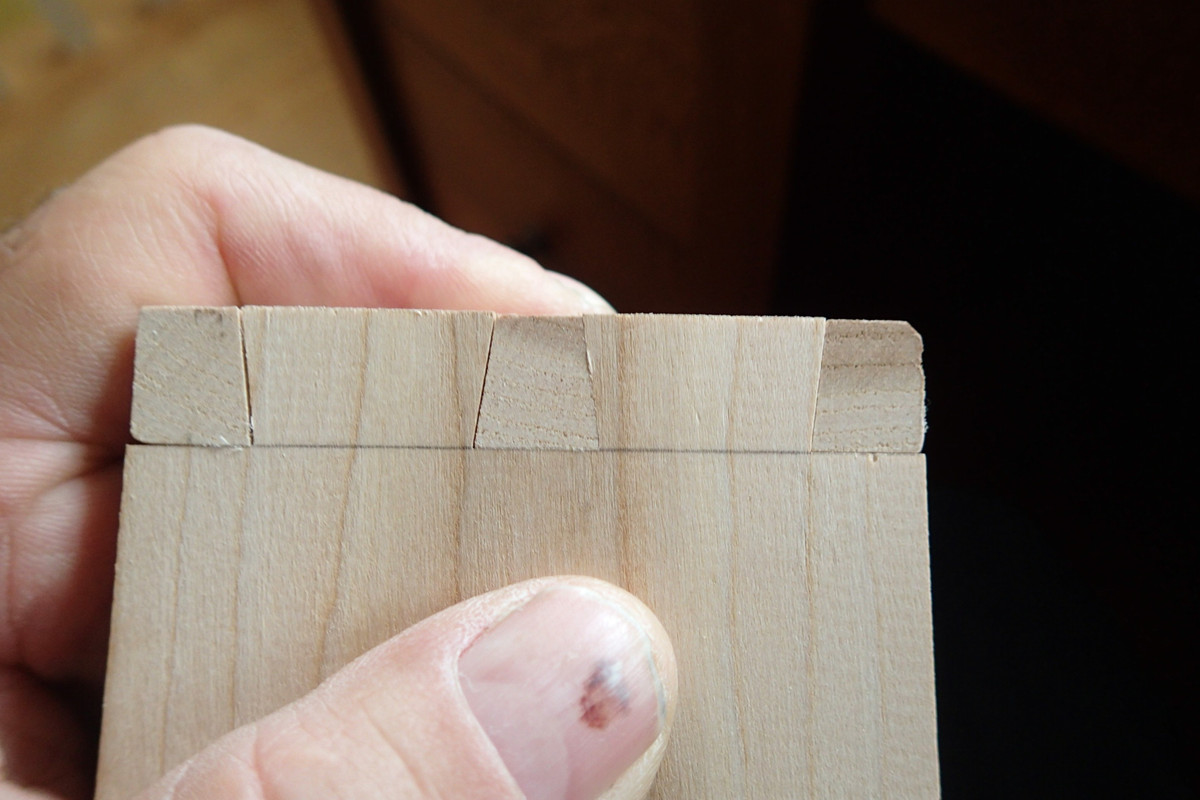 second try, minor adjustment in the cut, slightly tighter. I think its pretty good, not perfect but close. No sanding or gluing here, just dry assembly, some of the gaps disappear when its squeezed together. I think the joint maybe too tight, gotta tap it together when dry, I'm afraid that when glued it will swell causing assembly issues. 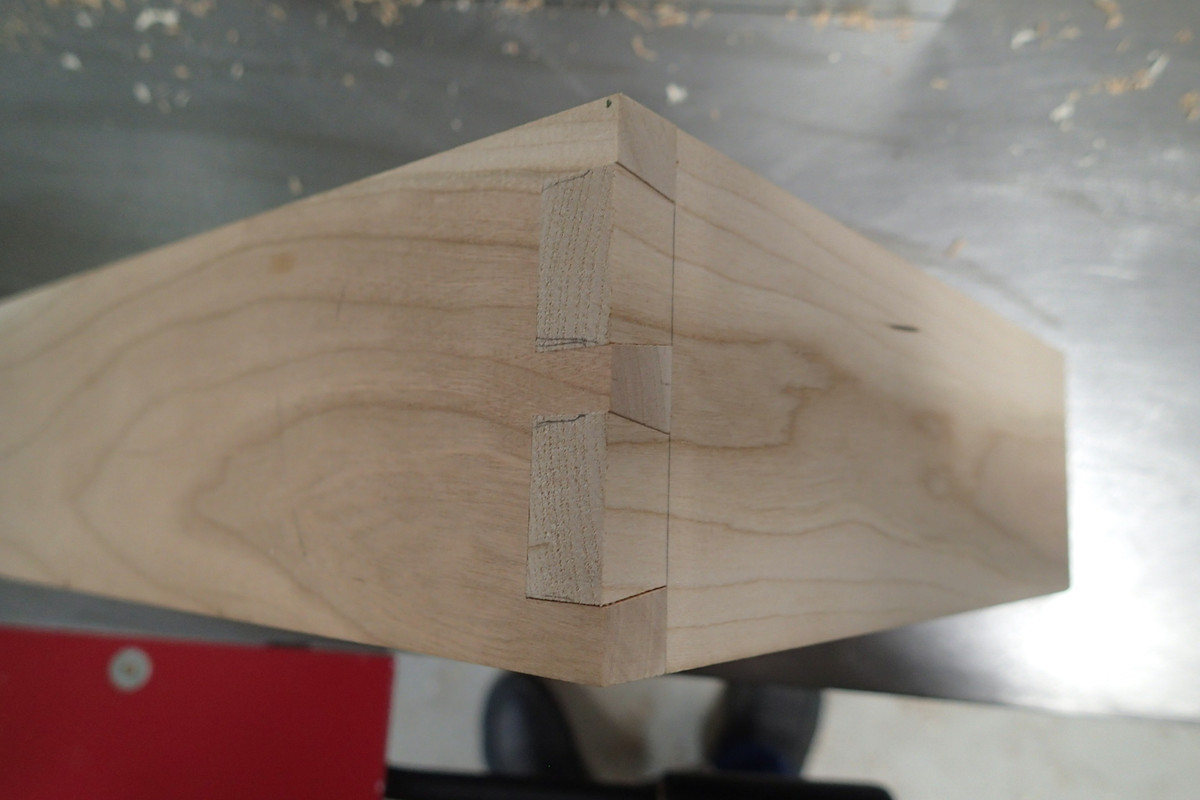 ready to make some project for the wife using dovetail corners. I guess the jig is going to allow for very nice finished dovetails without spending lots of time trying to learn the hand cutting methods. More power to a guy who can hand cut dovetails as good as these or better. I'll stick to the fixture I guess, there are advantages to both methods and in the end nobody except for a very experienced guy will be able to tell the difference. |
|
Originally Posted By DirtyDirk: my first try with the Leigh jig, https://i.postimg.cc/Dw3TFyDp/PC040057.jpg https://i.postimg.cc/yWqwVvf3/PC040060.jpg second try, minor adjustment in the cut, slightly tighter. I think its pretty good, not perfect but close. No sanding or gluing here, just dry assembly, some of the gaps disappear when its squeezed together. I think the joint maybe too tight, gotta tap it together when dry, I'm afraid that when glued it will swell causing assembly issues. https://i.postimg.cc/tT3QgtSv/PC050058.jpg ready to make some project for the wife using dovetail corners. I guess the jig is going to allow for very nice finished dovetails without spending lots of time trying to learn the hand cutting methods. More power to a guy who can hand cut dovetails as good as these or better. I'll stick to the fixture I guess, there are advantages to both methods and in the end nobody except for a very experienced guy will be able to tell the difference. The Leigh jig definitely takes some adjusting and fine tuning to get perfect joints. Did you use a centering cone to center the base to the spindle, and a centering pin to center the bushing to the spindle? Doing this helps the joints tighten up. Also, it helps to have two routers, one for the straight bit the other for the dovetail bit. This way, all the adjustments stay locked in their positions and there is less chance to introduce error when you change bits. The preceding may sound silly or overkill but every part of the equation you can reduce error in this process helps, because those errors compound. For your first couple of tries, your joints look quite good. |
Joined:
Jul 2023
Posts:
664
EE: 0% (0)
MS, USA
|
Originally Posted By A_G: The Leigh jig definitely takes some adjusting and fine tuning to get perfect joints. Did you use a centering cone to center the base to the spindle, and a centering pin to center the bushing to the spindle? Doing this helps the joints tighten up. Also, it helps to have two routers, one for the straight bit the other for the dovetail bit. This way, all the adjustments stay locked in their positions and there is less chance to introduce error when you change bits. The preceding may sound silly or overkill but every part of the equation you can reduce error in this process helps, because those errors compound. For your first couple of tries, your joints look quite good. Post ANY pictures of your work that might make me think your advise is worth considering here... Pro tip just for you - With the right amount of experience you don't really 'need' two routers. Learning how to actually set up a router (and index it with your workpiece / machine) is a tiny bit more important in the grand scheme. |
|
Originally Posted By Aaron56: Post ANY pictures of your work that might make me think your advise is worth considering here... Pro tip just for you - With the right amount of experience you don't really 'need' two routers. Learning how to actually set up a router (and index it with your workpiece / machine) is a tiny bit more important in the grand scheme. Originally Posted By Aaron56: Originally Posted By A_G: The Leigh jig definitely takes some adjusting and fine tuning to get perfect joints. Did you use a centering cone to center the base to the spindle, and a centering pin to center the bushing to the spindle? Doing this helps the joints tighten up. Also, it helps to have two routers, one for the straight bit the other for the dovetail bit. This way, all the adjustments stay locked in their positions and there is less chance to introduce error when you change bits. The preceding may sound silly or overkill but every part of the equation you can reduce error in this process helps, because those errors compound. For your first couple of tries, your joints look quite good. Post ANY pictures of your work that might make me think your advise is worth considering here... Pro tip just for you - With the right amount of experience you don't really 'need' two routers. Learning how to actually set up a router (and index it with your workpiece / machine) is a tiny bit more important in the grand scheme. Go on, keep mucking up the thread with your little Napoleon complex. I told you that you won.
|
Joined:
Jul 2023
Posts:
666
EE: 0% (0)
MS, USA
|
Originally Posted By A_G: Go on, keep mucking up the thread with your little Napoleon complex. I told you that you won. There will never come a day when I (or anybody else) 'needs' a special 'centering cone' for any sort of router based dovetail work. You would know this sort of stuff if you had done more than a handful of joints. |
|
I have one of the large Leigh dovetail jigs. It' been parked under my bench for the last 30 years, unused. That's sad, right? Life gets in the way of hobbies. OP, those drawers you made shown in your original post, those are great! |