



Saving diseases and stomping out lives
Joined:
Feb 2007
Posts:
8813
EE: 100% (3)
 AL, USA
Posted: 9/16/2026 11:26:17 AM EDT
My Dutch Shepherd tore his CCL other ligaments in his right knee Sunday he's scheduled for TPLO surgery on Wednesday and will be out of service for 3 months. Any one else have a dog that had this surgery? I've got a feeling it's gonna be a total shitshow.   
|
I've done so much with so little for so long, I can do anything with nothing.

|
My dog has had it on both knees four years apart. First knee was a total success. She's almost 6 months out from the second knee surgery, and she still skips occasionally. Two different vets did the surgeries due to a move. I think the second vet used some hardware that's way too big for my dog and that is what's bothering her. We are discussing whether to have the hardware removed.  |


| Daughter's small dog had ACL reconstruction done, and after it healed up he did fine. For some time after surgery, he seemed to feel fine, but every once in a while he would tweak his knee and yelp from pain. Eventually even that stopped. In the long run the surgery was successful...and expensive. |
|
How old is the dog? Our golden doodle blew out her knee, and couldn't even touch the floor with it because of the pain. The vet said it was probably a torn ACL. She's 11, and I opted for no surgery for a few reasons. My daughter's dog had knee surgery and it failed. She's 11, and healing would be slow, and it's impossible to keep her inactive without locking her in a kennel - something we've never done. My experience has been that letting things heal on there own is no worse than surgery in many cases. I bent my knee backwards in 2020, tearing almost everything, including a complete tear of my ACL. I opted for no surgery and it took only a few months to heal. I asked the vet if dogs were the same and could get by without an ACL, and he said they could. That was 6 or 8 months ago. She's fine now, other than it being a bit unstable. She developed a new way of running with her back legs striding together, and it hasn't slowed her down. She gets up stiff some times, but shows no other signs of pain. |
9 lives - 9 pellets... Coincidence?


|
My SO's dog had TPLO about 3 years ago and the other one done a year after. When they are recovering from one they put a lot of extra weight on the other leg and that usually causes the second one to tear as well. The first one was taking a while to heal and she started bringing her to physical therapy where the dog gets a life jacket and walks on a treadmill in a water tank. It helped a surprising amount with her getting back to normal. She is a high energy dog so the recovery from the surgery required a lot of close supervision. She is back to normal now and gets 2 mile walks multiple times a week. I guess she really hates hunting season though because she also broke her toe last year and for some reason likes to have all these injuries the week before duck opener. |
Saving diseases and stomping out lives
Joined:
Feb 2007
Posts:
8814
EE: 100% (3)
AL, USA
|
Originally Posted By ske714: How old is the dog? Our golden doodle blew out her knee, and couldn't even touch the floor with it because of the pain. The vet said it was probably a torn ACL. She's 11, and I opted for no surgery for a few reasons. My daughter's dog had knee surgery and it failed. She's 11, and healing would be slow, and it's impossible to keep her inactive without locking her in a kennel - something we've never done. My experience has been that letting things heal on there own is no worse than surgery in many cases. I bent my knee backwards in 2020, tearing almost everything, including a complete tear of my ACL. I opted for no surgery and it took only a few months to heal. I asked the vet if dogs were the same and could get by without an ACL, and he said they could. That was 6 or 8 months ago. She's fine now, other than it being a bit unstable. She developed a new way of running with her back legs striding together, and it hasn't slowed her down. She gets up stiff some times, but shows no other signs of pain. He is 7 |
I've done so much with so little for so long, I can do anything with nothing.
|
My big sweet girl had both done at the same time. She did great, the only issue was her "sit" was not as good as before  
|
My Sister....."Damn girl, get over it, we have all had to get on our knees and suck a dick to get what we wanted."
Great Aunt Florence..."Life is too short to drink cheap booze"
Great Aunt Florence..."Life is too short to drink cheap booze"
|
I had a pup that had them both done about 6 months apart 10 years ago. The toughest thing with the recovery was trying to keep her from going up and down stairs and jumping on the couch. We had to invest in a very large pen to keep her corralled. The recovery for the 2nd one was not as easy as the first. We ended up finding an amazing guy who did PT and water therapy, and did that for about 3 months or so. She responded really well to that. They will be more susceptible to arthritis, so make sure they keep active as they get older. |
|
Originally Posted By AKSig: Be ready for the other one to go in the 6-12 months following. Had both done for my Boxer about a year apart. Hardest part is trying to keep them sane during the rehab, as they want to go full bore a few weeks after the surgery. Lots of trazadone. This. |
|
Our Rhodesian Ridgeback had both legs done. Has some kinks every now and again like arthritis, but 5 yrs later is running and jumping like he wants it again. We did each leg separately. Dropped off at 8a, picked up around 1p both times. Had to crate him for a few weeks to heel. Had to walk him outside to evacuate so he didn't go wild and damage surgery. Dog is at my feet waiting for his walk now. Expensive but what isnt these days. Healed fine. Kids were happy so worth it. |

|
Our older Lab had it done on one of his back legs years ago. He made a good recovery - hardest part was keeping him calm and inactive for the required recovery. We tried using a baby gate to keep him isolated but at some point, a few weeks after surgery, he just said fuck it and started jumping over the gate. We figured that meant he was feeling pretty good. He was an absolute ball-chasing fiend when he was younger and the vet figured that had something to do with it. He's a lot older and slower now, but that surgery helped tons when he was younger. |
I don't know what will happen, or if anything will happen. But if something does, I'd rather be the guy with a gun than the guy without one.
Everyone please read this carefully. Eric802 is correct. - DK-Prof, 1/27/15
Everyone please read this carefully. Eric802 is correct. - DK-Prof, 1/27/15
|
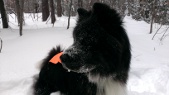
On two different Akitas. Only one leg each. The first Akita made it almost to 14. The second Akita developed osteosarcoma (bone cancer) at the TPLO site at 12 years of age. This is not atypical because of the presence of the surgical changes and the hardware. However, a dog that can walk and run for a goodly number of years after surgery is worth the chance of developing an osteo in the distant future. The key to success is to be super strict about what and when the dog is allowed to do anything from the perspective of activity and exercise. It was hard enough with my Akitas. I can't imagine how difficult it will be with your Dutchie. - Always, ALWAYS on leash when not in a crate. - No slack given on "just playing a little". - Get to a formal canine physical therapist as quick as you can, and go often, several times a week. Water therapy is particularly good. - Laser therapy for healing seems like a scam but worked well on both my dogs. - Go easy on the med's as pain is a good restraint system. Only enough to get through physical therapy. I used a tailor's measuring tape once a week to track muscle size in both rear legs. The atrophy in the operative leg can be quite significant. How well that's coming back is a really good metric for determining how much activity should be allowed. As someone else already noted, they'll happily blow out the good leg trying to make up for the bad leg. Let the bad leg recover before turning them loose. |
"Cogito, ergo armatum sum."
|
100 lb, 9 year old weimaraner. Fell on the lvt flooring in the kitchen. $6,000 by the time it was over. Its been about 6 months now and he walks normal, but still sits with the one leg kind of stuck out sideways. The doc told us he will get arthritis in that leg eventually. We don't walk him enough. Last time I did you could hear the joint going clickity clack. The vet provided us a leg sleeve for him to wear while the incision was healing to keep him from licking the wound. That worked really well. |
Joined:
Jul 2026
Posts:
13
EE: 0% (0)
MD, USA
|
Originally Posted By Genin: Daughter's small dog had ACL reconstruction done, and after it healed up he did fine. For some time after surgery, he seemed to feel fine, but every once in a while he would tweak his knee and yelp from pain. Eventually even that stopped. In the long run the surgery was successful...and expensive. This was our experience also. It is a real challenge to keep a working dog calm and sane while healing. |
Saving diseases and stomping out lives
Joined:
Feb 2007
Posts:
8815
EE: 100% (3)
AL, USA
Joined:
May 2022
Posts:
4219
EE: 0% (0)
NY, USA
|
Originally Posted By 1bamashooter: Got any recommendations for a good lick sleeve? This is what we used on our Akitas, and it worked great for them: https://a.co/d/0bGSp9Gw Sadly it is not available on Amazon right now, but there are plenty of others. Chewy probably has some, too. Just search on "dog leg sleeve". Also, if the wound is leaking/seeping, just stick a maxi-pad inside the sleeve. It's much easier than washing the sleeve all the time or trying to put a dressing on it. |
"Cogito, ergo armatum sum."
| Had both done on my Aussie Shepard many years ago, used fish line or something. hardest part was the 2 weeks in a cast. 4 years between other knee going out. both were successful, but was always careful about letting her off leash. What really sucked was 6 months after 2nd one she got cancer of the liver. I tell all dog owners if you have hard wood floors to use rugs so there not slipping all the time and used stairs or ramps for bed and getting in and out of vehicles to avoid constant jumping up, hard on knees, hips and back. I did all's these things with my border collie and no knee issues for her 13 years of life. Just lost her lost month, really sucks. |
Joined:
May 2026
Posts:
308
EE: 0% (0)
AZ, USA
|
4 TPLO's, across 2 dogs in a span of 12 years. It works. Rehab will take some of your time, but is 100% worth it. Keep him on a leash. Towel walking to poop for a few days, just to keep the weight off. ALWAYS on a leash. Walk him on leash to keep the energy down. Movement is important. Follow every step the surgeon gives you. The outcome? A stable knee is like having a younger dog. My first experience was a mixed breed dog of 60 lbs. Repaired knee after rehab and she ran everywhere. Second one let go 11 months later. After that healed it was like having a wound up puppy again. She ran for many years after that. Second dog was an AmStaff / Lab mix. 80 pounds. We bought pet insurance early. 1st TPLO @ 2 years old. Rehab was a lot of effort. Once healed she would go anywhere. 5 mile hikes were common. Second knee went at 4 years old. Rehab was still a lot of work. Worth every minute. Once healed she was running better than ever. Both dogs lived a full happy life after surgery. I would do it again in a heartbeat for our current dog. |
Saving diseases and stomping out lives
Joined:
Feb 2007
Posts:
8827
EE: 100% (3)
AL, USA

|
Originally Posted By AKSig: Be ready for the other one to go in the 6-12 months following. Had both done for my Boxer about a year apart. Hardest part is trying to keep them sane during the rehab, as they want to go full bore a few weeks after the surgery. Lots of trazadone. This. During recovering and the "physical therapy" period following try to make sure the pup isn't crutching or over relying on the non-impacted leg or the other side will let loose. Statistically speaking. |
the kubota survived Javier is no longer an illegal alien...
|
Consensus between some friends is that they don't know they've torn it, and don't know to take it easy on it going forward and the re-injury rate or the rate with which they injure the other leg is pretty high. Our last dog (poodle) jacked his up later in life, and when we talked at length with the vet about fix or no fix, we opted to let it ride and after a couple months of him deciding to take it easy, he finished out his life running at about 85% speed, no limping or visible pain. He'd dash across the yard, slow down, pivot, and dash back. YMMV. |
|
Originally Posted By johnh57: 100 lb, 9 year old weimaraner. Fell on the lvt flooring in the kitchen. $6,000 by the time it was over. Its been about 6 months now and he walks normal, but still sits with the one leg kind of stuck out sideways. The doc told us he will get arthritis in that leg eventually. We don't walk him enough. Last time I did you could hear the joint going clickity clack. The vet provided us a leg sleeve for him to wear while the incision was healing to keep him from licking the wound. That worked really well. |
Joined:
May 2026
Posts:
310
EE: 0% (0)
AZ, USA
|
My dogs get daily walks of 5k + in the morning, and at least a 1k before bedtime. Every day. It really helped with the first TPLO, and subsequent health assessments proved that walking that much was beneficial. Race tracking the yard was discouraged for 6 months following surgery. A Dutch Shepard is just a malligator with a paint job. Keeping a high energy dog moving and burning calories without going wild is a challenge. The Lab mix sometimes needed 3 walks per day, 5k or more to settle down |

| Our chihuahua had it done when she was around ten years old and she acted years younger after the surgery. Pretty fast recovery, too, but size of the dog probably makes a big difference. |
Sancte Michael Archangele, defende nos in proelio,
contra nequitiam et insidias diaboli esto praesidium.
Vivat Iesus.
contra nequitiam et insidias diaboli esto praesidium.
Vivat Iesus.