


Posted: 1/9/2020 11:37:57 PM EDT
[Last Edit: Stutzmech][Edited]
| I'm retired and bored, but I do know a fair amount about these cars mechanically, with all the talk in GD about cars I wanted to see if anybody in here is interested in these cars so I'm starting this thread to see if there's any interest, I'm just going to start posting random stuff about the subject and if anybody's interested let me know, I don't know everything but I'll give it a try, so if your interested in this let me know |
| The first thing is if you don't do any car work you will need a lot of money, if you know a lot about fabrication and repair it can help with the money part when I say vintage I generally mean mid 20s through 40s, brass era is pre mid 20s ,brass cars can be very expensive but if you look you can get one for 15grand and up they will not be in very good shape unless you want to spend 50 grand and up, the really good ones are 180grand and up, vintage cars can still be found for less there's a lot of 40s cars that are what I call low priced, the ones from 28-35 are the ones that are very pricey, I've seen deals for as low as 10-15 grand for somebody's project, mechanically your going to find there may be no or little info on repair so again it helps if you know mechanics,....alright I'll shut up and see if there's any interest in this subject |
Ok when you get in a early car you will see some controls in the center of steering wheel most early cars will have them here the levers are normally for spark timing and throttle, later ones would have a third lever usually controlling lighting, to start you must retard the timing so the engine does not kick back when rotated, if you have to hand crank it this is very important as it can lead to broken hands and arms, if you have a electric starter, as you crank, and timing is to advanced it will turn and stop or kick back so timing must be retarded, the next thing is fuel normally there will be a Manuel valve some were to turn on, if the carb then fills with fuel you can try the ign., usually a switch on the dash or steering column, this is a basic intro, I'll cover some of the other systems later, now a lot of early carbs do not have accelerator pumps so pumping the gas will do nothing the best way is to retard, turn ign on and crank some carbs have a choke, usually a push pull or lever you don't close it all the way as it will flood it so maybe halfway to begin, crank engine a few revs and if it fires you immediately advance timing and bump hand throttle up to a high idle and as it warms up you turn choke off, most cars unless in good shape won't start so after cranking look under car for a gas puddle from carb, if you see that close choke and crack throttle a little and crank again that usually will get it started, one thing you need to think about is there is no trans interlock so you need to make sure it's in neutral and e brake is on, as you can see an early car takes a lot more knowledge to operate than a modern car, that's why a lot of people had a driver then, very few women or small men could even crank start a car most early cars will have them here the levers are normally for spark timing and throttle, later ones would have a third lever usually controlling lighting, to start you must retard the timing so the engine does not kick back when rotated, if you have to hand crank it this is very important as it can lead to broken hands and arms, if you have a electric starter, as you crank, and timing is to advanced it will turn and stop or kick back so timing must be retarded, the next thing is fuel normally there will be a Manuel valve some were to turn on, if the carb then fills with fuel you can try the ign., usually a switch on the dash or steering column, this is a basic intro, I'll cover some of the other systems later, now a lot of early carbs do not have accelerator pumps so pumping the gas will do nothing the best way is to retard, turn ign on and crank some carbs have a choke, usually a push pull or lever you don't close it all the way as it will flood it so maybe halfway to begin, crank engine a few revs and if it fires you immediately advance timing and bump hand throttle up to a high idle and as it warms up you turn choke off, most cars unless in good shape won't start so after cranking look under car for a gas puddle from carb, if you see that close choke and crack throttle a little and crank again that usually will get it started, one thing you need to think about is there is no trans interlock so you need to make sure it's in neutral and e brake is on, as you can see an early car takes a lot more knowledge to operate than a modern car, that's why a lot of people had a driver then, very few women or small men could even crank start a car
|

I love these cars, keep it going OP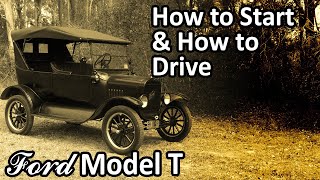 Ford Model T - How to Start & How to Drive |
Nothing cool ever happens to me
|
Originally Posted By 19suburban96:
I love these cars, keep it going OP  https://www.youtube.com/watch?v=QxfHMtgg2d8 https://www.youtube.com/watch?v=QxfHMtgg2d8
|
Ok, fuel delivery on an early car can be anything from a gravity feed like on a ford, to pressure feed, electric fuel pumps are a rarity until 30s so one system commonly used was a pressurized gas tank,using a hand pump similar to a bicycle pump or a small pump driven off of engine, even an exhaust gas injection to gas tank, there will be a pressure gauge on dash usually 0-5 psi most cars will run on 2-4 psi, another fuel delivery system used mid 20s on is a vacuum operated fuel delivery system, the one I'll show is called an autovac  
It uses engine vac to fill a chamber and then release by gravity to carb, they remind me of toilet bowl fillers they look complicated but if you take the time to understand the principle they are very easy to repair and very reliable
|
| One of the best pieces of advice I can give in regards to these cars is to become familiar with basic physics and mechanics, that will enable you to repair 90 percent of what problems you encounter without having any info on these cars, there were hundreds of guys in this era, all had different ways of doing something and usually the info on this stuff did not survive, repairing these mechanisms are a good way of keeping your mind sharp and learning something, it was an amazing time to be alive between the two wars |
Ignitions came in all different types as they were the weak link in early car, most of these early cars (brass) had multiple independent ignition systems some even had 3, most would have a complete magneto system that could be used without a batt., as well as a point and coil distribution system the one I'll show is a common Bosch system   
|
You will see a brass device on the dash, on a dual system it will have a lever marked m, b, mb it is a 3 pos switch to turn on batt. Ign. Or mag. Ign.,or both. Typically mags don't have a good output at low speed so most cars must be started with the batt. Ign. There were many different ignition systems used on early cars , interesting fact on a well tuned car, you could hop in a primed car and turn ign. On and hit the center button on the a coil and the engine would fire up without a starter or crank just on leftover air fuel charge in the cyl...............here's a caddy engine with two ign systems you can see the mag and the distributor and 2 plugs per cyl.
|

| Interesting stuff OP. Keep it coming. Do you own one of these old beasts? |
q3131: I can enjoy necrobeastialexhibitionism as much as the next guy, but homonecrobestailexhibitionism is just plain sick.
Tomislav:If you truly love something, you need to shoot it, then set it on fire. (And then post pics!)
كا
Tomislav:If you truly love something, you need to shoot it, then set it on fire. (And then post pics!)
كا
|
Originally Posted By CajunMojo:
Interesting stuff OP. Keep it coming. Do you own one of these old beasts? 
But I have worked on a lot of cars from 1895-early 40s most of the cars I've worked on are far too expensive for me, most of them are 500 grand and up with some 10-20 mill cars here and there Edit ... I've also got a lot of experience with pre war race cars if anybody wants to ask a question. |
|
Ok you have your car running and you push the clutch down and try to get first and it just grinds, early clutches come in all different types, single plate, multi plate, cone, cork,leather lined, wet, dry..etc.
The list is endless but they all have to do the same thing de-couple the input shaft of the trans from the flywheel, so most of the clutches ive come across are not set up properly so they don't work good. There's another device that was used on early cars to simplify this, it's called a clutch brake, when you depress the clutch pedal the throw out bearing releases the pressure plate and the clutch brake rubs on the rotating trans input shaft causing it to come to a stop, now you can shift gears, put it in gear and as you let up the clutch brake releases then the pressure plate contacts the clutch disc and off you go Now I've simplified this because there are hundreds of different ways to accomplish this and every different car came up with a different way of doing the same thing, on early cars the floorboards are designed to come out for adjustments and maintenance 
|
| So pull the floor and study the clutch mechanism and you can figure out how it works, a caution here, don't go adjusting a bunch of stuff without fully understanding what's going on most modern mechanics make to many assumptions and wind up screwing things up so look close, I've seen experienced old car mechanics screwy up to as have I on occasion ,anyway just remember it just has to decouple the input shaft and it needs to stop rotating, now the trans, most of them do not have synchros so the gears have to match speed to engage without grinding this is perhaps the biggest problem modern drivers have in driving these cars and it scares them off of driving these cars but don't worry even the best old driver will grind occasionally they just never admit it, what can help is when shifting it helps to have the RPMs as low as possible and some will take a slow shift and some will take it fast you can read up on double clutching on the internet and try and use the hundreds of different methods they suggest but it isn't something I can explain here every old car is different and a little research into what's happening will pay off as well as actual experience |

On early cars(pre 25) the brakes were not very good most American makers would only fit rear brakes and a brake on the output shaft of the trans. , when you look at most early cars you will notice no brakes on front wheels so stopping is always an issue with these car so in drive them be careful . Most of them would have 2 sets of shoes on each rear wheel an inner set similar to modern shoes and an outer set that would squeeze the drum ,almost all the cars I have worked on the brakes where in terrible shape , usually drums cut down too much (some less than .060 thick) warped and improper brake lining so an already borderline system was almost useless, almost all early brakes can be restored to work Decently , sometimes making new drums and riveting or glueing new linings on and repairing all the worn linkages, most of the cars the foot brake operates the outer shoes and squeezes, and the inner is operated by the hand lever, I have seen some cars were that is reversed, also some cars would have 1 set of shoes in back either inner or outer and it would have a brake attached to output shaft of trans operated by hand lever again there were 100s of different designs all mechanical some people are modifying there brakes for hydraulics or disc brakes like this
My preference has always been to repair the original system, my reasons are if you make a killer brake system and you have wooden wheels that puts a hell of a strain on them and if you can get the stock brakes to lock the rear wheels up that is adequate I think the biggest reason they modify the brakes is older owners that can't push the pedal hard enough, so that might be a good argument. My theory on most early cars is if it works leave the design alone, I see so many people on projects trying to make them better that all you do is "fix it till it's broken" I love that saying |
Here's an interesting method of providing lubrication to an engine, you will see it on some cars
See the brass box with a row of glass vials? That is the oil supply system for the engine, usually a small pump driven off of the engine would scavenge oil from bottom of crankcase and pump it up into this box and then the adj. flow valves would drip oil into small tubes that would go to main bearings and other places to gravity feed a steady drip of oil, it's similar to a dry sump system but with no pressure, there is no pressure fed oil system in these cars it's all splash or drip |
| I wish I had paid attention in English class , but if people are interested you can ask me questions and I would be happy to answer them, I've got thousands of subjects on these old cars that I can relate , as I write this there is a lot of info I'm leaving out as some of the experts in here have not called me out on some things that I'm leaving out , I'm doing that deliberately so feel free to ask |
|
Originally Posted By Stutzmech:
I wish I had paid attention in English class , but if people are interested you can ask me questions and I would be happy to answer them, I've got thousands of subjects on these old cars that I can relate , as I write this there is a lot of info I'm leaving out as some of the experts in here have not called me out on some things that I'm leaving out , I'm doing that deliberately so feel free to ask When working on these, is there a lot of info available (instructions) on working on them, or is it just a matter of taking shit apart and seeing how it works? |
q3131: I can enjoy necrobeastialexhibitionism as much as the next guy, but homonecrobestailexhibitionism is just plain sick.
Tomislav:If you truly love something, you need to shoot it, then set it on fire. (And then post pics!)
كا
Tomislav:If you truly love something, you need to shoot it, then set it on fire. (And then post pics!)
كا

|
Originally Posted By CajunMojo: I don't really have any questions on the cars themselves but find your writeups interesting. How long have you been working on these and is it your primary job? I take it that's a Stutz in your avatar? What model? When working on these, is there a lot of info available (instructions) on working on them, or is it just a matter of taking shit apart and seeing how it works?
32 stutz super bearcat dv32 engine, worked on it for several years, it's blue now and went to auction at bonhams. Most of the cars have little to no info on them and some that I've done they only made 1 or a few , so yes you just dive in, leads to interesting times |
|
Originally Posted By kfs35:
Cool thread, Stutz. 
My dad had a 28 Model A Tudor Sedan when I was a kid. Got to drive it a fair amount. Also drove a Model T that my uncle owned once just to experience it. These early autos are really interesting. |
|
All the brass you see on these cars is a pain in the ass to keep polished so if you don't know ,a good way to keep it from weathering is to rub car wax on it occasionally after polishing, some of these guys clear coat it but I wouldn't recommend that .
There's actually several groups that get together and drive these old cars on tours all the time sometimes several hundred miles, so some of these cars do drive on the street and you should try driving an early car 40 or 50 on country rds, it can be interesting 
|
I mentioned earlier about priming the engine, if you look at most early engines you will see these things somewhere on top of head
These are priming cups, they lead right into combustion chamber, to use them you open them and pour about a large thimble full of fuel in and close and the start, they are valves made so the arm is straight up or down so gravity doesn't open it while driving, I've seen this style on some they are part of spark plug 
|
Speaking of spark plugs , in that era they had a lot of different spark plugs in all shapes and sizes
Most you'll notice have a 2 pc design, they can be taken apart for cleaning and repair   rarely have I ever replaced plugs I clean and adjust and reuse, my method is to bead blast the threads ,electrode and ceramic , swish in some water(to loosen up beads) and air blow dry then use a fine wire brush to clean threads, adjust and install, on gap, for magnetos you will run from .010-.020 if you run a bigger gap you can damage magneto, on " coil " type distributors you can run them out to as much as .030 depending on coil power rarely have I ever replaced plugs I clean and adjust and reuse, my method is to bead blast the threads ,electrode and ceramic , swish in some water(to loosen up beads) and air blow dry then use a fine wire brush to clean threads, adjust and install, on gap, for magnetos you will run from .010-.020 if you run a bigger gap you can damage magneto, on " coil " type distributors you can run them out to as much as .030 depending on coil power
|

Most brass cars do not have a starter so the crank is usually used, all I'm going to say on crank starting is if you don't know how don't try, get somebody to show you how if you try it yourself there's a high likelihood that broken fingers or wrist will be the result ,seen it many times even with experts, some of these engines can be 450 cubic inch 6 cyl, so they can have a hell of a kick back,...........

Good way to break a wrist

Notice the thumb is not crossing the handle? |

| This is a good read. When I was a kid my dad was an AAA (Antique Automobile club of America) member we went to a lot of car shows. He owned a couple of older cars until we moved when I was 5. Then it was newer stuff. He did not like old Dodges for some reason |
RIP Jeff Reed. Tennessee Squire, Ga. Carry member, NRA Life member
Non-puking 72 ounce drinker 2 of 6 Norcal call sign, Forgotten.
Non-puking 72 ounce drinker 2 of 6 Norcal call sign, Forgotten.




|
.
@Stutzmech You have good information that folks won't read simply because you present it in long uninterrupted blocks of text. After the second comma indicating a new clause a new sentence is generally in order. Paragraphs (and an additional line space) are our friends. . |
If some catastrophic event happens and most of humanity is wiped from the face of the earth, the only people left to hang out with will be you guys! Oh the horror! -- Boombastic
No situation is ever so bad that the government can't make it worse.
No situation is ever so bad that the government can't make it worse.
|
Originally Posted By kar98k:
. @Stutzmech You have good information that folks won't read simply because you present it in long uninterrupted blocks of text. After the second comma indicating a new clause a new sentence is generally in order. Paragraphs (and an additional line space) are our friends. . I'm not a writer and I've rarely written more than a sentence, kinda a hermit with a bad high school education. |
Driving at night was a big problem on these cars, so on a lot of them you'll see lights and lamps such as on this,

Most used a acetylene lighting system, and oil lamps for side lamps and tail, that is why you will see a bottle like this on most, 
They do work fairly well, but a lot of people convert them over to electric lights for convenience. The oil lamps were pretty conventional, and have not changed. |
|
On tire changes, almost all of early tires are of the tube type, there were almost no use of a tubeless tire.
When changing or repairing tires, you would leave the wheel on the car and remove the "rim" . The rim is a steel band that the tire is mounted on, most rims would be of the "split rim type" where you would let the air out and pull a lock ring off and slide the tire and tube off. You would think it would be difficult to do, it is not, I can repair an old tire quicker than a modern one with no need of a shop and on the side of the road. 
This is a solid rim that does not detach like on most fords, most others had this style 
With a rim like this 
|

|
Originally Posted By Stutzmech:
Thank you. I'm not a writer and I've rarely written more than a sentence, kinda a hermit with a bad high school education. I'm not at all a "car guy" but this is a fascinating read. |
Soft words soften hearts that are harder than rock, harsh words harden hearts that are softer than silk.
Al-Ghazali
Al-Ghazali
|
An interesting thing about early car wheels, they used regular ball bearings in the hub, it is rare to find a cup and cone bearing (timkin style), so they were never very tight by today's standards.
And on the rear, most of them when you pulled off center nut, you can pull the axle out and service/replace without remove wheel, in some ways old cars are much easier to service On balancing the wheels you would clean the bearings of grease and lightly oil and spin on the car, the weight system would be lead wire on spokes or lead discs on studs mounted to rim |
|
Speaking of bearings, most early cars you can still get cup and cone, ball, and roller bearings, you just measure them and go to a bearing supply and order ,surprisingly most early bearings I've come across are metric with few being inch series.
Seals were generally not used, most used a system of felt or leather in a groove to achieve some type of seal, they actually work good and are easily made by hand, one of the good things about early cars is that many things on them could be repaired or maintained with common tools and supply's by almost anybody, town blacksmiths would often repair these cars in the turn of the century |
|
Gaskets, people always ask me were I get the gaskets, the answer is to make your own, it is actually quite easy to do, first find the material usually vegetable fiber or cork even paper.
All a early gasket has to do generally for oil seal is to soak up oil and swell just like the wood on a boat will swell to seal, the method I use is to buy it by the roll and trace it out and exacto it out, for holes you buy a kit like this, 
This is the kit I use and it works very well. The only gaskets that are trouble is the head gasket and exhaust gaskets, get a professional to make those On small thin gaskets a good trick is to use a copier and lay the part on an just run a copy off and cut/punch, you can run pretty thick paper on some copiers. There are many other ways of making gaskets that I would explain if you ask |
|
Hardware, when working on these and replacing original hardware avoid using modern equivalents such as Phillips, torx, Allan head, it stands out and you will catch hell over it, whenever possible use old style high head hex or blade type screws ,stainless are ok but I don't polish them, I bead blast to get a dull silver like original nickel plate.
A good rule on hardware is if you can't screw it all the way in by hand, either fix it or replace it, not worth the hassle of using junk, when you do one of these you fix every piece of hardware and fix all the female threaded holes, any thing else is doing it half assed Most early hardware was either painted after assembly or left bare steel so it looks funny to polish or plate every piece of hardware. On wiring , you can purchase modern cloth covered wire from many places you should use it, as plastic covered wire with crimped plastic connectors looks weird, the only tape that can be used is the cloth type electrical tape that you can still buy, it's all these little things that add to the car rather than detracting from it. Like this' 
Not this' 
|

|
Went to see a private car collection with my ex father in law. This guy had a ton of cars including some brass era or horseless carriage type.
My ExFIL seemed to have an issue with keeping his hands to himself and he got chastised for touching the lamps on one of the cars. I knew walking in the place I wasn’t touching shit and my hands stayed in my pockets or by my side the whole time. He had a car with semaphores and was showing us how they worked, well the wiring caught on fire. 
Guy had a lot of neat stuff, ran a radio station out of the shop, basically an iPod with the oldies on it and had one of the old silver buses from the 50’s that was a news bus from Dallas and may have been in use when Kennedy was shot. Think he had a BMW Isetta as well. My step father is a Hudson guy so he had a Terraplane and I drove a Hornet for a bit to help him sell it. He was the first to let me know not all engines had fancy oil pumps. |
|
Originally Posted By dino1:
Went to see a private car collection with my ex father in law. This guy had a ton of cars including some brass era or horseless carriage type. My ExFIL seemed to have an issue with keeping his hands to himself and he got chastised for touching the lamps on one of the cars. I knew walking in the place I wasn’t touching shit and my hands stayed in my pockets or by my side the whole time. He had a car with semaphores and was showing us how they worked, well the wiring caught on fire.
Guy had a lot of neat stuff, ran a radio station out of the shop, basically an iPod with the oldies on it and had one of the old silver buses from the 50’s that was a news bus from Dallas and may have been in use when Kennedy was shot. Think he had a BMW Isetta as well. My step father is a Hudson guy so he had a Terraplane and I drove a Hornet for a bit to help him sell it. He was the first to let me know not all engines had fancy oil pumps. I lost my worrys years ago on touching the cars, just treat them carefully whether their 10 grand or 10 mill, though I have been nervous taking them out to test drive
|
The nut/bolt on the top right looks a little out of place. 
Attached File Would you say you make a nice living doing this as compared to a typical mechanic? How did you get into doing this full time? I'll likely retain very little of the knowlege you are putting out here, but it is interesting as hell to read. Great thread man! |
q3131: I can enjoy necrobeastialexhibitionism as much as the next guy, but homonecrobestailexhibitionism is just plain sick.
Tomislav:If you truly love something, you need to shoot it, then set it on fire. (And then post pics!)
كا
Tomislav:If you truly love something, you need to shoot it, then set it on fire. (And then post pics!)
كا
|
Originally Posted By Stutzmech:
I lost my worrys years ago on touching the cars, just treat them carefully whether their 10 grand or 10 mill, though I have been nervous taking them out to test drive |
q3131: I can enjoy necrobeastialexhibitionism as much as the next guy, but homonecrobestailexhibitionism is just plain sick.
Tomislav:If you truly love something, you need to shoot it, then set it on fire. (And then post pics!)
كا
Tomislav:If you truly love something, you need to shoot it, then set it on fire. (And then post pics!)
كا
|
Originally Posted By CajunMojo:
The nut/bolt on the top right looks a little out of place.
https://www.AR15.Com/media/mediaFiles/498772/image-1231597.jpg Would you say you make a nice living doing this as compared to a typical mechanic? How did you get into doing this full time? I'll likely retain very little of the knowlege you are putting out here, but it is interesting as hell to read. Great thread man! |
All this talk about wheels, I should cover wheel hub nuts, if you don't understand them don't mess with them, here's a couple of samples,
 
It's easier if I explain the nearside, offside thing with the British, in England the near side of car is the one closest to the curb, the off side is to the center of the road , so on the nut it will have near and off marked, though it's quite common for the markings to be polished off, so that's all I'll say about that because they can't even drive on the right side of the road anyway .
I will give you my rule for all cars with wheel nuts, (not wheel lug nuts) , as you sit in the car facing forward remember left is right and right is left, that is the direction of the thread on hub, so too take off the right wheel hub you will unscrew it clockwise as you look at it and for the left hub unscrew it counter clockwise. Now to remove a nut sometimes it takes a special wrench that comes with the car, and on others they have wings to remove the winged type with wheel on ground you strike the wing with ether a soft mallet (lead, plastic,copper) sharply until it breaks loose, then jack up car and unscrew, to reinstall screw nut down and pop it a couple of times then let car down and strike it until it is tight. The cone surfaces and threads as well as the nut cone should have a lite coating of grease ,that prevents water from rusting it up and locking it up Sample of a wheel hub wrench, 
|
|
Originally Posted By Stutzmech:
All this talk about wheels, I should cover wheel hub nuts, if you don't understand them don't mess with them , here's a couple of samples,
https://www.AR15.Com/media/mediaFiles/498772/image-1232005.jpghttps://www.AR15.Com/media/mediaFiles/498772/image-1232004.jpg
|
q3131: I can enjoy necrobeastialexhibitionism as much as the next guy, but homonecrobestailexhibitionism is just plain sick.
Tomislav:If you truly love something, you need to shoot it, then set it on fire. (And then post pics!)
كا
Tomislav:If you truly love something, you need to shoot it, then set it on fire. (And then post pics!)
كا
|
Originally Posted By CajunMojo: I'm not a mechanic by far, but those look simple enough. edit... Sometimes it helps to slide a thin piece of plastic or wood between nut wing and spokes to prevent striking spokes
|