


Posted: 3/28/2025 6:45:18 PM EDT
|
Depending on the situation on which camera I use (D780, D500, D3s), I shoot them all the same.......back button focus, single or 9 focus point, continous auto-focus. Anybody use the 3d tracking thing? Also, feel free to throw in any tips for sports shooting. thx!!! |
|
What freezes motion : FLASH Rear curtain Sync mode on Nikon has blur then sharp image. With studio lighting and remote slaved flash units the main light is tripped by radio remote and the secondary flash units see the initial flash which trips the secondary flash. BULB - one can leave the shutter open at night and walk around a dark building popping a flash toward the building at multiple points able to illuminate the entire building. Freezing motion is a matter of understanding how three things work together. 1. Aperture Opening 2. Shutter Speed 3. ASA speed of the film. Sunny 16 = on a bright sunny day the correct exposure for 100 ASA film is F16 at 1/125 sec Or F11 at 1/250 sec Or F8. at 1/500 sec Once you get to 1/500 sec and faster motion freezes pretty good. The faster the better for water in motion, boat races etc. when you make a long exposure of a stream in the woods by using very slow shutter speed the moving water looks like cotton candy and the surroundings that are not moving are sharp in focus. By using higher ASA you get a more grainy effect at high ASA like 3200 ASA or 6400 ASA Most people can’t tell the difference between 100 ASA 200 ASA , 400 ASA but higher than that they may begin to notice. With real film I have push processed black and white 3200 ASA film to 6400 ASA shooting night shots of boats in a harbor, with good results. For high speed SPORTS the lens having a very wide aperture is incredible important. But a lens set at F1.4 will have very narrow depth of field. If it’s a wide angle lens they have more depth of field more in focus front to back. A Telephoto lens like a 135 has narrow depth of field in comparison at the same settings say F8. Test your lenses at different apertures to observe what you get then use that knowledge creatively. Traditional color print film had a latitude of 2 stops under to 3 stops over but transparency film was an exact exposure if you were low it was dark if over it washed out . |

|
We use the term ISO now. Haven't used ASA since about 1987. I don't think any digital cameras have ever used ASA to measure exposure speed...maybe that digital camera that Kodak developed back int he '70's, I dunno. Older DSLR cameras have issues with ISO above about 1600. Most modern mirrorless cameras will push ISO up to 10,000 and still have a usable image. I've pushed by Canon EOS R6 mkII as high as 12,800 and gotten usable images before. I try to stay at 4000-5000 at most though. To freeze fast moving sports, you have to use a fast shutter speed. ISO and aperture don't do anything to capture fast moving objects, they are more how much light is being taken into the imaging sensor. If it's a bright and sunny day outside, you can keep your ISO down at 100, and even push your aperture up to f/5.6 or f/8 and use a shutter speed of 1/500th or 1/1000th of a second or even fast and freeze the action. Most lenses increase sharpness as their aperture decreases to around f/5.6 or f/8. But if you use a wider aperture (smaller number) you let in even more light and can use an even faster shutter. The trade of is that your shots may be a bit soft still. Modern mirrorless cameras also have a faster image processor, and better auto focus and will track the subject far more accurately...at least they will with Canon and Sony. Nikon is still lagging behind in this regard. Telephoto lenses with a fast aperture are hellishly expensive. We're talking like $10,000 lenses or more even. But those are the lenses that photographers that shoot sports, airshows, and car and boat races use. |

|
For fast moving birds I shoot with a fast shutter 1/2000+ and a fast ISO. That all depends on the lighting I'm shooting in. However one of the best ways to help ensure you get a good shot is to shoot in burst. Let the camera take many pictures as you track the object. The more pictures taken increases the chance you get at least one good shot. I'm shooting a D500. EBR |
|
I appreciate the responses. I understand the triangle thing with exposure, and almost all the time (h.s. basketball, Friday night lights, etc), I'm shooting manual mode, f/2.8, around 1/800, and auto ISO. I guess my question is for fellow Nikon dudes is how are you TRACKING the subject and attempting to keep it in focus? As I mentioned, I'm using back button focus, continuous auto focus, and either single or 9 focus points selected. Is this what you use, or, are you using that 3d stuff they also have in the camera? I simply have not messed with that feature, as I usually forget about it once I get to the game. lol |

|
I use one of two methods: Linear tracking, I.e. moving the camera to keep my subject centered. Normal exposures; but requires a steady hand to avoid camera shake. This gives a sharply focused subject and a blurry background. Chief advantage is you can use slower shutters and lower ISOs. These are 1/100, f/11, ISO100 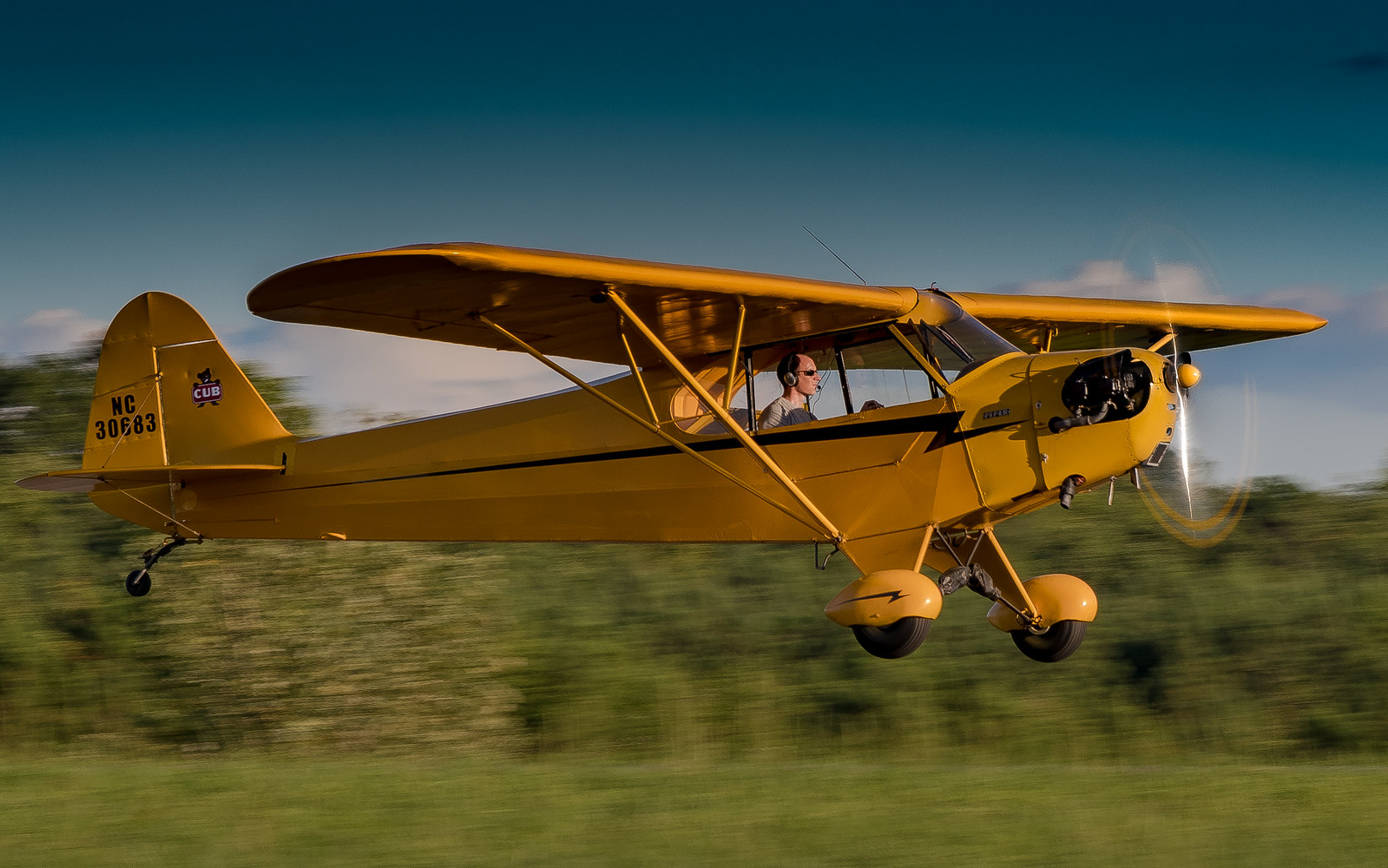 J3 at LKU Freeman Field by FredMan, on Flickr J3 at LKU Freeman Field by FredMan, on Flickr J3 at LKU Freeman Field by FredMan, on Flickr J3 at LKU Freeman Field by FredMan, on FlickrFixed camera. I.e. keeping the camera fixed and waiting for your subject to move into the frame. Fast exposure; you need to stop movement with shutter speed. This gives a sharply focused subject AND background. Requires fast shutters, which usually requires high ISOs, which can introduce noise. Remember, you’re probably going to be using a long lens, which means you’re probably going to be cropping that image pretty tight, and visible noise always seems to increase with the square of the crop ratio.  DSC_5622-Overpass by FredMan, on Flickr DSC_5622-Overpass by FredMan, on FlickrOr you’ll use some combination of the two; tracking the subject to keep it framed, but with a fast enough shutter to freeze what you want, and slow enough to blur what you want. You can see how the effects of background blur change as the rate of tracking decreases in these two shots.  GOO95008 Spraying by FredMan, on Flickr GOO95008 Spraying by FredMan, on Flickr GOO95008 Spraying by FredMan, on Flickr GOO95008 Spraying by FredMan, on Flickr |
ProTip: Never pick a fight with a tree planter. He swings a hoedad for 9 hours a day, carries 30-40 pounds of seedlings on his back, and has 12-14 friends just like him hiding out on the other side of the junk butt pile. They will fuck your shit up.
Continuous is the answer youre looking for that no one wants to give you. As for the amount of points I would use 9 or single. When you use the higher focus points its easy to get the camera to focus of the wrong subject. In sports many times there's people many feet infront or behind you're intended person. So having a wider focal range will start grabbing more stuff in the frame. Towards the end of my highschool/college sport photo career last year i was using the single point continuous focus. And not to brag but another little league soccer team coach called last week and asked if I would do their game photos for some cash!  
|
|
I'm a Canon guy, but that doesn't make a difference in techniques for moving subjects. There's no easy way around it, it's hard to nail every motion shot. Shoot a lot and try to learn what works. The tech out there is amazing these days, which doesn't hurt. I still struggle with free hand panning shots, but when they work, it's amazing. Some of the shots above are great examples. Enjoy! |
“How dare we whine at our inevitable return to that prior state from which the vast majority have never stirred?”
|
Forgot to add, use af-c focus, with 9 ish focal points. Use back button focus. Use continuous high frame rate |
ProTip: Never pick a fight with a tree planter. He swings a hoedad for 9 hours a day, carries 30-40 pounds of seedlings on his back, and has 12-14 friends just like him hiding out on the other side of the junk butt pile. They will fuck your shit up.
Just practice. It will come. People these days rely on software and fancy electronics to do everything for them and never really understand the craft. This was taken about 20 years ago using a Nikon N90s film camera with ISO 100 film, and a Nikon 500mm F/4P manual focus camera hand held.
|
|
Read and reread your replies......thanks. I guess what I'm doing is ok then........... continuous autofocus, single or 9 point focus points (depending on the situation), back button focus, high speed frame rate, etc etc. What got me thinking about all of this is that I saw a review on a lower end Canon camera (R10 maybe) and the guy was demonstrating shooting a basketball player and the single point focus square was following the player and I simply found that amazing. I suppose it's similiar to the Nikon 3d tracking, which I never mess with but am gonna give it a whirl next time I'm out. Softball/baseball for our local h.s. kids is starting soon, so looking forward to that. Thanks again. |