


Learned something new about oil/cars (Page 1 of 2)

Posted: Yesterday 8:35:55 PM EDT
|
There are cars that have the same engine in multiple countries. I read in a couple of places the oil called for in one country may be different in another country may partly be due to the oil pumps or the electronic controls programming the oil pumps on the otherwise the same engines being different. They may be called variable something or other oil pumps. Is there a way to find out if the electronic programming for the oil pumps or the oil pumps themselves different on a make/model depending on what country the vehicle is sold in? |

|
Smells like bullshit in here. The US EPA requires auto makers to eaak out every MPG they can. So we get stuck with recommendations of 0w20 or less when the same engine in other areas are allowed to run 5w30. In for someone to prove me wrong, please? |
"What have you given us Mr. Franklin?" "A Republic, if you can keep it."



| I'll wait for our local SME.... |
Posterity! You will never know, how much it cost the present Generation, to preserve your Freedom! I hope you will make a good Use of it. If you do not, I shall repent in Heaven, that I ever took half the Pains to preserve it.---John Adams




|
Originally Posted By cjk: Smells like bullshit in here. The US EPA requires auto makers to eaak out every MPG they can. So we get stuck with recommendations of 0w20 or less when the same engine in other areas are allowed to run 5w30. In for someone to prove me wrong, please? They don’t require it exactly. Lighter weight oil and tighter internal tolerances in the motor are the new normal approach to squeeze every bit of fuel economy out of them to meet CAFE standards. |

|
Originally Posted By -OdieGreen-: They don’t require it exactly. Lighter weight oil and tighter internal tolerances in the motor are the new normal approach to squeeze every bit of fuel economy out of them to meet CAFE standards. Originally Posted By -OdieGreen-: Originally Posted By cjk: Smells like bullshit in here. The US EPA requires auto makers to eaak out every MPG they can. So we get stuck with recommendations of 0w20 or less when the same engine in other areas are allowed to run 5w30. In for someone to prove me wrong, please? They don’t require it exactly. Lighter weight oil and tighter internal tolerances in the motor are the new normal approach to squeeze every bit of fuel economy out of them to meet CAFE standards. Which is why newer engines SUCK. Can only make something so efficient until it says "nope fuck you, I've had enough" and kaboom |
|
Variable displacement oil pumps are somewhat common nowadays I have never heard them being programmed for different oil weights, but yeah, they probably have different optimizations for different oils if species that way They are primarily to reduce parasitic draw on the engine, increasing mpg |
|
Originally Posted By -OdieGreen-: They don’t require it exactly. Lighter weight oil and tighter internal tolerances in the motor are the new normal approach to squeeze every bit of fuel economy out of them to meet CAFE standards. Tolerances or clearances? There is a difference. |

|
Originally Posted By ChuckD05: Oh one of exceedingly infinite knowledge @Foxtrot08 Originally Posted By ChuckD05: Originally Posted By intheburbs: I'll wait for our local SME.... @Foxtrot08  Yes. There are multiple reasons why different areas will call for different engine oils. 1. Fuel quality around the world is not the same as the U.S. and/or has completely different fuel standards. 2. Cost. High performance oils are expensive. In lower income regions, the high performance oils are just, too expensive. 3. Local availability. Shipping finished lubricants is expensive. So you kinda gotta work with what’s in that area in terms of base oils and additives. 4. Local cultures. Specifically with motorcycle riding cultures. They’re used to very heavy oils, so trying to get them to use like a 0w20, when they’re used to 10w40 or 20w50 is impossible. 5. Yes. The EPA / Cafe standards is part of it. It does not mean that 0w20 is bad. Or 10w30 is great. Just, in say Thailand they may be using a group 1 / 2 blend, with an ancient additive package around, natively. So that’s what most cars get… and it’s a 10w30 or something. Where as our group 3 0w20 just holds together better. There is a method to the madness. |
Direction, not intention, determines destination.
Integrity is the essence of everything successful.
Integrity is the essence of everything successful.
|
Originally Posted By fike: The climate is also different in other places. Originally Posted By fike: Originally Posted By NwG: The oil itself is different in other places. The climate is also different in other places. And the fuel. And the availability of different viscosities. And the realistically expected maintenance levels and amount of abuse. Edit: Fuck it, too late. 
|

|
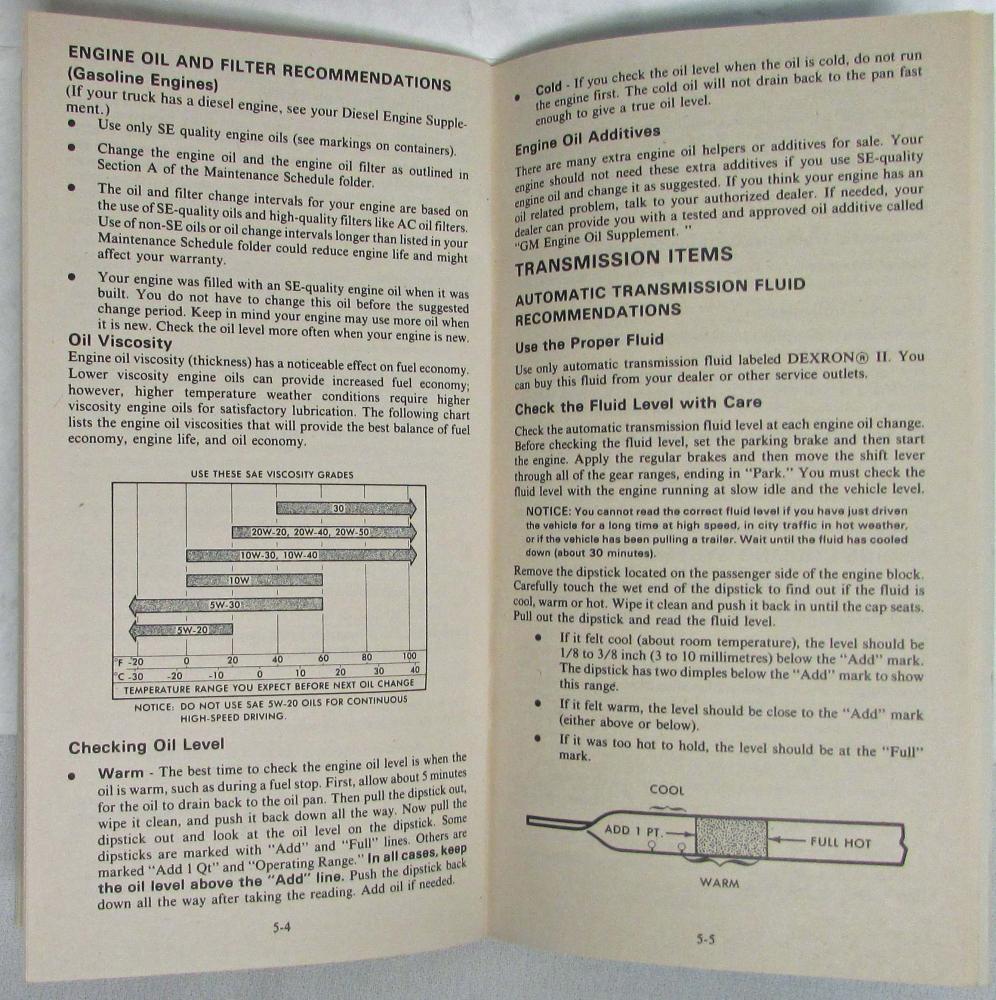
Originally Posted By ConcernedCitizen: Long, long ago, in the before time, oil viscosity used to be based on ambient temperature conditions. https://www.autopaper.com/images/59627/photo/img3099_368952.jpg  Something odd about that chart is it says 10W30 is good for temps higher than what 5W30 is good for. I thought the viscosity of the two are the same when fully warmed up. |
|
Originally Posted By peacematu: Something odd about that chart is it says 10W30 is good for temps higher than what 5W30 is good for. I thought the viscosity of the two are the same when fully warmed up. Originally Posted By peacematu: Originally Posted By ConcernedCitizen: Long, long ago, in the before time, oil viscosity used to be based on ambient temperature conditions. https://www.autopaper.com/images/59627/photo/img3099_368952.jpg Something odd about that chart is it says 10W30 is good for temps higher than what 5W30 is good for. I thought the viscosity of the two are the same when fully warmed up. Just old (not so) technical writing. They are. And absolutely provide the same protection. 10w30 in gasoline applications in the U.S., is essentially a dead viscosity. I don’t even stock it in bulk anymore. We have some bag in box and factory filled drums. But, we don’t carry it in bulk anymore as far as I’m aware. |
Direction, not intention, determines destination.
Integrity is the essence of everything successful.
Integrity is the essence of everything successful.

|
Originally Posted By Foxtrot08: https://www.ar15.com/media/mediaFiles/148484/770D6B37-640C-4EAA-B314-AFB3C7A14D02-2504536.jpg Yes. There are multiple reasons why different areas will call for different engine oils. 1. Fuel quality around the world is not the same as the U.S. and/or has completely different fuel standards. 2. Cost. High performance oils are expensive. In lower income regions, the high performance oils are just, too expensive. 3. Local availability. Shipping finished lubricants is expensive. So you kinda gotta work with what’s in that area in terms of base oils and additives. 4. Local cultures. Specifically with motorcycle riding cultures. They’re used to very heavy oils, so trying to get them to use like a 0w20, when they’re used to 10w40 or 20w50 is impossible. 5. Yes. The EPA / Cafe standards is part of it. It does not mean that 0w20 is bad. Or 10w30 is great. Just, in say Thailand they may be using a group 1 / 2 blend, with an ancient additive package around, natively. So that’s what most cars get… and it’s a 10w30 or something. Where as our group 3 0w20 just holds together better. There is a method to the madness. @Foxtrot08 How does a person know what is best for a given car in our country regardless of emissions and fuel economy? |

|
Originally Posted By foxxnhound: I sometimes look up the most shittiest places my cars are sold in and often the recommended oil is different than what is on the cap. |
_______________________________________________________
*** NRA Endowment Life Member *** VCDL Member *** TN Squire ***
*** NRA Endowment Life Member *** VCDL Member *** TN Squire ***

|
Originally Posted By Foxtrot08: Just old (not so) technical writing. They are. And absolutely provide the same protection. 10w30 in gasoline applications in the U.S., is essentially a dead viscosity. I don’t even stock it in bulk anymore. We have some bag in box and factory filled drums. But, we don’t carry it in bulk anymore as far as I’m aware. Originally Posted By Foxtrot08: Originally Posted By peacematu: Originally Posted By ConcernedCitizen: Long, long ago, in the before time, oil viscosity used to be based on ambient temperature conditions. https://www.autopaper.com/images/59627/photo/img3099_368952.jpg Something odd about that chart is it says 10W30 is good for temps higher than what 5W30 is good for. I thought the viscosity of the two are the same when fully warmed up. Just old (not so) technical writing. They are. And absolutely provide the same protection. 10w30 in gasoline applications in the U.S., is essentially a dead viscosity. I don’t even stock it in bulk anymore. We have some bag in box and factory filled drums. But, we don’t carry it in bulk anymore as far as I’m aware. Ignorant question from an uneducated layman here, so please forgive me in advance.  Theoretically speaking, wouldn't 10w30 be less prone to shearing than 5w30 in extreme situations, though the difference may be realistically imperceptible? I'm not trying to argue or disagree with you, this question is purely for my own intellectual curiosity, based on outdated and likely uncorroborated info I probably read somewhere decades ago...
|

|
Originally Posted By -OdieGreen-: They don’t require it exactly. Lighter weight oil and tighter internal tolerances in the motor are the new normal approach to squeeze every bit of fuel economy out of them to meet CAFE standards. Pretty much why old school 'sloppy' 1911's run, and newer 'tighter' 1911's choke |
"They want you dead but will settle for your submission" - Malice
|
Originally Posted By peacematu: @Foxtrot08 How does a person know what is best for a given car in our country regardless of emissions and fuel economy? Originally Posted By peacematu: Originally Posted By Foxtrot08: https://www.ar15.com/media/mediaFiles/148484/770D6B37-640C-4EAA-B314-AFB3C7A14D02-2504536.jpg Yes. There are multiple reasons why different areas will call for different engine oils. 1. Fuel quality around the world is not the same as the U.S. and/or has completely different fuel standards. 2. Cost. High performance oils are expensive. In lower income regions, the high performance oils are just, too expensive. 3. Local availability. Shipping finished lubricants is expensive. So you kinda gotta work with what’s in that area in terms of base oils and additives. 4. Local cultures. Specifically with motorcycle riding cultures. They’re used to very heavy oils, so trying to get them to use like a 0w20, when they’re used to 10w40 or 20w50 is impossible. 5. Yes. The EPA / Cafe standards is part of it. It does not mean that 0w20 is bad. Or 10w30 is great. Just, in say Thailand they may be using a group 1 / 2 blend, with an ancient additive package around, natively. So that’s what most cars get… and it’s a 10w30 or something. Where as our group 3 0w20 just holds together better. There is a method to the madness. @Foxtrot08 How does a person know what is best for a given car in our country regardless of emissions and fuel economy? Define “best” for your car. Chances are you will have a major failure that’s not oil related, if you use the spec oil for your car in the U.S. Or, you’ll get rid of the car first. As long as you change the oil on a regular schedule. |
Direction, not intention, determines destination.
Integrity is the essence of everything successful.
Integrity is the essence of everything successful.
|
Originally Posted By ConcernedCitizen: Ignorant question from an uneducated layman here, so please forgive me in advance. Theoretically speaking, wouldn't 10w30 be less prone to shearing than 5w30 in extreme situations, though the difference may be realistically imperceptible? I'm not trying to argue or disagree with you, this question is purely for my own intellectual curiosity, based on outdated and likely uncorroborated info I probably read somewhere decades ago... Originally Posted By ConcernedCitizen: Originally Posted By Foxtrot08: Originally Posted By peacematu: Originally Posted By ConcernedCitizen: Long, long ago, in the before time, oil viscosity used to be based on ambient temperature conditions. https://www.autopaper.com/images/59627/photo/img3099_368952.jpg Something odd about that chart is it says 10W30 is good for temps higher than what 5W30 is good for. I thought the viscosity of the two are the same when fully warmed up. Just old (not so) technical writing. They are. And absolutely provide the same protection. 10w30 in gasoline applications in the U.S., is essentially a dead viscosity. I don’t even stock it in bulk anymore. We have some bag in box and factory filled drums. But, we don’t carry it in bulk anymore as far as I’m aware. Ignorant question from an uneducated layman here, so please forgive me in advance. Theoretically speaking, wouldn't 10w30 be less prone to shearing than 5w30 in extreme situations, though the difference may be realistically imperceptible? I'm not trying to argue or disagree with you, this question is purely for my own intellectual curiosity, based on outdated and likely uncorroborated info I probably read somewhere decades ago... Really splitting hairs when it comes down to it. The question is more about the polymers and the quality, of polymers used for the viscosity improver. And secondly, it depends on the base oils when talking about an ultra high quality oil. A 10w30 with a cheap polymer will shear out of grade before a 5w30 with a quality polymer. A synthetic 10w30 made out of a group 3 base oil, will shear out of grade way faster than a 5w30 that is made with PAO base stocks. PAOs are naturally multi viscosity and don’t shear traditionally. Now, all things considered equal. Same base stock, same VI polymers. Yes, the 10w30 won’t shear as fast. You can also make a 10w30 out of just PAO / ester base stocks. Where it’s essentially like a mono grade - no polymers. But, again it’s really splitting hairs. Then you need to look at your fuel dilution if you’re really going to dial it in. |
Direction, not intention, determines destination.
Integrity is the essence of everything successful.
Integrity is the essence of everything successful.
|
Originally Posted By ConcernedCitizen: Ignorant question from an uneducated layman here, so please forgive me in advance. Theoretically speaking, wouldn't 10w30 be less prone to shearing than 5w30 in extreme situations, though the difference may be realistically imperceptible? I'm not trying to argue or disagree with you, this question is purely for my own intellectual curiosity, based on outdated and likely uncorroborated info I probably read somewhere decades ago... I think that was the case for conventional oil. My guess is it is much less so for synthetic oil. Also, better additives these days. |
|
Originally Posted By Foxtrot08: Really splitting hairs when it comes down to it. The question is more about the polymers and the quality, of polymers used for the viscosity improver. And secondly, it depends on the base oils when talking about an ultra high quality oil. A 10w30 with a cheap polymer will shear out of grade before a 5w30 with a quality polymer. A synthetic 10w30 made out of a group 3 base oil, will shear out of grade way faster than a 5w30 that is made with PAO base stocks. PAOs are naturally multi viscosity and don’t shear traditionally. Now, all things considered equal. Same base stock, same VI polymers. Yes, the 10w30 won’t shear as fast. You can also make a 10w30 out of just PAO / ester base stocks. Where it’s essentially like a mono grade - no polymers. But, again it’s really splitting hairs. Then you need to look at your fuel dilution if you’re really going to dial it in. Originally Posted By Foxtrot08: Originally Posted By ConcernedCitizen: Originally Posted By Foxtrot08: Originally Posted By peacematu: Originally Posted By ConcernedCitizen: Long, long ago, in the before time, oil viscosity used to be based on ambient temperature conditions. https://www.autopaper.com/images/59627/photo/img3099_368952.jpg Something odd about that chart is it says 10W30 is good for temps higher than what 5W30 is good for. I thought the viscosity of the two are the same when fully warmed up. Just old (not so) technical writing. They are. And absolutely provide the same protection. 10w30 in gasoline applications in the U.S., is essentially a dead viscosity. I don’t even stock it in bulk anymore. We have some bag in box and factory filled drums. But, we don’t carry it in bulk anymore as far as I’m aware. Ignorant question from an uneducated layman here, so please forgive me in advance. Theoretically speaking, wouldn't 10w30 be less prone to shearing than 5w30 in extreme situations, though the difference may be realistically imperceptible? I'm not trying to argue or disagree with you, this question is purely for my own intellectual curiosity, based on outdated and likely uncorroborated info I probably read somewhere decades ago... Really splitting hairs when it comes down to it. The question is more about the polymers and the quality, of polymers used for the viscosity improver. And secondly, it depends on the base oils when talking about an ultra high quality oil. A 10w30 with a cheap polymer will shear out of grade before a 5w30 with a quality polymer. A synthetic 10w30 made out of a group 3 base oil, will shear out of grade way faster than a 5w30 that is made with PAO base stocks. PAOs are naturally multi viscosity and don’t shear traditionally. Now, all things considered equal. Same base stock, same VI polymers. Yes, the 10w30 won’t shear as fast. You can also make a 10w30 out of just PAO / ester base stocks. Where it’s essentially like a mono grade - no polymers. But, again it’s really splitting hairs. Then you need to look at your fuel dilution if you’re really going to dial it in. Thanks, I appreciate the detailed answer. Again, I knew the difference would be practically imperceptible, but was curious about it just from a technical aspect. I didn't even consider how the base stocks could flip that entire scenario on its head.
|
|
Originally Posted By Foxtrot08: Define “best” for your car. Chances are you will have a major failure that’s not oil related, if you use the spec oil for your car in the U.S. Or, you’ll get rid of the car first. As long as you change the oil on a regular schedule. Originally Posted By Foxtrot08: Originally Posted By peacematu: Originally Posted By Foxtrot08: https://www.ar15.com/media/mediaFiles/148484/770D6B37-640C-4EAA-B314-AFB3C7A14D02-2504536.jpg Yes. There are multiple reasons why different areas will call for different engine oils. 1. Fuel quality around the world is not the same as the U.S. and/or has completely different fuel standards. 2. Cost. High performance oils are expensive. In lower income regions, the high performance oils are just, too expensive. 3. Local availability. Shipping finished lubricants is expensive. So you kinda gotta work with what’s in that area in terms of base oils and additives. 4. Local cultures. Specifically with motorcycle riding cultures. They’re used to very heavy oils, so trying to get them to use like a 0w20, when they’re used to 10w40 or 20w50 is impossible. 5. Yes. The EPA / Cafe standards is part of it. It does not mean that 0w20 is bad. Or 10w30 is great. Just, in say Thailand they may be using a group 1 / 2 blend, with an ancient additive package around, natively. So that’s what most cars get… and it’s a 10w30 or something. Where as our group 3 0w20 just holds together better. There is a method to the madness. @Foxtrot08 How does a person know what is best for a given car in our country regardless of emissions and fuel economy? Define “best” for your car. Chances are you will have a major failure that’s not oil related, if you use the spec oil for your car in the U.S. Or, you’ll get rid of the car first. As long as you change the oil on a regular schedule. My definition of what is best is longevity of the engine. |
|
Originally Posted By peacematu: My definition of what is best is longevity of the engine. Originally Posted By peacematu: Originally Posted By Foxtrot08: Originally Posted By peacematu: Originally Posted By Foxtrot08: https://www.ar15.com/media/mediaFiles/148484/770D6B37-640C-4EAA-B314-AFB3C7A14D02-2504536.jpg Yes. There are multiple reasons why different areas will call for different engine oils. 1. Fuel quality around the world is not the same as the U.S. and/or has completely different fuel standards. 2. Cost. High performance oils are expensive. In lower income regions, the high performance oils are just, too expensive. 3. Local availability. Shipping finished lubricants is expensive. So you kinda gotta work with what’s in that area in terms of base oils and additives. 4. Local cultures. Specifically with motorcycle riding cultures. They’re used to very heavy oils, so trying to get them to use like a 0w20, when they’re used to 10w40 or 20w50 is impossible. 5. Yes. The EPA / Cafe standards is part of it. It does not mean that 0w20 is bad. Or 10w30 is great. Just, in say Thailand they may be using a group 1 / 2 blend, with an ancient additive package around, natively. So that’s what most cars get… and it’s a 10w30 or something. Where as our group 3 0w20 just holds together better. There is a method to the madness. @Foxtrot08 How does a person know what is best for a given car in our country regardless of emissions and fuel economy? Define “best” for your car. Chances are you will have a major failure that’s not oil related, if you use the spec oil for your car in the U.S. Or, you’ll get rid of the car first. As long as you change the oil on a regular schedule. My definition of what is best is longevity of the engine. The SAE and STLE both have had studies that shown, an oil above 2.6 cst in the high temp, high shear test (150c) does not increase wear. 2.6cst is the cut off for a 0w20 for example. So, no, modern light weight oils will not increase wear. 0w8 / 0w16 is a different story. Those cars (and oils) are different. Different machining. Different interior coatings. Etc. So those ultra light viscosity oils are a completely different conversation than a 0w20 and above. |
Direction, not intention, determines destination.
Integrity is the essence of everything successful.
Integrity is the essence of everything successful.
|
Originally Posted By ConcernedCitizen: Thanks, I appreciate the detailed answer. Again, I knew the difference would be practically imperceptible, but was curious about it just from a technical aspect. I didn't even consider how the base stocks could flip that entire scenario on its head. Originally Posted By ConcernedCitizen: Originally Posted By Foxtrot08: Originally Posted By ConcernedCitizen: Originally Posted By Foxtrot08: Originally Posted By peacematu: Originally Posted By ConcernedCitizen: Long, long ago, in the before time, oil viscosity used to be based on ambient temperature conditions. https://www.autopaper.com/images/59627/photo/img3099_368952.jpg Something odd about that chart is it says 10W30 is good for temps higher than what 5W30 is good for. I thought the viscosity of the two are the same when fully warmed up. Just old (not so) technical writing. They are. And absolutely provide the same protection. 10w30 in gasoline applications in the U.S., is essentially a dead viscosity. I don’t even stock it in bulk anymore. We have some bag in box and factory filled drums. But, we don’t carry it in bulk anymore as far as I’m aware. Ignorant question from an uneducated layman here, so please forgive me in advance. Theoretically speaking, wouldn't 10w30 be less prone to shearing than 5w30 in extreme situations, though the difference may be realistically imperceptible? I'm not trying to argue or disagree with you, this question is purely for my own intellectual curiosity, based on outdated and likely uncorroborated info I probably read somewhere decades ago... Really splitting hairs when it comes down to it. The question is more about the polymers and the quality, of polymers used for the viscosity improver. And secondly, it depends on the base oils when talking about an ultra high quality oil. A 10w30 with a cheap polymer will shear out of grade before a 5w30 with a quality polymer. A synthetic 10w30 made out of a group 3 base oil, will shear out of grade way faster than a 5w30 that is made with PAO base stocks. PAOs are naturally multi viscosity and don’t shear traditionally. Now, all things considered equal. Same base stock, same VI polymers. Yes, the 10w30 won’t shear as fast. You can also make a 10w30 out of just PAO / ester base stocks. Where it’s essentially like a mono grade - no polymers. But, again it’s really splitting hairs. Then you need to look at your fuel dilution if you’re really going to dial it in. Thanks, I appreciate the detailed answer. Again, I knew the difference would be practically imperceptible, but was curious about it just from a technical aspect. I didn't even consider how the base stocks could flip that entire scenario on its head. Yeah, generally… don’t over think it. Unless you’re trying to hit a very specific goal. |
Direction, not intention, determines destination.
Integrity is the essence of everything successful.
Integrity is the essence of everything successful.

USPSA Master Race
Joined:
Feb 2023
Posts:
27656
EE: 100% (49)
 WI, USA
|
Originally Posted By cjk: Smells like bullshit in here. The US EPA requires auto makers to eaak out every MPG they can. So we get stuck with recommendations of 0w20 or less when the same engine in other areas are allowed to run 5w30. In for someone to prove me wrong, please? Foxtrot has already provided an explanation for varying viscosities in other countries. Has to do with the fuel and availability. ETA I posted before reading the entire thread. Covered
|
|
Originally Posted By Foxtrot08: Yeah, generally… don’t over think it. Unless you’re trying to hit a very specific goal. Originally Posted By Foxtrot08: Originally Posted By ConcernedCitizen: Originally Posted By Foxtrot08: Originally Posted By ConcernedCitizen: Originally Posted By Foxtrot08: Originally Posted By peacematu: Originally Posted By ConcernedCitizen: Long, long ago, in the before time, oil viscosity used to be based on ambient temperature conditions. https://www.autopaper.com/images/59627/photo/img3099_368952.jpg Something odd about that chart is it says 10W30 is good for temps higher than what 5W30 is good for. I thought the viscosity of the two are the same when fully warmed up. Just old (not so) technical writing. They are. And absolutely provide the same protection. 10w30 in gasoline applications in the U.S., is essentially a dead viscosity. I don’t even stock it in bulk anymore. We have some bag in box and factory filled drums. But, we don’t carry it in bulk anymore as far as I’m aware. Ignorant question from an uneducated layman here, so please forgive me in advance. Theoretically speaking, wouldn't 10w30 be less prone to shearing than 5w30 in extreme situations, though the difference may be realistically imperceptible? I'm not trying to argue or disagree with you, this question is purely for my own intellectual curiosity, based on outdated and likely uncorroborated info I probably read somewhere decades ago... Really splitting hairs when it comes down to it. The question is more about the polymers and the quality, of polymers used for the viscosity improver. And secondly, it depends on the base oils when talking about an ultra high quality oil. A 10w30 with a cheap polymer will shear out of grade before a 5w30 with a quality polymer. A synthetic 10w30 made out of a group 3 base oil, will shear out of grade way faster than a 5w30 that is made with PAO base stocks. PAOs are naturally multi viscosity and don’t shear traditionally. Now, all things considered equal. Same base stock, same VI polymers. Yes, the 10w30 won’t shear as fast. You can also make a 10w30 out of just PAO / ester base stocks. Where it’s essentially like a mono grade - no polymers. But, again it’s really splitting hairs. Then you need to look at your fuel dilution if you’re really going to dial it in. Thanks, I appreciate the detailed answer. Again, I knew the difference would be practically imperceptible, but was curious about it just from a technical aspect. I didn't even consider how the base stocks could flip that entire scenario on its head. Yeah, generally… don’t over think it. Unless you’re trying to hit a very specific goal. All of my knowledge is from back when Shell Rotella T6 being officially labeled JASO MA was the talk of the town.
|
|
Originally Posted By Foxtrot08: The SAE and STLE both have had studies that shown, an oil above 2.6 cst in the high temp, high shear test (150c) does not increase wear. 2.6cst is the cut off for a 0w20 for example. So, no, modern light weight oils will not increase wear. 0w8 / 0w16 is a different story. Those cars (and oils) are different. Different machining. Different interior coatings. Etc. So those ultra light viscosity oils are a completely different conversation than a 0w20 and above. Originally Posted By Foxtrot08: Originally Posted By peacematu: Originally Posted By Foxtrot08: Originally Posted By peacematu: Originally Posted By Foxtrot08: https://www.ar15.com/media/mediaFiles/148484/770D6B37-640C-4EAA-B314-AFB3C7A14D02-2504536.jpg Yes. There are multiple reasons why different areas will call for different engine oils. 1. Fuel quality around the world is not the same as the U.S. and/or has completely different fuel standards. 2. Cost. High performance oils are expensive. In lower income regions, the high performance oils are just, too expensive. 3. Local availability. Shipping finished lubricants is expensive. So you kinda gotta work with what’s in that area in terms of base oils and additives. 4. Local cultures. Specifically with motorcycle riding cultures. They’re used to very heavy oils, so trying to get them to use like a 0w20, when they’re used to 10w40 or 20w50 is impossible. 5. Yes. The EPA / Cafe standards is part of it. It does not mean that 0w20 is bad. Or 10w30 is great. Just, in say Thailand they may be using a group 1 / 2 blend, with an ancient additive package around, natively. So that’s what most cars get… and it’s a 10w30 or something. Where as our group 3 0w20 just holds together better. There is a method to the madness. @Foxtrot08 How does a person know what is best for a given car in our country regardless of emissions and fuel economy? Define “best” for your car. Chances are you will have a major failure that’s not oil related, if you use the spec oil for your car in the U.S. Or, you’ll get rid of the car first. As long as you change the oil on a regular schedule. My definition of what is best is longevity of the engine. The SAE and STLE both have had studies that shown, an oil above 2.6 cst in the high temp, high shear test (150c) does not increase wear. 2.6cst is the cut off for a 0w20 for example. So, no, modern light weight oils will not increase wear. 0w8 / 0w16 is a different story. Those cars (and oils) are different. Different machining. Different interior coatings. Etc. So those ultra light viscosity oils are a completely different conversation than a 0w20 and above. Thank you, Sir. |
|
Originally Posted By seek2: Yep, and availability is different, too. You're not going to find 0W16 sitting on the shelf of every auto parts store in Somalia. 5W30 on the other hand is probably obtainable even in bumfuck. or just 30 weight. my airplane can use either 20w-50 or just plain 50 depending on whether I'm in Florida you're around or up north somewhere. |


|
Originally Posted By DrMark: https://www.ar15.com/media/mediaFiles/11039/zzz_jpg-3832825.JPG Originally Posted By DrMark: Originally Posted By foxxnhound: I sometimes look up the most shittiest places my cars are sold in and often the recommended oil is different than what is on the cap.  I can’t wait for the day Foxtrot says gets fed up and starts saying “YES, you’re right, the car manufacturers are just trying to fuck everybody — just use 5w30 in everything. “ |
https://www.guntechtips.com
|
Originally Posted By Mikebiker: I have a Powerboost in my F150. When I turn on / start the truck the engine is not running but the oil pressure shows 20 PSI. Tell me that is not an electric oil pump maintaining pressure for the engine starting under a load. Originally Posted By Mikebiker: I have a Powerboost in my F150. When I turn on / start the truck the engine is not running but the oil pressure shows 20 PSI. Tell me that is not an electric oil pump maintaining pressure for the engine starting under a load. PowerBoost Oil Pump Details Mechanically Driven: The PowerBoost 3.5L V6 hybrid uses a traditional, engine-driven mechanical oil pump attached to the front/lower block. It does not use a separate electric oil pump for the internal combustion engine (ICE) lubrication. Operation: When the hybrid system shuts off the gasoline engine during electric-only driving or auto-stop, the mechanical oil pump also stops spinning. Residual oil pressure remains trapped in the system temporarily, but active pressurization resumes instantly once the internal combustion engine restarts. |
Joined:
Jun 2022
Posts:
12743
EE: 100% (3)
IA, USA
|
Originally Posted By ConcernedCitizen: Long, long ago, in the before time, oil viscosity used to be based on ambient temperature conditions. https://www.autopaper.com/images/59627/photo/img3099_368952.jpg Tribol knowledge has been lost 
|

|
Originally Posted By DrMark: https://www.ar15.com/media/mediaFiles/11039/zzz_jpg-3832825.JPG I rost |
| In my younger years, I thought I was doing the best thing by using 20W-50, sometimes with STP, in my new cars. I started this in 1967 and didn't stop until 1990, when I finally wised-up. Ever since then, I have stuck with the viscosity labeled on the oil fill cap, and I have never had any more internal engine problems. We all know that every vehicle includes in its manual various oil viscosities for different climates but having always lived in fairly temperate areas, I simply stick with the general recommendation - like I said, that which is seen on the oil fill cap. |
|
Originally Posted By peacematu: There are cars that have the same engine in multiple countries. I read in a couple of places the oil called for in one country may be different in another country may partly be due to the oil pumps or the electronic controls programming the oil pumps on the otherwise the same engines being different. They may be called variable something or other oil pumps. Is there a way to find out if the electronic programming for the oil pumps or the oil pumps themselves different on a make/model depending on what country the vehicle is sold in? They don't change oil pumps by country. And electric pumps aren't programmed. They are powered by electrons, but they aren't variable rate The oil viscosity they recommend varies by two data points: The local climate The local regulations |
“All things are said already, but since no one is listening, it is always necessary to start again.”
Learned something new about oil/cars (Page 1 of 2)
Join the Community
Your next conversation starts here.
Create your free account to join discussions, share your experience, save topics, and connect with the AR15.COM community.
- Join discussions
- Follow topics and replies
- Connect with fellow enthusiasts
Already a member? Sign in
Stay informed by subscribing to our Newsletter