


Posted: 12/21/2020 2:42:44 PM EDT
|
I decided that my wife needed a decent set of kitchen knives for Christmas. I didn't make the blades, I just don't have time for it anymore. I cut a burl off of an old boxelder tree and cut into slabs then stabilized them in dyed resin for the handle. The handles were to be pinned with sterling silver. Turns out that would be a problem. The problem? The holes were a little over 4mm in diameter. I can't buy sterling wire that size at most wholesalers and the ones who will make it charge a huge premium over spot. No problem, I'll just pour an ingot, roll it out to 5mm square and draw it out into round. Except you can't just pull large wire through a plate by hand, you'll herniate yourself and rip the vise off of the bench. The solution? Build a draw bench. Here's how. Get a solid piece of steel 4-6' long. I used a 6' piece of "U" channel 6" wide and 2" high. Rectangular tube should work too. 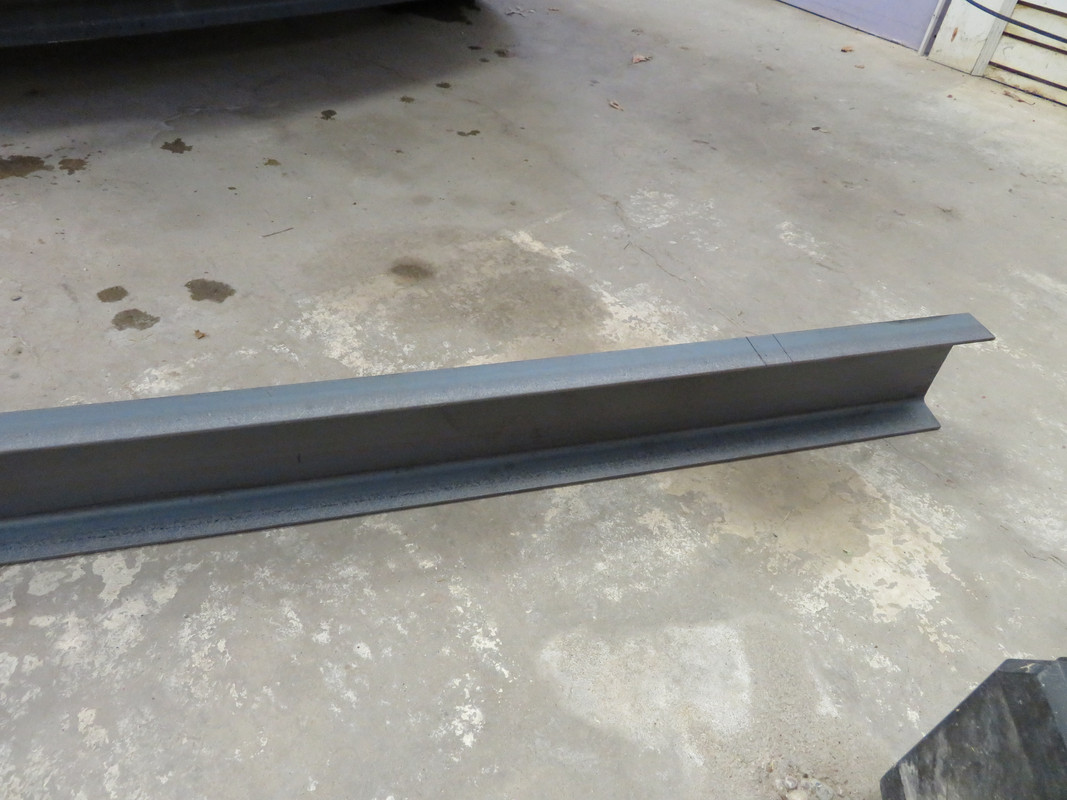 You can see that I've marked the steel at 60" and 61.25" This is where it will be cut. Don't go over 5' overall length, it will be too difficult to hold the pliers and winch handle. Here it is cut. You can see the 1.25" piece has been cut into 2 "L" shaped pieces. The trailer winch is in this picture too. 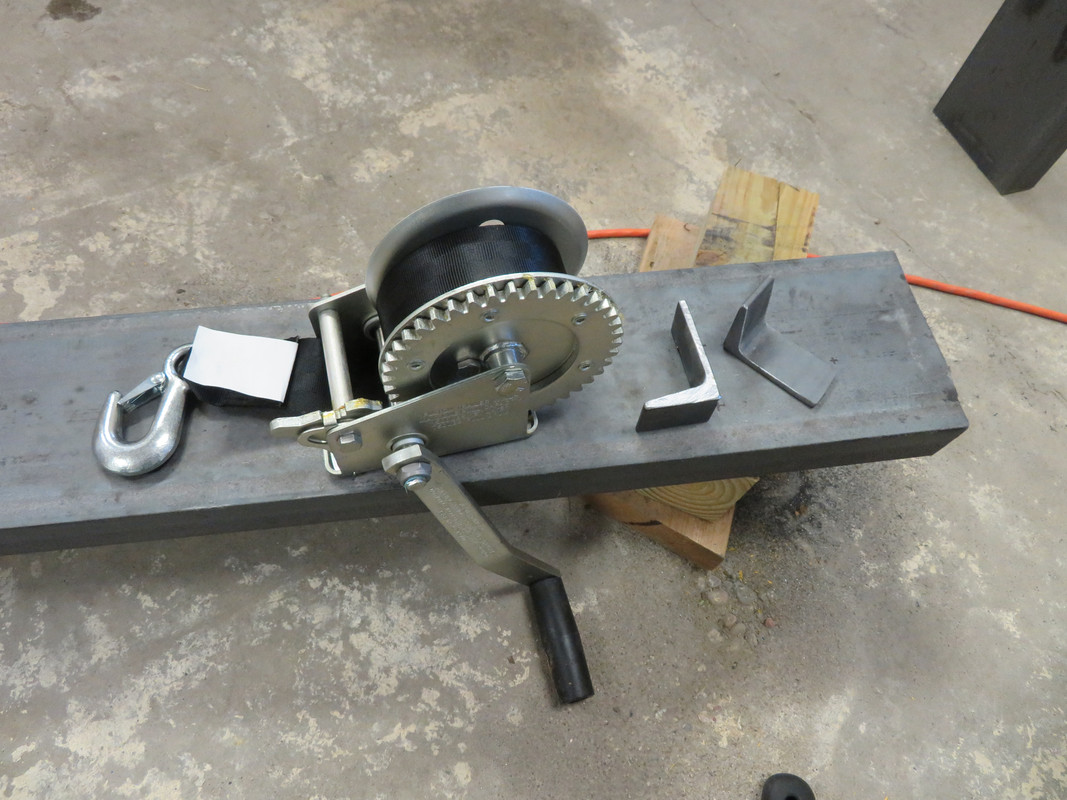 Drill the "L" brackets for bolts, I used 3/8". Then set them about 4" from what will be the left end of the "U" channel, square them up and mark the holes. Make sure there is at least 2" between them. Bolt into place. The hook on the winch should be cut off so that the ring on the draw pliers can be sewn in. I took the winch and ring in to my tailor and he had it done in ten minutes for the price of $5. 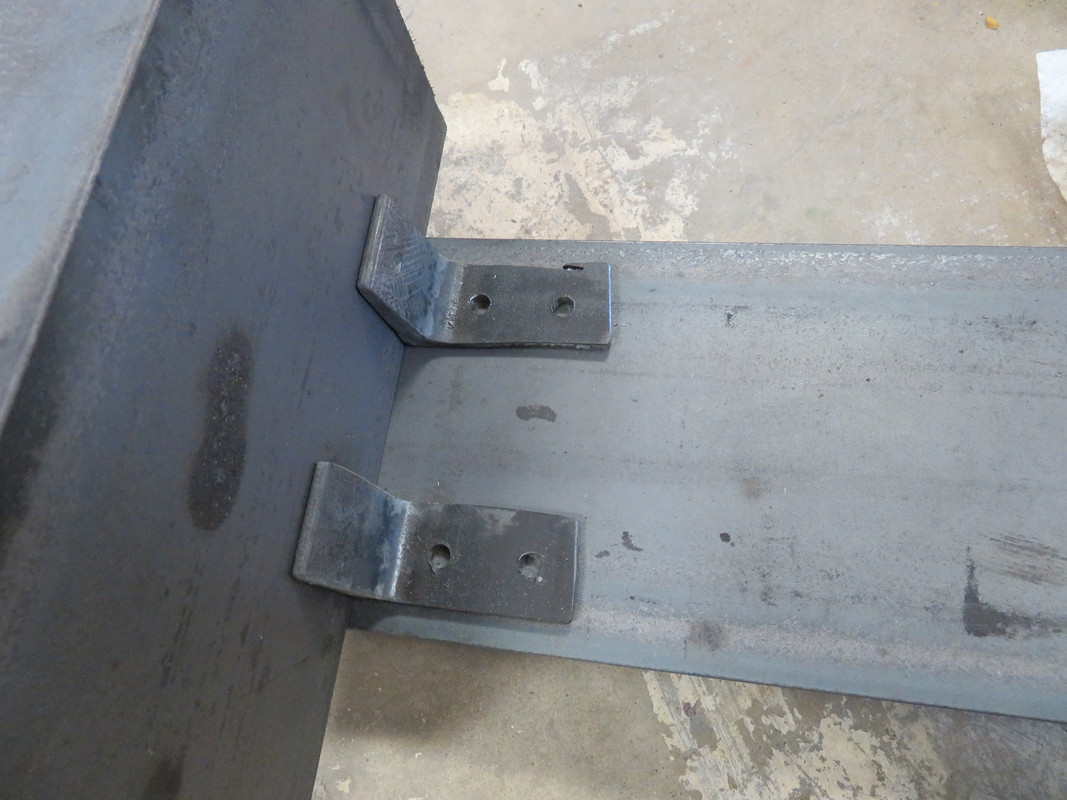 Mark and bolt down the winch on the other end of the "U" channel. 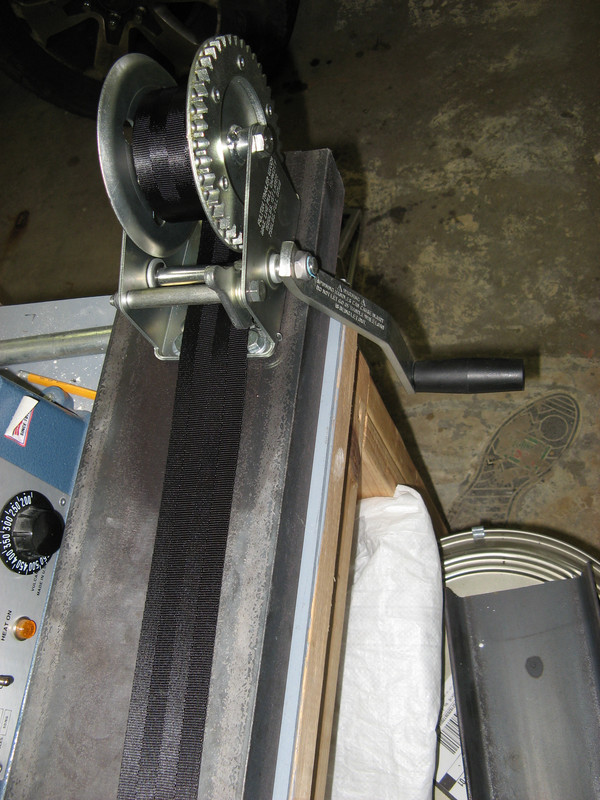 Now it's ready for use. 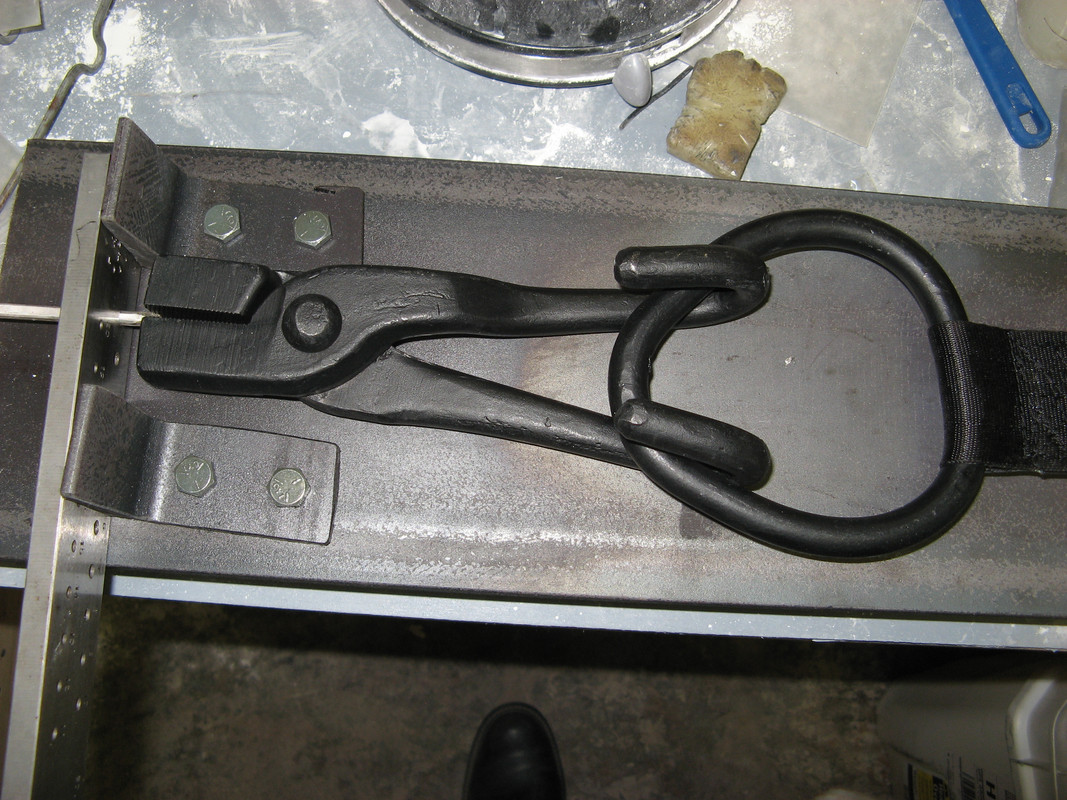 You can see the draw plate pulled against the brackets That is silver wire being drawn through. You can see how the pliers work. The ring squeezes the handles, once you have tension on the winch they won't come loose. Always lube wire being drawn, bee's wax works well for this. Pretty simple project that can be built with hand tools. I put this one together in around an hour. I'm sure I could have done a better job if I'd taken more time but time is at a premium this time of year. It will get a coat of paint this spring when it warms up. |


|
So is the plate just a bunch of progressively smaller holes? Are they tapered, or do they just cut the outside of the wire off? I would think that (based on the name alone) you would want to draw(which I interpret as "smash"  ) down the wire so you don't have a ton of waste but I can't see how that would work just pulling it through a hole. ) down the wire so you don't have a ton of waste but I can't see how that would work just pulling it through a hole. Thanks for sharing your projects! |
"Freedom is a messy business." - LaRue_Tactical
I am a sack of blood, held together by un-tanned leather. . .
I am a sack of blood, held together by un-tanned leather. . .
|
Yes, draw plate holes are tapered to smash the wire down. The best plates have carbide holes or, in the old days, sapphire lined holes. The insides of the holes are polished on good plates making drawing easier. The cheap Chinese plates...anything goes with that crap. You file or sand the end of the wire into a taper so the end of the wire can fit through the hole to be grabbed by the tongs. Then start cranking and the winch does all the work. Edit: That little yellow/brown block above the tongs in the last pic is beeswax used to lube the wire before drawing. |
|
Originally Posted By DFARM: So is the plate just a bunch of progressively smaller holes? Are they tapered, or do they just cut the outside of the wire off? I would think that (based on the name alone) you would want to draw(which I interpret as "smash" ) down the wire so you don't have a ton of waste but I can't see how that would work just pulling it through a hole. Thanks for sharing your projects! When you pull on wire it stretches longer and the diameter shrinks smaller. Done through a series of progressively smaller holes (note all the holes in the plate the wire is passing through) it's a fairly simple process as long as the material is ductile and remains that way. Just don't try to go too much in 1 step, the wire on the tension side has to be able to hold up to the force required to pull it through the hole in the plate. Changing the diameter in one big step would require a lot of force and the wire on the tension side would be coming out much smaller (thus able to hold less tension). |
|
That's interesting. I guess it makes sense. When you stretch things they get thinner. I just never really thought about using it to shape metal. I expected rollers or something to reduce the diameter. Thanks for the explanation. |
"Freedom is a messy business." - LaRue_Tactical
I am a sack of blood, held together by un-tanned leather. . .
I am a sack of blood, held together by un-tanned leather. . .
|
Originally Posted By DFARM: That's interesting. I guess it makes sense. When you stretch things they get thinner. I just never really thought about using it to shape metal. I expected rollers or something to reduce the diameter. Thanks for the explanation. You can run it through a rolling mill and get the same effect. However, mills won't make good round wire, square or half round is no problem in a mill. |


|
I used to draw gold wire when I work for a jewelry manufacturer. I could hand draw down to bout .005" With 18K or better gold. 14K-10K was very hard to get that fine unless I tempered as the wire entered the die. How Fine can you draw silver down? Never did any silver. EBR |
|
You can draw down as far as you want, thinner than a hair for sure. The problem is annealing and tapering the end to fit through the plate. In my experience, the thinner the wire gets the more important frequent annealing becomes. Soft metals like gold, silver, brass and copper can be drawn fairly easily by hand once they get down around 10-12 gauge. |