


DGRVP- Primer 229: German Walther P38 (Page 21 of 60)

|
Interesting presentation on different aspects of AI models. Brent Venable - Machines Thinking Fast and Slow: How the Way We Think is Shaping Smarter AI  Brent Venable - Machines Thinking Fast and Slow: How the Way We Think is Shaping Smarter AI As artificial intelligence becomes increasingly integrated into our lives, the way machines “think” is beginning to mirror how humans make decisions. The recent rise of large language models (LLMs) has brought renewed attention to a style of intelligence that resembles what psychologists call “thinking fast”—quick, intuitive, and context-driven responses. But human intelligence also relies on a slower, more deliberate system of reasoning—”thinking slow”—which allows for reflection, planning, and logical analysis. In "Machines Thinking Fast and Slow," Dr. Brent Venable explores how insights from dual-system theories of human cognition can help us build smarter, more adaptable AI. Drawing on examples from AI agents performing complex tasks, Dr. Venable highlights how combining fast, data-driven neural approaches with slower, symbolic reasoning leads to more robust performance. This dual-systems perspective not only provides a promising path for integrating symbolic and neural methods in AI, but also offers a framework for understanding the next generation of intelligent systems—machines that can reason, reflect, and react, all in the flow of thought. Dr. Brent Venable's research sits at the intersection of AI-based preference reasoning and cognitive modeling of human decision making, with the goal of designing intelligent systems that are both adaptive and human-aware. Her work focuses on developing automated models of preference to support decision-making in applications such as recommender systems, human-machine teaming, and behavioral modeling. More recently, she has explored the ethical implications of AI technologies and their potential for advancing social good. She is the co-author of two books and has published more than 100 peer-reviewed articles in leading AI journals and conferences. She collaborates with a number of premier research institutions, including NASA Ames, IBM Research, and NICTA, and her work has been supported by agencies such as NASA, ONR, ARL, NIH, NSF, the Gulf of Mexico Research Initiative, and the Future of Life Institute. Brent graduated Magna Cum Laude in Pure Mathematics from the University of Padova, Italy, and earned her Ph.D. in Computer Science and Artificial Intelligence with a dissertation on automatically learning preferences over schedules, developed at NASA Ames in support of the Mars Rovers Spirit and Opportunity. She is currently a Senior Research Scientist at the Florida Institute for Human and Machine Cognition (IHMC) and serves as Director of the IHMC–University of West Florida Ph.D. program in Intelligent Systems and Robotics. She is also a Professor of Computer Science at the University of West Florida. Previously, she held a joint appointment with Tulane University, where she joined as an Associate Professor in 2012 and was promoted to Professor in 2018. Before moving to the U.S., she was a tenured Assistant Professor of Computer Science at the University of Padova. |
|
Couple of videos on the SDB Dauntless. Douglas SBD Dauntless | Origins and Development of the 'Hero of Midway'  Douglas SBD Dauntless | Origins and Development of the 'Hero of Midway' 0:00 Intro 3:57 Design Origins 12:00 Northrop XBT-1 21:35 Douglas XSBD-1 25:40 SBD-1 30:27 SBD-2 33:18 SBD-3 39:14 Douglas A-24 42:28 SBD-4 44:33 SBD-5 48:06 SBD-6 The SBD Dauntless - Consistently Slow, Consistently Deadly  The SBD Dauntless - Consistently Slow, Consistently Deadly |
|
Interesting video on the B-32. B-32 Dominator, the other Very Heavy Bomber of WW2  B-32 Dominator, the other Very Heavy Bomber of WW2 |
|
Interesting video on supercharger and turbocharger usage during WW2 War Boost: An Introductory Lesson In WWII Aircraft Engine Supercharging  War Boost: An Introductory Lesson In WWII Aircraft Engine Supercharging |
|
Never heard of this truck. Battling Beast Of Burden: Why The M26 Dragon Wagon Was The Greatest Heavy Duty Truck Of WWII 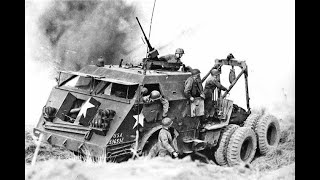 Battling Beast Of Burden: Why The M26 Dragon Wagon Was The Greatest Heavy Duty Truck Of WWII |
|
Interesting video. Would be interesting to see if we could pull off something similar today. War For The Woods: The New England Timber Salvage Administration and The Disaster Loggers of 1938  War For The Woods: The New England Timber Salvage Administration and The Disaster Loggers of 1938 When the Hurricane of 1938 struck New England, it was a disaster of proportions unknown to the region at that point. No storm in modern history had wrought more destruction or devastation than that one. Beyond the cities and towns, past the population centers, there was another looming nightmare...the forests. Nearly 1,000 square miles of New England Pine Forest were blown down, placing nearly 2 billion board feet in logs and lumber in jeopardy of not only waste but of becoming a massive fire hazard. No salvage logging operation on the planet before or since has been as large or as robust as that of the New England Timber Salvage Administration of 1938. In this video we tell the story of the hurricane, the aftermath, the plan, and the execution of this most audaciously bold plan. Somehow a Hurricane helped restore the forests, prepare the country for WWII, and in a plot twist has had a very pleasant after-effect on modern life in New England. |
|
Interesting video on the history of oil well firefighting. Masters of Disaster: The Men Who Invented and Perfected Oil Well Firefighting  Masters of Disaster: The Men Who Invented and Perfected Oil Well Firefighting This is the story of three men. Three men who through their own bravery, creative approach, and lifelong obsessions, created the industry of oil well fire fighting. Tex Thornton, Myron Kinley, and Red Adair all built up each other's knowledge and success to make scads of money while risking their lives on a daily basis to put out burning oil and gas wells, cap blown out wells, and otherwise battle the most intense and wild forces Mother Nature has to offer. |
|
Very interesting news. Latest paper: The Probable Direct-Imaging Detection of the Stellar Companion to Betelgeuse Holy Cow! Betelgeuse's Partner Has Finally Been Found  Holy Cow! Betelgeuse's Partner Has Finally Been Found 0:00 Betelgeuse Betelgeuse Betelgeuse 0:40 What happened to the star in 2019 2:40 Explanation - it has a companion! 3:30 Red supergiants and variability 5:05 Strange patterns 6:00 Difficulties and non detections 6:45 How this was done 9:05 What is this companion Siwarha? 11:00 What this explains and how this will change the stars 12:50 What's next? |
|
Interesting theory. Papers/articles are in the video description. Massive Blobs Inside Earth May Be Responsible For Extinction Events  Massive Blobs Inside Earth May Be Responsible For Extinction Events 0:00 LLSVP - Large Low Sheet Velocity Provinces 1:30 Could this be a result of Theia collision? 2:30 Studies of wave damping and unusual results 3:55 New study suggests they are made from continents 6:00 Major effects on Earth 6:40 Volcanic eruptions and superplumes 7:55 BLOBS - they move! 8:50 Extinctions 9:50 Predicting eruptions and findings diamonds 10:50 Conclusions |
|
Interesting video on a Russian rocket engine that wasn't actually built. RD-701: A Rocket Engine Too Beautiful For This World  RD-701: A Rocket Engine Too Beautiful For This World 00:00 FIRE SALE!!! 01:49 Intro 04:48 Specific impulse: a recap 14:24 Launch System Architecture 18:47 'The Big Plane' 21:43 RD-701: Engine Architecture 32:37 Why I know it Never Existed 41:47 Air Launch Feasibility 58:38 Legacy His previous video on a tri-propellant engine. The Best Performing (and most dangerous) Chemical Rocket Ever Tested: Rocketdyne Tripropellant  The Best Performing (and most dangerous) Chemical Rocket Ever Tested: Rocketdyne Tripropellant 00:00 Intro 01:46 Overview and Background 05:58 Reaction Chemistry 14:12 Engine Configuration 18:50 Testing 31:00 Environmental Impacts 36:14 Spaceflight Applications 41:54 Real Life Applications 50:30 Extremely '90s Outro |
|
Interesting video. This mechanism shrinks when pulled  This mechanism shrinks when pulled 0:00 What happens if you cut this rope? 1:41 The Spring Paradox 4:59 New York’s Perplexing Discovery 6:29 Road Networks and Traffic Flow 8:40 Braess’s Paradox 14:29 Snapping 17:16 This object shrinks when you stretch it |

|
Originally Posted By DaGoose: Interesting video. This mechanism shrinks when pulled  https://www.youtube.com/watch?v=-QTkPfq7w1A https://www.youtube.com/watch?v=-QTkPfq7w1A0:00 What happens if you cut this rope? 1:41 The Spring Paradox 4:59 New York’s Perplexing Discovery 6:29 Road Networks and Traffic Flow 8:40 Braess’s Paradox 14:29 Snapping 17:16 This object shrinks when you stretch it Probably off topic but pulling it from each end doesn't make it shorter, it makes it longer. The action of pulling it triggers the thing to try and yank the ends back towards each other. "When you pull this apart it tries to retract" is not likely to get clicks as a title though. |
|
Interesting video on the B-29 turret system. The B-29 Turret System: An Expensive, Effective Mechanical Masterpiece  The B-29 Turret System: An Expensive, Effective Mechanical Masterpiece 00:00 Intro 02:34 The Nadir 05:57 Mechanical Analog Computers 12:39 Overview of the B-29 19:01 Overview of the Fire Control System 27:29 Lead Correction 34:24 Parallax Correction 40:01 Ballistic Corrections 42:11 Putting it all Together 48:35 Everything Else 54:00 Effectiveness 1:03:18 Outro |
|
Video on the Lockheed Constellation. This INCREDIBLE Aircraft Changed Everything  This INCREDIBLE Aircraft Changed Everything 0:00 Intro 1:55 Origins 5:37 Lockheed's Electra Family 12:43 The Hudson 14:40 Lockheed Excalibur Concept 15:14 Excalibur Becomes the Constellation 17:53 P-38 Lightning| 24:39 Wartime 26:50 First Flight 28:07 C-69's Career 32:33 The War Ends 34:20 The Constellation is Born 38:50 The Constellation's Amazing Design 46:21 Outro |

Please De-Clickbait YouTube titles with a description instead of turning the thread title into click bait. Makes me want to unsub from thread. 
|
The person who complains most, and is the most critical of others has the most to hide.
All truth passes through three stages. First, it is ridiculed. Second, it is violently opposed. Third, it is accepted as being self-evident.
All truth passes through three stages. First, it is ridiculed. Second, it is violently opposed. Third, it is accepted as being self-evident.
|
Interesting article/paper. Paper: Causal inference and cognitive-behavioral integration deficits drive stable variation in human punishment sensitivity Charts and links at the below URL. Study sheds light on why some people keep self-sabotaging Most people, after suffering consequences for a bad decision, will alter their future behavior to avoid a similar negative outcome. That's just common sense. But many social circles have that one friend who never seems to learn from those consequences, repeatedly self-sabotaging themselves with the same bad decisions. When it comes to especially destructive behaviors, like addictions, the consequences can be severe or downright tragic. Why do they do this? Researchers at the University of New South Wales (UNSW) in Sydney, Australia, suggest that the core issue is that such people don't seem able to make a causal connection between their choices/behavior and the bad outcome, according to a new paper published in the journal Nature Communications Psychology. Nor are they able to integrate new knowledge into their decision-making process effectively to get better results. The results could lead to the development of new intervention strategies for gambling, drug, and alcohol addictions. In 2023, UNSW neuroscientist Philip Jean-Richard-Dit-Bressel and colleagues designed an experimental video game to explore the issue of why certain people keep making the same bad choices despite suffering some form of punishment as a result. Participants played the interactive online game by clicking on one of two planets to "trade" with them; choosing the correct planet resulted in earning points. For each click in two three-minute rounds, there was a 50 percent chance of choosing the correct planet and being rewarded with points. Then the researchers introduced a new element: clicking on one of the two planets would result in a pirate spaceship attacking 20 percent of the time and "stealing" one-fifth of a player's points. Selecting the other planet would result in a neutral spaceship 20 percent of the time, which did not attack or steal points. The result was a very distinct split between those who figured out the game and stopped trading with the planet that produced the pirate spaceship, and those who did not. None of the participants enjoyed losing points to the attacking space pirates, but the researchers found that those who didn't change their playing strategy just couldn't make the connection between their behavior and the negative outcome. The team identified three distinct behavioral phenotypes as a result of their experiments, representing the varying sensitivity of people to the adverse consequences (punishment) of their actions. Sensitives easily make the connection between their choices and the outcomes and can adapt their behavior to gain rewards and avoid punishment. Those who fail to make the link are either Unawares—people who, once given further information or clues, can re-evaluate and change their behavior—and Compulsives, i.e., people who still persist in making bad decisions despite suffering consequences. Expanding the pool This latest study builds on that earlier work, using a variation of the same experimental online game: After a few rounds, the researchers told all the subjects which planet was linked to which ship and also which ship triggered the point losses. "We never directly tell them what the best strategy is; we just reveal how each action leads to particular cues and 'attack' (the point-loss outcome)," Jean-Richard-dit-Bressel told Ars. "The reason being our studies have reliably shown all behavioral phenotypes, including Compulsives, are valuing cues and outcomes normally—and are totally aware of cue-attack relationships." They also expanded the pool of participants beyond the Australian psychology students who were subjects in the 2023 study, sampling a general population from 24 countries of different ages, backgrounds, and experiences. And the researchers conducted six-month follow-ups in which subjects played the same game and were asked afterward whether they thought their choices and strategies were optimal. The resulting phenotype breakdown was roughly similar to that of the 2023 study using just Australian students. About 26 percent were Sensitives, compared to 35 percent in the earlier study; 47 percent were Unawares, compared to 41 percent in 2023; and 27 percent were Compulsives, compared to 23 percent in the prior work. Those behavioral profiles remained unchanged even six months later. And the poor choices of the Compulsives could not be attributed simply to bad habits. The follow-up interviews showed that Compulsives were well aware of why they made their choices. "The thing they seemed to specifically struggle with is seeing the link between their actions and its consequences," said Jean-Richard-dit-Bressel. "Basically, lots of people (our Unaware and Compulsive phenotypes) don't readily learn how their actions are the problem. They fail to recognize their agency over things they are highly motivated to avoid. So we give them the piece of the puzzle they seemed to be missing. Correspondingly, simply telling people how their actions lead to negative outcomes completely changes the behavior of most poor avoiders (Unawares), but not all (Compulsives)." The researchers admit it's a bit perplexing that so many Compulsives still persisted in making bad choices, even after receiving new information. Is it that Compulsives simply don't believe what the researchers have told them? "There's maybe a little of that going on," said Jean-Richard-dit-Bressel. "We ask them which actions they thought led to attacks and how they value each action, and they do strongly update their beliefs/valuations after the information reveal but not as much as the Unawares. So, Compulsives are a little less on board about the relative values of actions than other phenotypes. But we've shown this still doesn't fully account for how poorly they continue to avoid." Better interventions needed That's something the scientists are keen to explore further. "We showed Compulsives are very aware of how they're behaving, and also think their behavior is optimal—even though it really wasn't," said Jean-Richard-Dit-Bressel. "This suggested a key failure point is between recognizing the relative values of actions and forming a corresponding behavioral strategy." Compulsives, in other words, exhibit deficits in cognitive-behavioral integration. "It's like they're thinking, 'Yeah, sure, Action A is good, Action B is bad... instead of a 50-50 split, I'll do 60-40,'" said Jean-Richard-dit-Bressel. "They really should be going cold turkey and doing 100-0. An implication of the trajectory analysis we did is that no amount of action belief updating would get them to behave optimally. We need a way to improve how those beliefs translate to perceptions of what's optimal." What might be the underlying cause of this persistent bad decision-making? "We don't know, but the fact most people have the same profile at retest suggests this is a kind of trait: a stable cognitive-behavioral tendency," said Jean-Richard-dit-Bressel. "It could be related to genetics, but we don't have the data for that. We know there are environmental factors that contribute to the Compulsive profile: It's significantly more likely to emerge if the Action→Punisher relationship is infrequent, i.e., people will be poor avoiders and ignore helpful information if punishment probability is low, even if the punishment is severe. But this would be a case of trait-x-environment interactions. My neuroscientist side would love to explore what's going on in the brain and map what contributes to adaptive vs maladaptive decision-making." This could help drive more effective public health messaging, which is typically focused on providing factual information about the risks of compulsive behaviors, whether we're talking about smoking, drinking, eating disorders, or gambling, for instance. The results of this study clearly demonstrate that for Compulsives, information is not sufficient to change their self-sabotaging behavior. One of Jean-Richard-dit-Bressel's lab members is now investigating better interventions for different profiles of decision-making, particularly for Compulsives. "We definitely haven't cracked the case yet," said Jean-Richard-dit-Bressel. "There's a body of work that says early over late information intervention might do the trick, but we've shown Compulsives in low probability punishment scenarios are impervious to early information. If the issue is they can't infer the winning strategy with Action→Punisher, maybe explicitly outlining the winning strategy will make more of a difference. Or maybe some potent combination of prompts. We have ideas, but the proof will be in the pudding." Then again, "It could be the case that no amount/type of information will be enough to really sway 'that friend,' and that something far more involved would be needed," he said. "But most people will have a least some response to helpful information, so my suggestion in the absence of a full answer is to just be a good friend and give that friend the info/advice they seem to need to hear (again). It won't go the distance for everyone, but it's cheap and you'd be surprised at how many people need what seems obvious pointed out to them." |
|
Interesting presentation on the White Sands Footprints. Think it came out before the newer paper that was a page or two ago. Context is Everything: Ruppia cirrhosa and Dating the White Sands Footprints 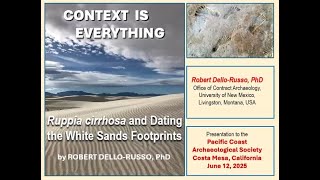 Context is Everything: Ruppia cirrhosa and Dating the White Sands Footprints Context is Everything: Ruppia cirrhosa and Dating the White Sands Footprints Dr. Robert Dello-Russo There is a fascinating scientific controversy surrounding the radiocarbon dating of the footprints left by early humans at White Sands National Park. Accurate ages of the footprints are important to our understanding of the Peopling of the Americas so, in this presentation, Dr. Dello-Russo will focus on several factors critical to this debate, including 1) Geological aspects of the Paleolake Otero Basin and the trackway site; 2) How the Ruppia cirrhosa seeds came to be found at the site; 3) The impact of the hard water effect on the radiocarbon ages attributed to the tracks; and 4) The role of stable carbon isotopes in evaluating the accuracy of Ruppia radiocarbon dates. Our research demonstrates that these contextual factors have largely been ignored by the NPS researchers, to the point that their Last Glacial Maximum (LGM) claims for the ages of the human footprints are likely erroneous. Dr. Robert Dello-Russo is the retired Director of the Office of Contract Archeology at the University of New Mexico. Prior to that, he was the Deputy Director at the NM Office of Archaeological Studies and the Compliance Archaeologist for the NM Department of Game & Fish—both in Santa Fe—and the owner and principal of Escondida Research Group, a private archaeological consulting firm. He has almost 40 years of archaeological experience, including field work in the Rocky Mountains, the Pacific Northwest, the Intermountain West, and the Southwest, where he served as Principal Investigator for dozens of grants funded and large scale CRM projects (including at White Sands National Park). In addition, he was the Principal Investigator for 20 years at the Water Canyon Paleoindian site in west-central New Mexico. His fields of research include hunter-gatherer prehistory in western North America, paleoclimate and paleoenvironmental studies, geomorphological processes, and the XRF sourcing of silicified rhyolites and dacites. Dr. Dello-Russo has a PhD in Anthropology/Archaeology from the University of New Mexico. Presented to the Pacific Coast Archaeological Society (PCAS) on June 12, 2025. |
|
Interesting video on the finds in the Kitsu Plateau of British Columbia. Alpine Obsidian Quarries and Perishable Artifacts from the Mt. Edziza Volcanic Complex, Canada  Alpine Obsidian Quarries and Perishable Artifacts from the Mt. Edziza Volcanic Complex, Canada Alpine Obsidian Quarries and Perishable Artifacts from the Mt. Edziza Volcanic Complex, Canada Dr. Duncan McLaren This presentation will focus on recent ice patch research in the vicinity of vast obsidian quarries of the Kitsu Plateau which lies at the center of Tahltan Territory in British Columbia, Canada. Field operations in 2019 and 2024 found numerous perishable artifacts melting from the ice including baskets, a moccasin, an antler billet, atlatl dart shafts, and several walking staffs. These objects provide insights into the materials that were necessary to quarry and transport obsidian and to conduct alpine-situated hunting. Radiocarbon ages on collected materials reveal that they have been frozen and preserved for up to 7,000 years. The results demonstrate that there is a direct correlation between ice patch archaeology sites and alpine stone tool quarries. Dr. McLaren received his PhD from the University of Victoria. He owns and operates Cordillera Archaeology Inc., a company that conducts archaeological research and consulting in western Canada. He is also an adjunct professor at the University of Victoria. McLaren specializes in the archaeology and paleoecology of the Canadian Northwest Coast and western Subarctic regions of North America. Presented to the Pacific Coast Archaeological Society (PCAS) on March 13, 2025. |
|
Interesting presentation on a site in Irvine California and what they have found over the decades. CA-ORA-64: Background, Data and What's Next - Michael E. Macko  CA-ORA-64: Background, Data and What's Next - Michael E. Macko CA-ORA-64: Background, Data and What's Next Michael E. Macko Archaeological investigation at CA-ORA-64, the Irvine (California) Site, began soon after its recording in 1965 by Paul Chace. While the site was first noted in 1912 by Nels Nelson from the University of California Museum of Anthropology, no scientific study occurred until the 1970s. The large site was located in an area of rapid commercial and residential development in the 1960s and 70s coastal Orange County city of Newport Beach, most of which was not subject to environmental review at the levels common today. The residential development of East bluff to the north, Fashion Island and the Newport Beach Country Club to the east, and Hyatt Newport and John Wayne Tennis Club to the south surrounded the undeveloped site of ORA-64. Despite extensive efforts to preserve ORA-64 through National Register nomination and ultimately a vote of the people in Newport Beach, the site was permitted for development by the California Coastal Commission. The data recovery at ORA-64 was quite large by comparison to most other archaeological projects that have been conducted in the United States. Due to its efficient system of recovery, data management, and reporting procedures, the recently completed Newport Coast Archaeological Project (NCAP), designed and implemented by Mr. Macko, was the model for the investigation at ORA-64. The results have produced good data from which a story of life during the early occupation of coastal Orange County can be outlined. These data include 772 features (with 600 partial inhumations and 172 cairn features) and their associations with 428,575 Chipped stone items (debitage, cores and tools) 7,967 ground stone artifacts (manos, metates, and balls), 1,235,601 bone specimens (faunal remains, beads, and tools), 37,656 shell specimens (faunal remains and beads), 94 ceramics, 360 shell beads, 209 stone beads, and a particularly fascinating 2,115 bone beads. Michael Macko received his BA (1978) and MA (1983) in anthropology from UC Santa Barbara. Earlier education included engineering, math, and architectural interests that led him to view archaeological inquiry in terms of site structure and function. Having an early exposure to mapping and land surveying from high school onward, Macko became proficient in field mapping with everything from a Brunton Compass to Lietz total stations and Autocad software for the graphic presentation of data. These tools combined to form a standardized methodology for documenting, evaluating, and sampling resources used on all his projects through the 1980s and 1990s. His noteworthy projects began with the MX and Peacekeeper Missile Projects in California, Nevada, Arizona, Texas, and New Mexico and continued with the 500-mile Intermountain Power Transmission Line Project across California, Nevada and Utah, the San Joaquin Hills and Foothill Transportation Corridor Projects in Orange County, the Newport Coast Archaeology Project and other related developments in coastal Orange County, and hundreds of smaller surveys and excavations in California. Mr. Macko is currently the Senior Archaeologist for Partner Engineering and Science, Inc. in Irvine, where he coordinates archaeological surveys, assessments, and section 106 consultations for Federal projects in over 30 states. Presented to the Pacific Coast Archaeological Society (PCAS) on December 12, 2024. |
|
Interesting video on use of fire by natives. Indigenous Fire and Why Burning is Good  Indigenous Fire and Why Burning is Good Introduction: 0:00 Disclaimers and Sources: 1:50 Fire Ecology 101: 6:28 Fire for Farming: 11:44 Fire for Foraging: 17:48 Fire for Hunting: 23:15 Fire for War: 27:09 Fire for Culture: 28:27 How?: 32:15 Fire Suppression: 34:53 Recovery: 44:23 |
|
Interesting presentation on the TRANSIT Satellites. Preparing for the Unthinkable: The U.S. Navy, SLBMS, and the TRANSIT Satellites  Preparing for the Unthinkable: The U.S. Navy, SLBMS, and the TRANSIT Satellites In April 1960 the US Navy launched the first experimental navigation satellite. This highly classified and cutting-edge technology found in the TRANSIT satellites were designed to provide the Navy’s submarines armed with the new POLARIS ballistic missile with more precise navigation fixes as a means to improve their accuracy, if and when they had to launch their missiles against the Soviet Union. Though useful for the U.S. Navy, President Lyndon Baines Johnson also found a civilian application. Thus, our routine use of GPS today in 2025 is result of this innovative technology during the Cold War. Dr. Sean N. Kalic is a Cold War historian. He lectures and publishes widely on topics such as U.S. space policy, the Cold War, the post-Cold War security environment, and transnational terrorism. Prior to CGSC, he taught at Youngstown State University, Kansas State University, and Norwich University. He has presented lectures for the U.S. Navy War College’s Fleet Seminar Program, The Slovenian General Staff, The Slovenian Command and General Staff College, The U.S. Army’s Futures Command, as well as numerous international conferences. He has taught in the Department of Military History at the US Army Command and General Staff College since 2004. |
|
Interesting video on Robert Fulton. Heard of some of these before, but not all of them. Robert Fulton: Submarines, Mines, and Torpedoes  Robert Fulton: Submarines, Mines, and Torpedoes Robert Fulton is best known for the first commercially successful steamboats plying the Hudson River. However, he did considerable work inventing and developing weapons of naval warfare: workable submarines, underwater mines, underwater cannons, and skiff-propelled torpedoes. Perhaps his crowning contribution to naval warfare was the Demologus (Voice of the People) – the world's first steam-powered warship with 5-foot-thick walls and carrying sixteen 32-pounder guns for the protection of New York Harbor. Dr. Richard V. Barbuto is a Professor Emeritus of Military History and former Deputy Director of the Department of Military History at the U.S. Army Command and General Staff College, Fort Leavenworth, Kansas before retiring in 2016. He received his Ph.D. in History from the University of Kansas in 1996. Graduating from West Point in 1971, Dr. Barbuto served twenty-three years as an armor officer with assignments in Europe, Canada, and Korea as well as various locations in the U.S. While on active duty he was on the teaching faculty in the Military Science Department at Eastern Kentucky University, the Land Studies Department at the Canadian Forces Command and Staff College, as well as two tours with the Combat Studies Institute at Fort Leavenworth. In 2001, after his retirement from active duty, Dr. Barbuto joined the teaching faculty at the Department of Military History at USACGSC. In 2000 The University Press of Kansas published Niagara 1814: America Invades Canada. This was the first book-length examination of the four-month campaign along the Niagara River which included the battles of Chippawa, Lundy’s Lane, and the Siege of Fort Erie. Dr. Barbuto is a regular presenter at the War of 1812 in the West Symposium and has made several presentations on other key campaigns of the War of 1812. His current interest is to fill the void of unit histories of the American Army 1812-1815, particularly regular army units raised in New York State. |
|
Interesting article on the ruins Article: Excavations Reveal a 3,500-Year-Old Trading City in Peru Video on it, but he goes off on tangents quickly, but he does have a lot of resource links in the video description.  Archaeologists Just Found Something Incredible in Peru |
|
Short history of HEB. The FEMA Of Texas - HEB The Grocery Store  The FEMA Of Texas - HEB The Grocery Store |
|
Looks like Planet 9 may not exist. Papers: Discovery and dynamics of a Sedna-like object with a perihelion of 66 au Discovery of a dwarf planet candidate in an extremely wide orbit - 2017 OF201 Strange Object Called Ammonite Invalidates Planet Nine Hypothesis  Strange Object Called Ammonite Invalidates Planet Nine Hypothesis 0:00 Planet Nine hypothesis challenged again 0:35 What is Planet Nine again? 1:00 Dwarf planet that almost killed it 3:30 New discovery - strange new sednoid 4:55 How this was found and why it's so unique 6:30 How this challenged Planet Nine 8:00 How can we explain this? 9:30 Conclusions and why this matters |
|
Lots of links in the video description that cover the video. Major Updates From Mars and Discoveries Nobody Expected  Major Updates From Mars and Discoveries Nobody Expected 0:00 Martian rocks 1:30 Water discoveries 5:00 Where is water now? 6:30 Toxicity 7:02 Atmosphere - where is it? 9:05 Martian imbalance 10:00 Sputtering 11:00 Aurora 11:40 Life? 13:55 Mars in a nutshell |

Member
Joined:
Jun 2023
Posts:
3938
EE: 0% (0)
 WA, USA
|
Update on 3I/ATLAS. Papers: NSF-DOE Vera C. Rubin Observatory Observations of Interstellar Comet 3I/ATLAS (C/2025 N1) The Feasibility of a Spacecraft Flyby with the Third Interstellar Object 3I/ATLAS from Earth or Mars Discovery and Preliminary Characterization of a Third Interstellar Object: 3I/ATLAS Breaking 3I/ATLAS News With Darryl Seligman  Breaking 3I/ATLAS News With Darryl Seligman 0:00 Introduction to Event Horizon with John Michael Godier 4:05 Initial Observations of 3i/ATLAS 8:10 Measuring Brightness and Early Data on 3I/ATLAS 12:12 Data from Vera Rubin Telescope on 3I/ATLAS 16:14 Challenges in Observing the New Interstellar Object 20:15 Unmatched Capabilities of UV Observations 24:20 Galactic Speeds and Implications for Detection 28:26 Interstellar Object Observation Strategies with Rubin Telescope 32:27 Long-term Observational Goals and Predictions 36:30 Unprecedented Opportunities for Studying Interstellar Objects 40:38 Assessing Accuracy and Confirming Observations 44:43 Famous Examples of Interstellar Object Observations 48:45 Rapid Response and Observational Challenges 53:18 Heat Signatures and Analysis |
|
Interesting video on the siege of Masada. The channel has a lot of interesting videos on Rome related topics. MASADA - the History of a Roman siege  MASADA - the History of a Roman siege |
|
Interesting discussion around the wars between Japan and Russia/China. Sarah Paine: How Imperial Japan Crushed Tsarist Russia & Qing China  Sarah Paine — How Imperial Japan defeated Tsarist Russia & Qing China 00:00:00 – Japan's Meiji reforms 00:15:26 – Trans-Siberian railway & Japan's 3-year window for empire 00:30:42 – The most important battle in the Russo-Japanese war 00:49:22 – China's implosion: imperialism, civil wars, and opium 01:00:15 – Was Russia on track to dominate Asia? 01:15:10 – Pearl Harbor (1941) vs surprise attack of Port Arthur (1904) 01:34:47 – Why big countries still lose wars 01:47:40 – Grand strategy for small countries |
|
Interesting discussion around China and how they may be an illusion of a superpower. Empire of Illusion: Frank Dikötter on Why China Isn’t a Superpower  Empire of Illusion: Frank Dikötter on Why China Isn’t a Superpower | Uncommon Knowledge Frank Dikötter is a senior fellow at the Hoover Institution who has recently returned to the United States after living in Hong Kong since 2006. In this provocative conversation, Dikötter challenges the prevailing narrative about China’s rise. Drawing from his latest book, China After Mao: The Rise of a Superpower, Dikötter argues that the Chinese Communist Party has masterfully projected the image of a powerful, modern, and economically dominant nation—but says that image is largely a façade. |
|
Interesting discussion around Stalin and his rise to power. Stephen Kotkin — How Stalin Became the Most Powerful Dictator in History  Stephen Kotkin — How Stalin became the most powerful dictator in history 00:00:00 – Was the tsarist regime the lesser of 2 evils? 00:24:38 – The peasants brought Lenin to power, then he enslaved them 00:38:31 – Why did so many go along with enforced famine and the Great Terror? 01:03:19 – Today's leftist civil war 01:13:54 – Doesn’t CCP deserve credit for China's growth? 01:36:06 – Why didn't somebody just kill Stalin? 01:53:38 – Overcoming the pathologies of communism with tech: USSR vs China |
|
Some interesting topics. A Billion Years of Evolution in a Single Afternoon — George Church  A billion years of evolution in a single afternoon — George Church 📖 Introduction and Context on Aging and Biotechnology (00:43 - 04:40) ├─ 00:43 George Church's Expertise in Biology and Breakthroughs ├─ 01:16 Estimating Lifespan Increase with Bio Technology Progress ├─ 01:52 Therapy and Treatment Approaches for Aging ├─ 02:28 Potential Timeline for Achieving Longer Lifespan ├─ 03:01 Somatic Gene Therapy and Germ Line Gene Therapy 📖 Synthetic Biology and Gene Delivery (04:40 - 08:37) ├─ 04:40 Artificially Introducing Stem Cells in the Brain ├─ 05:16 Existing Gene Delivery Mechanisms and Challenges ├─ 05:54 Targeting Tissues with Gene Therapy ├─ 06:30 Delivery to Every Single Cell in the Body ├─ 07:04 Practical Considerations and Societal Benefits 📖 Minimum Requirements in Synthetic Biology (08:37 - 12:37) ├─ 08:37 Exploring Minimum Requirements and Cost-Effectiveness ├─ 09:08 Minimum Number of Transcription Factors for Cellular Development ├─ 09:39 Making Things Bigger and Functionally Replicable ├─ 10:15 Successive Approximations in Genetic Engineering ├─ 11:30 Modifying Phenotypes through Gene Editing 📖 Reductionism and Gene Therapy (12:37 - 17:10) ├─ 12:37 Minimizing Complexity for Medical Treatments ├─ 13:14 Accumulating Widgets and Gene Therapy Implications ├─ 13:44 Finding the Latent Knob for Phenotypes ├─ 14:18 Challenges in Pushing Intelligence to a New Level ├─ 14:51 Actualizing Human Potential and Gene Therapy ├─ 15:21 Gene Therapy for Universal Health and Intelligence 📖 Targeted Cell Therapy and Gene Manipulation (17:10 - 22:37) ├─ 17:10 Identifying Target Cells and Transcription Factors ├─ 17:44 Reducing Gene Manipulation Complexity ├─ 18:19 Debugging and In Vitro Testing ├─ 20:22 Biodefense Concerns and Mirror Life 📖 The Dangers of Unchecked Power (22:37 - 26:25) ├─ 22:37 The Increased Capability of Individuals ├─ 23:09 Desire to Dial Back Power and Achieve Equilibrium ├─ 23:40 Building Defenses Against Unchecked Power ├─ 24:41 The Difficulty of Detecting and Preventing Harmful Actions ├─ 25:51 Technological Solutions to Societal Problems 📖 Genome Remapping and Virus Resistance (26:25 - 31:00) ├─ 26:25 Remapping Codons for Natural and Synthetic Viruses ├─ 28:16 Coding Space and Competition ├─ 29:23 Biotechnology Advancement and Dual-Use Concerns 📖 Why haven't we seen significant breakthroughs in biology? (31:00 - 35:16) ├─ 31:00 Comparing biological progress to other fields ├─ 31:30 Biotech industry advancements and potential payoffs ├─ 32:00 Current medical breakthroughs and future prospects ├─ 33:06 Impact of AI on biotech and potential consequences 📖 AI and Biology Convergence (35:16 - 39:14) ├─ 35:16 Merging AI with Protein Design ├─ 35:56 Future Directions in Biotechnology ├─ 36:32 Biology's Resolution and Atomic Precision ├─ 38:04 The Role of Synthetic Biology ├─ 38:42 Breaking Barriers in Materials Science 📖 Challenges and Advances in DNA Synthesis (39:14 - 44:19) ├─ 39:14 Designing Proteins and Nucleic Acids ├─ 40:30 The Evolution of DNA Synthesis Technology ├─ 42:36 Biology's Limitations in Materials Science 📖 AI and Materials Science (44:19 - 48:08) ├─ 44:19 Using AI to Create Superior Materials ├─ 45:19 Limitations of AlphaFold and the Need for More Data ├─ 46:57 Combining AI Tools for Deeper Insight ├─ 47:31 Nonstandard Amino Acids and Future Possibilities 📖 AI in Library Design and Materials Science (48:08 - 52:01) ├─ 48:08 Blending AI Models with New Materials ├─ 48:42 Real-Life Applications of AI in Materials Science ├─ 49:18 AI-Powered Protein Design and Material Development ├─ 49:49 Recruiting Researchers for AI-Driven Materials Science ├─ 50:59 AI Safety Concerns and Ethics in Bio Applications 📖 Cautious Approach to AGI and ASI (52:01 - 55:46) ├─ 52:01 Risks and Uncertainties in AGI Development ├─ 52:34 Potential Consequences of Unchecked AI Progress ├─ 53:05 The Difficulty in Calculating the Impact of AGI ├─ 54:09 Unintended Consequences of AI Advancements 📖 AI and Brain Organoids (55:46 - 1:01:40) ├─ 55:46 Shifting View on Complex Intelligence ├─ 56:17 Engineering the Brain and Genetic Diseases ├─ 57:32 Encoding a Brain and Replication 📖 Biological Replication and Engineering (1:01:40 - 1:06:05) ├─ 1:01:40 Comparing Biological Replication to Nuclear Reactors ├─ 1:02:16 Exploring the Concept of Rapid Replication ├─ 1:03:19 Synthetic Biology and Engineering Challenges ├─ 1:04:26 Whole Genome Engineering and Phenotype Manifestation 📖 The Possibility of Life in the Universe (1:06:05 - 1:10:10) ├─ 1:06:05 Reconstructing a Simple Pathway to Life ├─ 1:06:41 The Drake Equation and the Difficulty of Intelligent Life ├─ 1:07:12 Spontaneous Generation of Living Systems ├─ 1:07:46 Exploration and Simulation in the Search for Life ├─ 1:08:23 The Importance of Exploring Moons and Geyers for Life ├─ 1:09:04 Potential Breeding Grounds for Life in the Solar System 📖 Evolution and Information Storage (1:10:10 - 1:14:11) ├─ 1:10:10 Potential for New Amino Acids and Information Storage ├─ 1:13:06 Limitations of Evolutionary Processes 📖 Undervalued Research Topics (1:14:11 - 1:18:06) ├─ 1:14:11 Arrays for Gene Expression and Genetic Counseling ├─ 1:14:42 Genetic Counseling as Competitive with Gene Therapy ├─ 1:15:50 Misconceptions about Eugenics and Genetic Counseling ├─ 1:16:20 Difficulty in Dealing with Rare Things ├─ 1:17:28 The Trolley Problem and Responsibility 📖 Discussion on Genetic Counseling and Gene Therapy (1:18:06 - 1:22:28) ├─ 1:18:06 The Value of Genetic Counseling in India and Global Context ├─ 1:19:45 Addressing Stigma and Public Health Concerns ├─ 1:20:19 Cost-Effectiveness of Genetic Counseling and Gene Therapy 📖 Potential Future Scenarios and Funding Structure (1:22:28 - 1:26:35) ├─ 1:22:28 Exploring Positive Scenarios and Funding Alternatives ├─ 1:23:50 Philanthropy and Industrial Sponsored Research as a Positive Outcome ├─ 1:24:20 China's Potential Rise as a Dominant Force ├─ 1:24:55 Collective Efforts and Hypercapitalism ├─ 1:26:03 Uniqueness of Biology Research and Academic Labs 📖 Advantages and Challenges of Biotech Clustering (1:26:35 - 1:30:55) ├─ 1:26:35 Benefits of Concentrated Biotech and Pharma Presence ├─ 1:27:08 The Importance of Positive Feedback Loops in Lab Development ├─ 1:28:16 Timing and Exponential Growth in Biotech and Computing ├─ 1:28:48 Asymmetric Benefits of Existing Positive Feedback Loops ├─ 1:29:51 George's Lab and Talent Recruitment ├─ 1:31:05 Criteria for Hiring Team Members ├─ 1:31:41 Multidisciplinarity and Building Teams ├─ 1:32:13 AI Progress and Safety Concerns ├─ 1:32:53 Positive Feedback Loop and Healthcare |
|
Interesting discussion around maritime archaeology. Lost Voyages of the Ancient Mariners: Dr. James Delgado  Lost Voyages of the Ancient Mariners: Dr. James Delgado |
|
Interesting paper around the genetics of Otzi the Iceman and other samples in the region. Paper: Genomic diversity and structure of prehistoric alpine individuals from the Tyrolean Iceman’s territory New DNA Study Comparing Ötzi the Iceman To His Neighbors Reveals New Twist!  New DNA Study Comparing Ötzi the Iceman To His Neighbors Reveals New Twist! |
|
Interesting method. Reminds me of the Cycler concept. A New Interstellar Propulsion Method: T.A.R.S.  An Idea So Crazy It Might Just Work... 00:00 Echoes 00:30 Sea Longing 4:06 Breakthrough Starshot 6:51 The Cavalry Ain't Coming 8:39 The Art of Pragmatism 10:54 No Lasers Required 14:31 Enter the Quasite 16:39 Going Interstellar 18:32 Optimization 20:19 For Our Next Trick 23:26 Juicing TARS 27:13 Closing Thoughts 28:55 Outro and Credits |
|
Short video on different methods to deflect/destroy possible impactors. How Science Could Save the Earth from Asteroids  Can We Save Ourselves? 0:00 Prologue 1:13 Populations 4:20 NEOs 7:24 Incogni 9:00 Spaceguard 10:15 Oort Cloud 12:22 Threat Assessment 16:08 Deflection 19:44 Insurance 22:55 Credits |
|
Short video on Markov Chains. The Strange Math That Predicts (Almost) Anything  The Strange Math That Predicts (Almost) Anything 0:00 The Law of Large Numbers 4:37 What is a Markov Chain? 9:43 Ulam and Solitaire 12:21 Nuclear Fission 15:46 The Monte Carlo Method 16:32 The first search engines 19:07 Google is born 25:16 How does predictive text work? 27:10 Are Markov chains memoryless? 29:41 How to perfectly shuffle a deck of cards |
|
Interesting discussion around the universe and the fine tuning argument. Our Universe Almost Didn’t Exist (ft. Fred Adams)  What If Gravity Was 1000X Stronger? 00:00 Intro 01:29 Judging a book by its cover 02:12 DESI results and the equation of state 06:39 The cosmological constant and its role in our universe 12:31 Fine-tuning as a tool 32:37 The Hoyle resonance and carbon production 39:28 Probability distribution and fundamental theory 45:11 Intelligent design and anthropic arguments 52:30 The multiverse and its implications 58:14 Outro |
|
Part 2 of the discussion with Rich Frank. Diplomatic Warfare on the Road to Pearl Harbor Part 2 with Rich Frank - Episode 513  Diplomatic Warfare Before Pearl Harbor Part 2 with Rich Frank - Episode 513 This week Seth Paridon and co-host Jon Parshall welcome their good buddy Rich Frank back to the show to continue last week's conversation on the diplomatic road to Pearl Harbor. The guys pick up where they left off and begin with Rich's key steps to the oil embargo of July 1941. The discussion is fascinating as the trio waxes poetic on the world view situation as looked at by the Roosevelt administration, speaking on topics ranging from the Eastern Front and Operation TYPHOON, to the Japanese quest for oil and the American's action to shut off the spigots--all which lead to the inevitable in December. Then the guys get into the weeds regarding Japanese diplomats Nomura and Kurusu and their last-minute "attempts" to ward off the war that everyone knew was coming. A truly fascinating discussion that is worth your time as we continue our build-up to the Japanese attack and US involvement in World War II in this, our second episode, of the Pearl Harbor series. |
|
Interesting paper on a direct collapse black hole. Paper: The ∞ Galaxy: A Candidate Direct-collapse Supermassive Black Hole between Two Massive, Ringed Nuclei Article: NASA’s Webb Finds Possible 'Direct Collapse' Black Hole Groundbreaking Discovery of the First Ever Direct Collapse Black Hole 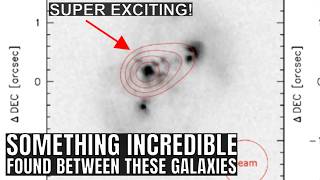 Groundbreaking Discovery of the First Ever Direct Collapse Black Hole 0:00 Another unusual galaxy! 1:30 Supermassive black hole that shouldn't be there! 2:30 What type of galaxies is this? 3:30 Bizarre object in the middle 5:00 How did this form? 6:58 Why this is bizarre and model of SMBH formation 8:25 Direct collapse explanation 9:15 Formation history 9:50 Conclusions and why this is so important 11:10 What's next? |
|
Interesting small archaeological site being worked by volunteers. Ice Age Hunters: The Shoop Paleoindian Site  Ice Age Hunters: The Shoop Paleoindian Site The Shoop Site in Dauphin County, Pennsylvania, stands as one of the largest known Paleoindian locations in the Northeastern United States. In this short documentary, we explore the site's archaeological significance, the remarkable density of artifacts—including over 100 fluted points and 500+ end scrapers—and what these finds reveal about the lifeways of Ice Age hunter-gatherers in North America. |
|
Video name speaks for itself. Papers: Close-in planet induces flares on its host star The Featherweight Giant: Unraveling the Atmosphere of a 17 Myr Planet with JWST Bizarre Case of a Planet Destroying Itself By Triggering the Star  Bizarre Case of a Planet Destroying Itself By Triggering the Star 0:00 Weird planet we've never seen before 1:30 Magnetic interactions and why this planet is so strange 4:20 New observations 5:10 New study - is this planet destroying itself? 7:00 Overall conclusions 8:05 What this means for astronomy |
|
Interesting short video on the US M103 tank. M103: The Tank With No Name  M103: The Tank With No Name 00:00 | Introduction 00:30 | Meet the M103 03:06 | T-43 and the Tank Crisis 06:21 | Unfit for Service? 11:33 | In Service 15:26 | M103 In Retrospect |
|
Video on the theories on the sinking of the USS Maine. The Destruction of USS Maine - What actually happened?  The Destruction of USS Maine - What actually happened? |
Overview of the armament systems of the B-36. Was a lot of bugs  Unfathomably American: The Armament Systems of the B-36  Unfathomably American: The Armament Systems of the B-36 00:00 Intro 01:18 B-36 Overview 04:56 System Overview 11:52 Dorsal and Ventral Turrets 16:20 Tail Turret 22:18 Nose Turret 26:55 The Many Issues 37:15 Parasite Aircraft 42:07 Bombs 47:02 Propulsion 54:27 The Flying Nuclear Reactor 01:01:45 Conclusions |
|
Interesting story around a doomed arctic balloon expedition. The Doomed Arctic Balloon Expedition That Vanished for 33 Years  The Arctic Balloon Expedition That Vanished for 33 Years 00:00 - A Grisly Discovery 03:50 - Danes Island, July 1897 09:22 - London Geographical Society, February 1895 14:15 - Thank You Odoo (feat: my baby) 16:25 - The Formation of an Expedition 20:53 - Planning an Expedition 21:38 - The Balloon 25:09 - The First Attempt 28:00 - An Unexpected Visitor 30:17 - Danes Island, July 11th, 1897 37:36 - In the Air 45:50 - On the Ice 55:55 - The End 59:57 - How Did the Men Die? 1:12:03 - The Mystery 1:14:23 - Anna |
|
Interesting video on the Kharkovchanka vehicle used in Antarctic. "Kharkovchanka" - The Colossal Soviet Antarctic Cruisers 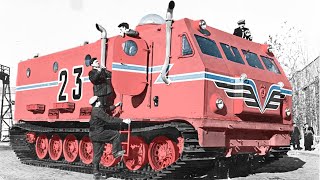 "Kharkovchanka" - The Colossal Soviet Antarctic Cruisers 0:00 - Introduction & early Exploration 2:49 - Early Soviet Antarctic Expeditions 5:12 - Introduction & Successes of the 'ATT' Tractor 8:14 - Building The Kharkovchanka 12:08 - Layout & Features 15:48 - The Kharkovchanka in Antarctica 21:10 - Design Issues & Possible Replacements 22:55 - The Kharkovchanka-II 26:00 - Where are they now? 30:22 - Conclusion 31:30 - Outro |