


Posted: 8/30/2026 8:00:33 AM EDT
With two 12v batteries in series, is the connection on the bottom still 12 volts?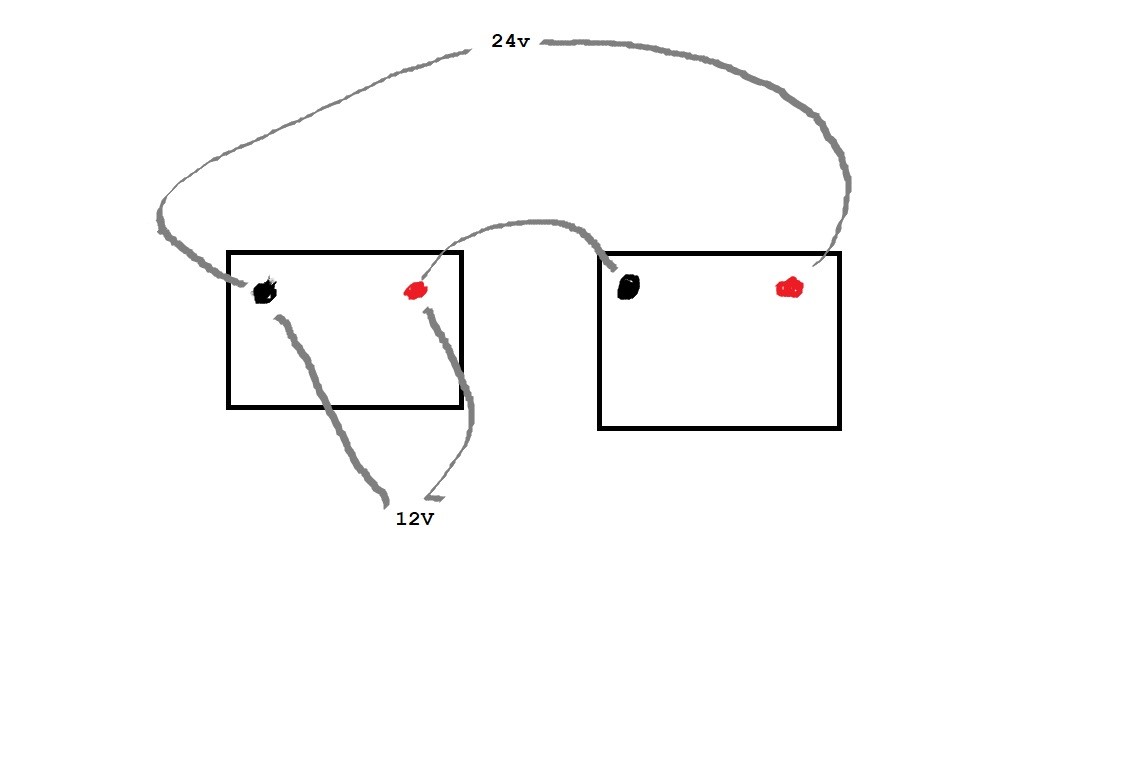
|

|
Originally Posted By jhoyda1: Yes. So I could put a 12v accessory plug at that connection safely? Just wondering about my options would be if I were to build a power station with a 12v/24v inverter. So along this line of thinking. Would this work as a charging option? 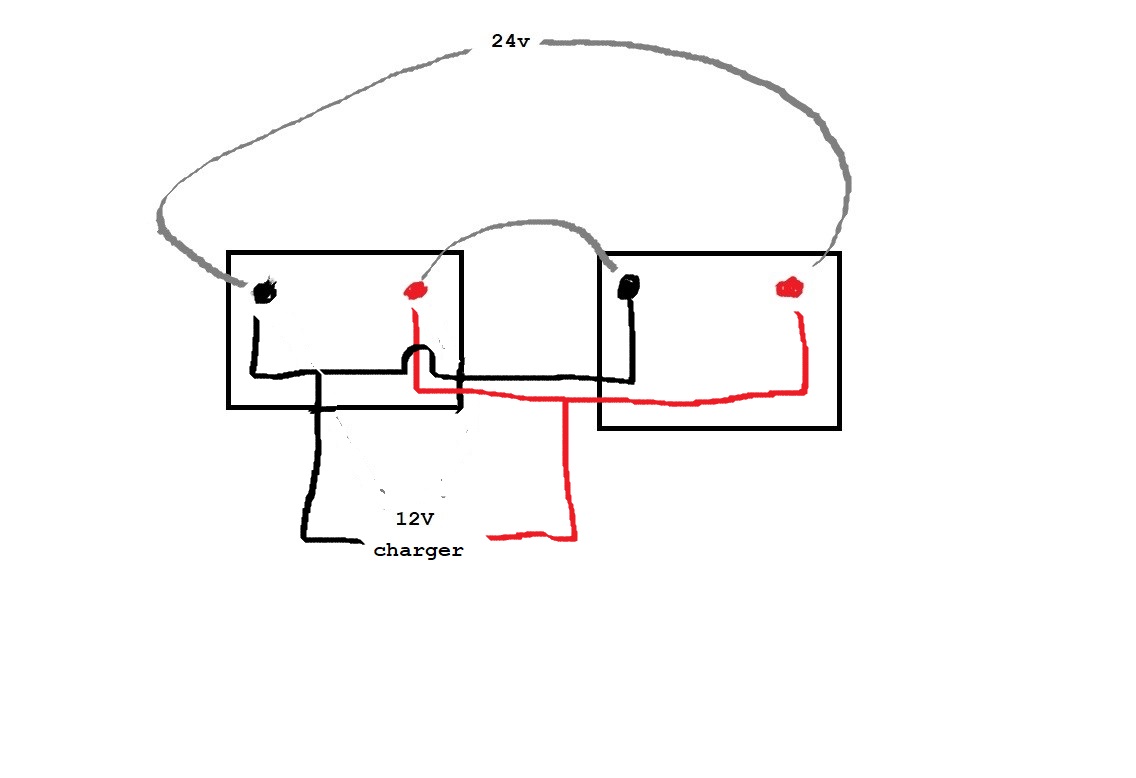
|



|
I was thinking about running my fish finder this way instead of off the main start battery in the boat. Two things - trolling motors make a lot of electrical noise that interfere with the fish finder, and, one battery of the pair always has more drain on it than the other. I ended up not doing this, mostly because of the electrical noise issue. My charger has 2 separate charge banks and charges each 12v battery independently. I wouldn't think you would want to split the 12v charger to two batteries - if they have different charge levels it could perhaps overcharge one battery (?). But a dual bank 12v charger would be fine. |
|
Originally Posted By johnh57: I was thinking about running my fish finder this way instead of off the main start battery in the boat. Two things - trolling motors make a lot of electrical noise that interfere with the fish finder, and, one battery of the pair always has more drain on it than the other. I ended up not doing this, mostly because of the electrical noise issue. My charger has 2 separate charge banks and charges each 12v battery independently. I wouldn't think you would want to split the 12v charger to two batteries - if they have different charge levels it could perhaps overcharge one battery (?). But a dual bank 12v charger would be fine. The main purpose of the 12v connection would to plug in a accessory plug battery meter inside the cabin which I may or may not need if the inverter has a remote with it. Overall I'm weighing ways to boondock power my trailer. Looking at options of buying a power station or putting something simple together. I want to have the option of charging the batteries with solar in the future or a small generator now. Last nights rabbit hole adventure took me down the wire guage/amperage draw between a 12v and 24v system which led me to discovering that there are inverters that work with 12v or 24v systems. So now next question.... If you have two 100 ah 12 v LIfP04 lithium ion phosphate explosive space modulator batteries....their boards limit them to 100amp draws (usually). Would two batteries in parallel be able to supply 200 amps or are they still 100 amps together? Same question for both batteries in series? |

|
Originally Posted By urbanredneck: So I could put a 12v accessory plug at that connection safely? Just wondering about my options would be if I were to build a power station with a 12v/24v inverter. So along this line of thinking. Would this work as a charging option? https://i.postimg.cc/QC74RtqJ/24v-Question.jpg DO NOT DO THIS. You can run the batteries in Parallel, or in Series. Not BOTH. You will short the batteries out, and car batteries have enough amperage to cause some serious, serious damage. |

|
Originally Posted By urbanredneck: So I could put a 12v accessory plug at that connection safely? Just wondering about my options would be if I were to build a power station with a 12v/24v inverter. So along this line of thinking. Would this work as a charging option? https://i.postimg.cc/QC74RtqJ/24v-Question.jpg This will actually be a short circuit. |
|
Originally Posted By urbanredneck: Okay, so if I wanted to charge a 24v like this then I would need 2 chargers. And if I want 200 amps then I need 24v. Maybe you should just buy a commercially available solution. No offense but sounds like you might hurt yourself if you try DIY. |

|
Originally Posted By urbanredneck: Okay, so if I wanted to charge a 24v like this then I would need 2 chargers. And if I want 200 amps then I need 24v. You don't need two separate chargers, you can get one that can do them all. Many boats are setup with two batteries for a 24v trolling motor, and a separate battery for cranking the motor, all powered by one multi bank charger. |
“Hokey religions and ancient weapons are no match for a 10mm at your side, kid.”
|
Originally Posted By urbanredneck: Okay, so if I wanted to charge a 24v like this then I would need 2 chargers. And if I want 200 amps then I need 24v. You should just buy a charger that can charge a 24v system. Two separate 12v chargers does not guarantee isolation between the chargers (battery grounds may be tied to earth ground and cause a short through the 120v electrical system). |
|
Originally Posted By Foxxz: You should just buy a charger that can charge a 24v system. Two separate 12v chargers does not guarantee isolation between the chargers (battery grounds may be tied to earth ground and cause a short through the 120v electrical system). I'm already looking at inverters and chargers that do 12 and 24. |
|
Originally Posted By urbanredneck: The main purpose of the 12v connection would to plug in a accessory plug battery meter inside the cabin which I may or may not need if the inverter has a remote with it. Originally Posted By urbanredneck: The main purpose of the 12v connection would to plug in a accessory plug battery meter inside the cabin which I may or may not need if the inverter has a remote with it. Originally Posted By urbanredneck: Okay, so if I wanted to charge a 24v like this then I would need 2 chargers. And if I want 200 amps then I need 24v. If you hook up a single 12v charger to two batteries that are wired in series the charger output will be shorted and you will destroy the charger and maybe batteries. It sounds like you aren't well versed in electricity. Trying to use only part of a series battery chain for lower voltage is a fool's errand. Trying to charge only a portion of a series battery chain can be risky if you don't know what you're doing. Keep things simple - make everything 24v and get a 24-12v converter to run your 12v items. A quality converter will also produce very clean power if you have things that are sensitive to power quality. Use a 24v charger to charge the series batteries and treat them as if they were a single battery. |
|
Yes you can. CATV systems do it all the time. 2 strings of 3 batteries wired in series parallel with a 36vdc inverter charging system. But we use an individual battery monitoring system to identify individual issues with batteries. link to image illustrating how it's done in CATV land - https://www.ptsupply.com/ASSETS/IMAGES/ITEMS/LIST_DISPLAY/87584821.jpg |
|
Originally Posted By urbanredneck: So I could put a 12v accessory plug at that connection safely? Just wondering about my options would be if I were to build a power station with a 12v/24v inverter. So along this line of thinking. Would this work as a charging option? https://i.postimg.cc/QC74RtqJ/24v-Question.jpg The batteries in this diagram are in parallel, not series. The voltage at the top and bottom are both 12v. |