


[ARCHIVED THREAD] - Sig M18 might have just killed an Airman (Page 26 of 28)
|
Occam's Razor. Which is the simpler explanation? Quoted: In the middle of the night? How does a holstered pistol on a duty belt kill someone? It's not pointed at anything vital. Even money someone was bored and finger fucking his pistol.  Ricky fucking atodaso |
|
Quoted: Wow, you seem pretty on the fence about this. Quoted: Quoted: Strange how the P320 sat quietly in a cop's holster until he bent down and then stood up. Almost like something pulled the trigger. And we all know cops never lie. Wow, you seem pretty on the fence about this. No kidding. lol The Montville incident is the perfect litmus test. We have two camera angles showing nobody hand a hand on the gun, and we have stills from earlier in video showing the gun is locked in the holster, there’s nothing around it on the belt, and the cop’s shirt is tucked in. And yet, some people still believe an unseen object weaved into the holster and pulled the trigger like it was the Death Star core in Return of the Jedi, and it all happened in that very brief moment. |
|
Quoted: Looks like it's partially closed and there's a debris window. https://i.imgur.com/AGapjon.jpeg Don't think you could fire a round in that holster and not be able to tell. Quoted: Quoted: How certain are you about that? Looks like it's partially closed and there's a debris window. https://i.imgur.com/AGapjon.jpeg Don't think you could fire a round in that holster and not be able to tell. We came to the conclusion that there is no way there wouldn't at least be powder burns or some other blast damage if it fired in the holster. That's just from a bunch of gun guys who carry an M18 in this holster everyday. Nothing scientific. |
|
Quoted: People are denying that an Airman shot another Airman. Quoted: Quoted: I see we are still in the denial and bargaining phases. People are denying that an Airman shot another Airman. People are denying that both can be true at the same time. Even if we find out the Airman’s buddy straight up shot him, that doesn’t change the fact that the P320 is a raging pile with major vulnerabilities in every system. |
|
Classy. What a strange thing to gloat about. |
|
Quoted: People are denying that both can be true at the same time. Even if we find out the Airman’s buddy straight up shot him, that doesn’t change the fact that the P320 is a raging pile with major vulnerabilities in every system. Well there is proof of some sort that the airman shot the other airman. There is zero repeatable demonstrative evidence that the guns go off on their own. If you have proof and can demonstrate the mode of failure then provide it. You stand to make a ton of money. A screw holding the trigger on the wall and messing with the gun to make it go off isn’t proof. |
| Colion Noir is reporting that another Airman was arrested in the FE Warren case for involuntary manslaughter, making false statements and obstructing. Certainly changes the narrative with that particular case. I’ll try to find link to put out when I get back home unless someone else beats me to it… |
|
Quoted: Colion Noir is reporting that another Airman was arrested in the FE Warren case for involuntary manslaughter, making false statements and obstructing. Certainly changes the narrative with that particular case. I'll try to find link to put out when I get back home unless someone else beats me to it https://www.ar15.com/forums/General/Sig-M18-might-have-just-killed-an-Airman/5-2805777/?page=24#i114402018 |
|
Quoted: Well there is proof of some sort that the airman shot the other airman. There is zero repeatable demonstrative evidence that the guns go off on their own. If you have proof and can demonstrate the mode of failure then provide it. You stand to make a ton of money. A screw holding the trigger on the wall and messing with the gun to make it go off isn't proof. Quoted: Quoted: People are denying that both can be true at the same time. Even if we find out the Airman's buddy straight up shot him, that doesn't change the fact that the P320 is a raging pile with major vulnerabilities in every system. Well there is proof of some sort that the airman shot the other airman. There is zero repeatable demonstrative evidence that the guns go off on their own. If you have proof and can demonstrate the mode of failure then provide it. You stand to make a ton of money. A screw holding the trigger on the wall and messing with the gun to make it go off isn't proof. Sig on the other hand has tripled-down in a way that any competent lawyer would scream NO STOP YOU IDIOTS! if their statements were anywhere close to being known to be untrue. By stating uneqivocally their weapons are safe, they are creating a product liability nightmare that I would think they know how to dodge. Other firearms companies mea culpa all the time - SW/Ruger/HK etc...if something is wrong BAM its a recall. This case reeks of strangeness and hard to explain situations on both sides of the fence. |
|
Quoted: I have some support for both sides of this. The M18 that went to the FBI had self-discharged on video with no probable input to its trigger. Thats bad, even if the FBI can't get it to do it twice. Sig on the other hand has tripled-down in a way that any competent lawyer would scream NO STOP YOU IDIOTS! if their statements were anywhere close to being known to be untrue. By stating uneqivocally their weapons are safe, they are creating a product liability nightmare that I would think they know how to dodge. Other firearms companies mea culpa all the time - SW/Ruger/HK etc...if something is wrong BAM its a recall. This case reeks of strangeness and hard to explain situations on both sides of the fence. In their report, the FBI found that the cop had been carrying keys in his hand at the time, that the keys he was holding were capable of pulling the trigger, and that using the keys to pull the trigger caused a mark on the frame similar to a mark that was present on the pistol when it arrived. I think it's more likely that not that the cop's keys pulled the trigger of his M18 in that case. That said, the demonstrable, repeatable proof that the striker block fails under some circumstances should be plenty to give anyone carrying a P320 serious doubts about it's safety. |
|
Quoted: In their report, the FBI found that the cop had been carrying keys in his hand at the time, that the keys he was holding were capable of pulling the trigger, and that using the keys to pull the trigger caused a mark on the frame similar to a mark that was present on the pistol when it arrived. I think it's more likely that not that the cop's keys pulled the trigger of his M18 in that case. That said, the demonstrable, repeatable proof that the striker block fails under some circumstances should be plenty to give anyone carrying a P320 serious doubts about it's safety. Quoted: Quoted: I have some support for both sides of this. The M18 that went to the FBI had self-discharged on video with no probable input to its trigger. Thats bad, even if the FBI can't get it to do it twice. Sig on the other hand has tripled-down in a way that any competent lawyer would scream NO STOP YOU IDIOTS! if their statements were anywhere close to being known to be untrue. By stating uneqivocally their weapons are safe, they are creating a product liability nightmare that I would think they know how to dodge. Other firearms companies mea culpa all the time - SW/Ruger/HK etc...if something is wrong BAM its a recall. This case reeks of strangeness and hard to explain situations on both sides of the fence. In their report, the FBI found that the cop had been carrying keys in his hand at the time, that the keys he was holding were capable of pulling the trigger, and that using the keys to pull the trigger caused a mark on the frame similar to a mark that was present on the pistol when it arrived. I think it's more likely that not that the cop's keys pulled the trigger of his M18 in that case. That said, the demonstrable, repeatable proof that the striker block fails under some circumstances should be plenty to give anyone carrying a P320 serious doubts about it's safety. But...I don't have Borderline Personality Disorder. I'll take in things that have the solid appearance of facts and let them actually move my opinion around. The final explaination will have to be facts based and make sense to my engineering mind. Thats not pointed at you, but there are certainly directions its pointed in. This whole thing has Ford Pinto vibes all over it. |
|
Quoted: In their report, the FBI found that the cop had been carrying keys in his hand at the time, that the keys he was holding were capable of pulling the trigger, and that using the keys to pull the trigger caused a mark on the frame similar to a mark that was present on the pistol when it arrived. I think it's more likely that not that the cop's keys pulled the trigger of his M18 in that case. That said, the demonstrable, repeatable proof that the striker block fails under some circumstances should be plenty to give anyone carrying a P320 serious doubts about it's safety. Quoted: Quoted: I have some support for both sides of this. The M18 that went to the FBI had self-discharged on video with no probable input to its trigger. Thats bad, even if the FBI can't get it to do it twice. Sig on the other hand has tripled-down in a way that any competent lawyer would scream NO STOP YOU IDIOTS! if their statements were anywhere close to being known to be untrue. By stating uneqivocally their weapons are safe, they are creating a product liability nightmare that I would think they know how to dodge. Other firearms companies mea culpa all the time - SW/Ruger/HK etc...if something is wrong BAM its a recall. This case reeks of strangeness and hard to explain situations on both sides of the fence. In their report, the FBI found that the cop had been carrying keys in his hand at the time, that the keys he was holding were capable of pulling the trigger, and that using the keys to pull the trigger caused a mark on the frame similar to a mark that was present on the pistol when it arrived. I think it's more likely that not that the cop's keys pulled the trigger of his M18 in that case. That said, the demonstrable, repeatable proof that the striker block fails under some circumstances should be plenty to give anyone carrying a P320 serious doubts about it's safety. I went back and re-read the FBI report and I gotta say that the conclusions of uncommanded firing of the pistol are...nebulous. There is a mark on the gun, it is in the place that the keys would have made, the FBI made that point but couldn't say that was exactly what happened. There was a lot of "it can fire without pulling the trigger!!!" How do you know? "Well, someone reached into the gun with a pin punch and did the exact thing pulling the trigger does and then wiggled the slide and it could fire!" I'm not excited about it being able to fire if the FP block safety fails, which it looks like moving it can do....and I think something is going on....but the FBI report is not the smoking gun it seems when you read it. The FBI milled off the primary sear surface in one case, and manually pushed the striker off the primary sear surface in another. So - if you are saying "some dude with a milling machine" or "some dude put a screw in there to pull the trigger" and it fired == "it just fires on its own..." Yeah I'm not giving that particular trophy out yet. I am surprised moving the slide can result in the secondary safety failing. Looking at its design it doesn't seem awful - wonder if its not opening properly. |
|
Quoted: Your summary is pretty good. I went back and re-read the FBI report and I gotta say that the conclusions of uncommanded firing of the pistol are...nebulous. There is a mark on the gun, it is in the place that the keys would have made, the FBI made that point but couldn't say that was exactly what happened. There was a lot of "it can fire without pulling the trigger!!!" How do you know? "Well, someone reached into the gun with a pin punch and did the exact thing pulling the trigger does and then wiggled the slide and it could fire!" I'm not excited about it being able to fire if the FP block safety fails, which it looks like moving it can do....and I think something is going on....but the FBI report is not the smoking gun it seems when you read it. The FBI milled off the primary sear surface in one case, and manually pushed the striker off the primary sear surface in another. So - if you are saying "some dude with a milling machine" or "some dude put a screw in there to pull the trigger" and it fired == "it just fires on its own..." Yeah I'm not giving that particular trophy out yet. I am surprised moving the slide can result in the secondary safety failing. Looking at its design it doesn't seem awful - wonder if its not opening properly. Quoted: Your summary is pretty good. I went back and re-read the FBI report and I gotta say that the conclusions of uncommanded firing of the pistol are...nebulous. There is a mark on the gun, it is in the place that the keys would have made, the FBI made that point but couldn't say that was exactly what happened. There was a lot of "it can fire without pulling the trigger!!!" How do you know? "Well, someone reached into the gun with a pin punch and did the exact thing pulling the trigger does and then wiggled the slide and it could fire!" I'm not excited about it being able to fire if the FP block safety fails, which it looks like moving it can do....and I think something is going on....but the FBI report is not the smoking gun it seems when you read it. The FBI milled off the primary sear surface in one case, and manually pushed the striker off the primary sear surface in another. So - if you are saying "some dude with a milling machine" or "some dude put a screw in there to pull the trigger" and it fired == "it just fires on its own..." Yeah I'm not giving that particular trophy out yet. I am surprised moving the slide can result in the secondary safety failing. Looking at its design it doesn't seem awful - wonder if its not opening properly. The sear failure mode is pretty well-understood: Quoted: To add to what GenYRevolverGuy (I cannot say that in my head without doing the Bill Nye The Science Guy jingle) and glklvr said: Any given P320 is going to have Z sear engagement. Whether that's 0.05", 0.02", doesn't matter. But it's some number. Any given P320 is going to be able to reduce sear engagement by Y via up/down movement of the slide. Whether that's 0.01, 0.005", doesn't matter. But it's some number. SOME P320's have been seen to have dimensional variance, surface issues, or wear in the sear surfaces. FBI BRF's report showed a "ledge" in the striker hook. USAF is currently looking for "burrs or spurs" on these surfaces. There's a possibility for the sear surfaces to get stuck not fully engaged, reducing the sear engagement by X. Whether that reduces sear engagement by 0.02", 0.03", 0.005", doesn't matter. But it's some number. ALL P320's are vulnerable to fouling reducing the sear engagement by W. Because of a combination of design decisions, there's a ramp on the sear under the striker hook and parts of the frame that form a "pocket" where debris can either enter or fouling from the gun can accumulate and reduce sear engagement. Whether that's 0.05", 0.01", or 0.000", doesn't matter. But it's some number. If W + X + Y >= Z, then the sear lets go of the striker without the trigger needing to move at all. Add to that the problematic design of the striker safety (see glklvr's post about Sig's own testing) and you've got a gun that can, under the right circumstances, go off on it's own in a holster. |
|
Quoted: The sear failure mode is pretty well-understood: Quoted: Quoted: Your summary is pretty good. I went back and re-read the FBI report and I gotta say that the conclusions of uncommanded firing of the pistol are...nebulous. There is a mark on the gun, it is in the place that the keys would have made, the FBI made that point but couldn't say that was exactly what happened. There was a lot of "it can fire without pulling the trigger!!!" How do you know? "Well, someone reached into the gun with a pin punch and did the exact thing pulling the trigger does and then wiggled the slide and it could fire!" I'm not excited about it being able to fire if the FP block safety fails, which it looks like moving it can do....and I think something is going on....but the FBI report is not the smoking gun it seems when you read it. The FBI milled off the primary sear surface in one case, and manually pushed the striker off the primary sear surface in another. So - if you are saying "some dude with a milling machine" or "some dude put a screw in there to pull the trigger" and it fired == "it just fires on its own..." Yeah I'm not giving that particular trophy out yet. I am surprised moving the slide can result in the secondary safety failing. Looking at its design it doesn't seem awful - wonder if its not opening properly. The sear failure mode is pretty well-understood: Quoted: To add to what GenYRevolverGuy (I cannot say that in my head without doing the Bill Nye The Science Guy jingle) and glklvr said: Any given P320 is going to have Z sear engagement. Whether that's 0.05", 0.02", doesn't matter. But it's some number. Any given P320 is going to be able to reduce sear engagement by Y via up/down movement of the slide. Whether that's 0.01, 0.005", doesn't matter. But it's some number. SOME P320's have been seen to have dimensional variance, surface issues, or wear in the sear surfaces. FBI BRF's report showed a "ledge" in the striker hook. USAF is currently looking for "burrs or spurs" on these surfaces. There's a possibility for the sear surfaces to get stuck not fully engaged, reducing the sear engagement by X. Whether that reduces sear engagement by 0.02", 0.03", 0.005", doesn't matter. But it's some number. ALL P320's are vulnerable to fouling reducing the sear engagement by W. Because of a combination of design decisions, there's a ramp on the sear under the striker hook and parts of the frame that form a "pocket" where debris can either enter or fouling from the gun can accumulate and reduce sear engagement. Whether that's 0.05", 0.01", or 0.000", doesn't matter. But it's some number. If W + X + Y >= Z, then the sear lets go of the striker without the trigger needing to move at all. Add to that the problematic design of the striker safety (see glklvr's post about Sig's own testing) and you've got a gun that can, under the right circumstances, go off on it's own in a holster. I noticed the words possibility and if in your explanation. |
|
Quoted: P320s aren't going off every single time they get loaded my guy. Quoted: Quoted: I noticed the words possibility and if in your explanation. P320s aren't going off every single time they get loaded my guy. Almost all of them aren’t going off when loaded. One of your fellow travelers even described it as rare broseph. ETA: You and your brethren have almost convinced me that a dirty P320 is a safety issue. Like a dirty Mosquito is a jam-o-matic. |
|
Quoted: Riiiiiight. So your issue with the word "if" is what exactly? Quoted: Quoted: Almost all of them aren’t going off when loaded. One of your fellow travelers even described it as rare broseph. Riiiiiight. So your issue with the word "if" is what exactly? If negates a definitive answer to the problem that has not been replicated in firearms blamed with the problem. Even the FBI says so. |
|
Quoted: If negates a definitive answer to the problem that has not been replicated in firearms blamed with the problem. Even the FBI says so. Jesus Christ. Where I said "if", replace that word with "because" or "since" or whatever word that assumes the following statement is always true, and every single P320 on the planet would mag dump every single time they were loaded. Since that clearly isn't happening, "if" is the right word to use. How is this even remotely hard to understand? |
|
Quoted: Almost all of them aren’t going off when loaded. One of your fellow travelers even described it as rare broseph. ETA: You and your brethren have almost convinced me that a dirty P320 is a safety issue. Like a dirty Mosquito is a jam-o-matic. Quoted: Quoted: Quoted: I noticed the words possibility and if in your explanation. P320s aren't going off every single time they get loaded my guy. Almost all of them aren’t going off when loaded. One of your fellow travelers even described it as rare broseph. ETA: You and your brethren have almost convinced me that a dirty P320 is a safety issue. Like a dirty Mosquito is a jam-o-matic. A rough guesstimate is 1:35,000 pistols over a 10 year span, if it happened to be loaded at the time. |
|
Quoted: Riiiiiight. So your issue with the word "if" is what exactly? Quoted: Quoted: Almost all of them aren’t going off when loaded. One of your fellow travelers even described it as rare broseph. Riiiiiight. So your issue with the word "if" is what exactly? I think his issue is that you can't say it's "pretty well understood" yet then have your explanation have a ton of variables and maybes in it. Saying "if" or "possibly" means it's not well understood because the exact failure mode isn't known, it's being guessed at. Well documented and understood would mean it's repeatable, period. Before you get all twisted up over it, your explanation makes sense. We all know tolerance stacking is a thing. It makes sense that a certain set of scenarios, when stacked together, could cause a failure. Largely due to an internal design that could potentially allow this to happen because it's not as "safe" as other designs. The problem is, even though your suppositions are logical, and others know this same thing, no one has been able to repeat the self discharge without some form of external manipulation. Or at least no report that I've seen. Which then allows people to poke holes in the arguments. And is what Sig is fully hanging their hat on. What I can say is that this has happened often enough that it's pretty obvious something isn't right and it would behoove an individual to set a 320 aside until more is known about the issue unless you want to be one of the unlucky few who becomes a statistic, however rare it may be. |
|
Quoted: I think his issue is that you can't say it's "pretty well understood" yet then have your explanation have a ton of variables and maybes in it. Saying "if" or "possibly" means it's not well understood because the exact failure mode isn't known, it's being guessed at. Well documented and understood would mean it's repeatable, period. Go back and read it again. Not how those words are being used. At this point, people are just deliberately turning their brains off. You have a series of variables that can add up to a sear disengagement or not add up to a sear disengagement. Since P320's aren't mag dumping on their own, it's clear that they don't always add up to a sear disengagement. So when explaining how they add up to a sear disengagement on an extremely rare basis, when you see the word "if" or "possibly" and can't connect the dots that what's being said isn't conveying a lack of understanding but rather a statement of statistical probability, you aren't equipped to even be discussing this phenomenon. Period. |
|
Quoted: Well there is proof of some sort that the airman shot the other airman. There is zero repeatable demonstrative evidence that the guns go off on their own. If you have proof and can demonstrate the mode of failure then provide it. You stand to make a ton of money. A screw holding the trigger on the wall and messing with the gun to make it go off isn’t proof. Quoted: Quoted: People are denying that both can be true at the same time. Even if we find out the Airman’s buddy straight up shot him, that doesn’t change the fact that the P320 is a raging pile with major vulnerabilities in every system. Well there is proof of some sort that the airman shot the other airman. There is zero repeatable demonstrative evidence that the guns go off on their own. If you have proof and can demonstrate the mode of failure then provide it. You stand to make a ton of money. A screw holding the trigger on the wall and messing with the gun to make it go off isn’t proof. You say that as if the Wyoming soyjack dude is the only one playing with this stuff. We have several real world incidents on video. We have several tests and reports showing that the striker safety system doesn't work reliably, and we have several mechanical explanations for why that is. We have a few tests and reports showing that the sear isn't secure, and we have an irrefutable mechanical explanation for why that is. And... that's all it takes. Either one of those systems having safety issues should be a deal killer. But it's both. |
|
Quoted: The sear failure mode is pretty well-understood: Quoted: Quoted: Your summary is pretty good. I went back and re-read the FBI report and I gotta say that the conclusions of uncommanded firing of the pistol are...nebulous. There is a mark on the gun, it is in the place that the keys would have made, the FBI made that point but couldn't say that was exactly what happened. There was a lot of "it can fire without pulling the trigger!!!" How do you know? "Well, someone reached into the gun with a pin punch and did the exact thing pulling the trigger does and then wiggled the slide and it could fire!" I'm not excited about it being able to fire if the FP block safety fails, which it looks like moving it can do....and I think something is going on....but the FBI report is not the smoking gun it seems when you read it. The FBI milled off the primary sear surface in one case, and manually pushed the striker off the primary sear surface in another. So - if you are saying "some dude with a milling machine" or "some dude put a screw in there to pull the trigger" and it fired == "it just fires on its own..." Yeah I'm not giving that particular trophy out yet. I am surprised moving the slide can result in the secondary safety failing. Looking at its design it doesn't seem awful - wonder if its not opening properly. The sear failure mode is pretty well-understood: Quoted: To add to what GenYRevolverGuy (I cannot say that in my head without doing the Bill Nye The Science Guy jingle) and glklvr said: Any given P320 is going to have Z sear engagement. Whether that's 0.05", 0.02", doesn't matter. But it's some number. Any given P320 is going to be able to reduce sear engagement by Y via up/down movement of the slide. Whether that's 0.01, 0.005", doesn't matter. But it's some number. SOME P320's have been seen to have dimensional variance, surface issues, or wear in the sear surfaces. FBI BRF's report showed a "ledge" in the striker hook. USAF is currently looking for "burrs or spurs" on these surfaces. There's a possibility for the sear surfaces to get stuck not fully engaged, reducing the sear engagement by X. Whether that reduces sear engagement by 0.02", 0.03", 0.005", doesn't matter. But it's some number. ALL P320's are vulnerable to fouling reducing the sear engagement by W. Because of a combination of design decisions, there's a ramp on the sear under the striker hook and parts of the frame that form a "pocket" where debris can either enter or fouling from the gun can accumulate and reduce sear engagement. Whether that's 0.05", 0.01", or 0.000", doesn't matter. But it's some number. If W + X + Y >= Z, then the sear lets go of the striker without the trigger needing to move at all. Add to that the problematic design of the striker safety (see glklvr's post about Sig's own testing) and you've got a gun that can, under the right circumstances, go off on it's own in a holster. It is an extremely accurate set of statements, but also it posits the existence of a system to explain the failure mode. However, this system needs numbers dumped into it to work. Its like a coin sorting machine that pushes quarters over here, nickels there, dimes there, and finally pennies. If the question is how much change do I need to put in to have each hopper be full, nothing is said of that number. Example (W) .005 + (X) .005 + (Y) .005 = .015. If Z is .020, the weapon will not fire. What is z generally, and does it follow the rule of engineering for safety margins? Its possible Sig didn't include slide movement in their engineering calculations, perhaps by considering the the firing pin safety as a "fail safe" design without understanding the failure rate of the FP safety itself could overlap the failure of the primary sear surface? I'm interested in finding the truth from an engineering standpoint of this topic, btw. Not defending anything - I'm looking for a solid answer and I haven't seen it yet. Anywhere. I do CNC machining and CAD design in the gun industry, but I don't in any way specialize in fire control systems. In fact I try to stay the fuck away from them because they are trivially easy to fuck up. Things I would lend proven truth tags to: The Sig FP Block in the 320 has inadequate function. Its possible to get the Sig 320 to fire without the trigger pulled all the way to the rear. Things I would lend "unproven" tags to: Its possible to get a Sig P320 to fire with no input to the trigger mechanism whatsoever. The glock on the other hand has multiple overlapping safety features in this space, specifically that the striker does not have the kinetic energy to fire most primers in its loaded state. Other systems use more robust firing pin blocks that seem to have done a good job. |
|
Quoted: You say that as if the Wyoming soyjack dude is the only one playing with this stuff. We have several real world incidents on video. a) We have several tests and reports showing that the striker safety system doesn't work reliably, and we have several mechanical explanations for why that is. b) We have a few tests and reports showing that the sear isn't secure, and we have an irrefutable mechanical explanation for why that is. And... that's all it takes. Either one of those systems having safety issues should be a deal killer. But it's both. Quoted: Quoted: Quoted: People are denying that both can be true at the same time. Even if we find out the Airman's buddy straight up shot him, that doesn't change the fact that the P320 is a raging pile with major vulnerabilities in every system. Well there is proof of some sort that the airman shot the other airman. There is zero repeatable demonstrative evidence that the guns go off on their own. If you have proof and can demonstrate the mode of failure then provide it. You stand to make a ton of money. A screw holding the trigger on the wall and messing with the gun to make it go off isn't proof. You say that as if the Wyoming soyjack dude is the only one playing with this stuff. We have several real world incidents on video. a) We have several tests and reports showing that the striker safety system doesn't work reliably, and we have several mechanical explanations for why that is. b) We have a few tests and reports showing that the sear isn't secure, and we have an irrefutable mechanical explanation for why that is. And... that's all it takes. Either one of those systems having safety issues should be a deal killer. But it's both. Do you have any links to B)? This isn't a punchy "show your work" math teacher bullshit, its an honest request. I can say that the earlier thing I just responded to isn't a functional condemnation of the sig sear design. In fact, this engineering description of a failure mode applies to nearly every sear engagement in every gun ever made. For example, a Glock would have the same readout on how its primary sear could let go. |
|
Quoted: Thanks for the post. I had read and understood this earlier. It is an extremely accurate set of statements, but also it posits the existence of a system to explain the failure mode. However, this system needs numbers dumped into it to work. Its like a coin sorting machine that pushes quarters over here, nickels there, dimes there, and finally pennies. If the question is how much change do I need to put in to have each hopper be full, nothing is said of that number. Example (W) .005 + (X) .005 + (Y) .005 = .015. If Z is .020, the weapon will not fire. What is z generally, and does it follow the rule of engineering for safety margins? Its possible Sig didn't include slide movement in their engineering calculations, perhaps by considering the the firing pin safety as a "fail safe" design without understanding the failure rate of the FP safety itself could overlap the failure of the primary sear surface? I'm interested in finding the truth from an engineering standpoint of this topic, btw. Not defending anything - I'm looking for a solid answer and I haven't seen it yet. Anywhere. I do CNC machining and CAD design in the gun industry, but I don't in any way specialize in fire control systems. In fact I try to stay the fuck away from them because they are trivially easy to fuck up. Things I would lend proven truth tags to: The Sig FP Block in the 320 has inadequate function. Its possible to get the Sig 320 to fire without the trigger pulled all the way to the rear. Things I would lend "unproven" tags to: Its possible to get a Sig P320 to fire with no input to the trigger mechanism whatsoever. The glock on the other hand has multiple overlapping safety features in this space, specifically that the striker does not have the kinetic energy to fire most primers in its loaded state. Other systems use more robust firing pin blocks that seem to have done a good job. Quoted: Quoted: Quoted: Your summary is pretty good. I went back and re-read the FBI report and I gotta say that the conclusions of uncommanded firing of the pistol are...nebulous. There is a mark on the gun, it is in the place that the keys would have made, the FBI made that point but couldn't say that was exactly what happened. There was a lot of "it can fire without pulling the trigger!!!" How do you know? "Well, someone reached into the gun with a pin punch and did the exact thing pulling the trigger does and then wiggled the slide and it could fire!" I'm not excited about it being able to fire if the FP block safety fails, which it looks like moving it can do....and I think something is going on....but the FBI report is not the smoking gun it seems when you read it. The FBI milled off the primary sear surface in one case, and manually pushed the striker off the primary sear surface in another. So - if you are saying "some dude with a milling machine" or "some dude put a screw in there to pull the trigger" and it fired == "it just fires on its own..." Yeah I'm not giving that particular trophy out yet. I am surprised moving the slide can result in the secondary safety failing. Looking at its design it doesn't seem awful - wonder if its not opening properly. The sear failure mode is pretty well-understood: Quoted: To add to what GenYRevolverGuy (I cannot say that in my head without doing the Bill Nye The Science Guy jingle) and glklvr said: Any given P320 is going to have Z sear engagement. Whether that's 0.05", 0.02", doesn't matter. But it's some number. Any given P320 is going to be able to reduce sear engagement by Y via up/down movement of the slide. Whether that's 0.01, 0.005", doesn't matter. But it's some number. SOME P320's have been seen to have dimensional variance, surface issues, or wear in the sear surfaces. FBI BRF's report showed a "ledge" in the striker hook. USAF is currently looking for "burrs or spurs" on these surfaces. There's a possibility for the sear surfaces to get stuck not fully engaged, reducing the sear engagement by X. Whether that reduces sear engagement by 0.02", 0.03", 0.005", doesn't matter. But it's some number. ALL P320's are vulnerable to fouling reducing the sear engagement by W. Because of a combination of design decisions, there's a ramp on the sear under the striker hook and parts of the frame that form a "pocket" where debris can either enter or fouling from the gun can accumulate and reduce sear engagement. Whether that's 0.05", 0.01", or 0.000", doesn't matter. But it's some number. If W + X + Y >= Z, then the sear lets go of the striker without the trigger needing to move at all. Add to that the problematic design of the striker safety (see glklvr's post about Sig's own testing) and you've got a gun that can, under the right circumstances, go off on it's own in a holster. It is an extremely accurate set of statements, but also it posits the existence of a system to explain the failure mode. However, this system needs numbers dumped into it to work. Its like a coin sorting machine that pushes quarters over here, nickels there, dimes there, and finally pennies. If the question is how much change do I need to put in to have each hopper be full, nothing is said of that number. Example (W) .005 + (X) .005 + (Y) .005 = .015. If Z is .020, the weapon will not fire. What is z generally, and does it follow the rule of engineering for safety margins? Its possible Sig didn't include slide movement in their engineering calculations, perhaps by considering the the firing pin safety as a "fail safe" design without understanding the failure rate of the FP safety itself could overlap the failure of the primary sear surface? I'm interested in finding the truth from an engineering standpoint of this topic, btw. Not defending anything - I'm looking for a solid answer and I haven't seen it yet. Anywhere. I do CNC machining and CAD design in the gun industry, but I don't in any way specialize in fire control systems. In fact I try to stay the fuck away from them because they are trivially easy to fuck up. Things I would lend proven truth tags to: The Sig FP Block in the 320 has inadequate function. Its possible to get the Sig 320 to fire without the trigger pulled all the way to the rear. Things I would lend "unproven" tags to: Its possible to get a Sig P320 to fire with no input to the trigger mechanism whatsoever. The glock on the other hand has multiple overlapping safety features in this space, specifically that the striker does not have the kinetic energy to fire most primers in its loaded state. Other systems use more robust firing pin blocks that seem to have done a good job. Some points of order. Individuals have performed tests that show the Glock in resting partial cocked state has more than enough energy to ignite the majority of primers. This may be why Glock even introduced the match trigger which I do believe turns the system into a fully cocked striker. The Glock will fire if the trigger is pulled slightly passed the wall and the slide is manipulated. This too has been demonstrated. Just about any striker fired system will do this, just the nature of the beast. No, I'm not defending SIG. No, I'm not saying the Glock is unsafe. |
|
Quoted: I have seen A) so far, and from very reputable sources. Do you have any links to B)? This isn't a punchy "show your work" math teacher bullshit, its an honest request. I can say that the earlier thing I just responded to isn't a functional condemnation of the sig sear design. In fact, this engineering description of a failure mode applies to nearly every sear engagement in every gun ever made. For example, a Glock would have the same readout on how its primary sear could let go. Quoted: Quoted: Quoted: Quoted: People are denying that both can be true at the same time. Even if we find out the Airman's buddy straight up shot him, that doesn't change the fact that the P320 is a raging pile with major vulnerabilities in every system. Well there is proof of some sort that the airman shot the other airman. There is zero repeatable demonstrative evidence that the guns go off on their own. If you have proof and can demonstrate the mode of failure then provide it. You stand to make a ton of money. A screw holding the trigger on the wall and messing with the gun to make it go off isn't proof. You say that as if the Wyoming soyjack dude is the only one playing with this stuff. We have several real world incidents on video. a) We have several tests and reports showing that the striker safety system doesn't work reliably, and we have several mechanical explanations for why that is. b) We have a few tests and reports showing that the sear isn't secure, and we have an irrefutable mechanical explanation for why that is. And... that's all it takes. Either one of those systems having safety issues should be a deal killer. But it's both. Do you have any links to B)? This isn't a punchy "show your work" math teacher bullshit, its an honest request. I can say that the earlier thing I just responded to isn't a functional condemnation of the sig sear design. In fact, this engineering description of a failure mode applies to nearly every sear engagement in every gun ever made. For example, a Glock would have the same readout on how its primary sear could let go. We have a video where a guy puts a .005" brass shim on the sear leg, moves the slide, and the gun pops the primer. We also have a video where a guy puts a small pin on top of the sear leg, lets the slide go forward, and pushes down on the slide causing a dry fire. This failure mode does NOT apply to every gun ever made. In fact, it might not apply to anything other than the P320 in the standard, as-carried configuration. The Glock's sear is fully blocked and locked. It can't move until someone unlocks it by pulling the trigger dingus. A 1911/2011 or other SAO gun's sear is locked up by the manual safety and grip safety. It can't move. A DA or DASA gun isn't even cocked. The potential energy for the hammer to drop doesn't exist. And then there's the P320 sear free floating in a fairly exposed position at the back of the frame, and it's not blocked by anything, even in manual safety models. |
|
Quoted: Some points of order. Individuals have performed tests that show the Glock in resting partial cocked state has more than enough energy to ignite the majority of primers. This may be why Glock even introduced the match trigger which I do believe turns the system into a fully cocked striker. The Glock will fire if the trigger is pulled slightly passed the wall and the slide is manipulated. This too has been demonstrated. Just about any striker fired system will do this, just the nature of the beast. No, I'm not defending SIG. No, I'm not saying the Glock is unsafe. Quoted: Quoted: Quoted: Quoted: Your summary is pretty good. I went back and re-read the FBI report and I gotta say that the conclusions of uncommanded firing of the pistol are...nebulous. There is a mark on the gun, it is in the place that the keys would have made, the FBI made that point but couldn't say that was exactly what happened. There was a lot of "it can fire without pulling the trigger!!!" How do you know? "Well, someone reached into the gun with a pin punch and did the exact thing pulling the trigger does and then wiggled the slide and it could fire!" I'm not excited about it being able to fire if the FP block safety fails, which it looks like moving it can do....and I think something is going on....but the FBI report is not the smoking gun it seems when you read it. The FBI milled off the primary sear surface in one case, and manually pushed the striker off the primary sear surface in another. So - if you are saying "some dude with a milling machine" or "some dude put a screw in there to pull the trigger" and it fired == "it just fires on its own..." Yeah I'm not giving that particular trophy out yet. I am surprised moving the slide can result in the secondary safety failing. Looking at its design it doesn't seem awful - wonder if its not opening properly. The sear failure mode is pretty well-understood: Quoted: To add to what GenYRevolverGuy (I cannot say that in my head without doing the Bill Nye The Science Guy jingle) and glklvr said: Any given P320 is going to have Z sear engagement. Whether that's 0.05", 0.02", doesn't matter. But it's some number. Any given P320 is going to be able to reduce sear engagement by Y via up/down movement of the slide. Whether that's 0.01, 0.005", doesn't matter. But it's some number. SOME P320's have been seen to have dimensional variance, surface issues, or wear in the sear surfaces. FBI BRF's report showed a "ledge" in the striker hook. USAF is currently looking for "burrs or spurs" on these surfaces. There's a possibility for the sear surfaces to get stuck not fully engaged, reducing the sear engagement by X. Whether that reduces sear engagement by 0.02", 0.03", 0.005", doesn't matter. But it's some number. ALL P320's are vulnerable to fouling reducing the sear engagement by W. Because of a combination of design decisions, there's a ramp on the sear under the striker hook and parts of the frame that form a "pocket" where debris can either enter or fouling from the gun can accumulate and reduce sear engagement. Whether that's 0.05", 0.01", or 0.000", doesn't matter. But it's some number. If W + X + Y >= Z, then the sear lets go of the striker without the trigger needing to move at all. Add to that the problematic design of the striker safety (see glklvr's post about Sig's own testing) and you've got a gun that can, under the right circumstances, go off on it's own in a holster. It is an extremely accurate set of statements, but also it posits the existence of a system to explain the failure mode. However, this system needs numbers dumped into it to work. Its like a coin sorting machine that pushes quarters over here, nickels there, dimes there, and finally pennies. If the question is how much change do I need to put in to have each hopper be full, nothing is said of that number. Example (W) .005 + (X) .005 + (Y) .005 = .015. If Z is .020, the weapon will not fire. What is z generally, and does it follow the rule of engineering for safety margins? Its possible Sig didn't include slide movement in their engineering calculations, perhaps by considering the the firing pin safety as a "fail safe" design without understanding the failure rate of the FP safety itself could overlap the failure of the primary sear surface? I'm interested in finding the truth from an engineering standpoint of this topic, btw. Not defending anything - I'm looking for a solid answer and I haven't seen it yet. Anywhere. I do CNC machining and CAD design in the gun industry, but I don't in any way specialize in fire control systems. In fact I try to stay the fuck away from them because they are trivially easy to fuck up. Things I would lend proven truth tags to: The Sig FP Block in the 320 has inadequate function. Its possible to get the Sig 320 to fire without the trigger pulled all the way to the rear. Things I would lend "unproven" tags to: Its possible to get a Sig P320 to fire with no input to the trigger mechanism whatsoever. The glock on the other hand has multiple overlapping safety features in this space, specifically that the striker does not have the kinetic energy to fire most primers in its loaded state. Other systems use more robust firing pin blocks that seem to have done a good job. Some points of order. Individuals have performed tests that show the Glock in resting partial cocked state has more than enough energy to ignite the majority of primers. This may be why Glock even introduced the match trigger which I do believe turns the system into a fully cocked striker. The Glock will fire if the trigger is pulled slightly passed the wall and the slide is manipulated. This too has been demonstrated. Just about any striker fired system will do this, just the nature of the beast. No, I'm not defending SIG. No, I'm not saying the Glock is unsafe. Also, the sear engagement becoming low enough to cause a slide-jostle firing event is expected if the slide is able to move vertically whatsoever. |
|
Quoted: We have a video where a guy puts a .005" brass shim on the sear leg, moves the slide, and the gun pops the primer. We also have a video where a guy puts a small pin on top of the sear leg, lets the slide go forward, and pushes down on the slide causing a dry fire. This failure mode does NOT apply to every gun ever made. In fact, it might not apply to anything other than the P320 in the standard, as-carried configuration. The Glock's sear is fully blocked and locked. It can't move until someone unlocks it by pulling the trigger dingus. A 1911/2011 or other SAO gun's sear is locked up by the manual safety and grip safety. It can't move. A DA or DASA gun isn't even cocked. The potential energy for the hammer to drop doesn't exist. And then there's the P320 sear free floating in a fairly exposed position at the back of the frame, and it's not blocked by anything, even in manual safety models. Quoted: Quoted: Quoted: Quoted: Quoted: People are denying that both can be true at the same time. Even if we find out the Airman's buddy straight up shot him, that doesn't change the fact that the P320 is a raging pile with major vulnerabilities in every system. Well there is proof of some sort that the airman shot the other airman. There is zero repeatable demonstrative evidence that the guns go off on their own. If you have proof and can demonstrate the mode of failure then provide it. You stand to make a ton of money. A screw holding the trigger on the wall and messing with the gun to make it go off isn't proof. You say that as if the Wyoming soyjack dude is the only one playing with this stuff. We have several real world incidents on video. a) We have several tests and reports showing that the striker safety system doesn't work reliably, and we have several mechanical explanations for why that is. b) We have a few tests and reports showing that the sear isn't secure, and we have an irrefutable mechanical explanation for why that is. And... that's all it takes. Either one of those systems having safety issues should be a deal killer. But it's both. Do you have any links to B)? This isn't a punchy "show your work" math teacher bullshit, its an honest request. I can say that the earlier thing I just responded to isn't a functional condemnation of the sig sear design. In fact, this engineering description of a failure mode applies to nearly every sear engagement in every gun ever made. For example, a Glock would have the same readout on how its primary sear could let go. We have a video where a guy puts a .005" brass shim on the sear leg, moves the slide, and the gun pops the primer. We also have a video where a guy puts a small pin on top of the sear leg, lets the slide go forward, and pushes down on the slide causing a dry fire. This failure mode does NOT apply to every gun ever made. In fact, it might not apply to anything other than the P320 in the standard, as-carried configuration. The Glock's sear is fully blocked and locked. It can't move until someone unlocks it by pulling the trigger dingus. A 1911/2011 or other SAO gun's sear is locked up by the manual safety and grip safety. It can't move. A DA or DASA gun isn't even cocked. The potential energy for the hammer to drop doesn't exist. And then there's the P320 sear free floating in a fairly exposed position at the back of the frame, and it's not blocked by anything, even in manual safety models. So - to be clear - you are stating that people changing the geometry of the factory parts is proof that the factory parts are defective? Specifically referring only to the primary sear in this case. |
|
Quoted: Things I would lend "unproven" tags to: Its possible to get a Sig P320 to fire with no input to the trigger mechanism whatsoever. Dude, how many videos of holster pops do you need? Just because you don't understand how it's happening isn't evidence of it NOT happening. |
|
Quoted: Dude, how many videos of holster pops do you need? Just because you don't understand how it's happening isn't evidence of it NOT happening. Quoted: Quoted: Things I would lend "unproven" tags to: Its possible to get a Sig P320 to fire with no input to the trigger mechanism whatsoever. Dude, how many videos of holster pops do you need? Just because you don't understand how it's happening isn't evidence of it NOT happening. A firearm going off in a holster does not mean that it had no input on the trigger mechanism. For example, the Michigan State Police situation the FBI analyzed looks VERY much like the guy had a set of keys in his hand that fired the pistol. And the mechanical testing that the FBI did showed that the safety margins on the pistol left something to be desired - particularly around inoperability of the Firing Pin block. I have not seen it proven that a P320 can fire with no input on the trigger mechanism (and without manipulating internal parts with a pin punch, or changing factory parts). I believe this is possible, based on the videos presented. I would like the engineering answer as to what happened. The weak analysis materials that exist right now on the topic don't prove it, and the strong materials on this topic lean towards disproving it. I'm an engineer, I don't have "feelings" about this topic. I especially don't have peer pressure herd mentality "feelings" about it. |
|
Quoted: So - to be clear - you are stating that people changing the geometry of the factory parts is proof that the factory parts are defective? Specifically referring only to the primary sear in this case. Quoted: Quoted: Quoted: Quoted: Quoted: Quoted: People are denying that both can be true at the same time. Even if we find out the Airman's buddy straight up shot him, that doesn't change the fact that the P320 is a raging pile with major vulnerabilities in every system. Well there is proof of some sort that the airman shot the other airman. There is zero repeatable demonstrative evidence that the guns go off on their own. If you have proof and can demonstrate the mode of failure then provide it. You stand to make a ton of money. A screw holding the trigger on the wall and messing with the gun to make it go off isn't proof. You say that as if the Wyoming soyjack dude is the only one playing with this stuff. We have several real world incidents on video. a) We have several tests and reports showing that the striker safety system doesn't work reliably, and we have several mechanical explanations for why that is. b) We have a few tests and reports showing that the sear isn't secure, and we have an irrefutable mechanical explanation for why that is. And... that's all it takes. Either one of those systems having safety issues should be a deal killer. But it's both. Do you have any links to B)? This isn't a punchy "show your work" math teacher bullshit, its an honest request. I can say that the earlier thing I just responded to isn't a functional condemnation of the sig sear design. In fact, this engineering description of a failure mode applies to nearly every sear engagement in every gun ever made. For example, a Glock would have the same readout on how its primary sear could let go. We have a video where a guy puts a .005" brass shim on the sear leg, moves the slide, and the gun pops the primer. We also have a video where a guy puts a small pin on top of the sear leg, lets the slide go forward, and pushes down on the slide causing a dry fire. This failure mode does NOT apply to every gun ever made. In fact, it might not apply to anything other than the P320 in the standard, as-carried configuration. The Glock's sear is fully blocked and locked. It can't move until someone unlocks it by pulling the trigger dingus. A 1911/2011 or other SAO gun's sear is locked up by the manual safety and grip safety. It can't move. A DA or DASA gun isn't even cocked. The potential energy for the hammer to drop doesn't exist. And then there's the P320 sear free floating in a fairly exposed position at the back of the frame, and it's not blocked by anything, even in manual safety models. So - to be clear - you are stating that people changing the geometry of the factory parts is proof that the factory parts are defective? Specifically referring only to the primary sear in this case. Not sure how you came to the idea that the geometry of factory parts were changed based on what GenYRevolverGuy wrote. As far as what he was talking about here are some videos that hopefully give you a better idea of what he is describing where the triggers are not manipulated in the process of demonstrating an uncommanded discharge. This one the guy uses stuff who would normally see that could possibly build up like brass shavings and unburned gunpowder.  Failed To Load Title This one is by a member here VeryAverage, who has an engineering background. 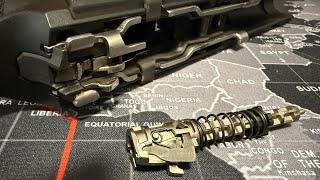 P320 False Auto-Sear Malfunction |
|
Quoted: You say that as if the Wyoming soyjack dude is the only one playing with this stuff. We have several real world incidents on video. We have several tests and reports showing that the striker safety system doesn't work reliably, and we have several mechanical explanations for why that is. We have a few tests and reports showing that the sear isn't secure, and we have an irrefutable mechanical explanation for why that is. And... that's all it takes. Either one of those systems having safety issues should be a deal killer. But it's both. Prove it. |
|
Interesting. So another case of blaming the gun for human actions. |
|
Quoted: Go back and read it again. Not how those words are being used. At this point, people are just deliberately turning their brains off. You have a series of variables that can add up to a sear disengagement or not add up to a sear disengagement. Since P320's aren't mag dumping on their own, it's clear that they don't always add up to a sear disengagement. So when explaining how they add up to a sear disengagement on an extremely rare basis, when you see the word "if" or "possibly" and can't connect the dots that what's being said isn't conveying a lack of understanding but rather a statement of statistical probability, you aren't equipped to even be discussing this phenomenon. Period. Quoted: Quoted: I think his issue is that you can't say it's "pretty well understood" yet then have your explanation have a ton of variables and maybes in it. Saying "if" or "possibly" means it's not well understood because the exact failure mode isn't known, it's being guessed at. Well documented and understood would mean it's repeatable, period. Go back and read it again. Not how those words are being used. At this point, people are just deliberately turning their brains off. You have a series of variables that can add up to a sear disengagement or not add up to a sear disengagement. Since P320's aren't mag dumping on their own, it's clear that they don't always add up to a sear disengagement. So when explaining how they add up to a sear disengagement on an extremely rare basis, when you see the word "if" or "possibly" and can't connect the dots that what's being said isn't conveying a lack of understanding but rather a statement of statistical probability, you aren't equipped to even be discussing this phenomenon. Period. Removed my prior post, not worth the argument as that's clearly what this is instead of a discussion about what's actually happening and figuring out how to make this failure mode, or multiple failure modes (as there's enough happening here that I feel like that's a definite possibility) repeatable rather than conjecture. I can unequivocally state that I don't think anyone should be carrying a P320 at this point. Too many issues, even if the exact circumstances of them are obscured due to a variety of factors, to take the risk. Also way too many other options on the market that are just as good or better. |
|
Quoted: Prove it. Quoted: Quoted: You say that as if the Wyoming soyjack dude is the only one playing with this stuff. We have several real world incidents on video. We have several tests and reports showing that the striker safety system doesn't work reliably, and we have several mechanical explanations for why that is. We have a few tests and reports showing that the sear isn't secure, and we have an irrefutable mechanical explanation for why that is. And... that's all it takes. Either one of those systems having safety issues should be a deal killer. But it's both. Prove it. Proof that the striker block safety can be non-functional. That alone is reason not to buy one or carry one, and that SIG needs to recall the 320 instead of repeatedly claiming the gun is safe. It's not. SIG's own picture shows it's not. SIG's own tests. 3 out of 10 pistols tested. 30%. Attached File |
|
I have seen that primer pic since the day it was dropped. Why would Sig release that pic as evidence? If Sig is deliberately denying/lying about P320 issues, why would they even offer that pic up as evidence? Yes you could say they are required during discovery. But so many here say Sig is a lying immoral company. And I would agree so? So why? |
|
Quoted: So - to be clear - you are stating that people changing the geometry of the factory parts is proof that the factory parts are defective? Specifically referring only to the primary sear in this case. Quoted: Quoted: Quoted: Quoted: Quoted: Quoted: People are denying that both can be true at the same time. Even if we find out the Airman's buddy straight up shot him, that doesn't change the fact that the P320 is a raging pile with major vulnerabilities in every system. Well there is proof of some sort that the airman shot the other airman. There is zero repeatable demonstrative evidence that the guns go off on their own. If you have proof and can demonstrate the mode of failure then provide it. You stand to make a ton of money. A screw holding the trigger on the wall and messing with the gun to make it go off isn't proof. You say that as if the Wyoming soyjack dude is the only one playing with this stuff. We have several real world incidents on video. a) We have several tests and reports showing that the striker safety system doesn't work reliably, and we have several mechanical explanations for why that is. b) We have a few tests and reports showing that the sear isn't secure, and we have an irrefutable mechanical explanation for why that is. And... that's all it takes. Either one of those systems having safety issues should be a deal killer. But it's both. Do you have any links to B)? This isn't a punchy "show your work" math teacher bullshit, its an honest request. I can say that the earlier thing I just responded to isn't a functional condemnation of the sig sear design. In fact, this engineering description of a failure mode applies to nearly every sear engagement in every gun ever made. For example, a Glock would have the same readout on how its primary sear could let go. We have a video where a guy puts a .005" brass shim on the sear leg, moves the slide, and the gun pops the primer. We also have a video where a guy puts a small pin on top of the sear leg, lets the slide go forward, and pushes down on the slide causing a dry fire. This failure mode does NOT apply to every gun ever made. In fact, it might not apply to anything other than the P320 in the standard, as-carried configuration. The Glock's sear is fully blocked and locked. It can't move until someone unlocks it by pulling the trigger dingus. A 1911/2011 or other SAO gun's sear is locked up by the manual safety and grip safety. It can't move. A DA or DASA gun isn't even cocked. The potential energy for the hammer to drop doesn't exist. And then there's the P320 sear free floating in a fairly exposed position at the back of the frame, and it's not blocked by anything, even in manual safety models. So - to be clear - you are stating that people changing the geometry of the factory parts is proof that the factory parts are defective? Specifically referring only to the primary sear in this case. No. Not even close. There are three basic conclusions that shouldn’t really be controversial, and that seem kind of obvious in hindsight. 1) FOD/debris can compromise the sear striker engagement. 2) The P320 doesn’t have anything that blocks the sear to prevent this from happening. 3) The P320 design exacerbates this problem because the sear has a leg that acts as a lever, and the sear sits in a “pocket” that traps and contains debris instead of keeping it out or giving it space to fall down in the frame. |
|
Quoted: Prove it. Quoted: Quoted: You say that as if the Wyoming soyjack dude is the only one playing with this stuff. We have several real world incidents on video. We have several tests and reports showing that the striker safety system doesn't work reliably, and we have several mechanical explanations for why that is. We have a few tests and reports showing that the sear isn't secure, and we have an irrefutable mechanical explanation for why that is. And... that's all it takes. Either one of those systems having safety issues should be a deal killer. But it's both. Prove it. The proof for these statements is posted all over this thread and the big “it ends now” thread. If you haven’t seen it, it’s because you’re actively ignoring it. |
|
Quoted: What would possess someone to play with a handgun? They are literally designed to put holes through people, what kind of retard thinks that would be OK to play with  I don't know but evaced a M9 wound to the chest and a star cluster to the chest. Both were fuck around and find out moments. One FOB in Afghanistan, 2009. |
|
Quoted: Thanks for the post. I had read and understood this earlier. It is an extremely accurate set of statements, but also it posits the existence of a system to explain the failure mode. However, this system needs numbers dumped into it to work. Its like a coin sorting machine that pushes quarters over here, nickels there, dimes there, and finally pennies. If the question is how much change do I need to put in to have each hopper be full, nothing is said of that number. Example (W) .005 + (X) .005 + (Y) .005 = .015. If Z is .020, the weapon will not fire. Most of those numbers will be different for each individual pistol, and obviously the fouling/contaminant issue will be different in each situation. Some P320's have more sear engagement out of the box than others. Some P320's have more slide slop out of the box than others. Some P320's have ideal (correct) sear surfaces and are not affected by that issue. But all P320's are susceptible to fouling and foreign debris reducing the sear engagement. So it's my belief that you can get any P320 to let go of the sear with the right-sized brass shaving, unburnt powder, carbon, lube, a clump of all three, and/or something foreign that has fallen into the gap between slide and frame directly above the striker/sear pocket. |
|
Quoted: I don't know but evaced a M9 wound to the chest and a star cluster to the chest. Both were fuck around and find out moments. One FOB in Afghanistan, 2009. Quoted: Quoted: What would possess someone to play with a handgun? They are literally designed to put holes through people, what kind of retard thinks that would be OK to play with I don't know but evaced a M9 wound to the chest and a star cluster to the chest. Both were fuck around and find out moments. One FOB in Afghanistan, 2009. One of my airmen was finger fucking his M9 at Manas AB in 2010 and fired a round through the patrol truck door. He almost hit an Army Captain walking by. |
|
Quoted: Not sure how you came to the idea that the geometry of factory parts were changed based on what GenYRevolverGuy wrote. As far as what he was talking about here are some videos that hopefully give you a better idea of what he is describing where the triggers are not manipulated in the process of demonstrating an uncommanded discharge. This one the guy uses stuff who would normally see that could possibly build up like brass shavings and unburned gunpowder.  https://www.youtube.com/watch?v=5ByWtn25RMg https://www.youtube.com/watch?v=5ByWtn25RMgThis one is by a member here VeryAverage, who has an engineering background. https://www.youtube.com/watch?v=HiWhK6OUMV4Quoted: Quoted: Quoted: Quoted: Quoted: Quoted: Quoted: People are denying that both can be true at the same time. Even if we find out the Airman's buddy straight up shot him, that doesn't change the fact that the P320 is a raging pile with major vulnerabilities in every system. Well there is proof of some sort that the airman shot the other airman. There is zero repeatable demonstrative evidence that the guns go off on their own. If you have proof and can demonstrate the mode of failure then provide it. You stand to make a ton of money. A screw holding the trigger on the wall and messing with the gun to make it go off isn't proof. You say that as if the Wyoming soyjack dude is the only one playing with this stuff. We have several real world incidents on video. a) We have several tests and reports showing that the striker safety system doesn't work reliably, and we have several mechanical explanations for why that is. b) We have a few tests and reports showing that the sear isn't secure, and we have an irrefutable mechanical explanation for why that is. And... that's all it takes. Either one of those systems having safety issues should be a deal killer. But it's both. Do you have any links to B)? This isn't a punchy "show your work" math teacher bullshit, its an honest request. I can say that the earlier thing I just responded to isn't a functional condemnation of the sig sear design. In fact, this engineering description of a failure mode applies to nearly every sear engagement in every gun ever made. For example, a Glock would have the same readout on how its primary sear could let go. We have a video where a guy puts a .005" brass shim on the sear leg, moves the slide, and the gun pops the primer. We also have a video where a guy puts a small pin on top of the sear leg, lets the slide go forward, and pushes down on the slide causing a dry fire. This failure mode does NOT apply to every gun ever made. In fact, it might not apply to anything other than the P320 in the standard, as-carried configuration. The Glock's sear is fully blocked and locked. It can't move until someone unlocks it by pulling the trigger dingus. A 1911/2011 or other SAO gun's sear is locked up by the manual safety and grip safety. It can't move. A DA or DASA gun isn't even cocked. The potential energy for the hammer to drop doesn't exist. And then there's the P320 sear free floating in a fairly exposed position at the back of the frame, and it's not blocked by anything, even in manual safety models. So - to be clear - you are stating that people changing the geometry of the factory parts is proof that the factory parts are defective? Specifically referring only to the primary sear in this case. Not sure how you came to the idea that the geometry of factory parts were changed based on what GenYRevolverGuy wrote. As far as what he was talking about here are some videos that hopefully give you a better idea of what he is describing where the triggers are not manipulated in the process of demonstrating an uncommanded discharge. This one the guy uses stuff who would normally see that could possibly build up like brass shavings and unburned gunpowder. https://www.youtube.com/watch?v=5ByWtn25RMgThis one is by a member here VeryAverage, who has an engineering background. https://www.youtube.com/watch?v=HiWhK6OUMV4Putting a shim on a sear leg is altering the geometry. Putting a small pin on top of the sear leg is altering the geometry. The FBI milling the primary sear notch is altering the geometry. |
|
Quoted: Go back and read it again. Not how those words are being used. At this point, people are just deliberately turning their brains off. You have a series of variables that can add up to a sear disengagement or not add up to a sear disengagement. Since P320's aren't mag dumping on their own, it's clear that they don't always add up to a sear disengagement. So when explaining how they add up to a sear disengagement on an extremely rare basis, when you see the word "if" or "possibly" and can't connect the dots that what's being said isn't conveying a lack of understanding but rather a statement of statistical probability, you aren't equipped to even be discussing this phenomenon. Period. Quoted: Quoted: I think his issue is that you can't say it's "pretty well understood" yet then have your explanation have a ton of variables and maybes in it. Saying "if" or "possibly" means it's not well understood because the exact failure mode isn't known, it's being guessed at. Well documented and understood would mean it's repeatable, period. Go back and read it again. Not how those words are being used. At this point, people are just deliberately turning their brains off. You have a series of variables that can add up to a sear disengagement or not add up to a sear disengagement. Since P320's aren't mag dumping on their own, it's clear that they don't always add up to a sear disengagement. So when explaining how they add up to a sear disengagement on an extremely rare basis, when you see the word "if" or "possibly" and can't connect the dots that what's being said isn't conveying a lack of understanding but rather a statement of statistical probability, you aren't equipped to even be discussing this phenomenon. Period. If the geometry is present in a P320 to allow it to fire "uncommanded", then why can't testing replicate it in the same P320? |