


[ARCHIVED THREAD] - SIG “ The P320. It ends today.” (Page 111 of 142)
|
Quoted: Mischief Machine placed .01" of debris on the tail of the sear then pressed down on the slide a few times and the gun went off.  https://www.youtube.com/watch?v=5ByWtn25RMg https://www.youtube.com/watch?v=5ByWtn25RMgQuoted: As an addendum, although Mischief Machine beat me by about 15 minutes. I can make it happen with a single large piece of debris, and slight forward-back slide movement. Mischief Machine did it with small debris and up-down slide movement. https://www.youtube.com/watch?v=HiWhK6OUMV4So it can be done at least two different ways. This might actually be a viable answer. We know there's 3 different known types of failure for the striker block. There's the striker block overriding the shelf on the striker, there's spring failures, and there's force back-feeding through the sear as shown in the "sear movement test." The question, up until now, has been how the sear might be letting go, and how we might be able to reproduce that. I still think movement and tolerances are ONE way this happens in reported UDs. But this? This is a no-shenanigans answer for how it might really be happening in the real world. Dirt, sand, lint, carbon, brass, cheeto dust... whatever... there are all kinds of things that can accumulate in that space, and ~.01" isn't exactly a lot. And, as a "bonus" of sorts, this kind of circles back to Trenchcoat's sear movement test. Sig seems to think there's a specific way that should be tested, and there were legitimate questions about how much force on the sear is reasonable, but I think this could be a realistic answer to that, too. I'm sure there will be different iterations of this test, but I don't immediately see a path for it to be debunked. |
|
Quoted: As an addendum, although Mischief Machine beat me by about 15 minutes. I can make it happen with a single large piece of debris, and slight forward-back slide movement. Mischief Machine did it with small debris and up-down slide movement. https://www.youtube.com/watch?v=HiWhK6OUMV4So it can be done at least two different ways. Wow! Thanks for making that video, man. Subscribed. |
|
Quoted: https://itendstoday.com Just bought another one just the other day. Came cut for optic and a threaded barrel. |
|
Quoted: This might actually be a viable answer. We know there's 3 different known types of failure for the striker block. There's the striker block overriding the shelf on the striker, there's spring failures, and there's force back-feeding through the sear as shown in the "sear movement test." The question, up until now, has been how the sear might be letting go, and how we might be able to reproduce that. I still think movement and tolerances are ONE way this happens in reported UDs. But this? This is a no-shenanigans answer for how it might really be happening in the real world. Dirt, sand, lint, carbon, brass, cheeto dust... whatever... there are all kinds of things that can accumulate in that space, and ~.01" isn't exactly a lot. And, as a "bonus" of sorts, this kind of circles back to Trenchcoat's sear movement test. Sig seems to think there's a specific way that should be tested, and there were legitimate questions about how much force on the sear is reasonable, but I think this could be a realistic answer to that, too. I'm sure there will be different iterations of this test, but I don't immediately see a path for it to be debunked. Quoted: Quoted: Mischief Machine placed .01" of debris on the tail of the sear then pressed down on the slide a few times and the gun went off. https://www.youtube.com/watch?v=5ByWtn25RMgQuoted: As an addendum, although Mischief Machine beat me by about 15 minutes. I can make it happen with a single large piece of debris, and slight forward-back slide movement. Mischief Machine did it with small debris and up-down slide movement. https://www.youtube.com/watch?v=HiWhK6OUMV4So it can be done at least two different ways. This might actually be a viable answer. We know there's 3 different known types of failure for the striker block. There's the striker block overriding the shelf on the striker, there's spring failures, and there's force back-feeding through the sear as shown in the "sear movement test." The question, up until now, has been how the sear might be letting go, and how we might be able to reproduce that. I still think movement and tolerances are ONE way this happens in reported UDs. But this? This is a no-shenanigans answer for how it might really be happening in the real world. Dirt, sand, lint, carbon, brass, cheeto dust... whatever... there are all kinds of things that can accumulate in that space, and ~.01" isn't exactly a lot. And, as a "bonus" of sorts, this kind of circles back to Trenchcoat's sear movement test. Sig seems to think there's a specific way that should be tested, and there were legitimate questions about how much force on the sear is reasonable, but I think this could be a realistic answer to that, too. I'm sure there will be different iterations of this test, but I don't immediately see a path for it to be debunked. In my instance someone with a proper computer program could likely model it. An object that sits in that space, and the recoil spring is pushing forward but “rolling” the object with that angle of the slide plate at some vector, and the sear is resisting at some vector. I’ll point out my “push” on the slide is assisted by the recoil spring. Any little bouncing around… it’s like a pistol with a very tightly fitted barrel lockup not completely closing when releasing the slide gently, but then even shaking it in your hand can make it snap shut. I’m not offering very much force. A simple elbow bump or definitely less than that will do it. |
|
Quoted: This might actually be a viable answer. We know there's 3 different known types of failure for the striker block. There's the striker block overriding the shelf on the striker, there's spring failures, and there's force back-feeding through the sear as shown in the "sear movement test." The question, up until now, has been how the sear might be letting go, and how we might be able to reproduce that. I still think movement and tolerances are ONE way this happens in reported UDs. But this? This is a no-shenanigans answer for how it might really be happening in the real world. Dirt, sand, lint, carbon, brass, cheeto dust... whatever... there are all kinds of things that can accumulate in that space, and ~.01" isn't exactly a lot. And, as a "bonus" of sorts, this kind of circles back to Trenchcoat's sear movement test. Sig seems to think there's a specific way that should be tested, and there were legitimate questions about how much force on the sear is reasonable, but I think this could be a realistic answer to that, too. I'm sure there will be different iterations of this test, but I don't immediately see a path for it to be debunked. Quoted: Quoted: Mischief Machine placed .01" of debris on the tail of the sear then pressed down on the slide a few times and the gun went off. https://www.youtube.com/watch?v=5ByWtn25RMgQuoted: As an addendum, although Mischief Machine beat me by about 15 minutes. I can make it happen with a single large piece of debris, and slight forward-back slide movement. Mischief Machine did it with small debris and up-down slide movement. https://www.youtube.com/watch?v=HiWhK6OUMV4So it can be done at least two different ways. This might actually be a viable answer. We know there's 3 different known types of failure for the striker block. There's the striker block overriding the shelf on the striker, there's spring failures, and there's force back-feeding through the sear as shown in the "sear movement test." The question, up until now, has been how the sear might be letting go, and how we might be able to reproduce that. I still think movement and tolerances are ONE way this happens in reported UDs. But this? This is a no-shenanigans answer for how it might really be happening in the real world. Dirt, sand, lint, carbon, brass, cheeto dust... whatever... there are all kinds of things that can accumulate in that space, and ~.01" isn't exactly a lot. And, as a "bonus" of sorts, this kind of circles back to Trenchcoat's sear movement test. Sig seems to think there's a specific way that should be tested, and there were legitimate questions about how much force on the sear is reasonable, but I think this could be a realistic answer to that, too. I'm sure there will be different iterations of this test, but I don't immediately see a path for it to be debunked. Imaging being at war in a sandy place......... Honestly this type of issue offers a perfect opportunity for sig to latch onto the issue. "The gun is fine, but we have identified a possible maybe sorta weakness and have developed a fix for it." Lots of ways to spin this. Now it would help if they stopped (or never did in the first place) sending out all those dumbass press releases. |
|
Quoted: This might actually be a viable answer. We know there's 3 different known types of failure for the striker block. There's the striker block overriding the shelf on the striker, there's spring failures, and there's force back-feeding through the sear as shown in the "sear movement test." The question, up until now, has been how the sear might be letting go, and how we might be able to reproduce that. I still think movement and tolerances are ONE way this happens in reported UDs. But this? This is a no-shenanigans answer for how it might really be happening in the real world. Dirt, sand, lint, carbon, brass, cheeto dust... whatever... there are all kinds of things that can accumulate in that space, and ~.01" isn't exactly a lot. And, as a "bonus" of sorts, this kind of circles back to Trenchcoat's sear movement test. Sig seems to think there's a specific way that should be tested, and there were legitimate questions about how much force on the sear is reasonable, but I think this could be a realistic answer to that, too. I'm sure there will be different iterations of this test, but I don't immediately see a path for it to be debunked. Quoted: Quoted: Mischief Machine placed .01" of debris on the tail of the sear then pressed down on the slide a few times and the gun went off. https://www.youtube.com/watch?v=5ByWtn25RMgQuoted: As an addendum, although Mischief Machine beat me by about 15 minutes. I can make it happen with a single large piece of debris, and slight forward-back slide movement. Mischief Machine did it with small debris and up-down slide movement. https://www.youtube.com/watch?v=HiWhK6OUMV4So it can be done at least two different ways. This might actually be a viable answer. We know there's 3 different known types of failure for the striker block. There's the striker block overriding the shelf on the striker, there's spring failures, and there's force back-feeding through the sear as shown in the "sear movement test." The question, up until now, has been how the sear might be letting go, and how we might be able to reproduce that. I still think movement and tolerances are ONE way this happens in reported UDs. But this? This is a no-shenanigans answer for how it might really be happening in the real world. Dirt, sand, lint, carbon, brass, cheeto dust... whatever... there are all kinds of things that can accumulate in that space, and ~.01" isn't exactly a lot. And, as a "bonus" of sorts, this kind of circles back to Trenchcoat's sear movement test. Sig seems to think there's a specific way that should be tested, and there were legitimate questions about how much force on the sear is reasonable, but I think this could be a realistic answer to that, too. I'm sure there will be different iterations of this test, but I don't immediately see a path for it to be debunked. |
|
Quoted: Wow! Thanks for making that video, man. Subscribed. Quoted: Quoted: As an addendum, although Mischief Machine beat me by about 15 minutes. I can make it happen with a single large piece of debris, and slight forward-back slide movement. Mischief Machine did it with small debris and up-down slide movement. https://www.youtube.com/watch?v=HiWhK6OUMV4So it can be done at least two different ways. Wow! Thanks for making that video, man. Subscribed. Thanks for that… it’s just a hobby for me. I spent more buying this P320 than I’ll probably make on YouTube in a year. I’m an industrial mechanic. I like tinkering with machines and enjoy a challenge. |
|
Quoted: I highly doubt this is the sum of all problems with this gun. The issue with this problem is that it likely leaves no evidence that it was the cause of the UD, thus being unrepeatable. Quoted: Quoted: Quoted: Mischief Machine placed .01" of debris on the tail of the sear then pressed down on the slide a few times and the gun went off. https://www.youtube.com/watch?v=5ByWtn25RMgQuoted: As an addendum, although Mischief Machine beat me by about 15 minutes. I can make it happen with a single large piece of debris, and slight forward-back slide movement. Mischief Machine did it with small debris and up-down slide movement. https://www.youtube.com/watch?v=HiWhK6OUMV4So it can be done at least two different ways. This might actually be a viable answer. We know there's 3 different known types of failure for the striker block. There's the striker block overriding the shelf on the striker, there's spring failures, and there's force back-feeding through the sear as shown in the "sear movement test." The question, up until now, has been how the sear might be letting go, and how we might be able to reproduce that. I still think movement and tolerances are ONE way this happens in reported UDs. But this? This is a no-shenanigans answer for how it might really be happening in the real world. Dirt, sand, lint, carbon, brass, cheeto dust... whatever... there are all kinds of things that can accumulate in that space, and ~.01" isn't exactly a lot. And, as a "bonus" of sorts, this kind of circles back to Trenchcoat's sear movement test. Sig seems to think there's a specific way that should be tested, and there were legitimate questions about how much force on the sear is reasonable, but I think this could be a realistic answer to that, too. I'm sure there will be different iterations of this test, but I don't immediately see a path for it to be debunked. That’s the issue, but it’s also the symptom. How can the gun fire, but then when examined the pistol is mechanically fine and the malfunction cannot be repeated? That’s the issue with the theory, but also explains how it has been happening. |
|
Quoted: Thanks for that… it’s just a hobby for me. I spent more buying this P320 than I’ll probably make on YouTube in a year. I’m an industrial mechanic. I like tinkering with machines and enjoy a challenge. Quoted: Quoted: Quoted: As an addendum, although Mischief Machine beat me by about 15 minutes. I can make it happen with a single large piece of debris, and slight forward-back slide movement. Mischief Machine did it with small debris and up-down slide movement. https://www.youtube.com/watch?v=HiWhK6OUMV4So it can be done at least two different ways. Wow! Thanks for making that video, man. Subscribed. Thanks for that… it’s just a hobby for me. I spent more buying this P320 than I’ll probably make on YouTube in a year. I’m an industrial mechanic. I like tinkering with machines and enjoy a challenge. Really? You could say I'm in a similar business. |
|
Quoted: Wow! Thanks for making that video, man. Subscribed. Quoted: Quoted: As an addendum, although Mischief Machine beat me by about 15 minutes. I can make it happen with a single large piece of debris, and slight forward-back slide movement. Mischief Machine did it with small debris and up-down slide movement. https://www.youtube.com/watch?v=HiWhK6OUMV4So it can be done at least two different ways. Wow! Thanks for making that video, man. Subscribed. Ditto. |
|
Quoted: Respect. Quoted: Quoted: Thanks for that… it’s just a hobby for me. I spent more buying this P320 than I’ll probably make on YouTube in a year. I’m an industrial mechanic. I like tinkering with machines and enjoy a challenge. Respect. I heard that in Komacho's voice. 
|

|
Quoted: Mischief Machine placed .01" of debris on the tail of the sear then pressed down on the slide a few times and the gun went off. https://www.youtube.com/watch?v=5ByWtn25RMgQuoted: Quoted: Quoted: @VeryAverage https://www.instagram.com/stories/mischief_machine/3688399107389114934?igsh=MTNmeTM1b2w1YjQ4NQ== https://www.instagram.com/stories/mischief_machine/3688439420958562399?igsh=MWg1c250cWxlMDg0bw== https://www.instagram.com/stories/mischief_machine/3688447115904236154?igsh=MWQ5cXpqbjB3OTRiMA== This is way more interesting than putting a screw in the trigger. https://www.youtube.com/watch?v=5ByWtn25RMgOk guys. Test your glocks and m&ps and other guns like this. Let's see what "normal" actually is. |
|
Quoted: Mischief Machine placed .01" of debris on the tail of the sear then pressed down on the slide a few times and the gun went off. https://www.youtube.com/watch?v=5ByWtn25RMgQuoted: Quoted: Quoted: @VeryAverage https://www.instagram.com/stories/mischief_machine/3688399107389114934?igsh=MTNmeTM1b2w1YjQ4NQ== https://www.instagram.com/stories/mischief_machine/3688439420958562399?igsh=MWg1c250cWxlMDg0bw== https://www.instagram.com/stories/mischief_machine/3688447115904236154?igsh=MWQ5cXpqbjB3OTRiMA== This is way more interesting than putting a screw in the trigger. Do you have a summary for people without Instagram? https://www.youtube.com/watch?v=5ByWtn25RMgHe's got the manual safety engaged (which prevents movement of the trigger) and the bladed-trigger safety trigger from Agency Arms (which prevents movement of the trigger). Ironic, Sig went through all that effort of re-wording their statement about pulling the trigger to movement of the trigger, and it was still bullshit. |
|
Quoted: Well then. Ok guys. Test your glocks and m&ps and other guns like this. Let's see what "normal" actually is. Quoted: Quoted: Quoted: Quoted: @VeryAverage https://www.instagram.com/stories/mischief_machine/3688399107389114934?igsh=MTNmeTM1b2w1YjQ4NQ== https://www.instagram.com/stories/mischief_machine/3688439420958562399?igsh=MWg1c250cWxlMDg0bw== https://www.instagram.com/stories/mischief_machine/3688447115904236154?igsh=MWQ5cXpqbjB3OTRiMA== This is way more interesting than putting a screw in the trigger. https://www.youtube.com/watch?v=5ByWtn25RMgOk guys. Test your glocks and m&ps and other guns like this. Let's see what "normal" actually is. They can’t do it. There is no rear sear shelf to hold debris. They have a fundamentally different design that doesn’t allow his mode of failure nor mine. |
|
Quoted: He's got the manual safety engaged (which prevents movement of the trigger) and the bladed-trigger safety trigger from Agency Arms (which prevents movement of the trigger). Ironic, Sig went through all that effort of re-wording their statement about pulling the trigger to movement of the trigger, and it was still bullshit. Quoted: Quoted: Quoted: Quoted: @VeryAverage https://www.instagram.com/stories/mischief_machine/3688399107389114934?igsh=MTNmeTM1b2w1YjQ4NQ== https://www.instagram.com/stories/mischief_machine/3688439420958562399?igsh=MWg1c250cWxlMDg0bw== https://www.instagram.com/stories/mischief_machine/3688447115904236154?igsh=MWQ5cXpqbjB3OTRiMA== This is way more interesting than putting a screw in the trigger. Do you have a summary for people without Instagram? https://www.youtube.com/watch?v=5ByWtn25RMgHe's got the manual safety engaged (which prevents movement of the trigger) and the bladed-trigger safety trigger from Agency Arms (which prevents movement of the trigger). Ironic, Sig went through all that effort of re-wording their statement about pulling the trigger to movement of the trigger, and it was still bullshit. I’ve gone breathless saying that… the “millimeter test” means nothing. |
|
Quoted: This might actually be a viable answer. We know there's 3 different known types of failure for the striker block. There's the striker block overriding the shelf on the striker, there's spring failures, and there's force back-feeding through the sear as shown in the "sear movement test." The question, up until now, has been how the sear might be letting go, and how we might be able to reproduce that. I still think movement and tolerances are ONE way this happens in reported UDs. But this? This is a no-shenanigans answer for how it might really be happening in the real world. Dirt, sand, lint, carbon, brass, cheeto dust... whatever... there are all kinds of things that can accumulate in that space, and ~.01" isn't exactly a lot. And, as a "bonus" of sorts, this kind of circles back to Trenchcoat's sear movement test. Sig seems to think there's a specific way that should be tested, and there were legitimate questions about how much force on the sear is reasonable, but I think this could be a realistic answer to that, too. I'm sure there will be different iterations of this test, but I don't immediately see a path for it to be debunked. Quoted: Quoted: Mischief Machine placed .01" of debris on the tail of the sear then pressed down on the slide a few times and the gun went off. https://www.youtube.com/watch?v=5ByWtn25RMgQuoted: As an addendum, although Mischief Machine beat me by about 15 minutes. I can make it happen with a single large piece of debris, and slight forward-back slide movement. Mischief Machine did it with small debris and up-down slide movement. https://www.youtube.com/watch?v=HiWhK6OUMV4So it can be done at least two different ways. This might actually be a viable answer. We know there's 3 different known types of failure for the striker block. There's the striker block overriding the shelf on the striker, there's spring failures, and there's force back-feeding through the sear as shown in the "sear movement test." The question, up until now, has been how the sear might be letting go, and how we might be able to reproduce that. I still think movement and tolerances are ONE way this happens in reported UDs. But this? This is a no-shenanigans answer for how it might really be happening in the real world. Dirt, sand, lint, carbon, brass, cheeto dust... whatever... there are all kinds of things that can accumulate in that space, and ~.01" isn't exactly a lot. And, as a "bonus" of sorts, this kind of circles back to Trenchcoat's sear movement test. Sig seems to think there's a specific way that should be tested, and there were legitimate questions about how much force on the sear is reasonable, but I think this could be a realistic answer to that, too. I'm sure there will be different iterations of this test, but I don't immediately see a path for it to be debunked. Don't forget the spurs or bad finishing on the sear and other parts we've seen. |
|
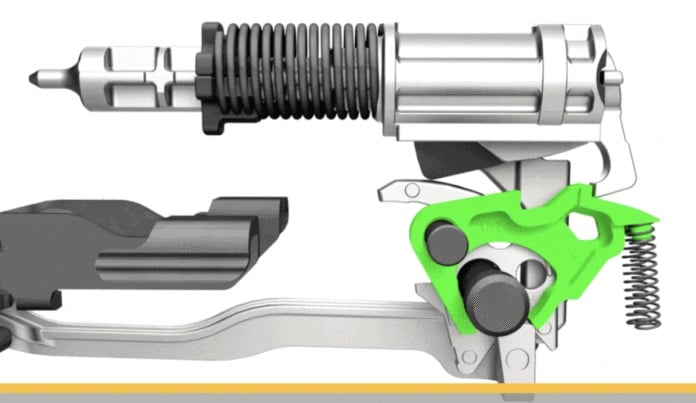
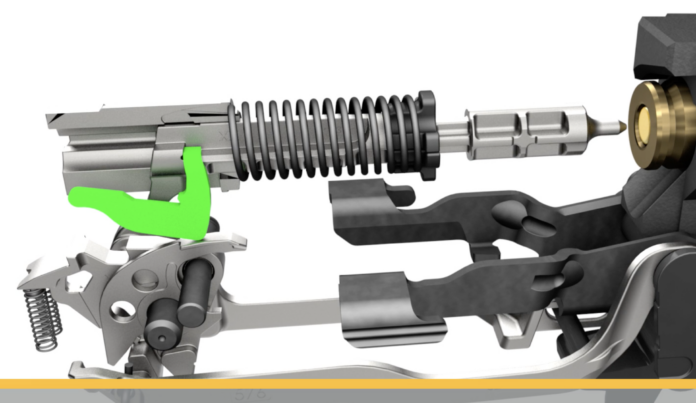
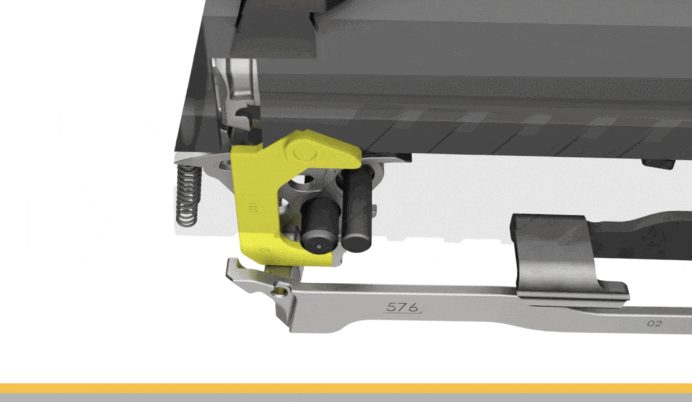
Quoted: I highly doubt this is the sum of all problems with this gun. The issue with this problem is that it likely leaves no evidence that it was the cause of the UD, thus being unrepeatable. It doesn't have to be the sum of all problems. The goal is to explain how this is happening, in at least some cases. Until now, we've had some good theories, and I'd argue some of those other theories are still plausible, but none of them were repeatable in a controlled setting, even with the actual examples of the P320 that discharged. Well, now we have a theory that's repeatable, and it's surprisingly simple. It turns out, all that has to happen is some debris has to end up in this pocket:  Get just enough stuff between the sear and the striker, or between that sear shelf and the back plate of the slide, and you're screwed. And as Mischief Machine proved, this CAN happen on a manual safety gun with the safety on. This brings us back to the Swiss Cheese model. 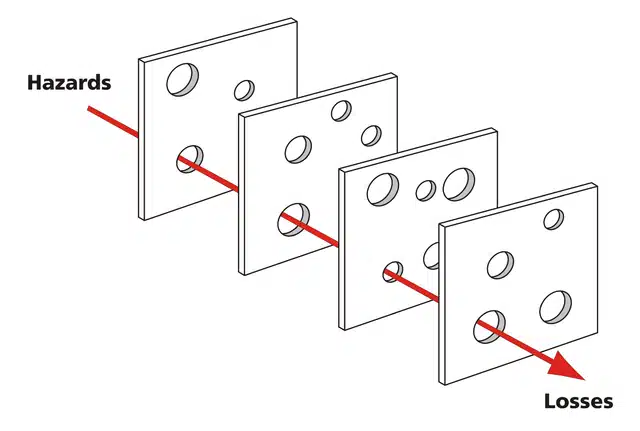 This shouldn't be as simple as some debris gets in the gun, so it discharges. Multiple holes have to exist for this threat to get through. At minimum, for the P320, those holes include the floating sear and the ability for the sear to back-feed into the striker safety. That's just the minimum, though. Other design issues that we've been talking about probably come into play... The lack of a trigger dingus means the trigger bar can be moved and operate the striker safety. The limited engagement of the striker on the sear means it doesn't take much to break that engagement. The sloppy slide to frame fit both increases the probability of debris entering that space AND increases the leverage the slide has when compressed against that debris due to force on the top of the slide. Even if we pretend for a moment that this debris explanation is the only cause of these UDs (it's not), you're still looking at significant changes to the gun to protect it from that threat vector. And it's not hard to look at other designs and see why they aren't vulnerable to this sort of thing. |


|
Quoted: They can’t do it. There is no rear sear shelf to hold debris. They have a fundamentally different design that doesn’t allow his mode of failure nor mine. Quoted: Quoted: Quoted: Quoted: Quoted: @VeryAverage https://www.instagram.com/stories/mischief_machine/3688399107389114934?igsh=MTNmeTM1b2w1YjQ4NQ== https://www.instagram.com/stories/mischief_machine/3688439420958562399?igsh=MWg1c250cWxlMDg0bw== https://www.instagram.com/stories/mischief_machine/3688447115904236154?igsh=MWQ5cXpqbjB3OTRiMA== This is way more interesting than putting a screw in the trigger. https://www.youtube.com/watch?v=5ByWtn25RMgOk guys. Test your glocks and m&ps and other guns like this. Let's see what "normal" actually is. They can’t do it. There is no rear sear shelf to hold debris. They have a fundamentally different design that doesn’t allow his mode of failure nor mine. I guess if you got creative you might find a way to get equal amount of space or an equal ratio of spacing between the sear and the striker appendage in some of those other guns, even if you had to rig it to stay there. |
|
Quoted: I’ve gone breathless saying that… the “millimeter test” means nothing. Quoted: Quoted: Quoted: Quoted: Quoted: @VeryAverage https://www.instagram.com/stories/mischief_machine/3688399107389114934?igsh=MTNmeTM1b2w1YjQ4NQ== https://www.instagram.com/stories/mischief_machine/3688439420958562399?igsh=MWg1c250cWxlMDg0bw== https://www.instagram.com/stories/mischief_machine/3688447115904236154?igsh=MWQ5cXpqbjB3OTRiMA== This is way more interesting than putting a screw in the trigger. Do you have a summary for people without Instagram? https://www.youtube.com/watch?v=5ByWtn25RMgHe's got the manual safety engaged (which prevents movement of the trigger) and the bladed-trigger safety trigger from Agency Arms (which prevents movement of the trigger). Ironic, Sig went through all that effort of re-wording their statement about pulling the trigger to movement of the trigger, and it was still bullshit. I’ve gone breathless saying that… the “millimeter test” means nothing. I think this, in conjunction with the firing pin safety not working properly, is probably the root cause. It's repeatable, simple, and the characteristics of what causes the ignition is in line with the discharges we've seen. |
|
Quoted:
Hat tip aimless for the screencap: Attached File |
|
Quoted: I guess if you got creative you might find a way to get equal or an equal ratio of spacing between the sear and the striker appendage in some of those other guns, even if you had to rig it to stay there. Quoted: Quoted: Quoted: Quoted: Quoted: Quoted: @VeryAverage https://www.instagram.com/stories/mischief_machine/3688399107389114934?igsh=MTNmeTM1b2w1YjQ4NQ== https://www.instagram.com/stories/mischief_machine/3688439420958562399?igsh=MWg1c250cWxlMDg0bw== https://www.instagram.com/stories/mischief_machine/3688447115904236154?igsh=MWQ5cXpqbjB3OTRiMA== This is way more interesting than putting a screw in the trigger. https://www.youtube.com/watch?v=5ByWtn25RMgOk guys. Test your glocks and m&ps and other guns like this. Let's see what "normal" actually is. They can’t do it. There is no rear sear shelf to hold debris. They have a fundamentally different design that doesn’t allow his mode of failure nor mine. I guess if you got creative you might find a way to get equal or an equal ratio of spacing between the sear and the striker appendage in some of those other guns, even if you had to rig it to stay there. It’s maybe possible in a theoretical sense. On a Glock you cannot because of the trigger housing. You can’t force the sear down until the trigger pull moves it to the rear. On a S&W the sear is all forward of the striker… could you maybe get something far enough into the gun that it could somehow become wedged forward of the striker, on top of the sear, and then wiggle around… maybe, but all that stuff is buried in the gun and has a lot of opportunities to fall aside before it can get there. It’s not reasonable. The P320 has a shelf on the rear of the sear to accommodate the springs. It’s distinctly different and explains why this affects this pistol in multiple ways but not these other pistols. |
|
Quoted: Well then. Ok guys. Test your glocks and m&ps and other guns like this. Let's see what "normal" actually is. Quoted: Quoted: Quoted: Quoted: @VeryAverage https://www.instagram.com/stories/mischief_machine/3688399107389114934?igsh=MTNmeTM1b2w1YjQ4NQ== https://www.instagram.com/stories/mischief_machine/3688439420958562399?igsh=MWg1c250cWxlMDg0bw== https://www.instagram.com/stories/mischief_machine/3688447115904236154?igsh=MWQ5cXpqbjB3OTRiMA== This is way more interesting than putting a screw in the trigger. https://www.youtube.com/watch?v=5ByWtn25RMgOk guys. Test your glocks and m&ps and other guns like this. Let's see what "normal" actually is. It's worth mentioning that, in the Mischief Machine video, I think he said he had the striker safety disabled for repeatability. With that context, the trigger safety is the low hanging fruit. If the trigger bar is the only way to operate the striker block, and the trigger can't move, we're already on the road to prevention. Next step is having a striker block design that isn't dildos. Nearly everyone else on the market uses much stronger and more reliable plunger style systems that don't pivot or rotate and that have good contact surfaces. Again, that's a big upgrade over the P320. Then we get into sear designs, and this would take more digging. I think each company has a somewhat unique approach to this problem. We know the Glock cruciform is locked into a channel that doesn't allow vertical movement without the trigger being pulled rearward. That's a tremendous difference. |
|
Quoted: Hat tip aimless for the screencap: https://www.ar15.com/media/mediaFiles/14563/IMG_8703-3597413.png Quoted: Quoted:
Hat tip aimless for the screencap: https://www.ar15.com/media/mediaFiles/14563/IMG_8703-3597413.png I guess their verbiage change in the manual was useful after all |
|
Quoted: It's worth mentioning that, in the Mischief Machine video, I think he said he had the striker safety disabled for repeatability. With that context, the trigger safety is the low hanging fruit. If the trigger bar is the only way to operate the striker block, and the trigger can't move, we're already on the road to prevention. Next step is having a striker block design that isn't dildos. Nearly everyone else on the market uses much stronger and more reliable plunger style systems that don't pivot or rotate and that have good contact surfaces. Again, that's a big upgrade over the P320. Then we get into sear designs, and this would take more digging. I think each company has a somewhat unique approach to this problem. We know the Glock cruciform is locked into a channel that doesn't allow vertical movement without the trigger being pulled rearward. That's a tremendous difference. Quoted: Quoted: Quoted: Quoted: Quoted: @VeryAverage https://www.instagram.com/stories/mischief_machine/3688399107389114934?igsh=MTNmeTM1b2w1YjQ4NQ== https://www.instagram.com/stories/mischief_machine/3688439420958562399?igsh=MWg1c250cWxlMDg0bw== https://www.instagram.com/stories/mischief_machine/3688447115904236154?igsh=MWQ5cXpqbjB3OTRiMA== This is way more interesting than putting a screw in the trigger. https://www.youtube.com/watch?v=5ByWtn25RMgOk guys. Test your glocks and m&ps and other guns like this. Let's see what "normal" actually is. It's worth mentioning that, in the Mischief Machine video, I think he said he had the striker safety disabled for repeatability. With that context, the trigger safety is the low hanging fruit. If the trigger bar is the only way to operate the striker block, and the trigger can't move, we're already on the road to prevention. Next step is having a striker block design that isn't dildos. Nearly everyone else on the market uses much stronger and more reliable plunger style systems that don't pivot or rotate and that have good contact surfaces. Again, that's a big upgrade over the P320. Then we get into sear designs, and this would take more digging. I think each company has a somewhat unique approach to this problem. We know the Glock cruciform is locked into a channel that doesn't allow vertical movement without the trigger being pulled rearward. That's a tremendous difference. In other words you'd have to find something that could move that bar up to where it could fall away without the trigger being moved. |
|
Quoted: I guess their verbiage change in the manual was useful after all Quoted: Quoted: Quoted:
Hat tip aimless for the screencap: https://www.ar15.com/media/mediaFiles/14563/IMG_8703-3597413.png I guess their verbiage change in the manual was useful after all We won! YAAAAY! *ahem, sir ...* What? Sir, we won by admitting our product is not exactly the best ... Wait ... WHAT? |
|
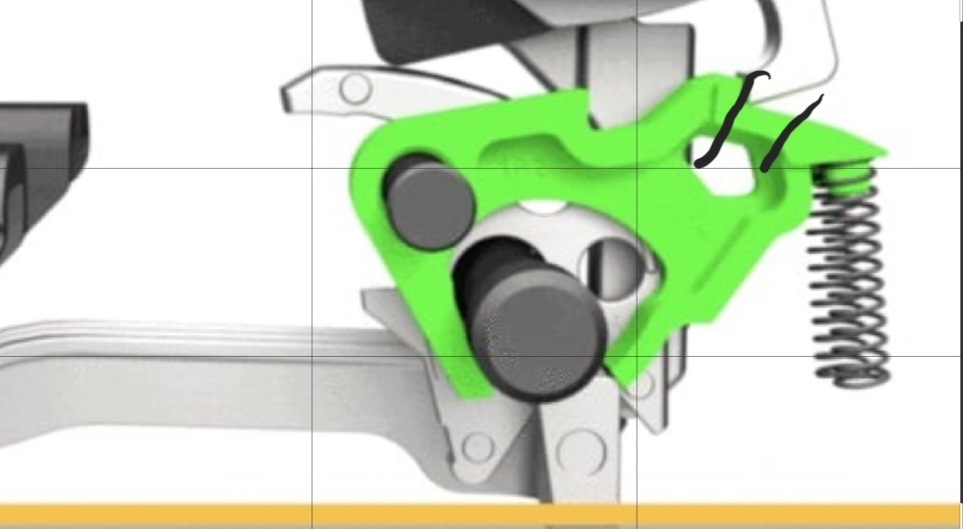
Quoted: Well then. Ok guys. Test your glocks and m&ps and other guns like this. Let's see what "normal" actually is. The method of disconnect and securing the sear after reset with those models prevents similar issues from debris causing a release (this is more a by product of the trigger pull-less takedown of the 320 here and similar pistols like a 365, apx? maybe eschelon, not familiar enough, etc would likely also be sensitive to sear deactivation by debris, though hopefully in those models the firing pin block design is robust enough to prevent discharge.) on models like a Glock/ m&p/ etc. which require trigger pull to takedown, usually the sear is rigidly constrained upwards and cannot be depressed downwards after disconnect and trigger reset so a piece of debris between dear and striker is more likely to either cause no issue (if small enough) or jam up the trigger mechanism. |
|
Quoted: Wonder if it would help, if one were to cut out the top rear section of the sear, from the striker shelf to just in front of the sear spring? Give the striker hook 'more room' to engage? https://i.postimg.cc/L6H8gfcf/Screenshot-20250730-225158-Photo-Editor.jpg I think that could prevent a lot of it. As Mischief Machine noticed in his prior video, the P320 sear is not “bottomless”, I think is what he said. Anything that makes it more bottomless would alleviate this at least in part. Might not make it impossible since that back shelf is still there because they use rear tensioning springs, but it would mitigate it. |
| We're gonna end up w/ people Dremeling the shit outta their sears. I don't recommend, suggest carrying a HiPoint instead for a bit. Taurus G3C if you can swing it, Taurus has already had the shake awake problem, fixed it, & come out the other side. No style points at the range but it won't shoot yer dick off. |
|
Quoted: We're gonna end up w/ people Dremeling the shit outta their sears. I don't recommend, suggest carrying a HiPoint instead for a bit. Taurus G3C if you can swing it, Taurus has already had the shake awake problem, fixed it, & come out the other side. No style points at the range but it won't shoot yer dick off. Carry a nambu and just don't poke the sear in it.  I'm joking! (the fact that I have to say that's a joke is kinda scary) |
|
Quoted: Wonder if it would help, if one were to cut out the top rear section of the sear, from the striker shelf to just in front of the sear spring? Give the striker hook 'more room' to engage? https://i.postimg.cc/L6H8gfcf/Screenshot-20250730-225158-Photo-Editor.jpg Maybe not cut it out entirely, but do a radius cut to make the area below the sear a deeper channel for FOD? |
|
Quoted: Maybe not cut it out entirely, but do a radius cut to make the area below the sear a deeper channel for FOD? Quoted: Quoted: Wonder if it would help, if one were to cut out the top rear section of the sear, from the striker shelf to just in front of the sear spring? Give the striker hook 'more room' to engage? https://i.postimg.cc/L6H8gfcf/Screenshot-20250730-225158-Photo-Editor.jpg Maybe not cut it out entirely, but do a radius cut to make the area below the sear a deeper channel for FOD? I think if we really dive deep in, it’s the location of the sear springs that caused this. The only reason that shelf exists is to be acted upon by those springs. Other pistols spring their sear differently. It’s not that they don’t have that shelf by accident, they don’t need it. SIG didn’t add the shelf just for fun, they need that shelf because of the sear springs. Why did they choose that location? I dunno. Could have been just a convenient spot, might have been avoiding some other patent, might have worked within the context of adapting the P250, or maybe there isn’t a real reason aside from it didn’t seem like a problem. Can’t blame them for not seeing the sear shelf as a problem… it took everyone a decade to maybe narrow it down to that as the differentiating aspect. It’s not obvious until you just happen to see it, then it can’t be unseen. It’s a blatant contaminant trap. Only owning one today, I actually do kind of like the pistol in general handling. Trigger is good, frame is comfortable. The slide is a little big and high, as SIG tends to do, but it’s easy to manipulate. It’s a comfortable pistol. It doesn’t feel foreign to me, even though I only have the most minimal experience with one. I understand how people can like it. I don’t trust it having seen what we’ve now seen and simulated. I hope they can engineer a fix. I think it involves relocating the sear springs. Just my opinion. |
|
Quoted: As an addendum, although Mischief Machine beat me by about 15 minutes. I can make it happen with a single large piece of debris, and slight forward-back slide movement. Mischief Machine did it with small debris and up-down slide movement. https://www.youtube.com/watch?v=HiWhK6OUMV4So it can be done at least two different ways. Definitely can see what you and Mischief Machine were able to demonstrate as being very plausible for how the incidents with the 320 have been occurring. Says a lot about Sig when they probably didn't test for something so simply as to what could cause an uncommanded discharge. Just hope Sig doesn't reach out to you and him offering you both the "factory tour" that the Sig Armorer was given. |
|
Quoted: I think if we really dive deep in, it’s the location of the sear springs that caused this. The only reason that shelf exists is to be acted upon by those springs. This is the idea I was thinking of. Make a radius cut just below the sear engagement area for FOD. Keeps the shelf for the sear springs intact. Dont know if it would weaken the area, but has to be better than cutting it out entirely as suggested above. Unless the striker would fall down into the radius cut? @VeryAverage |
|
Quoted: Definitely can see what you and Mischief Machine were able to demonstrate as being very plausible for how the incidents with the 320 have been occurring. Says a lot about Sig when they probably didn't test for something so simply as to what could cause an uncommanded discharge. Just hope Sig doesn't reach out to you and him offering you both the "factory tour" that the Sig Armorer was given. Quoted: Quoted: As an addendum, although Mischief Machine beat me by about 15 minutes. I can make it happen with a single large piece of debris, and slight forward-back slide movement. Mischief Machine did it with small debris and up-down slide movement. https://www.youtube.com/watch?v=HiWhK6OUMV4So it can be done at least two different ways. Definitely can see what you and Mischief Machine were able to demonstrate as being very plausible for how the incidents with the 320 have been occurring. Says a lot about Sig when they probably didn't test for something so simply as to what could cause an uncommanded discharge. Just hope Sig doesn't reach out to you and him offering you both the "factory tour" that the Sig Armorer was given. I don’t hate SIG, although I think this situation could have been handled better… maybe they didn’t know. I don’t know. I’d like to think they just overlooked this. I love their P210, and am a bit irritated they wasted the P211 model number on something other than a double stack P210. I don’t depend on the gun industry for a paycheck and a “factory tour” wouldn’t prove anything to me. I don’t think this sear issue is a manufacturing defect. It’s inherent to the way the pistol is designed due to the location of the sear springs. For all the complaints people have voiced, this used one I bought looks good inside. The parts look well finished and precise. It doesn’t look sloppy. Complicated, but not sloppy. I don’t think it is poorly built, it just has a design deficiency that makes it unsafe when carried in real world environmental conditions. For all the excitement I felt “proving it”, all I proved was an avenue to errantly discharge a pistol that has millions of copies in circulation… and that’s not a very uplifting thought. |
|
Quoted: I still think movement and tolerances are ONE way this happens in reported UDs. But this? This is a no-shenanigans answer for how it might really be happening in the real world. Dirt, sand, lint, carbon, brass, cheeto dust... whatever... there are all kinds of things that can accumulate in that space, and ~.01" isn't exactly a lot. Quoted: No. I was just absolutely shocked that GD and the errornet jumped to conclusions before an investigation even happened. I'm sure the pockets lined by clicks are still fist pumping. |
|
Quoted: https://www.ar15.com/media/mediaFiles/525/1000018584_jpg-3597629.JPG This is the idea I was thinking of. Make a radius cut just below the sear engagement area for FOD. Keeps the shelf for the sear springs intact. Dont know if it would weaken the area, but has to be better than cutting it out entirely as suggested above. Unless the striker would fall down into the radius cut? @VeryAverage Quoted: Quoted: I think if we really dive deep in, it’s the location of the sear springs that caused this. The only reason that shelf exists is to be acted upon by those springs. This is the idea I was thinking of. Make a radius cut just below the sear engagement area for FOD. Keeps the shelf for the sear springs intact. Dont know if it would weaken the area, but has to be better than cutting it out entirely as suggested above. Unless the striker would fall down into the radius cut? @VeryAverage No, it wouldn’t fall too far. Most pistols have a “bottomless sear”, to borrow a term from Mischief Machine. It would probably prevent his “small contaminant” discharge he displayed. I don’t think it would reliably prevent the “big contaminant” discharge I demonstrated by accident while trying to find a way to do what he showed. Your suggestion would help, in my opinion, but the location of those sear springs is suboptimal and is the real issue. The sear needs to be sprung differently and then the shelf can go away. |

|
Thats a lot of fouling. Has it been proven to build up that much in that specific spot? |
|
Quoted: Yes, or they're using various thickness of sheet metal for the FCU, or both. And that's just perception. I don't have empirical data to back it up. It could just be the way the 320 works. There's no vertical pressure on the 320 until the striker block lever rotates up and pushes she striker block out of the way. But it would certainly seem that at least some 320s have a really sloppy FCU to slide fit. That's why I wish someone would make aa billet FCU. Warfighter Machining made an 80% for awhile. Wished I had gotten one. A user on the P320 sub Reddit finished one and assembled a 320. The FCU rail to slide fit was very nice. There was almost 0 play between the rails and slide. |