


Armory Sponsor



Posted: 9/10/2026 10:06:21 AM EDT
[Last Edit: Ronnoc][Edited]
|
A rifle issue and what looks like a baffle strike video pooped up for me and the autopsy report video of the suppressor. The internals of the suppressor looked odd and I looked up the suppressor maker, SVEMKO which looks to be a Norwegian suppressor maker. The internals look kind of odd and some of the suppressors in their line-up have very restrictive firing schedules. Was just wondering if some of our resident experts could explain it or shed some light on the designs. They have a lot of different suppresors. SVEMKO Suppressors 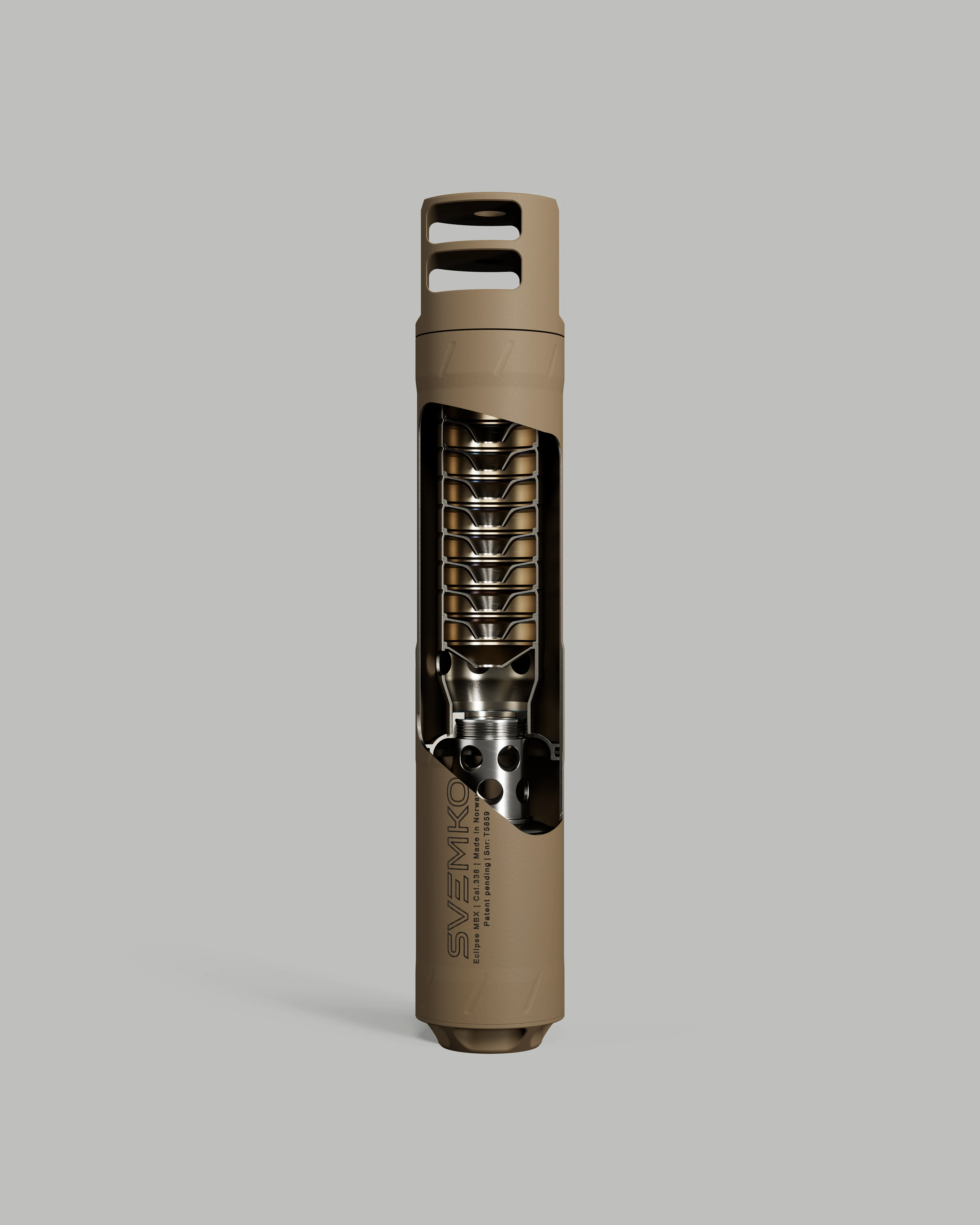 Starts about 2:45 with the suppressor.  My Rifle Exploded in My Face. The Investigation Is Complete. |
Dare to tame me. Nothing can hold back my rage. Dare to tame me. You can't fool the faithless. Dare to tame me. Fear the man who lost it all.

|
The suppressor is very thin for .338lm. It looks like a weld failure is what happened here unless the can is not welded at all. The blast baffle separated from the thing it was attached to which had a lot of its material taken away by the big holes punched in it, taking strength out of that welded joint most likely. The baffles have the kind of thickness I would expect in a rimfire can, and its a .338LM. We made a .338lm can called “precision hunter” around 2014. The stress test for it was firing 5 rds a minute for 250 rds on an 18” Barrett MRAD in .338 LM. The can turned purple and brown from heat doing that sustained fire test and it was fine. |
Austin, Managing Partner - www.GriffinArmament.com

|
The general design has an American counterpart: - notice there is a large hollow space around the baffle stack? There are also large perforations in the blast chamber to vent gas into the empty space around the baffle stack. At least one very quiet US can uses a similar design; don’t recall which one. But it works. I mean, they all “work,” but the design supposedly works well. |


|
Originally Posted By Dominion21: The general design has an American counterpart: - notice there is a large hollow space around the baffle stack? There are also large perforations in the blast chamber to vent gas into the empty space around the baffle stack. At least one very quiet US can uses a similar design; don’t recall which one. But it works. I mean, they all “work,” but the design supposedly works well. I think that's the MK9K but it is subsonic in application. I don't know how that would work in supersonic applications. It makes the blast chamber humongous so FRP is probably screwed at least. |
Austin, Managing Partner - www.GriffinArmament.com

|
Originally Posted By Green0: The suppressor is very thin for .338lm. It looks like a weld failure is what happened here unless the can is not welded at all. The blast baffle separated from the thing it was attached to which had a lot of its material taken away by the big holes punched in it, taking strength out of that welded joint most likely. The baffles have the kind of thickness I would expect in a rimfire can, and its a .338LM. We made a .338lm can called “precision hunter” around 2014. The stress test for it was firing 5 rds a minute for 250 rds on an 18” Barrett MRAD in .338 LM. The can turned purple and brown from heat doing that sustained fire test and it was fine. Is it possible it can get away with thinner than normal baffles as the pressure is equalized on both sides by the blast chamber diverting some blast up the sides? |
Armory Sponsor