


Armory Sponsor
NRA 7.62x51mm Lake City load data for M1-A's. (Page 1 of 2)

Posted: 2/21/2015 8:40:29 PM EDT
[Last Edit: borderpatrol][Edited]
Please read these articles thoroughly. Velocities are fired from 24" barrels.


c.u.p. = copper units of pressure. psi is approximately 8000 psi higher than c.u.p. measurements shooting the same ammo. 52,000 c.u.p. is a maximum load. |

|
Thanks, we were discussing this last night, along with a great competitive target shooting book the NRA published at one time.
Your thread is set now to keep it out of the archive. These threads eventually sink to the last few pages of the forum if there are no new comments for a while. |
It is not easy to explain Liberty to those that are not familiar with Liberty. Kevin Jamison, on explaining firearm regulation to a Massachusetts lawyer. Jeff City, Mo 18 Apr 13.


Global Warming Hoax Skeptic before it was cool
Joined:
Jun 2007
Posts:
33861
EE: 100% (1)
 WA, USA

|
Originally Posted By ZA206:
Nice articles.... Looks they were from the late 70s or early 80s. ZA 1984 to be exact. Published in the American Rifleman magazine and then again in NRA's book titled "Semi-Auto Rifles - Data & Comment". I obtained permission from NRA headquarters to post them provided I credited them as the source. |



|
Unfortunately, the testing should have been extended to work out the equivalent loads for commercial brass, especially Winchester and Remington.
This leaves us to match muzzle velocity with larger charges. I don't have my notebook handy, but I don't think my 41.5 grain charges of IMR 4895 in Winchester cases get all that close to the speeds in the articles. I suppose the good news is that I have a barrel (barrel, small) full of LC NM cases. |
It is not easy to explain Liberty to those that are not familiar with Liberty. Kevin Jamison, on explaining firearm regulation to a Massachusetts lawyer. Jeff City, Mo 18 Apr 13.
|
Originally Posted By AeroE:
Unfortunately, the testing should have been extended to work out the equivalent loads for commercial brass, especially Winchester and Remington. This leaves us to match muzzle velocity with larger charges. I don't have my notebook handy, but I don't think my 41.5 grain charges of IMR 4895 in Winchester cases get all that close to the speeds in the articles. I suppose the good news is that I have a barrel (barrel, small) full of LC NM cases. Wm. C. Davis Jr. did include pressure tests with the maximum Lake City load of 40.5 grains of IMR-4895, 168 grain SMK's, Winchester standard large rifle primers in Winchester, Federal, and Remington brass. He also changed primer brands and pressure tested using Lake City brass. The results are substantially changed when switching components, much more than most people realize. Those results are in Table III on page 28. |
|
Originally Posted By borderpatrol:
Wm. C. Davis Jr. did include pressure tests with the maximum Lake City load of 40.5 grains of IMR-4895, 168 grain SMK's, Winchester standard large rifle primers in Winchester, Federal, and Remington brass. He also changed primer brands and pressure tested using Lake City brass. The results are substantially changed when switching components, much more than most people realize. Those results are in Table III on page 28. Originally Posted By borderpatrol:
Originally Posted By AeroE:
Unfortunately, the testing should have been extended to work out the equivalent loads for commercial brass, especially Winchester and Remington. This leaves us to match muzzle velocity with larger charges. I don't have my notebook handy, but I don't think my 41.5 grain charges of IMR 4895 in Winchester cases get all that close to the speeds in the articles. I suppose the good news is that I have a barrel (barrel, small) full of LC NM cases. Wm. C. Davis Jr. did include pressure tests with the maximum Lake City load of 40.5 grains of IMR-4895, 168 grain SMK's, Winchester standard large rifle primers in Winchester, Federal, and Remington brass. He also changed primer brands and pressure tested using Lake City brass. The results are substantially changed when switching components, much more than most people realize. Those results are in Table III on page 28. That's exactly what I'm referring to, the test stops short. Look at the speeds and pressures. |
It is not easy to explain Liberty to those that are not familiar with Liberty. Kevin Jamison, on explaining firearm regulation to a Massachusetts lawyer. Jeff City, Mo 18 Apr 13.
|
borderpatrol, Thanks for the information.
I loaded some 180gr SMK yesterday in LC brass. I cross referenced 3 sources one of which is a Hodgdon manual that specifies "GI" brass was used. The manual is only a couple years newer than the information you posted. I am surprised that the load listed in the article for the 180gr SMK using H-4895 is 39grs. That is a full grain over the max in the Hodgdon manual. I decided to load 4, five round lots in 1gr increments starting at 34gr and going up to 37gr. I'm not trying to work up a "match" load. I just have one box of these left over from the past and want to use them up. I do want them to shoot ok though. If I didn't care I would have just got a middle of the road load and loaded them up. |
|
Originally Posted By AeroE:
That's exactly what I'm referring to, the test stops short. Look at the speeds and pressures. Originally Posted By AeroE:
Originally Posted By borderpatrol:
Originally Posted By AeroE:
Unfortunately, the testing should have been extended to work out the equivalent loads for commercial brass, especially Winchester and Remington. This leaves us to match muzzle velocity with larger charges. I don't have my notebook handy, but I don't think my 41.5 grain charges of IMR 4895 in Winchester cases get all that close to the speeds in the articles. I suppose the good news is that I have a barrel (barrel, small) full of LC NM cases. Wm. C. Davis Jr. did include pressure tests with the maximum Lake City load of 40.5 grains of IMR-4895, 168 grain SMK's, Winchester standard large rifle primers in Winchester, Federal, and Remington brass. He also changed primer brands and pressure tested using Lake City brass. The results are substantially changed when switching components, much more than most people realize. Those results are in Table III on page 28. That's exactly what I'm referring to, the test stops short. Look at the speeds and pressures. If you are using Winchester commercial brass and have a 24" barrel you will almost certainly be able to drive a 168 grain SMK to 2625 fps (maximum load velocity using Lake City brass and IMR-4895). Hornady data shows 43.2 grains of IMR-4895 with their 168 in .308 bolt action data and 2600 fps from their 24" barrel. Sierra's goes even faster. I would add .5 grain at a time and work up to 43.0 grains watching for pressure signs and checking velocity with a chronograph. Primer selection makes a huge difference in pressure based on Wm. C. Davis's testing. Winchester standard large rifle primers (old style with nickel plating) and Federal 210M Gold Medal Match primers create the highest pressures equal to almost 2.0 grains more powder (+ 6000 c.u.p.) when compared to Remington 9.5's and CCI's 200/250 series primers. Using the softer primers will reduce velocity and pressure. Almost the exact pressure drop happens when substituting commercial brass (- 6000 c.u.p. or = to 2.0 whole grains of powder). Comparing the velocity/pressure curves for every charge tested an increase of approximately 60 fps occurs and 3000 c.u.p. pressure increase happens with each additional (1.0) grain of powder charge increased. I believe you can safely increase your current Winchester brass/168 SMK by at least 1.5 grains and safely reach at least 2600 fps using most of the IMR powders used in his data. Shorter barrels will not allow the velocities he recorded. My M1-A's have never recorded velocities comparable to their barrel lengths (22"), they have run around 50/100 fps slower than expected. Safe reloading and good luck. |
|
Originally Posted By jblomenberg16:
Making me really rethink trying a load of 43.5gr of IMR4895 for my M1a with 168 SMK's. If you are using Winchester commercial cases you are probably at maximum. If you are using Lake City or other G.I. brass you are almost certainly too hot. |
|
Originally Posted By borderpatrol:
If you are using Winchester commercial cases you are probably at maximum. If you are using Lake City or other G.I. brass you are almost certainly too hot. Originally Posted By borderpatrol:
[span style='font-weight: bold;']Originally Posted By jblomenberg16:[/span168sMaking me really rethink trying a load of 43.5gr of IMR4895 for my M1a with 168 SMK's. If you are using Winchester commercial cases you are probably at maximum. If you are using Lake City or other G.I. brass you are almost certainly too hot. I can't say I agree. From all the data I have studied 43.5gr of IMR4895 is no more than 2 or 3% over "book" even in GI brass with 168s. As far as chamber pressure goes I'd say it fine. Gas port pressure would be a little higher. So safety wise I think it wouldn't be a problem but it may be a little harder on the rifle mechanically. I would start out low and work up as normal and hope I get good accuracy before getting to 41grs. Motor1 |
|
Originally Posted By borderpatrol:
If you are using Winchester commercial cases you are probably at maximum. If you are using Lake City or other G.I. brass you are almost certainly too hot. Originally Posted By borderpatrol:
Originally Posted By jblomenberg16:
Making me really rethink trying a load of 43.5gr of IMR4895 for my M1a with 168 SMK's. If you are using Winchester commercial cases you are probably at maximum. If you are using Lake City or other G.I. brass you are almost certainly too hot. Brass is CBC with the NATO cross. I was incorrect...checked my load data and am at 42.5gr. Still probably a little on the hot side. Only have 50 loaded up as test loads so no big deal to pull and drop down the charge a bit. |
|
Originally Posted By Motor1:
You do what you feel is right. I'm sure on a 95 degree day that M80 ball is well over what difference 1gr of IMR4895 is going to make. If I had more brass to work with I'd just set them aside for now. Yeah, I have a bunch of brass, plenty of powder, and plenty of Boolits. I'll work up some loads starting a bit lower and see where I end up. I picked 42.5 based on it being a little under the max load for .308Win and where I have come in on some of my other loads historically for other rounds. That was also where I was at for a good load with M80 pull downs, so that charge weight was already dialed up and I didn't have to make any changes. Probably being a little too lazy. |
|
Originally Posted By jblomenberg16:
Yeah, I have a bunch of brass, plenty of powder, and plenty of Boolits. I'll work up some loads starting a bit lower and see where I end up. I picked 42.5 based on it being a little under the max load for .308Win and where I have come in on some of my other loads historically for other rounds. That was also where I was at for a good load with M80 pull downs, so that charge weight was already dialed up and I didn't have to make any changes. Probably being a little too lazy. Originally Posted By jblomenberg16:
Originally Posted By Motor1:
You do what you feel is right. I'm sure on a 95 degree day that M80 ball is well over what difference 1gr of IMR4895 is going to make. If I had more brass to work with I'd just set them aside for now. Yeah, I have a bunch of brass, plenty of powder, and plenty of Boolits. I'll work up some loads starting a bit lower and see where I end up. I picked 42.5 based on it being a little under the max load for .308Win and where I have come in on some of my other loads historically for other rounds. That was also where I was at for a good load with M80 pull downs, so that charge weight was already dialed up and I didn't have to make any changes. Probably being a little too lazy. Your concern is well founded. I'm not down playing it. The thing is I know how much work it is to dissemble 50 rounds of ammo and this is not just plinking ammo so you should re-size the necks before reloading the brass. Your 42.5gr IMR4895 in GI brass is 2 full grains over the data I have seen but as I stated before that is not a lot over considering the amount of the charge. Maybe you could use them in another rifle instead of your M1A. Just as a side note, this has got me looking at several data sources which has turned up something kind of unusual. My manuals date back to 1985 my newest is Hornady 8th. Hornady 8th has quickly become notorious for being conservative when it comes to max loads. It seem IMR4895 with 168gr bullets is kind of an exception. The max in the 3rd edition is 39.0gr The max in the 8th edition is 43.3gr This is "regular" .308 Win. data using Hornady/Frontier brass. (The 7.62 Service Rifle Max is 2gr less using the same brass.) Motor1 |
|
I, personally, am leery of using load data for the 80's................ It wasn't a good decade and the powders have changed. There are others available and the lots they used are long gone.
Work up your load carefully and stop when you find the accuracy you want. Don't just pick the max load and jump on that. Like wise pushing loads (to I guess get higher velocity) isn't wise either. With hotter loads the return is really diminishing (ie. the ballistic effect of squeezing out another 50fps isn't worth the effort), Hot loads actually lose BC as they go increasely go over pressure and you are needlessly beating up your rifle. |
|
Originally Posted By TGH456E:
I, personally, am leery of using load data for the 80's................ It wasn't a good decade and the powders have changed. There are others available and the lots they used are long gone. Work up your load carefully and stop when you find the accuracy you want. Don't just pick the max load and jump on that. Like wise pushing loads (to I guess get higher velocity) isn't wise either. With hotter loads the return is really diminishing (ie. the ballistic effect of squeezing out another 50fps isn't worth the effort), Hot loads actually lose BC as they go increasely go over pressure and you are needlessly beating up your rifle. Actually these powders haven't changed. The manufacturer's still have the same goals when marketing these powders and a very narrow window as to what's acceptable. Some new powders have hit the market in the meantime, but this data is still accurate regarding the powders chosen for this article. For anyone interested a Google search of ballistician William C. Davis Jr. will reveal that he was among the most highly regarded in his field. He was selected to represent the U.S. government and sent to Europe as our representative to NATO to develop a standardized 7.62x51mm round. He was also instrumental in fixing problems associated with M-16 ammunition early in it's career as our nation's service rifle. The NRA could not have found a more accomplished ballistician to conduct these tests. With that being said, I have used virtually every maximum load listed except for the IMR-4320 loads and have never had a single issue using Lake City brass. Some loads were fired on 90+ degree days. I believe he limited the WW-748-168 grain loads to 43.0 grains and 48,000 c.u.p. to allow for temperature spikes that most people experience when using ball powders at high ambient temperatures. This data has been reliably safe in every rifle I've tried it through. I still use it with current powders marketed under the same names with identical chronograph results when compared to what I found 25 years ago using this data. Always start a little lower and work up. Bolt actions with 24" barrels will approach this data's listed velocities, my M1-A's are 75 to 100 fps slower. This is partly the 22" barrel and partly because of chamber dimensions. |
|
Originally Posted By borderpatrol:
BTT Thanks bp I remember this one well. The photos you posted are similar to the pages in my Hodgdon book. It seems there is a decent amount of difference between "cup" and psi The info you posted states a port pressure of 12,500 cup +/-2,000 for port pressure spec. It would seem to me there is quite a bit of room there to play with. Motor1 |

|
Rattle Battle on Viale...man, that's been a few years.
The 180SMK noted in the articles is, as I understand, a different design than the 180 available today. The results we got back in the day were less than enthusiastic. Using an M1A/M14, We were able to get it to shoot acceptably out of an Obermeyer bbl using IMR 4320, 42.0 I think, but a Douglas or GI med-heavy just didn't cut the mustard. I still have about 1500 sitting on the shelf gathering dust. The 170 Lapua was even more finicky. It shot fine out of GI barrels but not out of commercial barrels, something with the looser tolerances on the GI barrels and the Lapua bullets being slightly oversized. |

|
Originally Posted By NoHarmNoFAL:
Did Varget come about after the early 1980's? yeah, VARGET is relatively new Those metal cans of Win-748 bring back memories. 
|
NRA Life Member
USPSA-IPSC
"They that can give up essential liberty to obtain a little temporary safety deserve neither liberty nor safety."
- Benjamin Franklin
USPSA-IPSC
"They that can give up essential liberty to obtain a little temporary safety deserve neither liberty nor safety."
- Benjamin Franklin
|
Originally Posted By Motor1:
Thanks bp I remember this one well. The photos you posted are similar to the pages in my Hodgdon book. It seems there is a decent amount of difference between "cup" and psi The info you posted states a port pressure of 12,500 cup +/-2,000 for port pressure spec. It would seem to me there is quite a bit of room there to play with. Motor1 Originally Posted By Motor1:
Originally Posted By borderpatrol:
BTT Thanks bp I remember this one well. The photos you posted are similar to the pages in my Hodgdon book. It seems there is a decent amount of difference between "cup" and psi The info you posted states a port pressure of 12,500 cup +/-2,000 for port pressure spec. It would seem to me there is quite a bit of room there to play with. Motor1 52,000 c.u.p. is actually very close to 60,000 psi. The difference is in the measurement system being used not the actual pressures being produced. There is only 2000 psi difference between NATO spec and commercial .308. Not enough to worry about. Changing primer makes will produce as much as 6000 psi difference so be aware. Most M1-A's will function fine with lower charges (lower port pressure). The highest port pressure is obtained with the lightest bullets because more powder is being burned. |
Global Warming Hoax Skeptic before it was cool
Joined:
Jun 2007
Posts:
37075
EE: 100% (1)
WA, USA



|
You can right click and then copy the images to your desktop or directly into a powerpoint or word file.
|
It is not easy to explain Liberty to those that are not familiar with Liberty. Kevin Jamison, on explaining firearm regulation to a Massachusetts lawyer. Jeff City, Mo 18 Apr 13.
|
Those articles and the NRA Semiauto book are classics.
The Virginia gentleman mentioned in the 748 article, Bert Rollins, was a great human being and a fine rifleman and coach. http://competitions.nra.org/documents/pdf/compete/nat-trophy/tro-203.pdf The older Sierra 180 Match King was a very different bullet than the current one (the boat tail is shorter now). |

|
That's cool - I had just posted a question about how much variation there is when you switch just one component and that post had a nice reference. [ETA] I wonder if the formulations of any of those components has changed slightly over the years. |
Daddy loves you. Now go away.

|
Originally Posted By Motor1:
Your concern is well founded. I'm not down playing it. The thing is I know how much work it is to dissemble 50 rounds of ammo and this is not just plinking ammo so you should re-size the necks before reloading the brass. Your 42.5gr IMR4895 in GI brass is 2 full grains over the data I have seen but as I stated before that is not a lot over considering the amount of the charge. Maybe you could use them in another rifle instead of your M1A. Just as a side note, this has got me looking at several data sources which has turned up something kind of unusual. My manuals date back to 1985 my newest is Hornady 8th. Hornady 8th has quickly become notorious for being conservative when it comes to max loads. It seem IMR4895 with 168gr bullets is kind of an exception. The max in the 3rd edition is 39.0gr The max in the 8th edition is 43.3gr This is "regular" .308 Win. data using Hornady/Frontier brass. (The 7.62 Service Rifle Max is 2gr less using the same brass.) Motor1 Originally Posted By Motor1:
Originally Posted By jblomenberg16:
Originally Posted By Motor1:
You do what you feel is right. I'm sure on a 95 degree day that M80 ball is well over what difference 1gr of IMR4895 is going to make. If I had more brass to work with I'd just set them aside for now. Yeah, I have a bunch of brass, plenty of powder, and plenty of Boolits. I'll work up some loads starting a bit lower and see where I end up. I picked 42.5 based on it being a little under the max load for .308Win and where I have come in on some of my other loads historically for other rounds. That was also where I was at for a good load with M80 pull downs, so that charge weight was already dialed up and I didn't have to make any changes. Probably being a little too lazy. Your concern is well founded. I'm not down playing it. The thing is I know how much work it is to dissemble 50 rounds of ammo and this is not just plinking ammo so you should re-size the necks before reloading the brass. Your 42.5gr IMR4895 in GI brass is 2 full grains over the data I have seen but as I stated before that is not a lot over considering the amount of the charge. Maybe you could use them in another rifle instead of your M1A. Just as a side note, this has got me looking at several data sources which has turned up something kind of unusual. My manuals date back to 1985 my newest is Hornady 8th. Hornady 8th has quickly become notorious for being conservative when it comes to max loads. It seem IMR4895 with 168gr bullets is kind of an exception. The max in the 3rd edition is 39.0gr The max in the 8th edition is 43.3gr This is "regular" .308 Win. data using Hornady/Frontier brass. (The 7.62 Service Rifle Max is 2gr less using the same brass.) Motor1 Small update, I shot 10 through my Remm 700. Great groups with several touching holes at 100yds. But they were hard to extract. Primers looked fine, but necks were showing signs of sticking a bit in the chamber. Gonna pull and back off. Not sure if the brass has lower case volume or what. Glad Ididn't shoot in my M1a. |
Do kids still play Cops and Robbers, or are they just taught both are equally bad and given a participation ribbon after a rousing game of scoreless Everyone's a Winner Ball? - BehindBlueI's
|
Originally Posted By Zhukov:
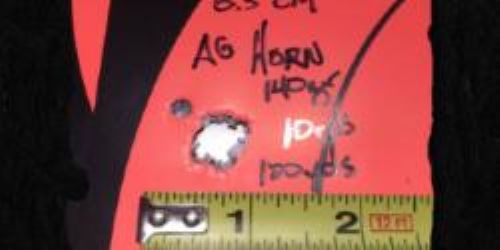
That's cool - I had just posted a question about how much variation there is when you switch just one component and that post had a nice reference. [ETA] I wonder if the formulations of any of those components has changed slightly over the years. Powder and primer manufacturer's have a very narrow window of what's an acceptable variation in canister grade powders. Variations exit, but they are minimal and should always be allowed for when working up loads with new lots of primers or powders. The Winchester standard larger rifle primers used in the two articles were the older nickel plated type, not the new brass colored variety. How the newer primers behave vs. the older model I am not sure. Canister grade powders have more tightly controlled production standards than bulk powders used by major manufacturers and the U.S. Armed Forces who simply adjust powder charges based on particular characteristics of any given lot. I have found Wm. C. Davis Jr.'s published data to be spot on and safe from every rifle I have tried them in. My M1-A's develop 2500 fps with his maximum suggested loads, my 26" barreled .308's run closer to 2600 fps with 168 grain SMK's. |
|
Originally Posted By Zhukov:
That's cool - I had just posted a question about how much variation there is when you switch just one component and that post had a nice reference. [ETA] I wonder if the formulations of any of those components has changed slightly over the years. Zhukov... you might find this interesting... if you can get a digital copy of "Handloader" magazine, Issue 257, Dec. 2008.... there is a fantastic article called "Developing the Most Accurate .308 Winchester Load"... written by Gary D. Sciuchetti. The depth of his testing is incredible. Effects from , all commonly available... Brass, Primers, Seating Depth, 32 different 165-168gr Bullets, once fired v. virgin brass.... he uses Varget exclusively, with different charge weights... Way more info then I could post here. I will say .....ultimately... Differences in charge weight altered group size by 3/4 inch. Primers altered group size by .313 inch. Changing brass cases ( Both once fired and neck sized only ) altered group size by .25 inch. Changing Brands and style of bullets altered group size up to 2 inches. Changing ANY component could cause extremes of .... Primers... .5 inch Cases... 1.375 vert. and 1.875 horiz. Bullets... 2.5 inches vert. and 1.875 horiz. Powder Charge... .625 vertically between 42.5 - 46.0 grains w/ 165 ish bullet |
*Hold on to your AR-15s. Their magic must be very powerful, or they wouldn’t want them.*
JAFOM
JAFOM


|
Originally Posted By jaholder1971:
Remember that .mil velocity is measured 25 meters from the muzzle while civilian velocities are measured at the muzzle, so factor this in when comparing mil match loads to civilian and or handloads. Careful reading of the articles posted will reveal that issue US M118 loads fired through the pressure gun reached 2650 fps through the author's chronograph. They also were 3.000 c.u.p. over maximum pressure when fired through his test gun. He says this is not out of the ordinary and that this particular lot was "average" in the accuracy department. It was on the high end of acceptable pressure limits. BTW - US Army velocity figures are fired from 24" barrels in 7.62x51mm. |
|
The major difference from the 1984 data and today is the fact that Winchester no longer produces primer cups using nickel-plated sheets -- they have been standard brass since around 1999 when Olin lost the Lake City Army Ammunition Plant contract to ATK-Federal.
Nickling makes for harder primer cups. |
|
The old nickel plated Winchester primers were my favorite. Tough and uniform velocities. The new ones have been problematic for a lot of people with some of them being defective.
It's one thing to pierce a primer from using too much powder, it's another to see gas jet hole at the edge of a primer because it failed on a modest load. I will use the new Winchester primers so long as I keep the pressures down, but won't be buying any more. |
NRA 7.62x51mm Lake City load data for M1-A's. (Page 1 of 2)
Armory Sponsor