


AR Sponsor


Posted: 12/3/2025 2:31:51 PM EDT
|
So TBH, I'm asking this question out of ignorance, never done it and haven't seen the need, but maybe I'm missing something. Can you explain some things to me and preferably give examples of improved accuracy when this is done. Questions: -Isn't this firstly a question of quality? What I mean is do you find that a "quality" upper doesn't need this? -Next, in my ignorant mind, you'd have to address any irregularities in the barrel nut and extension. Those three work in unison to lock the barrel to the upper. Great you "true up" the upper but if any of the other two are buggered, arent you wasting your time? -Reading thru the various threads about this, it seems, if there is a difference, it is that the barrel is better aligned to the upper, but does it increase ACCURACY? I mean ok Great, the sights/barrel are more aligned but what about how it shoots? |
Joined:
May 2022
Posts:
200
EE: 100% (121)
 USA
USA

| I have done dozens of uppers both with lapping tools and lathes in many calibers. IMO squaring the front of the upper DOES help get the mechanical zero closer to center. It does NOT do anything to increase accuracy.. |
Join the N.R.A.
Beware speaking with a sharp tongue as you are apt to cut your own throat.
My name is John Wick, you killed my puppy, prepare to die.
Beware speaking with a sharp tongue as you are apt to cut your own throat.
My name is John Wick, you killed my puppy, prepare to die.
|
Originally Posted By Big-Bore: I have done dozens of uppers both with lapping tools and lathes in many calibers. IMO squaring the front of the upper DOES help get the mechanical zero closer to center. It does NOT do anything to increase accuracy.. Thanks for the reply. Did you do it out of necessity - as in all those uppers- were that much "not square"? Or more of "it's what i do" type thing? Were these known name brand uppers, or? |
| The first 10 or so, were because I found them all (several different brands from DPMS to VLTOR to POF to Anderson…) to be slightly out of square or the sights needed too much adjustment to zero. I think most of the “out of squareness” found was due to variations in the thickness of the anodizing. After that, squaring just became part of my building process. Every once in a while, I get a wild hair and test accuracy before squaring and after squaring. I’ve yet to find there to be any difference in accuracy. |
Join the N.R.A.
Beware speaking with a sharp tongue as you are apt to cut your own throat.
My name is John Wick, you killed my puppy, prepare to die.
Beware speaking with a sharp tongue as you are apt to cut your own throat.
My name is John Wick, you killed my puppy, prepare to die.
|
Originally Posted By Big-Bore: I get a wild hair and test accuracy before squaring and after squaring. I’ve yet to find there to be any difference in accuracy. My experience as well . . . I am of the opinion that if accuracy is the primary goal, invest in a good barrel, if having the rear sight perfectly centered in the handle ears, lap. |

|
Originally Posted By Big-Bore: It does NOT do anything to increase accuracy.. This. If your barrel is cockeyed in the receiver, it will manifest itself in having to use a lot of windage or elevation to obtain a proper zero. It could look funny at the end of the handguard, like it's off center. Any improvements in precision (if there are any) would probably not be measurable. |

|
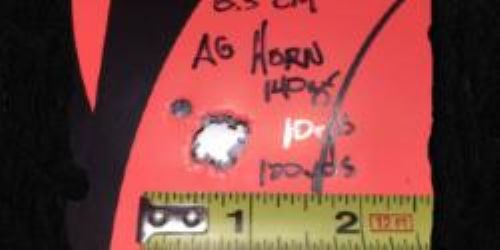
Originally Posted By Big-Bore: The first 10 or so, were because I found them all (several different brands from DPMS to VLTOR to POF to Anderson ) to be slightly out of square or the sights needed too much adjustment to zero. I think most of the "out of squareness" found was due to variations in the thickness of the anodizing. After that, squaring just became part of my building process. Every once in a while, I get a wild hair and test accuracy before squaring and after squaring. I've yet to find there to be any difference in accuracy. |
|
"but does it increase ACCURACY?" IMHO, shiming or Loctite'n the barrel in place will ( along with lapping the receiver face ) will make for better consistency , group wise. Not with every ammo... but my results were good enough to recommend it. Some groups were noticeably better, some were not. However, I feel like there is nothing to lose from truing a receiver face. It take very little time to do. And then shimming or Loctiting the barrel in place takes only a little more time. Soooo... if your goal is to try and squeak out as much accuracy as possible ... do it. Along with some of the other easy accuracy "tweaks". BTW, my profile pic is from a Trued and Glued build. Link to a thread I did a long time ago... https://www.ar15.com/forums/industry/PSA-PA10-GenII-lower-w-PA-65-review-START-at-the-beginning-again-UPDATED-with-Tn-G-results-/301-285762/ |
*Hold on to your AR-15s. Their magic must be very powerful, or they wouldn’t want them.*
JAFOM.... Just another fat old man.
________________________________
TOGC,IADC
JAFOM.... Just another fat old man.
________________________________
TOGC,IADC
|
Absent correcting a defective receiver, I don't believe lapping could improve accuracy. I have no data to back up that belief. However, I have never seen any data that shows lapping receivers that aren't defective improves accuracy either. The data mentioned in this thread indicates it does not. As for shimmimg barrel extensions to achieve a press fit with the receiver, I have measured reductions in group sizes on two different uppers in the range of .25 to .3 moa. |

|
I lap them all. Why? 2 reasons. 1. MSG Joe Carlos pretty much wrote the book on building precision ARs. He advocates for lathe truing the receiver face. I don't have a lathe. I know lapping is probably a few thou less accurate but, it's what I have. Perhaps some day. 2. If I'm investing my time, I'm going to build the best rifle I can. True the face, shim and bed the barrel, measure and fit the parts and monitor tolerances... I don't buy into the "Lego" mindset. These are firearms. Build every one like your life depends on it. Take pride in what you are doing. |
|
Originally Posted By Homesteader375: I lap them all. Why? 2 reasons. 1. MSG Joe Carlos pretty much wrote the book on building precision ARs. He advocates for lathe truing the receiver face. I don't have a lathe. I know lapping is probably a few thou less accurate but, it's what I have. Perhaps some day. 2. If I'm investing my time, I'm going to build the best rifle I can. True the face, shim and bed the barrel, measure and fit the parts and monitor tolerances... I don't buy into the "Lego" mindset. These are firearms. Build every one like your life depends on it. Take pride in what you are doing. I build fairly painstakingly as well. I concluded that lapping with hand tools as a matter of course is more likely to make matters worse than better. I reached the conclusion based on experience building and reading what machinists have written on the subject here. I've never read a good explanation for why putting a metal cylinder in the receiver bore and running its lip around the receiver face with a hand drill is more likely to make the receiver face more square to the top rail than the machining processes used to make the receiver in the first place. |
| I had an issue where a handguard would not obtain proper 'clock'. The solution was to lap the receiver and it finally clocked perfectly. Having seen how uneven the receiver was, I lapped every one of my receivers and every receiver on future builds. Why not? I have the tool and you can see for yourself how uneven every receiver is while lapping them. |

Joined:
May 2023
Posts:
616
EE: 0% (0)
WI, USA
|
Originally Posted By Big-Bore: [...] IMO squaring the front of the upper DOES help get the mechanical zero closer to center. [...] Originally Posted By Big-Bore: [...] IMO squaring the front of the upper DOES help get the mechanical zero closer to center. [...] Making it easier to zero a sighting system alone is worth it. Originally Posted By STJ: I put the receiver vertical in a vise and manually turn the tool by hand allowing the weight of it to do the work. Same approach here: vertical and by hand letting the weight do it. |
|
Originally Posted By Homesteader375: I lap them all. Why? 2 reasons. 1. MSG Joe Carlos pretty much wrote the book on building precision ARs. He advocates for lathe truing the receiver face. I don't have a lathe. I know lapping is probably a few thou less accurate but, it's what I have. Perhaps some day. 2. If I'm investing my time, I'm going to build the best rifle I can. True the face, shim and bed the barrel, measure and fit the parts and monitor tolerances... I don't buy into the "Lego" mindset. These are firearms. Build every one like your life depends on it. Take pride in what you are doing. I'm with this and send my uppers to Paladin Machine service for lathe truing. |
|
Originally Posted By cttb:... I've never read a good explanation for why putting a metal cylinder in the receiver bore and running its lip around the receiver face with a hand drill is more likely to make the receiver face more square to the top rail than the machining processes used to make the receiver in the first place. This thought has crossed my mind. If there is any play between the tool and the bore of the receiver it seems logical that that play might translate into a less than perfectly square match with the rail or the receiver bore. Maybe. That said, the Wheeler tool I have is as perfectly fitted as I could hope for to the inside of the Aero M4E1 upper I finally got around to trying it on. The only one I've tried it on. That tool slides in snug with some grease, but not actually tight. With zero perceptible play. I went slow with moderate pressure and it didn't take much until I had a ring where it looked like only the anodizing was really changed, but I could see the aluminum underneath. While I had it apart I also bedded it with Permatex Green 64000 Sleeve Retainer. PROOF 16in. SS 223 Wylde. I haven't been able to really test the results, but I can say for sure that that lite lapping job moved the POA about a half inch low and and an inch left at 100 yards from where it was before. |
Joined:
May 2023
Posts:
639
EE: 0% (0)
WI, USA
|
Originally Posted By Tiribulus: This thought has crossed my mind. Originally Posted By Tiribulus: Originally Posted By cttb:... I've never read a good explanation for why putting a metal cylinder in the receiver bore and running its lip around the receiver face with a hand drill is more likely to make the receiver face more square to the top rail than the machining processes used to make the receiver in the first place. This thought has crossed my mind. First, the simplest reason is tolerances and quality control standards. Burrs get left by machining all the time. I've handled dozens of receivers where you can feel the uneven rings on the receiver face. The better the machining process and tools, and the QC, the closer the product will be to spec, and lower the benefit from truing. Second, anodizing and/or Cerakote happens after machining, and these processes can easily have variances in thickness, as both of these are deposition processes. Truing can even out any thickness differences here. It is, generally speaking, cost prohibitive for a manufacturer to re-machine the front of a receiver after the finishing process. There's also greater risk of creating blems by doing that. So they don't bother. Taking the time to just do it can result in a more even surface simply because, at least in regards to the finish, it's not a comparison of machining to home shop work, but rather a comparison of nothing to home shop work. Third, anodizing/cerakote is harder than the aluminum it is on, and they can fill and hide low spots on the face. By taking the entire receiver face to bare aluminum, the collar of the barrel extension and the face of the receiver do not have a thicker harder layer on one side and a thinner one on the other. When torquing the barrel nut down, removing a harder layer means that after everything mates with equally hard materials, so it also compresses and tightens evenly, too. These hardness differences, to be fair, are usually completely miniscule compared to an uneven receiver face and may well not show up in any noticeable way on the target. eta: Another thought I just had -- if you look at a raw upper receiver, you can see the marks where it was held for machining, typically just below the picatinny rail at the front and back. The cutting of the bore inside the receiver, and cutting the picatinny rail are between the front and the rear hold positions, making them quite stable. The receiver extension is outside all four of these points. I don't know if this increases machine chatter (or the chances thereof) when cutting the extension face or the threads, but the geometry makes it seems to me like a possibility. I would suspect this is more likely to cause issues when the tooling is duller and the machines are lower quality, too. Therefore, I also suspect this issue is generally only common on lower-end receivers. |
AR Sponsor