


AR Sponsor


Posted: 9/9/2026 9:44:34 PM EDT
[Last Edit: USMC88-93][Edited]
|
Not brand specific but a technology question. Does long term non use of 18650 rechargeable batteries kill the batteries. I know some drill batteries if they parasitic drain below a certain point are trash and wont recharge but in some cases can be "revived". Does the protection circuitry cause a similar parasitic drain on the cell where you need to schedule a recharge periodically just to avoid killing the cell? Don't store them at full charge? |
Plays well with self, and cleverly disguised as a responsible adult.

|
Originally Posted By USMC88-93: Not brand specific but a technology question. Does long term non use of 18650 rechargeable batteries kill the batteries. I know some drill batteries if they parasitic drain below a certain point are trash and wont recharge but in some cases can be "revived". Does the protection circuitry cause a similar parasitic drain on the cell where you need to schedule a recharge periodically just to avoid killing the cell? Don't store them at full charge? Based on my personal nearly 20 year study on a set of laptop battery 18650's, no. They do, however, become somewhat dangerous etc. That said, this is technical. I sent them off for analysis after they had: Sat so long they registered nearly 0 charge Were recharged and drained Ran my 1000lumen Streamlight for a half hour constantly or longer Did all sorts of stuff like that with them. Them charged them up fully and let them sit for a few years and tested them at intervals, all that jazz. These are the most abused 18650's on the planet that I know of.  How long do Lithium Ion rechargeable batteries last in storage?  Part II of Testing Rechargeable Battery Lifespan (Do they hold a charge?)  Part III Rechargeable Battery Life Span Study (Do they hold a charge as they age?) 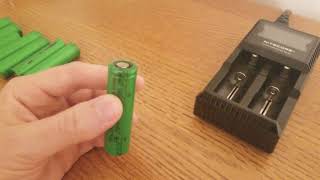 Part IV of testing 18650 battery longevity and viability after long-term storage.  How long do 18650s hold a charge and maintain viability, long term? part V.  18650 Battery Longevity Test...Part VI...Load testing on their 20th Anniversary (Est.) They still all ran my WML. The tester I sent them to declared them basically dangerous trash, though, lol. Battery Mooch, who has an excellent Patreon well worth the price if you care about anything at all "Battery", said this about the 2 cells from this batch which I sent him for testing, in 2024: These two cells are about 20 years old! They were used in a laptop battery pack that got so hot the plastic case melted and they were stored for years without being recharged. During that storage their voltage dropped (from self-discharge) to near 2V. This is worse than we might think since these cells have a 3.0V low voltage cutoff, not 2.5V. Measuring their capacity at the standard 0.2C rate (400mA in this case) gave me 1344mAh and 1361mAh, which is a big drop (about 31%). This capacity loss combined with their extremely high IR (lots of voltage sag) means their run time would be very short. NOTE: These cells not catching fire doesn’t mean overdischarged cells aren’t risky to use! We just don’t have any good data on what might or might not be dangerous for cells that were discharged below the (typical) 2.5V cutoff but weren’t obviously abused, for example, by being discharged to zero volts or left at a low voltage for a long time. The above is a clipped excerpt of the test. Below you can find a link: https://www.patreon.com/batterymooch/posts/how-damaged-are-104529276 |

|
Originally Posted By chevrofreak: Storing a lithium battery completely charged will reduce its lifespan. 18650's are cheap, just replace them from time to time. 55-60% SoC is the sweet spot. A solar panel with USB and a USB charger ensures performance long after all the cr123a are gone and used and dead. |

|
Originally Posted By JohnDough: 55-60% SoC is the sweet spot. A solar panel with USB and a USB charger ensures performance long after all the cr123a are gone and used and dead. I've always heard 60 to 80%. Lately I've heard 50%. I did have a couple of kids electric motorcycles that delivered with three out of five bars. As did mine. My latest round of Ryobi tool batteries had three out of four bars or three out of five. I don't remember. |
Joined:
Dec 2022
Posts:
1609
EE: 100% (42)
 SC, USA
|
I've wondered about this too, I work with (completely different) devices where it matters, and the advice from the manufacturer is IDEALLY, set them on the shelf in the 50-80% range, and expect them to lose about 1% a week; that is for storage purposes. Do not allow them to fall below 10% or it becomes questionable on whether they will become recoverable. This is for larger laptop-like lithium batteries. Obviously once they are deployed, they are charged to 100% and held there until needed. These are subject to environmental temp cycles and have a functional service life of ~5-7 years depending on conditions, before their capacity gets low to the point they should be replaced. I don't know if its a direct apples to apples comparison, but what I've been doing with all my rechargeable WML batteries is monitor them (just click the light on once a month or more often for an HD gun, and give them a top off charge every so often; call it 3-6 months. This has worked pretty well. If you have them sitting in a car taking pretty significant temp swings/extremes, I would monitor even more closely. I can't prove it, but I think I've had a couple lights with enough parasitic drain to take down batteries noticeably faster than if they were stored outside the light. I suspect it is more a question of "how much" rather than "if" parasitic drain is happening on your installed batteries. This is why I monitor, and I would do the same whether you like rechargeables or single use CR123; batteries are relatively unreliable compared to just about anything else in the system regardless. |


|
Originally Posted By USMC88-93: Not brand specific but a technology question. Does long term non use of 18650 rechargeable batteries kill the batteries. I know some drill batteries if they parasitic drain below a certain point are trash and wont recharge but in some cases can be "revived". Does the protection circuitry cause a similar parasitic drain on the cell where you need to schedule a recharge periodically just to avoid killing the cell? Don't store them at full charge? For the vast majority of cells the protection circuitry drain is so low as to be completely negligible relative to the cell's actual lifespan, e.g. self-discharge and aging impacts are much, much larger than the protection drain. Typical protection circuit drains are under 10uA when active and under 1uA when shut down -- for an average 18650 cell that has around 3AH of storage, that's 34 years before the protection circuit itself would drain the battery while active, and it would take more than a hundred years to drain a battery with 5% charge remaining while triggered. Battery packs, like for drills, are a little more complicated due to balancing circuits, fuel gauges and the like, and really aren't a direct comparison to a single protected cell. The main issue with 18650 cells in storage is simply aging, which is faster when the state of charge is above 50-60% or so. |
|
Originally Posted By bmarshall1: I've always heard 60 to 80%. Lately I've heard 50%. I did have a couple of kids electric motorcycles that delivered with three out of five bars. As did mine. My latest round of Ryobi tool batteries had three out of four bars or three out of five. I don't remember. I drive EVs exclusively for half a decade and put a ton of research into things. 50% isnt bad at all, I prefer 60% as it gives more protection against over discharge long term with minimal effect on calendar aging vs 50. |
|
Originally Posted By DVCNick: I've wondered about this too, I work with (completely different) devices where it matters, and the advice from the manufacturer is IDEALLY, set them on the shelf in the 50-80% range, and expect them to lose about 1% a week; that is for storage purposes. Do not allow them to fall below 10% or it becomes questionable on whether they will become recoverable. This is for larger laptop-like lithium batteries. Obviously once they are deployed, they are charged to 100% and held there until needed. These are subject to environmental temp cycles and have a functional service life of ~5-7 years depending on conditions, before their capacity gets low to the point they should be replaced. I don't know if its a direct apples to apples comparison, but what I've been doing with all my rechargeable WML batteries is monitor them (just click the light on once a month or more often for an HD gun, and give them a top off charge every so often; call it 3-6 months. This has worked pretty well. If you have them sitting in a car taking pretty significant temp swings/extremes, I would monitor even more closely. I can't prove it, but I think I've had a couple lights with enough parasitic drain to take down batteries noticeably faster than if they were stored outside the light. I suspect it is more a question of "how much" rather than "if" parasitic drain is happening on your installed batteries. This is why I monitor, and I would do the same whether you like rechargeables or single use CR123; batteries are relatively unreliable compared to just about anything else in the system regardless. My EV would lose 0-2% per month sitting. My 18350s settle at 95% and hold for many months to literal years at 90-95%. My 18650s do a hair better. |
|
Originally Posted By seek2: For the vast majority of cells the protection circuitry drain is so low as to be completely negligible relative to the cell's actual lifespan, e.g. self-discharge and aging impacts are much, much larger than the protection drain. Typical protection circuit drains are under 10uA when active and under 1uA when shut down -- for an average 18650 cell that has around 3AH of storage, that's 34 years before the protection circuit itself would drain the battery while active, and it would take more than a hundred years to drain a battery with 5% charge remaining while triggered. Battery packs, like for drills, are a little more complicated due to balancing circuits, fuel gauges and the like, and really aren't a direct comparison to a single protected cell. The main issue with 18650 cells in storage is simply aging, which is faster when the state of charge is above 50-60% or so. The real issue is how bad protection circuits perform under load. Surefire 18350 and modlite 18350 batteries ive sent for testing are horrible performers under load with the circuits. |
|
Originally Posted By JohnDough: The real issue is how bad protection circuits perform under load. Surefire 18350 and modlite 18350 batteries ive sent for testing are horrible performers under load with the circuits. |
Plays well with self, and cleverly disguised as a responsible adult.
|
Originally Posted By USMC88-93: Am I to presume you have a preferred brand? Surefire M640DFT is where it will end up. For an 18350, Vapcell M11 V2 For an 18650, a lot of cells are excellent for lights as they are much lower draw than 18650s are typically used for. I prefer the Molicel 18650s. Specifically their P30b. They are guaranteed A grade new, and one of the few companies that sell direct to distribution. |
|
Originally Posted By JohnDough:For an 18650, a lot of cells are excellent for lights as they are much lower draw than 18650s are typically used for. I prefer the Molicel 18650s. Specifically their P30b. They are guaranteed A grade new, and one of the few companies that sell direct to distribution. |
Plays well with self, and cleverly disguised as a responsible adult.


|
Originally Posted By JohnDough: I run unprotected cells in everything. Originally Posted By JohnDough: Originally Posted By USMC88-93: Unprotected cell in a Surefire? I run unprotected cells in everything. Me too, but warnings like this give me pause. Attached File |
|
Originally Posted By cchurchi: Me too, but warnings like this give me pause. https://www.ar15.com/media/mediaFiles/154626/IMG_9476_jpeg-3827967.JPG Wait until you read what's on your ammo box. |
|
Originally Posted By Marksman14: Where do you get yours from? I typically buy from https://liionwholesale.com/ . Mooch endorses them as excellent, and their price and availability is good. https://liionwholesale.com/products/vapcell-18350?variant=6132565278752 https://liionwholesale.com/products/molicel-npe-inr-18650-p30b-36a-3000mah-flat-top-18650-battery-authorized-distributor?variant=40622648164421 Those are my personal picks for what I run in my wmls. I have moved over to 18350 lights for packaging preferences. |
AR Sponsor