


AR Sponsor

[ARCHIVED THREAD] - MEN 56 Grain M193 Accuracy (Page 2 of 2)
|
Quoted: Dunning–Kruger effect on full display. Your post is the only laughable thing in this thread because nobody is “chasing a 1 grain difference” in bullet weight. What people are chasing, is accuracy/precision and if you had the slightest clue what you were talking about, you would know that the German manufactured MEN M193 is one of the most accurate M193 clones ever offered for sale on the commercial market. If you had actually even read the statistically significant data posted in this thread, you would have known that. Some don’t realize how utterly clueless they are. Your statement is pure bullshit and easily proven false using statistically significant groups sizes of quality 5.56mm and 223 Remington loads from the same company. GECO 223 Remington 55 Grain FMJ Target https://www.ar15.com/media/mediaFiles/28568/geco_55_grain_box_01_resized-2149805.jpg This is not your father’s 55 grain FMJ ammunition. For starters, the 55 grain FMJ projectile loaded in this ammunition has a groove cannelure, instead of a rolled cannelure that is typically found on 55 grain FMJ bullets. Secondly, the boat-tail on the GECO bullet is longer than that found on typical 55 grain FMJ bullets. https://www.ar15.com/media/mediaFiles/28568/geco_55_grain_target_bullet_01b_resized-2149781.jpg The GECO bullets have some of the most uniform bases I’ve ever seen on bullets in this category. https://www.ar15.com/media/mediaFiles/28568/geco_bullets_bases_02-2149780.jpg This ammunition is loaded in brass cases that have the annealing iris still visible. The cases have sealed primer pockets. The primer pockets are crimped with three “stab” crimps. The head-stamp reads: “ GECO .223 Rem. ”. The case-mouths are also crimped and sealed. The ammunition is charged with a short-cut extruded powder. https://www.ar15.com/media/mediaFiles/28568/geco_223_casehead_02__1_-2149806.jpg (The individual squares in the red grid pictured below are one-tenth of an inch.) https://www.ar15.com/media/mediaFiles/28568/geco_223_powder_01_resized-2149808.jpg Velocity I chronographed the GECO 223 Remington 55 grain FMJ Target ammunition from a semi-automatic AR-15 with a chrome-lined, NATO chambered, 20” Colt M16A2 barrel. Chronographing was conducted using an Oehler 35-P chronograph with “proof screen” technology. The Oehler 35P chronograph is actually two chronographs in one package that takes two separate chronograph readings for each shot and then has its onboard computer analyze the data to determine if there is any statistically significant difference between the two readings. If there is a difference, the chronograph “flags” the shot to let you know that the data is invalid. There was no invalid data flagged during this testing. The velocity stated below is the muzzle velocity as calculated from the instrumental velocity using Oehler’s Ballistic Explorer software program. The string of fire consisted of 10 rounds over the chronograph. Each round was single-loaded and cycled into the chamber from a magazine fitted with a single-load follower. The bolt locked-back after each shot allowing the chamber to cool in between each shot. This technique was used to mitigate the possible influence of “chamber-soak” on velocity data. Each new shot was fired in a consistent manner after hitting the bolt release. Atmospheric conditions were monitored and recorded using a Kestrel 4000 Pocket Weather Tracker. Atmospheric conditions Temperature: 78 degrees F Humidity: 33% Barometric pressure: 30.05 inches of Hg Elevation: 950 feet above sea level The muzzle velocity for the 10-shot string of the GECO 223 Remington 55 grain FMJ Target ammunition fired from the 20” Colt barrel was 3084 FPS with a standard deviation of 26 FPS and a coefficient of variation of 0.84%. Accuracy I conducted an accuracy (technically, precision) evaluation of the GECO 223 Remington 55 grain FMJ Target ammunition following my usual protocol. This accuracy evaluation used statistically significant shot-group sizes and every single shot in a fired group was included in the measurements. There was absolutely no use of any group-reduction techniques (e.g. fliers, target movement, butterfly shots). The shooting set-up will be described in detail below. As many of the significant variables as was practicable were controlled for. Also, a control group was fired from the test-rifle used in the evaluation using match-grade, hand-loaded ammunition; in order to demonstrate the capability of the barrel. Pictures of shot-groups are posted for documentation. All shooting was conducted from a concrete bench-rest from a distance of 100 yards (confirmed with a laser rangefinder.) The barrel used in the evaluation was free-floated. The free-float handguards of the rifle rested in a Sinclair Windage Benchrest, while the stock of the rifle rested in a Protektor bunny-ear rear bag. Sighting was accomplished via a Leupold VAR-X III set at a magnification of 25X and adjusted to be parallax-free at 100 yards. A mirage shield was attached to the objective-bell of the scope. Wind conditions on the shooting range were continuously monitored using a Wind Probe. The set-up was very similar to that pictured below. https://www.ar15.com/media/mediaFiles/28568/lothar_walther_ar15_on_bench_03-2149839.jpg The Wind Probe. https://www.ar15.com/media/mediaFiles/28568/wind_probe_2016_01_framedb-1342522.jpg The test vehicle for this evaluation was one of my semi-automatic precision AR-15s with a 20” stainless-steel Lothar Walther barrel. The barrel has a 223 Wylde chamber with a 1:8” twist. Prior to firing the GECO 223 Remington 55 grain FMJ Target ammunition, I fired a 10-shot control group using a hand-load topped with the Sierra 77 grain MatchKing. That group had an extreme spread of 0.81”. https://www.ar15.com/media/mediaFiles/28568/geco_223_rem_55_fmj_control_group_of_77_-2149809.jpg Three 10-shot groups of the GECO 223 Remington 55 grain FMJ Target ammunition were fired in a row with the resulting extreme spreads: 1.71” 1.06” 1.52” for a 10-shot group average extreme spread of 1.43”. The three 10-shot groups were over-layed on each other using RSI Shooting Lab to form a 30-shot composite group. The mean radius for the 30-shot composite group was 0.47”. The smallest 10-shot group . . . https://www.ar15.com/media/mediaFiles/28568/GECO_223_Rem_55_grain_Target__lothar_bar-2149810.jpg The 30-shot composite group . . . https://www.ar15.com/media/mediaFiles/28568/geco_223_rem_composite_group_01b-2149812.jpg ….. GECO 5.56x45mm 55 Grain FMJ https://www.ar15.com/media/mediaFiles/28568/geco_556_5_grain_fmj_box_01_resized__1_-2149815.jpg This ammunition appears to be loaded with the same 55 grain FMJ projectile that is found in the GECO 223 Remington 55 Grain FMJ Target ammunition. https://www.ar15.com/media/mediaFiles/28568/geco_bullets_bases_02-2149780.jpg The 55 grain FMJ projectile loaded in this ammunition has a groove cannelure, instead of a rolled cannelure that is typically found on 55 grain FMJ bullets. The boat-tail on the GECO bullet is longer than that found on typical 55 grain FMJ bullets and the GECO bullets have some of the most uniform bases I’ve ever seen on bullets in this category. https://www.ar15.com/media/mediaFiles/28568/geco_55_grain_target_bullet_01b_resized-2149781.jpg This ammunition is loaded in brass cases that have the annealing iris still visible. The cases have sealed primer pockets. The primer pockets are crimped with three “stab” crimps. The case-mouths are also crimped and sealed. The ammunition is charged with a ball powder. The head-stamp reads: “ T 5.56 x 45 ”. https://www.ar15.com/media/mediaFiles/28568/geco_556_casehead_02-2149819.jpg (The individual squares in the red grid pictured below are one-tenth of an inch.) https://www.ar15.com/media/mediaFiles/28568/geco_556_powder_02-2149820.jpg Velocity I chronographed the GECO 5.56x45mm 55 grain FMJ ammunition from a semi-automatic AR-15 with a chrome-lined, NATO chambered, 20” Colt M16A2 barrel. Chronographing was conducted using an Oehler 35-P chronograph with “proof screen” technology. The Oehler 35P chronograph is actually two chronographs in one package that takes two separate chronograph readings for each shot and then has its onboard computer analyze the data to determine if there is any statistically significant difference between the two readings. If there is a difference, the chronograph “flags” the shot to let you know that the data is invalid. There was no invalid data flagged during this testing. The velocity stated below is the muzzle velocity as calculated from the instrumental velocity using Oehler’s Ballistic Explorer software program. The string of fire consisted of 10 rounds over the chronograph. Each round was single-loaded and cycled into the chamber from a magazine fitted with a single-load follower. The bolt locked-back after each shot allowing the chamber to cool in between each shot. This technique was used to mitigate the possible influence of “chamber-soak” on velocity data. Each new shot was fired in a consistent manner after hitting the bolt release. Atmospheric conditions were monitored and recorded using a Kestrel 4000 Pocket Weather Tracker. Atmospheric conditions Temperature: 78 degrees F Humidity: 33% Barometric pressure: 30.05 inches of Hg Elevation: 950 feet above sea level The muzzle velocity for the 10-shot string of the GECO 5.56x45m 55 grain FMJ ammunition fired from the 20” Colt barrel was 3276 FPS with a standard deviation of 22 FPS and a coefficient of variation of 0.67%. Accuracy I conducted an accuracy (technically, precision) evaluation of the GECO 5.56x45mm 55 grain FMJ ammunition following my usual protocol. This accuracy evaluation used statistically significant shot-group sizes and every single shot in a fired group was included in the measurements. There was absolutely no use of any group-reduction techniques (e.g. fliers, target movement, butterfly shots). The shooting set-up will be described in detail below. As many of the significant variables as was practicable were controlled for. Also, a control group was fired from the test-rifle used in the evaluation using match-grade, hand-loaded ammunition; in order to demonstrate the capability of the barrel. Pictures of shot-groups are posted for documentation. All shooting was conducted from a concrete bench-rest from a distance of 100 yards (confirmed with a laser rangefinder.) The barrel used in the evaluation was free-floated. The free-float handguards of the rifle rested in a Sinclair Windage Benchrest, while the stock of the rifle rested in a Protektor bunny-ear rear bag. Sighting was accomplished via a Leupold VAR-X III set at a magnification of 25X and adjusted to be parallax-free at 100 yards. A mirage shield was attached to the objective-bell of the scope. Wind conditions on the shooting range were continuously monitored using a Wind Probe. The set-up was very similar to that pictured below. https://www.ar15.com/media/mediaFiles/28568/lothar_walther_ar15_on_bench_03-2149839.jpg The Wind Probe. https://www.ar15.com/media/mediaFiles/28568/wind_probe_2016_01_framedb-1342522.jpg The test vehicle for this evaluation was one of my semi-automatic precision AR-15s with a 20” stainless-steel Lothar Walther barrel. The barrel has a 223 Wylde chamber with a 1:8” twist. Prior to firing the GECO 223 Remington 55 grain FMJ Target ammunition, I fired a 10-shot control group using a hand-load topped with the Sierra 77 grain MatchKing. That group had an extreme spread of 0.81”. https://www.ar15.com/media/mediaFiles/28568/geco_223_rem_55_fmj_control_group_of_77_-2149809.jpg Three 10-shot groups of the GECO 5.56x45mm 55 grain FMJ ammunition were fired in a row with the resulting extreme spreads: 2.55” 2.09” 2.19” for a 10-shot group average extreme spread of 2.28”. The three 10-shot groups were over-layed on each other using RSI Shooting Lab to form a 30-shot composite group. The mean radius for the 30-shot composite group was 0.79”. The smallest 10-shot group . . . https://www.ar15.com/media/mediaFiles/28568/geco_556_55_fmj_smallest_group_01_resize-2149847.jpg The 30-shot composite group . . . https://www.ar15.com/media/mediaFiles/28568/geco_556_5_fmj_30_shot_composite_group_0-2149814.jpg Lastly, for any Internet Commandos in our viewing audience tonight, here’s a pic of a sub-half-MOA group of the GECO ammunition fired from 100 yards. The group has an extreme spread of 0.46”. https://www.ar15.com/media/mediaFiles/28568/geco_556_3_shot_group_measured_01_resize-2149813.jpg ..... No, he didn't. There is sooooo much retardation in that video that I’m not even going to waste my time pointing out every thing that is wrong in it. The piss-ant, statistically insignificant couple of 5-shot groups that he fired mean exactly jack and shit for determining the radial dispersion of ammunition. He even admitted in the video that he can’t shoot consistently, so his “findings” mean squat. Oh, and if he’s going to talk about case capacity, maybe he should actually measure case capacities. https://www.ar15.com/media/mediaFiles/28568/case_capacities_resized-2149877.jpg More stupidity. The single most import component in a load is the bullet. Extensive testing at Lake City has shown that the bullet accounts for 60% of the accuracy of a load. Wow! The amount of first-hand, statistically significant data that you collected, analyzed and posted to support that claim is amazing! Oh wait . . . you didn’t do any of that. You just pulled some shit out of your ass and pretended that it’s a fact. Logic fallacy: straw man. As opposed to figuratively weighing rounds in someone else’s possession? What in the actual fuck does the complete cartridge weight of a 62 grain FMJ load have to do with the accuracy and velocity of MEN M193? Before dumping any more of your ignorant bullshit in this thread, why don’t try actually educating yourself. You can start here . . . Molon Reference Links …  Forrest |
|
Quoted: Dunning–Kruger effect on full display. Your post is the only laughable thing in this thread because nobody is “chasing a 1 grain difference” in bullet weight. What people are chasing, is accuracy/precision and if you had the slightest clue what you were talking about, you would know that the German manufactured MEN M193 is one of the most accurate M193 clones ever offered for sale on the commercial market. If you had actually even read the statistically significant data posted in this thread, you would have known that. Some don’t realize how utterly clueless they are. Your statement is pure bullshit and easily proven false using statistically significant groups sizes of quality 5.56mm and 223 Remington loads from the same company. GECO 223 Remington 55 Grain FMJ Target https://www.ar15.com/media/mediaFiles/28568/geco_55_grain_box_01_resized-2149805.jpg This is not your father’s 55 grain FMJ ammunition. For starters, the 55 grain FMJ projectile loaded in this ammunition has a groove cannelure, instead of a rolled cannelure that is typically found on 55 grain FMJ bullets. Secondly, the boat-tail on the GECO bullet is longer than that found on typical 55 grain FMJ bullets. https://www.ar15.com/media/mediaFiles/28568/geco_55_grain_target_bullet_01b_resized-2149781.jpg The GECO bullets have some of the most uniform bases I’ve ever seen on bullets in this category. https://www.ar15.com/media/mediaFiles/28568/geco_bullets_bases_02-2149780.jpg This ammunition is loaded in brass cases that have the annealing iris still visible. The cases have sealed primer pockets. The primer pockets are crimped with three “stab” crimps. The head-stamp reads: “ GECO .223 Rem. ”. The case-mouths are also crimped and sealed. The ammunition is charged with a short-cut extruded powder. https://www.ar15.com/media/mediaFiles/28568/geco_223_casehead_02__1_-2149806.jpg (The individual squares in the red grid pictured below are one-tenth of an inch.) https://www.ar15.com/media/mediaFiles/28568/geco_223_powder_01_resized-2149808.jpg Velocity I chronographed the GECO 223 Remington 55 grain FMJ Target ammunition from a semi-automatic AR-15 with a chrome-lined, NATO chambered, 20” Colt M16A2 barrel. Chronographing was conducted using an Oehler 35-P chronograph with “proof screen” technology. The Oehler 35P chronograph is actually two chronographs in one package that takes two separate chronograph readings for each shot and then has its onboard computer analyze the data to determine if there is any statistically significant difference between the two readings. If there is a difference, the chronograph “flags” the shot to let you know that the data is invalid. There was no invalid data flagged during this testing. The velocity stated below is the muzzle velocity as calculated from the instrumental velocity using Oehler’s Ballistic Explorer software program. The string of fire consisted of 10 rounds over the chronograph. Each round was single-loaded and cycled into the chamber from a magazine fitted with a single-load follower. The bolt locked-back after each shot allowing the chamber to cool in between each shot. This technique was used to mitigate the possible influence of “chamber-soak” on velocity data. Each new shot was fired in a consistent manner after hitting the bolt release. Atmospheric conditions were monitored and recorded using a Kestrel 4000 Pocket Weather Tracker. Atmospheric conditions Temperature: 78 degrees F Humidity: 33% Barometric pressure: 30.05 inches of Hg Elevation: 950 feet above sea level The muzzle velocity for the 10-shot string of the GECO 223 Remington 55 grain FMJ Target ammunition fired from the 20” Colt barrel was 3084 FPS with a standard deviation of 26 FPS and a coefficient of variation of 0.84%. Accuracy I conducted an accuracy (technically, precision) evaluation of the GECO 223 Remington 55 grain FMJ Target ammunition following my usual protocol. This accuracy evaluation used statistically significant shot-group sizes and every single shot in a fired group was included in the measurements. There was absolutely no use of any group-reduction techniques (e.g. fliers, target movement, butterfly shots). The shooting set-up will be described in detail below. As many of the significant variables as was practicable were controlled for. Also, a control group was fired from the test-rifle used in the evaluation using match-grade, hand-loaded ammunition; in order to demonstrate the capability of the barrel. Pictures of shot-groups are posted for documentation. All shooting was conducted from a concrete bench-rest from a distance of 100 yards (confirmed with a laser rangefinder.) The barrel used in the evaluation was free-floated. The free-float handguards of the rifle rested in a Sinclair Windage Benchrest, while the stock of the rifle rested in a Protektor bunny-ear rear bag. Sighting was accomplished via a Leupold VAR-X III set at a magnification of 25X and adjusted to be parallax-free at 100 yards. A mirage shield was attached to the objective-bell of the scope. Wind conditions on the shooting range were continuously monitored using a Wind Probe. The set-up was very similar to that pictured below. https://www.ar15.com/media/mediaFiles/28568/lothar_walther_ar15_on_bench_03-2149839.jpg The Wind Probe. https://www.ar15.com/media/mediaFiles/28568/wind_probe_2016_01_framedb-1342522.jpg The test vehicle for this evaluation was one of my semi-automatic precision AR-15s with a 20” stainless-steel Lothar Walther barrel. The barrel has a 223 Wylde chamber with a 1:8” twist. Prior to firing the GECO 223 Remington 55 grain FMJ Target ammunition, I fired a 10-shot control group using a hand-load topped with the Sierra 77 grain MatchKing. That group had an extreme spread of 0.81”. https://www.ar15.com/media/mediaFiles/28568/geco_223_rem_55_fmj_control_group_of_77_-2149809.jpg Three 10-shot groups of the GECO 223 Remington 55 grain FMJ Target ammunition were fired in a row with the resulting extreme spreads: 1.71” 1.06” 1.52” for a 10-shot group average extreme spread of 1.43”. The three 10-shot groups were over-layed on each other using RSI Shooting Lab to form a 30-shot composite group. The mean radius for the 30-shot composite group was 0.47”. The smallest 10-shot group . . . https://www.ar15.com/media/mediaFiles/28568/GECO_223_Rem_55_grain_Target__lothar_bar-2149810.jpg The 30-shot composite group . . . https://www.ar15.com/media/mediaFiles/28568/geco_223_rem_composite_group_01b-2149812.jpg ….. GECO 5.56x45mm 55 Grain FMJ https://www.ar15.com/media/mediaFiles/28568/geco_556_5_grain_fmj_box_01_resized__1_-2149815.jpg This ammunition appears to be loaded with the same 55 grain FMJ projectile that is found in the GECO 223 Remington 55 Grain FMJ Target ammunition. https://www.ar15.com/media/mediaFiles/28568/geco_bullets_bases_02-2149780.jpg The 55 grain FMJ projectile loaded in this ammunition has a groove cannelure, instead of a rolled cannelure that is typically found on 55 grain FMJ bullets. The boat-tail on the GECO bullet is longer than that found on typical 55 grain FMJ bullets and the GECO bullets have some of the most uniform bases I’ve ever seen on bullets in this category. https://www.ar15.com/media/mediaFiles/28568/geco_55_grain_target_bullet_01b_resized-2149781.jpg This ammunition is loaded in brass cases that have the annealing iris still visible. The cases have sealed primer pockets. The primer pockets are crimped with three “stab” crimps. The case-mouths are also crimped and sealed. The ammunition is charged with a ball powder. The head-stamp reads: “ T 5.56 x 45 ”. https://www.ar15.com/media/mediaFiles/28568/geco_556_casehead_02-2149819.jpg (The individual squares in the red grid pictured below are one-tenth of an inch.) https://www.ar15.com/media/mediaFiles/28568/geco_556_powder_02-2149820.jpg Velocity I chronographed the GECO 5.56x45mm 55 grain FMJ ammunition from a semi-automatic AR-15 with a chrome-lined, NATO chambered, 20” Colt M16A2 barrel. Chronographing was conducted using an Oehler 35-P chronograph with “proof screen” technology. The Oehler 35P chronograph is actually two chronographs in one package that takes two separate chronograph readings for each shot and then has its onboard computer analyze the data to determine if there is any statistically significant difference between the two readings. If there is a difference, the chronograph “flags” the shot to let you know that the data is invalid. There was no invalid data flagged during this testing. The velocity stated below is the muzzle velocity as calculated from the instrumental velocity using Oehler’s Ballistic Explorer software program. The string of fire consisted of 10 rounds over the chronograph. Each round was single-loaded and cycled into the chamber from a magazine fitted with a single-load follower. The bolt locked-back after each shot allowing the chamber to cool in between each shot. This technique was used to mitigate the possible influence of “chamber-soak” on velocity data. Each new shot was fired in a consistent manner after hitting the bolt release. Atmospheric conditions were monitored and recorded using a Kestrel 4000 Pocket Weather Tracker. Atmospheric conditions Temperature: 78 degrees F Humidity: 33% Barometric pressure: 30.05 inches of Hg Elevation: 950 feet above sea level The muzzle velocity for the 10-shot string of the GECO 5.56x45m 55 grain FMJ ammunition fired from the 20” Colt barrel was 3276 FPS with a standard deviation of 22 FPS and a coefficient of variation of 0.67%. Accuracy I conducted an accuracy (technically, precision) evaluation of the GECO 5.56x45mm 55 grain FMJ ammunition following my usual protocol. This accuracy evaluation used statistically significant shot-group sizes and every single shot in a fired group was included in the measurements. There was absolutely no use of any group-reduction techniques (e.g. fliers, target movement, butterfly shots). The shooting set-up will be described in detail below. As many of the significant variables as was practicable were controlled for. Also, a control group was fired from the test-rifle used in the evaluation using match-grade, hand-loaded ammunition; in order to demonstrate the capability of the barrel. Pictures of shot-groups are posted for documentation. All shooting was conducted from a concrete bench-rest from a distance of 100 yards (confirmed with a laser rangefinder.) The barrel used in the evaluation was free-floated. The free-float handguards of the rifle rested in a Sinclair Windage Benchrest, while the stock of the rifle rested in a Protektor bunny-ear rear bag. Sighting was accomplished via a Leupold VAR-X III set at a magnification of 25X and adjusted to be parallax-free at 100 yards. A mirage shield was attached to the objective-bell of the scope. Wind conditions on the shooting range were continuously monitored using a Wind Probe. The set-up was very similar to that pictured below. https://www.ar15.com/media/mediaFiles/28568/lothar_walther_ar15_on_bench_03-2149839.jpg The Wind Probe. https://www.ar15.com/media/mediaFiles/28568/wind_probe_2016_01_framedb-1342522.jpg The test vehicle for this evaluation was one of my semi-automatic precision AR-15s with a 20” stainless-steel Lothar Walther barrel. The barrel has a 223 Wylde chamber with a 1:8” twist. Prior to firing the GECO 223 Remington 55 grain FMJ Target ammunition, I fired a 10-shot control group using a hand-load topped with the Sierra 77 grain MatchKing. That group had an extreme spread of 0.81”. https://www.ar15.com/media/mediaFiles/28568/geco_223_rem_55_fmj_control_group_of_77_-2149809.jpg Three 10-shot groups of the GECO 5.56x45mm 55 grain FMJ ammunition were fired in a row with the resulting extreme spreads: 2.55” 2.09” 2.19” for a 10-shot group average extreme spread of 2.28”. The three 10-shot groups were over-layed on each other using RSI Shooting Lab to form a 30-shot composite group. The mean radius for the 30-shot composite group was 0.79”. The smallest 10-shot group . . . https://www.ar15.com/media/mediaFiles/28568/geco_556_55_fmj_smallest_group_01_resize-2149847.jpg The 30-shot composite group . . . https://www.ar15.com/media/mediaFiles/28568/geco_556_5_fmj_30_shot_composite_group_0-2149814.jpg Lastly, for any Internet Commandos in our viewing audience tonight, here’s a pic of a sub-half-MOA group of the GECO ammunition fired from 100 yards. The group has an extreme spread of 0.46”. https://www.ar15.com/media/mediaFiles/28568/geco_556_3_shot_group_measured_01_resize-2149813.jpg ..... No, he didn't. There is sooooo much retardation in that video that I’m not even going to waste my time pointing out every thing that is wrong in it. The piss-ant, statistically insignificant couple of 5-shot groups that he fired mean exactly jack and shit for determining the radial dispersion of ammunition. He even admitted in the video that he can’t shoot consistently, so his “findings” mean squat. Oh, and if he’s going to talk about case capacity, maybe he should actually measure case capacities. https://www.ar15.com/media/mediaFiles/28568/case_capacities_resized-2149877.jpg More stupidity. The single most import component in a load is the bullet. Extensive testing at Lake City has shown that the bullet accounts for 60% of the accuracy of a load. Wow! The amount of first-hand, statistically significant data that you collected, analyzed and posted to support that claim is amazing! Oh wait . . . you didn’t do any of that. You just pulled some shit out of your ass and pretended that it’s a fact. Logic fallacy: straw man. As opposed to figuratively weighing rounds in someone else’s possession? What in the actual fuck does the complete cartridge weight of a 62 grain FMJ load have to do with the accuracy and velocity of MEN M193? Before dumping any more of your ignorant bullshit in this thread, why don’t you try actually educating yourself. You can start here . . . Molon Reference Links … Molon, For the win. Some people claim to know it all, and truly don't at all ... and , Some people do ( Molon and mcantu as examples ) actually do know danged near all of it . ( In a good way ) |

|
In for the results. |


|
looks like 56gr might be pretty true to the US spec Attached File |
|
Quoted: Dunning–Kruger effect on full display. Your post is the only laughable thing in this thread because nobody is “chasing a 1 grain difference” in bullet weight. What people are chasing, is accuracy/precision and if you had the slightest clue what you were talking about, you would know that the German manufactured MEN M193 is one of the most accurate M193 clones ever offered for sale on the commercial market. If you had actually even read the statistically significant data posted in this thread, you would have known that. Some don’t realize how utterly clueless they are. Your statement is pure bullshit and easily proven false using statistically significant groups sizes of quality 5.56mm and 223 Remington loads from the same company. GECO 223 Remington 55 Grain FMJ Target https://www.ar15.com/media/mediaFiles/28568/geco_55_grain_box_01_resized-2149805.jpg This is not your father’s 55 grain FMJ ammunition. For starters, the 55 grain FMJ projectile loaded in this ammunition has a groove cannelure, instead of a rolled cannelure that is typically found on 55 grain FMJ bullets. Secondly, the boat-tail on the GECO bullet is longer than that found on typical 55 grain FMJ bullets. https://www.ar15.com/media/mediaFiles/28568/geco_55_grain_target_bullet_01b_resized-2149781.jpg The GECO bullets have some of the most uniform bases I’ve ever seen on bullets in this category. https://www.ar15.com/media/mediaFiles/28568/geco_bullets_bases_02-2149780.jpg This ammunition is loaded in brass cases that have the annealing iris still visible. The cases have sealed primer pockets. The primer pockets are crimped with three “stab” crimps. The head-stamp reads: “ GECO .223 Rem. ”. The case-mouths are also crimped and sealed. The ammunition is charged with a short-cut extruded powder. https://www.ar15.com/media/mediaFiles/28568/geco_223_casehead_02__1_-2149806.jpg (The individual squares in the red grid pictured below are one-tenth of an inch.) https://www.ar15.com/media/mediaFiles/28568/geco_223_powder_01_resized-2149808.jpg Velocity I chronographed the GECO 223 Remington 55 grain FMJ Target ammunition from a semi-automatic AR-15 with a chrome-lined, NATO chambered, 20” Colt M16A2 barrel. Chronographing was conducted using an Oehler 35-P chronograph with “proof screen” technology. The Oehler 35P chronograph is actually two chronographs in one package that takes two separate chronograph readings for each shot and then has its onboard computer analyze the data to determine if there is any statistically significant difference between the two readings. If there is a difference, the chronograph “flags” the shot to let you know that the data is invalid. There was no invalid data flagged during this testing. The velocity stated below is the muzzle velocity as calculated from the instrumental velocity using Oehler’s Ballistic Explorer software program. The string of fire consisted of 10 rounds over the chronograph. Each round was single-loaded and cycled into the chamber from a magazine fitted with a single-load follower. The bolt locked-back after each shot allowing the chamber to cool in between each shot. This technique was used to mitigate the possible influence of “chamber-soak” on velocity data. Each new shot was fired in a consistent manner after hitting the bolt release. Atmospheric conditions were monitored and recorded using a Kestrel 4000 Pocket Weather Tracker. Atmospheric conditions Temperature: 78 degrees F Humidity: 33% Barometric pressure: 30.05 inches of Hg Elevation: 950 feet above sea level The muzzle velocity for the 10-shot string of the GECO 223 Remington 55 grain FMJ Target ammunition fired from the 20” Colt barrel was 3084 FPS with a standard deviation of 26 FPS and a coefficient of variation of 0.84%. Accuracy I conducted an accuracy (technically, precision) evaluation of the GECO 223 Remington 55 grain FMJ Target ammunition following my usual protocol. This accuracy evaluation used statistically significant shot-group sizes and every single shot in a fired group was included in the measurements. There was absolutely no use of any group-reduction techniques (e.g. fliers, target movement, butterfly shots). The shooting set-up will be described in detail below. As many of the significant variables as was practicable were controlled for. Also, a control group was fired from the test-rifle used in the evaluation using match-grade, hand-loaded ammunition; in order to demonstrate the capability of the barrel. Pictures of shot-groups are posted for documentation. All shooting was conducted from a concrete bench-rest from a distance of 100 yards (confirmed with a laser rangefinder.) The barrel used in the evaluation was free-floated. The free-float handguards of the rifle rested in a Sinclair Windage Benchrest, while the stock of the rifle rested in a Protektor bunny-ear rear bag. Sighting was accomplished via a Leupold VAR-X III set at a magnification of 25X and adjusted to be parallax-free at 100 yards. A mirage shield was attached to the objective-bell of the scope. Wind conditions on the shooting range were continuously monitored using a Wind Probe. The set-up was very similar to that pictured below. https://www.ar15.com/media/mediaFiles/28568/lothar_walther_ar15_on_bench_03-2149839.jpg The Wind Probe. https://www.ar15.com/media/mediaFiles/28568/wind_probe_2016_01_framedb-1342522.jpg The test vehicle for this evaluation was one of my semi-automatic precision AR-15s with a 20” stainless-steel Lothar Walther barrel. The barrel has a 223 Wylde chamber with a 1:8” twist. Prior to firing the GECO 223 Remington 55 grain FMJ Target ammunition, I fired a 10-shot control group using a hand-load topped with the Sierra 77 grain MatchKing. That group had an extreme spread of 0.81”. https://www.ar15.com/media/mediaFiles/28568/geco_223_rem_55_fmj_control_group_of_77_-2149809.jpg Three 10-shot groups of the GECO 223 Remington 55 grain FMJ Target ammunition were fired in a row with the resulting extreme spreads: 1.71” 1.06” 1.52” for a 10-shot group average extreme spread of 1.43”. The three 10-shot groups were over-layed on each other using RSI Shooting Lab to form a 30-shot composite group. The mean radius for the 30-shot composite group was 0.47”. The smallest 10-shot group . . . https://www.ar15.com/media/mediaFiles/28568/GECO_223_Rem_55_grain_Target__lothar_bar-2149810.jpg The 30-shot composite group . . . https://www.ar15.com/media/mediaFiles/28568/geco_223_rem_composite_group_01b-2149812.jpg ….. GECO 5.56x45mm 55 Grain FMJ https://www.ar15.com/media/mediaFiles/28568/geco_556_5_grain_fmj_box_01_resized__1_-2149815.jpg This ammunition appears to be loaded with the same 55 grain FMJ projectile that is found in the GECO 223 Remington 55 Grain FMJ Target ammunition. https://www.ar15.com/media/mediaFiles/28568/geco_bullets_bases_02-2149780.jpg The 55 grain FMJ projectile loaded in this ammunition has a groove cannelure, instead of a rolled cannelure that is typically found on 55 grain FMJ bullets. The boat-tail on the GECO bullet is longer than that found on typical 55 grain FMJ bullets and the GECO bullets have some of the most uniform bases I’ve ever seen on bullets in this category. https://www.ar15.com/media/mediaFiles/28568/geco_55_grain_target_bullet_01b_resized-2149781.jpg This ammunition is loaded in brass cases that have the annealing iris still visible. The cases have sealed primer pockets. The primer pockets are crimped with three “stab” crimps. The case-mouths are also crimped and sealed. The ammunition is charged with a ball powder. The head-stamp reads: “ T 5.56 x 45 ”. https://www.ar15.com/media/mediaFiles/28568/geco_556_casehead_02-2149819.jpg (The individual squares in the red grid pictured below are one-tenth of an inch.) https://www.ar15.com/media/mediaFiles/28568/geco_556_powder_02-2149820.jpg Velocity I chronographed the GECO 5.56x45mm 55 grain FMJ ammunition from a semi-automatic AR-15 with a chrome-lined, NATO chambered, 20” Colt M16A2 barrel. Chronographing was conducted using an Oehler 35-P chronograph with “proof screen” technology. The Oehler 35P chronograph is actually two chronographs in one package that takes two separate chronograph readings for each shot and then has its onboard computer analyze the data to determine if there is any statistically significant difference between the two readings. If there is a difference, the chronograph “flags” the shot to let you know that the data is invalid. There was no invalid data flagged during this testing. The velocity stated below is the muzzle velocity as calculated from the instrumental velocity using Oehler’s Ballistic Explorer software program. The string of fire consisted of 10 rounds over the chronograph. Each round was single-loaded and cycled into the chamber from a magazine fitted with a single-load follower. The bolt locked-back after each shot allowing the chamber to cool in between each shot. This technique was used to mitigate the possible influence of “chamber-soak” on velocity data. Each new shot was fired in a consistent manner after hitting the bolt release. Atmospheric conditions were monitored and recorded using a Kestrel 4000 Pocket Weather Tracker. Atmospheric conditions Temperature: 78 degrees F Humidity: 33% Barometric pressure: 30.05 inches of Hg Elevation: 950 feet above sea level The muzzle velocity for the 10-shot string of the GECO 5.56x45m 55 grain FMJ ammunition fired from the 20” Colt barrel was 3276 FPS with a standard deviation of 22 FPS and a coefficient of variation of 0.67%. Accuracy I conducted an accuracy (technically, precision) evaluation of the GECO 5.56x45mm 55 grain FMJ ammunition following my usual protocol. This accuracy evaluation used statistically significant shot-group sizes and every single shot in a fired group was included in the measurements. There was absolutely no use of any group-reduction techniques (e.g. fliers, target movement, butterfly shots). The shooting set-up will be described in detail below. As many of the significant variables as was practicable were controlled for. Also, a control group was fired from the test-rifle used in the evaluation using match-grade, hand-loaded ammunition; in order to demonstrate the capability of the barrel. Pictures of shot-groups are posted for documentation. All shooting was conducted from a concrete bench-rest from a distance of 100 yards (confirmed with a laser rangefinder.) The barrel used in the evaluation was free-floated. The free-float handguards of the rifle rested in a Sinclair Windage Benchrest, while the stock of the rifle rested in a Protektor bunny-ear rear bag. Sighting was accomplished via a Leupold VAR-X III set at a magnification of 25X and adjusted to be parallax-free at 100 yards. A mirage shield was attached to the objective-bell of the scope. Wind conditions on the shooting range were continuously monitored using a Wind Probe. The set-up was very similar to that pictured below. https://www.ar15.com/media/mediaFiles/28568/lothar_walther_ar15_on_bench_03-2149839.jpg The Wind Probe. https://www.ar15.com/media/mediaFiles/28568/wind_probe_2016_01_framedb-1342522.jpg The test vehicle for this evaluation was one of my semi-automatic precision AR-15s with a 20” stainless-steel Lothar Walther barrel. The barrel has a 223 Wylde chamber with a 1:8” twist. Prior to firing the GECO 223 Remington 55 grain FMJ Target ammunition, I fired a 10-shot control group using a hand-load topped with the Sierra 77 grain MatchKing. That group had an extreme spread of 0.81”. https://www.ar15.com/media/mediaFiles/28568/geco_223_rem_55_fmj_control_group_of_77_-2149809.jpg Three 10-shot groups of the GECO 5.56x45mm 55 grain FMJ ammunition were fired in a row with the resulting extreme spreads: 2.55” 2.09” 2.19” for a 10-shot group average extreme spread of 2.28”. The three 10-shot groups were over-layed on each other using RSI Shooting Lab to form a 30-shot composite group. The mean radius for the 30-shot composite group was 0.79”. The smallest 10-shot group . . . https://www.ar15.com/media/mediaFiles/28568/geco_556_55_fmj_smallest_group_01_resize-2149847.jpg The 30-shot composite group . . . https://www.ar15.com/media/mediaFiles/28568/geco_556_5_fmj_30_shot_composite_group_0-2149814.jpg Lastly, for any Internet Commandos in our viewing audience tonight, here’s a pic of a sub-half-MOA group of the GECO ammunition fired from 100 yards. The group has an extreme spread of 0.46”. https://www.ar15.com/media/mediaFiles/28568/geco_556_3_shot_group_measured_01_resize-2149813.jpg ..... No, he didn't. There is sooooo much retardation in that video that I’m not even going to waste my time pointing out every thing that is wrong in it. The piss-ant, statistically insignificant couple of 5-shot groups that he fired mean exactly jack and shit for determining the radial dispersion of ammunition. He even admitted in the video that he can’t shoot consistently, so his “findings” mean squat. Oh, and if he’s going to talk about case capacity, maybe he should actually measure case capacities. https://www.ar15.com/media/mediaFiles/28568/case_capacities_resized-2149877.jpg More stupidity. The single most import component in a load is the bullet. Extensive testing at Lake City has shown that the bullet accounts for 60% of the accuracy of a load. Wow! The amount of first-hand, statistically significant data that you collected, analyzed and posted to support that claim is amazing! Oh wait . . . you didn’t do any of that. You just pulled some shit out of your ass and pretended that it’s a fact. Logic fallacy: straw man. As opposed to figuratively weighing rounds in someone else’s possession? What in the actual fuck does the complete cartridge weight of a 62 grain FMJ load have to do with the accuracy and velocity of MEN M193? Before dumping any more of your ignorant bullshit in this thread, why don’t you try actually educating yourself. You can start here . . . Molon Reference Links … Outstanding information as always, Molon. Thank you for what you do. |
|
Quoted: looks like 56gr might be pretty true to the US spec https://www.ar15.com/media/mediaFiles/18978/M193_Data_Sheet_jpg-2212047.JPG Just out of curiosity (and no offense intended), was there anything previously that suggested it wasn't...? I mean, other than calling it 56gr vs 55gr...? Forrest |

|
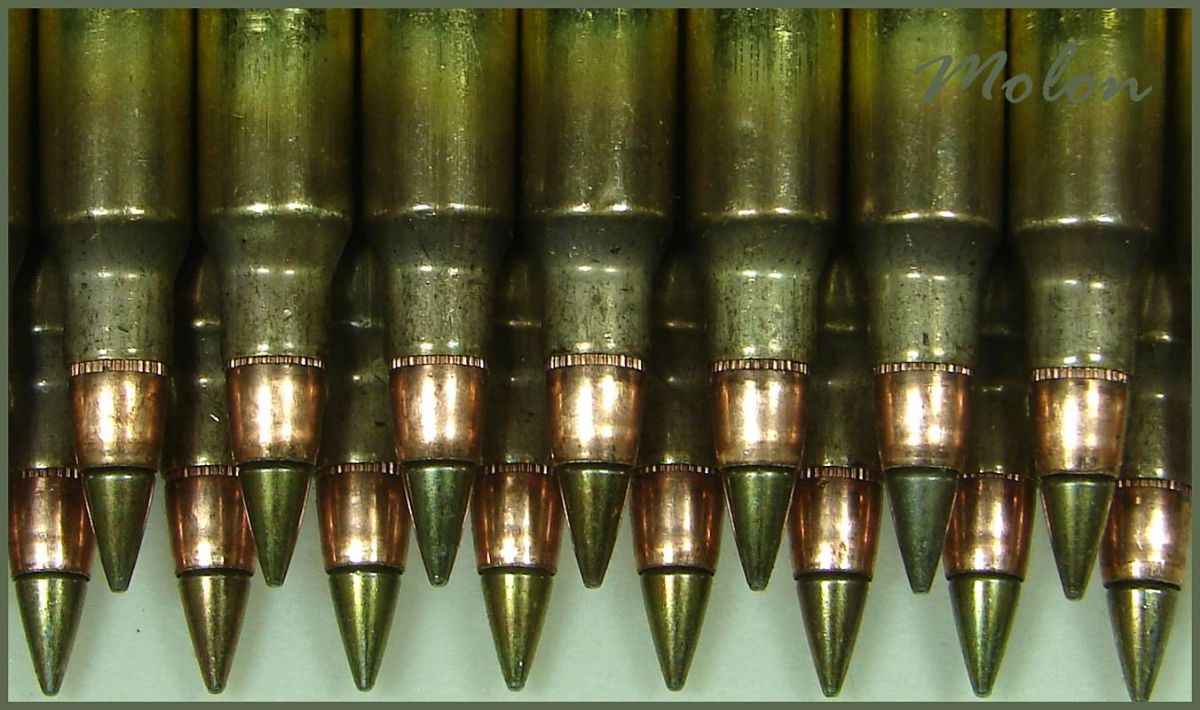
Quoted: Look what the big brown truck dropped off . . . https://www.ar15.com/media/mediaFiles/28568/men_m193_09-2260222.jpg .... Yup. That's the stuff. I hope you get a chance to test some and dont forget to post your results. |


[ARCHIVED THREAD] - MEN 56 Grain M193 Accuracy (Page 2 of 2)
AR Sponsor