User Panel
User Panel
User Panel
|
Posted: 6/2/2009 9:29:05 PM EDT
[#1]
Originally Posted By D_CRISIS:
If I don't have a head space gauge can I use a dummy round to check how it feeds and what not?  provided the dumy round is in spec, then yes you could use it as a GO gauge, if it chambers then you know you have more then the minimum safe headspace... I own acolt field gauge and a in spec dummy round....when i barrel an upper, first i make sure the dummy round chamers, then i use a real round (firing pin/ejector/extractor removed)...then i make sure my fiend gauge does NOT chamber, then i know im good to go. i still check the brass on the first few rounds to. |
|
|
|
|
Posted: 6/2/2009 9:32:01 PM EDT
[#2]
Originally Posted By Heineken:
Originally Posted By D_CRISIS:
If I don't have a head space gauge can I use a dummy round to check how it feeds and what not? provided the dumy round is in spec, then yes you could use it as a GO gauge, if it chambers then you know you have more then the minimum safe headspace...BUT you would still need a no go or a field gauge. I own acolt field gauge and a in spec dummy round....when i barrel an upper, first i make sure the dummy round chamers, then i use a real round (firing pin/ejector/extractor removed)...then i make sure my fiend gauge does NOT chamber, then i know im good to go. i still check the brass on the first few rounds to. basicaly, if you only own one gauge, i would say it should be a field gauge. as long as it wont chamber you know you have less then the maximum headspace, and if you had less then then minimum then a round in theroy should not chamber. |
|
|
|
GA, USA
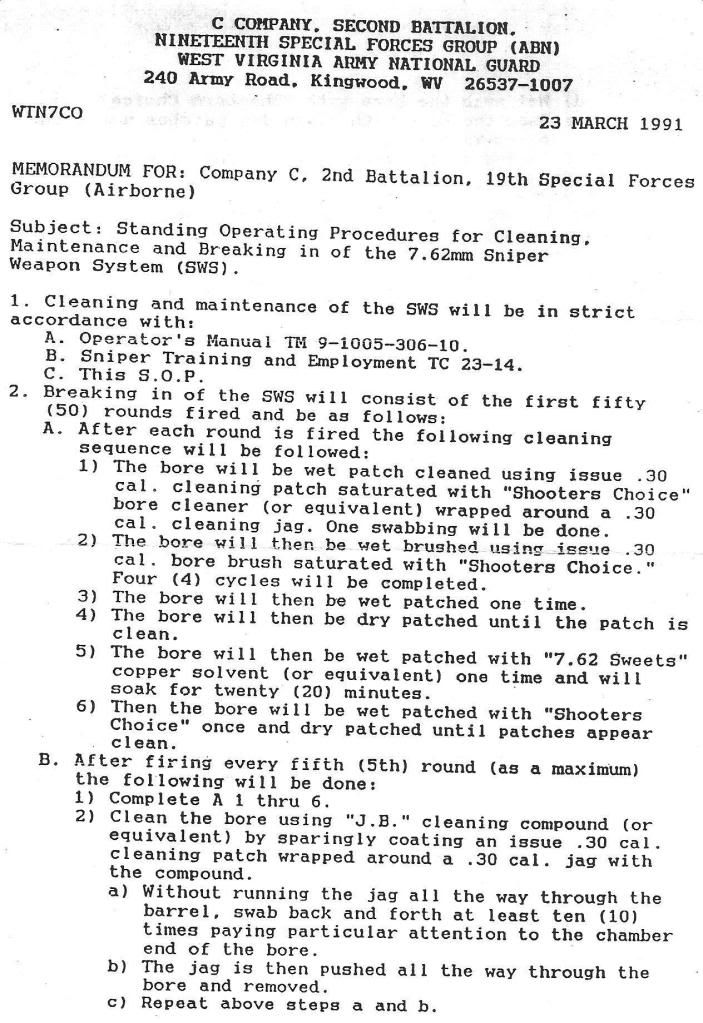
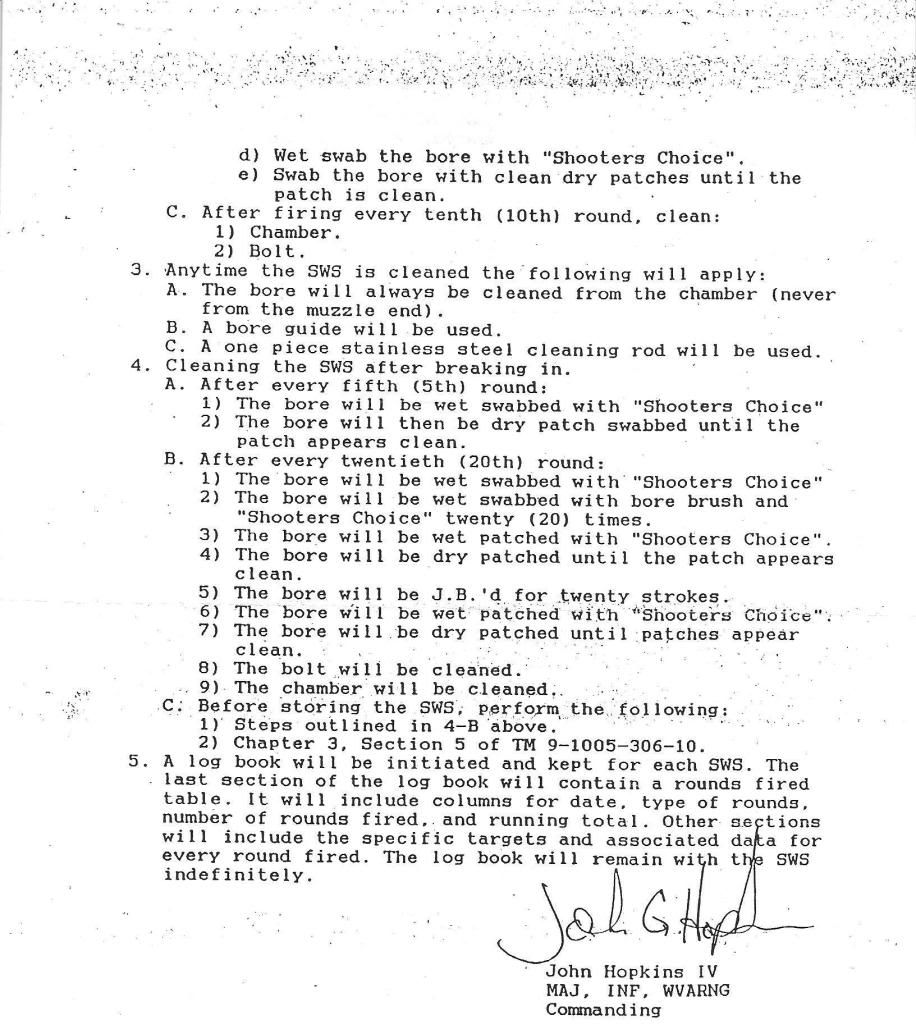
|
Posted: 6/2/2009 9:52:52 PM EDT
[#3]
Awesome, I have a few different dummy rounds and shell casings laying around
|
|
|
|
Posted: 6/4/2009 7:08:18 AM EDT
[#4]
Originally Posted By Heineken:
Originally Posted By D_CRISIS:
If I don't have a head space gauge can I use a dummy round to check how it feeds and what not? provided the dumy round is in spec, then yes you could use it as a GO gauge, if it chambers then you know you have more then the minimum safe headspace... I own acolt field gauge and a in spec dummy round....when i barrel an upper, first i make sure the dummy round chamers, then i use a real round (firing pin/ejector/extractor removed)...then i make sure my fiend gauge does NOT chamber, then i know im good to go. i still check the brass on the first few rounds to. I also have a no go field gauge...but I have a question. Why should we have to remove the firing pin, ejector, and extractor from the bolt? If you can not get the bolt to close on the gauge then all is well...even with those components installed...correct? Obviously you wouldn't want to slam the bolt closed with the gauge in...but I really don't see why the bolt has to be disassembled as long as you are careful.....but then I am not a smith 
|
|
|
|
|
Posted: 6/5/2009 10:22:52 PM EDT
[Last Edit: Heineken]
[#5]
Originally Posted By SVGA-1:
Originally Posted By Heineken:
Originally Posted By D_CRISIS:
If I don't have a head space gauge can I use a dummy round to check how it feeds and what not? provided the dumy round is in spec, then yes you could use it as a GO gauge, if it chambers then you know you have more then the minimum safe headspace... I own acolt field gauge and a in spec dummy round....when i barrel an upper, first i make sure the dummy round chamers, then i use a real round (firing pin/ejector/extractor removed)...then i make sure my fiend gauge does NOT chamber, then i know im good to go. i still check the brass on the first few rounds to. I also have a no go field gauge...but I have a question. Why should we have to remove the firing pin, ejector, and extractor from the bolt? If you can not get the bolt to close on the gauge then all is well...even with those components installed...correct? Obviously you wouldn't want to slam the bolt closed with the gauge in...but I really don't see why the bolt has to be disassembled as long as you are careful.....but then I am not a smith The reason it is ALWAYS recomended to remove ejector and ectractor to test headspace is this: Lets say you are using a no go gauge (on no go field gauge), you DO NOT want it to chamber...well lets say you test it and it barily chambers, you know your have to much headspace...now lets go back in time a few minutes and pretend that you did not take the time remove the ejector and that little bit of extra tension kept it from chambering fausly leading you to believe you were good to go since it did not chamber...thsi would be a false reading. and with a go gauge, same thing that extra tension could keep it from chambering beacuse you have very tight headspace (but still in spec) and you might think, oh shit, my go gauge wound not chamber i must have a problem, when in fact with the ejector/extractor removed it would have chambered... hopfully i explaned that to make sense. |
|
|
|
|
Posted: 6/11/2009 10:49:58 PM EDT
[#6]
Thanks for the schooling!!

|
|
|
|
|
Posted: 6/12/2009 9:24:23 AM EDT
[#7]
Originally Posted By SVGA-1:
Thanks for the schooling!! yep, all these years of arfcom helping me out with questions feels good to be able to actualy get to answer a question once in a while! |
|
|
|
NY, USA
|
Posted: 7/3/2009 11:14:11 PM EDT
[#8]
If you had multiple barrels/bolts to test, is there a way to check headspace without removing the ejector?
My first thought would be to have a professional machine a hole in the gauge so the ejector doesn't push on the gauge. Pros and cons? |
|
|
TX, USA
|
Posted: 8/11/2009 4:46:57 PM EDT
[#9]
Originally Posted By samurairabbi:
–––––––– added June 4 ––––––––––––- I found the answers to my original questions at the Indy gun show this last weekend. The 3-thou range of these Forster guages is intended for checking headspace on BOLT-ACTION .223 rifles. –––––––––––––––––––––––––––––––––––– I offer a question on the .223 Forster go/nogo guages. I have a set of these go/nogo guages marked the same as in AR15Texan's earlier post: 1.4636 Go and 1.4666 Nogo. Clearly these are different guages than the "3-decimal" Forster ones compared in the lead post of this thread. The "military" headspace range for a "New" rifle is given in this thread as 1.4646" to 1.4706". This is a 6-thousandth range. The "4-decimal" Forster guages give a 3-thousandth range between the Go and Nogo range, which is HALF the allowable military new range. Does that difference indicate that the "civilian" .223 headspace range has become far tighter than the 5.56 military headspace range? An earlier post by Falarak in this thread indicated that some new in-spec military chambers could still close on a Forster (civilian) Nogo guage. Is this another aspect of the tighter 3-thou range of the newer Forster guages? According to this post I have gathered that there are two different style guages one for bolt action, and one for auto. How can I tell the difference between the two? I am wanting to buy a go and no go headspace guage, but dont want to get the wrong ones.. Thanks.. |
|
|
|
Posted: 8/11/2009 7:14:34 PM EDT
[Last Edit: FALARAK]
[#10]
Originally Posted By wpeschel: Originally Posted By samurairabbi: –––––––– added June 4 ––––––––––––- I found the answers to my original questions at the Indy gun show this last weekend. The 3-thou range of these Forster guages is intended for checking headspace on BOLT-ACTION .223 rifles. –––––––––––––––––––––––––––––––––––– I offer a question on the .223 Forster go/nogo guages. I have a set of these go/nogo guages marked the same as in AR15Texan's earlier post: 1.4636 Go and 1.4666 Nogo. Clearly these are different guages than the "3-decimal" Forster ones compared in the lead post of this thread. The "military" headspace range for a "New" rifle is given in this thread as 1.4646" to 1.4706". This is a 6-thousandth range. The "4-decimal" Forster guages give a 3-thousandth range between the Go and Nogo range, which is HALF the allowable military new range. Does that difference indicate that the "civilian" .223 headspace range has become far tighter than the 5.56 military headspace range? An earlier post by Falarak in this thread indicated that some new in-spec military chambers could still close on a Forster (civilian) Nogo guage. Is this another aspect of the tighter 3-thou range of the newer Forster guages? According to this post I have gathered that there are two different style guages one for bolt action, and one for auto. How can I tell the difference between the two? I am wanting to buy a go and no go headspace guage, but dont want to get the wrong ones.. Thanks.. That is incorrect. There are just gauges. Of different sizes. Period. They are USED to follow different specifications of "go" and "no go". They are "loosely" defined as Civilian, or Military. Also can be considered SAAMI vs NATO.... as in the chamber dimensions. GENERALLY - a bolt gun will have a SAAMI chamber, and a gas gun will have a NATO chamber, but that is not always the case. This isnt really as complicated as people make it... because as I have stated - loose headspace is not a big deal unless it is ridiculous....
|
|
|
|
|
Posted: 10/8/2009 3:09:01 AM EDT
[#11]
If a Rifle manufacturer like DPMS is known to use minimum headspace when reaming the chamber and CMT is know to produce bolts slightly large then headspace of this combination could be tight.
it may chamber some rounds may not chamber some surplus. If some other manufacturer chambers a barrel on the large side with a CMT bolt then someone swaps to a LMT which is known to be a little loose excessive headspace could result. Not a big deal with most ammo but if a handloader screws the die down to far a difference of .020 could result and that could cause case head seperation and blow the bottom of the mag or worse. I have seen as much as .007 difference between bolts manufactured from different companies. Most of the time bolt swapping is not an issue but certain combinations can cause problems, better to take 5 minutes and check it out. |
|
|
|
MD, USA
|
Posted: 10/26/2009 2:25:51 PM EDT
[#12]
maybe one of you can help. i finally got around to my first ar build this past weekend and found that my head-space is to tight. im not sure on the brand of go gauge we used but it would not chamber. i will go back by my friends later and try it again not that i have really scrubbed out my boar and chamber. before it would not always chamber lake city and it was a tight extraction and not they are smooth so it could have been gunk. im not sold on this. so i will post back when i know the brand of gauge. hopefully it will chamber but i have a feeling it wont.
Dannel defense 16inch chrome lined 5.56 barrel http://www.bravocompanyusa.com/Daniel-Defense-16-M4-Carbine-Gas-Barrel-stripped-p/dd%209060.htm bravo company manufacture complete bolt Assembly http://www.bravocompanyusa.com/BCM-Bolt-Carrier-Group-MPI-Auto-M16-p/bcm%20bolt%20carrier%20group%20auto%20mp.htm and a Yankee hill upper http://yankeehillmachine.com/store/product368.html with there barrel nut. that that the upper or nut really matter (i think maybe im wrong) so since i have a chrome lined boar what do i do? i have tried the bolt from my old bushmaster and it was having the same issues with some brass. although i did not have the gauge. so i will try my bushy bolt with the gauge as well as some of my friends bolts. assuming these dont work what is the next step? i was thinking of getting a piece of brass and some polishing compound and lapping the chamber? hopefully one of you can help, as i am afraid i am sol. my friend who is a colt armor is stumped and has never heard of this actually happening. |
|
|
|
Posted: 11/1/2009 1:34:24 PM EDT
[#13]
If it will not close on a go gauge I would not shoot it. I am FAR more concered about ANY short headspace than long headspace. If you clean the chamber, and try a couple bolts (with the extractor and ejector REMOVED) and it will not close on a .223 go gague - then I would send the barrel back to the manufacturer for defective replacement, and they should make good on it.
|
|
|
|
MT, USA
|
Posted: 11/7/2009 5:11:38 PM EDT
[Last Edit: Bretshooter]
[#14]
Answered earlier in thread. Delete.
|
|
|
LA, USA
|
Posted: 12/22/2009 12:26:46 AM EDT
[#15]
OK, I have a question. I often see where people say they "tighten the barrel nut three times, then torque to 30 ft/lbs." Can you explain the process more clearly? When you tighten three times, do you tighten, back off, tighten, back off, etc? It would be greatly appreciated if someone could provide a detailed explanation of the barrel installation/replacement process.
I apologize if this is already explained in this thread. I did try to read everything thoroughly but there is a lot of information here. Thanks in advance jonblack |
|
|
KS, USA
|
Posted: 12/26/2009 11:18:07 PM EDT
[#16]
Originally Posted By rick458:
Where are some good vendors to get 1/7" Barrels ? RRA has some good looking 1/8" I'd recommend BCM or LMT. You get the right price and quality mix. You should be able to find both at bravocompanyusa.com
|
|
|
PA, USA
|
Posted: 12/28/2009 8:30:55 PM EDT
[Last Edit: Suburban]
[#17]
Originally Posted By FALARAK:
If it will not close on a go gauge I would not shoot it. I am FAR more concered about ANY short headspace than long headspace. If you clean the chamber, and try a couple bolts (with the extractor and ejector REMOVED) and it will not close on a .223 go gague - then I would send the barrel back to the manufacturer for defective replacement, and they should make good on it. Not good, huh? My Model 1 upper and LMT 16" upper checked out with the gages I bought from Bushmaster. I just tested a new LMT 10.5" upper with a new Colt bolt, and I can't get it to lock up with the 1.464" Go gage, but it will close on live rounds (with the firing pin removed). I tried again with another Colt bolt, removed the extractor and ejector, and tried again. Still won't lock up on the gage, but will with the live rounds. I'll try putting the LMT bolt in the 10.5" upper, and Colt bolt in the LMT 16" upper, but I don't like where this is going. EDIT: 10.5" upper still no-go with the GO gage and LMT bolt. LMT M4 upper - the bolt snaps easily on the GO gage, and I don't remember fighting with it when it was new. EDIT AGAIN: Gene Swanson at LMT says they made it that way on purpose. I guess as long as the upper functions, it's okay, and will probably break in a bit with use. |
|
|
PA, USA
|
Posted: 12/28/2009 11:42:53 PM EDT
[#18]
Originally Posted By jonblack:
OK, I have a question. I often see where people say they "tighten the barrel nut three times, then torque to 30 ft/lbs." Can you explain the process more clearly? When you tighten three times, do you tighten, back off, tighten, back off, etc? It would be greatly appreciated if someone could provide a detailed explanation of the barrel installation/replacement process. I apologize if this is already explained in this thread. I did try to read everything thoroughly but there is a lot of information here. Thanks in advance jonblack It's done as you describe. I think the idea is to mate the threads of the barrel nut and upper, to get an accurate torque. Whether it's really necessary may be debatable, but it only takes a few minutes. |
|
|
OK, USA
|
Posted: 1/8/2010 10:45:01 AM EDT
[#19]
After reading the posts I have just one question. I have a barrel that is not chrome lined, is there a barrel break in process for it? I haven't attached it yet cause I'm standing by for front sight and flash hider so id like to know before iattatch it so I know what to do. Thanks.
|
|
|
|
Posted: 1/11/2010 10:38:58 AM EDT
[#20]
Originally Posted By LARman0311:
After reading the posts I have just one question. I have a barrel that is not chrome lined, is there a barrel break in process for it? I haven't attached it yet cause I'm standing by for front sight and flash hider so id like to know before iattatch it so I know what to do. Thanks. yes, there is barrel break in processes, lots of different options and opinions on this, i have my method but u might want to do a search and find one that u like |
|
|
|
WV, USA
|
Posted: 1/30/2010 8:26:44 PM EDT
[#21]
BREAK IN FOR ACURACY I am new to this post, but a Retired Guy, you may want to consider this for break in of any rifle you want to be as accurate as it can be. |
|
|
USA
|
Posted: 2/25/2010 11:21:43 PM EDT
[#22]
Originally Posted By SVGA-1:
Originally Posted By Heineken:
Originally Posted By D_CRISIS:
If I don't have a head space gauge can I use a dummy round to check how it feeds and what not? provided the dumy round is in spec, then yes you could use it as a GO gauge, if it chambers then you know you have more then the minimum safe headspace... I own acolt field gauge and a in spec dummy round....when i barrel an upper, first i make sure the dummy round chamers, then i use a real round (firing pin/ejector/extractor removed)...then i make sure my fiend gauge does NOT chamber, then i know im good to go. i still check the brass on the first few rounds to. I also have a no go field gauge...but I have a question. Why should we have to remove the firing pin, ejector, and extractor from the bolt? If you can not get the bolt to close on the gauge then all is well...even with those components installed...correct? Obviously you wouldn't want to slam the bolt closed with the gauge in...but I really don't see why the bolt has to be disassembled as long as you are careful.....but then I am not a smith Well I was an armorer in the Marine Corps trained at aberdeen proving grounds ... we never disassemble the bolt for this ... you just use pressure at the back of the carrier and make sure it travels as far as it can go . |
|
|
WI, USA
|
Posted: 5/16/2010 9:38:55 AM EDT
[#23]
OLD18C thanks for the info, I was looking for something along these lines as America's Really Missguided Youngsters. I Am currently trying to break in a new 1:7 twist YHM 16" barrel and only have 40-50 rounds through it so far. And I am still unable to get it into a at least a 1 MOA at 100 yards. Deffently still in the break in period.
|
|
|
TX, USA
|
Posted: 8/8/2010 4:32:55 PM EDT
[Last Edit: slaxer07]
[#24]
I'm sorry if this has been asked but in theory wouldnt you only need a field or no-go guage. If it closes on them you make need to look further into it but what do you gain from a go guage if it doesnt close on that wouldnt you have a problem chambering a round? I'm just trying to decide what I'm going to do with a upper I built that has a new barrel and used bolt (about 400 rds).
Thanks for the help. |
|
|
FL, USA
|
Posted: 11/3/2010 10:27:06 PM EDT
[#25]
From my 6 years experience in the Army working on all weapons from the 9mm up to the 155mm howitzers, I know a little about headspace. When I was taught to check headspace in M16/M4 I was taught to do it with the extractor and ejector in place. If the bolt went into battery, locked up completely, it failed headspace. The cure for this was either to change the barrel or the bolt or in extreme cases of wear, change both. Usually a new bolt will give you better headspace specs. You should always double check after doing work to an AR. Buying one new, you need not worry. It should be checked from the manufacturer. To clarify after doing work: THe only time headspace COULD be affected is with changing bolt or barrel. If anyone has further questions, feel free to ask, I will answer to the best of my ability and if I do not know the answer, I will try to research it to find out. Good luck!
|
|
|
FL, USA
|
Posted: 11/4/2010 6:01:27 PM EDT
[#26]
Yes you tighten and loosen 3 times. It helps seat the barrel nut so it doesnt work its way loose. Make sur you get ATLEAST 30lbs on the barrel nut, but overtightening can strip the theeth on the barrel nut or possibly fracture the upper receiver. However, I have put over 100lbs on a barrel nut before and with proper technique only slightly malformed the teeth on the barrel nut, no problems with it after the remainder of service life of barrel and bolt. That same carbine was carried in Afghan and tested far beyond normal field use by US soldier.
|
|
|
|
Posted: 12/24/2010 4:24:52 PM EDT
[#27]
Most of us who have worked on cars or put anything together know the feeling between a tight bolt and a loose one... So that being said you really dont need a tourqe wrench just remember to the the nut tight and then look to see if you have to index it farther foward in order to install the gas tube... As a rule I never loosen the nut to get to the the proper alighnment always tighten... 99.9 percent of the time if your installing a new stick and carrier its not needed to check the headspace espically if your stick already came spaced and your not the one putting it together... But for saftey's sake you should have a Headspace guage set and a torque wrench.. I have build a dozen from new parts and never have found one out of spec....I always use Moss and Oly barrels and spikes carriers.....
|
|
|
|
AZ, USA
|
Posted: 3/9/2011 10:12:32 PM EDT
[#28]
Originally Posted By FALARAK:
Originally Posted By sniperfrog:
How critical is the 40 inch pounds for the receiver extension? Inch/pounds torque wrenches are pretty expensive. I installed a new Vltor stock tube and I snugged it up but it was probably more than 40 inch pounds. Is overtightening the buffer tube a bad thing? Non-issue. That is not a critical torque spec. Just get it snug. Then - optionally stake it if you want to, or you can use *one drop* of *blue* loctite to optionaly add some insurance against it loosening up over time. I do neither. Just get it good and snug and I am sure I am well over 40 inch pounds. 37 to 40 INCH pounds has been determined as "Hand Tight". If you need to put a torque value on "Hand Tight" it is 37 to 40 INCH pounds. Apparently some have decided the carbine RE castle nut is supposed to be torqued to 40 FT lbs and people do it... and the RE's take it so Id say if you are a tad over 40 inch lbs you are fine Its obviously been proven the castle nut can be torqued from Zero to 40 FT LBS(480 INCH pounds). Commercial RE's I however would not torqued to 40 FT LBS going a tad over 40 FT LBS will break or warp a commercial tube. |
|
|
|
Posted: 5/7/2011 7:57:35 PM EDT
[#29]
I recently had an experience with Century Arms that is worth sharing.
There was a recent posting about the Century Arms C-15 Sporter. This model rifle was my first AR purchase approximately 2 and ½ years ago. A bought it as a “shooter” and it lead to a severe case of BRD. You, who have been infected, know the scenario. A couple of SP1’s followed and then several builds from the recently available Colt Parts Kits and also a finished C-15A-1 from Century Arms. Back to the C-15 Sporter. The quality of the rifle was good, especially for the price. It had mostly new components except for the Colt BCG and modified FCG. I first shot it about a year or so ago (40 rounds) and it functioned flawlessly. Recently, I purchased a set of headspace gauges from Brownells and decided to check the headspace on the C-15. With a stripped bolt, it did not pass the “Go” gauge test. I almost crapped, since I had already shot the rifle and headspace is almost never an issue on properly assembled AR's. I called Century and they were very helpful. I eventually got to a Customer Service Rep. who told me that they only use “no-go” gauges when they check their rifles. He also said that “if it shot OK, what was I worried about?’ When I expressed my concern about the safety of the weapon, due to the faulty headspace, he offered to repair it at the factory, but, I would have to pay the shipping. At that point, I elected to use a local gunsmith. He verified that the headspace was, in fact, wrong. He also said that it appeared that the rifle chamber had not had the finish reaming. He fixed it for $60.00 and I am now “good to go”. I plan to go to the range this week. I am concerned about the large number of these C-15 rifles and also the M16-A1 Kits and assembled C-15A-1’s that have recently come from Century and other suppliers with barrels “in the white” and also “parked”. Have their chambers been finish reamed or not? My advice is – Check the headspace on these rifles before you shoot them! I am not bashing Century Arms, I have bought their products for years, their Customer Service is excellent, and, as an FFL, I will continue to buy their products. I will, however, check the headspace where new barrels are concerned. Hal PS - The headspace on my C-15A-1 is fine. |
|
|
|
|
Posted: 5/7/2011 8:35:19 PM EDT
[#30]
To be safe I would but if your installing a New Bolt and carrier then no you really dont have to.... If its your gun but if your working on anothers gun Id check it for safteys sake.....New Parts usually dont have to be checked unless you doubt the manufacture you purchased it from then Its not a bad Idea.....
|
|
|
|
|
Posted: 5/28/2011 12:23:04 PM EDT
[Last Edit: sinlessorrow]
[#31]
I just took a spikes buffer tube off that was torqued to 38ft/lbs, after i got the castle nut off the buffer tube threads were tore up. It asnt going anywhere but it was also unusable after removal, there was little shard of aluminum all over my hands
I have mine at 40in/lbs still trying to decide if i should keep it there |
|
|
|
VA, USA
|
Posted: 7/5/2011 11:58:19 AM EDT
[#32]
Originally Posted By FALARAK:
Originally Posted By AR15Texan:
Need some help with headspace. I finished building a 24" Varmint AR15. I bought the Forster .223REM GO and NOGO headspace gauges and checked the chamber tonight. The GO Gauge has 1.4636 and the NOGO has 1.4666. I could not close the bolt on either the GO or the NOGO gauge. Below are the rifle's details: DPMS lower with Rock River Arms LPK and two-stage trigger kit. RRA A4 Stripped Upper with charging handle and foward assist DPMS 24" Bull Barrel with Extension installed. JP Enterprise free-float handguard DPMS flat top gas block and gas tube Mil-spec BCG Magpul PRS stock with Rifle buffer tube, spring, and buffer I separated the upper and lower receivers. I then removed the extractor and ejector. I placed the bolt back into the bolt carrier. Installed the key, firing pin, and retaining clip into the bolt carrier. I inserted the GO gauge and then slide the BCG into the upper. I pushed the BCG forward and saw that the bolt started to rotate about 10 degrees and stop. The NOGO gauge was about the same. I then grabbed another BCG that has seen about 350-400 rounds. I only removed the extractor as I was having trouble getting the ejector roll pin out. I then installed this BCG assembly into the upper. I applied more pressure than before as I could feel the ejector spring compress. The bolt then snapped into battery. I then tried the NOGO and it too snap into battery with about the same pressure. I figured I was pushing too hard in order to overcome the ejector spring and concluded that this test was no good. I then spent some more time on the used BCG and finally got the ejector roll pin out. I then tried it back in the DPMS 24" upper. This time the bolt closed on the GO gauge but it still took more pressure than I thought should be used. Shouldn't I see the bolt rotate easily on the GO gauge? Next I tried the NOGO gauge on the used BCG. The bolt started to rotate a few degrees but then stopped. I then tried the brand new BCG on the older upper. This is a J&T kit upper with a 16" barrel. The new BCG would not close on the GO or NOGO gauge. So it looks like my chamber and bolt are too tight. Doesn't the GO gauge measure maximum SAMMI length. Should I not run any ammunition through the new AR? Should I try some other bolts? 
Most NATO chambered AR's will close on a civilian NOGO. It does sounds like you are checking them correctly... but the fact you are tight on a civvy GO gauge in both weapons is highly suspect. Are you sure both chambers and bolts, and barrel extension are impeccably clean? What you are describing is extremely rare, and likely something else is happening. Have you tested using a live round? How much force is required to chamber that? I just built a a carbine using a Colt 14.5 pencil barel..........the bolt will not close on a civi 223 no-0go gauge |
|
|
|
|
Posted: 10/15/2011 4:13:42 AM EDT
[#33]
I have a 1981 era SP-1 with approx. 10,000 rounds down range that will not close on a 5.56 go Gage, no signs of over pressure.
|
|
|
|
WA, USA
|
Posted: 11/26/2011 4:21:27 PM EDT
[Last Edit: ntwillea]
[#34]
Quick couple of questions, I found Field, Go, No-Go and a set of MATCH, 5.56mm headspace gauges here:
Del-Ton Parts Not sure which (if any) are within spec tho. According to DF's specs on a GO the gauge being offered is off by .0010? As far as I can read off the match set these are PTG (Pacific Tool and Gauge). 1) Are these safe to use for proper military head spacing (all my barrels so far are mil spec)? 2) Anyone own these or other PTG gauges have any pros/cons that they feel would be helpful in helping me decide on avoiding/procuring them? 3) Is the match set for match barrels only? From the description the .330 is static, I'm guessing this is the shoulder angle and the 1.4xxx is to gauge wear in the bbl? Thanks to all in advance. EDIT-Fixed link |
|
|
WA, USA
|
Posted: 7/1/2012 12:16:12 AM EDT
[#35]
Originally Posted By FALARAK:
Now - if we did push the barrel forward another .003" (for instance) this still has ZERO effect on headspace. The headspace is set from the bolt FACE to the chamber. This distance is set by a factor of the back of the bolt lugs, contacting the barrel exension lugs. This is why, ONLY the barrel extension, when installed to the barrel, controls the headspace. All bolts are made to the same spec. Therefore, the position of the barrel in the upper receiver makes no difference, because the bolt carrier is freely moving, and will just simply slide an extra .003" forward in this case. There is a large margin of tolerance here. As an end user - you CANNOT have any impact to headspace. This is set by the barrel maker when they install the extension on the barrel and pin it. Nothing you do to the weapon can increase or decrease headspace. All you can do is *verify* headspace with a gauge, and replace the barrel if it is badly out of spec, which is extremely rare. OK, I've been trying to wrap my brain around this head space issue and the comments above finally made it all start coming together. Now since I am a visual person, I sketched up what I think is a proper representation of head space. Please confirm. 
|
|
|
|
Posted: 7/1/2012 9:49:40 PM EDT
[Last Edit: FALARAK]
[#36]
Originally Posted By DR-B: Originally Posted By FALARAK: Now - if we did push the barrel forward another .003" (for instance) this still has ZERO effect on headspace. The headspace is set from the bolt FACE to the chamber. This distance is set by a factor of the back of the bolt lugs, contacting the barrel exension lugs. This is why, ONLY the barrel extension, when installed to the barrel, controls the headspace. All bolts are made to the same spec. Therefore, the position of the barrel in the upper receiver makes no difference, because the bolt carrier is freely moving, and will just simply slide an extra .003" forward in this case. There is a large margin of tolerance here. As an end user - you CANNOT have any impact to headspace. This is set by the barrel maker when they install the extension on the barrel and pin it. Nothing you do to the weapon can increase or decrease headspace. All you can do is *verify* headspace with a gauge, and replace the barrel if it is badly out of spec, which is extremely rare. OK, I've been trying to wrap my brain around this head space issue and the comments above finally made it all start coming together. Now since I am a visual person, I sketched up what I think is a proper representation of head space. Please confirm. https://lh5.googleusercontent.com/-WsGWLYCMMaQ/T-_NPy0G-9I/AAAAAAAAAdQ/yjwpxbfgRNQ/s912/Head%2520Space%25201.png It is a rough drawing - but correct in that it shows the back of the bolt lugs against the barrel extension lugs, and the bolt face setting the headspace to the barrel chamber. |
|
|
|
WA, USA
|
Posted: 7/1/2012 10:21:57 PM EDT
[#37]
Originally Posted By FALARAK:
It is a rough drawing - but correct in that it shows the back of the bolt lugs against the barrel extension lugs, and the bolt face setting the headspace to the barrel chamber. Thanks for the confirmation FALARAK. I know it is a crude drawing, I just wanted to represent it with a picture to ensure I'm on the right track in my understanding. This leads me to a couple more questions. Understand that I am asking for academic purposes, not to justify my current build. So, based on my sketch, which part will likely wear over time? I assume that it will be the forward face of the barrel extension lugs and/or the aft face of the bolt lugs. Also, when this wear happens, what actual condition will create an unsafe condition? Too much gap? Thanks again. |
|
|
|
Posted: 7/2/2012 12:10:40 PM EDT
[#38]
Originally Posted By DR-B: So, based on my sketch, which part will likely wear over time? I assume that it will be the forward face of the barrel extension lugs and/or the aft face of the bolt lugs. Also, when this wear happens, what actual condition will create an unsafe condition? Too much gap? Wear over time will be: 1. Barrel extension lug face. 2. Rear lugs on bolt. There will be limited wear on the bolt face from erosion, and front face bolt lugs from slamming into the barrel, but this wont affect headspace. The wear over time will not create an unsafe condition. It could potentialy wear enough over time to close on a no-go or even field or field II gauge. However, this does not create an unsafe condition, as this amount of extended headspace is still far less than the headspace set on machineguns that fire the same cartridge, such as the M249. It will have a slightly diminished accuracy potential and will allow more stretching of brass. That said - the wear induced on the barrel extension is very minor given the barrel's serviceable life of around 10,000 rounds. There just isnt enough time in a barrels service life to worry with headspace from wear. However, it would be feasible to continue replacing a barrel every 10,000 rounds, using the same bolt, and see enough wear on the bolt to induce extended headspace. Generally when replacing the barrel, it is a good idea to replace the bolt with a fresh, in spec bolt. However, I have worn out barrels, and continued to use the same bolt with no cause for concern. Again - repeating information already in this thread, too LITTLE headspace poses much more of a dangerous situation (pressure spike), than excessive headspace. (assuming the excessive headspace is not extreme, such as an improperly built barrel.) |
|
|
|
OR, USA
|
Posted: 10/31/2012 9:12:12 PM EDT
[#39]
For those who are more visual I found this link to be helpful also somewhere that had said gauges in stock. $30 each
|
|
|
OR, USA
|
Posted: 11/9/2012 11:52:47 PM EDT
[#40]
What gauge do I use for a wylde chamber .556 or .223 REM?
|
|
|
|
Posted: 12/19/2012 5:06:39 PM EDT
[#41]
Ok, I ordered the NO GO gauge from Brownells and my bolt won't close on it. WoooHoo! I am glad to have that verification.
One note... I dismantled my bolt to do this, but put it in the carrier... no firing pin and no firing pin retaining pin, but the cam pin was in to hold the bolt in and allow it to turn. Well, the cam pin must have turned a tad while the bolt was closed. Wow... I had very little movement in the carrier but moved it back and forth many many times and finally the cam must have rotated back in position and I was able to get the bolt/carrier out. So, my suggestion, remove the extractor and ejector plunger/spring, but still put your bolt carrier group together with the bolt, firing pin and FP retaining pin. Other than that, the suggestions on this thread were excellent and now I am not worried about firing my new upper for the first time! Thanks guys! -SubgunFun |
|
|
|
CO, USA
|
Posted: 12/25/2012 9:51:14 PM EDT
[#42]
Just a short item from my first build. I'm familiar with torque wrenches, the last thing I built was an airplane. Torque was your GOD.
IF you're not using a torque wrench, but the AR multi-tool, be aware that the ft-lb wrench is about twice as long as the multi-tool, so since the long torque wrench needed quite a bit of effort to achieve the proper max torque for the barrel nut, I would assume that just the short multi-tool would need A BUNCH of effort. Next, don't underestimate the helpful effect of some moly grease. Without it, I couldn't achieve any more than the minimum torque. All aircraft torque values are rated as dry, and lubed. After the moly, torque THREE times, loosening each time between, the max torque was easy to achieve. So, NO short cuts. Sure, do it without a torque wrench, but be aware of the short arm of the multi-tool, and give it some serious muscle. And be sure to use moly grease and loosen twice, torqueing it up on the last effort. Remember, the range is something like 40 to 80 inch-lbs, so it's quite broad. |
|
|
TX, USA
|
Posted: 12/29/2012 11:27:49 PM EDT
[Last Edit: Glockknocker]
[#43]
I just put a YHM free float on mine. I haven't shot it yet but does anyone think I should check the headspace before I shoot it? I noticed that I over torqued it probably by one of the gas tube holes on the jam nut since I have just a paper thin sized gap between the upper and free float rail extension. Everybody's got me all second guessing myself and wondering if I shoulda got the damn gages when I ordered everything. I looked on brownells and midway, and couldn't find a field gage in 5.56 or .223. I got a 5.56 so I figured I'd get that one if I choose to make the buy. I know ultimately its better safe than sorry, but does anyone think I need to buy the gages? Also the barrel and receiver are still the same before I did the free flair upgrade if that also makes any difference.
|
|
|
|
Posted: 12/30/2012 12:38:08 PM EDT
[Last Edit: FALARAK]
[#44]
Originally Posted By Glockknocker:
I just put a YHM free float on mine. I haven't shot it yet but does anyone think I should check the headspace before I shoot it? I noticed that I over torqued it probably by one of the gas tube holes on the jam nut since I have just a paper thin sized gap between the upper and free float rail extension. Everybody's got me all second guessing myself and wondering if I shoulda got the damn gages when I ordered everything. I looked on brownells and midway, and couldn't find a field gage in 5.56 or .223. I got a 5.56 so I figured I'd get that one if I choose to make the buy. I know ultimately its better safe than sorry, but does anyone think I need to buy the gages? Also the barrel and receiver are still the same before I did the free flair upgrade if that also makes any difference. No. As stated many times in this thread, if you aren't changing the barrel extension, or the bolt, you CANNOT affect headspace in any way. Too many others have posted in this thread with silly or bad information. In general, there is no need to check headspace on ANY AR15 unless you are the barrel maker, or reaming the chamber and installing the barrel extension, which is the job of the barrel manufacturer or final barrel smith. By assembling or reconfiguring, you cannot affect headspace, and that has been covered already in this thread. |
|
|
|
CA, USA
|
Posted: 2/18/2013 11:27:30 AM EDT
[#45]
I bought a JP Enterprises 16" stainless super match barrel kit. 1:8 twist and it came with a match grade bolt.
Considering what I have read in this forum I am curious why they supply the bolt. I am very impressed with the product. It is flat black with a highly polished feed ramp and the bolt is a thing of beauty. The Bennie Cooley seamless compensator is awesome. |
|
|
PA, USA
|
Posted: 2/19/2013 11:44:50 PM EDT
[#46]
Originally Posted By rangem4:
I bought a JP Enterprises 16" stainless super match barrel kit. 1:8 twist and it came with a match grade bolt. Considering what I have read in this forum I am curious why they supply the bolt. I am very impressed with the product. It is flat black with a highly polished feed ramp and the bolt is a thing of beauty. The Bennie Cooley seamless compensator is awesome. It's not terribly unusual, particularly with match barrels. JP may want to precisely set the headspace. The JP bolts are supposed to be made of a better steel, and last longer, but I'm not sure that "match grade bolt" is a real thing though. http://www.majorpandemic.com/2012/01/jp-enterprise-ar15-barrel-kit-review.html |
|
|
|
Posted: 2/28/2013 7:25:22 PM EDT
[#47]
Bump for cleanup
|
|
|
|

 Win a FREE Membership!
Sign up for the ARFCOM weekly newsletter and be entered to win a free ARFCOM membership. One new winner* is announced every week!
You will receive an email every Friday morning featuring the latest chatter from the hottest topics, breaking news surrounding legislation, as well as exclusive deals only available to ARFCOM email subscribers.

AR15.COM is the world's largest firearm community and is a gathering place for firearm enthusiasts of all types.
From hunters and military members, to competition shooters and general firearm enthusiasts, we welcome anyone who values and respects the way of the firearm.
Subscribe to our monthly Newsletter to receive firearm news, product discounts from your favorite Industry Partners, and more.
Copyright © 1996-2024 AR15.COM LLC. All Rights Reserved.
Any use of this content without express written consent is prohibited.
AR15.Com reserves the right to overwrite or replace any affiliate, commercial, or monetizable links, posted by users, with our own.